Get Premium
Dark mode theme is available exclusively for premium users. Learn more about the benefits of subscribing.
No fees, cancel anytime.

 Dark Mode Ad-Free Browsing Unlimited Content
 Ad-Free Browsing Unlimited Content Dark Mode
Join 1.2 million Panda readers who get the best art, memes, and fun stories every week!
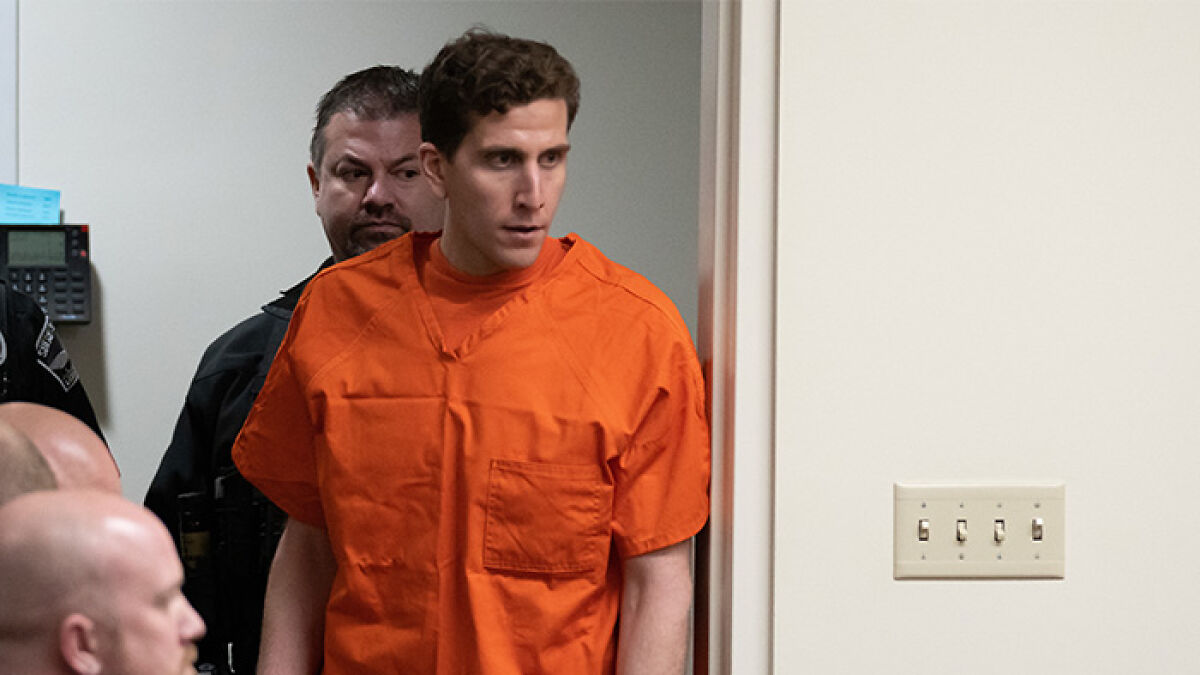

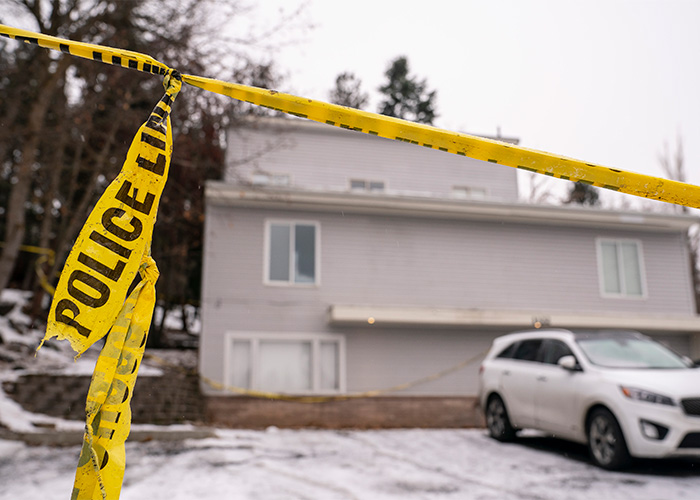
When Netflix released The Idaho Student Murders, thousands of people revisited one of America’s most talked-about murder cases.
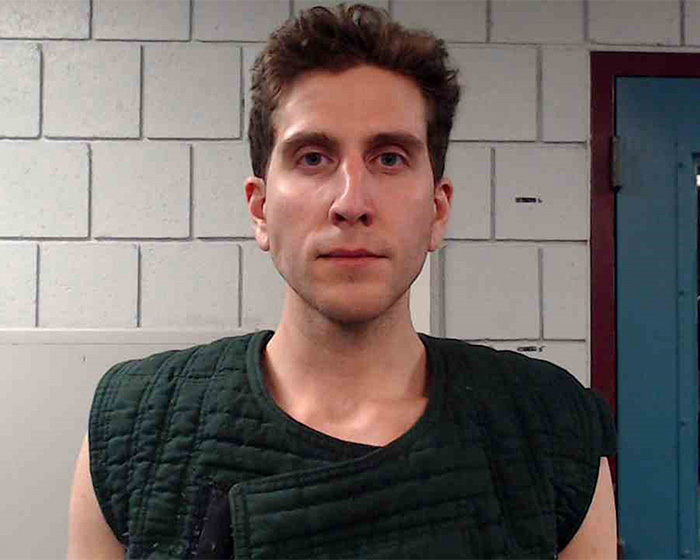
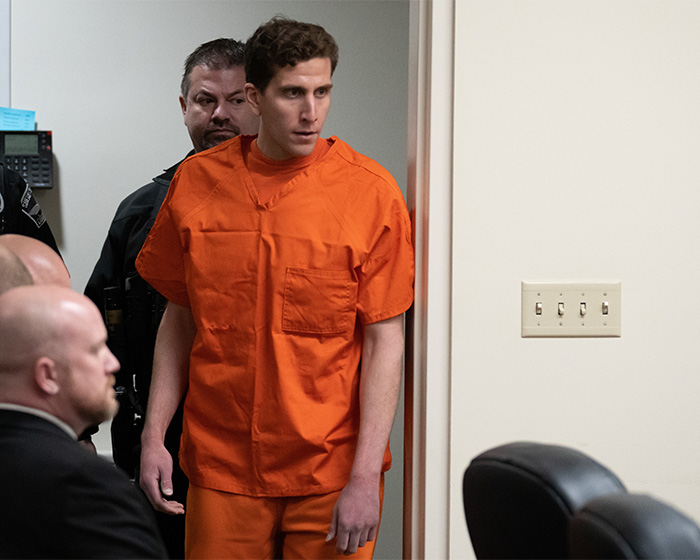
Image credits: Monroe County Correctional Facility/Getty Images
And now, one viewer came away more confused than convinced.
A Reddit user, TheClassics, said they knew almost nothing about Bryan Kohberger before watching the documentary, hoping it would explain how investigators connected him to the brutal killings of four University of Idaho students.
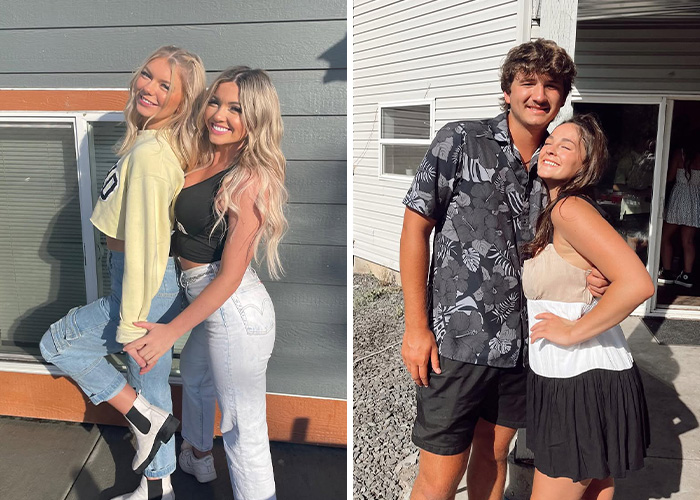
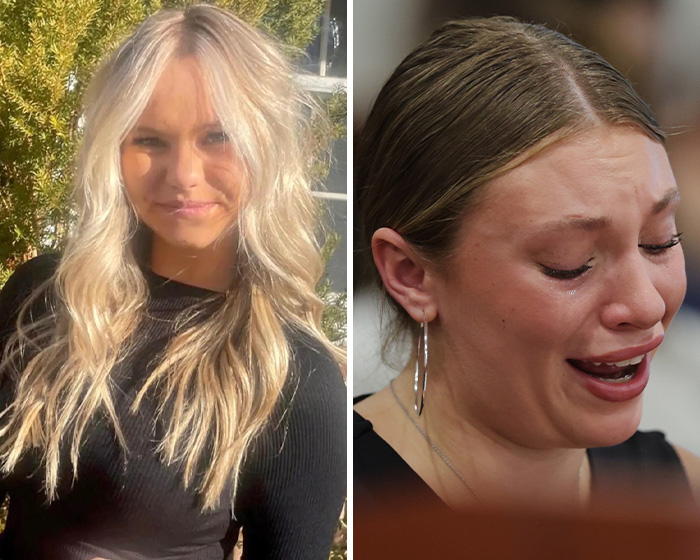
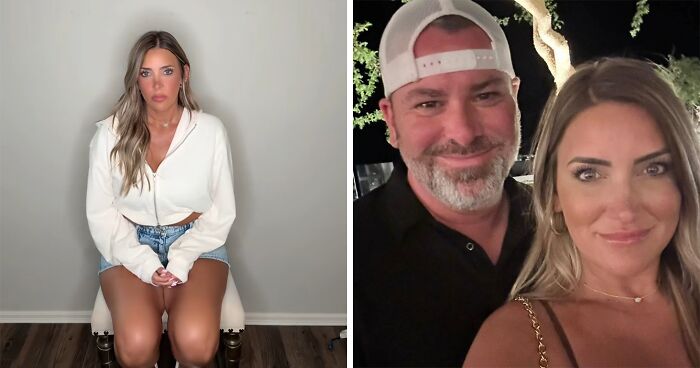
Image credits: kayleegoncalves / xanakernodle
Instead, the user was left asking, “Wait…what?”
In a Reddit post that has gone viral, they listed eight moments they felt didn’t add up or weren’t fully explained, leaving them questioning what they had just watched.
This post may include affiliate links.
One part of the documentary that confused TheClassics the most was the 911 call. The caller repeatedly said Xana was "not waking up," even though police later walked into what was clearly a brutal homicide scene. To the Redditor, those two things didn't seem to fit together.
"Wait. Stop. Hold up. The explanation on the 911 call from the roommate (that Xana had apparently drunk too much and wouldn't wake up) felt completely at odds with what the cops later found. The documentary never addresses that discrepancy… It seemed like an important question, and I kept waiting for an explanation that never came."
The newly released 911 recording showed just how confused everyone at the house was that morning.
A surviving roommate called dispatch saying, "Something's happened in our house, and we don't know what."
A female neighbor then took the phone and said one of the roommates was "not waking up," before adding, "Oh, and they saw some man in their house last night." Moments later, another person got on the line and told the dispatcher the roommate was "not breathing."
Many viewers on Reddit felt the documentary should have spent more time explaining why the call was reported as an unconscious person rather than an obvious homicide.
One commenter wrote, "Before calling 911, the surviving roommates summoned friends to the house because they couldn't reach the roommates and they were still unsure if the events of the night before really happened or were a drunken dream."
The same user explained that friend Hunter Johnson went inside first, discovered Xana and Ethan, then told everyone else to go outside and "call police and report an unconscious person."
According to that version of events, "he was the only one who knew they were d*ad and was trying to shield the others until first responders arrived."
Another Redditor felt the documentary missed an important detail, writing, "In the 911 call, they should have done better to explain or to clarify later that whoever saw Xana must've not seen her wounds and assumed she was just blacked out and didn't bother to look further than her being under the blanket and not waking up."
The delay in calling police has also been addressed by investigators and one of the surviving roommates.
According to court testimony, Dylan Mortensen said she had been drinking, was frightened after seeing a masked man in the house around 4:20 a.m., and "didn't want to believe what was going on."
After unsuccessfully calling and texting her roommates, she locked herself in Bethany Funke's room.
Moscow Police Chief Anthony Dahlinger later said investigators considered many possible reasons for the eight-hour delay, explaining, "People are in shock, it's traumatic… I can't imagine being of that age and being able to comprehend that this horrific thing just occurred."
Still, not everyone is convinced that explanation answers every question.
One commenter pointed out, "Right from the start with the 911 call I was confused… as soon as the cops entered the room it was immediately clear to them that it was a homicide."
Another suggested the friend who found the victims may simply have been overwhelmed, writing, "I think that the friend was in shock at seeing the d*ad bodies with blood and just said that they were unconscious so as not to f*eak everyone out."
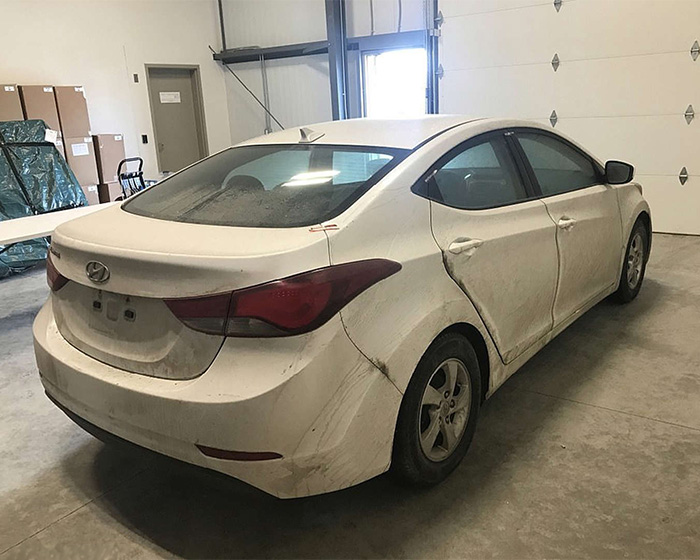
One of the first things that confused TheClassics was how the documentary connected a white Hyundai Elantra to Kohberger.
According to the Redditor, "There are a lot of white Hyundais out there. Why him? Where did his name actually come from?"
They felt the documentary spent plenty of time explaining how the FBI narrowed down the make and model of the car, only to suddenly jump to, "...and then we got a name: Bryan Kohberger,” without showing viewers what happened in between.
Several other commenters agreed that the documentary glossed over that part of the investigation.
One commenter suggested watching One Night in Idaho on Amazon Prime, writing that it “answers all of your questions.”
They explained that Washington State University police identified Kohberger after finding he owned a white Hyundai matching the description released by investigators.
From there, detectives reportedly learned he had recently driven to Pennsylvania, had been stopped by police during the trip, and changed his vehicle registration from Pennsylvania to Washington just days after the killings.
As the commenter noted, "None of that proved guilt, but it made him a strong investigative lead."
Others weren’t convinced, however.
One Redditor argued that police “identified” the car only after receiving Kohberger’s name as a tip and claimed the Hyundai seen on surveillance footage appeared to have fog lights while Kohberger’s did not.
Reports released after Kohberger’s arrest also filled in details the documentary barely touched on.
According to CNN, investigators watched Kohberger while he was staying at his parents' home in Pennsylvania, where a police source claimed he "cleaned his car, inside and outside, not missing an inch."
The same source said officers saw him wearing surgical gloves and placing trash into his neighbors' garbage bins.
DNA recovered from that trash was later linked to the knife sheath found at the crime scene, giving investigators enough evidence to seek an arrest warrant.
Another moment that left TheClassics scratching their head was the documentary’s claim that Kohberger bought the m*rder weapon on Amazon. While watching, they kept waiting for the film to explain how investigators knew that in the first place.
" Is there proof? Did they recover purchase records? Was it confirmed? I honestly don't know because the documentary never says. It just presents it as fact and moves on."
Several Redditors were quick to fill in the missing context.
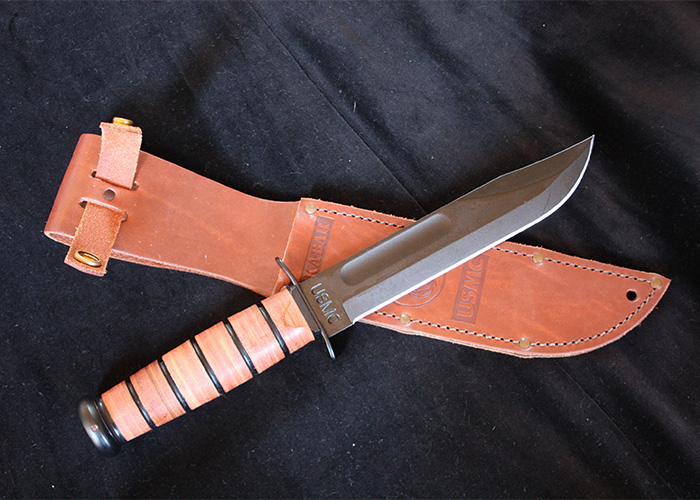
The same user who recommended watching One Night in Idaho replied that, "After Kohberger's arrest, investigators obtained warrants for his electronic devices and reportedly found Amazon purchase records showing he bought the Ka-Bar knife and sheath, shipped to his Washington apartment."
Another commenter added, "Once they had a name, they tracked his purchase of a Ka-Bar knife via an Amazon gift card using info from his search history, etc."
A third person noted that "it was mentioned in the documentary that they coordinated with Amazon to check on Bryan's account (purchase history). This is normal under an investigation, and under court order, Amazon needs to cooperate."
Recently released investigation records also offer more insight into the sheath itself.
Idaho State Police released photographs of the Ka-Bar knife sheath recovered from the bed where Madison Mogen and Kaylee Goncalves were found.
Investigators initially tried to recover fingerprints from the sheath but came up empty.
Instead, they turned to genetic genealogy, which eventually helped move the investigation forward.
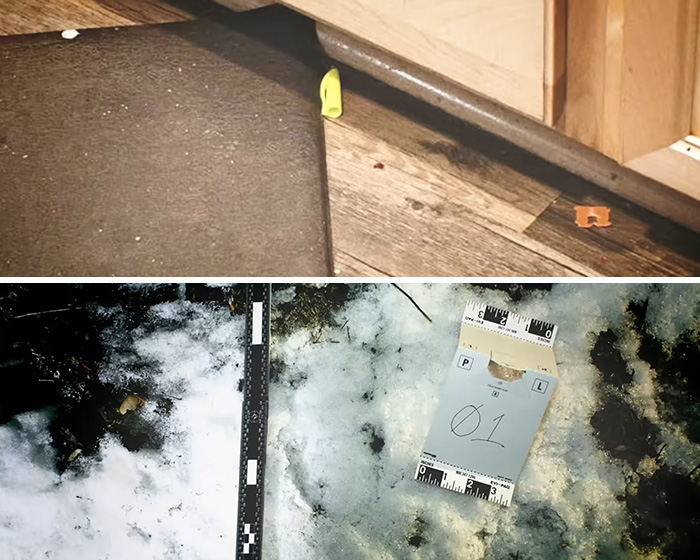
The newly released files also show detectives collected and tested dozens of other items, including evidence from the crime scene, trash recovered from Kohberger's family home in Pennsylvania, and parts removed from his white Hyundai Elantra as they searched for more DNA links.
The documentary's handling of the DNA evidence was another part that didn't sit right with TheClassics. They understood that investigators used genetic genealogy to identify a possible suspect, but felt the documentary treated it as if it proved the entire case.
"The investigator even says the genealogy DNA wasn't admissible in court. They explain that the DNA pointed to someone who could be the son of the man whose DNA was collected from trash outside Bryan's parents' house. That sounds like something the cops use to generate a lead, not something a jury would ever hear. Yet the documentary treats it like the smoking gun. As someone who knew nothing about the case beforehand, it came across as... pretty inconclusive."
Many Redditors responded by saying the documentary may not have explained the difference between investigative DNA and trial evidence clearly enough.
One commenter wrote, "The DNA: Investigators first used investigative genetic genealogy to identify the suspect as a male relative of Bryan Kohberger's father. That wasn't trial evidence—it was used to generate a lead. After Kohberger's arrest, police collected his DNA, which matched the DNA found on the knife sheath."
Another user explained why the genealogy search mattered in the first place, saying, "That's what the genealogy does. They could have a whole family tree on file without you even knowing just because a couple of your cousins submitted DNA years ago. The docu treated it like a smoking gun because at this point, everything hinged on being able to link Bryan to the crime, and that was the only thing they had: the blood found on that sheath that had DNA that didn't belong to anyone in the house."
A third commenter felt the documentary actually covered the process, writing, "They explained that the genealogy discovery wouldn't be admissible, hence why they collected trash from his parents' house. The trash DNA matched the sheath DNA."
Not everyone was completely convinced, though.
One Redditor questioned whether a single attacker was responsible, arguing, "It's odd to think there weren't multiple perpetrators because if one knife was used, the first victim's DNA would be in the second victim, etc., and it wasn't."
After Kohberger was arrested, TheClassics expected the documentary to mention a direct DNA comparison between Kohberger and the knife sheath found at the crime scene. When that explanation never came, it left them wondering if such a match had ever happened.
"After Bryan was arrested, I kept waiting for the documentary to say, 'Once in custody Bryan's cheeks were swabbed for DNA, and that DNA was a match for the DNA on the sheath.' That never happened. What? I'm not an idiot. To me that says, 'Bryan's DNA didn't conclusively match the sheath.' Or did it match, and the documentary left that out?"
Many Redditors replied that the documentary either skipped over that detail or didn't spend enough time explaining it.
One user responded simply, "After his arrest, they did swab BK and matched his DNA to that on the sheath." Another added, "He was swabbed upon arrest, and DNA compared."
The newly released case records back up those responses.
Court documents showed that investigators took a cheek swab from Kohberger after his arrest and directly compared it to the male DNA recovered from the Ka-Bar knife sheath found beside Madison Mogen's body.
According to the documents, the DNA profile was 5.37 octillion times more likely to belong to Kohberger than to a random person, providing a direct match rather than just a family connection.
The DNA itself was also far stronger than many people believed.
Othram founder David Mittelman, whose company helped investigators through genetic genealogy, pushed back against reports that it was merely "trace DNA."
"The DNA evidence was amazing… There was tons of DNA by the way…I don't know why it's been reported it was trace DNA. It was not. It was tons of DNA,” Mittelman told Fox News at the ComicCon 2025 conference.
He also said there was "certainty in the quality of the DNA" and that investigators had "more than enough information" to build the family tree that ultimately led to Kohberger.
Still, not everyone in the discussion accepted that explanation.
One Redditor argued, "Does the doc even mention that they couldn't find a SINGLE drop of blood, hair, fibers or DNA in his car or his apartment?... They got nothing on this dude but a pipe dream."
Another moment that left TheClassics puzzled involved surviving roommate Dylan Mortensen's testimony.
The documentary mentioned that she saw a man inside the house and that they supposedly "locked eyes," but, according to the Redditor, it never really explained what happened next.
"The roommate says she saw someone in the house. The documentary even says they 'locked eyes', and then she went back into her room. And then... it just moves on. What? How is that not one of the biggest pieces of evidence to discuss? I felt like there had to be more context that the documentary wasn't giving."
That reaction was shared by many first-time viewers, especially because Dylan's account became one of the most talked-about parts of the entire case.
Many Reddit users argued that the missing piece was trauma and how people react during terrifying situations.
One commenter explained, "Roommate's testimony and why they didn't call that night... In short - shock." The user said Dylan woke up to strange noises, believed she heard Xana crying, opened her bedroom door several times, and eventually saw "a man dressed in black walk past her."
According to the commenter, she locked her door before later going to Bethany Funke's room downstairs.
The same Redditor added that Dylan later questioned whether what she had seen was even real because "she'd been asleep and had been drinking all day."
They concluded, "While her reaction seems unusual, trauma can cause people to freeze, rationalize what they experienced, or doubt their own memories... The brain has to decide if they are witnessing a real-life horror movie or misunderstanding college craziness, and it chooses the latter."
However, not everyone accepted that explanation.
One skeptical commenter wrote, "The roommate who locked eyes with the killer basically says she was scared and locked herself in her room, then ran down to the first floor and went to sleep. Phone records proved that was a lie; she was awake for hours afterward."
The same user questioned why she continued describing Xana as unconscious, adding, "We will never know, because the cops refused to ask her those hard questions."
Others looked at the testimony differently and believed it suggested the killings were never meant to involve everyone inside the house.
As one Redditor put it, "I don't think he planned on killing all in the house. It seemed more targeted and controlled, and his plan just got off track. He didn't break down any doors or break in."
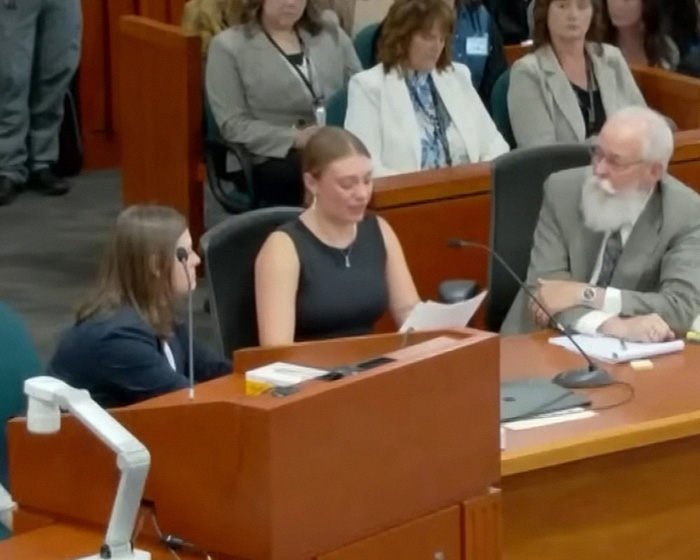
The sentencing hearing also showed just how deeply that night affected the surviving roommates.
In a statement read on behalf of Bethany Funke, she said, "That was the worst day of my life, and I know it always will be."
She also admitted she still fears for her safety, saying she was terrified "the person who did this would come for me next."
Dylan Mortensen described the emotional toll in even greater detail.
"What happened that night changed everything," she told the court.
She said the murders stole birthdays, graduations, and countless future memories with her friends. She also revealed she continues to suffer severe panic attacks.
"I made escape plans everywhere I went... Then there were the panic attacks, the kind that slam into me like a tsunami. I can't breathe, I can't think, I can't stop shaking."
She ended her statement by saying that although she is still rebuilding her life, "I'm still putting myself back together. Piece by piece."
One of the biggest questions raised by TheClassics wasn't about DNA or evidence. It was about time.
The documentary suggested the killer entered the house, moved through multiple floors, killed four people, and left again in roughly eight to ten minutes. For the Redditor, that sounded almost impossible.
"The documentary says Bryan entered an unfamiliar house, navigated multiple floors, murdered four people, including pursuing one of them, and got back out in under ten minutes? That's an incredibly tight timeline, and the documentary zooms past this point instead of establishing how it could be done."
According to the probable cause affidavit, investigators believe the killings happened between 4:00 a.m. and 4:25 a.m.
Security footage captured a white Hyundai Elantra entering and leaving the neighborhood during that period, while Dylan Mortensen told police she saw a masked man walking toward the sliding glass door before he disappeared into the night.
Prosecutors later narrowed the actual attack to roughly eight to ten minutes inside the home.
Many people on Reddit argued that, disturbing as it sounds, the timeline is not as unrealistic as it first appears.
One commenter wrote, "An 8–10 minute timeline is highly plausible. Three of the victims were asleep when attacked, Kaylee woke and tried to defend herself, and Xana was the only one out of bed who actually had the opportunity to fight back. Which means the whole thing happened fast."
The same user added that investigators believe "Kohberger had previously been inside the house or had familiarized himself with its layout," which could explain how he moved through the home so quickly.
Another Redditor shared a similar theory, saying, "I think Bryan had been surveilling them and even ventured inside to get a layout of the apartment. Must've been just an exercise for him."
While investigators have not publicly confirmed he had entered the house before the murders, prosecutors have alleged he repeatedly visited the neighborhood before the attack. Phone records were cited as part of that claim.
Not everyone agrees with the prosecution's timeline, however.
Cellphone geolocation expert Sy Ray, who reviewed Kohberger's phone records for the defense, has publicly argued that investigators presented only a small portion of the available data.
Calling the prosecution's timeline "incredibly misleading," Ray claimed authorities relied on "closer to 8 percent" of the available cellphone records while leaving out GPS information that he believes tells "a completely different narrative."
He also said the GPS data provides a detailed turn-by-turn route of Kohberger's movements after the killings and argued that the full records should have been presented rather than selected portions.
At the same time, Ray has also made it clear that questioning the timeline does not automatically mean Kohberger is innocent.
As he put it, "Bryan Kohberger can be, and the criminal investigation surrounding this can be extremely flawed. Both of those things can be true at the same time."
The final point raised by TheClassics wasn't about DNA or timelines. It was about how the documentary portrayed Bryan Kohberger himself.
The Redditor felt much of the documentary focused on his personality rather than actual evidence.
"Outside of the DNA discussion, the documentary spends a lot of time suggesting Bryan was just... weird? Another student says he asked too many questions in class. He didn't have social media. Okay, and? Why are we interviewing this person? What does any of that have to do with whether he committed four murders? It certainly isn't providing a motive."
Many viewers agreed that simply being socially awkward doesn't prove someone committed a crime.
But others argued the documentary wasn't trying to present those traits as evidence.
Instead, they believed it was providing background that investigators thought could help explain a possible motive.
One Redditor responded, "Details about Kohberger's personality, like being socially awkward, perceived as creepy and misogynistic, weren't evidence of guilt. They were included to provide background and to show a pattern of behavior towards women that could speak to motive."
Police interviews released after the case reveal that some classmates described Kohberger as far more than just an awkward student.
One fellow doctoral student told investigators she believed "he committed these homicides because he wanted to know what it felt like to commit these crimes... and ultimately if he could get away with the crimes, further supporting his belief that he was smarter than others."
She also described him as "calculated" and "a narcissist," adding that despite seeing him nearly every day for a semester, "he had never displayed empathy toward another person."
According to Detective Sergeant Michael Van Leuven's interview summary, the classmate eventually concluded that Kohberger "always thinks he is the smartest person in the room" and often appeared resentful of other people's success.
Investigators also interviewed two women from Washington State University who claimed Kohberger repeatedly sought them out before the murders.
One bookstore employee told police he appeared at her workplace almost daily, somehow knew her name despite her never telling him, commented on her work schedule, and later she experienced several unsettling incidents outside her home, including someone knocking on her bedroom window at night.
Another student claimed Kohberger continued approaching her after she rejected his advances and told him she was a lesbian.
She said he appeared "almost daily" at her workplace, once made prolonged eye contact from outside while she was closing the building, and she ended up hiding in a bathroom until he left.
Around the same time, a neighbor warned her someone had been standing outside her window.
Police reports also noted that Kaylee Goncalves had reportedly told people she believed someone had been stalking her before she was murdered, although investigators never publicly confirmed who that person was.
Some Reddit users felt all of those details paint a much broader picture than simply describing Kohberger as "weird."
As one commenter put it, "He was more than just 'kind of weird'... His DNA was there, he owned that knife and sheath, his car was there, he deliberately turned his phone off... he went back the next day and then never went to Moscow again despite previously going there frequently."

How many posts are we going to see about this case? Are we advertising for Netflix now?

Why does this article start with 60 upvotes? Are you assuming it will downvoted that much? If so, why even print it?
Users posts do not get such a starting bonus, so they are quickly buried. Just one reason why we do not see people's contributions any more. I would like to see other stuff treated equally in the free but they make it so you have to dig, and that aspect of the website has died off.
Load More Replies... How many posts are we going to see about this case? Are we advertising for Netflix now?
Why does this article start with 60 upvotes? Are you assuming it will downvoted that much? If so, why even print it?
Users posts do not get such a starting bonus, so they are quickly buried. Just one reason why we do not see people's contributions any more. I would like to see other stuff treated equally in the free but they make it so you have to dig, and that aspect of the website has died off.
Load More Replies...






 No fees, cancel anytime