Get Premium
Dark mode theme is available exclusively for premium users. Learn more about the benefits of subscribing.
No fees, cancel anytime.

 Dark Mode Ad-Free Browsing Unlimited Content
 Ad-Free Browsing Unlimited Content Dark Mode
Join 1.2 million Panda readers who get the best art, memes, and fun stories every week!
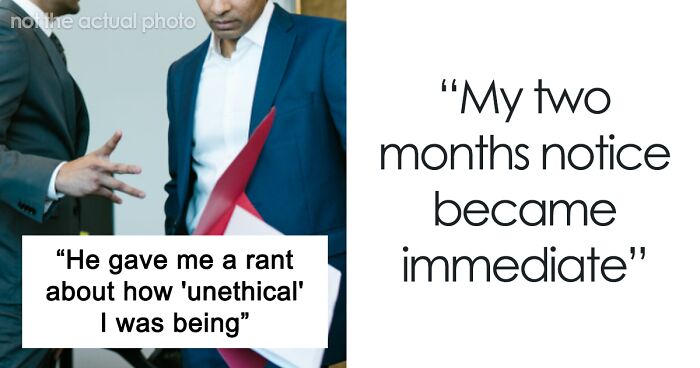
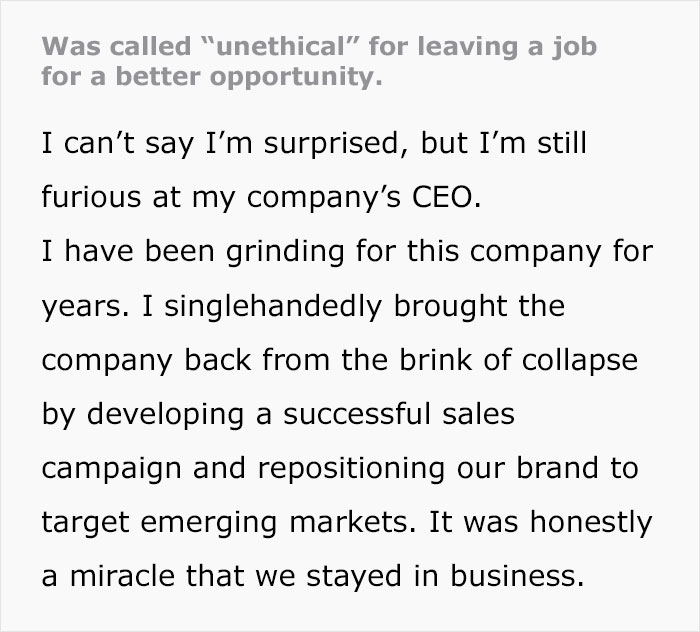
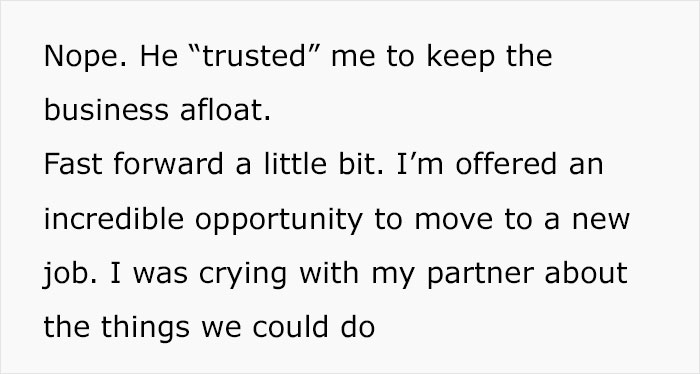
A man who goes online by the nickname Chamstar made a post on the popular subreddit r/AntiWork about quitting his job, and it went viral within the community as a prime example of greed.
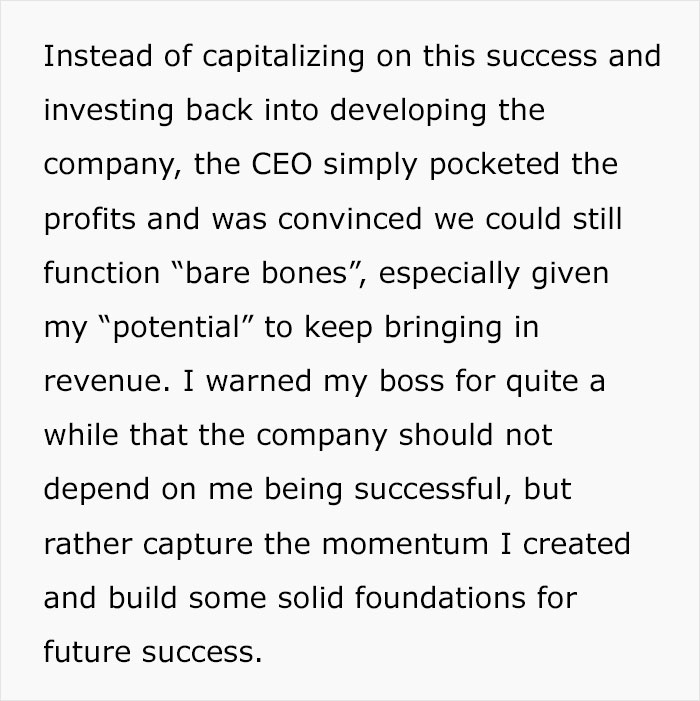
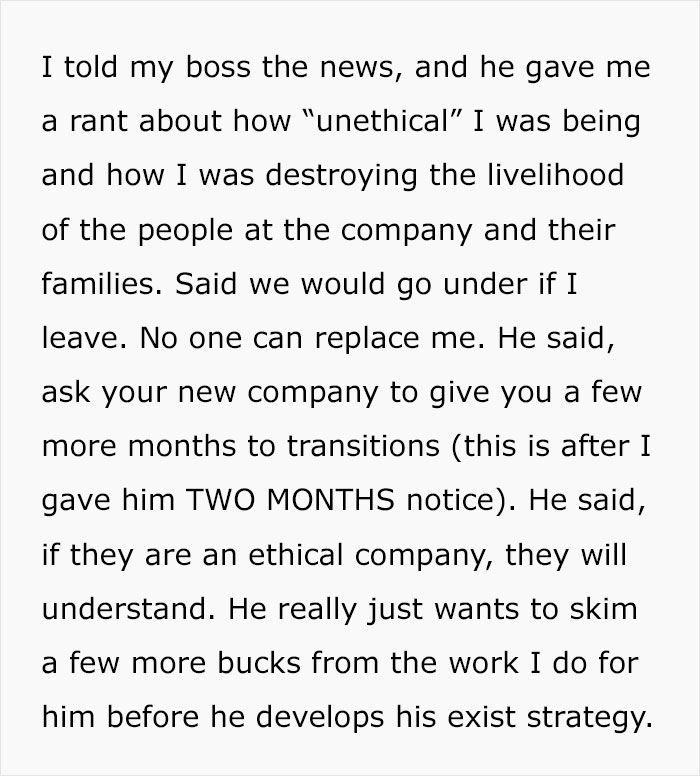
In it, Chamstar describes his toxic boss who cared only about profit and not the satisfaction of the employees nor the betterment of the company. Needless to say, it was just a matter of time before Chamstar decided to quit.
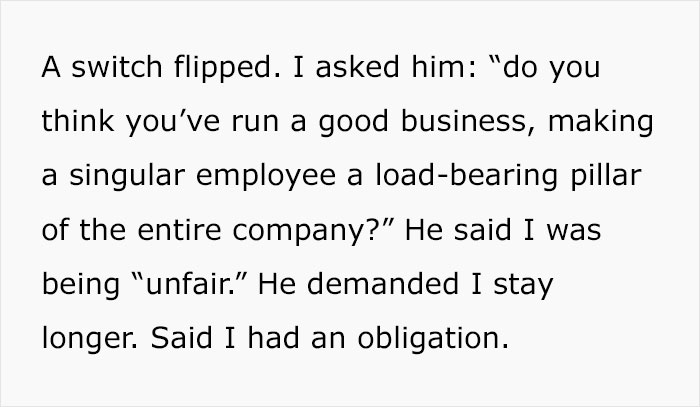
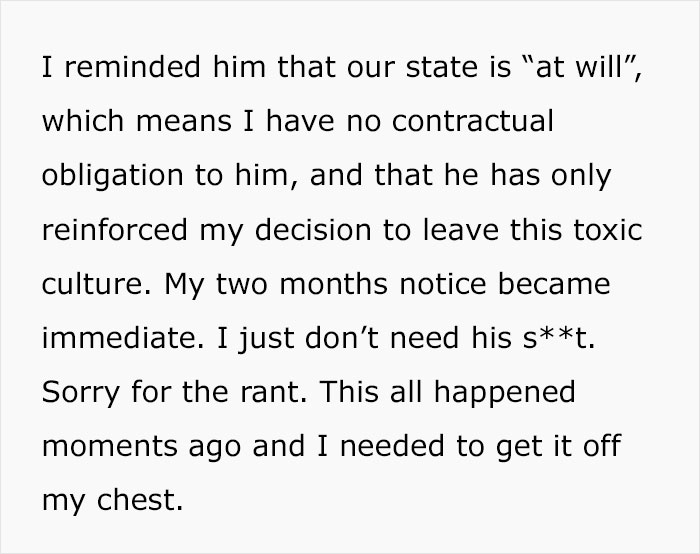
However, when the employee handed in his 2-month notice, the boss said he was being “unfair” and demanded he stay longer. You know, because business is all about being nice.
Image credits: Charles Deluvio (not the actual photo)
Judging by the look of today’s job market, Chamstar’s seat can be hard to fill. Quitting rates were high in August, September and October. Then, they climbed even further: more than 4.5 million people left their jobs voluntarily in November, a record high in two decades of tracking.
Economists explain the numbers by saying that competition for workers led to better pay and benefits, driving some — including Chamstar — to seek out new opportunities. But psychologists have an additional explanation: quitting is contagious.
“Workers continued to quit their jobs at a historic rate. The low-wage sectors directly impacted by the pandemic continued to be the source of much of the elevated quitting,” Nick Bunker, director of research at the Indeed Hiring Lab, told CNN.
But positions in finance and insurance, as well as in the federal government, increased in November.
Jelena Kecmanovic, who is the founding director of the Arlington/DC Behavior Therapy Institute and an adjunct professor of psychology at Georgetown University, says there are six helpful questions that might allow a person to assess whether it’s time for them to move on from their job:
However, your mental fulfillment might need something more. “Keep in mind that a job change isn’t guaranteed to bring happiness, as two 2021 studies demonstrated,” Kecmanovic wrote in The Washington Post.
“German research showed that workers who quit their jobs to become self-employed had lower well-being after making the change than they had predicted. And an Australian study found that a year into a job change, employees had lower job satisfaction than before leaving.”
Let’s hope that everything works out for Chamstar.
255Kviews
Share on Facebook
I once worked for a large Swedish furniture chain and was one of two people trained to do the computer orders. One morning, one afternoon shift. Five of us in the logistics office including three management. First year asked for pay rise from normal floor rate I started at. No. Second year asked again. No. But the three management all got rises. Quit with one weeks notice. "Can you stay longer?" "Will you pay me more?" "No" "Bye"

I'm still scratching my head. They asked you to stay longer but refused to give you a raise? Bunch of morons.
Load More Replies...
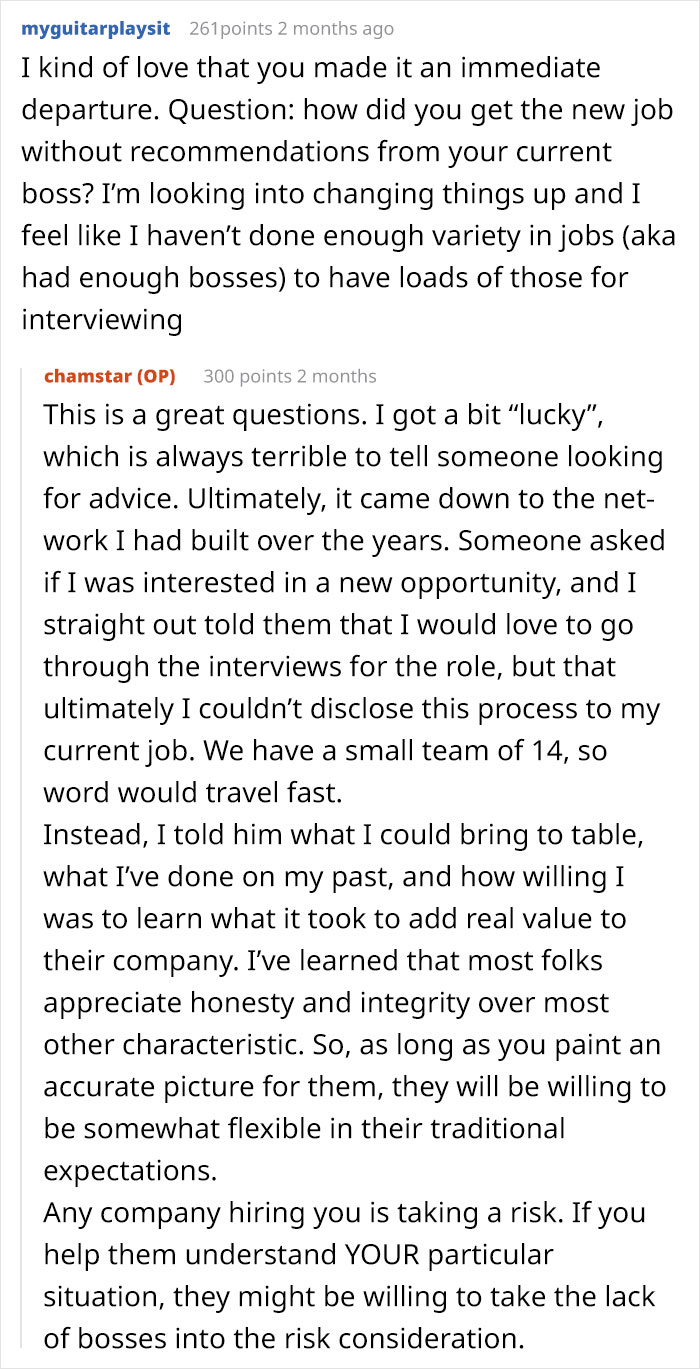
I don't the comment asking how to get a job without recommendations from your current boss? In the UK a hiring company will usually only ever contact your references AFTER they have offered you the job- making the offer "subject to references". I've been for many, many interviews over the years without my then-manager ever finding out about me intending to leave their employment. I've also used the process a few times to go back to my current manager and say "match this offer or I walk" too. I assumed that was how it happened everywhere!

It's good practice for a hiring company to ask permission before calling your references, but if they have the contact info then they *could* do it without asking, so it's a reasonable fear for someone. It's best to only have your references 'available by request,' which will force the conversation about discretion.
Load More Replies...
If you bust your ass, do a great job, bring in lots of investment and cash flow, the company (if you have a bad one) will consider that it's your job to keep doing so. They will enjoy the success you brought, coast on the merits you earned and complain when you leave. They will not learn a lesson, improve the company to to point that the company (not an individual) is bringing in those benefits. Worse, it'll always be your fault (because the boss is never wrong).
I once worked for a large Swedish furniture chain and was one of two people trained to do the computer orders. One morning, one afternoon shift. Five of us in the logistics office including three management. First year asked for pay rise from normal floor rate I started at. No. Second year asked again. No. But the three management all got rises. Quit with one weeks notice. "Can you stay longer?" "Will you pay me more?" "No" "Bye"
I'm still scratching my head. They asked you to stay longer but refused to give you a raise? Bunch of morons.
Load More Replies... I don't the comment asking how to get a job without recommendations from your current boss? In the UK a hiring company will usually only ever contact your references AFTER they have offered you the job- making the offer "subject to references". I've been for many, many interviews over the years without my then-manager ever finding out about me intending to leave their employment. I've also used the process a few times to go back to my current manager and say "match this offer or I walk" too. I assumed that was how it happened everywhere!
It's good practice for a hiring company to ask permission before calling your references, but if they have the contact info then they *could* do it without asking, so it's a reasonable fear for someone. It's best to only have your references 'available by request,' which will force the conversation about discretion.
Load More Replies... If you bust your ass, do a great job, bring in lots of investment and cash flow, the company (if you have a bad one) will consider that it's your job to keep doing so. They will enjoy the success you brought, coast on the merits you earned and complain when you leave. They will not learn a lesson, improve the company to to point that the company (not an individual) is bringing in those benefits. Worse, it'll always be your fault (because the boss is never wrong).



































 No fees, cancel anytime


















121
39