Get Premium
Dark mode theme is available exclusively for premium users. Learn more about the benefits of subscribing.
No fees, cancel anytime.

 Dark Mode Ad-Free Browsing Unlimited Content
 Ad-Free Browsing Unlimited Content Dark Mode
Join 1.2 million Panda readers who get the best art, memes, and fun stories every week!
28submissions
Finished

The English language is a tricky matter of business. Whether you came into this world speaking your native tongue from day one or just got on board, many aspects of English are confusing and even ridiculous. The spelling, the grammar, the pronunciations, the meanings that contradict one another, and — obviously — the exceptions to every rule. Even when you memorize everything to a T, you somehow manage to mess something up in the most mortifying way.
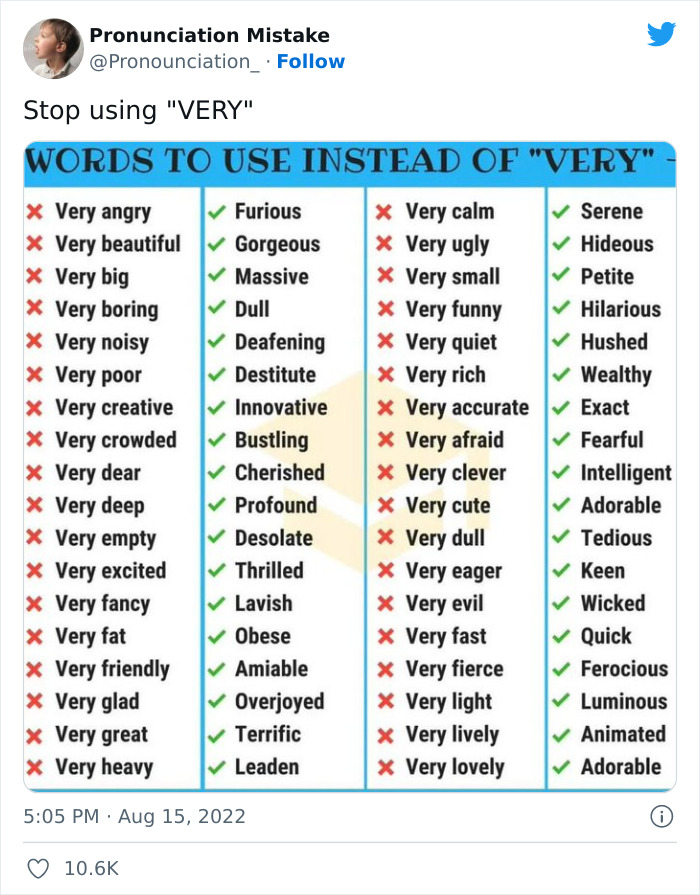
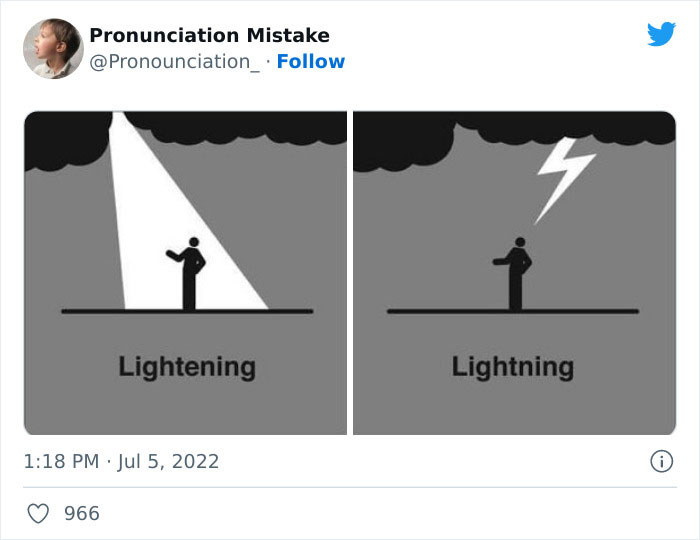
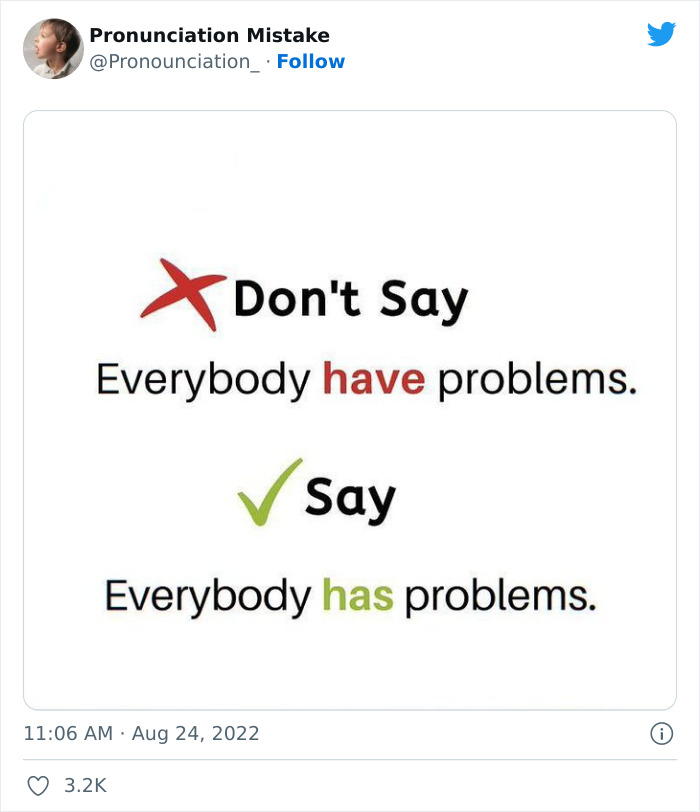
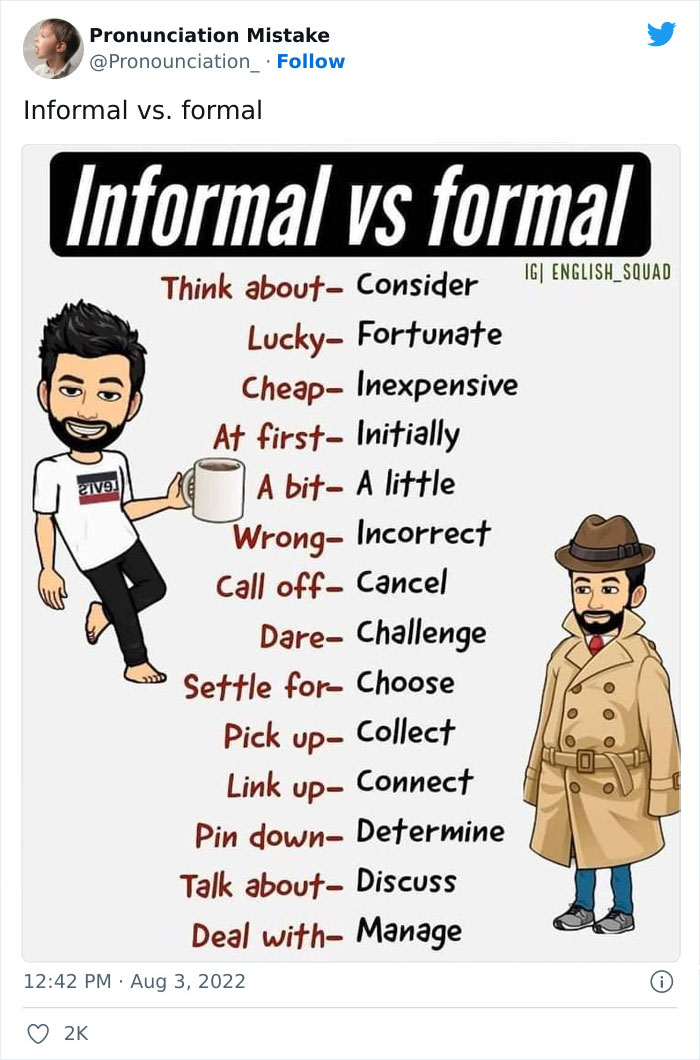
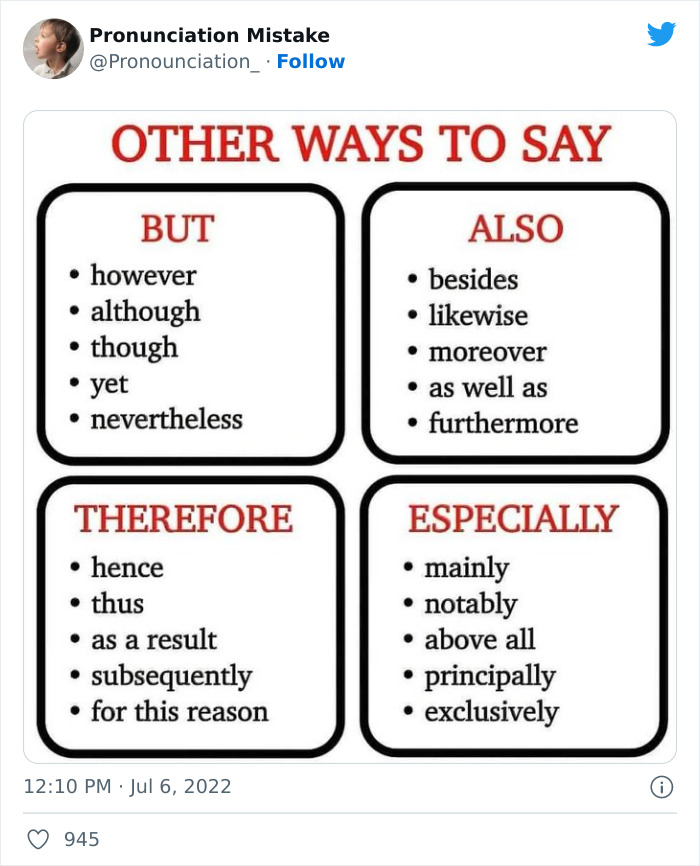
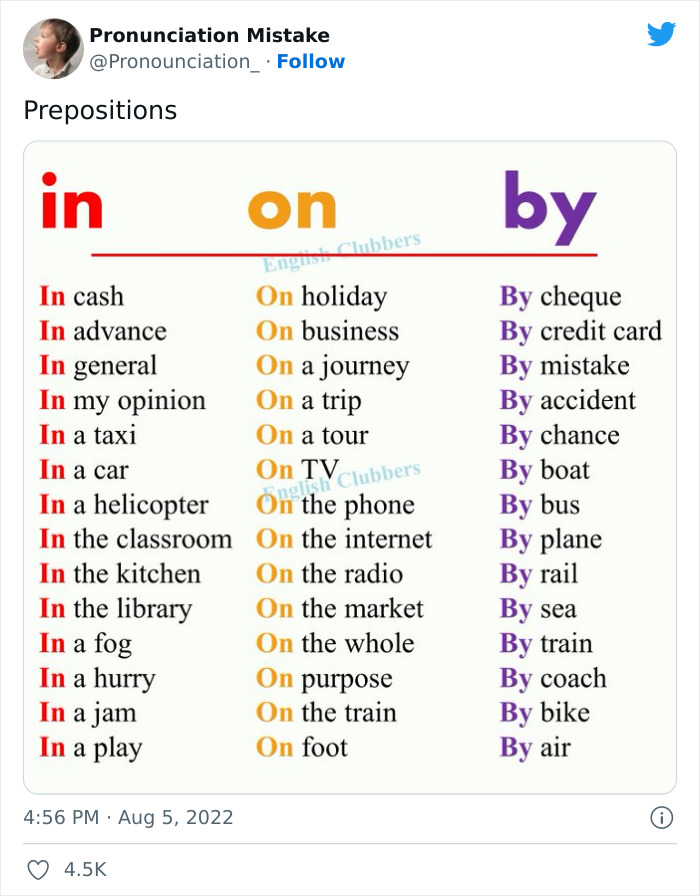
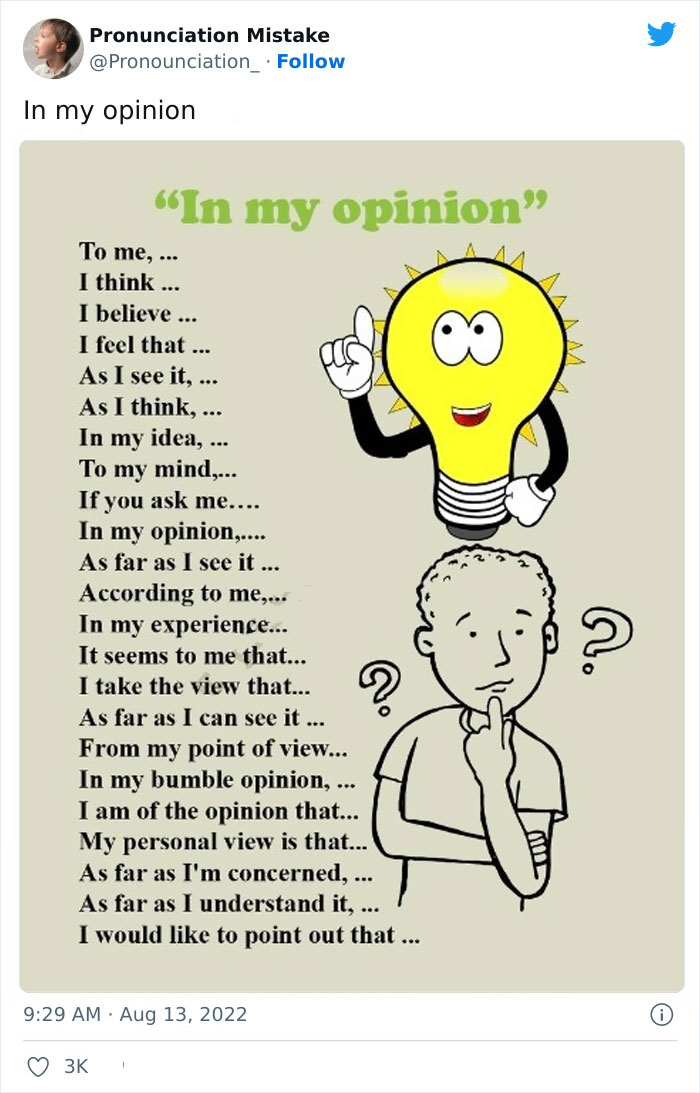
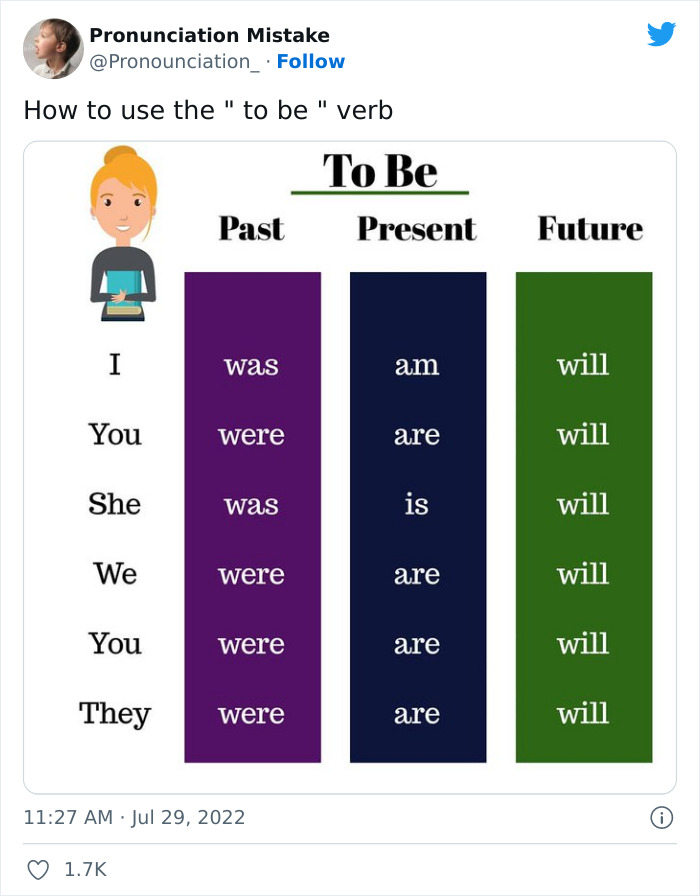
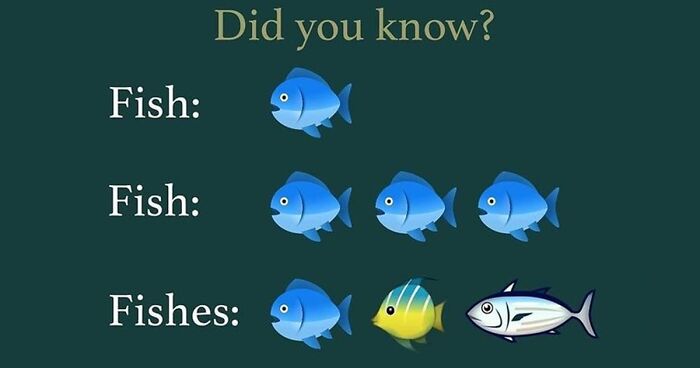
I mean, I still lapse into cons-cienc-ious when I'm distracted. And let’s face it, the word necessary is so unnecessarily hard to spell. I mean, how many Cs and Ss do you really need?! But while these blunders may bruise my confidence, they also spark an interest to know more. So allow me to introduce you to one enlightening corner of Twitter called 'Pronunciation Mistake'. With a huge community of more than 212k followers, this social media project is dedicated to the most informative and useful tips for anyone trying to improve their English.
So grab a pen and a notebook because our linguistics-loving team here at Bored Panda has gathered some of their best posts to take your skills to the next level. Scroll down to have a read, upvote your favorite posts, and be sure to share your own experience with the wild ride that is the English language in the comments below.
Click here & follow us for more lists, facts, and stories.
This post may include affiliate links.
Although the 'Pronunciation Mistake' project was founded only in May, it has already gained a strong foothold on Twitter. In just a few months, it has grown into a popular outlet that focuses on sharing helpful language advice for anyone willing to learn. At the time of writing, the account has amassed more than 212k devoted fans trying to elevate their English skills to another level.
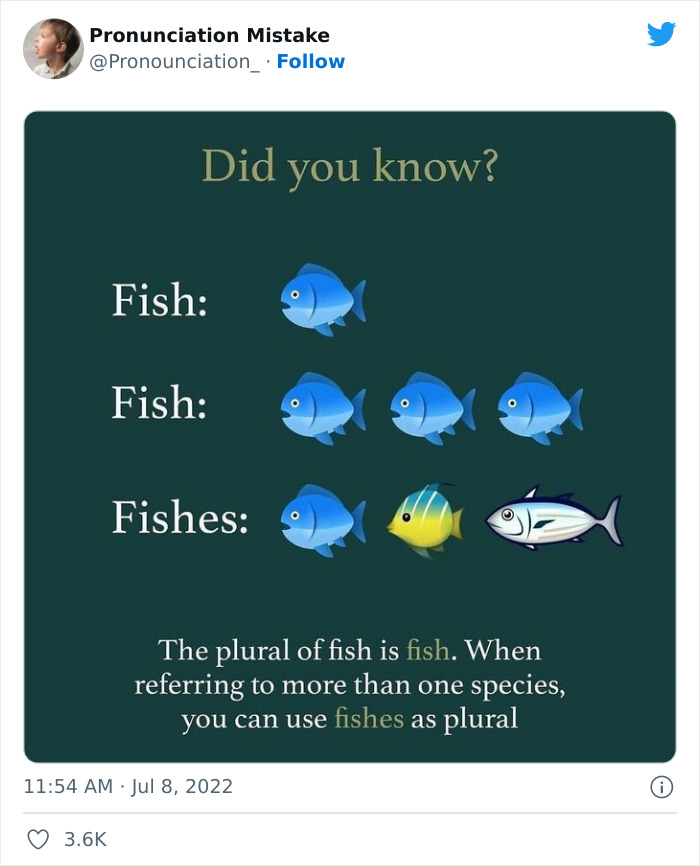
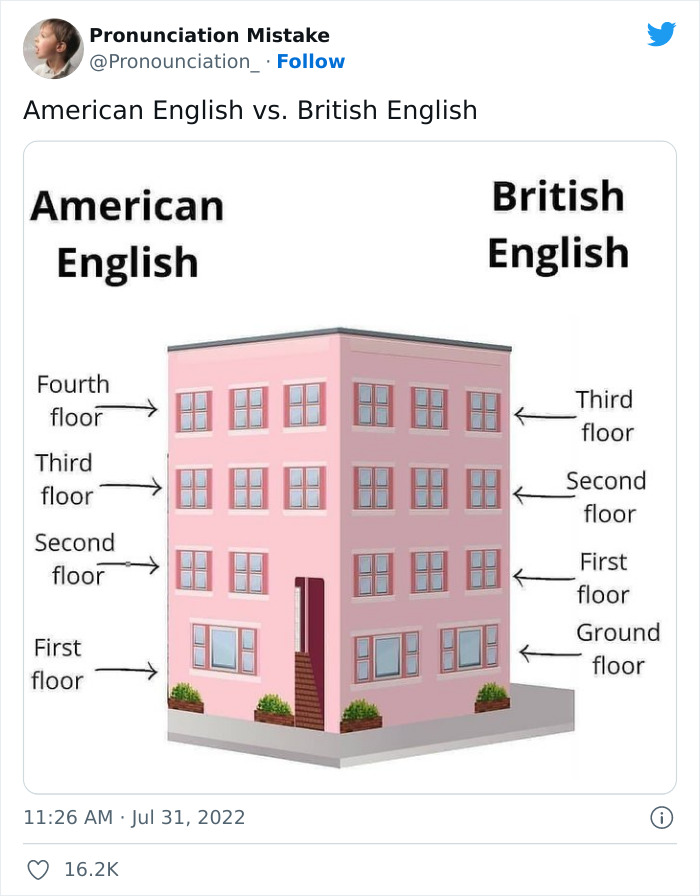
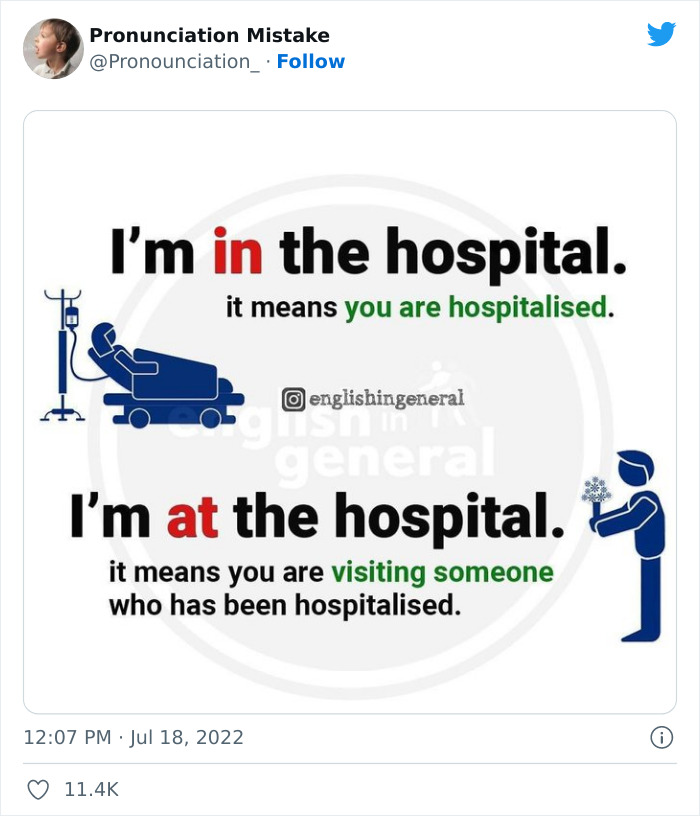
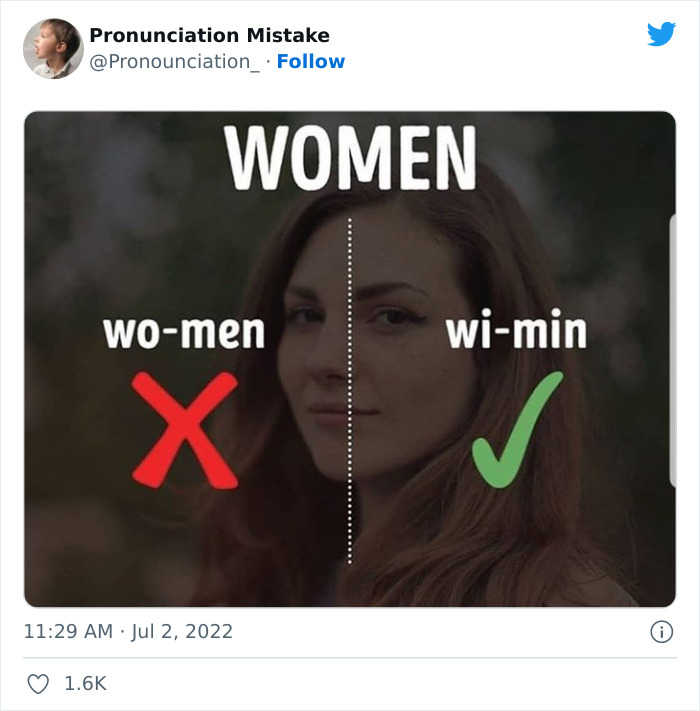
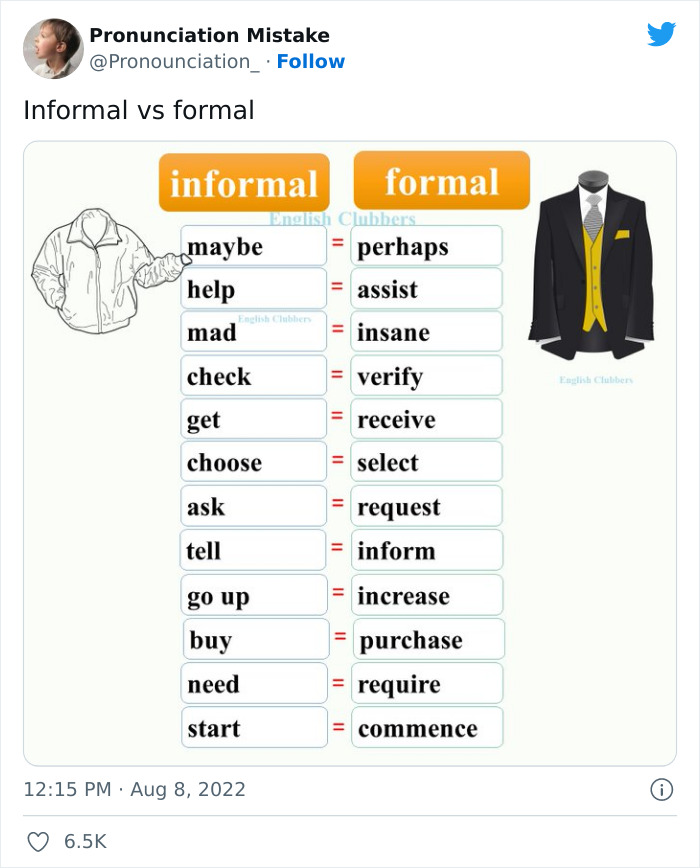
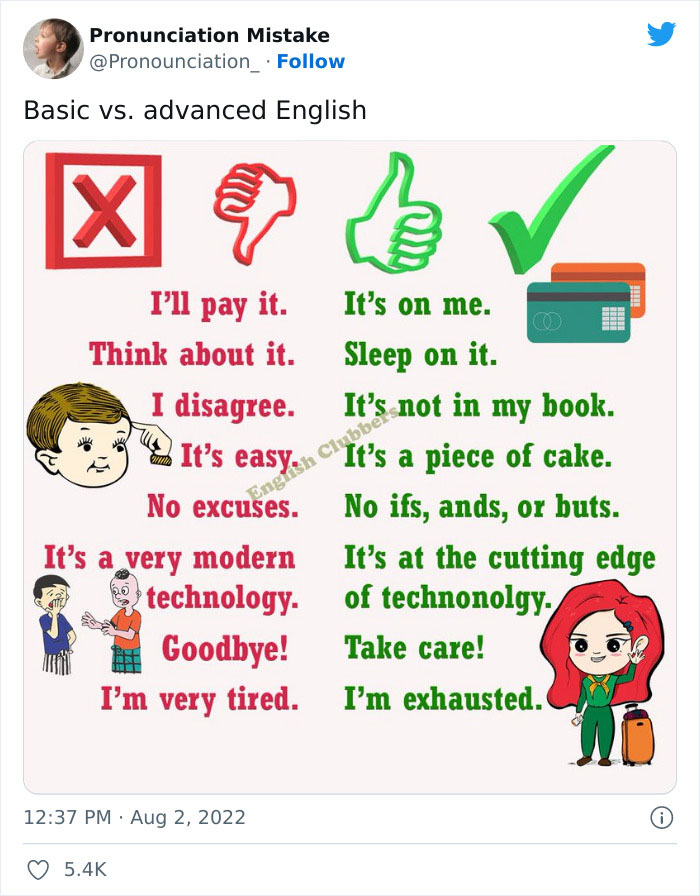
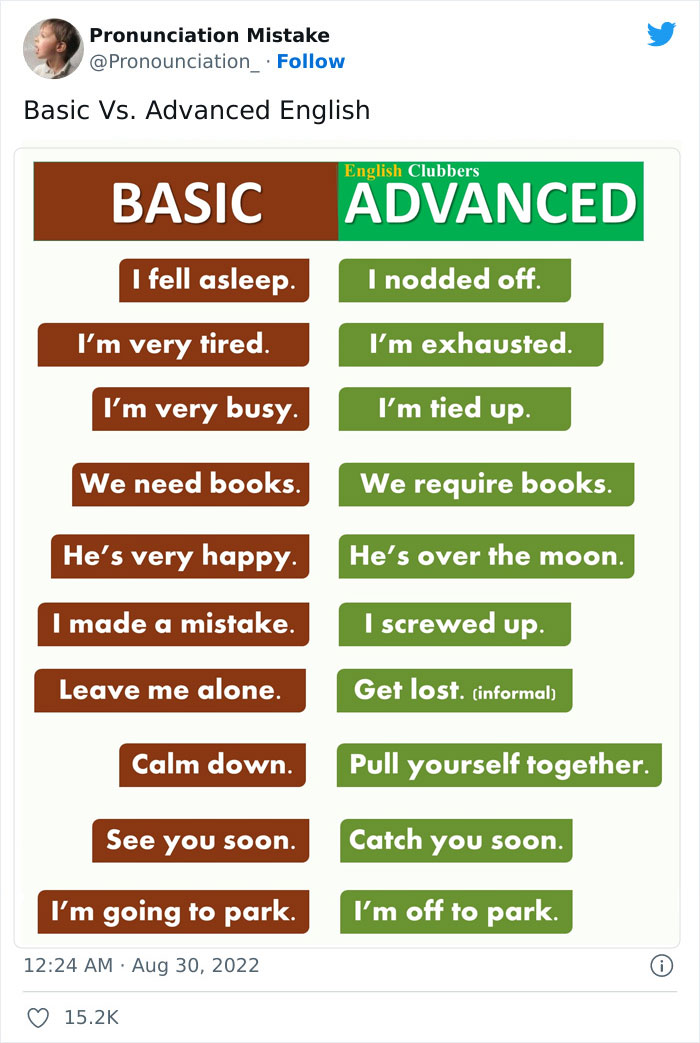
As the creator plainly states in the bio, "Pronunciation is the way in which a word or a language is spoken." While this is absolutely true, a brief scroll through this list will show you pronunciation blunders are not the only thing they’re after. The account has been branching out to feature an array of different tips and tricks, from spelling and grammar to the many exceptions this beautiful language has to offer.
English is the most widely spoken language across the globe. According to Statista, there were a mind-bending total of around 1.5 billion people worldwide who spoke English either natively or as a second language. This is slightly more than the 1.1 billion Mandarin Chinese speakers, while Hindi and Spanish accounted for the third and fourth most widespread languages this year.
The reason behind this is that our world has become hyper-connected, and English has gained a position as the dominant language of global communication. Thanks to the internet, the spread of English has almost certainly accelerated.
No other language has ever been used so widely or stretched across a greater portion of the planet. It has become synonymous with opportunity, a means to reach the realms of education and global business. It has become the language of international commerce, science, diplomacy, and so much more.
But everywhere it goes, it tends to leave a trail. Its mark can be easily traced in the way its vocabulary has infiltrated so many other languages. As Jacob Mikanowski explained in a piece in the Guardian, English has become an exporter of words. For example, researchers at the IULM University in Milan have noticed that, in the past 50 years, Italian syntax has shifted towards patterns that mimic English models. Moreover, both German and Swedish languages are increasingly adopting English grammatical forms and changing the rules governing word formation and phonology.
The influence of the English language is undeniable. But as every second language speaker knows, it is also full of weird oddities that are sometimes incredibly difficult to comprehend. Some words are spelled the same but pronounced differently, others sound alike yet have completely separate meanings, and these are just a few examples that make this tongue seem so challenging.
Sure, we absolutely adore the English language with all its twists and turns and quirky in-betweens, even when they are hard to grasp. To improve your level, you must dedicate time and effort and be comfortable with failing. You will mess up sentence structures, passive voice, genders, and even forget the simplest words. It’s a fact. But while it's easy to feel discouraged, it won’t take long to realize that it's the only efficient way to master a foreign language.
Previously, Bored Panda reached out to Dr. Lisa McLendon to learn more about the pitfalls of learning English, how to keep our linguistic skills sharp, and how social media affects our grammar. As the News and Information Track Chair at the University of Kansas School of Journalism and Coordinator at the Bremner Editing Center, she happily shared her insights.
According to her, some parts of the English language can be hard to learn for foreign students. But the difficulty often depends on the languages they already speak. For example, learning English as a native speaker of another Indo-European language (think Italian) might be easier than being a native speaker of a tonal language (think Vietnamese).
"For students whose native language lacks articles (a, an, the), articles are by far the hardest category of words to master. Verb tense/aspect is also really hard — the difference between 'I read,' 'I am reading,' and 'I do read' is nonexistent in many other languages," the professor explained.
Memorizing common words, however, won’t help overcome these difficulties. To truly elevate your skills, try to change your mindset and practice, practice, practice — repeat everything until it becomes second nature. "These don’t pose any difficulties for native speakers who use them correctly without even thinking about it," Dr. McLendon said.
But second language speakers are not the only ones messing up when it comes to English. An astonishing number of native speakers often make spelling and grammar mistakes such as mixing up 'there', 'their', and 'they’re' or 'your' and 'you're'. Dr. McLendon stated that they have other problems with English, too.
In her experience as an editor and a teacher, she has found that native speakers face issues with past passive participles in speech (e.g. saying 'I had went'). Meanwhile, in writing, they have problems with punctuation, homophones (peek vs. peak, etc.), and misplaced modifiers.
But even if you feel confident in your English, Dr. McLendon explained your journey isn’t over. "Read! Read widely and frequently. Read magazines, newspapers, novels, even cereal boxes."
"But be careful when scrolling through social media, which, although it can give you a good idea of current slang and shorthand, is often not a great model of clarity, accuracy, or good grammar," the professor concluded.


































 No fees, cancel anytime