Get Premium
Dark mode theme is available exclusively for premium users. Learn more about the benefits of subscribing.
No fees, cancel anytime.

 Dark Mode Ad-Free Browsing Unlimited Content
 Ad-Free Browsing Unlimited Content Dark Mode
Join 1.2 million Panda readers who get the best art, memes, and fun stories every week!
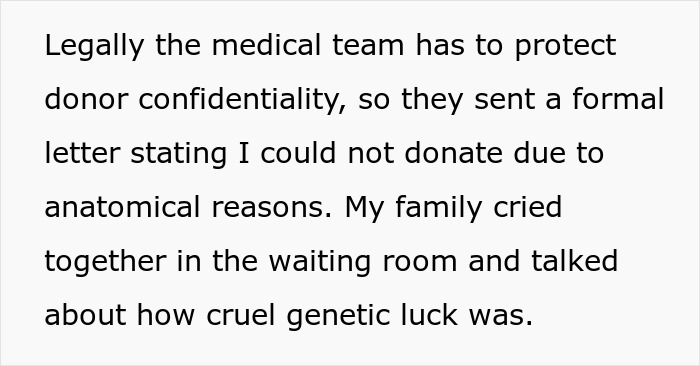
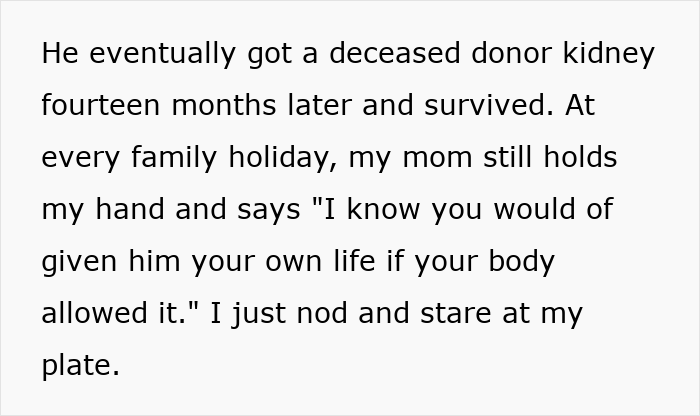
When a family member needs a kidney transplant, relatives may be asked to undergo testing to see if they can become a living donor. In this family, the older brother was dealing with kidney failure and urgently needed a transplant, putting his younger sister in an uncomfortable position.
The woman had a difficult relationship with her brother growing up, and that made the idea of becoming his donor quite complicated. When the hospital gave her the results of her screening, she had to decide how she wanted to handle the situation with her family.
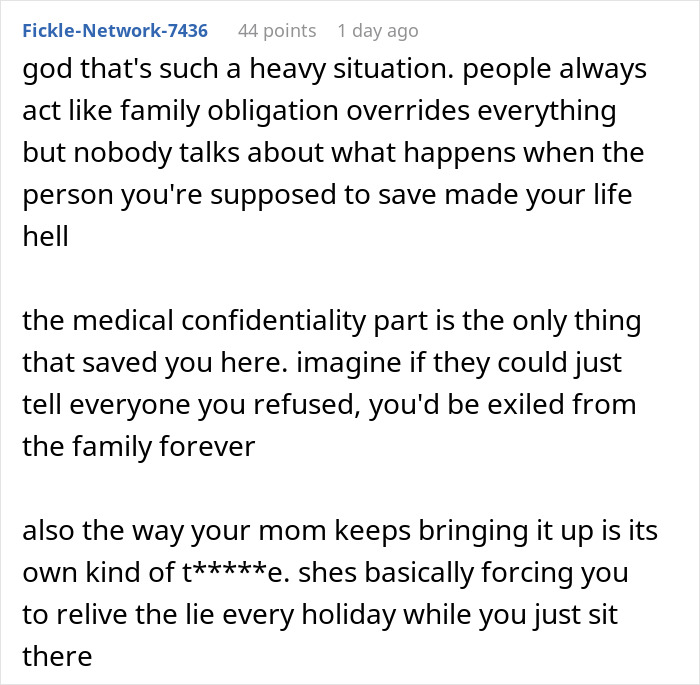
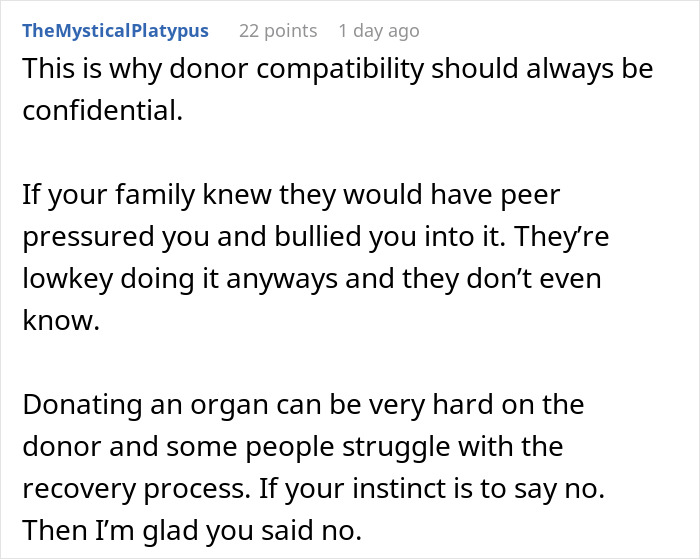
Being someone’s sibling can give you a strong sense of responsibility toward them, especially when their life is on the line. But medical professionals do not consider living kidney donation something a sibling is automatically obligated to do. The National Kidney Foundation emphasizes that potential donors must decide voluntarily and without pressure from anyone else.
That matters in a situation like this, where the donor and recipient already had a difficult relationship. Research on living kidney donation found that kinship can influence how freely people feel they can decide, even when nobody is directly forcing them to donate.
That is why HRSA guidance requires assessing the relationship between a potential donor and recipient when evaluating possible coercion or undue influence. The goal is to make sure the person genuinely wants to donate, even if they happen to be a close relative or a strong medical match.
One sibling may feel compelled to help because they are family, while another may view the relationship differently. Research involving sibling donors shows that family ties can bring responsibility, guilt, and obligation into this kind of decision. For this woman, that family connection also came with years of difficult memories.
Living kidney donation involves major surgery, and although healthy donors generally do well, the procedure still carries risks such as bleeding and infection. Experts also note that donors face a small long-term risk of kidney failure, which is why they are carefully screened before being allowed to donate.
Being a good match can improve the chances of a successful transplant, but it does not remove the risks for the donor. Tissue typing and crossmatching help doctors assess donor-recipient compatibility, with closer matches generally linked to a lower risk of rejection.
What happens after the transplant can also affect the donor-recipient relationship. One study found that donation can bring family members closer, but it can also lead to tension, guilt, resentment, or new expectations. These possibilities can be complicated when the relationship is already strained, as in this story.
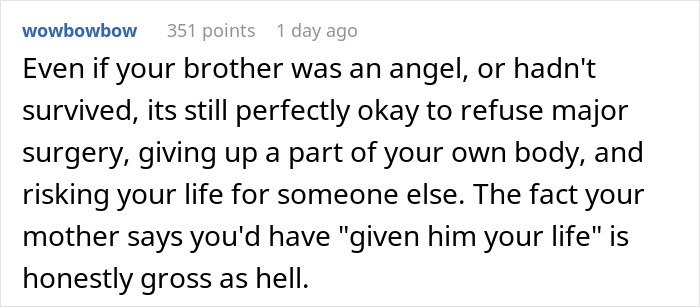
Also, saying no does not necessarily mean the recipient has no options. People with kidney failure can receive dialysis while waiting for a transplant, and a deceased-donor kidney may eventually become available. So while refusing to donate can be a difficult choice, it does not mean someone has to put their own health and well-being aside.
At the end of the day, being a perfect match does not automatically mean someone has to donate. This woman had to weigh a major medical decision against years of painful history with her brother.
Would you have made the same choice, or would you have felt differently knowing your sibling needed you? Let us know where you stand in the comments.






By entering your email and clicking Subscribe, you're agreeing to let us send you customized marketing messages about us and our advertising partners. You are also agreeing to our Privacy Policy.
Thank you! You've successfully subscribed to newsletters!


Liked the plot twist scenario that all of them were a match and all of them declined.

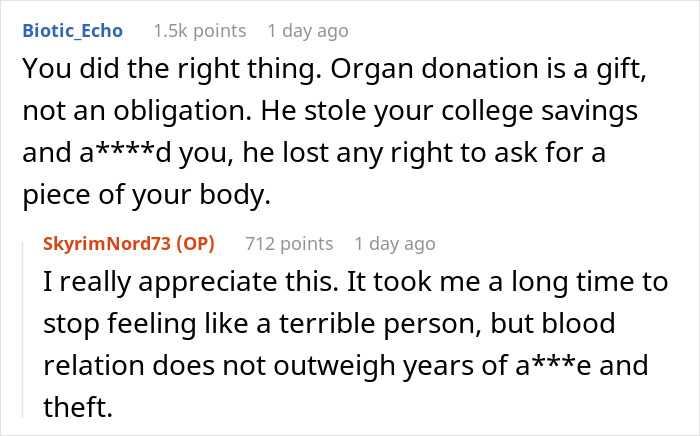
I think it's perfectly reasonable to refuse this very major surgery and long recovery followed by a lifetime of risk, even if you really like the person. I also think it's reasonable to go the route OP did and just tell the folks doing the testing that I'm being coerced and not really interested in doing it.

Hope her reply to mom was that now she knew which child her mother would save in a house fire. Throw the guilt back at her for saying your d***h would have been "reasonable" exchange for his life.
Liked the plot twist scenario that all of them were a match and all of them declined.
I think it's perfectly reasonable to refuse this very major surgery and long recovery followed by a lifetime of risk, even if you really like the person. I also think it's reasonable to go the route OP did and just tell the folks doing the testing that I'm being coerced and not really interested in doing it.
Hope her reply to mom was that now she knew which child her mother would save in a house fire. Throw the guilt back at her for saying your d***h would have been "reasonable" exchange for his life.











 No fees, cancel anytime





31
3