Get Premium
Dark mode theme is available exclusively for premium users. Learn more about the benefits of subscribing.
No fees, cancel anytime.

 Dark Mode Ad-Free Browsing Unlimited Content
 Ad-Free Browsing Unlimited Content Dark Mode
Join 1.2 million Panda readers who get the best art, memes, and fun stories every week!

Have you ever been in a situation where the expectations placed on you by family no longer seem to match the reality of how you were raised? Conflicts like these often emerge quietly over time, only becoming clear when life circumstances shift and long-term assumptions come to the surface.
This story explores one such case, where differing interpretations of independence, responsibility, and family duty collide. After being raised to be completely independent, when his parents could afford to fund his education today’s Original Poster (OP) set hard boundaries when his parents came back years later with an audacious demand.
More info: Reddit
Image credits: pressfoto / Freepik (not the actual photo)
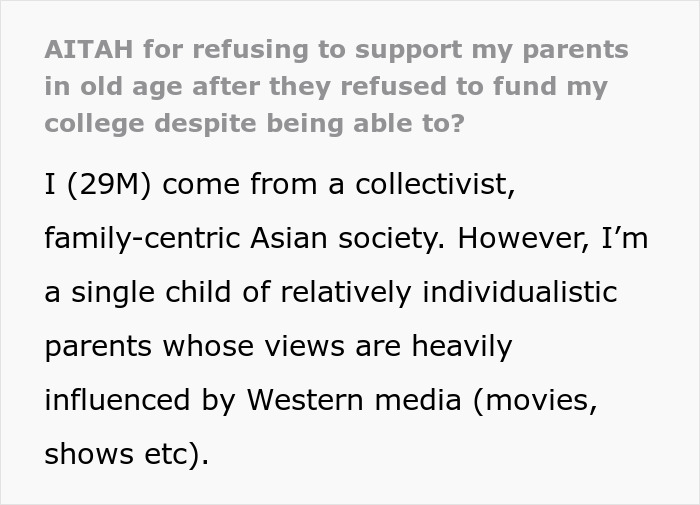
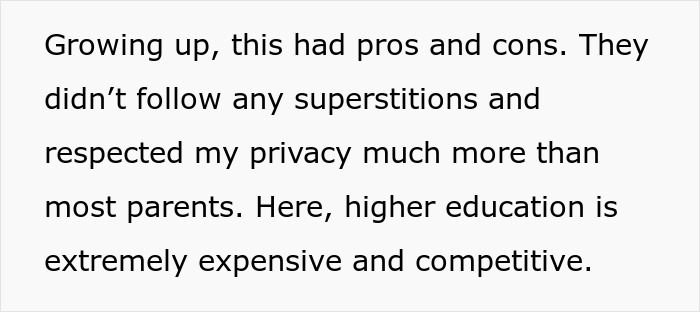
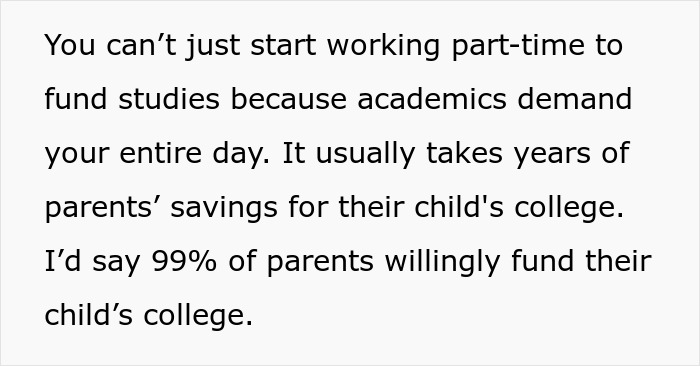
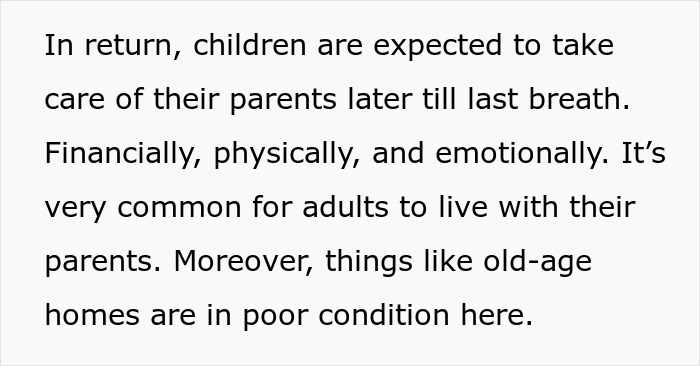
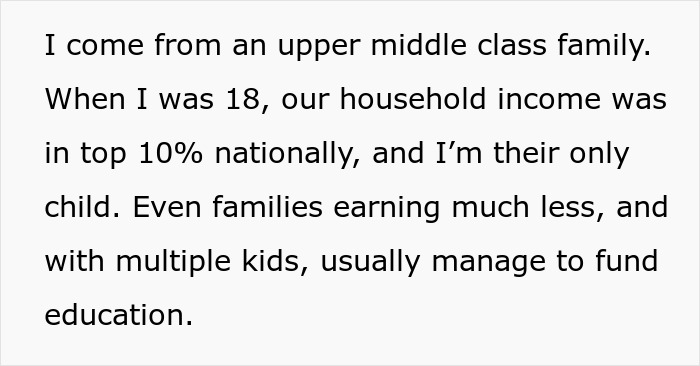
Image credits: dapor2560 / Freepik (not the actual photo)
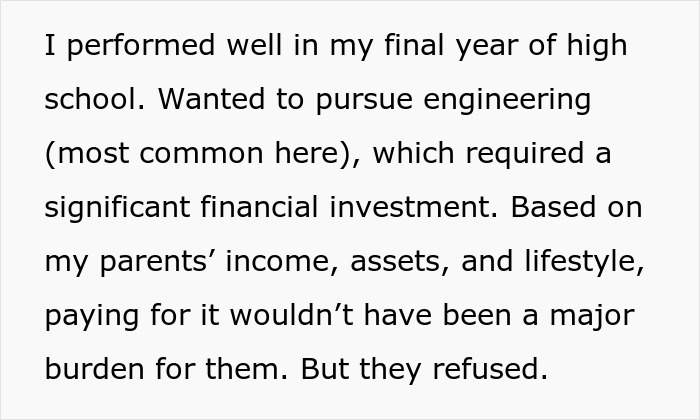
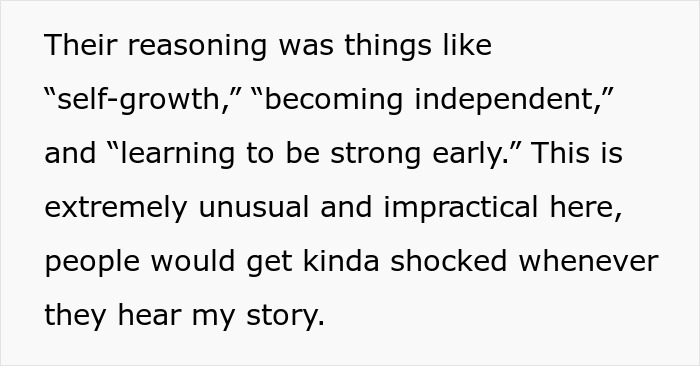
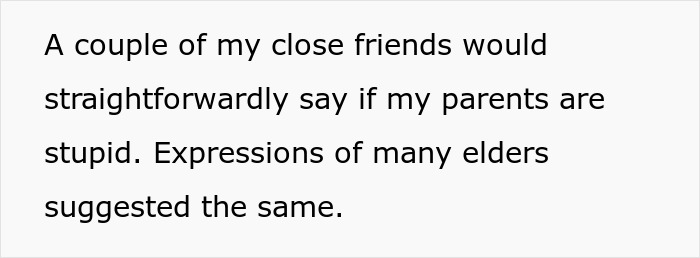
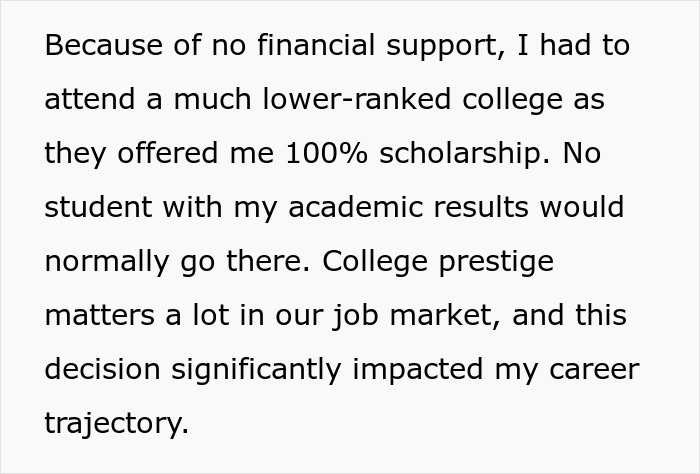
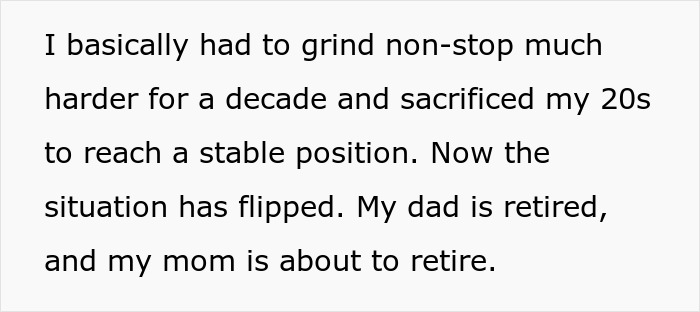
Image credits: wavebreakmedia_micro / Freepik (not the actual photo)
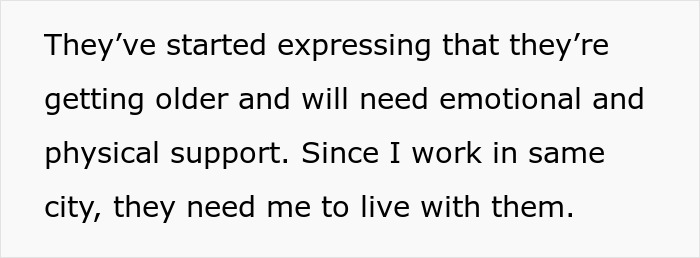
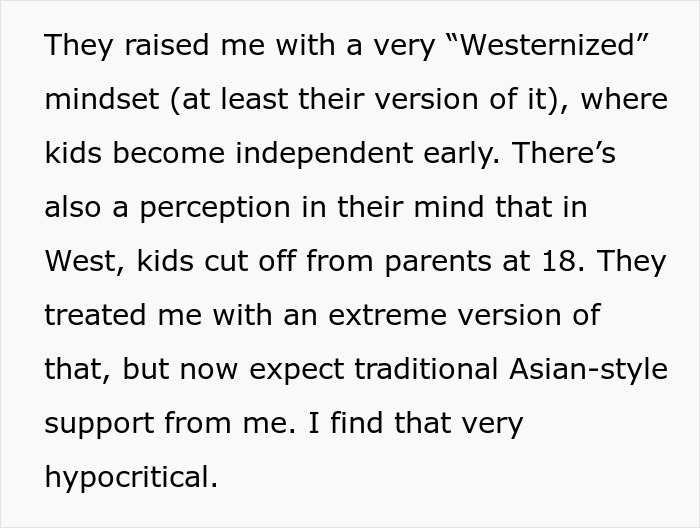
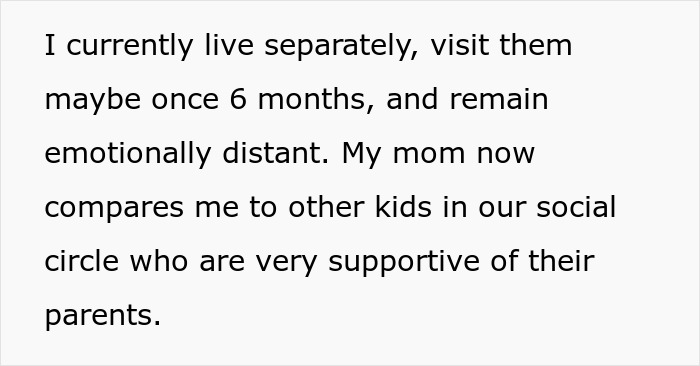
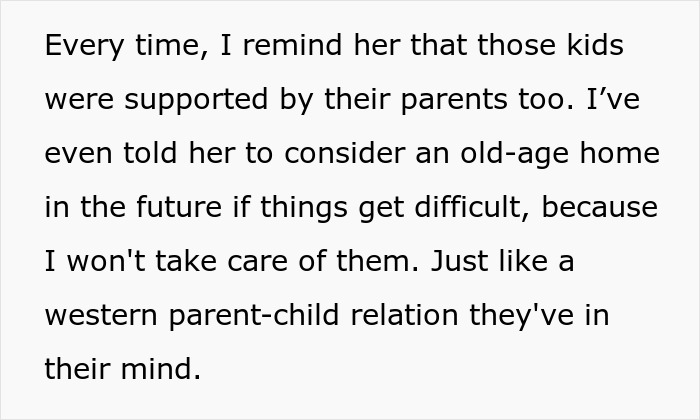
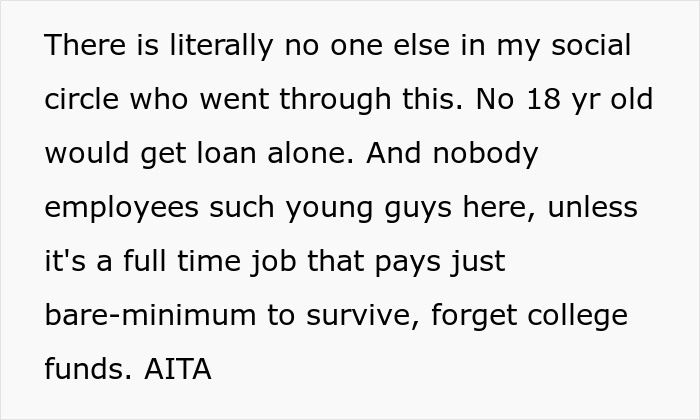
Image credits: Lucky_Purpose_7362
Growing up in a society where family bonds are central, the OP’s upbringing stood out. While most parents in similar environments invest heavily, financially and emotionally, in their child’s future, his parents took a different route. Influenced by Western ideals, they emphasized independence early on, giving him more privacy and freedom than most peers.
However, this independence came with a cost. In a system where higher education is both expensive and essential, parental support isn’t just common, it’s almost expected. For most families, funding education is seen as a long-term investment, one that’s repaid through care and support in later years.
The OP, however, didn’t receive that foundational support. And in a society where such backing is the norm, this placed him at a significant disadvantage from the very beginning. Despite performing well academically, the OP’s plans to pursue a prestigious engineering degree were cut short due to lack of funding. His parents, who could have afforded it, chose not to contribute, saying he had to become independent.
This decision forced him into a lower-ranked institution offering a full scholarship. While financially practical, the move carried long-term consequences. In many competitive job markets, college prestige plays a major role in shaping career opportunities. As a result, the OP had to compensate with years of relentless effort, sacrificing much of his 20s to reach stability.
Now, with his parents nearing retirement, they’ve begun expressing a need for emotional and physical support. Ironically, the same parents who enforced early independence are now expecting a traditional form of familial duty. To the OP, he saw that the rules changed, but only when it benefited his parents. So he went ahead to make himself clear, insisting that he didn’t plan to take on the caregiving role.
Image credits: amenic181 / Freepik (not the actual photo)
In many ways, the situation described in the story can be better understood through broader social and cultural research on family expectations, education, and modernization. According to The Epic, filial piety in many Asian cultures is not just about respecting parents, but about a lifelong duty of care that includes emotional, practical, and financial support in later life.
This expectation is built on reciprocity in that parents invest in raising and educating their children, and children are expected to return that care when parents age. At the same time, Top Universities highlights how educational background can have long-lasting structural effects on a person’s life outcomes.
In highly competitive labor markets, where many graduates compete for limited high-status roles, the prestige of a university can significantly influence both initial job opportunities and long-term earnings. In relation to the story, this provides context for how being forced into a lower-ranked institution due to lack of parental support can create disadvantages that extend far beyond the education period itself.
Still, some parents still expect to be taken care of. Square Holes explains that this is because individualism emphasizes autonomy and personal success, while collectivism focuses on family duty and interdependence. However, these blended systems are often inconsistent, with people or institutions adopting Western ideals in some areas of life while still expecting traditional responsibilities in others.
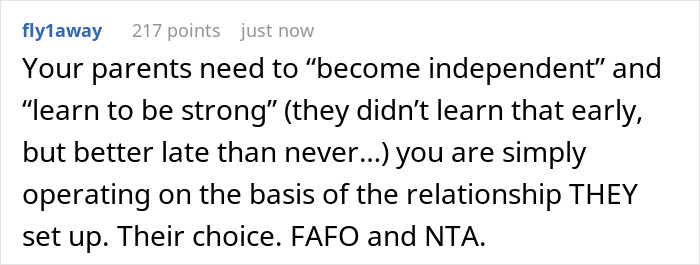
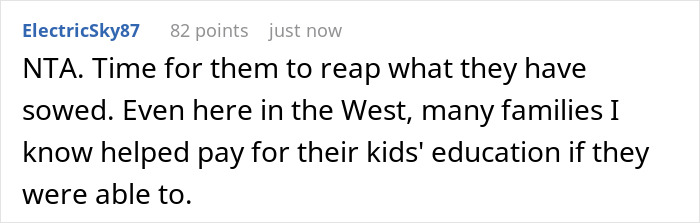
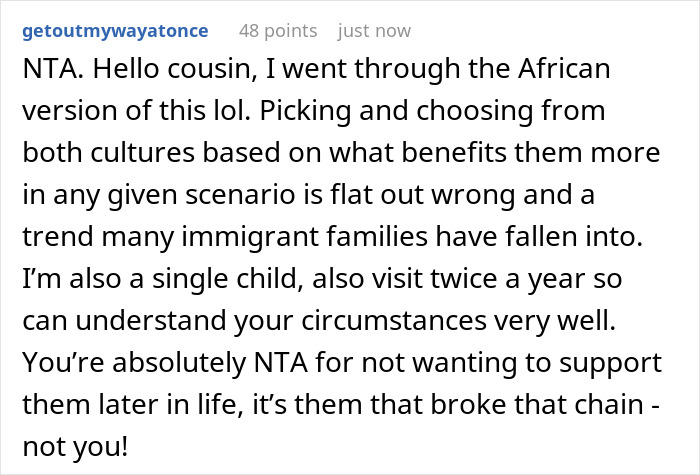
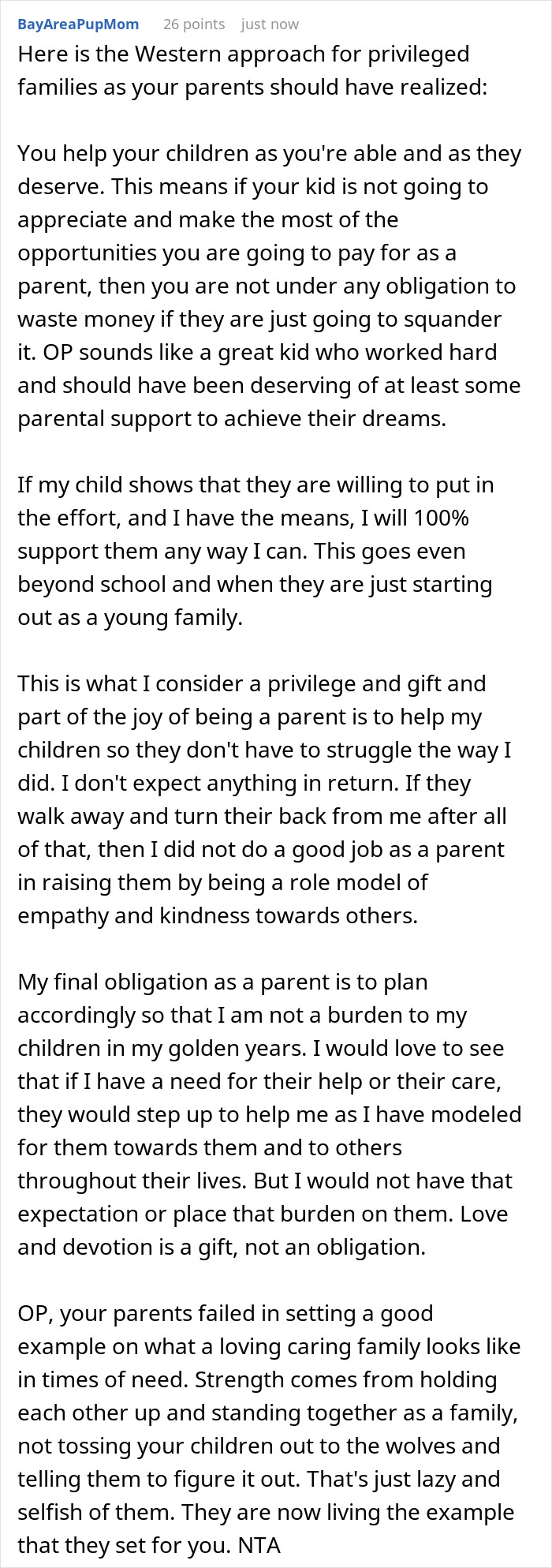
Netizens were strongly supportive of the OP, insisting that his parents cannot selectively adopt Western ideals like independence when it suits them, while later reverting to traditional expectations of lifelong filial responsibility. What do you think about this situation? Is the OP being fair, or just holding a grudge? We would love to know your thoughts!








By entering your email and clicking Subscribe, you're agreeing to let us send you customized marketing messages about us and our advertising partners. You are also agreeing to our Privacy Policy.
Thank you! You've successfully subscribed to newsletters!


Good point from one commenter that the parrents chose "convenience". Their claim about children in the west being independent at 18 is bogus. I (in Canada) worked with someone from India who chose the best from both cultures in raising her three sons. They were expected to work hard in school, but were free to pick their career without being nagged into something high-prestige. The boys also helped with housework, which is not the norm for their parents' culture, but would make them better spouses (and get along better with their mum, too).

OP's parents saved the tuition fee. They should've invested that wisely, and its interest could serve as their income in retirement. In both senses: either as the investment in OP's future, or as a direct monetary investment (saving, stocks, bonds, etc.)

They didn't do their part, so why would they think he owed them anything?
Good point from one commenter that the parrents chose "convenience". Their claim about children in the west being independent at 18 is bogus. I (in Canada) worked with someone from India who chose the best from both cultures in raising her three sons. They were expected to work hard in school, but were free to pick their career without being nagged into something high-prestige. The boys also helped with housework, which is not the norm for their parents' culture, but would make them better spouses (and get along better with their mum, too).
OP's parents saved the tuition fee. They should've invested that wisely, and its interest could serve as their income in retirement. In both senses: either as the investment in OP's future, or as a direct monetary investment (saving, stocks, bonds, etc.)
They didn't do their part, so why would they think he owed them anything?








































 No fees, cancel anytime








33
3