Get Premium
Dark mode theme is available exclusively for premium users. Learn more about the benefits of subscribing.
No fees, cancel anytime.

 Dark Mode Ad-Free Browsing Unlimited Content
 Ad-Free Browsing Unlimited Content Dark Mode
Join 1.2 million Panda readers who get the best art, memes, and fun stories every week!

With the economy acting up and the cost of living skyrocketing everywhere, it’s no surprise that adult kids are turning to the bank of mum and dad to get a leg up. But what happens when the same kids try to take advantage of their parents’ generosity?
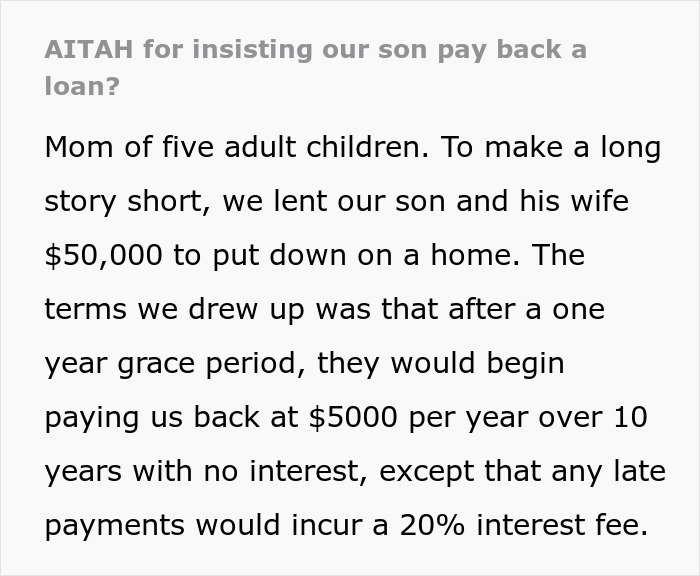
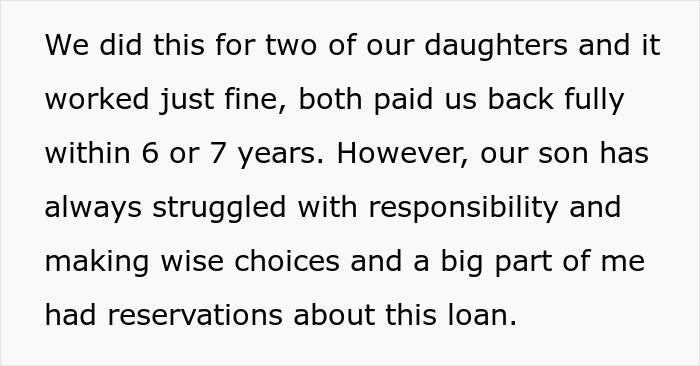
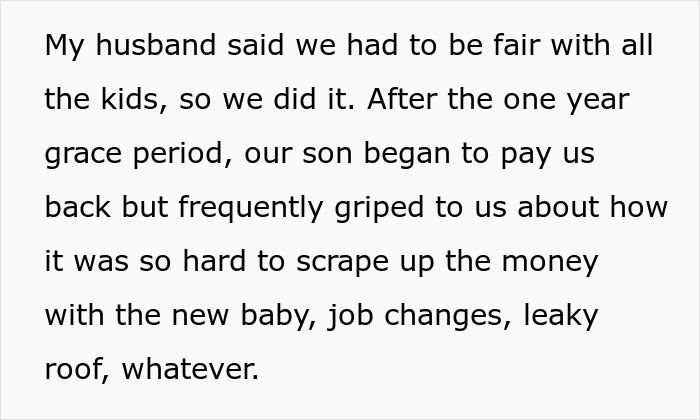
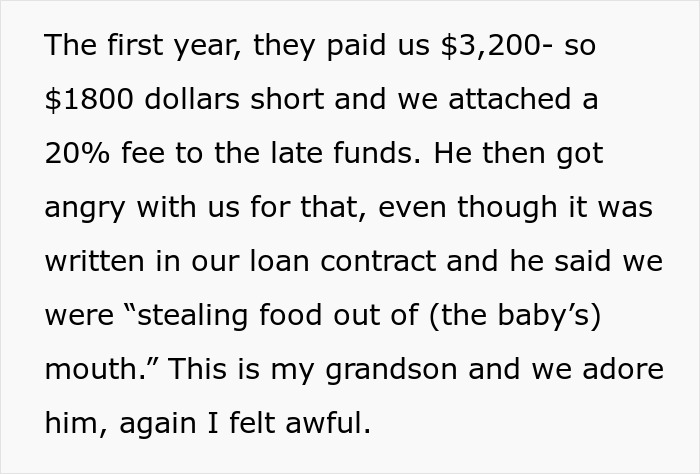
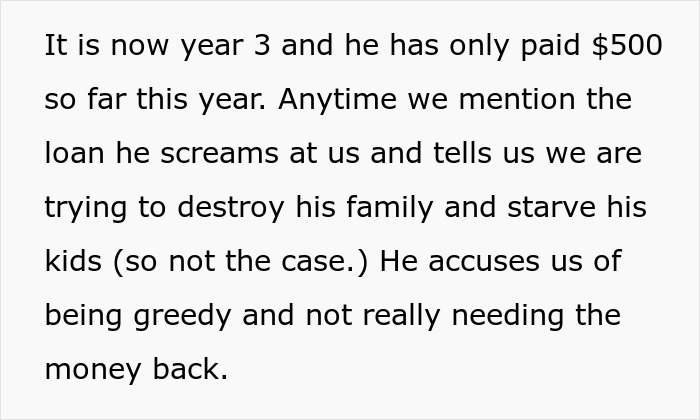
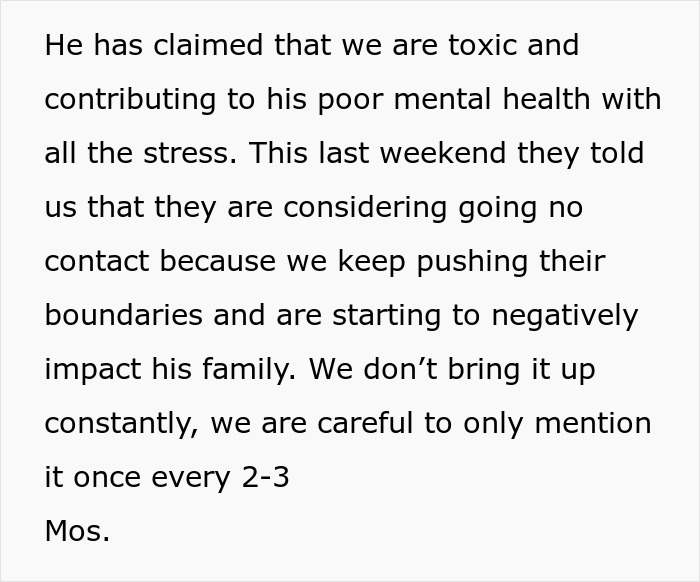
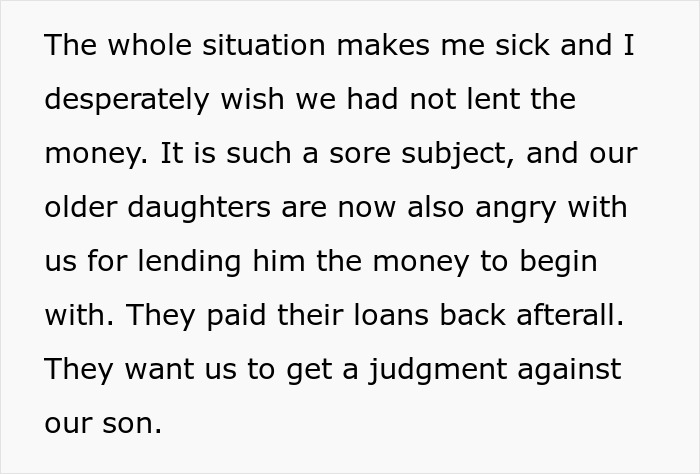
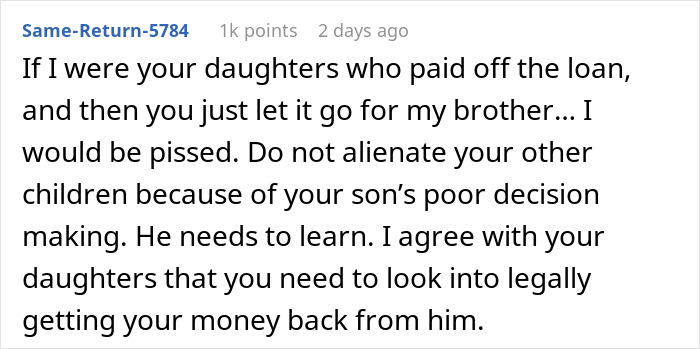
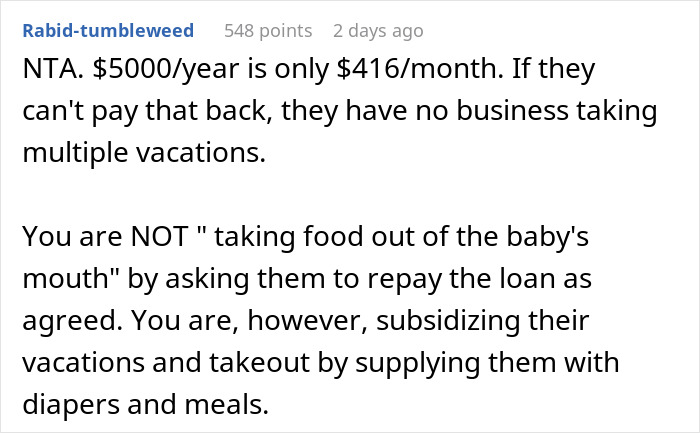
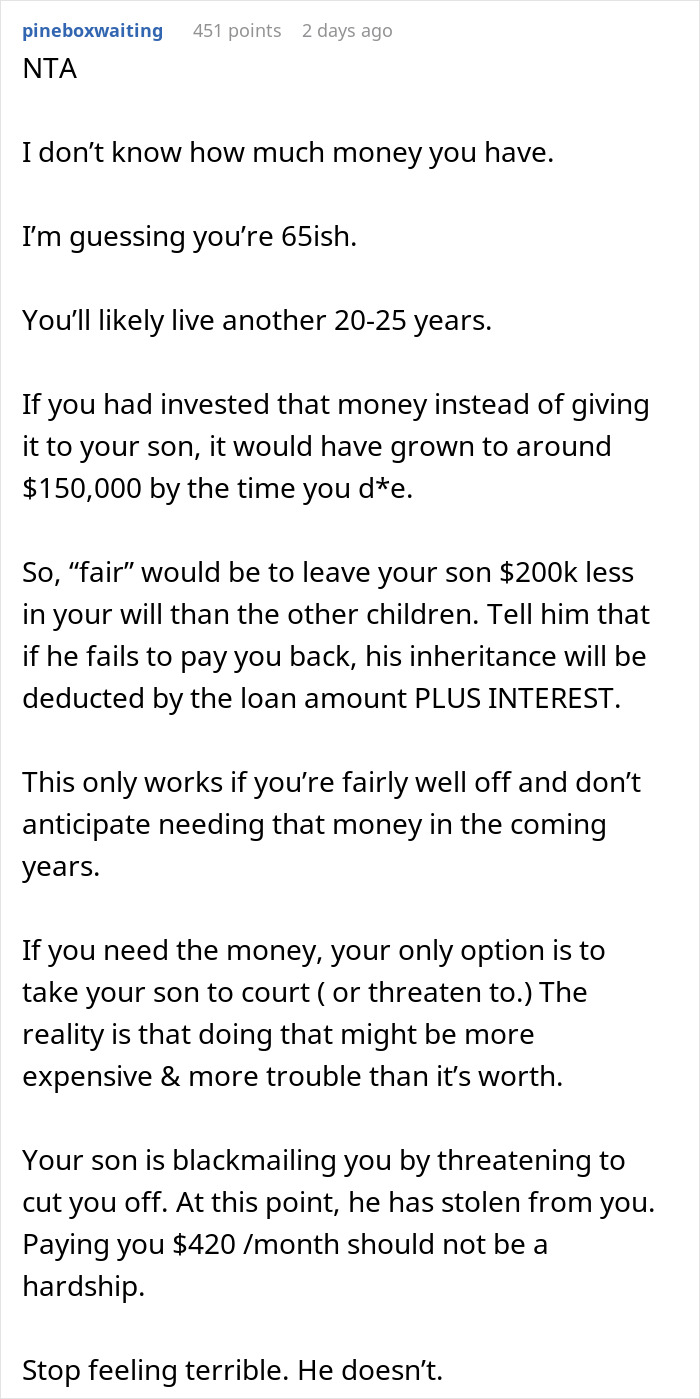
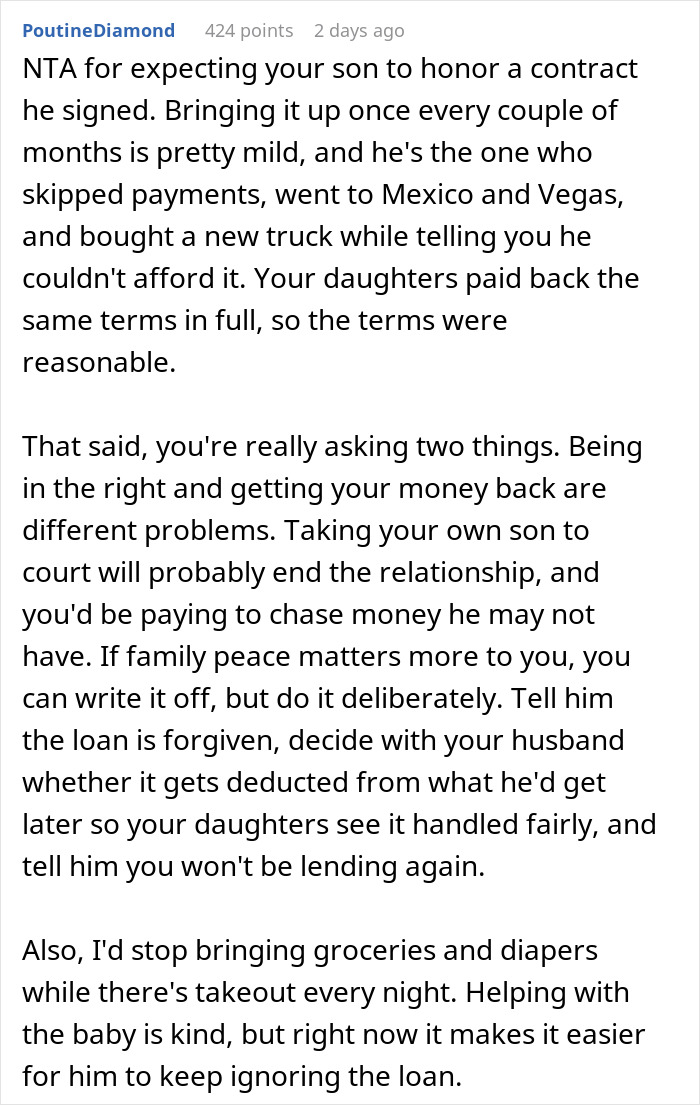
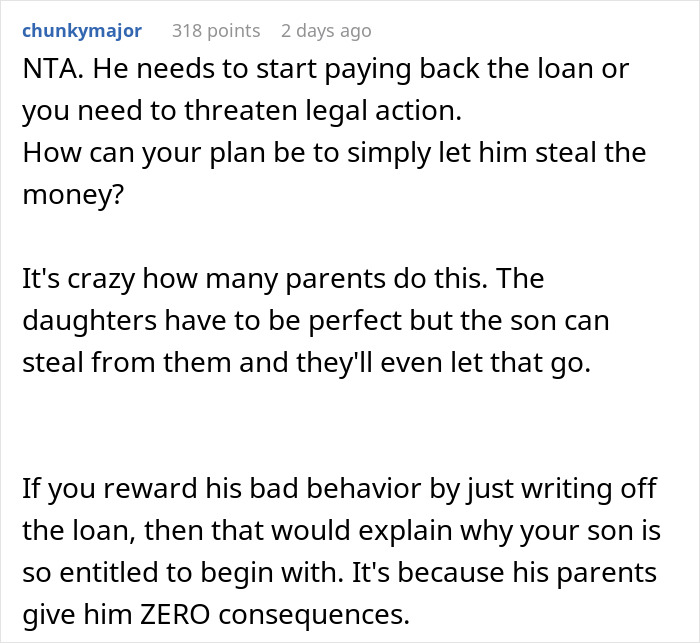
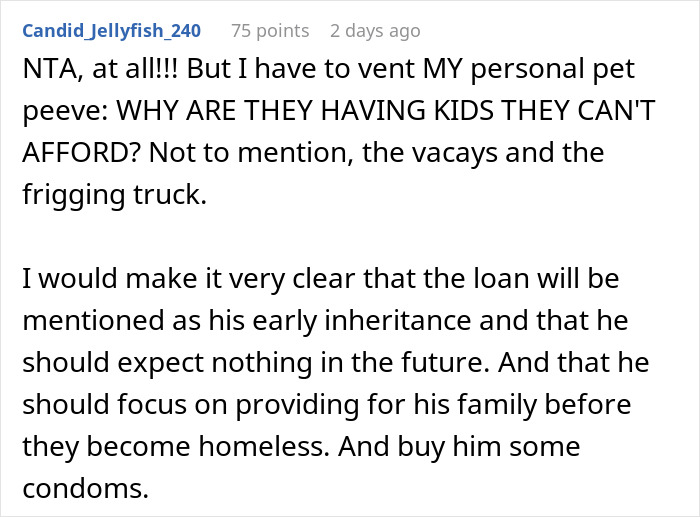
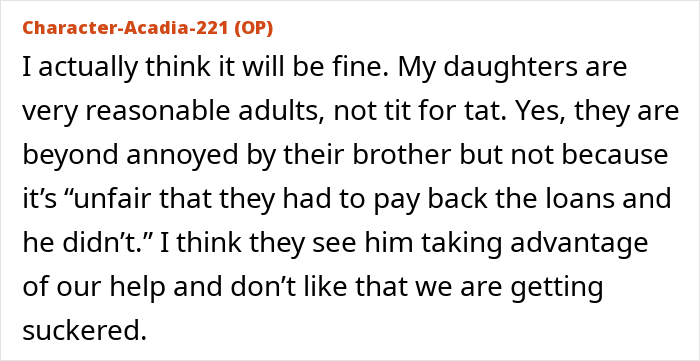
After lending her son and his wife $50,000 to buy a home, one mom expected them to follow through on their simple repayment contract. Instead, she was met with endless excuses about how broke they were — all while watching them buy a brand-new truck and take off on vacations to Mexico and Las Vegas.
She shared her story online, hoping for an objective solution to her dilemma. Should she write off the massive debt to keep the peace, or is there a better way to hold her son accountable?




Standard milestones like landing a good job and buying a house have gotten much harder to reach in today’s economy. It makes total sense, then, that parents want to step in and soften the blow.
Studies show that nearly half of all parents in the US provide some form of financial support to their grown children.
A 2025 survey found that 75% of American parents pitch in to help with basic needs — paying cell phone bills, helping with rent, or even groceries. On average, parents are shelling out around $7,000 a year to keep their adult kids afloat.
Since buying a house or renting on your own has also gotten so crazy expensive, more young people are moving back in with their family. Roughly one in five young adults aged 25 to 34 now live with their parents in the US, which is almost double what it was two decades ago.
“The reasons aren’t necessarily surprising: the jump comes as students graduate college with high education debt into a weak entry-level job market, and Americans of all ages are struggling with the cost of housing,” says Geoffrey T. Sanzenbacher, a professor at Boston College.
Younger generations also carry far more student debt than their parents ever did. And those who do manage to get a mortgage take on much larger loans.
All the data we scoured through points to the same clear fact: the economic system is definitely stacked against young people, and parental support is often a total lifesaver. But there is a huge difference between helping a child survive a tough economy and being taken for a ride.
Research shows that this constant financial aid puts a massive strain on parents, especially as they get closer to retirement age.
“When people have to divert what little resources they have to help their children, and they can’t put it toward retirement, that jeopardizes their own financial futures,” says Richard Johnson, who leads a financial security policy team at the American Association of Retired Persons.
In a recent survey, 17% of middle-aged Americans with more than $150,000 in investable assets admitted that they supported children aged 26 or older, even when they knew it actively jeopardized their own financial security. More than half of respondents said doing so directly cut into their retirement savings.
Most financial advisors will tell you the same golden rule: your own emergency fund and retirement savings always come first. Think of it like the oxygen mask on an airplane — you have to secure your own financial health before you can safely help anyone else.
Experts like Carolyn McClanahan, a certified financial planner and member of CNBC’s Advisor Council, stress that parents need to set firm boundaries. “We are careful to make sure parents don’t gift so much to put themselves in peril,” she notes.
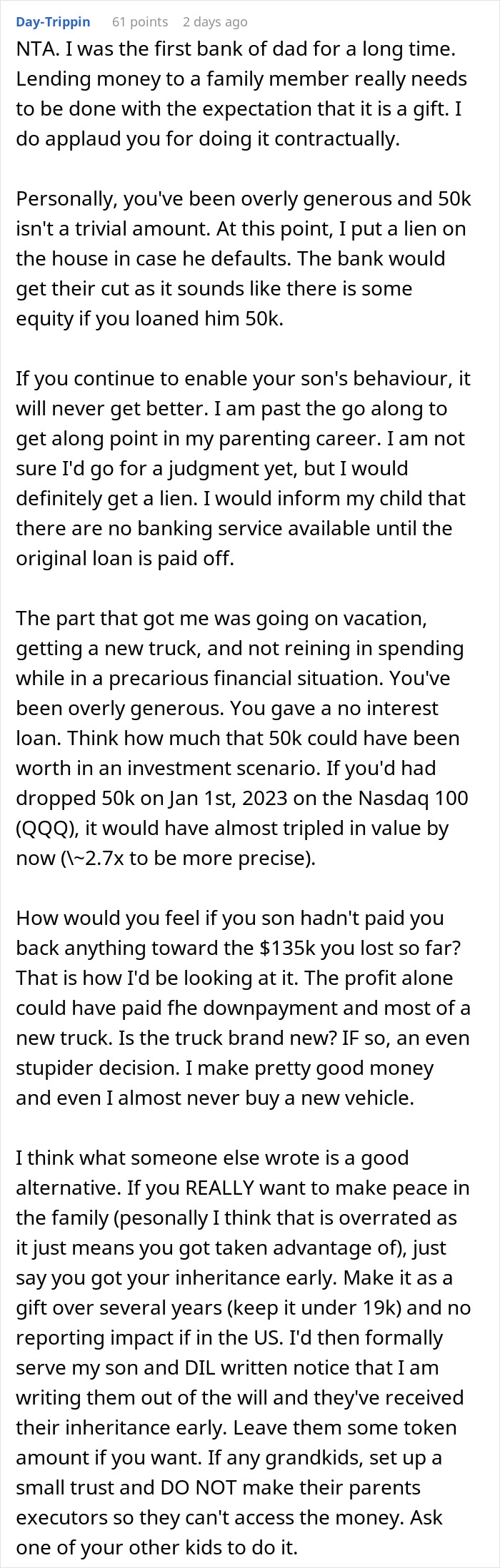
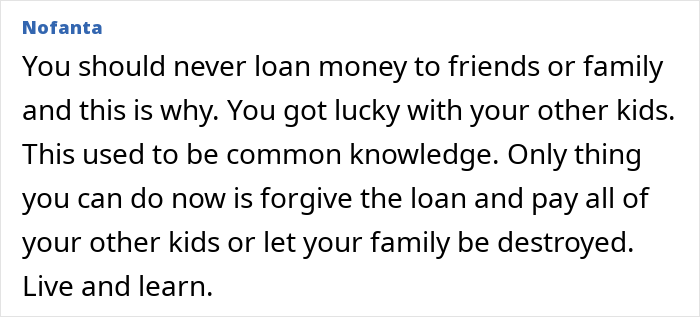
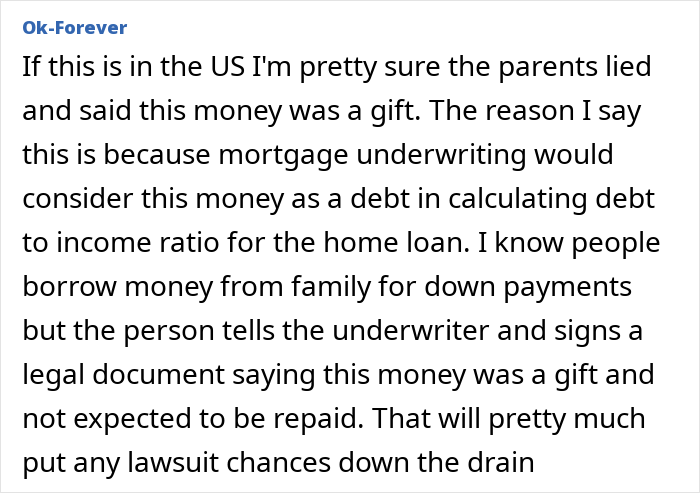
If your adult child comes to you with a reasonable need, you can still support them, but you have to act like a real bank. That means setting ground rules, drawing up formal terms, and making it clear that the money is a loan to be repaid, not a free gift
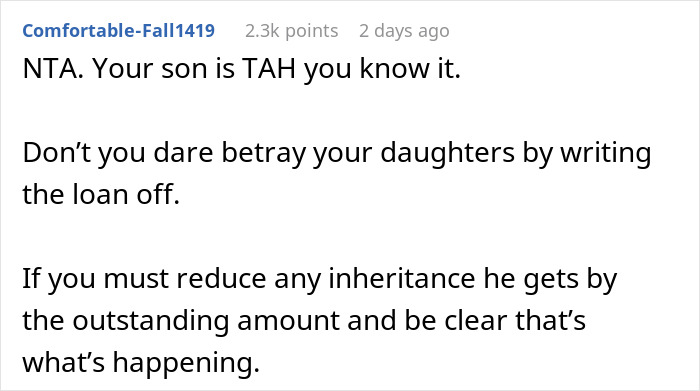
Many families also use a clever legal tool in estate planning called a “Hotchpot Clause.” This clause lets a parent deduct an unpaid loan from that specific child’s future inheritance. The money owed is notionally added back to the total estate before everything is divided equally among all the siblings.
Loaning your relatives money and not getting it back is a tough spot to be in.
Adult kids need to know that accepting financial help from their parents is not a free pass to spend carelessly. For parents, the lesson is equally crucial: protecting your own future is not selfish… it is necessary.

























By entering your email and clicking Subscribe, you're agreeing to let us send you customized marketing messages about us and our advertising partners. You are also agreeing to our Privacy Policy.
Thank you! You've successfully subscribed to newsletters!





































 No fees, cancel anytime
















31
5