Get Premium
Dark mode theme is available exclusively for premium users. Learn more about the benefits of subscribing.
No fees, cancel anytime.

 Dark Mode Ad-Free Browsing Unlimited Content
 Ad-Free Browsing Unlimited Content Dark Mode
Join 1.2 million Panda readers who get the best art, memes, and fun stories every week!

Being a teenager comes with its own mix of struggles, victories, and life lessons. Right, Pandas? It’s that in-between age where you’re trying to assert independence, yet still rely on your parents for so many things. Want a tattoo? Need permission. Want a car? Better ask first. Finances, too, often mean leaning on a little (or sometimes a lot) of parental support. But when that support is denied, it can sting in ways you don’t expect.
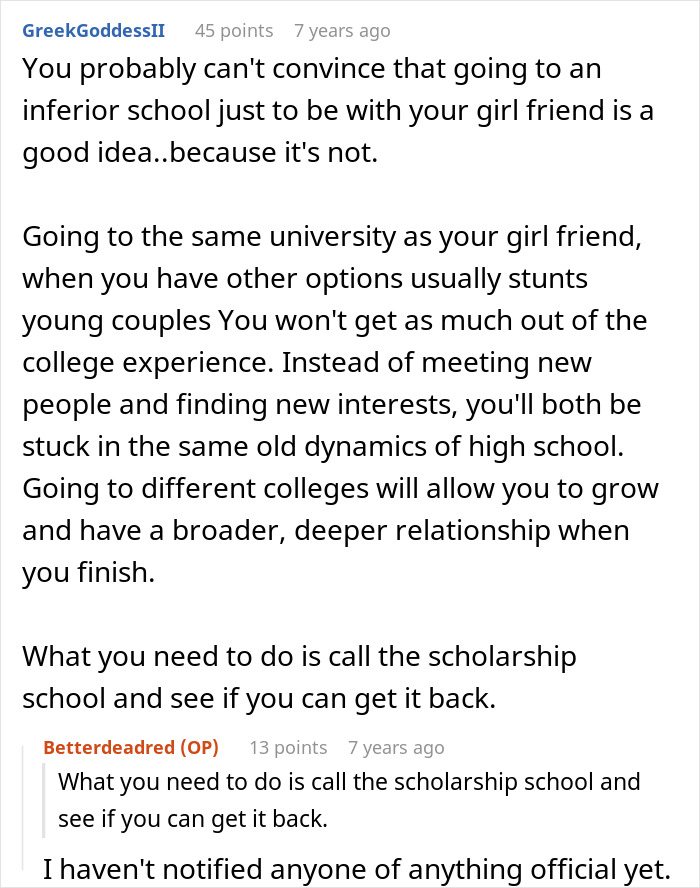
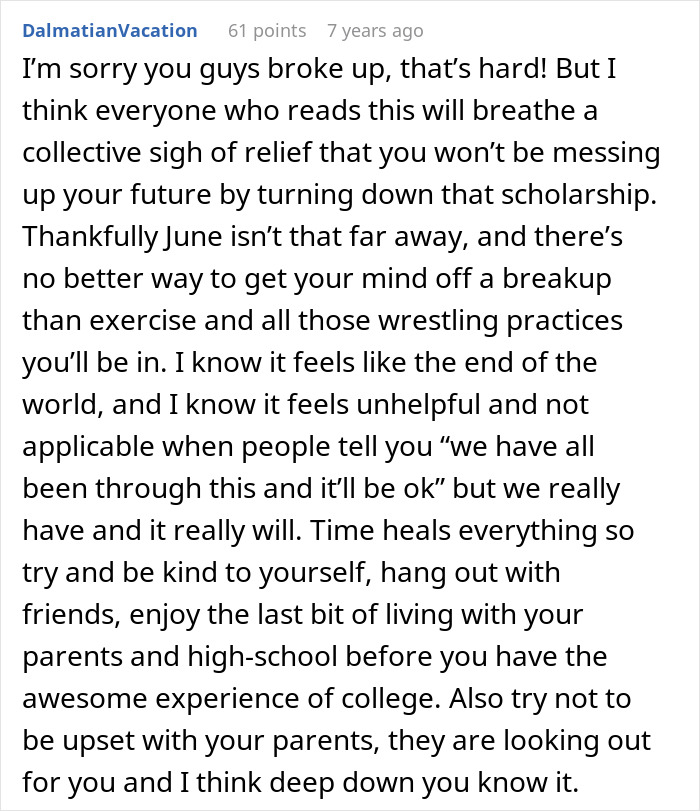
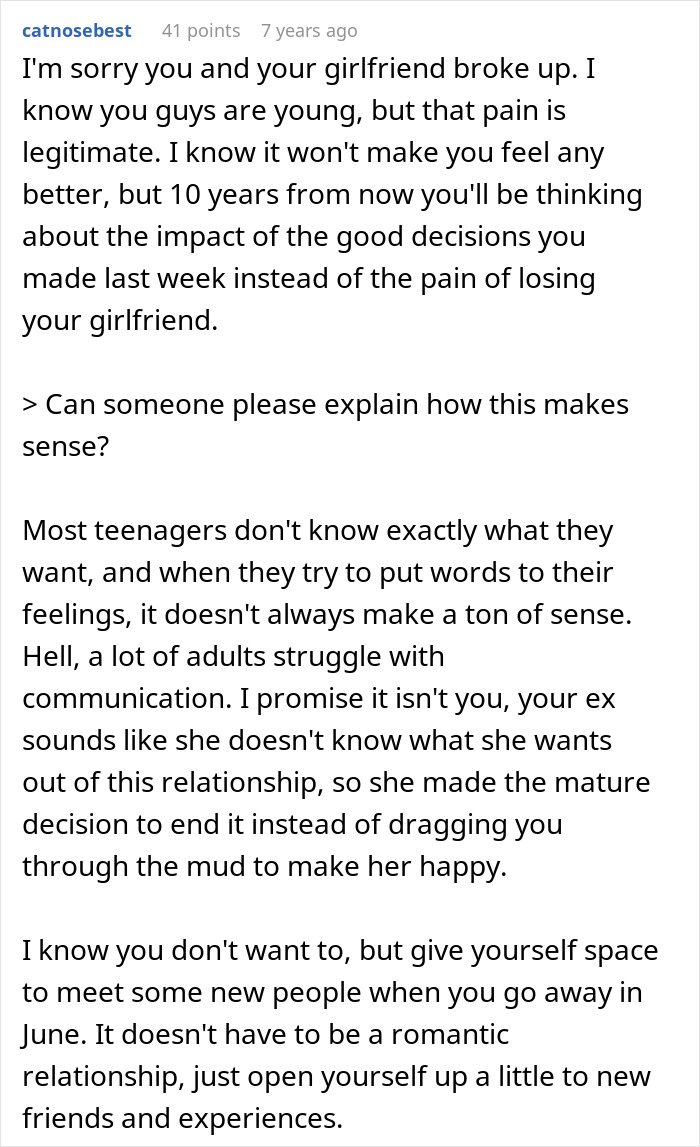
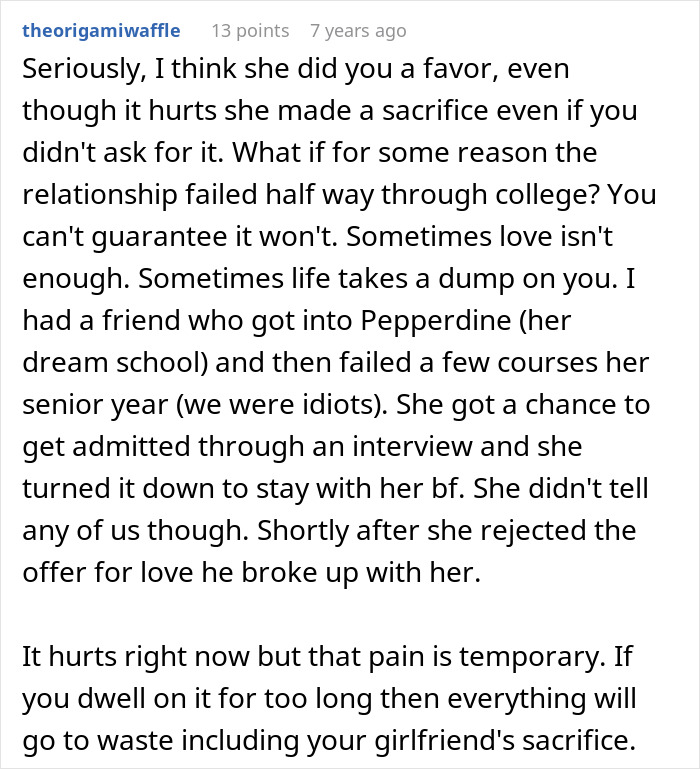
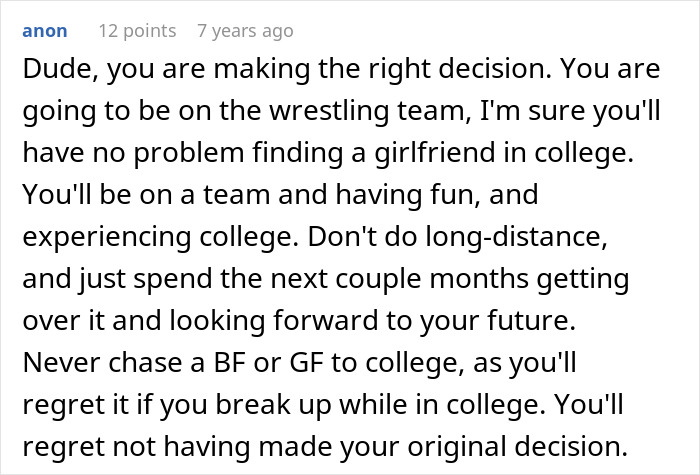
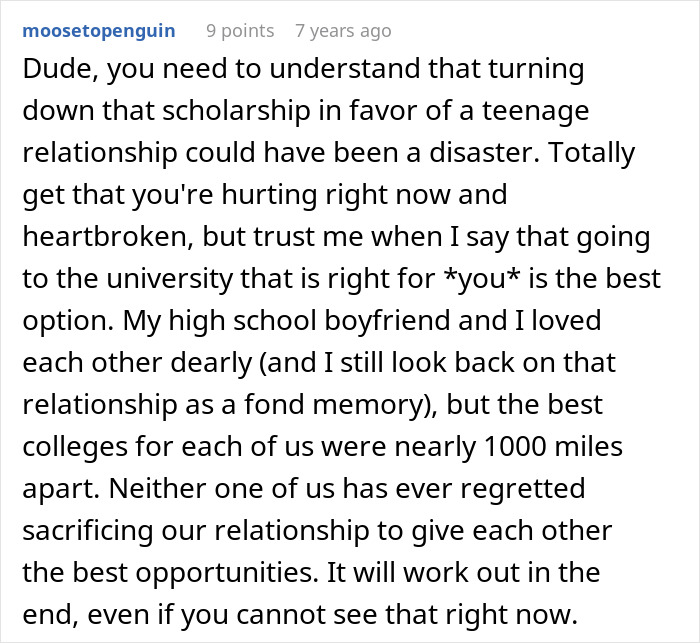
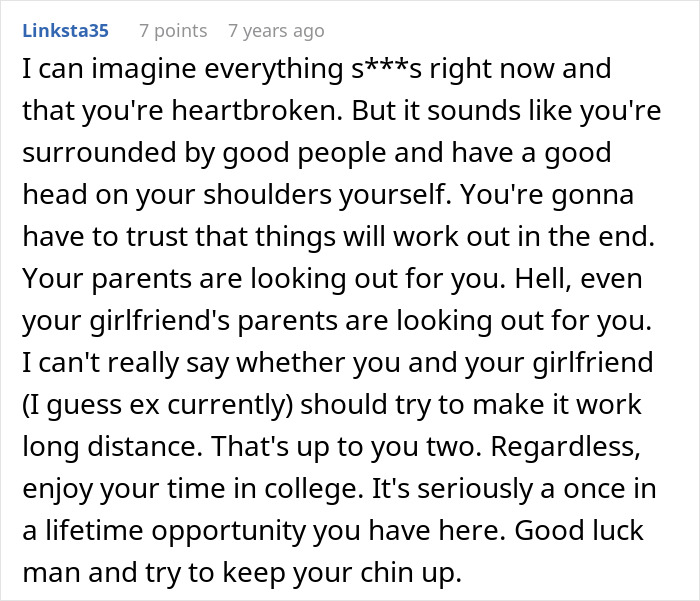
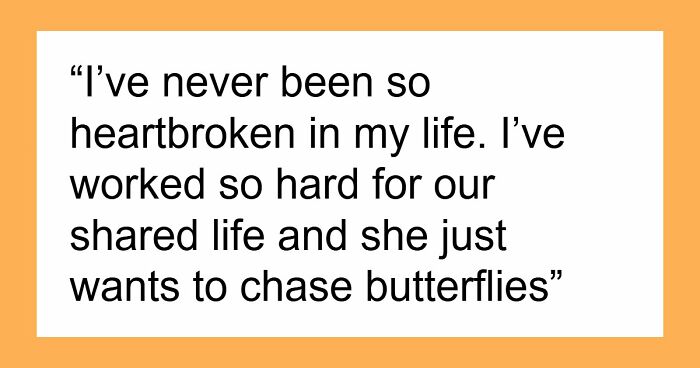
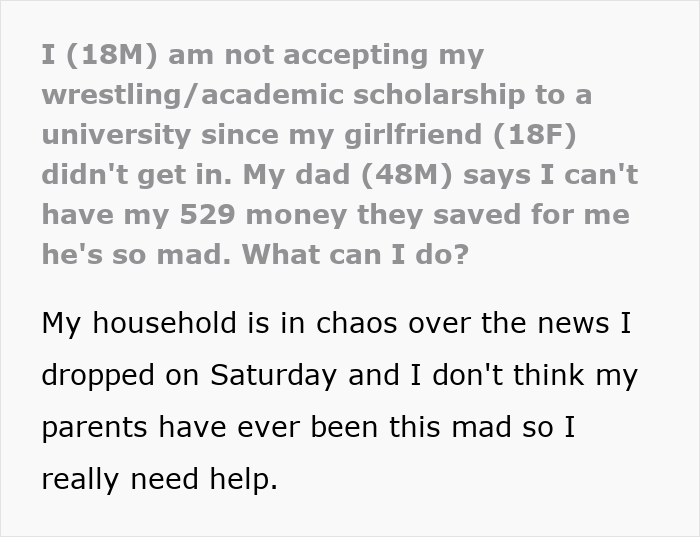
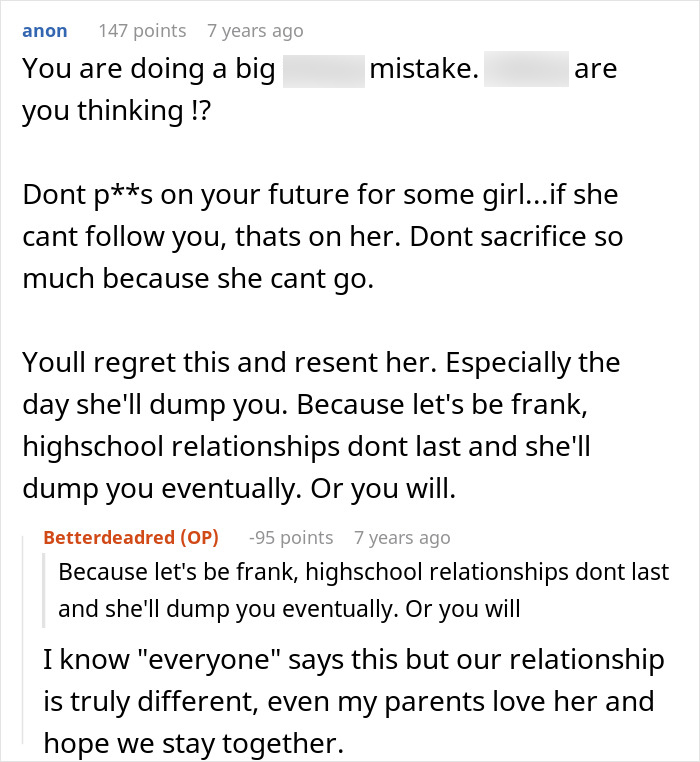
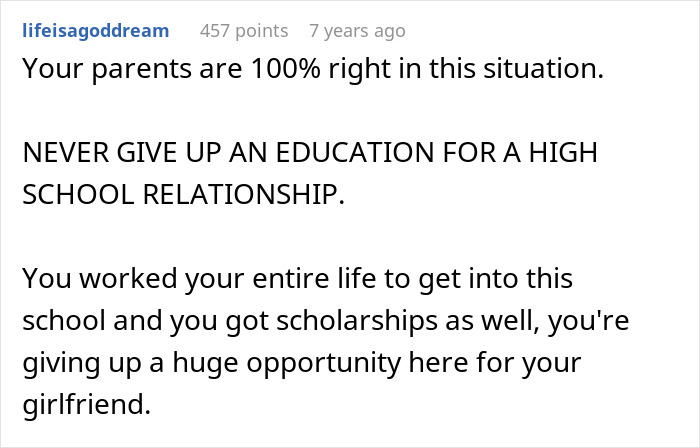
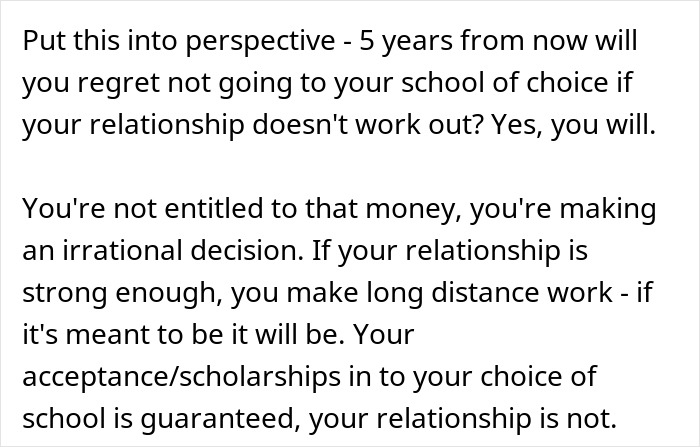
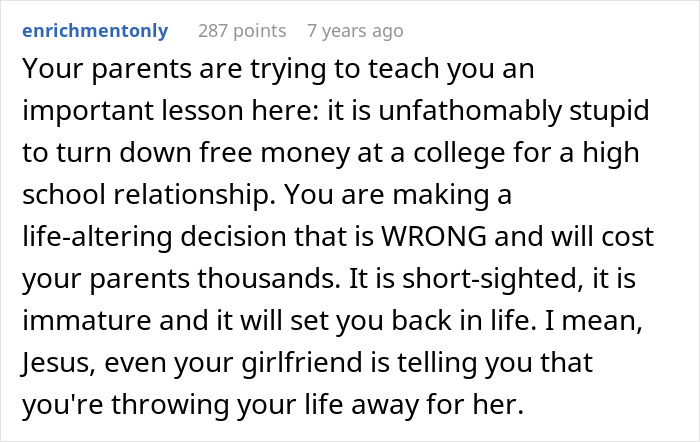
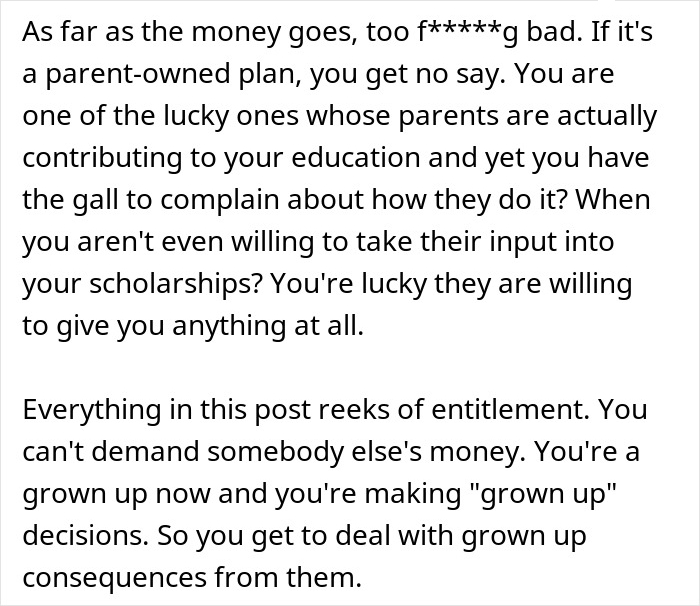
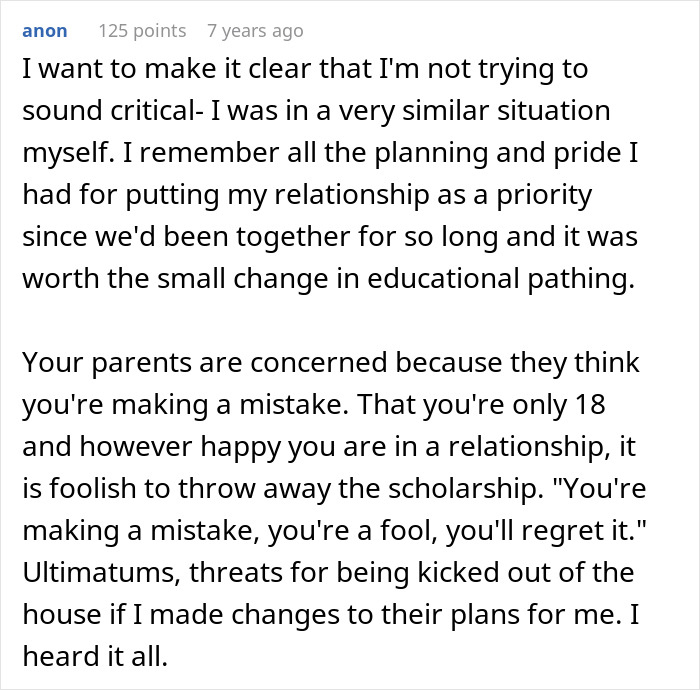
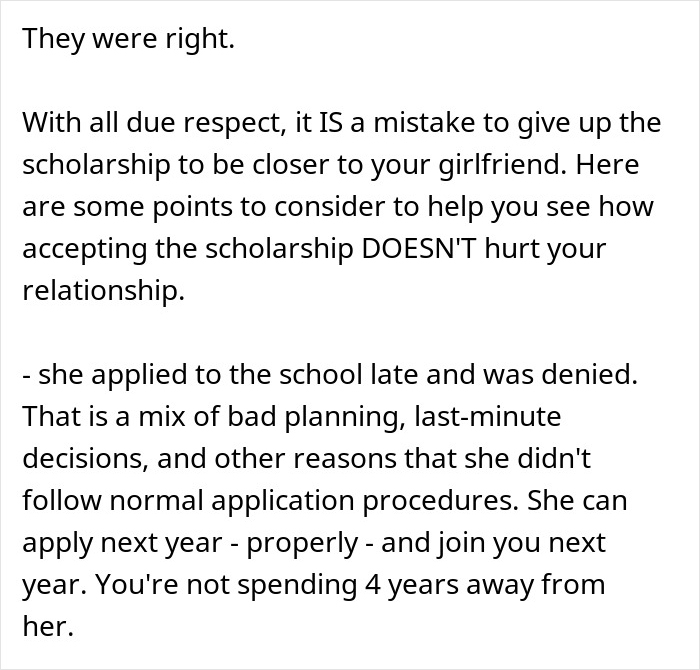
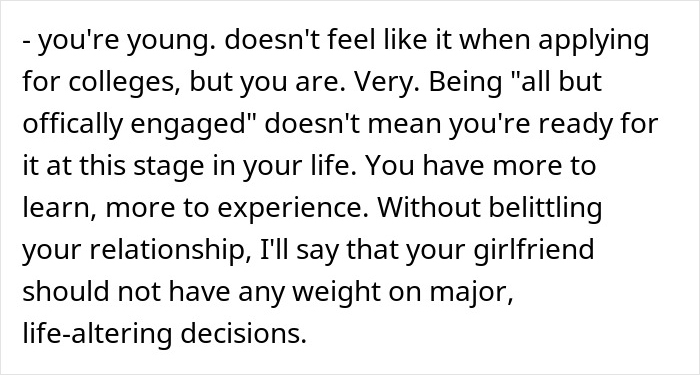
For example, an 18-year-old shared how his parents refused to give him access to his college fund. On the surface, it seems reasonable; they had a good reason, but the story behind it is wild. He decided to give up his hard-earned admission and scholarships… all for love. While his parents tried to reason with him, the fallout left him frustrated. Keep reading to see what happened next.
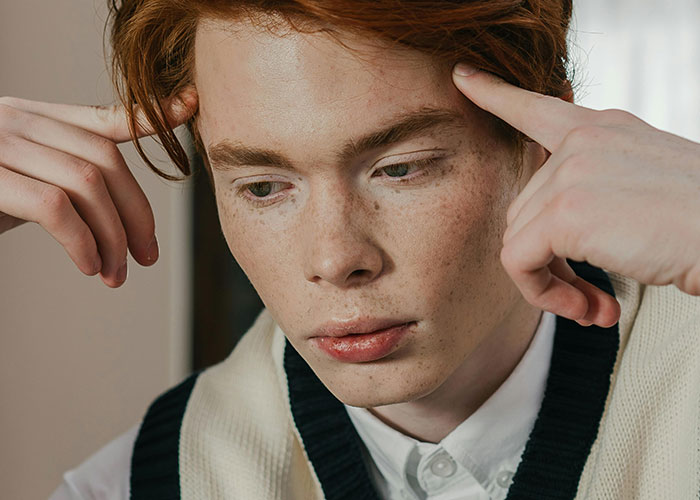
Image credits: Mikhail Nilov/Pexels (not the actual photo)
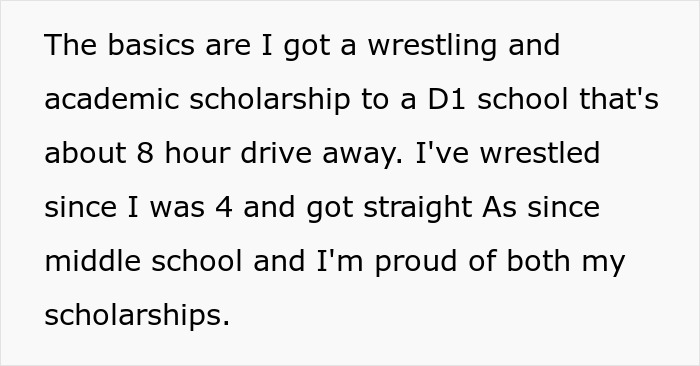
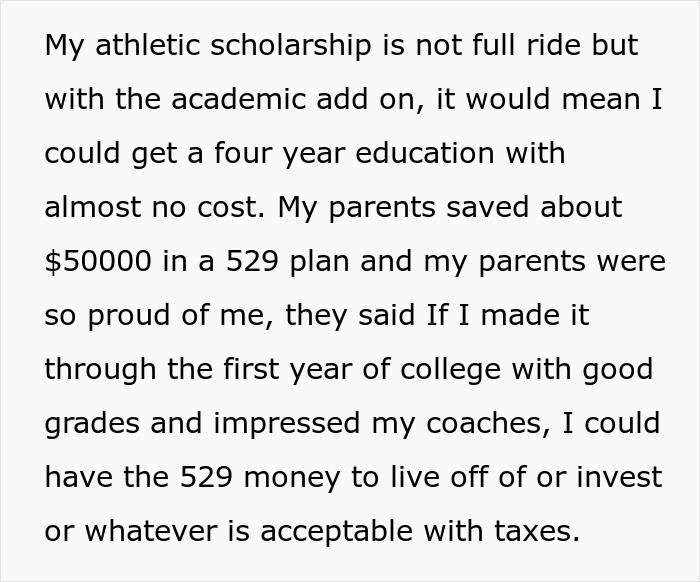
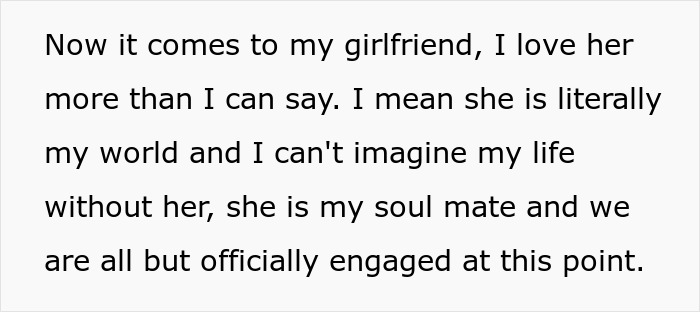

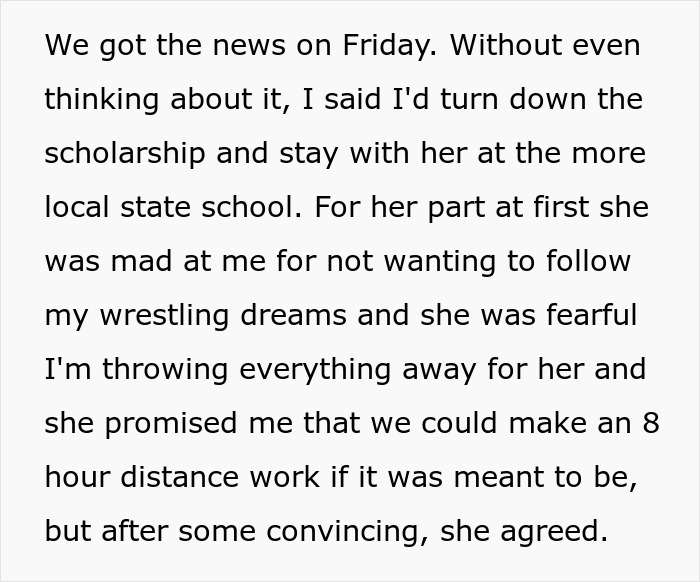
Image credits: cottonbro studio/Pexels (not the actual photo)
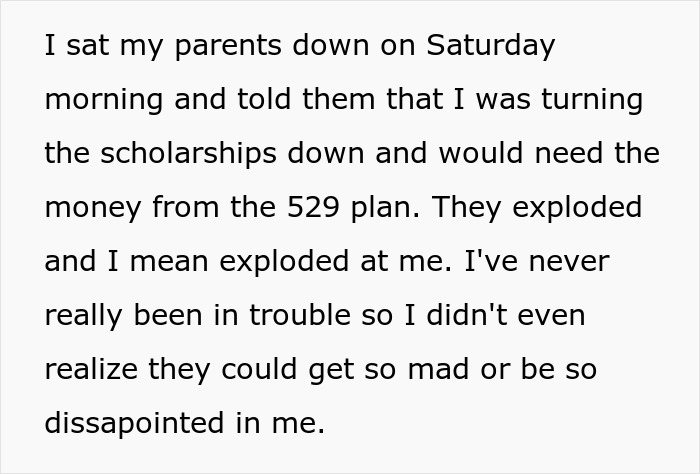
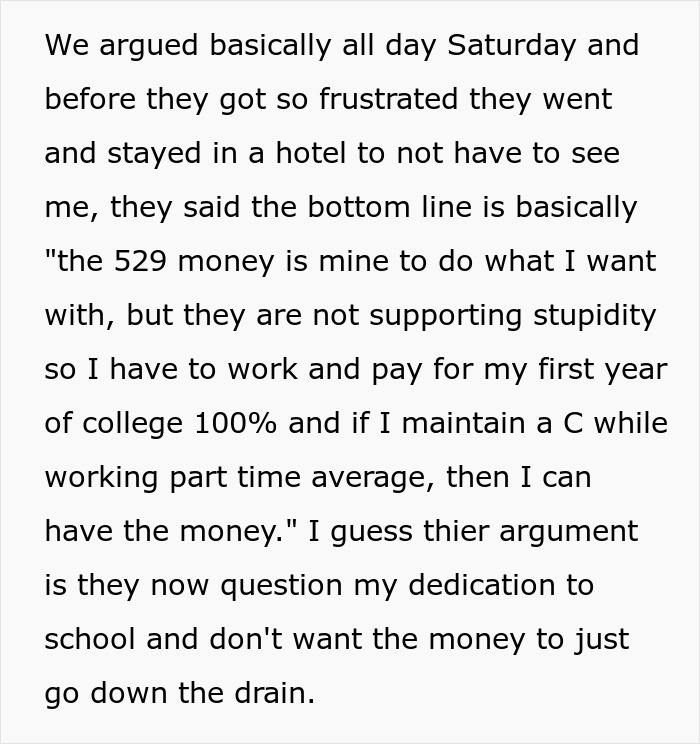
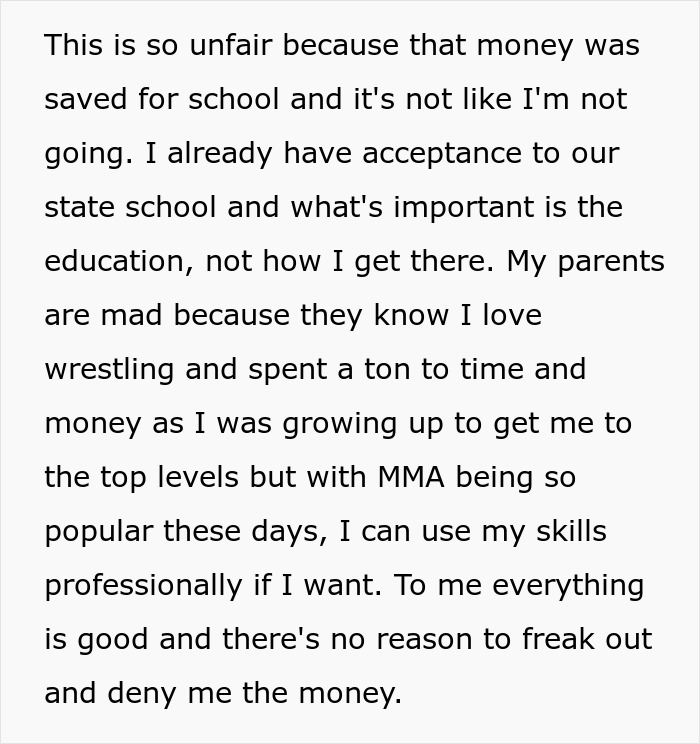
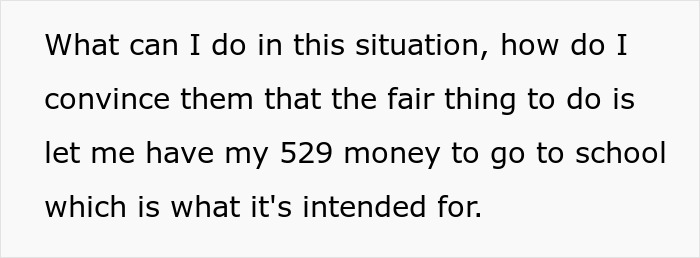
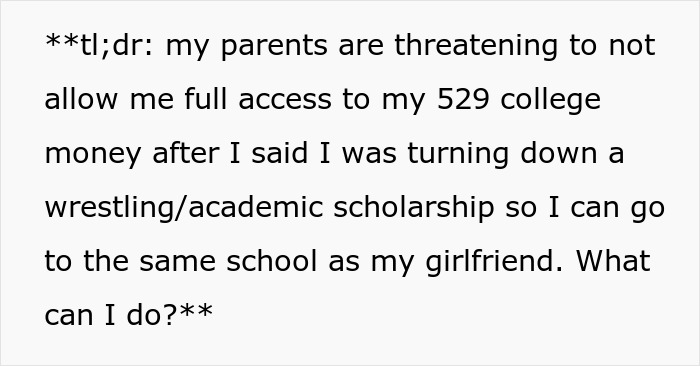
Image credits: Betterdeadred
As adults, we all understand the value of a steady job, a reliable income, and building a stable future. Looking back, we often think, “If only I had paid attention in that class, taken that extra credit, or done that intensive course, life might be easier now.” Those small choices we brushed off as teenagers can have long-lasting effects, shaping our careers, finances, and opportunities.
However, processing all this as a teen is a whole different story. The teenage brain is still building itself, and it does so in a way that can feel unpredictable. The frontal cortex, the part of the brain responsible for planning, reasoning, and self-control, builds and prunes connections throughout adolescence. This makes the brain more efficient and allows skills to expand rapidly, but it also means that some areas develop faster than others. Areas tied to rewards tend to mature more quickly than those linked to self-control. This biological imbalance explains why teens can be so impulsive, diving into choices that seem thrilling in the moment without fully thinking about the consequences.
Because of this brain wiring, it’s no wonder teens sometimes leap before they look. That’s why we might see teenagers making snap decisions like skipping class to hang out with friends, saying something without thinking in an argument, or taking a risk for social status or approval. Even something as simple as buying the newest gadget or trying a new sport without preparation can feel urgent and exciting in the moment. These decisions might sometimes lead to embarrassment, disappointment, or small setbacks but they’re also part of learning who you are and how your choices shape your life.
Another fascinating aspect of teen development is the way the brain processes social connections. Areas responsible for understanding and navigating social experiences are changing rapidly, making peer relationships a huge focus. Teens often weigh the benefits of social approval more heavily than the potential downsides of a risky choice. This doesn’t mean they’re reckless: it just means that talking to a new classmate, joining a club, or stepping into a leadership role can feel worth the fear or uncertainty. Social risks, whether positive or negative, are an essential part of learning, growth, and discovering where you belong in the world.
Think about a teen trying out for a school play, asking someone on their first date, or speaking up in class when they normally wouldn’t. These are all examples of social risks with big rewards: new friendships, confidence, and independence. Sometimes the “risk” could be negative, like arguing with a friend or being embarrassed in public. But it’s through these experiences that teens learn resilience, empathy, and how to navigate the complex social world around them. Each success and failure teaches them skills they will carry into adulthood.
Teens respond to stress in unique ways because their brains are still developing. The parts of the brain that regulate emotion, judgment, and stress response are still maturing, which means that stress can feel more overwhelming than it does for adults. When under pressure, teens are more susceptible to developing anxiety, depression, and other stress-related mental health challenges. A failed test, an argument with a friend, or family tension can feel monumental. Recognizing this isn’t about excusing behavior, it’s about understanding why teens sometimes react intensely and how adults can guide them toward healthier coping strategies.
Sleep is another factor that makes adolescence tricky. Research shows that melatonin works differently in teens than in children or adults. It keeps teens awake later at night and delays the natural waking cycle in the morning. As a result, staying up late and struggling to wake up early isn’t laziness; it’s biology. Unfortunately, many teens don’t get enough sleep, which affects attention, impulse control, and mood. It’s important they get adequate rest as it supports emotional regulation, mental health, and overall well-being.
Despite the challenges and biological quirks of adolescence, most teens grow into healthy, well-adjusted adults. They need patience, guidance, and support as they navigate big decisions, emotions, and social pressures. It’s important to help teens find safe ways to express and manage strong emotions. Whether it’s playing on a team, journaling, painting, or learning an instrument, these activities help teens process feelings they may not fully understand yet. Structured outlets like these will also teach discipline, patience, and self-expression.
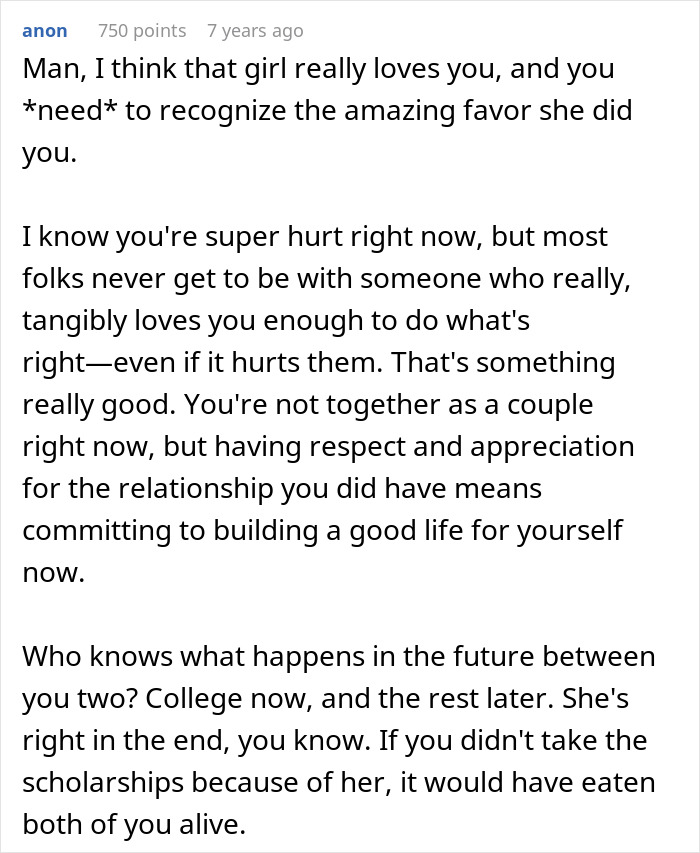
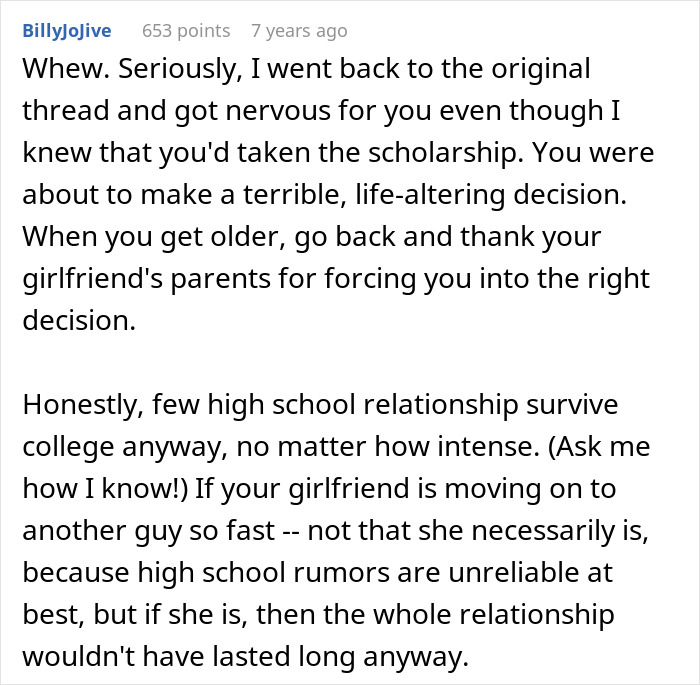
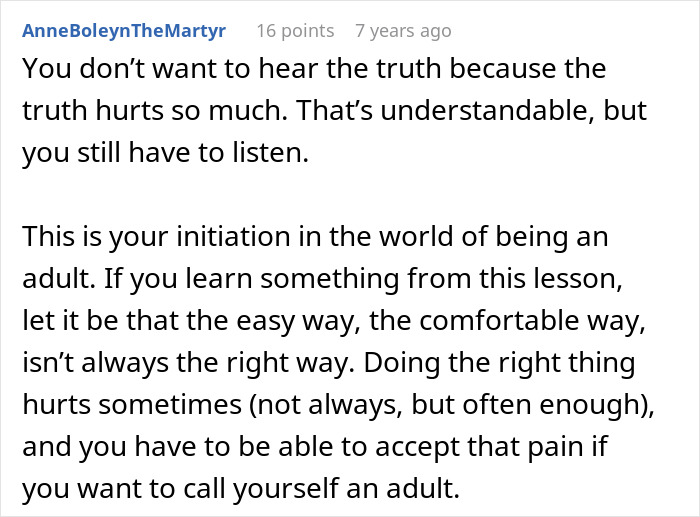
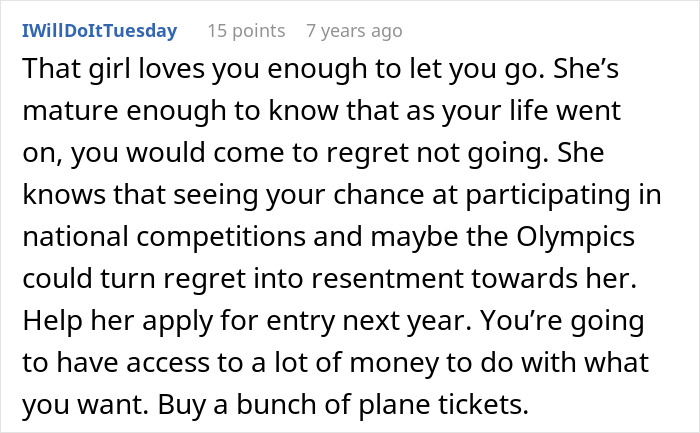
In this particular case, it seems like the teenager was acting out of love, following his heart in a very impulsive way. While his feelings are understandable, giving up a once-in-a-lifetime opportunity and potentially jeopardizing his future doesn’t seem like the wisest choice. It’s a classic example of teenage passion colliding with long-term consequences. What would you do in this situation? How would you handle a loved one making such a big, impulsive decision?
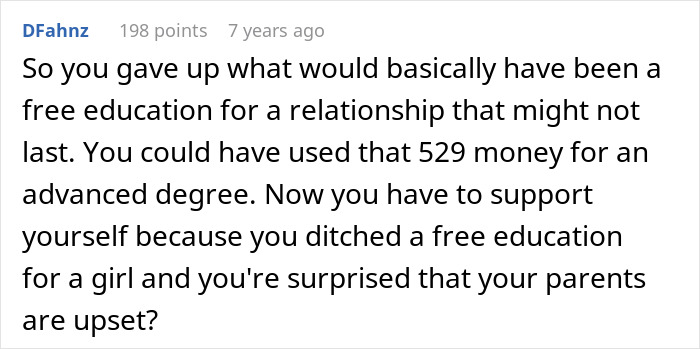
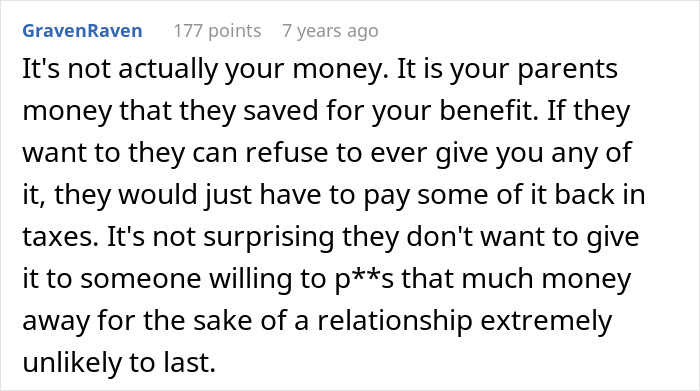
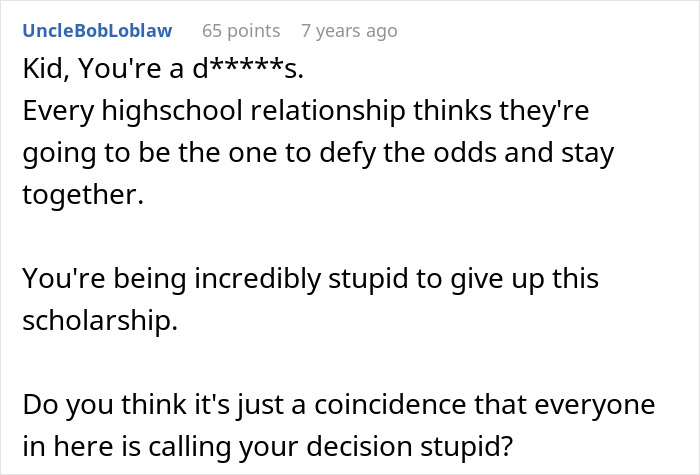
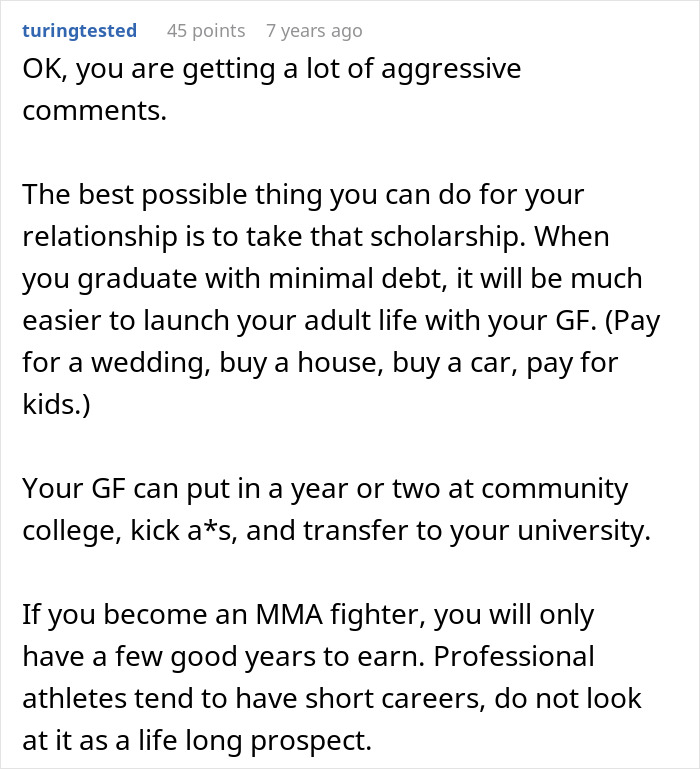
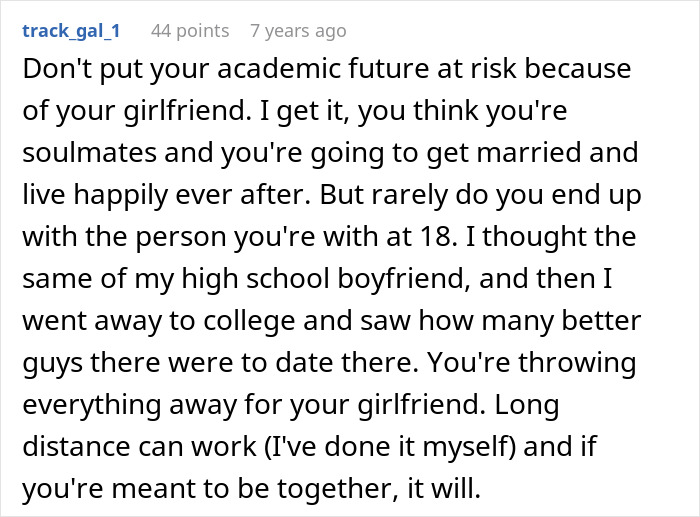


Image credits: MART PRODUCTION/Pexels (not the actual photo)
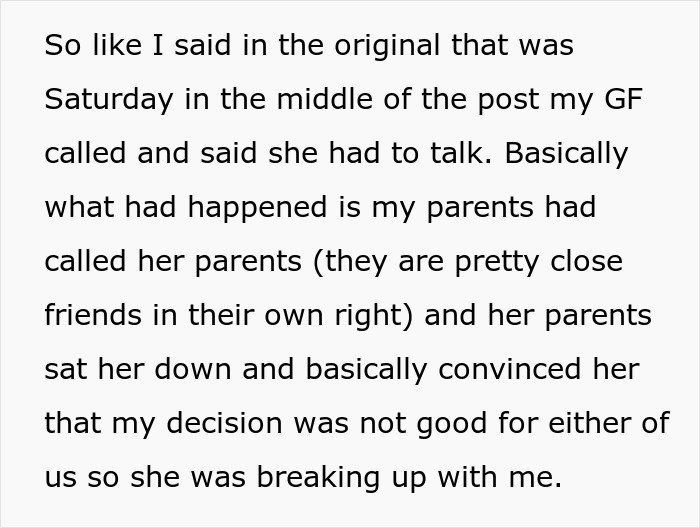
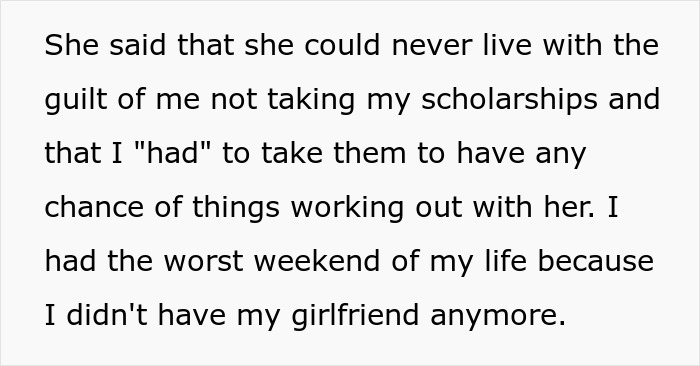
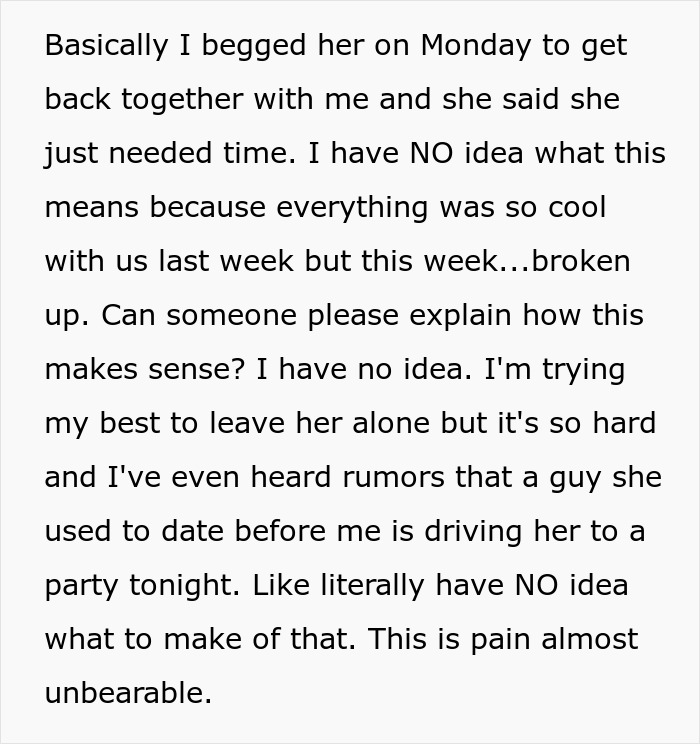
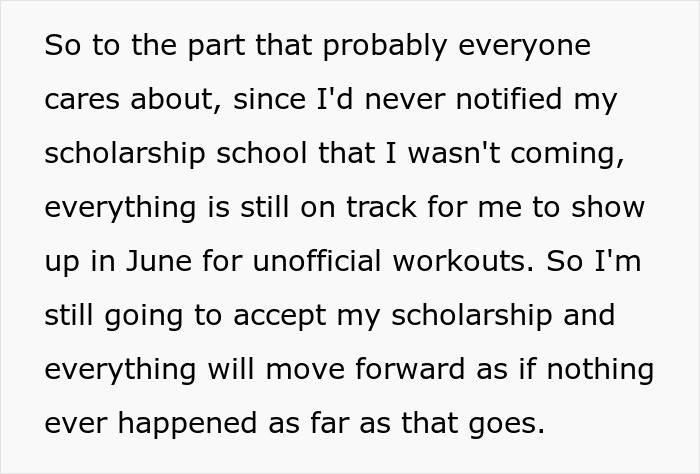
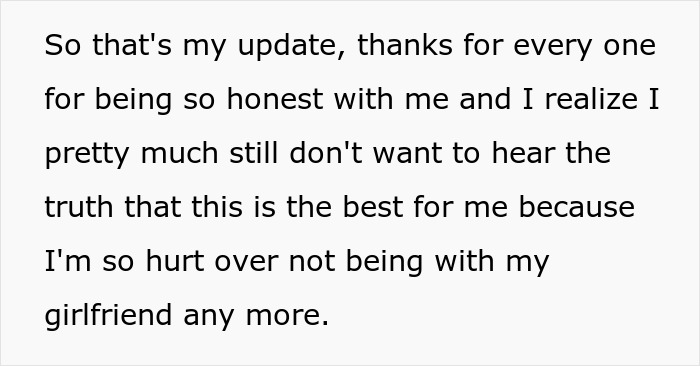
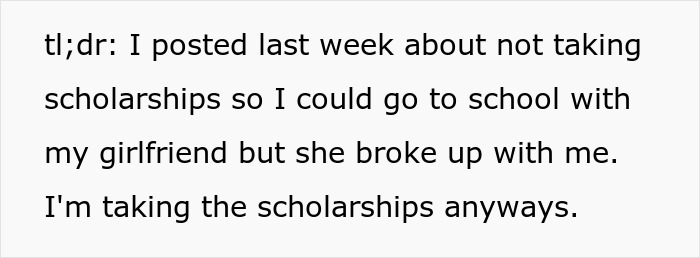
Image credits: Betterdeadred





By entering your email and clicking Subscribe, you're agreeing to let us send you customized marketing messages about us and our advertising partners. You are also agreeing to our Privacy Policy.
Thank you! You've successfully subscribed to newsletters!


if its meant to be, they can survive the distance. And hopefully once he went there, she re-connected
Load More Replies...
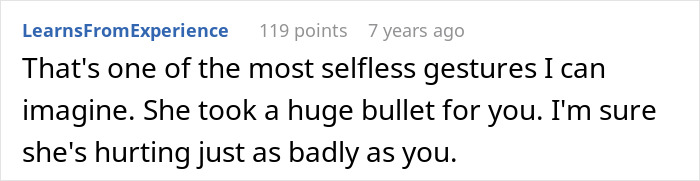
Sounds like his gf really loved him and wasn't going to let him ruin his life.

None percent of Pandas voted for “Balancing both relationship and school”; now we have a clue as to how many high schoolers hang out here. ☺️ Every teenager believes their love is forever; not even ONE of the couples from my high school class married. NOT ONE. They, too, believed each had met “the one,” and that their love was “different” from all other loves. I’m absolutely positive he’s doing the right thing, except for MMA; that is 100% guaranteed brain damage, and if you count the number of champs and then count the number of fighters, you’ll see the odds of becoming a chance aren’t quite as good as “slim to none.” And unless you’re the main event, you’re not making enough to afford your rent, unfortunately. (You don’t hafta believe me; just check out PFL and see how many fighters have had to SUE to get their pay.) So you’re mortgaging your future by giving up your healthy brain in vain hopes that you’ll become a main card fighter. I do hope I’ve seen this guy on UFC cards, though!

I just came across this amazing way to earn $6,000-$8,000 a month online! No selling, no struggle—just a simple system that anyone can follow. Kelly Richards did it, and so can you! Don't miss out on this life-changing opportunity. Follow Here ....... LIVEJOB1.COM
Load More Replies... if its meant to be, they can survive the distance. And hopefully once he went there, she re-connected
Load More Replies... Sounds like his gf really loved him and wasn't going to let him ruin his life.
None percent of Pandas voted for “Balancing both relationship and school”; now we have a clue as to how many high schoolers hang out here. ☺️ Every teenager believes their love is forever; not even ONE of the couples from my high school class married. NOT ONE. They, too, believed each had met “the one,” and that their love was “different” from all other loves. I’m absolutely positive he’s doing the right thing, except for MMA; that is 100% guaranteed brain damage, and if you count the number of champs and then count the number of fighters, you’ll see the odds of becoming a chance aren’t quite as good as “slim to none.” And unless you’re the main event, you’re not making enough to afford your rent, unfortunately. (You don’t hafta believe me; just check out PFL and see how many fighters have had to SUE to get their pay.) So you’re mortgaging your future by giving up your healthy brain in vain hopes that you’ll become a main card fighter. I do hope I’ve seen this guy on UFC cards, though!
I just came across this amazing way to earn $6,000-$8,000 a month online! No selling, no struggle—just a simple system that anyone can follow. Kelly Richards did it, and so can you! Don't miss out on this life-changing opportunity. Follow Here ....... LIVEJOB1.COM
Load More Replies...














 No fees, cancel anytime








28
9