Get Premium
Dark mode theme is available exclusively for premium users. Learn more about the benefits of subscribing.
No fees, cancel anytime.

 Dark Mode Ad-Free Browsing Unlimited Content
 Ad-Free Browsing Unlimited Content Dark Mode
Join 1.2 million Panda readers who get the best art, memes, and fun stories every week!
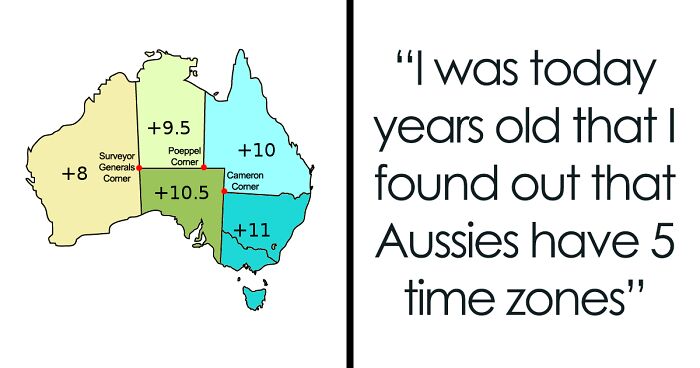
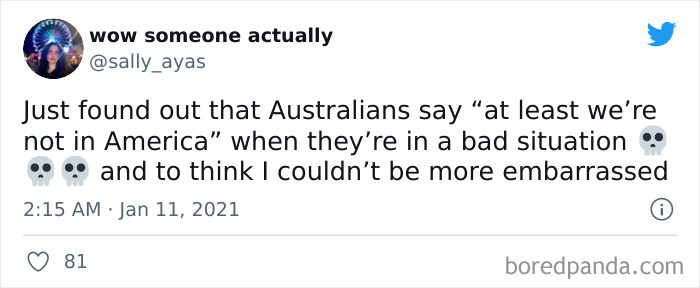
Quick, Pandas, what are the first few things that pop into your mind when I mention Australia? If we were to go by stereotypes alone, odds are that you might have thought along the lines of poisonous wildlife, koalas, kangaroos, boisterous yet friendly locals, God-tier surfing, delicious barbeques, and all-around having a great time at the beach. However, Australia is far more than just what we learn about it from movies, TV shows, and the news (though those can help us get a better handle on the culture). And a lot of the magic lies in the language.
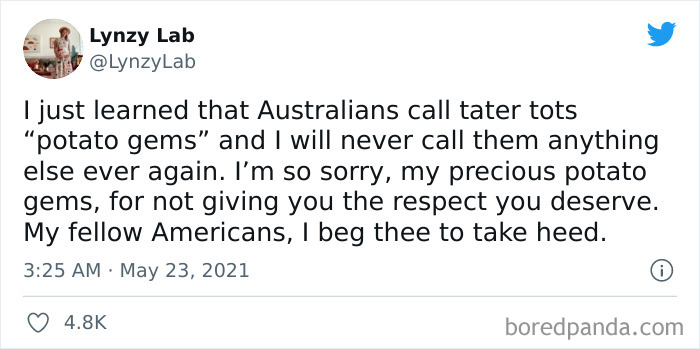
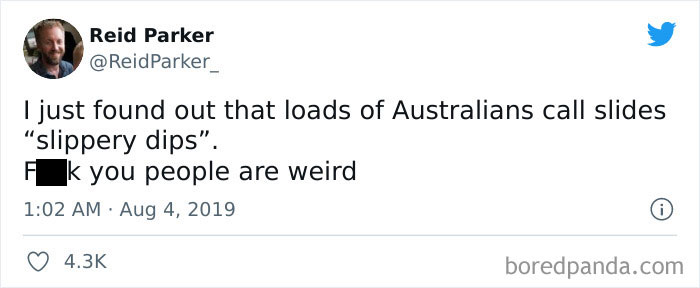
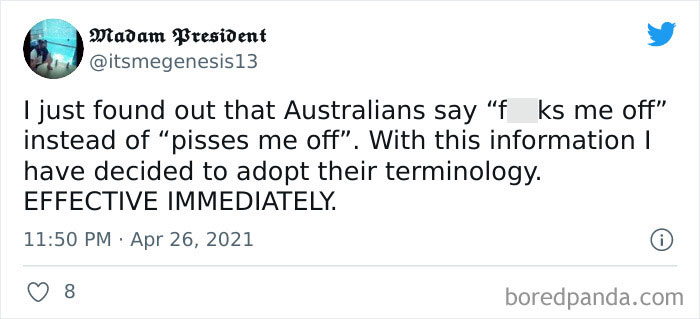
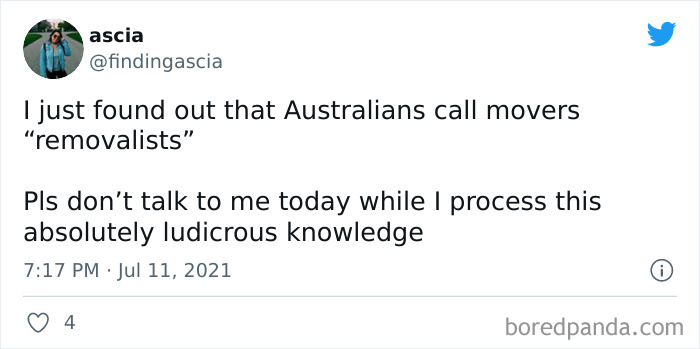
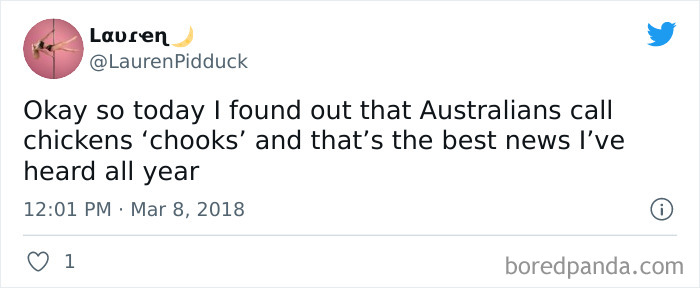
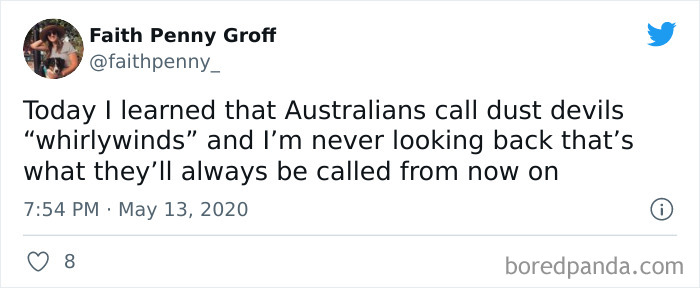
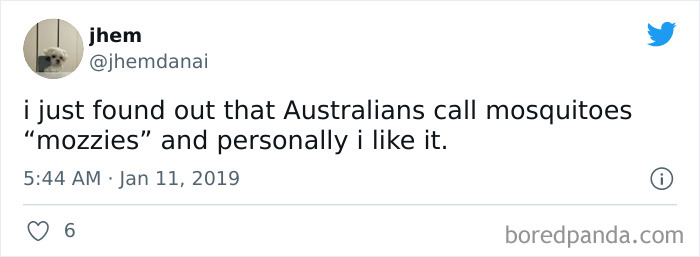
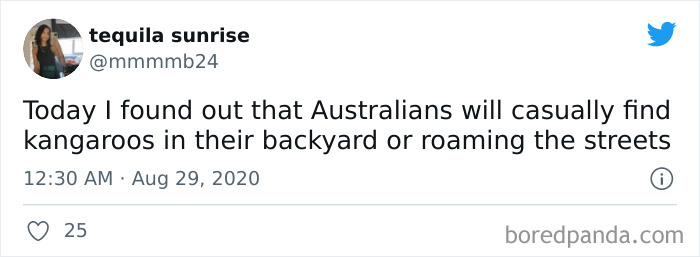
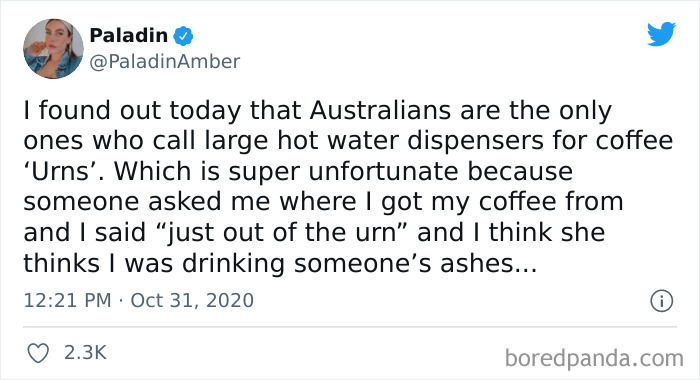
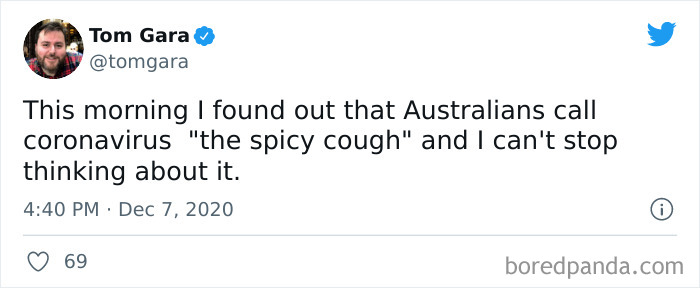
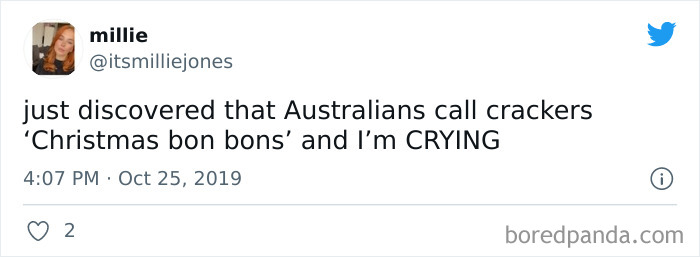
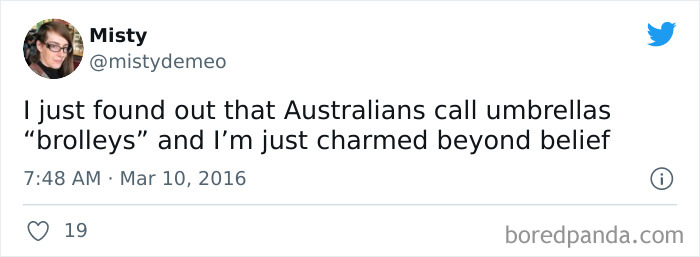
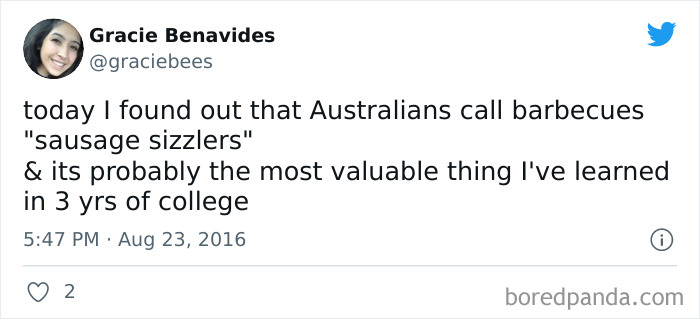
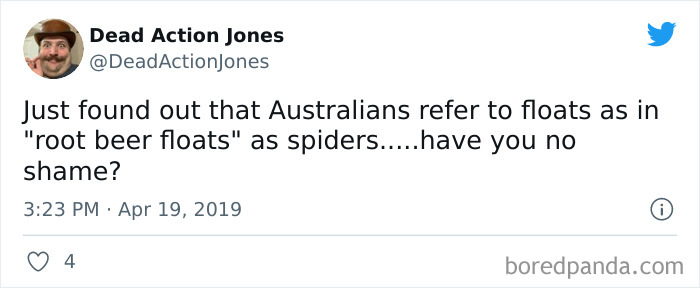
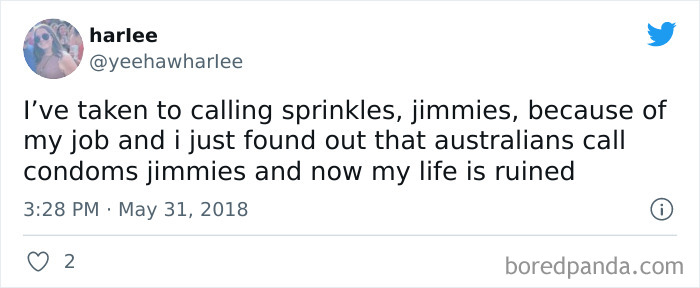
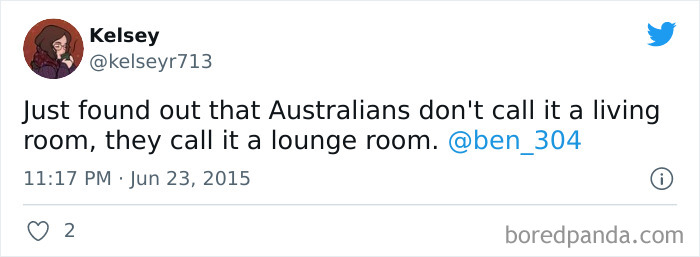
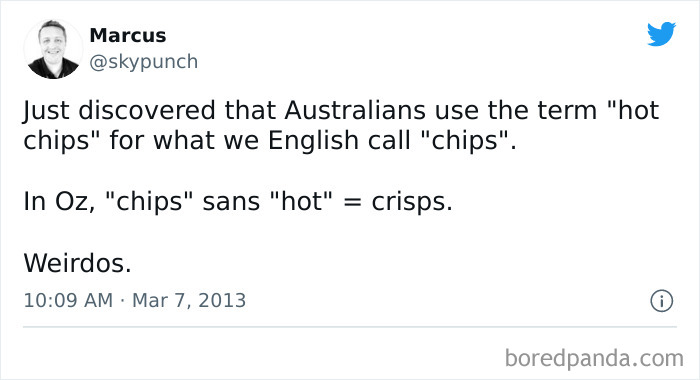
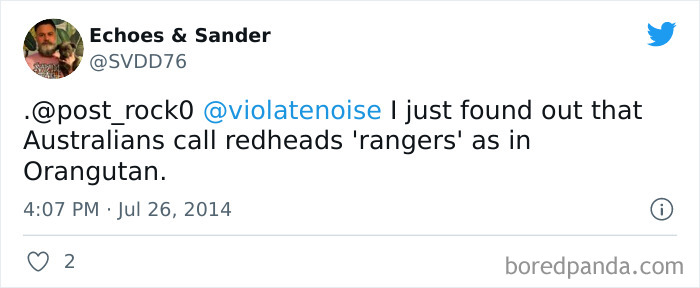
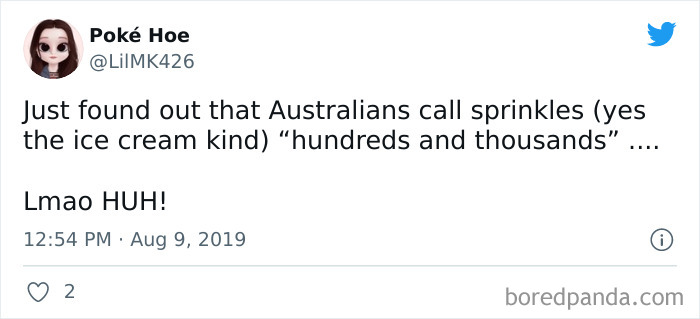
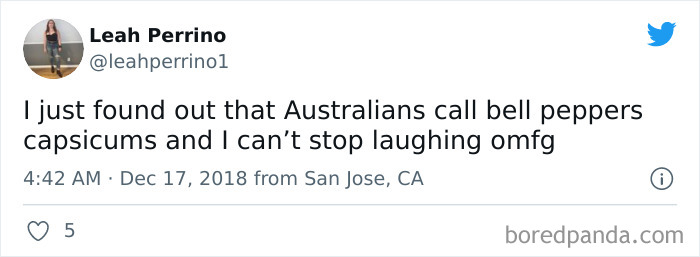
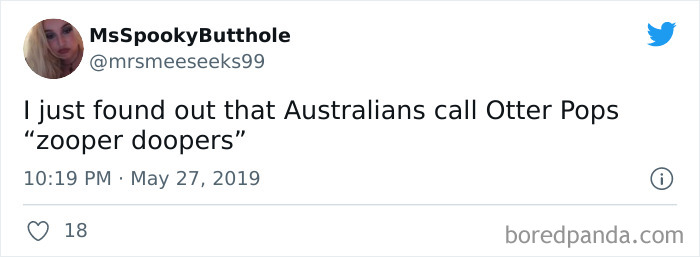
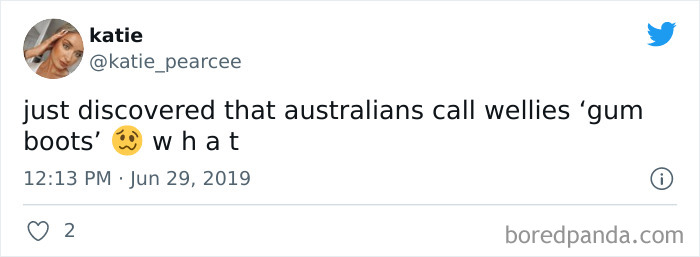
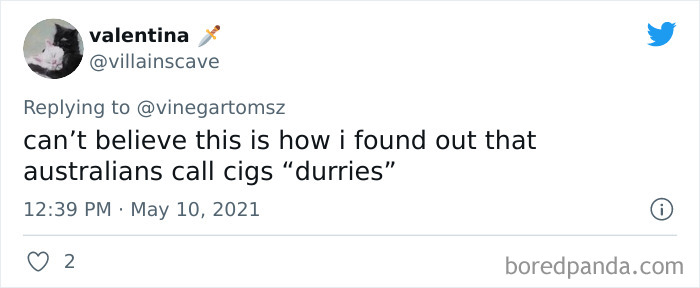
Sure, we might all be speaking English, but Australians have a whole host of colorful phrases, fun expressions, stunning slang and take some truly magnificent linguistic liberties that are just as impressive as the country’s vast biodiversity. And Bored Panda has traveled all over Twitter to share how non-Australians reacted when they learned about some of these interesting turns of phrase, as well as a sprinkling of some other interesting Aussie facts. Cultural quirks that we love? You bet! Of course, keep in mind that some of these phrases are just the internet having fun and taking the mickey.
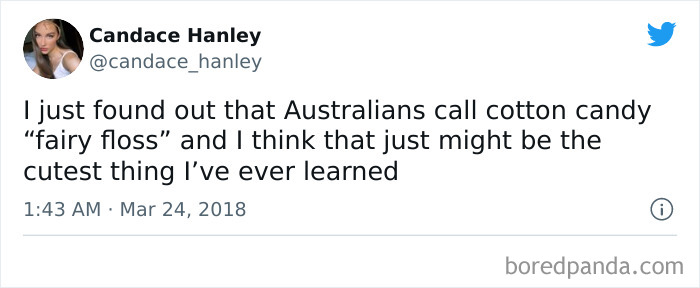
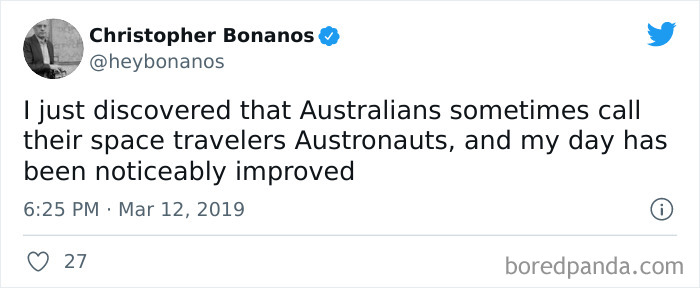
Scroll down, upvote your favorite tweets, and let us know which of them made your day the most, dear Pandas. Personally, I think that saying ‘fairy floss’ instead of candy floss and calling astronauts ‘Austronauts’ is truly, deeply ingenious.
I was curious to learn about how differences in the same language develop in different places, how expressions get entrenched in languages, and how we can become more aware of fun linguistic tendencies in our native tongues, so I reached out to Lisa McLendon at the University of Kansas.
"Any living language is always changing, and different regions/groups/subcultures take the language in different directions," she told Bored Panda, adding that geography is also a "significant factor" in language change. Lisa is the William Allen White Professor of Journalism and Mass Communications and the coordinator of the Bremner Editing Center at KU. Scroll down for the full interview.
This post may include affiliate links.


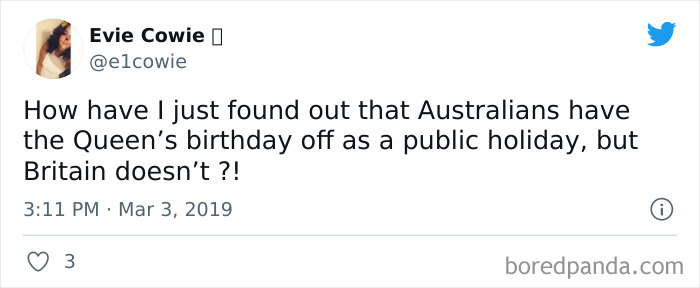
The funny thing is that our public holiday is not actually on the Queens birthday.

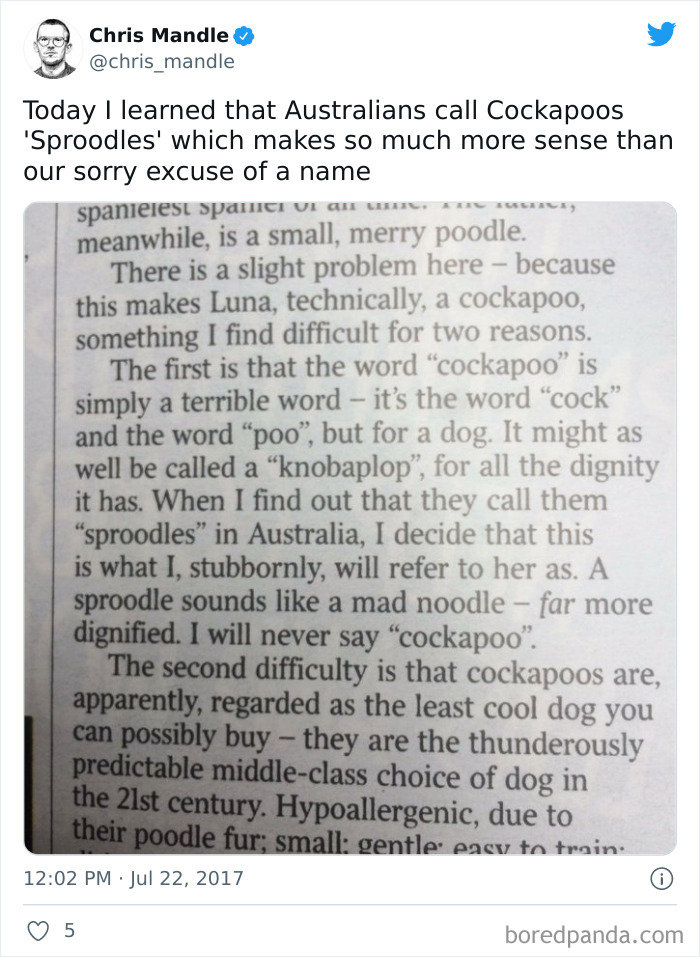
Well this guy is calling his poodle cocker spaniel cross the wrong thing now, he should be calling it a spoodle. A sproodle is a Springer spaniel poodle cross. We also have the much better name for a golden retriever poodle cross, groodle. I mean what dumb person calls them goldendoodle, it's as bad as cockerpoo.

Canadian here - around here we call them that too (though it might be a local / regional thing)

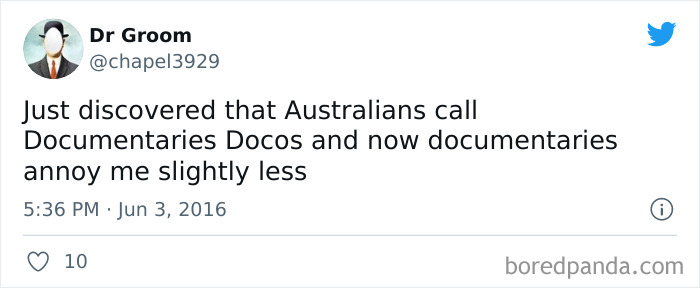
That's actually a common shortening/nickname for many things in Australia. Documentarys are doccos, people named Dave can be Davo, service stations are servos, bottle shops are bottle-os.
Really? Just because a handful of people call it something doesn't mean it's an Aussie term. Another one I have never heard before.


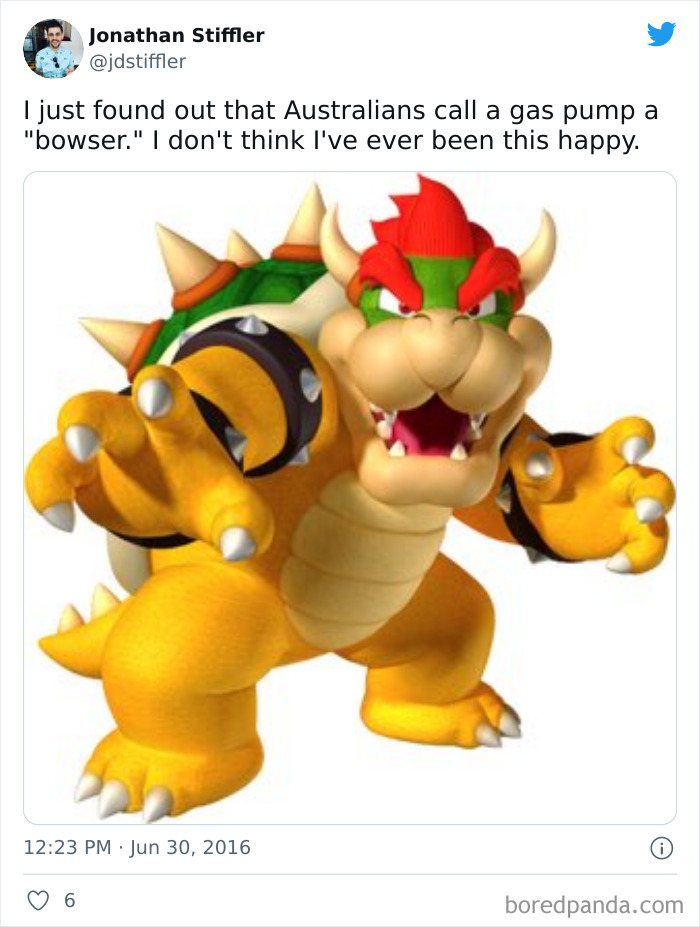
The term derives from Sylvanus Bowser, American inventor of the first self-service fuel pump
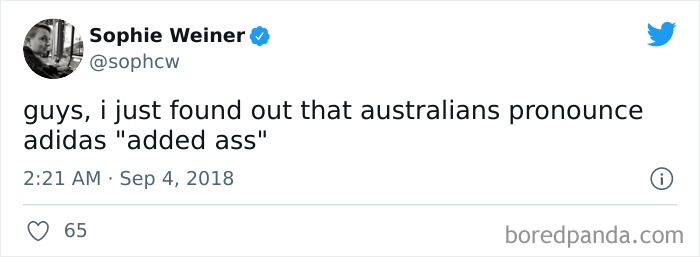
Given it's a German brand, I don't think you pronounce it properly either.
Yes, so do we Brits. Could this be because Australia is a British colony?

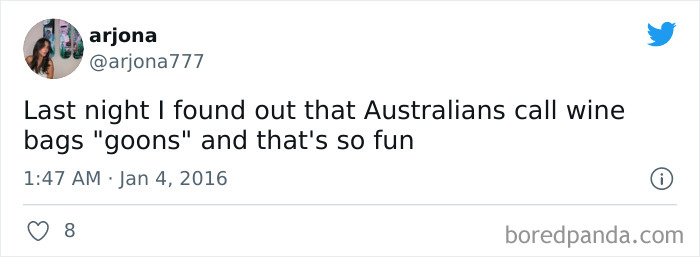
We also play Goon Roulette! It's like Spin the Bottle, except you hang a goon bag from the clothesline, get a bunch of friends to stand around it in a circle and then spin the clothesline. If the goon bag stops near you, you drink! Then spin again!!

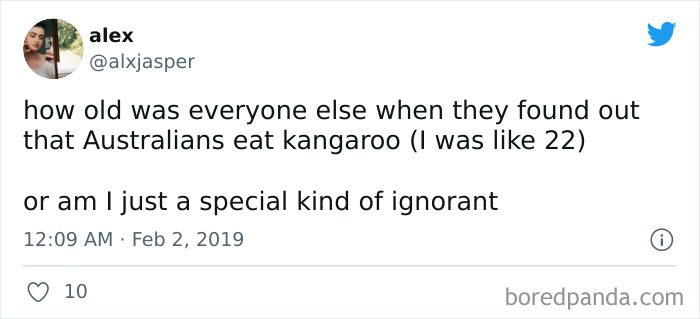
I'm about to make your year. I eat kangaroo sausages for breakfast sometimes, the packaging describes them as kanga bangas. Just gunna leave that here
We were still letting mining companies destroy sacred sites as recently as right now.
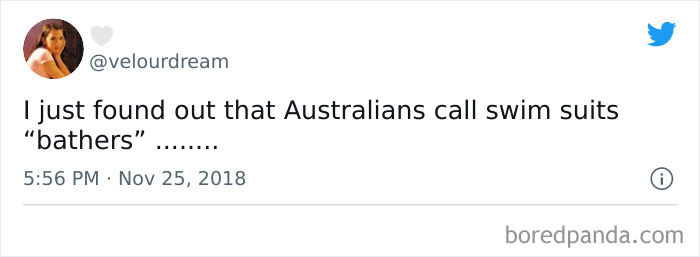
And men's tight swimming trunks are called "Budgie Smugglers!" Because the bulge in the man's bathers looks like he's trying to smuggle a budgie in it. For those of you who don't know, a budgie is a slang term for the bird, the budgerigar. Known as a parakeet, in America.
Both are used. Hundreds and thousands are the small rainbow balls, the other varieties are just sprinkles. And having buttered bread with hundreds and thousands is a kids party food staple called fairy bread.


Rubber boots were first made of "gum rubber." How did Wellington get involved?
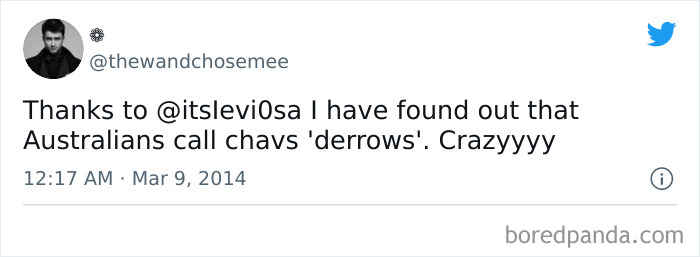
Derro's are often used to describe people that are like trouble makers, druggies, look unkempt and ratty etc. It is an insult.
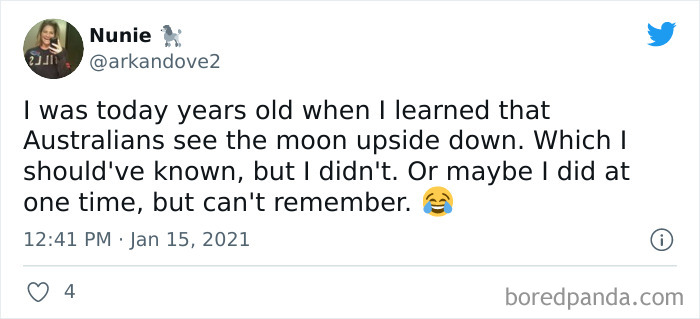
Yes, New Zealanders and everyone else South of the Equator see it the right way up because we have a special corrective lens on the dome.

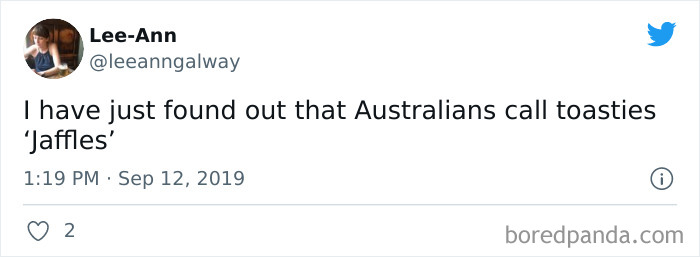
A jaffle is a very specific thing though. A jaffle is a toasted sandwich with the edges sealed shut in the Jaffle maker (almost like a pie maker). A toastie is made in a sandwich press (flat)
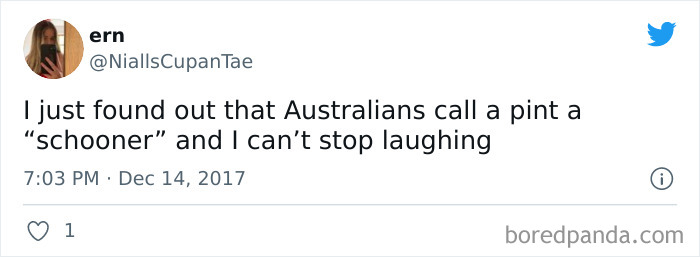
A pint and schooner are not the same. You order a pint and a schooner and you will see the difference.
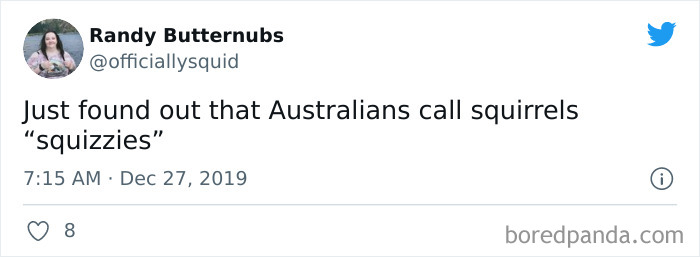
That's not what squizzies means in Australia. We don't have squirrels so it's not something most would bother to abbreviate.
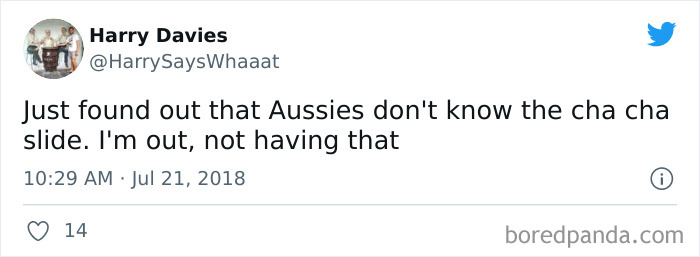
Not as bad as finding out no other countries know the nutbush dance by Tina turner and its not even an Aussie song. It's a song and dance that's often played at parties, weddings etc.
TLDR - Americans find it hilarious and weird because other people say different things to them.
When I think about it, I'm fine with the concept of being amused by words other people use. If it becomes a double-entendre for you, that would be funny. So maybe the problem isn't that they found it funny, but more the "why" and "how" they found it funny. There seems to be some sort of underlying arrogance to these posts where the authors are saying "these silly Australians are using wrong words", which is condescending. And then there is the "shock" that different words are used, which is ignorant. But maybe I'm reading between the lines too much.
Load More Replies...
Many of these are British English and are used in the UK and many other English-speaking countries, rather than being anything specific to Australia.

TLDR - Americans find it hilarious and weird because other people say different things to them.
When I think about it, I'm fine with the concept of being amused by words other people use. If it becomes a double-entendre for you, that would be funny. So maybe the problem isn't that they found it funny, but more the "why" and "how" they found it funny. There seems to be some sort of underlying arrogance to these posts where the authors are saying "these silly Australians are using wrong words", which is condescending. And then there is the "shock" that different words are used, which is ignorant. But maybe I'm reading between the lines too much.
Load More Replies... Many of these are British English and are used in the UK and many other English-speaking countries, rather than being anything specific to Australia.


































 No fees, cancel anytime