Get Premium
Dark mode theme is available exclusively for premium users. Learn more about the benefits of subscribing.
No fees, cancel anytime.

 Dark Mode Ad-Free Browsing Unlimited Content
 Ad-Free Browsing Unlimited Content Dark Mode
Join 1.2 million Panda readers who get the best art, memes, and fun stories every week!
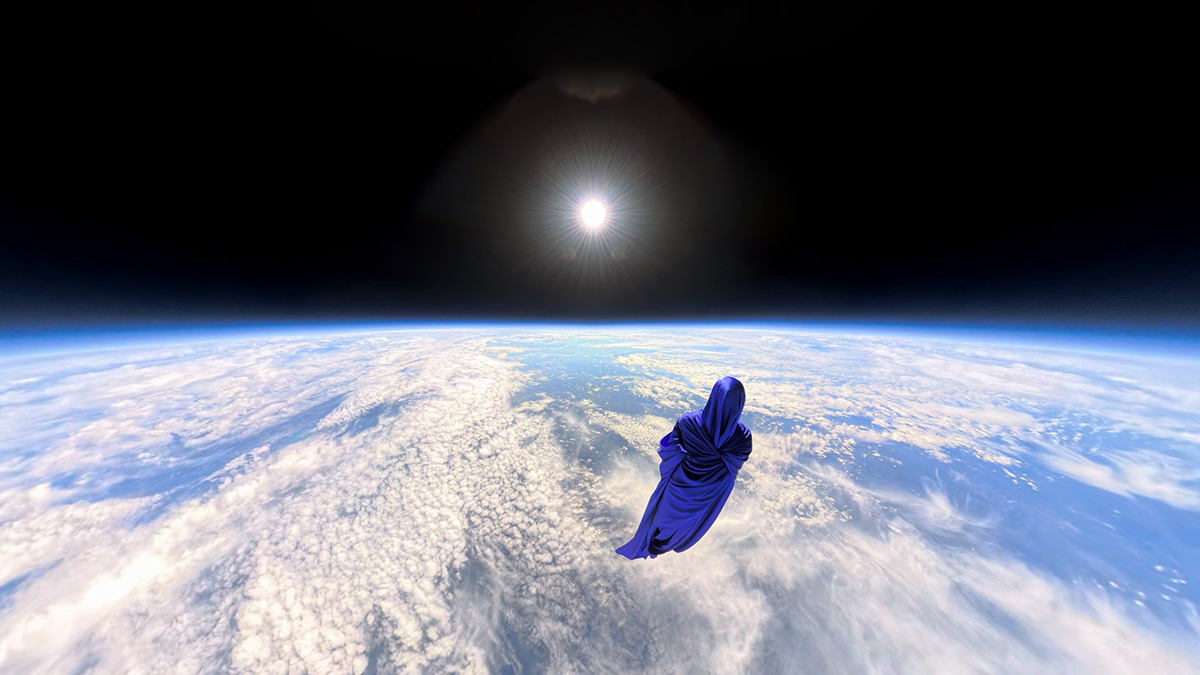
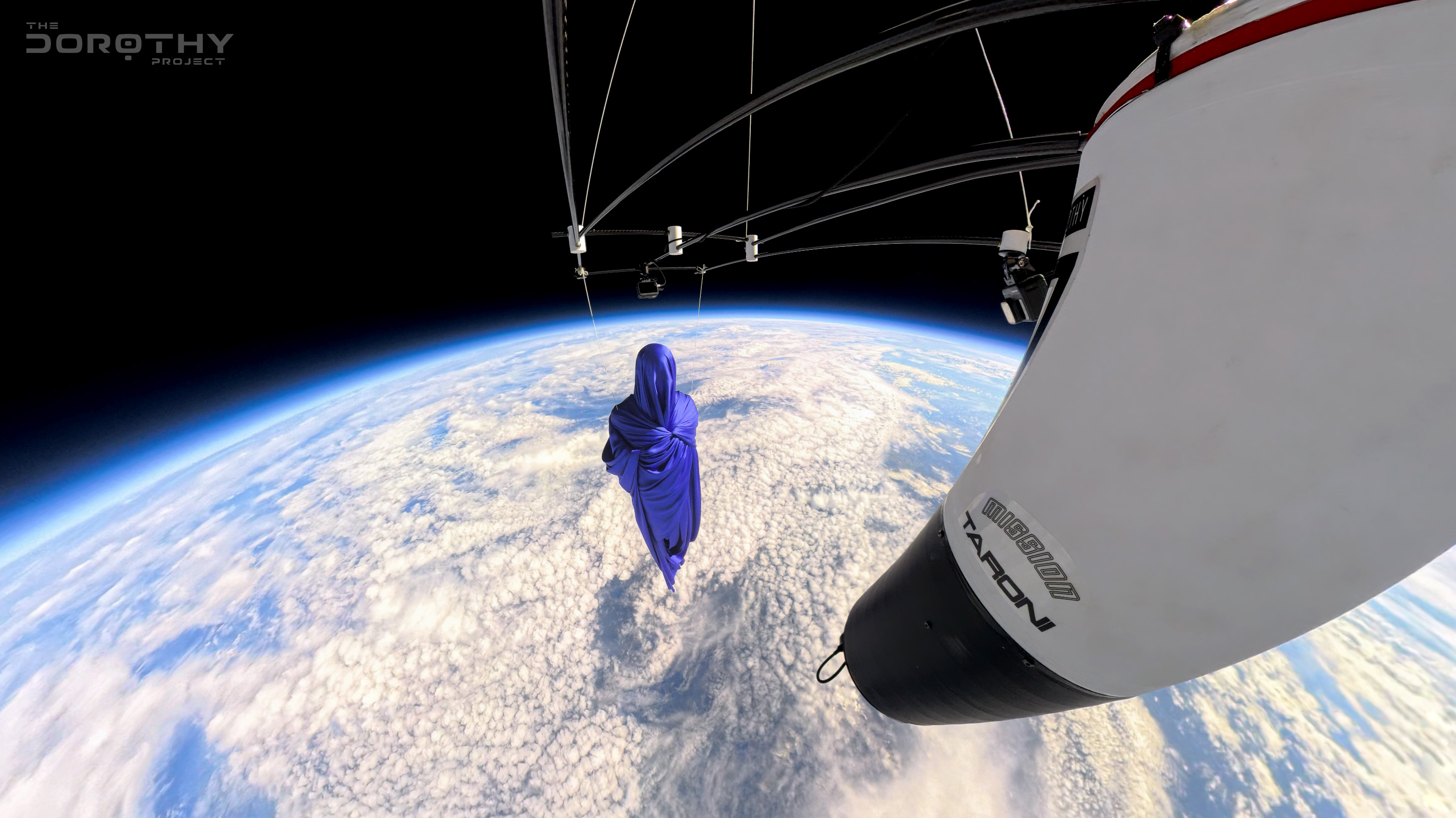
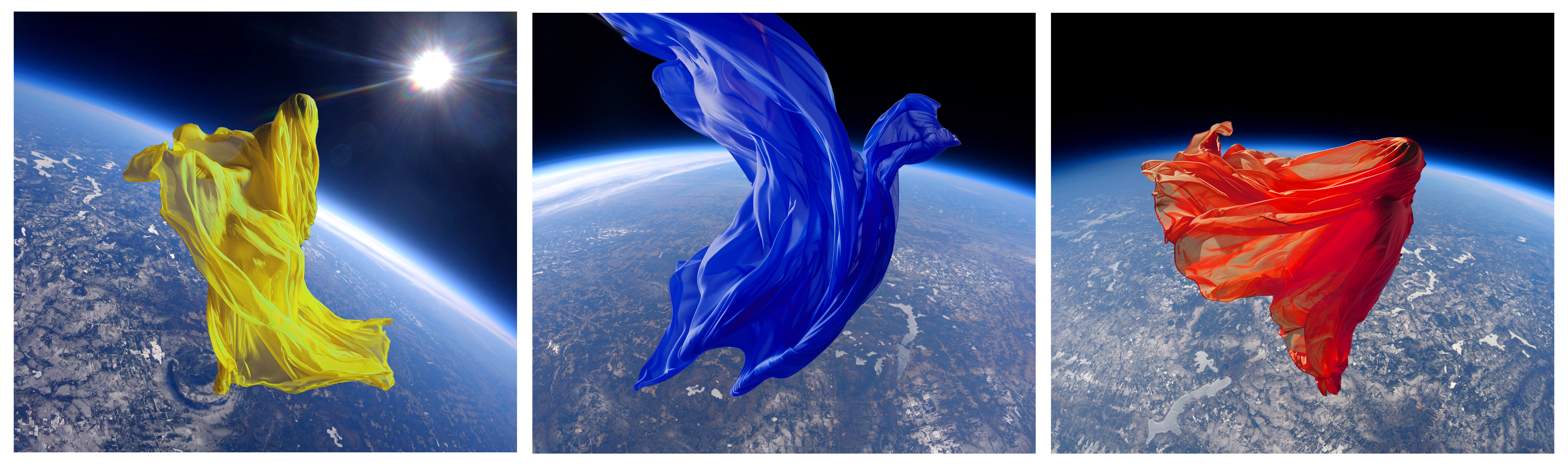
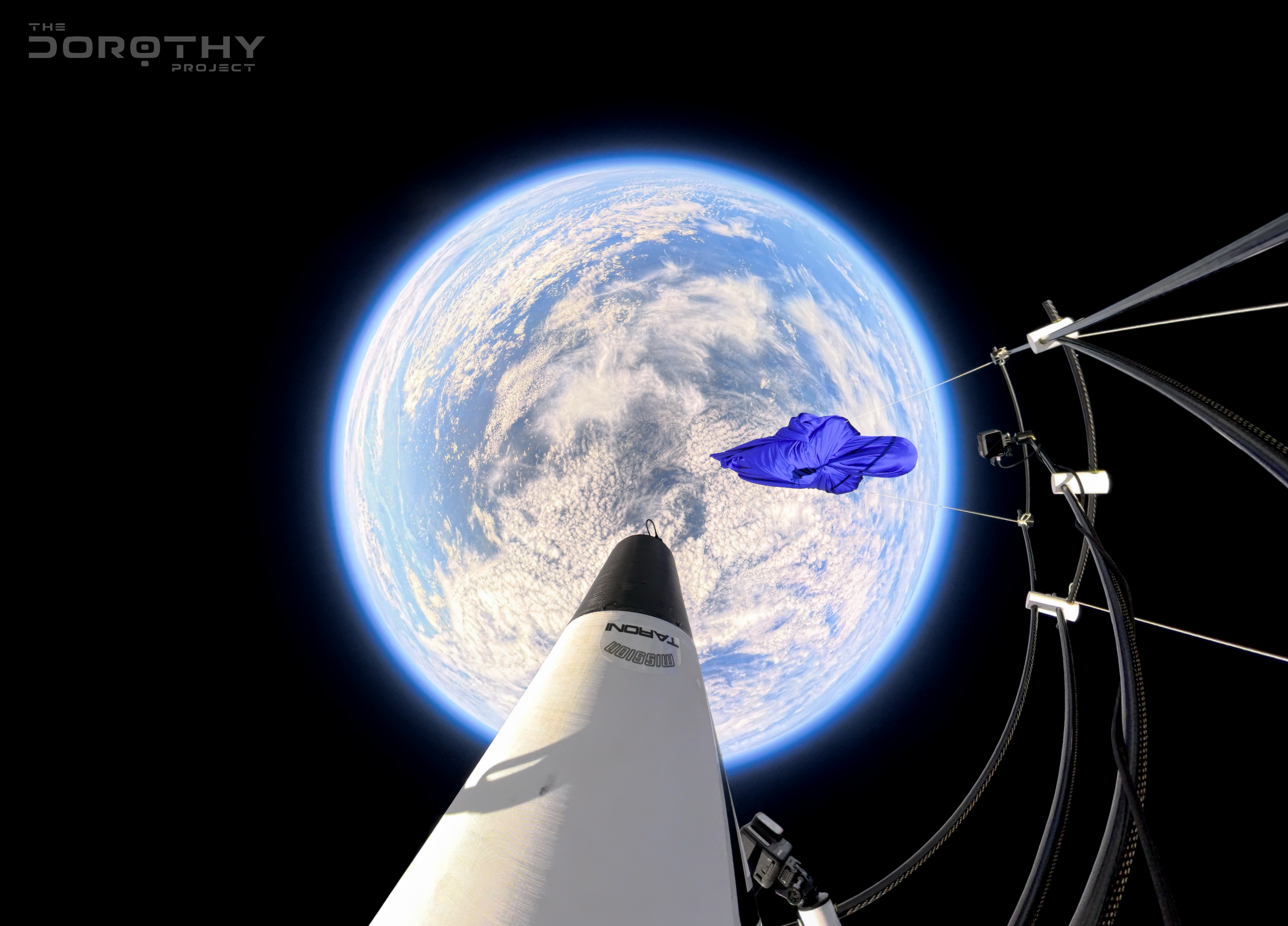
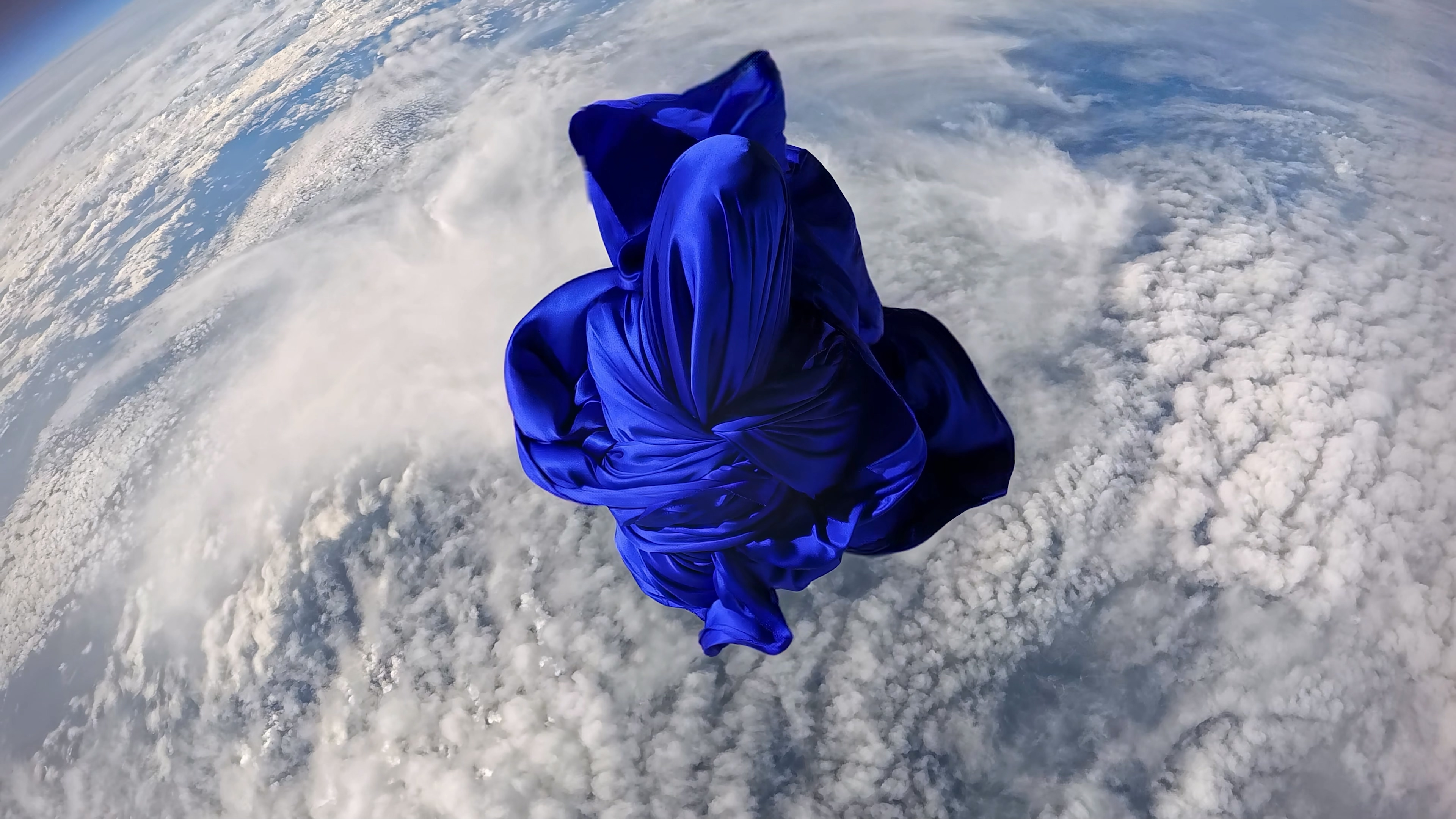
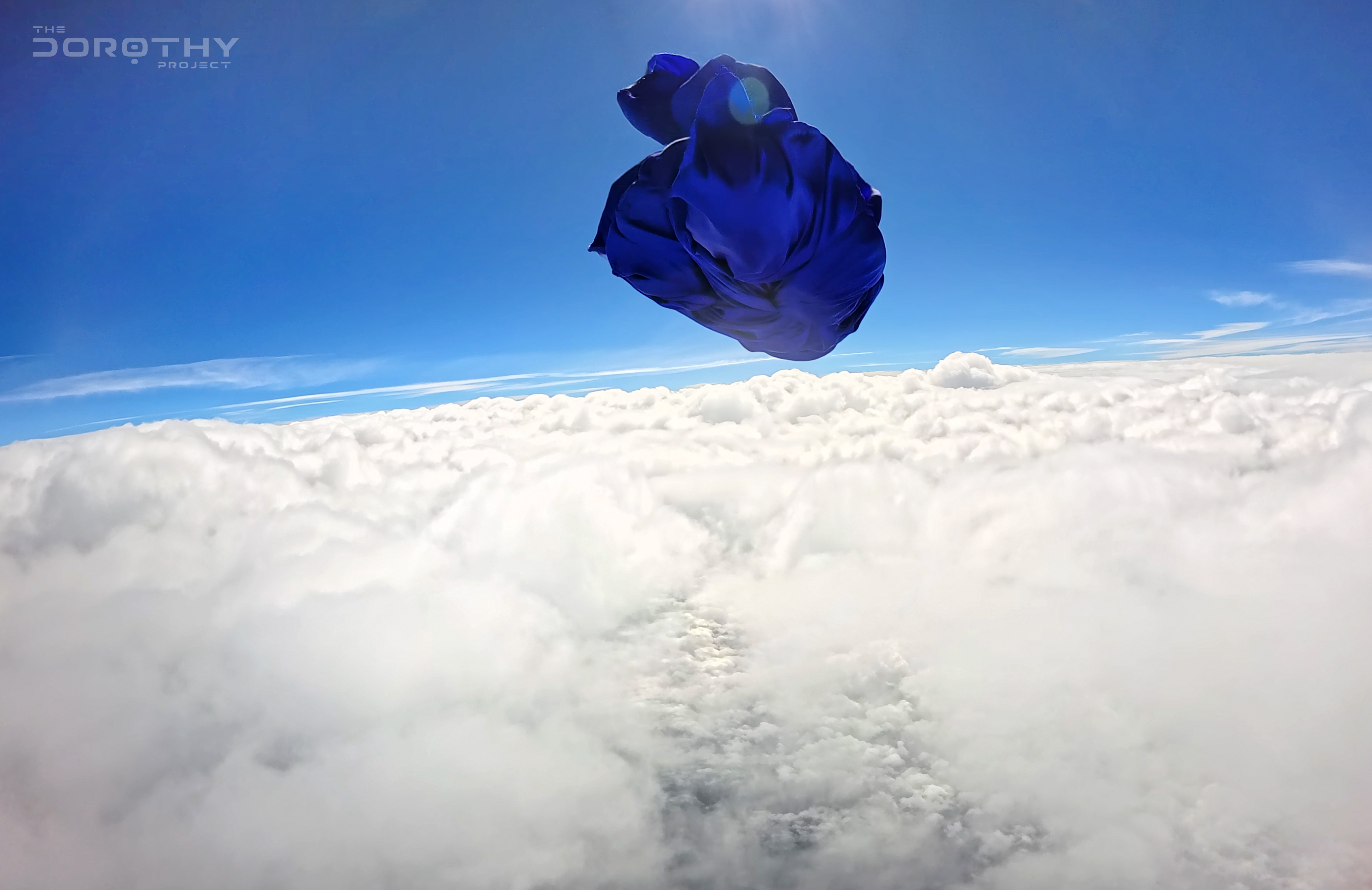
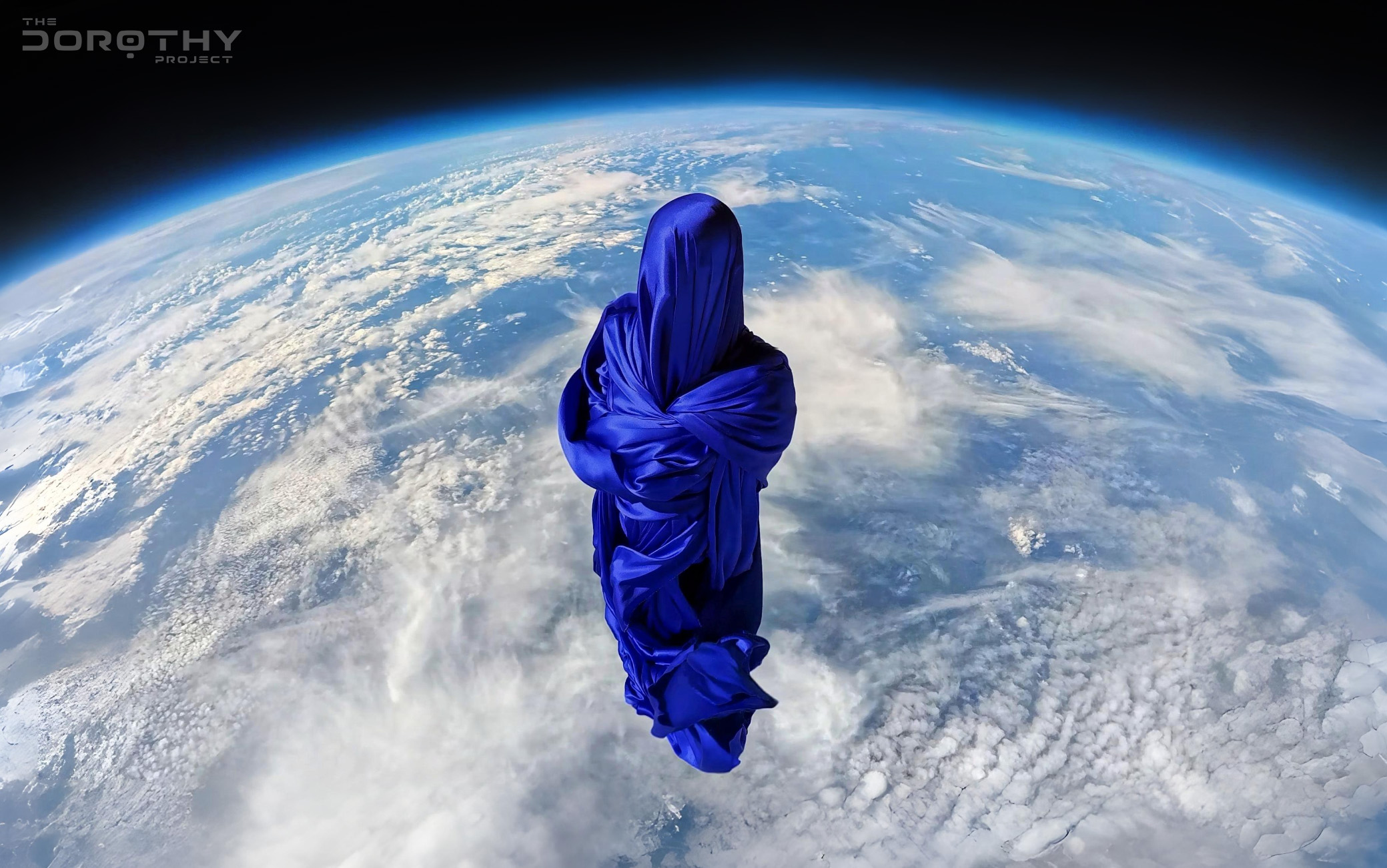
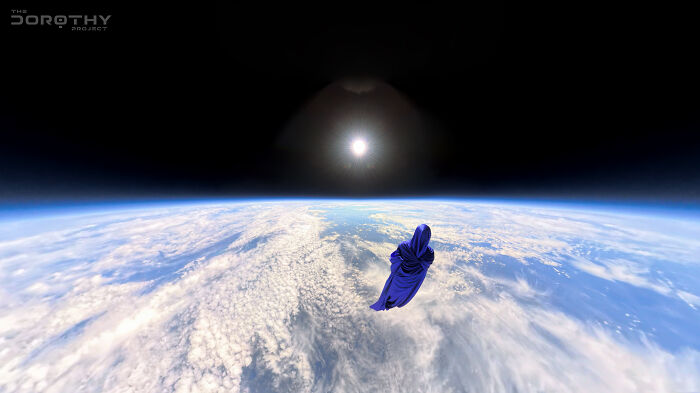
Most people who first saw the images assumed they were looking at something artificial. A generated vision. A well-executed illusion. The human figure suspended above Earth, wrapped in electric blue silk against a black sky, felt too precise, too surreal to belong to reality. But nothing about Mission TARONI is synthetic. Every frame was captured in real conditions, at the edge of space—at 33 kilometers altitude—where more than 99% of Earth’s atmosphere lies below, and the sky turns completely black even in full daylight. What appears impossible is simply unfamiliar.
That misunderstanding is not accidental; it is part of what gives the project its force. We have reached a point where reality, when pushed far enough, resembles fiction. Mission TARONI operates exactly at that threshold. It does not imitate the language of AI or digital creation; it exposes how limited our expectations of the real have become. A piece of silk, a human form, a hydrogen balloon, sunlight—nothing more. And yet, placed in the right conditions, stripped of atmospheric filters and visual comfort, they produce something that feels almost unreal, precisely because it is not constructed to please us.
More info: thedorothyproject.ca | thedorothyproject.ca | Instagram | youtube.com
The work emerged from The Dorothy Project, a Montréal-based collective bringing together artists, engineers, filmmakers, and scientists to create immersive experiences grounded in real scientific phenomena. Their aim was not simply to communicate knowledge, but to reshape perception—to translate complex realities into images that could be felt.
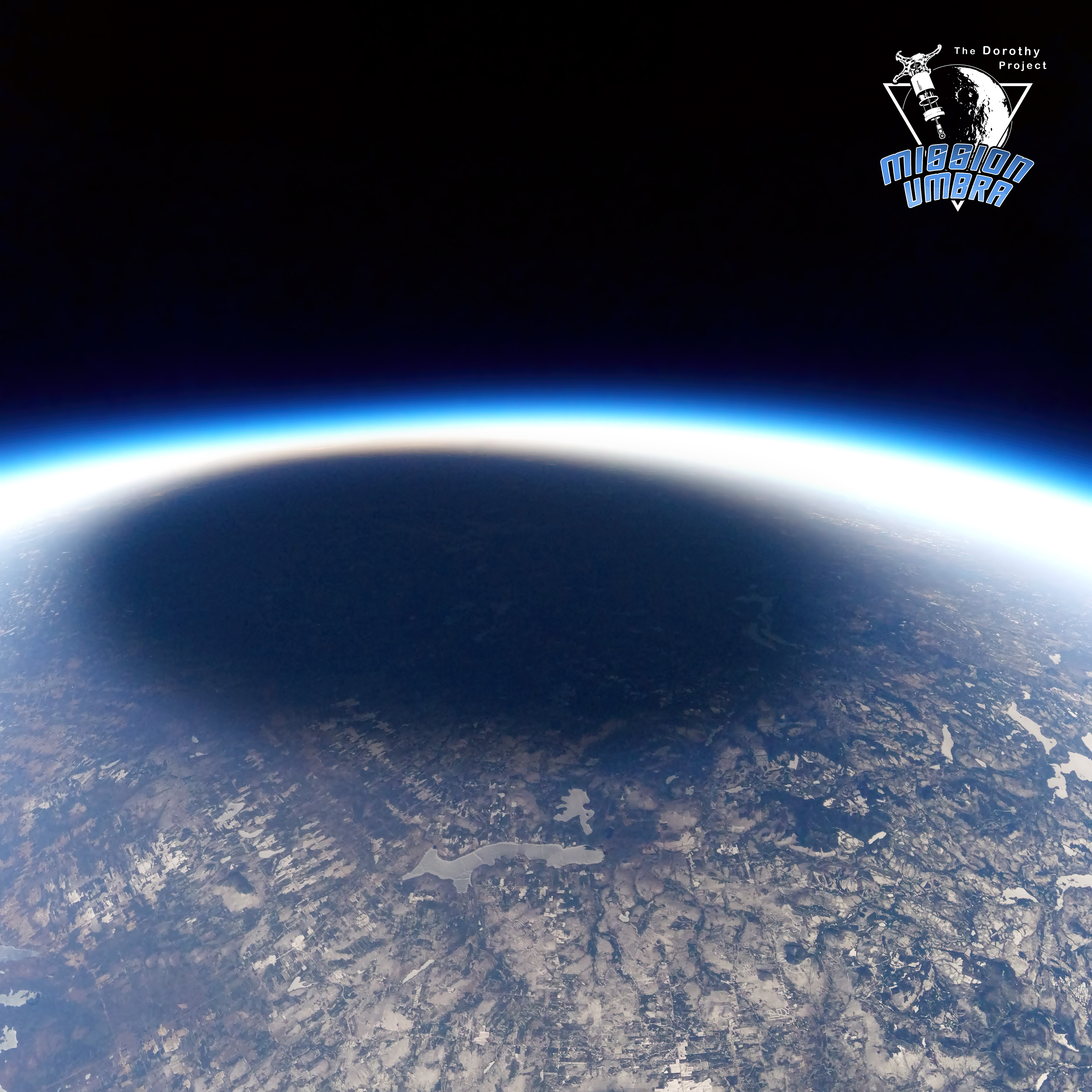
This approach drew directly from the concept of the “overview effect,” the cognitive shift experienced by astronauts when seeing Earth from space, often described as a sudden awareness of its fragility and unity. The Dorothy Project sought to recreate that shift through stratospheric imagery. Their earlier mission, capturing the shadow of the Moon during the April 2024 solar eclipse, resulted in the immersive film Mission UMBRA, screened in galleries, film festivals, and planetariums.
Mission TARONI extended this logic further. Instead of observing Earth, it introduced a human-made object into near-space conditions, allowing the material itself to become part of the phenomenon.
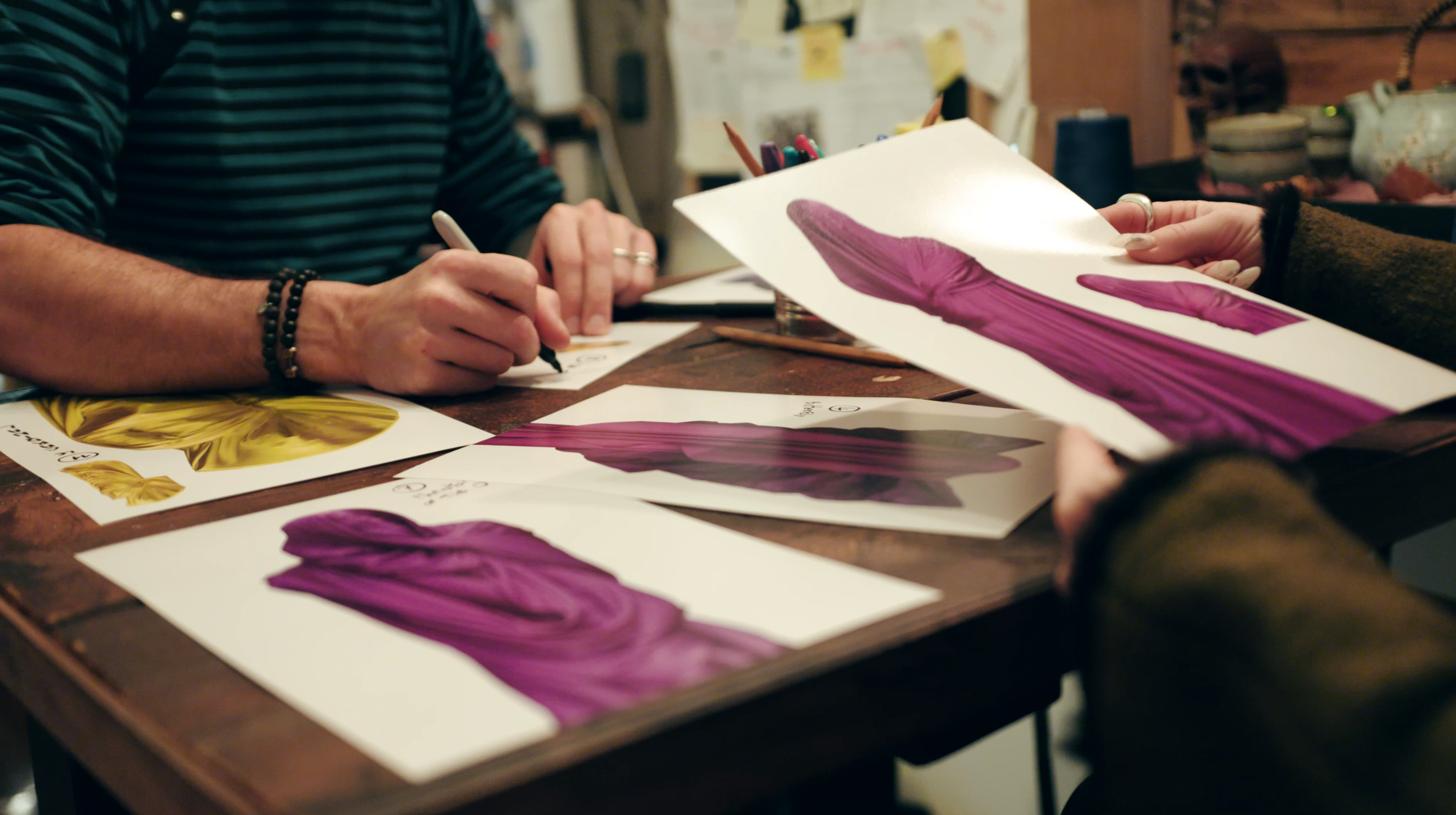
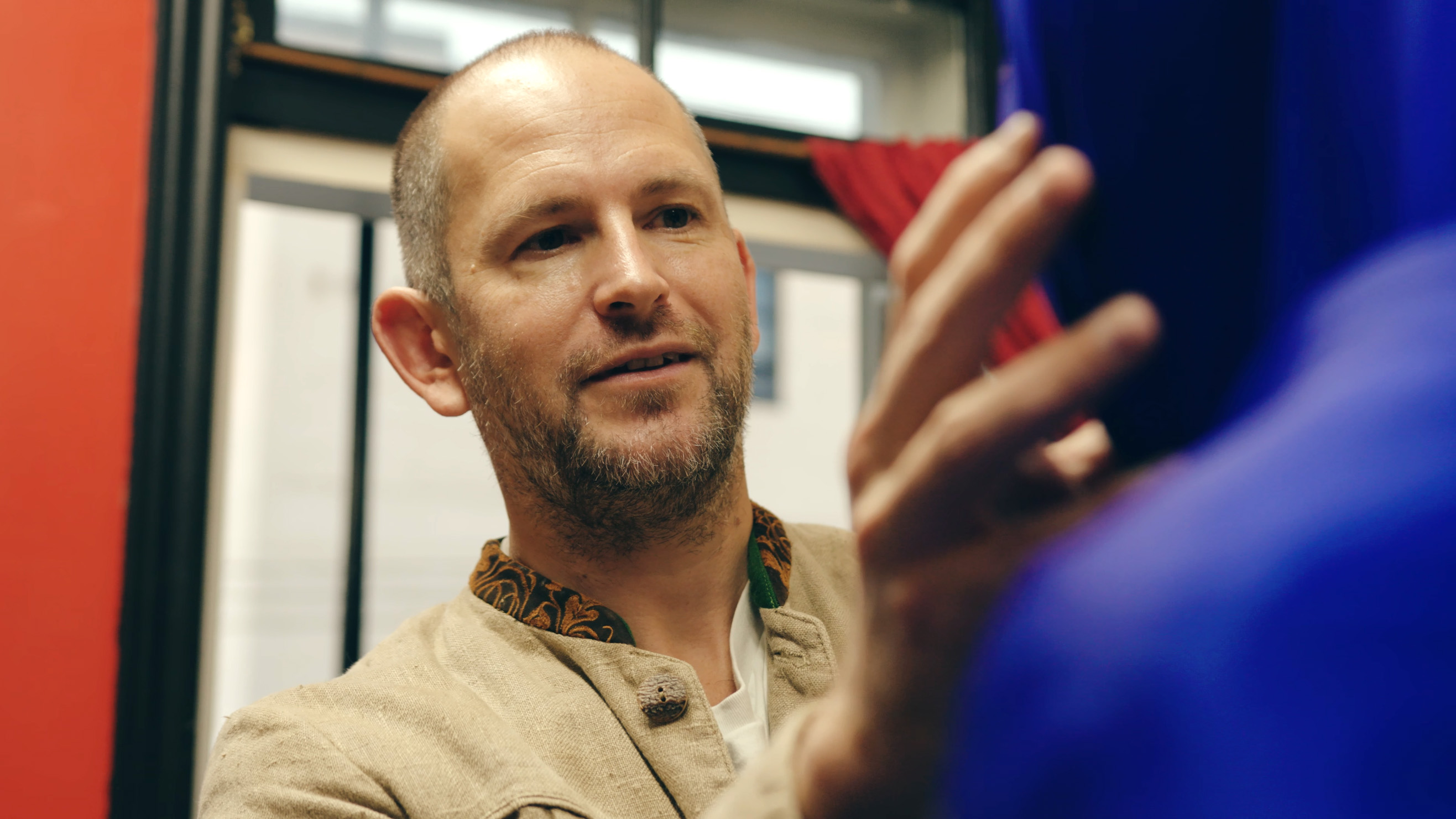
At the origin of the project was an idea developed by Maximilian Canepa, artistic director of Taroni, one of Europe’s oldest silk manufacturers based in Como. Having studied art and photography before returning to lead the family company, Canepa had been exploring how heritage could evolve without being erased—how silk could move beyond its historical role as a symbol of luxury and become a medium capable of expressing contemporary concerns.
The starting point was not technical, but philosophical: what happens when a material shaped by centuries of control is placed in an environment where control disappears? As the project framed it in the interview with Bored Panda, the intention was to explore “the ties between human creation and the natural world,” tracing a relationship defined by dependence, transformation, and responsibility.
That idea found its counterpart in Mathieu Baptista, whose work with stratospheric modules and near-space imaging provided both the technical infrastructure and conceptual alignment to bring the idea into reality.
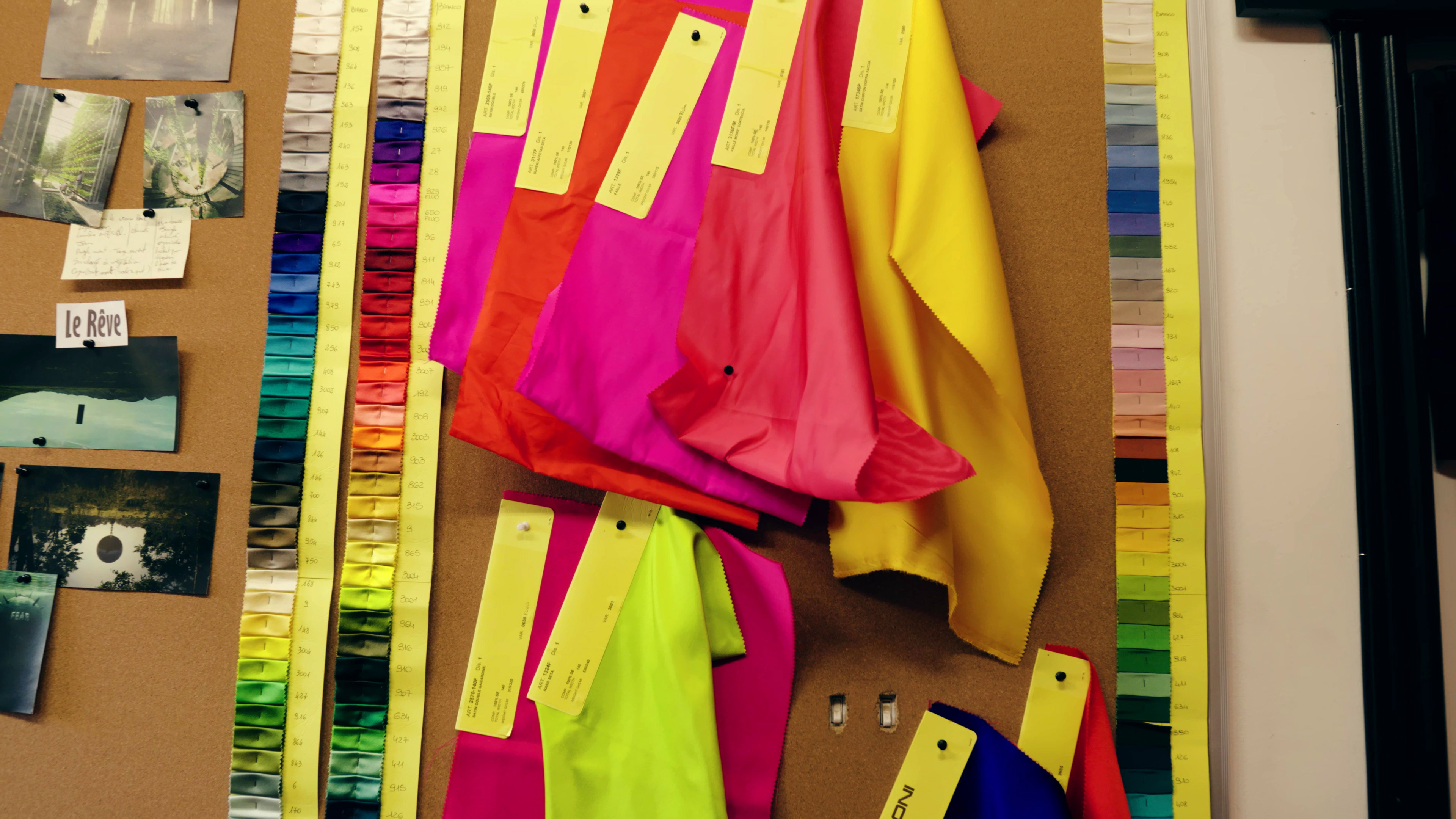
The silk—an ultra-light double satin in a deep Klein blue—was not modified before the flight. Instead, it was exposed to conditions that would fundamentally alter its perception. At 33 kilometers altitude, sunlight was no longer filtered by Earth’s atmosphere. It appeared white rather than yellow, interacting with the material directly.
This was a deliberate artistic intention. As described in the project, “the fabric is illuminated by raw, unfiltered sunlight… revealing a truer expression of its color.” Removed from atmospheric distortion, the silk’s color sharpened, becoming more absolute and less familiar. In this context, the material functioned almost as a sensor—responding to light, gravity, and time rather than simply reflecting them.
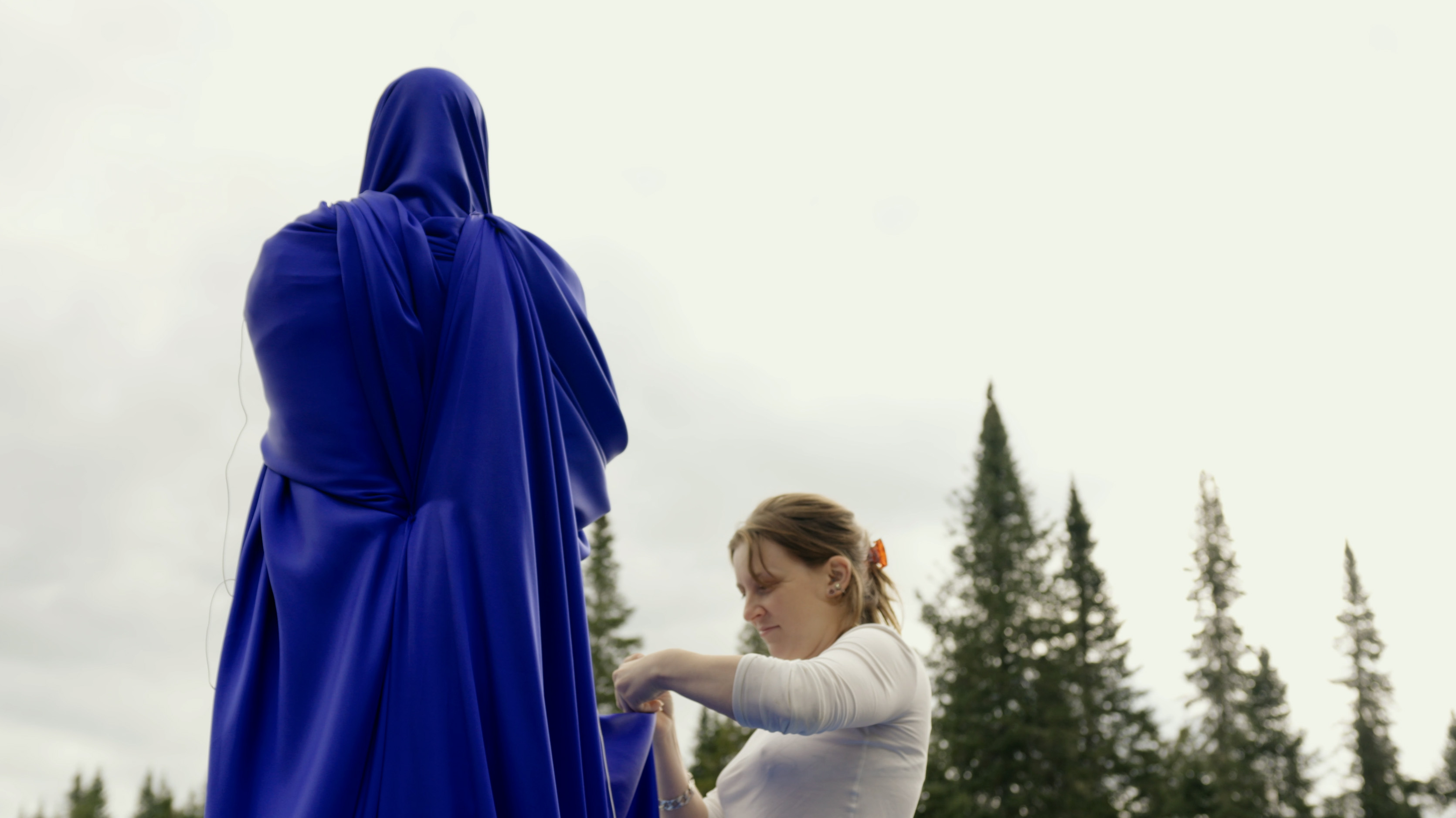
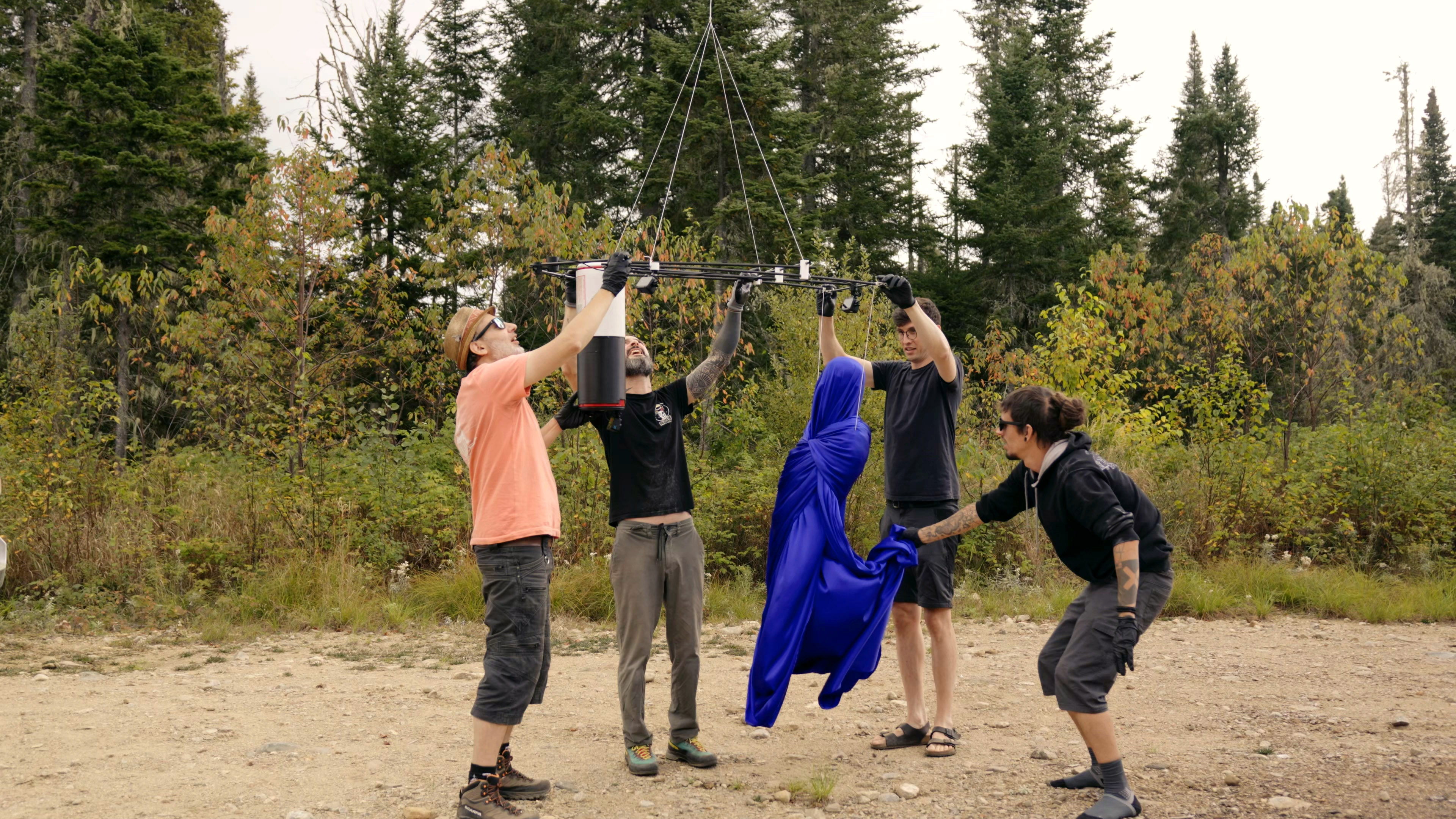
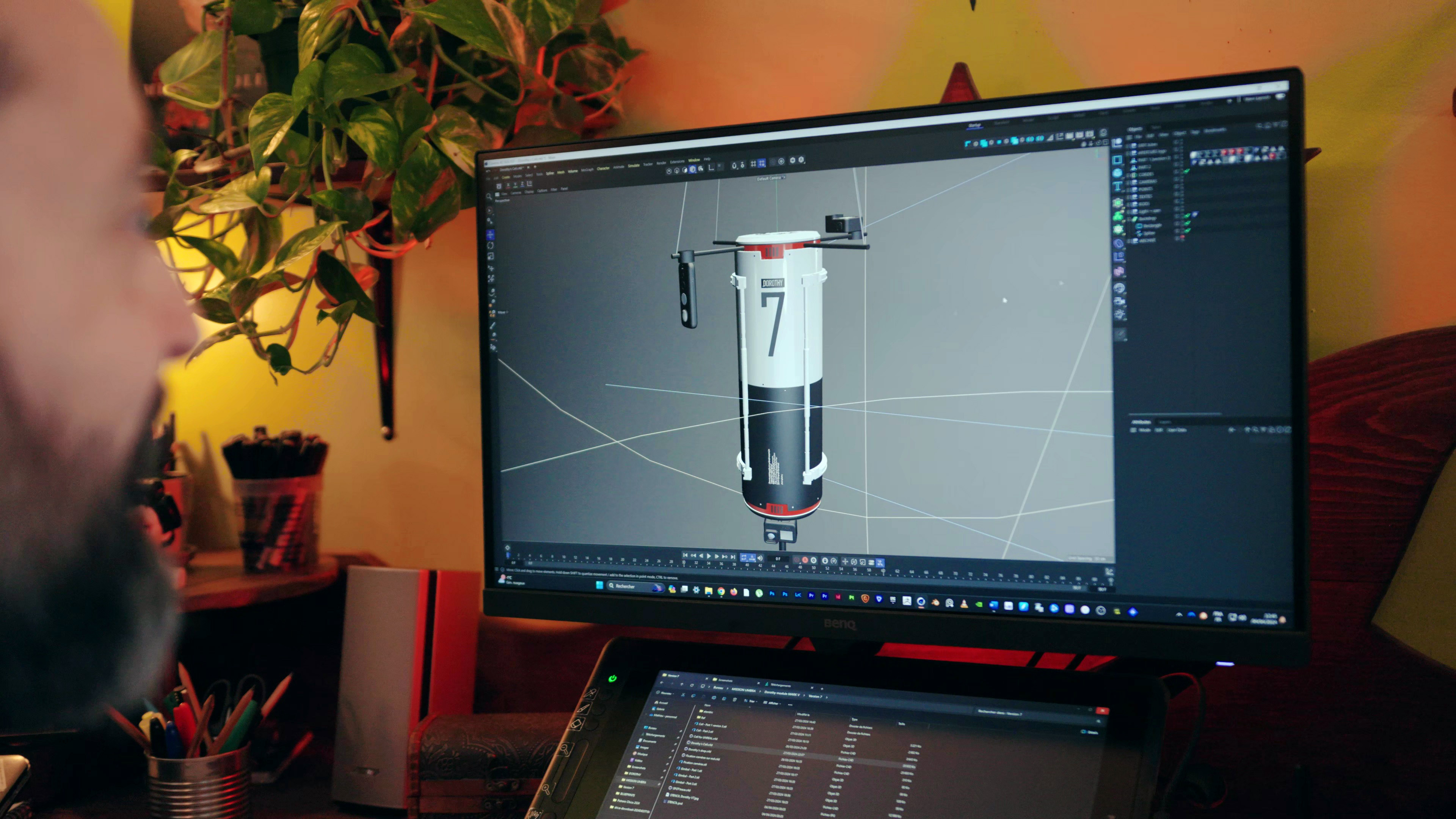
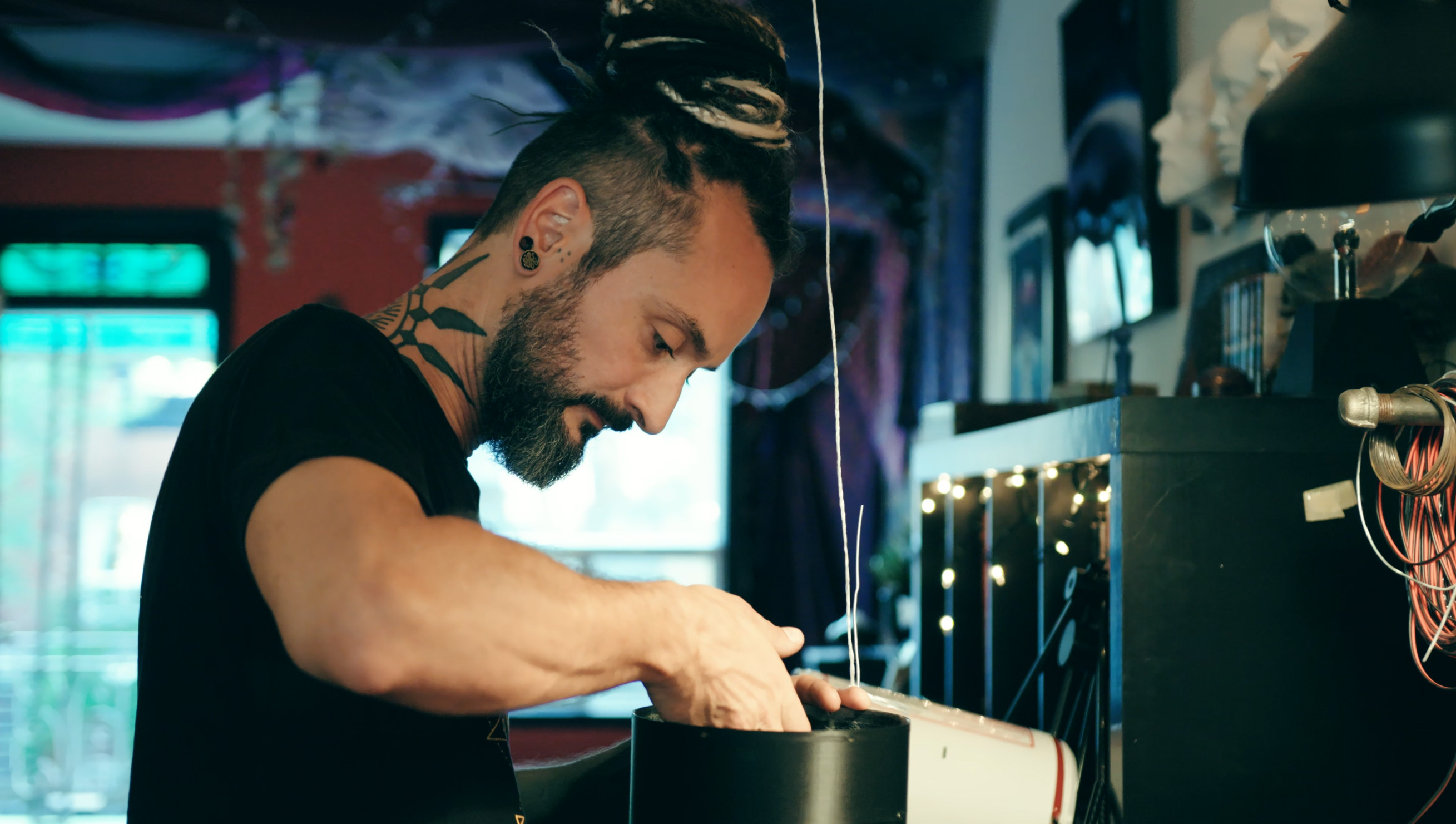
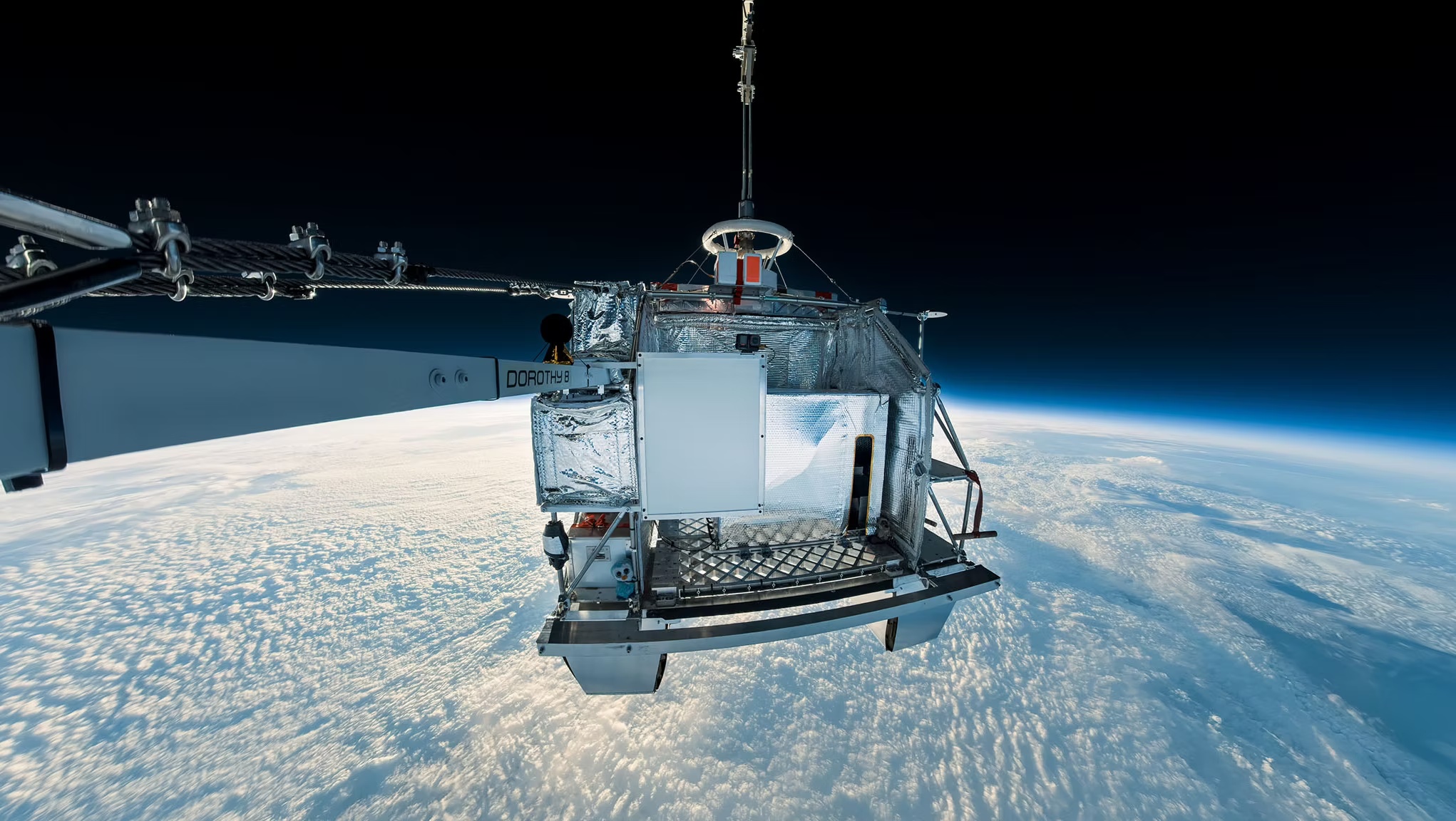
To carry the silk into the stratosphere, the team developed a sculpture that balanced artistic intent with extreme engineering constraints. The mannequin was originally conceived as larger and articulated, with visible facial features, which led to the use of a life-casting process.
But this approach was ultimately reduced. The final structure weighed only 700 grams—a significant engineering constraint. Built from a real human cast yet stripped of identity, it retained proportion while becoming anonymous. As the team noted, this reduction was necessary “to keep the system as light as possible… a crazy engineering challenge.”
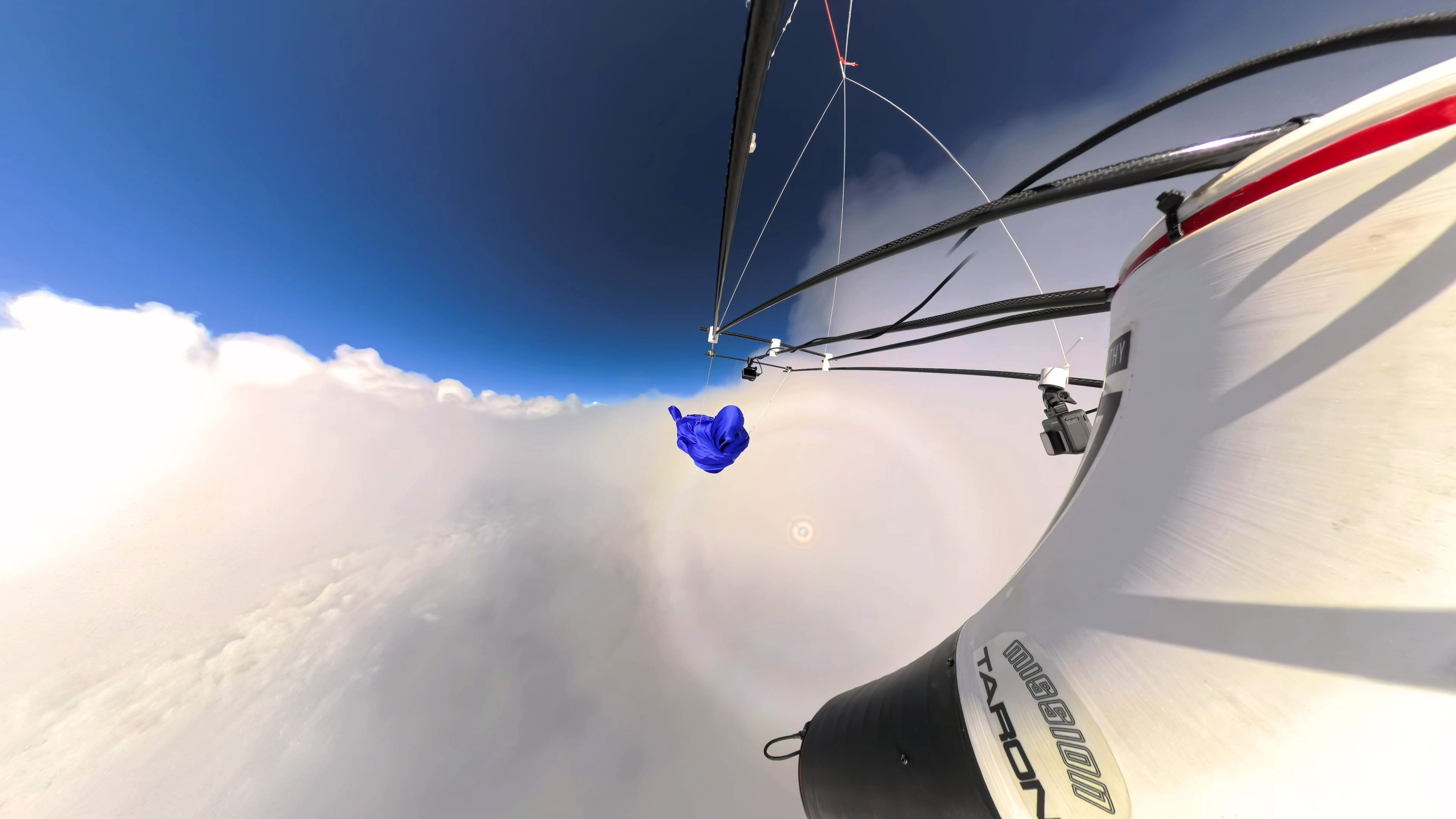
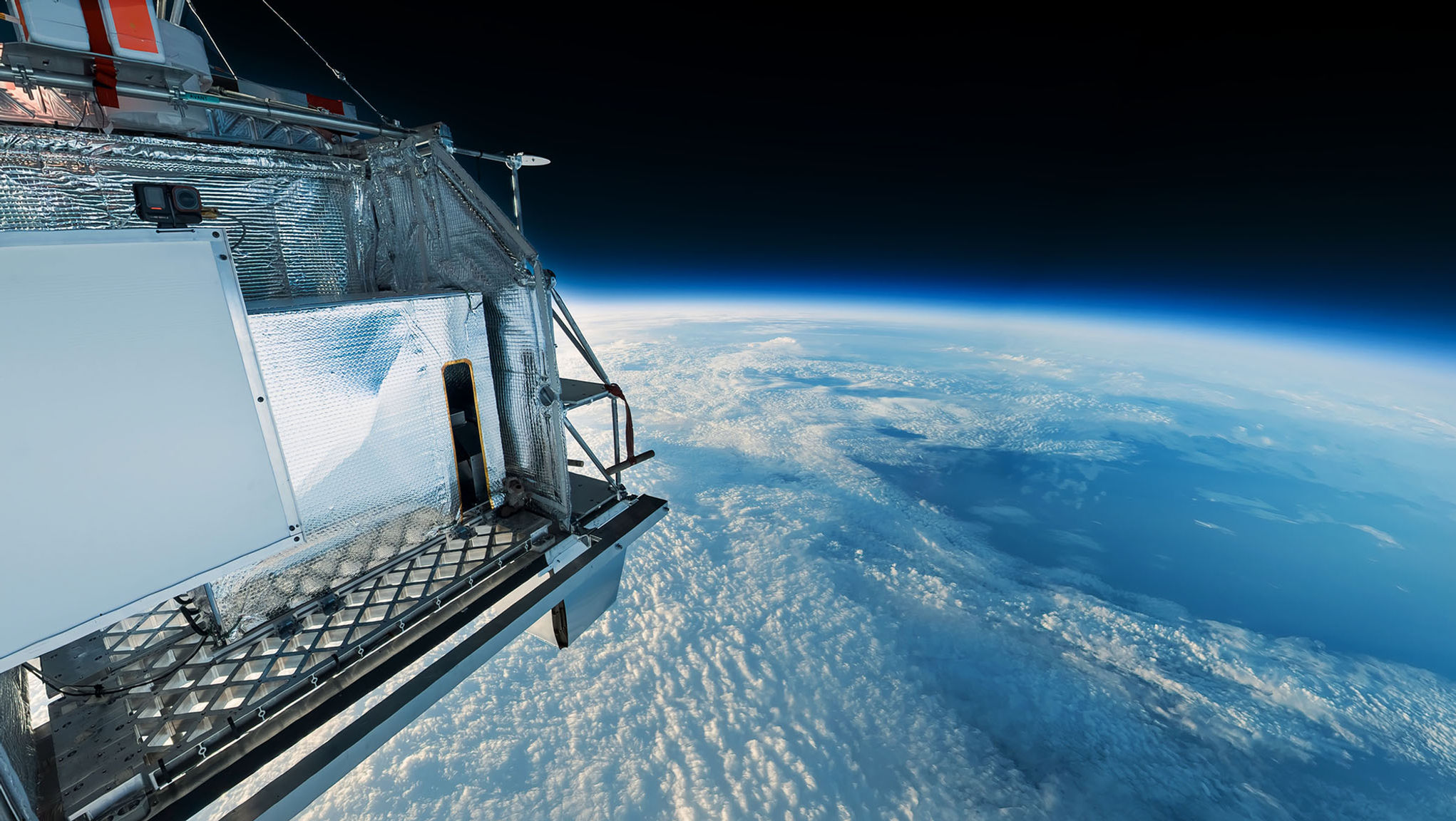
Mounted on a custom carbon-fiber rig and attached to the Dorothy module, the figure became less an individual than a universal presence—designed not to express, but to endure.
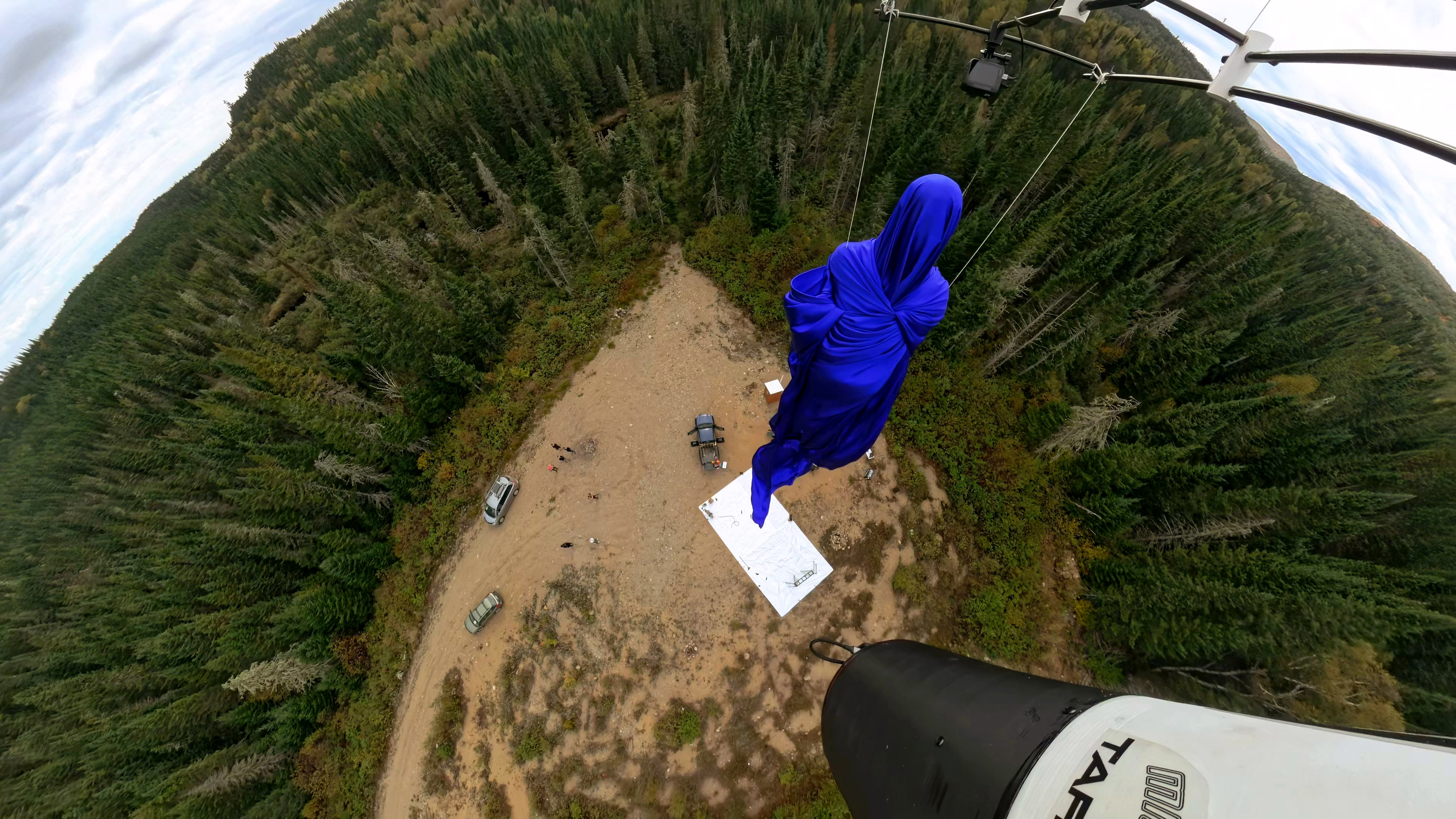
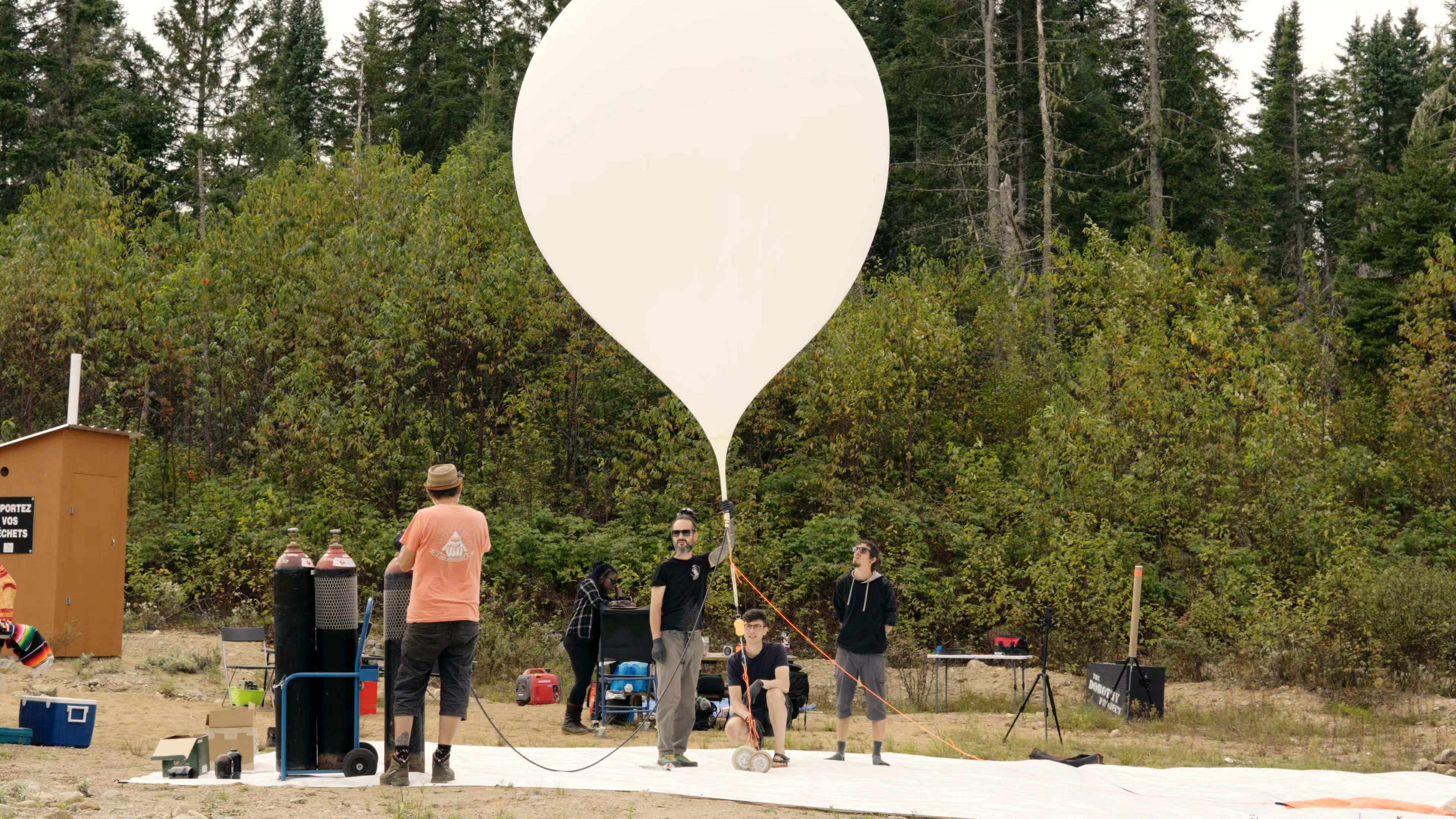
The flight lasted approximately two and a half hours. During ascent, the sculpture remained almost completely still, suspended beneath a hydrogen-filled latex balloon as it rose through increasingly thin layers of atmosphere.
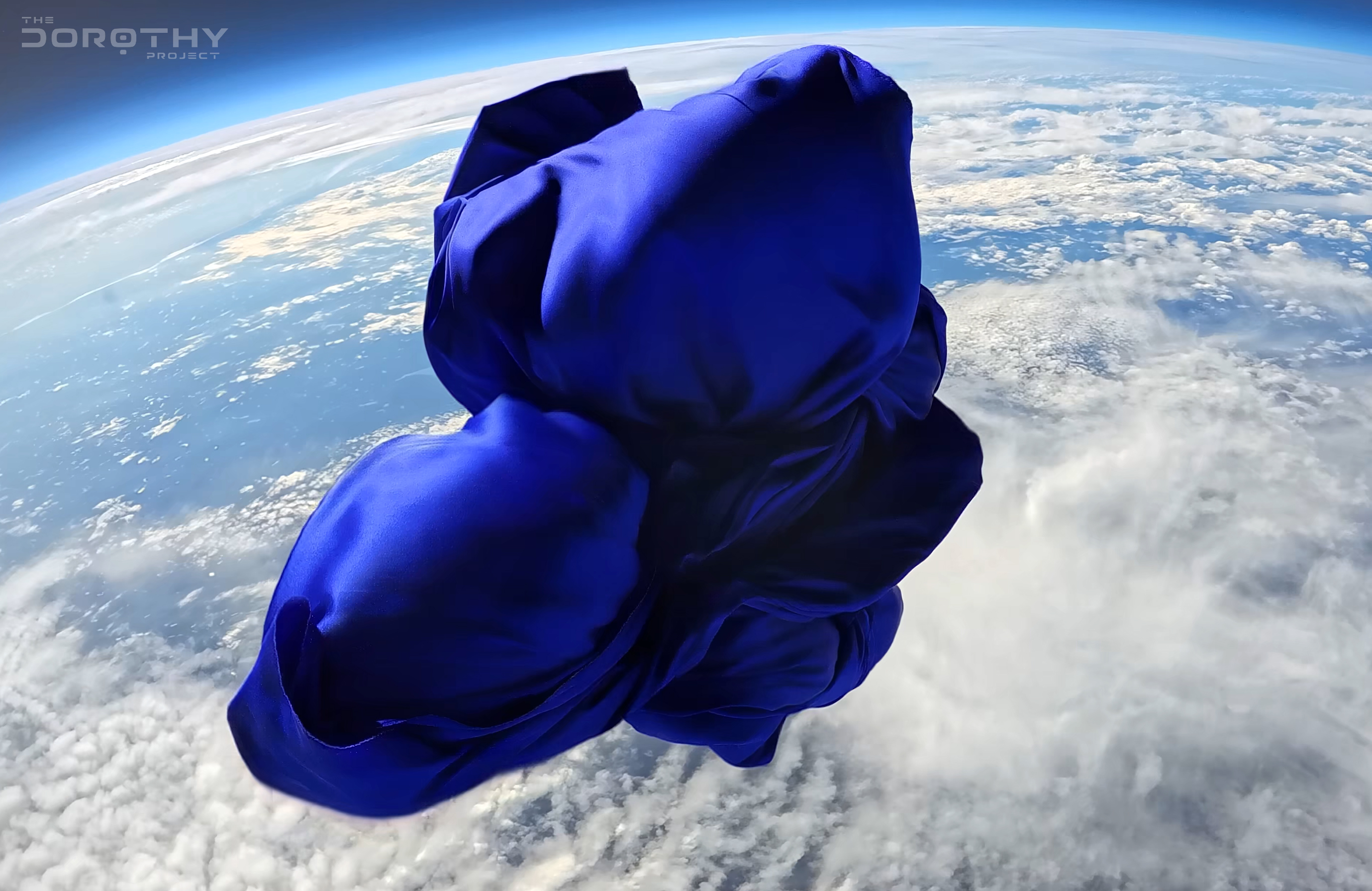
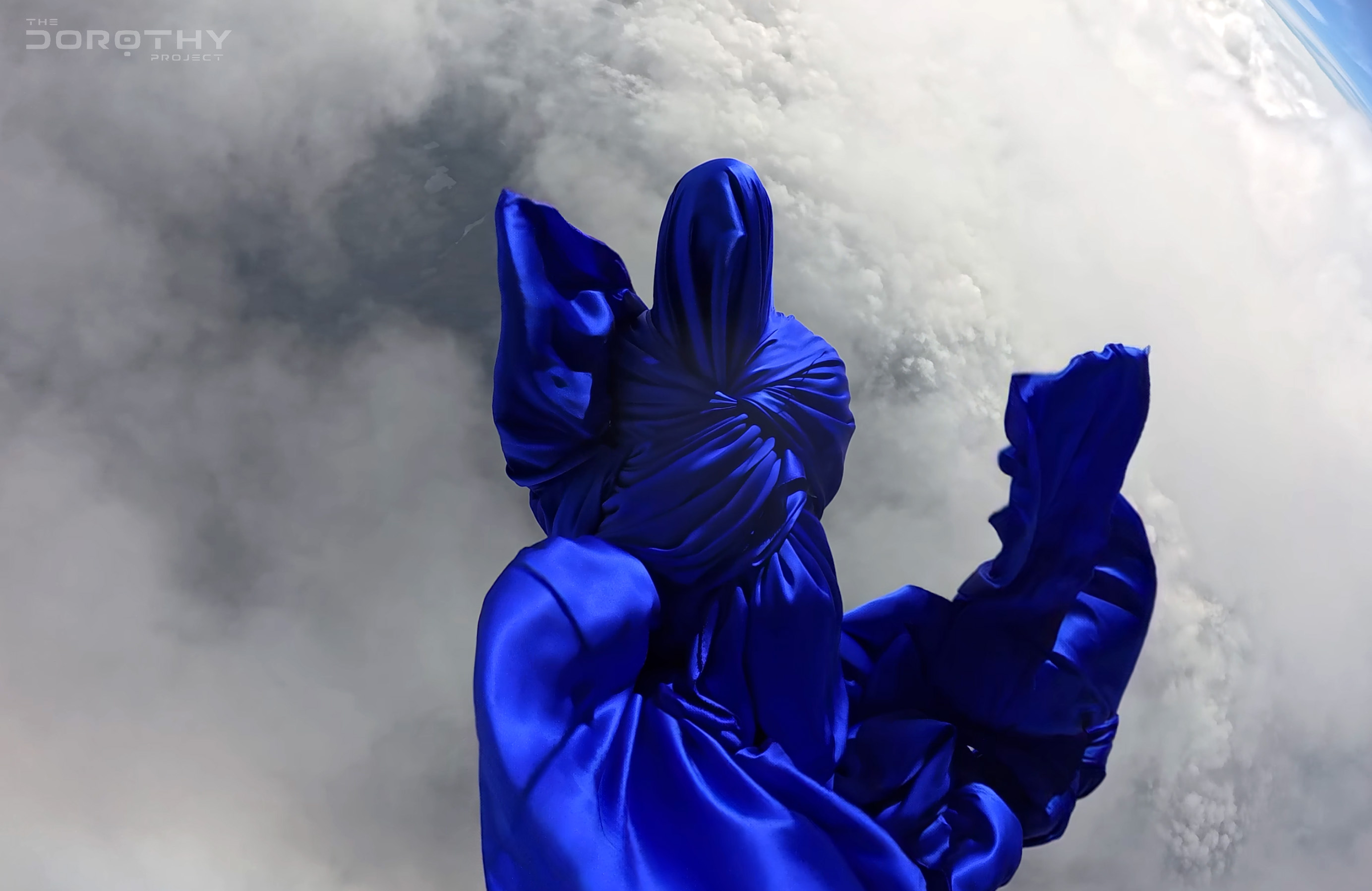
The transformation occurred at rupture. When the balloon burst, the system entered free fall, and the silk began to move. As the team explained, “all the dynamic shots… were captured during the descent.” At around 35 kilometers altitude, the air was about 150 times thinner than at sea level, yet still dense enough to create drag.
This created a precise physical condition where the fabric responded dynamically—folding, expanding, and shifting in direct interaction with invisible forces. Even at far greater altitudes, atmospheric drag remained present. The International Space Station required constant reboosting despite orbiting at 400 kilometers, reinforcing that these movements were not staged but inevitable.
The visual power of Mission TARONI lay in its restraint. The cameras—an Insta360 Ace Pro 2 and an Insta360 X4—captured the entire sequence directly from the structure.
Post-production was deliberately minimal. As specified, “the only work was slowing down the footage, reframing, and manually removing the two support cables frame by frame,” a process that took five days. No visual effects were added. The movement, light, and environment remained exactly as recorded.
The collaboration aligned two parallel approaches to responsibility. Taroni had already committed to eliminating hazardous chemicals and implementing strict environmental standards, supported by certifications such as GOTS, GRS, and FSC.
The Dorothy Project applied the same logic to flight design. Hydrogen was used instead of helium, an abundant element with negligible environmental impact compared to a finite resource. The balloon was largely recovered, and any remaining fragments were biodegradable.
Nothing was left in space. The entire system—module, mannequin, cameras, and silk—returned to Earth. Even the silk itself was reused in subsequent works, ensuring that the project produced no waste, only transformation.
The gesture resonated with Christo and Jeanne-Claude, who had transformed landscapes through temporary wrapping, revealing presence through concealment. Mission TARONI extended that logic to the human figure.
As described in the project, “by draping the body in silk… transforming the human body into a shared poetic experience.” Suspended above Earth, the figure lost individuality and became a universal form, placed in direct contrast with the scale of the planet and the surrounding void.
Mission TARONI operated within a lineage that preceded disciplinary separation. Figures such as Leonardo da Vinci and Galileo Galilei approached knowledge through both observation and representation.
The Dorothy Project explicitly returned to this approach. As they stated, the aim was “to use the instruments of science to produce images that move us.” The result was not explanatory, but experiential—reconnecting analysis with perception.
When the silk returned, it had changed. It had expanded, contracted, and been marked by turbulence and exposure. As described, it became “a testimony… an instrument for seeing our planet differently.”
It was no longer simply fabric. It was evidence of having existed, however briefly, in a place where human intention no longer determined outcome.
Mission TARONI formed part of a broader trajectory. Following its selection by the STRATOS program—an initiative led by the Canadian Space Agency and CNES—The Dorothy Project continued to develop missions designed to test technologies and engage directly with extreme environments.
The next step will move even closer to instability. As the team noted, “we’ll be following storm chasers in the famous ‘Tornado Alley’ to film tornadoes with 360° FPV custom drones.” If TARONI explored the silence of near-space, this upcoming mission will enter environments defined by violence, unpredictability, and force—where systems are no longer suspended, but pushed to their limits.
The intention remains unchanged. Not to control these environments, and not to aestheticize them, but to encounter them. To place human creation inside conditions where it cannot dominate—and to observe what remains when it is forced to respond rather than impose.

By entering your email and clicking Subscribe, you're agreeing to let us send you customized marketing messages about us and our advertising partners. You are also agreeing to our Privacy Policy.
Thank you! You've successfully subscribed to newsletters!
























 No fees, cancel anytime










33
6