Get Premium
Dark mode theme is available exclusively for premium users. Learn more about the benefits of subscribing.
No fees, cancel anytime.

 Dark Mode Ad-Free Browsing Unlimited Content
 Ad-Free Browsing Unlimited Content Dark Mode
Join 1.2 million Panda readers who get the best art, memes, and fun stories every week!

Imagine coming home only to realize that everything looks different. Yup, someone redecorated without asking for your consent, and you’re left close to years, wondering what happened.
Someone who genuinely respects and cares for you will also respect your boundaries. The opposite is also true: you can tell a lot about a person’s character and their real feelings about you by how easily they disregard your wants and needs. Throw in some in-law tension, entitlement, and narcissism into the mix, and you have all the makings of a family drama.
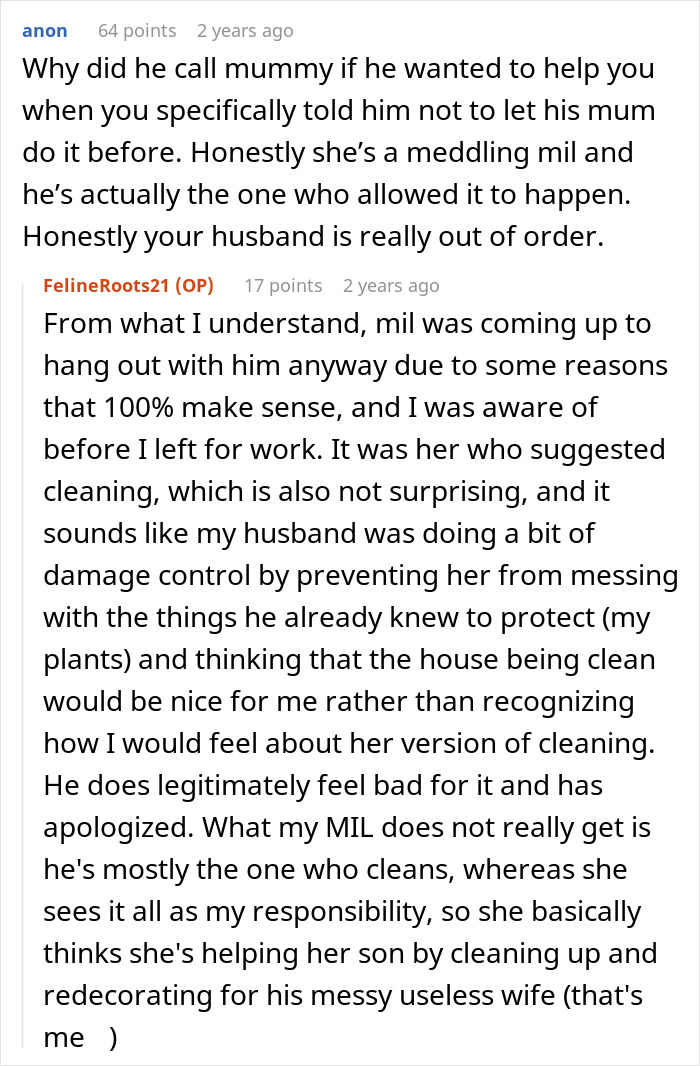
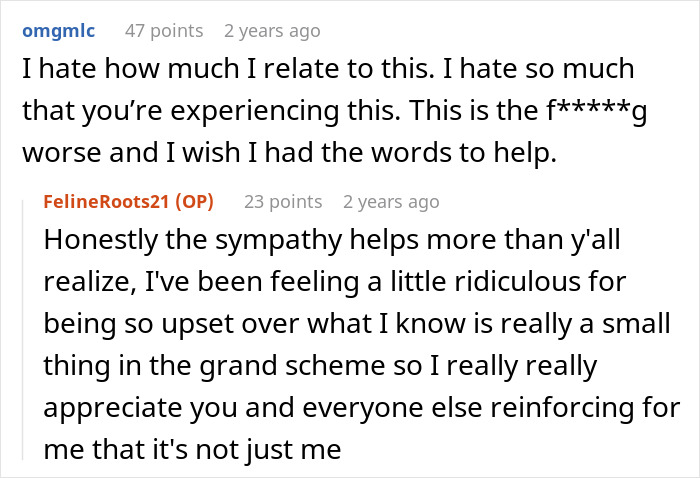
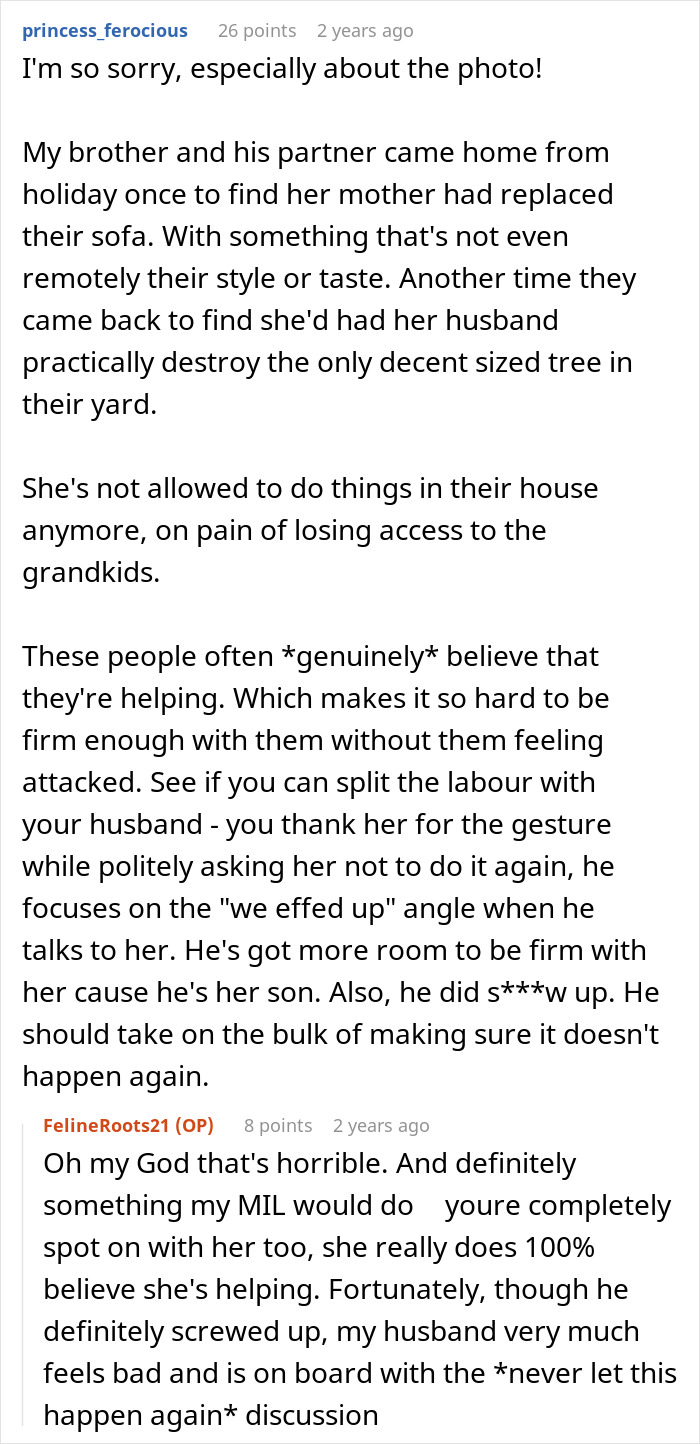
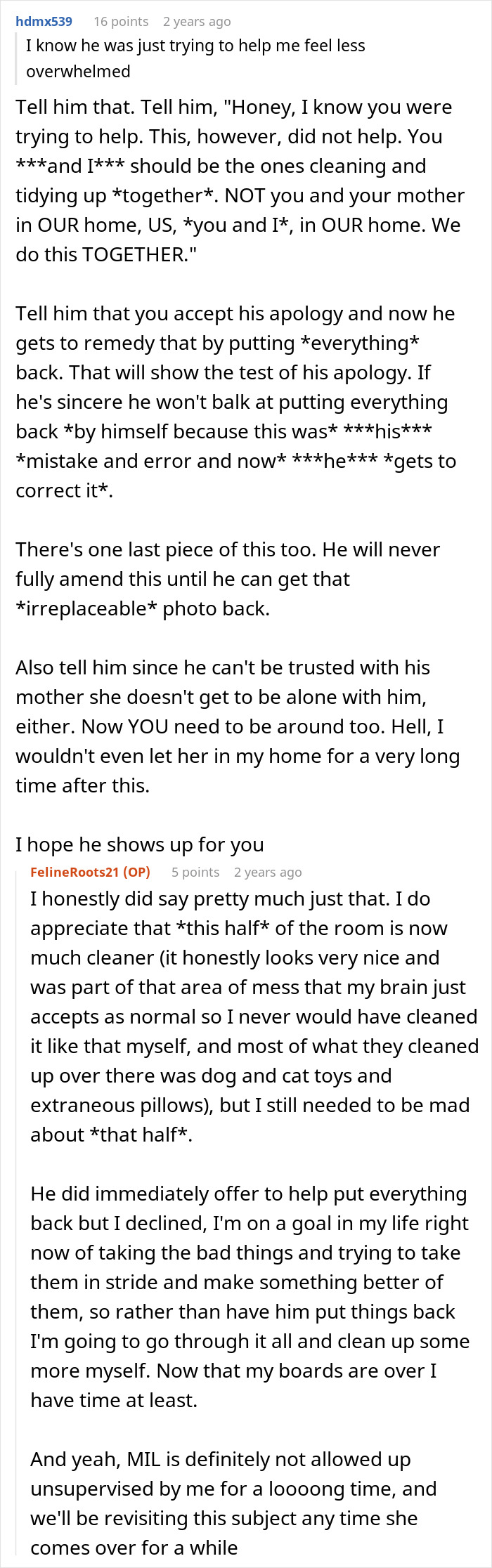
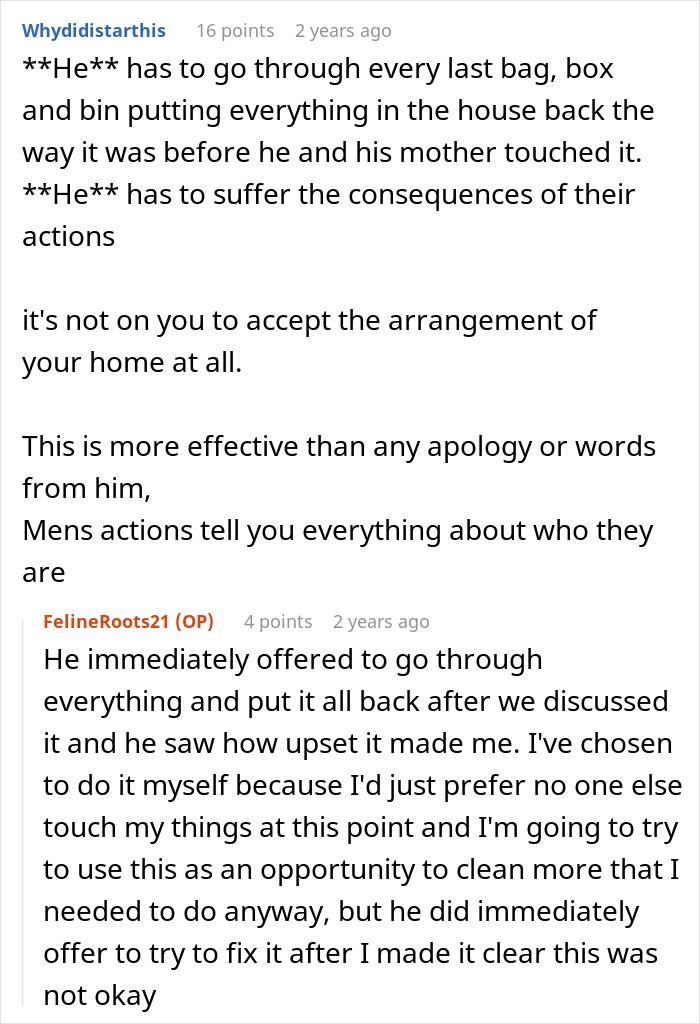
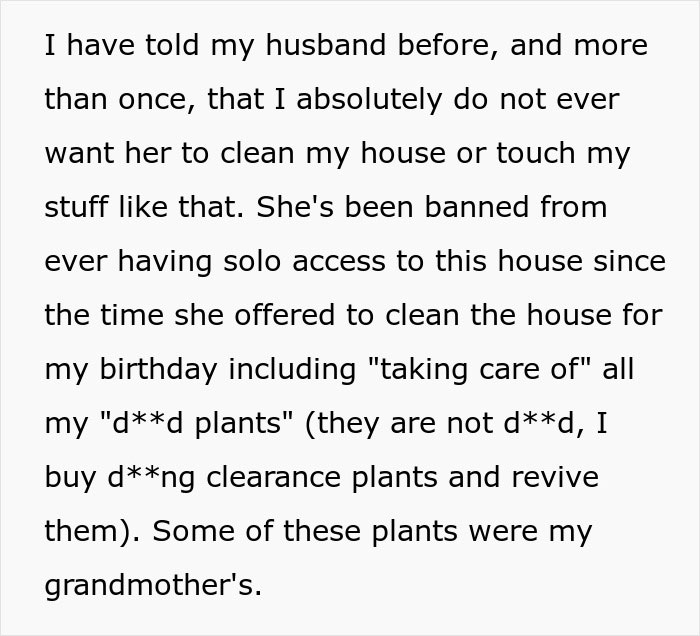
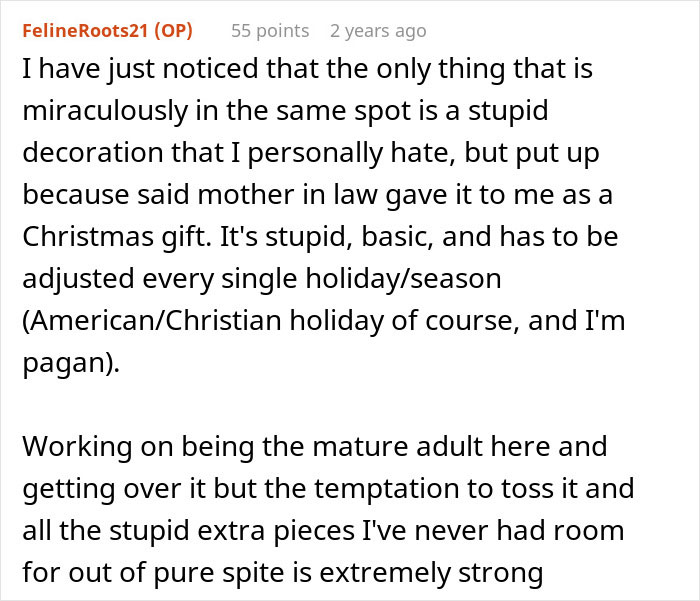
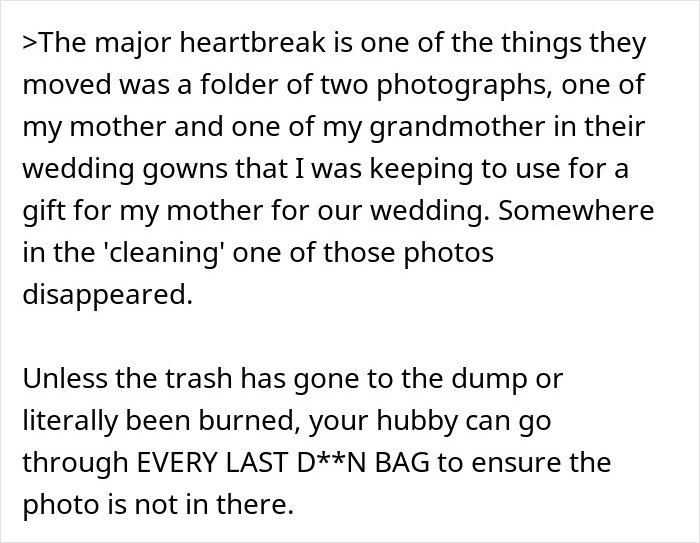
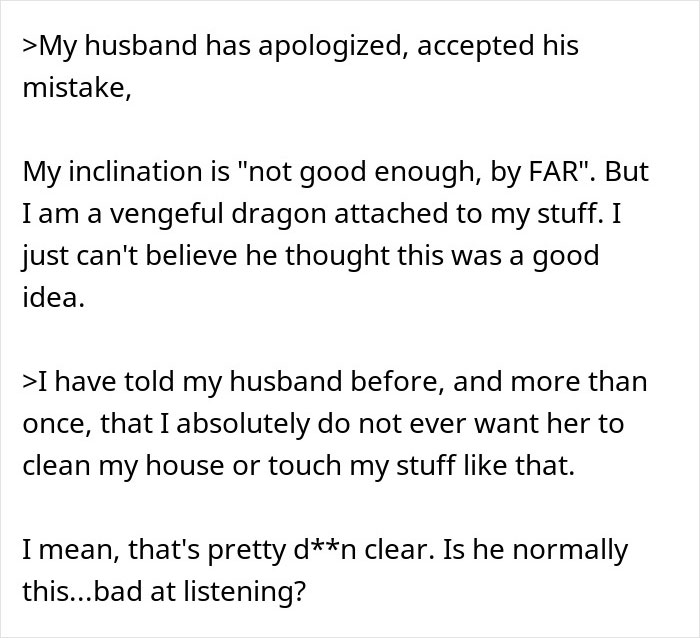
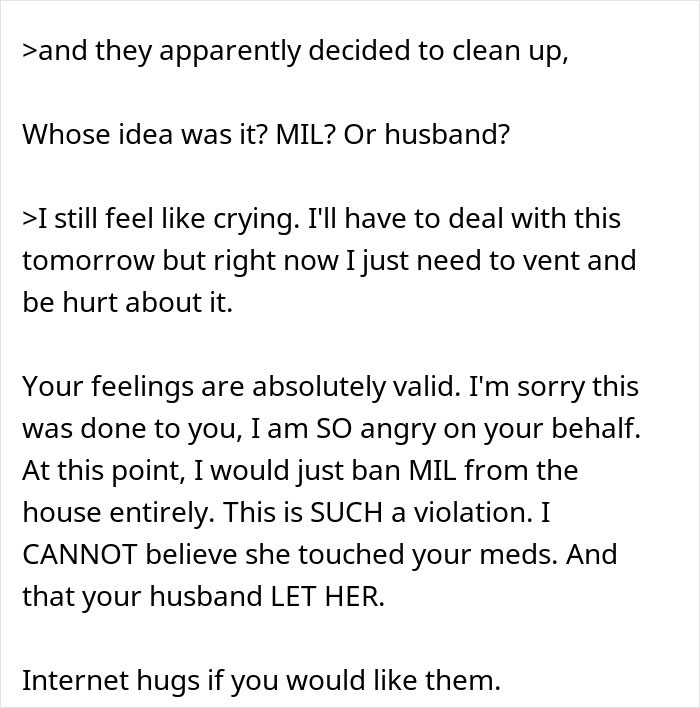
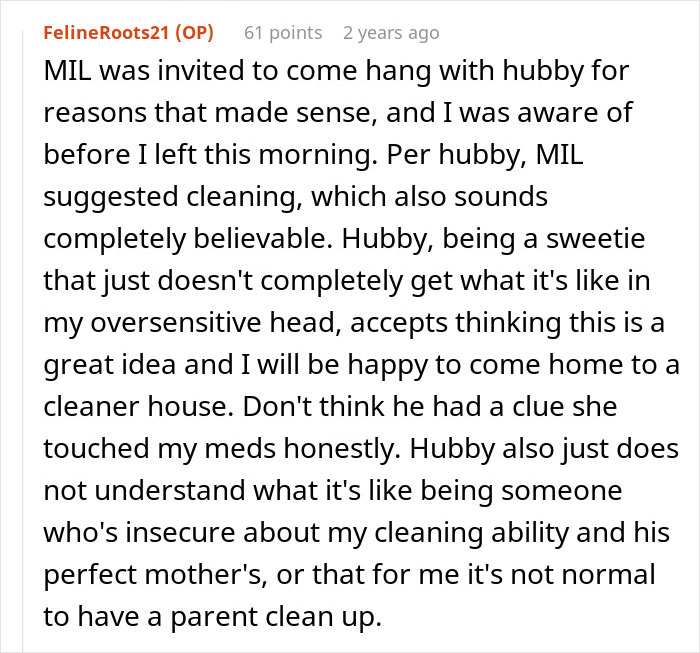
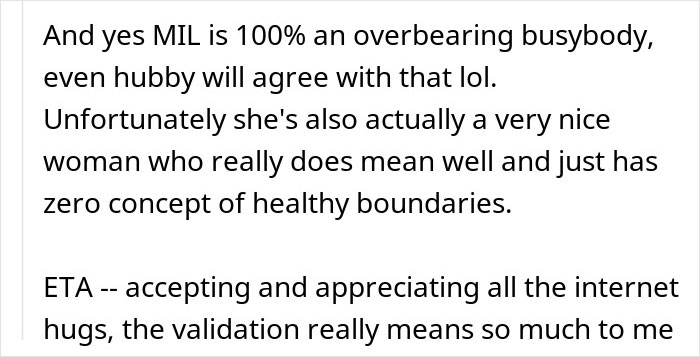
One woman described the “shock and horror” of realizing that her mother-in-law had secretly rearranged everything in her house and also lost an important possession. Scroll down to read her brutal story.
Image credits: wayhomestudio / Magnific (not the actual photo)
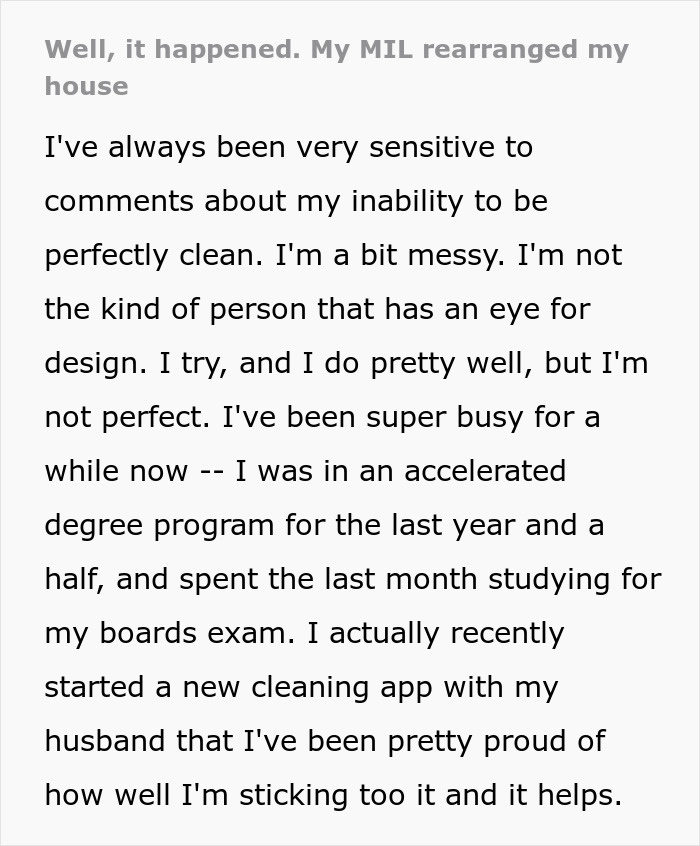
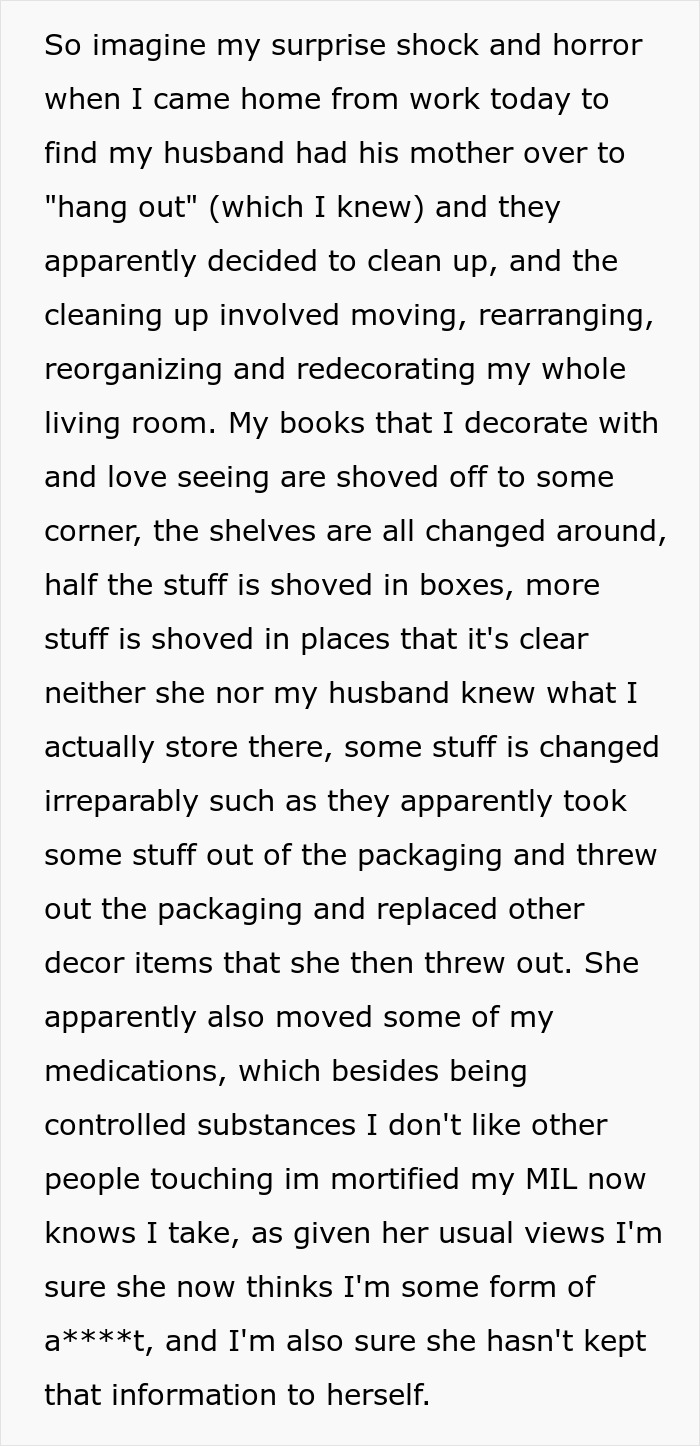

Image credits: beststudio / Magnific (not the actual photo)
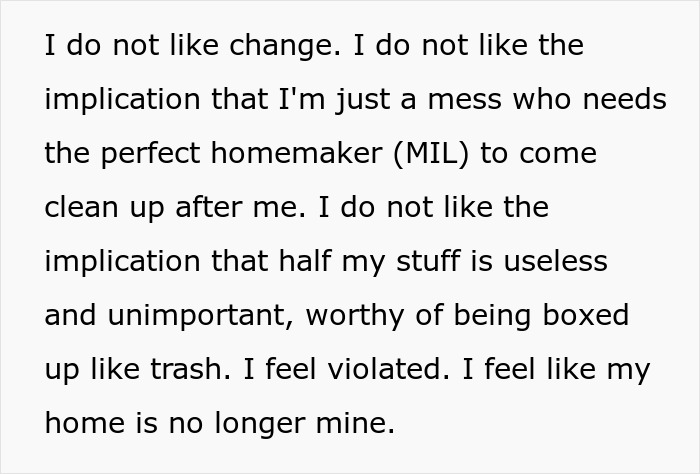
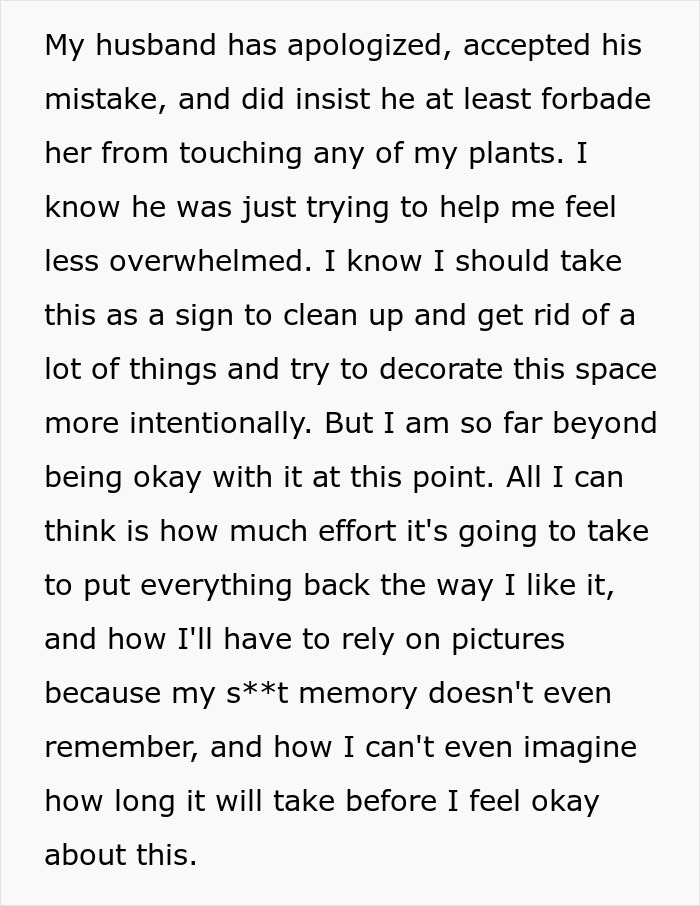

Image credits: Kmpzzz / Magnific (not the actual photo)
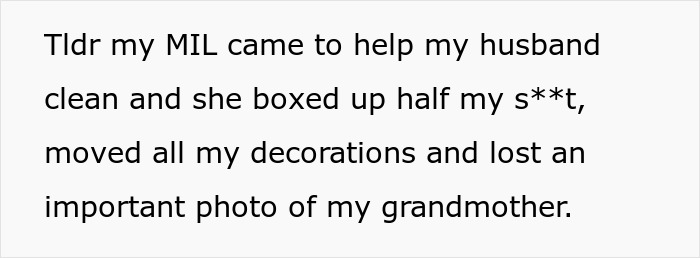
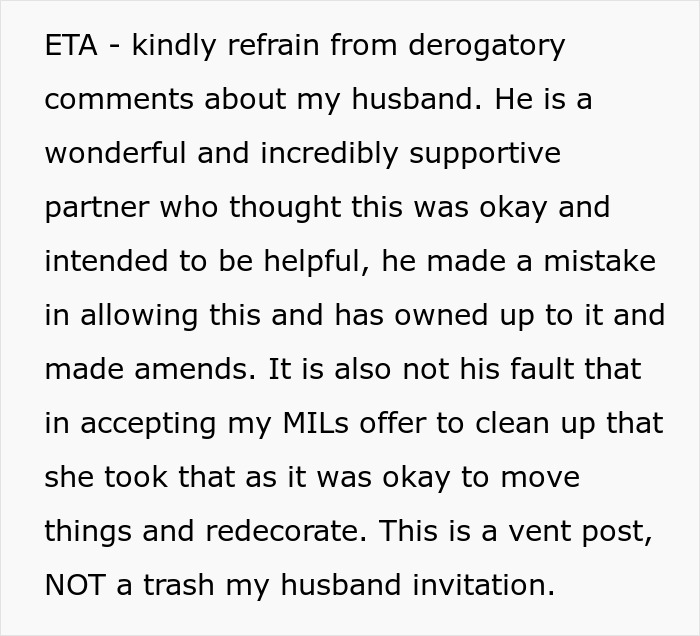
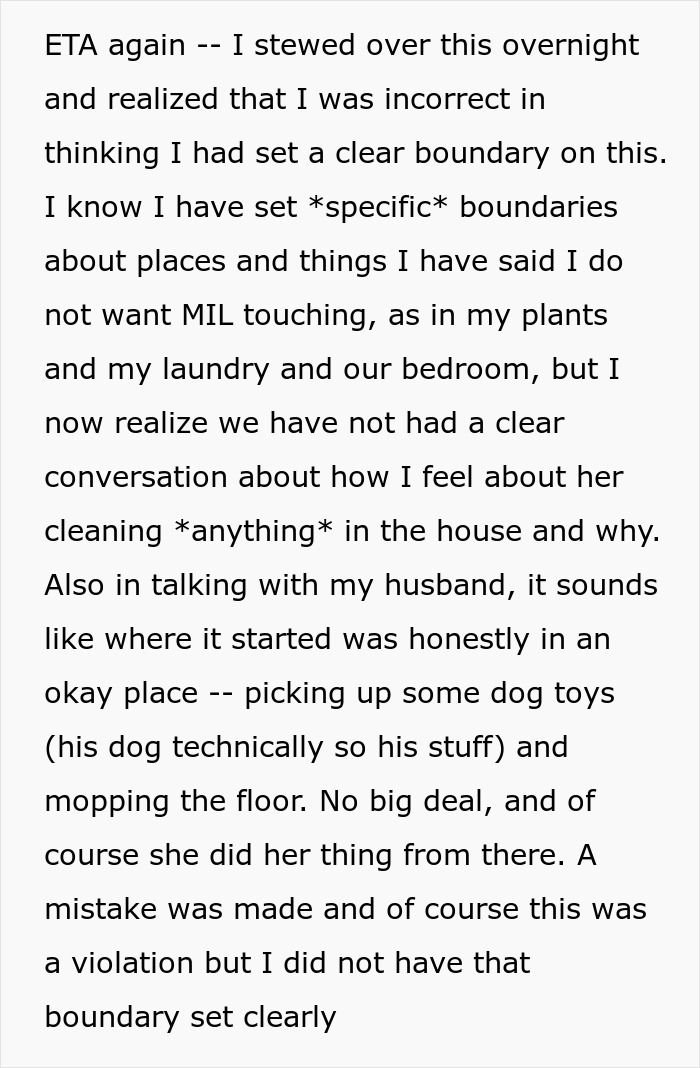
Image credits: FelineRoots21
Boundaries, boundaries, boundaries! They keep your relationships healthy, they protect your well-being and happiness, and they are how we should all, ideally, navigate the world. Unfortunately, there are two problems.
First, many people are utterly awful at communicating their needs and then setting and enforcing their boundaries. They might feel ashamed, embarrassed, or guilty for saying what they want and need aloud. And it is beyond difficult to say “no” to family, friends, and coworkers, even though that is how we live an authentic life and strengthen those positive relationships.
And secondly, even if you have clearly explained what your boundaries are, there is no guarantee that they will be respected. Some people are so selfish, entitled, and narcissistic that they believe that social rules don’t apply to them and that your needs are just a suggestion they can ignore.
This is why it is so important that there are consequences when someone violates your boundaries. If there is no instant feedback, they will continue with the same behavior in the future. You can, for example, cut back on the time you spend with this person. Or, in a truly toxic situation, you may want to cut them out of your life, whether permanently or at least until you can rethink your relationship.
At the end of the day, you need to sit down and think about what you want from this relationship. If spending time with this individual constantly leaves you feeling drained instead of energized, you might want to shift your time and attention toward other (and as harsh as it sounds) better people. Alternatively, you may want to reach out to a therapist who can help you unpack some of the underlying issues.
“Boundaries let others know how they should treat us and how far they can go,” clinical and educational psychologist Aura De Los Santos explained to The Knot.
Meanwhile, when it comes to protecting your house rules, lifestyle choices, living arrangement, chores, and parenting styles, your in-laws “should respect the couple’s decisions,” says licensed marriage and family therapist Michelle Landeros.
“This boundary is vital for maintaining a sense of control and comfort in one’s own home,” she told The Knot.
If you fail to set boundaries, you are, essentially, opening your life up to unpleasant and inappropriate experiences. For example, your in-laws might make unannounced visits to your home, share information that you want kept private, ask intrusive questions about your life, etc.
You are not obligated to spend time with your in-laws at home. Depending on your situation, it might be healthier to host family gatherings at, say, a restaurant, theme park, or other third space. That way, you can spend time interacting while also protecting your boundaries and privacy.
What do you think, Pandas? What would you do if, say, you came back home today, opened the door, and saw that someone in your family had completely redecorated everything without asking for your permission or input? How do you keep your relationship with your in-laws happy and healthy? Share your words of wisdom with all of us in the comments.
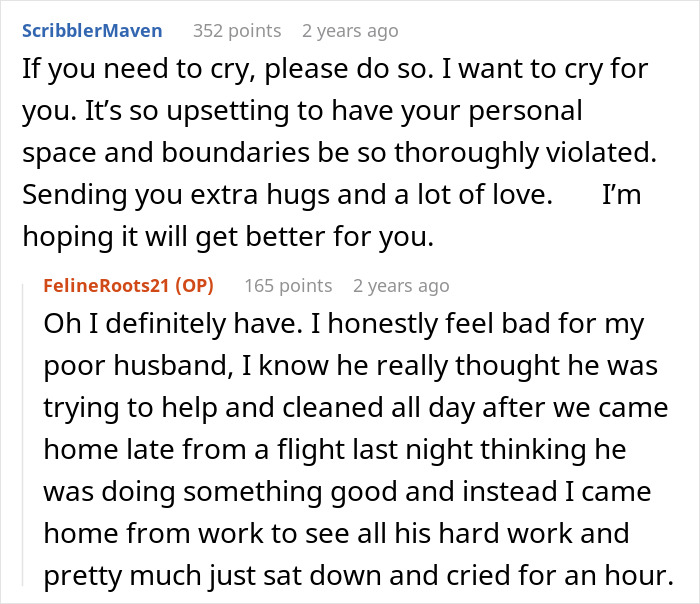
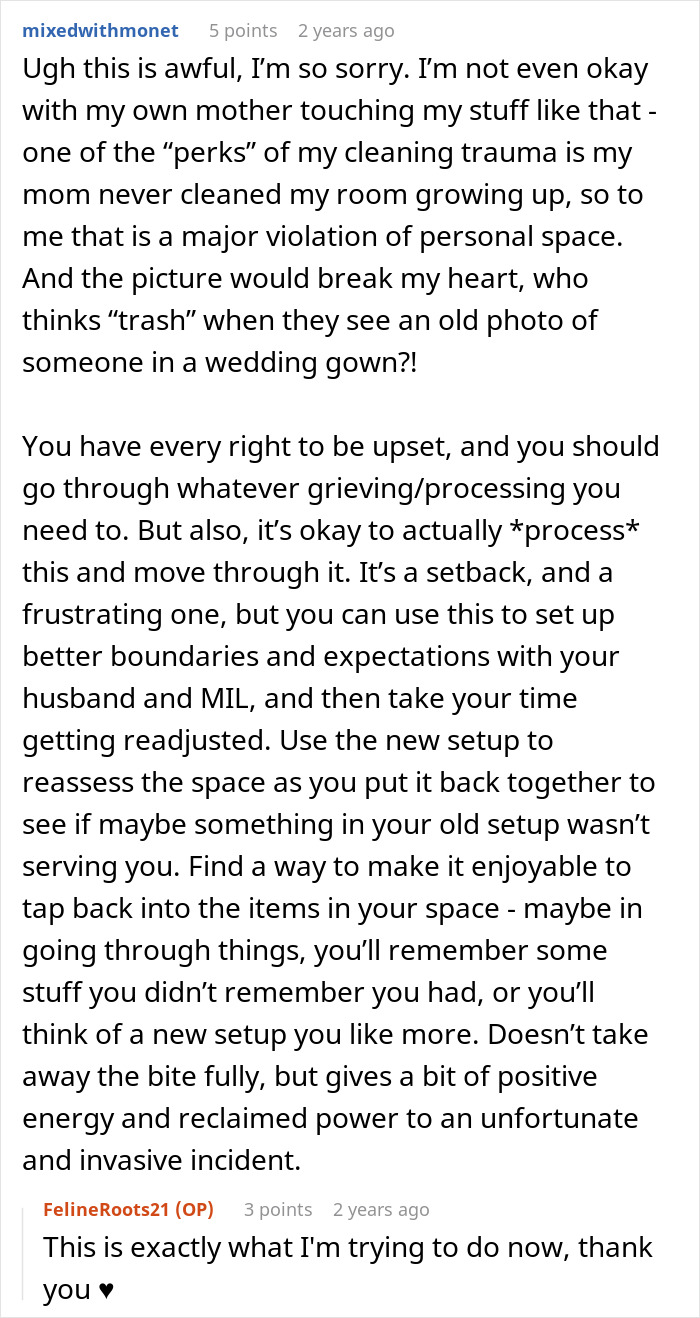

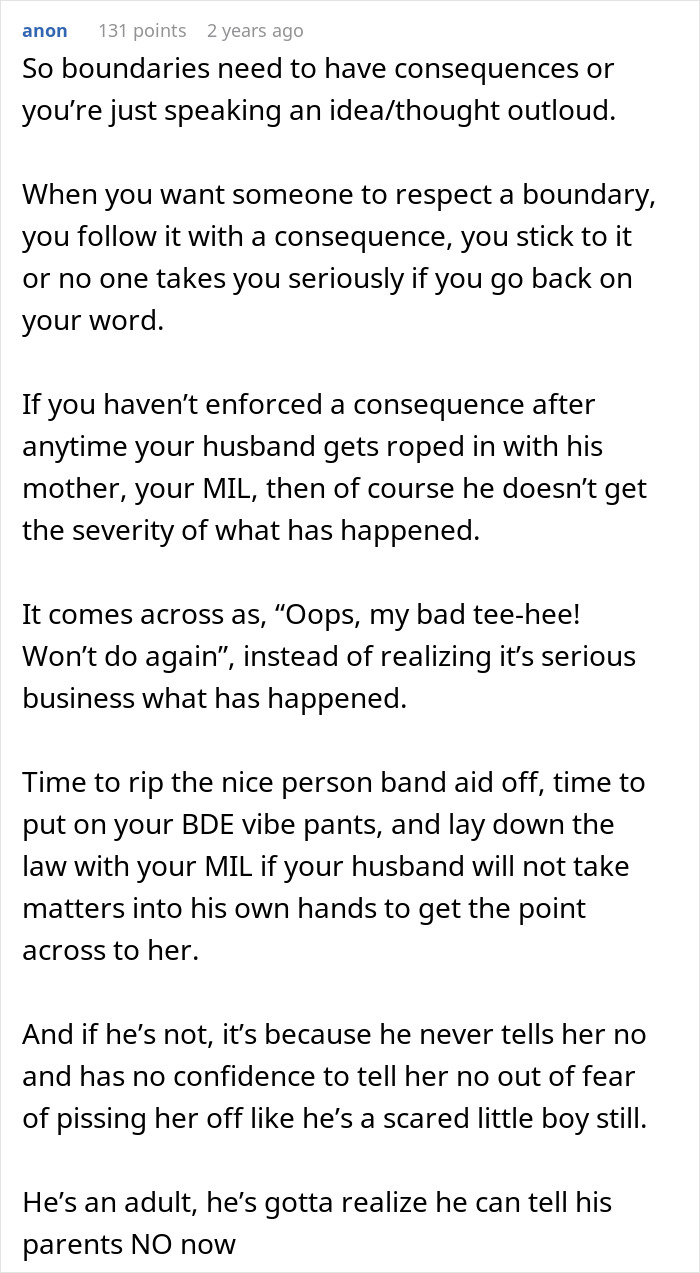


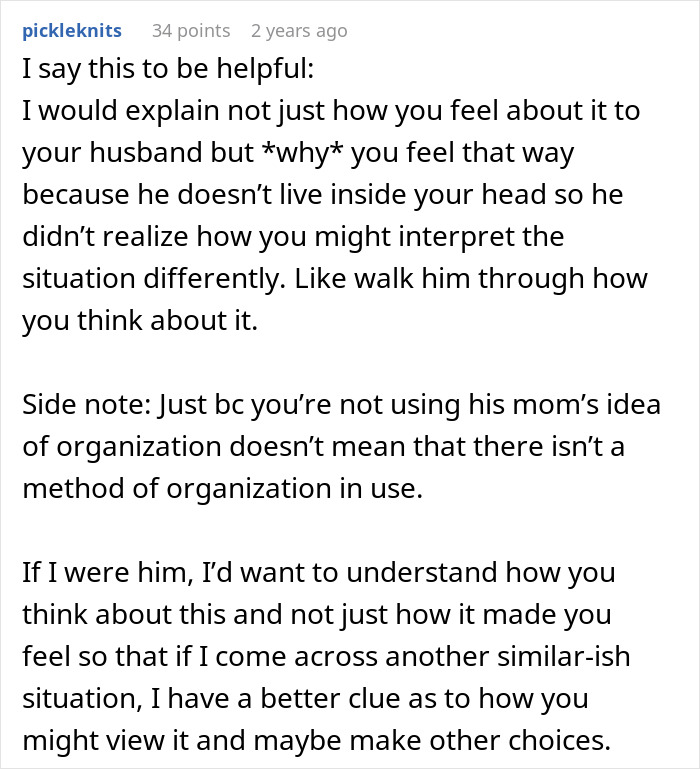



CBA to read this, it's the third or fourth similar story I've seen on BP this week. Funny how as soon as one gets written, a dozen others start popping out of the woodwork over a very short space of time. And usually escalating, i.e. each story get progressively worse, as the writers vie to outdo each other.
CBA to read this, it's the third or fourth similar story I've seen on BP this week. Funny how as soon as one gets written, a dozen others start popping out of the woodwork over a very short space of time. And usually escalating, i.e. each story get progressively worse, as the writers vie to outdo each other.


























 No fees, cancel anytime










26
1