Get Premium
Dark mode theme is available exclusively for premium users. Learn more about the benefits of subscribing.
No fees, cancel anytime.

 Dark Mode Ad-Free Browsing Unlimited Content

 Ad-Free Browsing Unlimited Content Dark Mode

Join 1.2 million Panda readers who get the best art, memes, and fun stories every week!

Much of modern caregiving happens quietly behind the scenes — in grocery aisles and pharmacy drive-throughs. Millions of families carry the heavy financial weight of caring for aging parents, treating it as just another chore on an overwhelming to-do list.
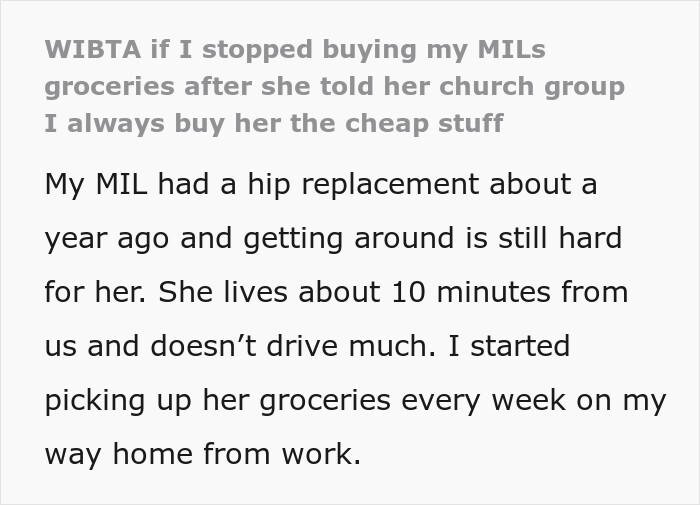
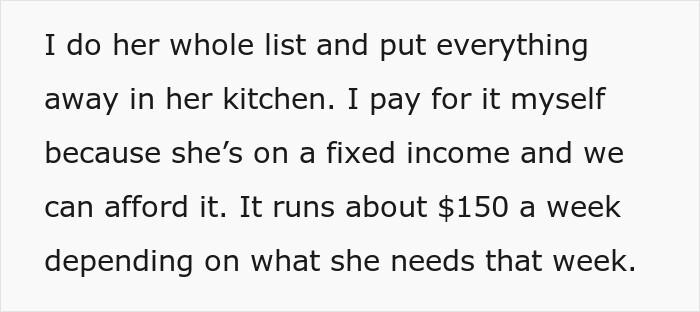
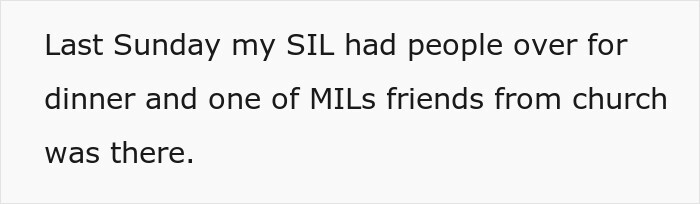
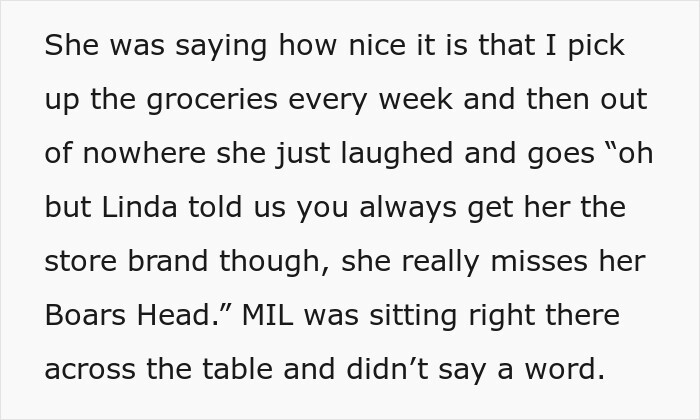
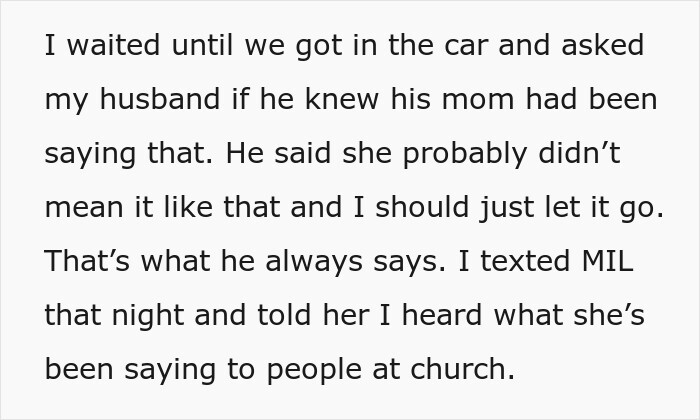
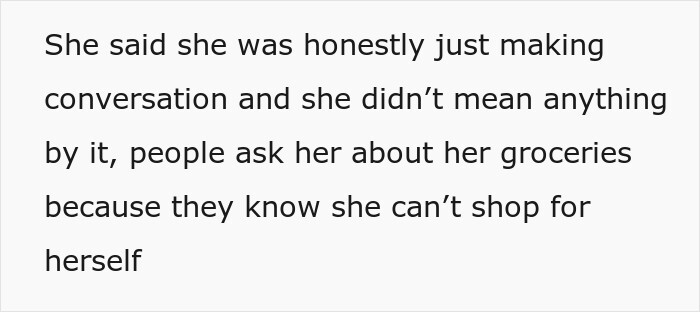
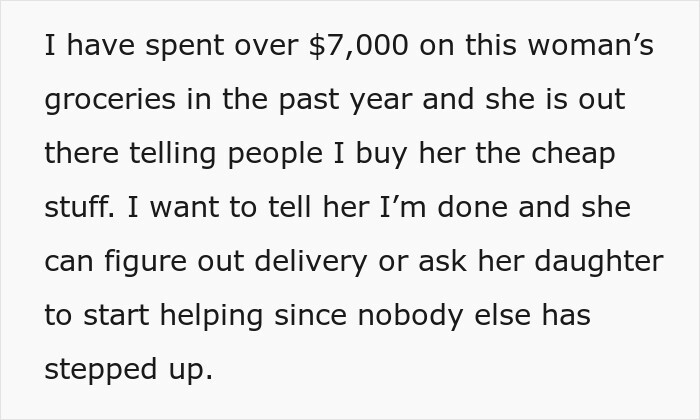
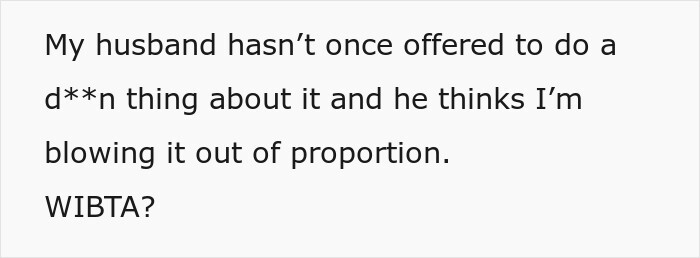
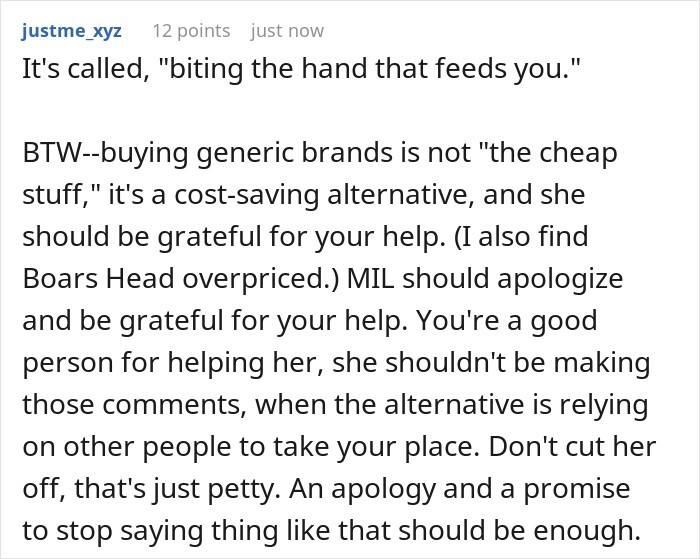
But what happens when that generosity meets absolute entitlement? One woman recently learned the hard way that it is not a pretty picture. Turning to the internet for some advice, she shared that she had been doing weekly grocery runs for her mother-in-law (MIL) for over a year following her hip replacement surgery. On top of her time and energy, she spent over $7,000 of her own money.
In return, her mother-in-law was trash-talking her behind her back. Read the full story below to see the exact comment that pushed her over the edge.
When people step up to financially support their aging parents, groceries, housing costs, and medical bills top the list of expenses they cover.
According to recent research from the American Association of Retired Persons (AARP), 54% of those helping aging family members have given $1,000 or more to a parent in the last twelve months alone, while 20% have shelled out $5,000 or more. While groceries lead the list of essential provisions, these midlife adults are simultaneously juggling support for utilities, transportation, and other basic needs.
Their survey also found that family caregivers are spending 60% more than they were five years ago.
When you do the math, thousands of dollars are often pulled straight out of personal savings. For many households, it eats into emergency funds and retirement savings
“Millions of Americans are providing essential care for the people they love. They shouldn’t have to sacrifice their own financial security to do it,” said Nancy LeaMond, AARP Executive Vice President and Chief Advocacy and Engagement Officer.
Finances are only half the battle, though. The emotional toll of informal caregiving can also impact a person’s physical and mental health.
Recent surveys reveal that about 78% of informal caregivers report feeling deeply burned out and emotionally overwhelmed. A primary driver of this exhaustion isn’t just the physical labor itself — it is the lack of clear exit strategies, institutional support, or shared help from other family members.
About 38% of family caregivers report high emotional stress, and nearly two-thirds report moderate-to-high stress overall. Across various health studies, roughly one in three caregivers experiences clinical depression, and a similar share battles chronic anxiety.
This burnout is supercharged when it meets entitlement.
Entitlement is a belief that a person deserves special treatment and zero negative consequences, regardless of their own effort or the sacrifices of others. It also breeds ungratefulness — when someone consistently believes they are inherently owed support, they take other people’s generosity for granted.
Some people also believe in relational entitlement — the feeling that you are unconditionally owed a certain level of care, attention, or freebies from someone else just because you are related to them in some way.
In tight-knit family structures, these toxic patterns can easily become normalized. For example, a parent might come to blindly assume that their child or daughter-in-law will always show up, spend their own hard-earned money, and stock their pantry, regardless of the personal cost.
“Many factors, such as our perception of the value of the specific relationship in question, impact one’s sense of entitlement. Sometimes, the level of genetic connection can cause a greater sense of entitlement,” says trauma psychotherapist Amanda Ann Gregory.
Psychological issues, cultural stereotypes, and generational habits take much of the blame for in-law friction, but the real catalyst is often the adult child who refuses to stand up for their partner.
A study published in the International Journal of Health Sciences examining conflicts between daughters-in-law and mothers-in-law found that the partner acts as the primary factor in such conflicts. They determine whether domestic friction escalates out of control or stays manageable.
When the adult child falls into a loyalty bind and chooses passivity over partnership, they make the situation exponentially worse. If they avoid confronting their own parents or dismiss their spouse’s legitimate hurt, resentment only grows inside the marriage. But when adult children actively act as mediators, set healthy boundaries, and validate their partner’s perspective, conflict tends to de-escalate.
“The person who wants to be both a loyal spouse and a loyal son or daughter can experience a dilemma that can rock a marriage to its roots, and this is one reason it is important to understand the intricacies of in-law relationships,” says psychologist Dr. Terri Apter.
In her research, she was surprised by how often men chose to protect their mothers over their wives. “They saw a wife as stronger and tougher, and therefore the one who should make allowances.”
Ultimately, her advice is that both partners must learn to balance loyalties and set firm boundaries to protect a marriage from in-law drama.
Navigating such family dynamics and relational entitlement is never easy, and the only real way forward is slowly rebuilding clear boundaries and sticking to them —even when it causes temporary discomfort or pushback. At the end of the day, caring for anyone — especially family — should be a two-way street built on love and mutual respect, not an obligation fueled by entitlement.
As the ancient Greek philosopher Cicero wisely noted, “Gratitude is not only the greatest of virtues, but the parent of all the others.”

By entering your email and clicking Subscribe, you're agreeing to let us send you customized marketing messages about us and our advertising partners. You are also agreeing to our Privacy Policy.
Thank you! You've successfully subscribed to newsletters!


she drives and she goes to church so she can manage the store.... I wouldn't get too upset about what an old lady gossips about at church though... does it really hurt that much?

I agree. If she misses Boar’s Head and I could afford it, I’d roll my eyes get her some. The intense reaction to a mildly annoying comment is probably because she has a bigger husband problem than she can admit. She likely feels taken advantage of overall, doing all this work for her husband’s mother without him appreciating her efforts of deigning to help. My grandmom has said much worse, especially as her dementia kicked in! It shouldn’t be tolerated without pushback, but she still needs and deserves to eat. If she really can’t afford her own groceries and the son can afford to help, i hope he continues to send her money even if she is now expected to acquire her own food.
Load More Replies...
So one spiteful neighbour making trouble out of what might have been a throwaway remark about her fave brand. I think this is blown out of proportion, I don't think she has enough evidence that MiL has been trash-talking her to everyone. I've seen ppl behave like that neighbour, stirring up drama.

she drives and she goes to church so she can manage the store.... I wouldn't get too upset about what an old lady gossips about at church though... does it really hurt that much?
I agree. If she misses Boar’s Head and I could afford it, I’d roll my eyes get her some. The intense reaction to a mildly annoying comment is probably because she has a bigger husband problem than she can admit. She likely feels taken advantage of overall, doing all this work for her husband’s mother without him appreciating her efforts of deigning to help. My grandmom has said much worse, especially as her dementia kicked in! It shouldn’t be tolerated without pushback, but she still needs and deserves to eat. If she really can’t afford her own groceries and the son can afford to help, i hope he continues to send her money even if she is now expected to acquire her own food.
Load More Replies... So one spiteful neighbour making trouble out of what might have been a throwaway remark about her fave brand. I think this is blown out of proportion, I don't think she has enough evidence that MiL has been trash-talking her to everyone. I've seen ppl behave like that neighbour, stirring up drama.


































 No fees, cancel anytime
















28
16