Get Premium
Dark mode theme is available exclusively for premium users. Learn more about the benefits of subscribing.
No fees, cancel anytime.

 Dark Mode Ad-Free Browsing Unlimited Content
 Ad-Free Browsing Unlimited Content Dark Mode
Join 1.2 million Panda readers who get the best art, memes, and fun stories every week!

Helping a family member in need is typically seen as an important part of being someone’s social support system. But there is a fine line between giving some assistance now and then and being on call 24/7, with the implication that one is free to drop everything and help.
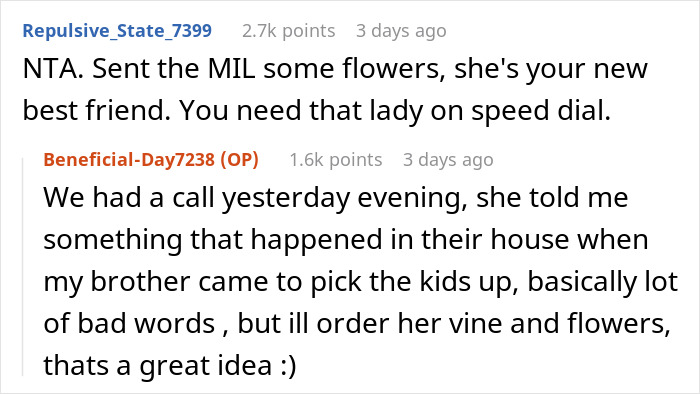
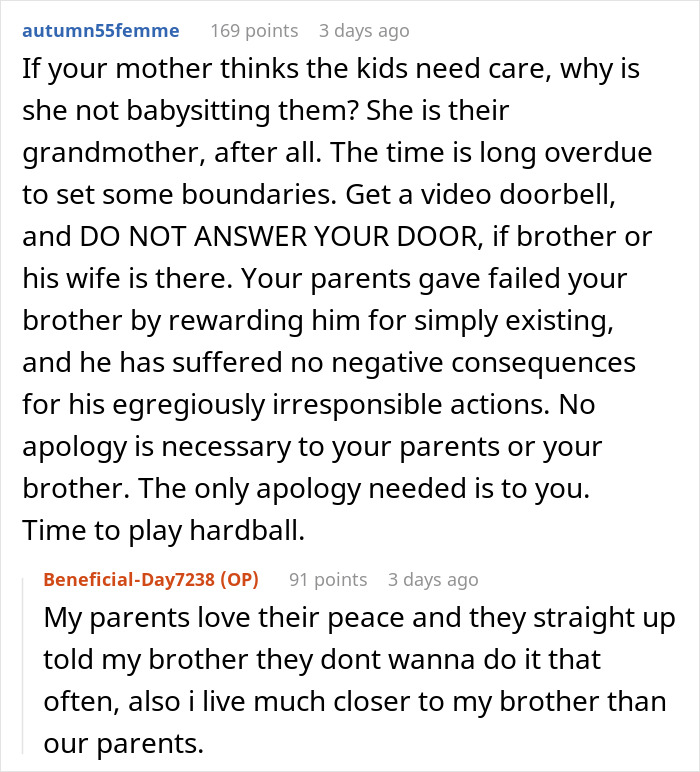
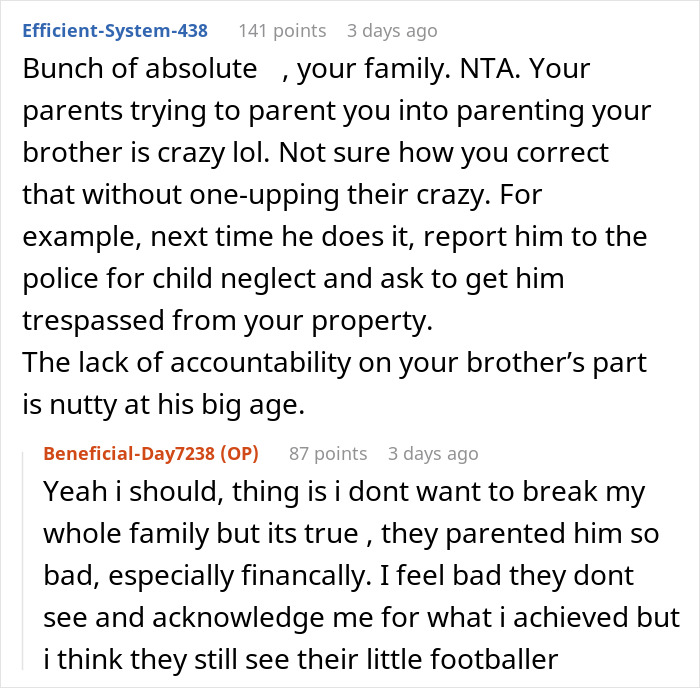
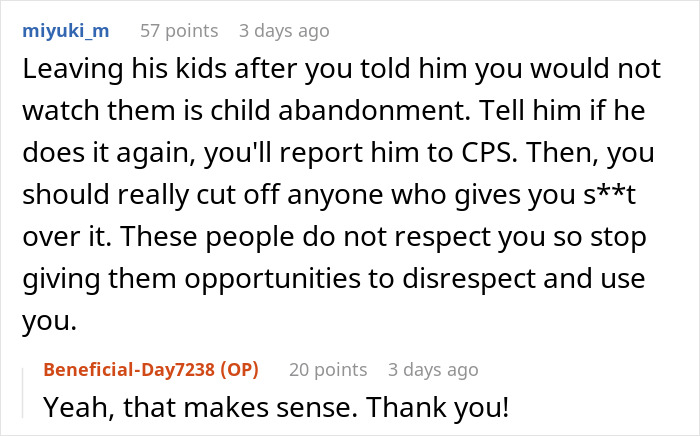
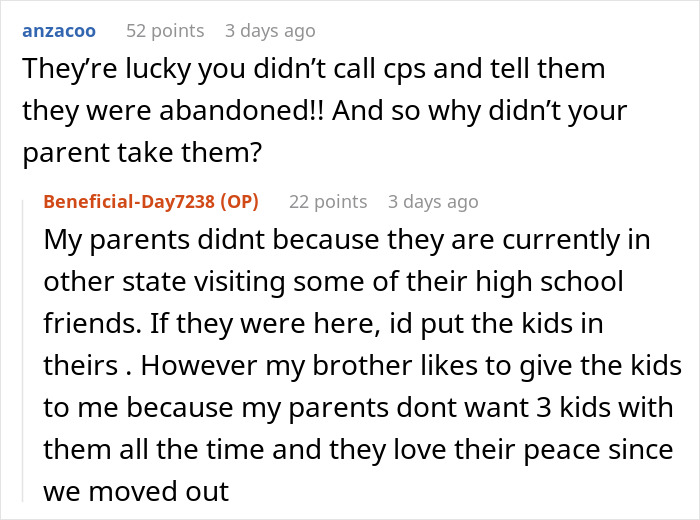
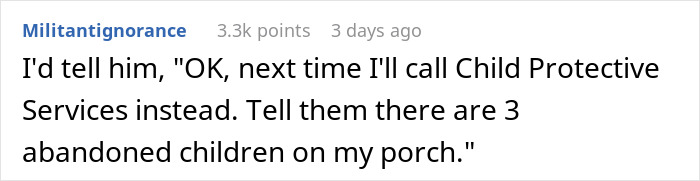
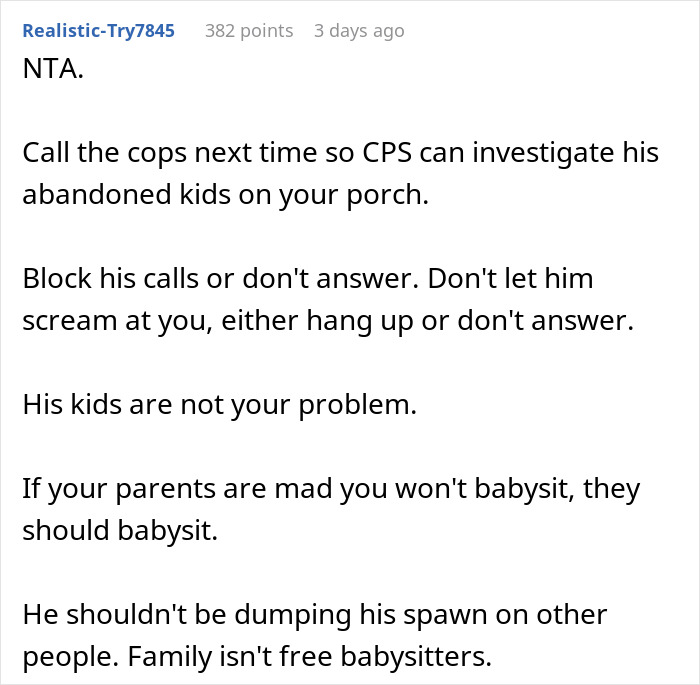
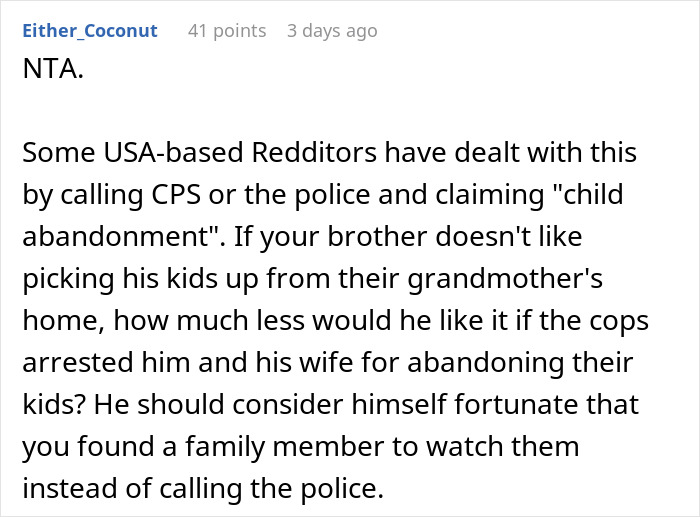
A man turned to the internet for advice after having multiple conflicts with his brother over babysitting. The brother had, without any warning, dropped off his kids at the man’s house, despite being told no. So the man simply drove them to the brother’s MIL’s home, which ended up enraging him.


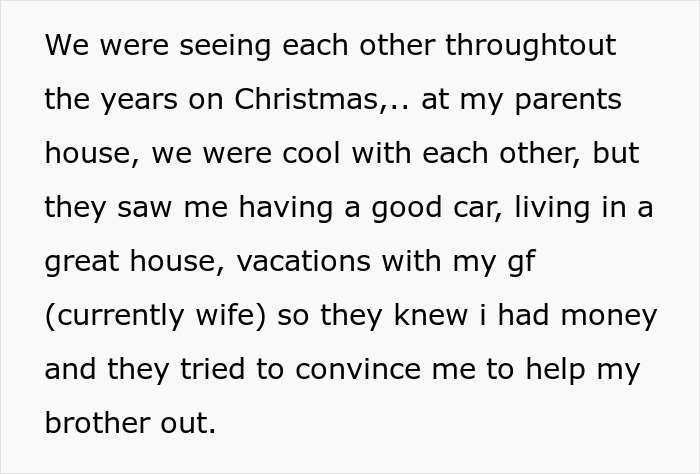
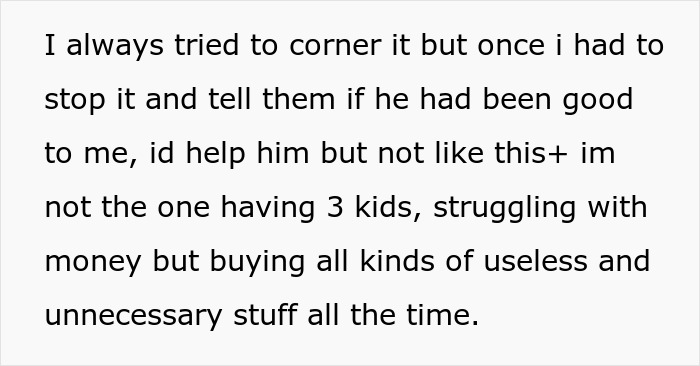
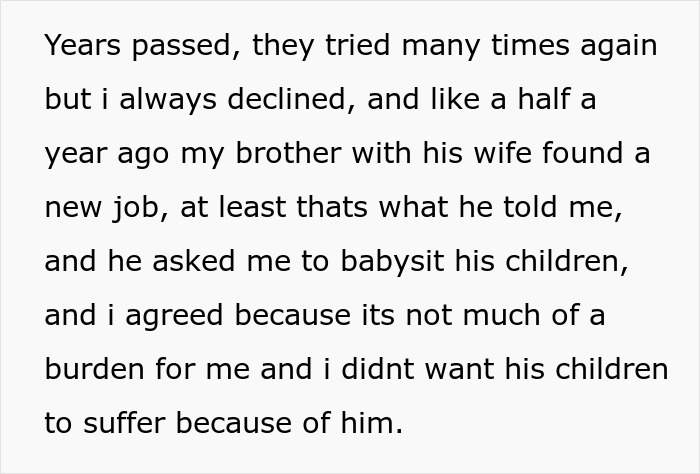

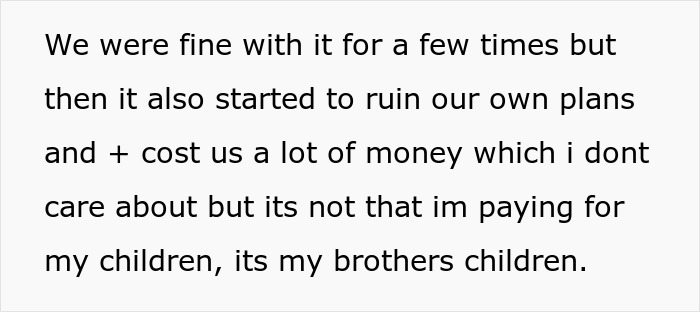

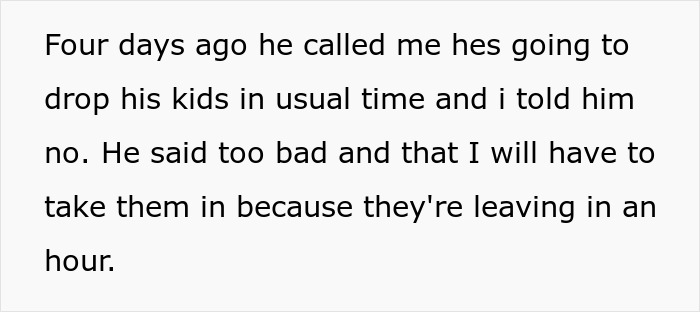
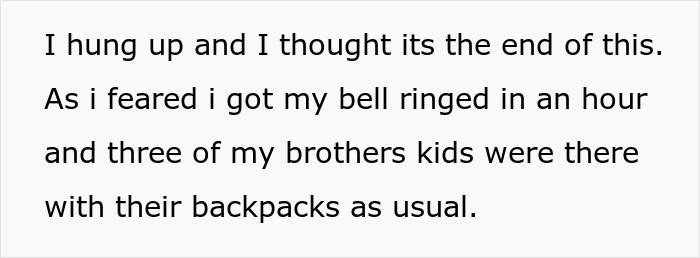
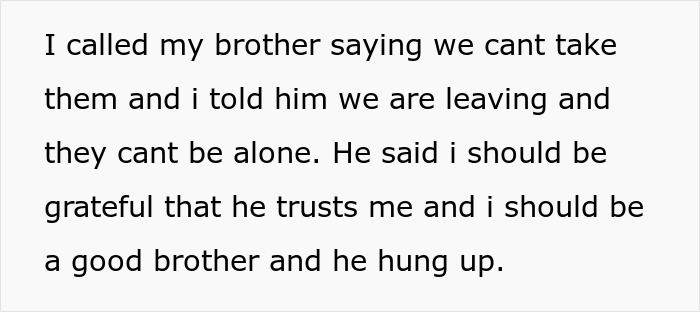

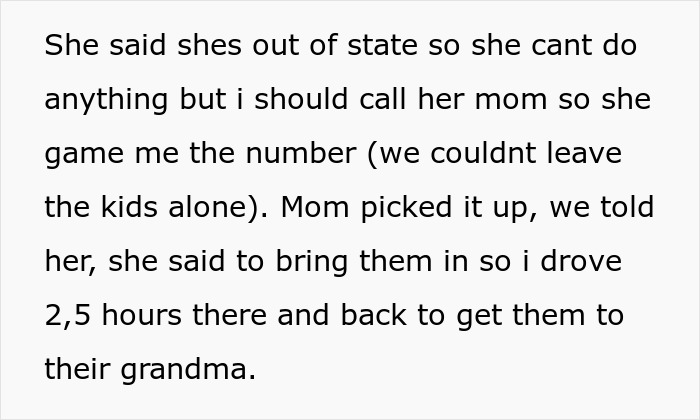

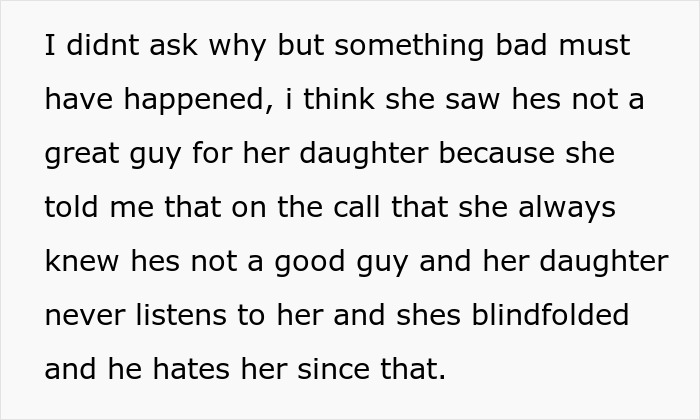

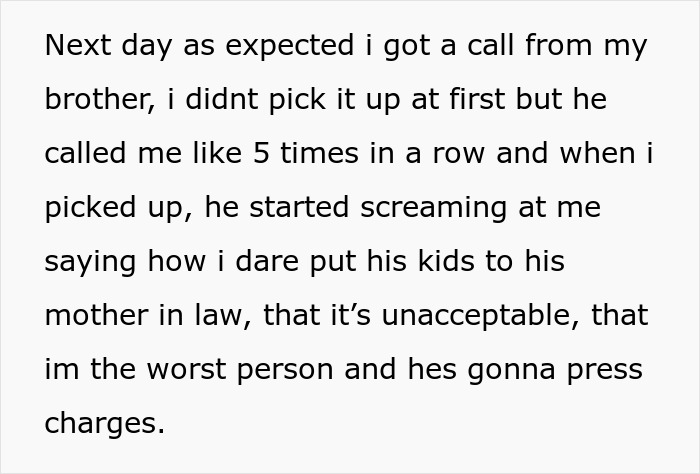
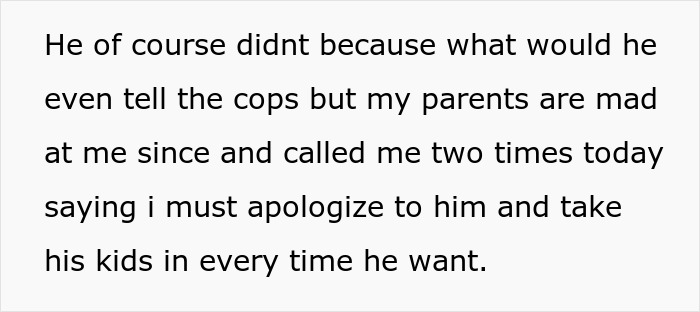

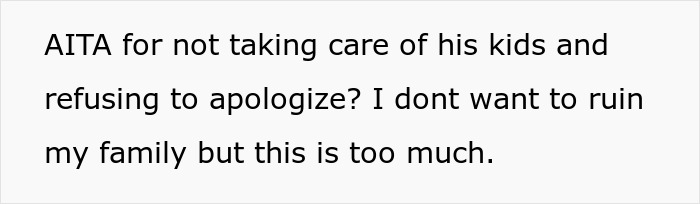
Boundaries tend to look simple on paper and get messy around a real family table. What stands out here is that the limit was stated plainly and then treated as a suggestion. Saying “I’m done babysitting” is about as specific as a boundary gets, and a drop off on the doorstep days later shows how little weight the other side gave it.
A Psychology Today guide to setting family boundaries points out that vague limits leave everyone confused, while clear ones simply inform people of what will happen instead of asking for permission. A boundary that gets announced, ignored, and then quietly abandoned teaches everyone that it was never real.
It also helps to separate a boundary from a demand. A boundary covers what you will and won’t do with your own time, money, and home.
It does not give anyone the power to control how other people run their lives. That distinction matters for the grandmother phone call, which is where reasonable readers may split. One view says the kids couldn’t be left alone, the door was already open, and a relative who loves them was a sensible fallback.
Another view says that choosing who looks after someone else’s children, especially a relative the parents openly dislike, moved past declining and into deciding on the parents’ behalf. Both views can hold some truth at once, and the children were the ones caught in the middle of an adult standoff.
Guilt deserves its own mention, because it is usually the loudest part of these situations. Family systems that lean heavily on togetherness often make personal limits feel like betrayal, and Psychology Today has written about how that sense of obligation can override a person’s own needs.
Two phone calls from the parents demanding an apology are a good example of how that pressure arrives. Feeling terrible about a decision does not automatically mean the decision was wrong, and it also does not mean it was flawless. Guilt is a signal worth noticing, but it is a poor judge.
The apology question has a more useful answer than a flat yes or no. Saying sorry for how something happened is different from taking back the limit itself. Someone can honestly say that the way the kids ended up with their grandmother caused hurt, and that a call to the brother first might have been better, while still holding firm that regular childcare is off the table.
That kind of statement keeps the boundary intact and leaves room for repair. What it should not do is become a bargaining chip that trades the boundary away for peace.
Money is another tangled thread. Helping a sibling financially or with childcare is a gift, and gifts work best when they are freely given, not extracted through a sense of duty. Years of old hurts, from school teasing to being overlooked at home, add weight to every present day request.
Those wounds are real, but they are worth keeping apart from the current question. One conversation can address the babysitting arrangement, and a separate, much longer one can address how the brothers have treated each other since childhood.
Consistency is where most boundaries rise or fall. A family boundaries guide from Burlap and Blue describes healthy limits as bridges with guardrails, meaning they protect people without cutting off connection. That framing suggests a middle path.
A person can decline open ended childcare and still offer something bounded, such as one afternoon with plenty of notice, or an invitation for the kids to visit at a set time with their parents nearby. Alternatives like this meet the family’s wish for closeness without repeating the pattern that caused the blowup.
A few practical habits tend to help in standoffs like this one. Repeat the boundary calmly and briefly instead of debating it each time. Keep the explanation short, since long justifications often invite counterarguments. Let the parents know the answer is settled, and that pushing again will not change it.
And if the tension keeps building, a family counselor or a neutral relative can lower the temperature in ways that phone calls rarely do. Ultimately, the healthiest outcomes here look less like winning and more like clarity. Everyone involved deserves to know where the lines sit, and the children deserve adults who sort out their disagreements without using them as messengers.








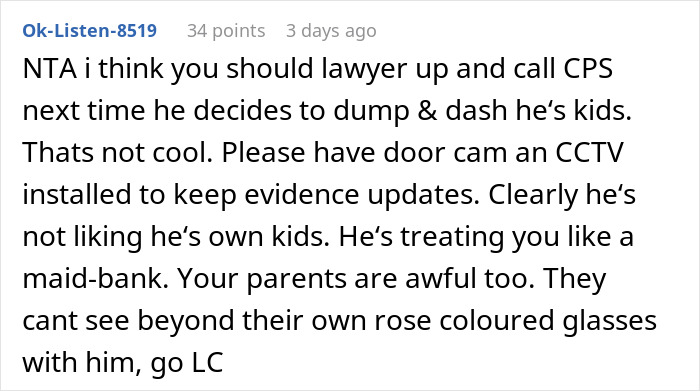
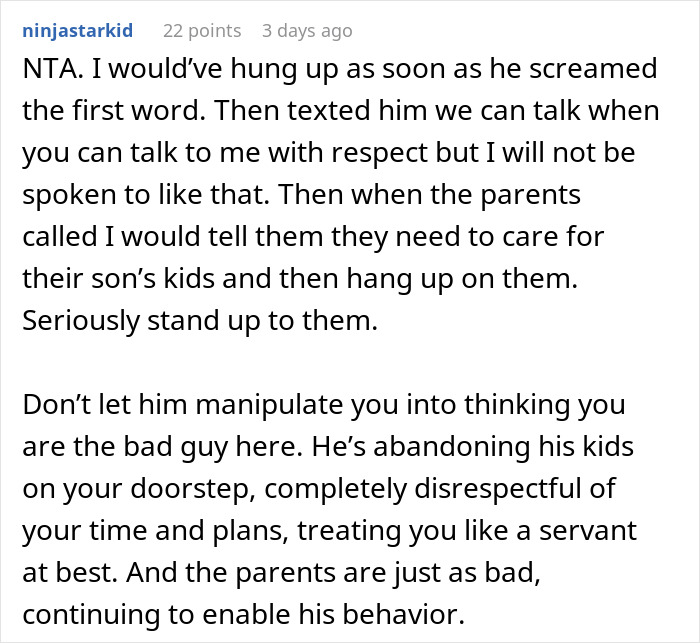
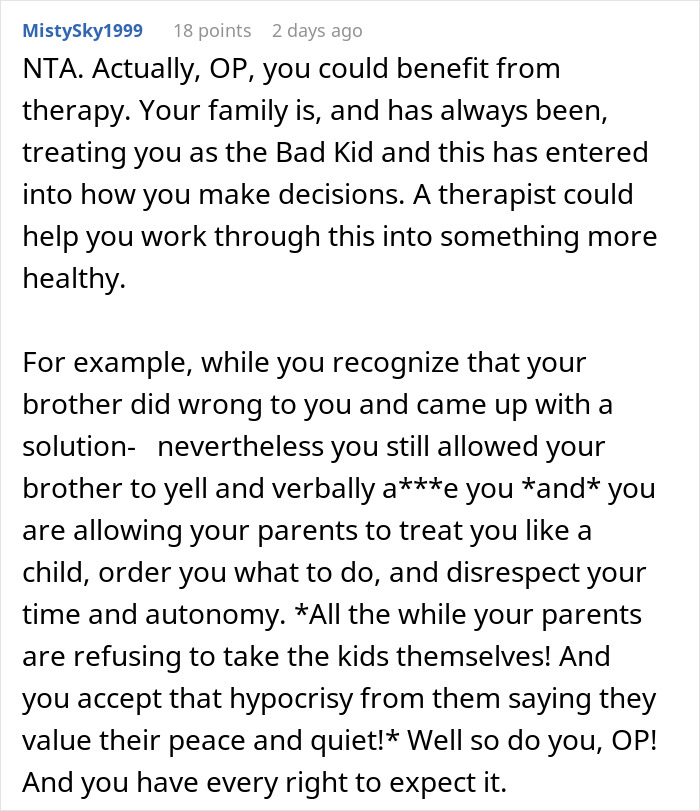

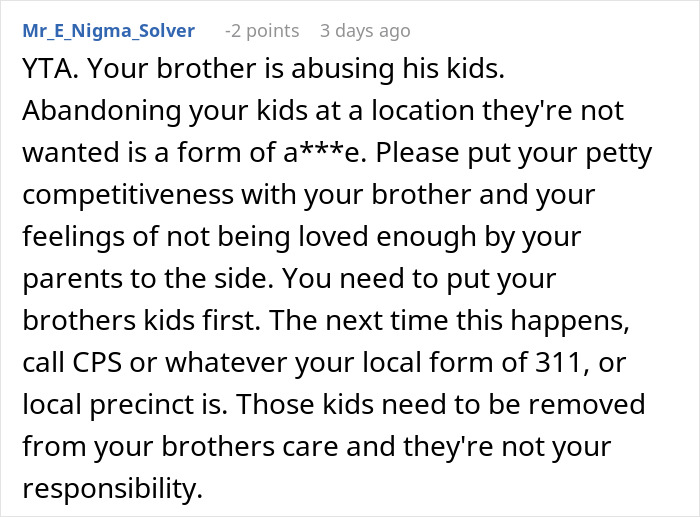
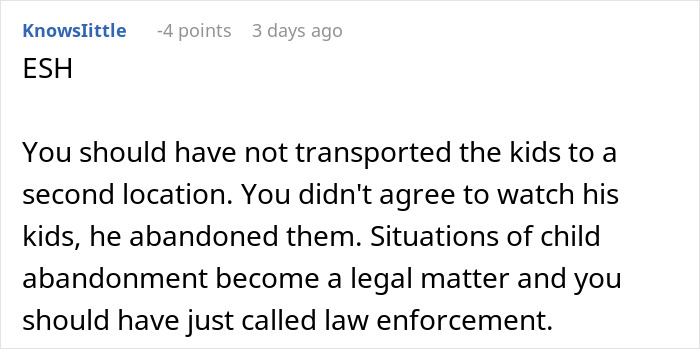
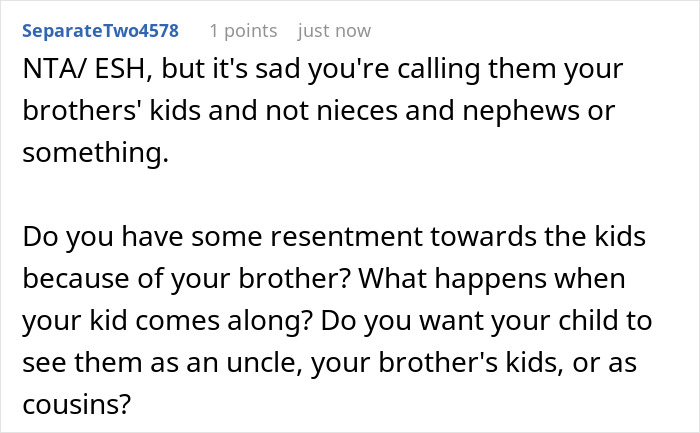
YTA

By entering your email and clicking Subscribe, you're agreeing to let us send you customized marketing messages about us and our advertising partners. You are also agreeing to our Privacy Policy.
Thank you! You've successfully subscribed to newsletters!


What he needs to do is tell them all to f**k off and cut them out of his life entirely.

Next time he phones to say he's dropping them off, text "not today" and then leave the house. Physically leave the house. Immediately. Also, get a ring door camera for back up of his deserting his kids which you may or may not want to tell him CPS would be very interested in. You told him no by text, there is now evidence you did so.

Don't answer the phone, don't answer the door. Tell your parents it's their turn to step up whether they like it or not.
What he needs to do is tell them all to f**k off and cut them out of his life entirely.
Next time he phones to say he's dropping them off, text "not today" and then leave the house. Physically leave the house. Immediately. Also, get a ring door camera for back up of his deserting his kids which you may or may not want to tell him CPS would be very interested in. You told him no by text, there is now evidence you did so.
Don't answer the phone, don't answer the door. Tell your parents it's their turn to step up whether they like it or not.



































 No fees, cancel anytime









62
4