Get Premium
Dark mode theme is available exclusively for premium users. Learn more about the benefits of subscribing.
No fees, cancel anytime.

 Dark Mode Ad-Free Browsing Unlimited Content

 Ad-Free Browsing Unlimited Content Dark Mode

Join 1.2 million Panda readers who get the best art, memes, and fun stories every week!

Television always seems to want us to root for the same set of male archetypes. The hopeless romantic, the sensitive outsider, the nice guy. We’re supposed to sympathize with the insecurities they project onto everyone else and agree with them that their polite behavior entitles them to relationships.
But let’s look at what they actually do.
They lie, they manipulate, they sabotage. They punish people for wanting lives that don’t revolve around them. To put it simply, they hurt people.
In many cases, these TV “good guys” aren’t heroes at all. They’re toxic men who make things worse for everyone around them.
Disclaimer: The views and opinions expressed in this article are those of the author and do not necessarily reflect the official position of Bored Panda.
This post may include affiliate links.
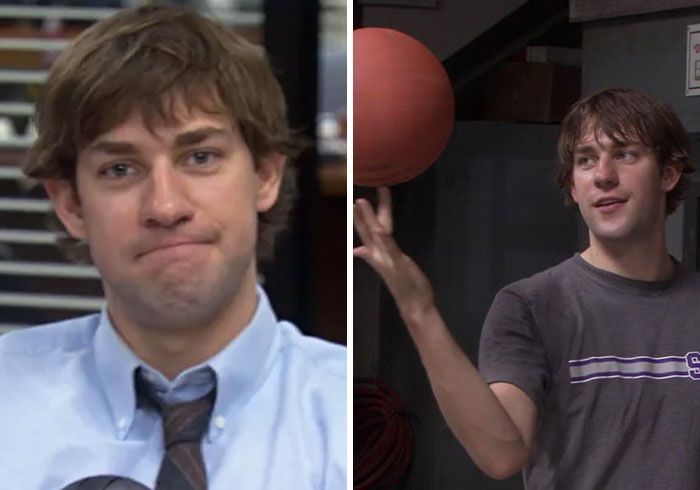
Jim Halpert is a particularly egregious case. Many toxic male characters are written that way on purpose. Characters have flaws. Those flaws cause conflict with other characters. They make mistakes. They learn. They grow.
But most of Jim’s toxic traits actually seem to be written as his positive attributes, the things that are supposed to make him a sympathetic hero. Ryan concisely articulates Jim’s character in Season 3, Episode 8 (“The Merger”). When Jim transfers back to Scranton from Stamford, he finds Ryan has taken over his old desk. He reluctantly takes another. In a talking head, Ryan states bluntly: “Jim is a nice guy. That’s why I got the desk.”
Jim is the quintessential “nice guy” archetype, and apparently what this means is that he is not assertive, forthright, or honest about anything. He never simply tells people how he feels and accepts the consequences. Rather, he uses manipulation and dishonesty to get what he wants.
His relationship with Pam is the most glaring example. No, it’s not inherently wrong to develop feelings for someone who’s engaged. That’s not really something he could control. However, the honest response would be to tell Pam how he feels and let her make her own decision. Not flirt with her behind her fiancé’s back for years, something he knows is wrong since he always stops doing it the moment Roy enters the room, only to kiss her anyway when he finally does come clean and she rejects him.
It’s not just Pam, though. Consider one of Jim’s defining features: his pranks on Dwight. In the earlier seasons, the writers did paint Dwight as maliciously annoying and unreasonably so, so Jim is arguably justified in disliking him. But again, he can’t express this in an honest manner. He can’t set boundaries with Dwight and appropriately escalate the situation when they’re crossed. Instead, he takes the most passive-aggressive approach imaginable and puts his coworker’s stapler in Jell-O. By the later seasons, Dwight is hardly even malicious anyway and more just quirky in a way that gets on Jim’s nerves, but Jim still can’t help but bully him.
And we’re supposed to root for this guy?
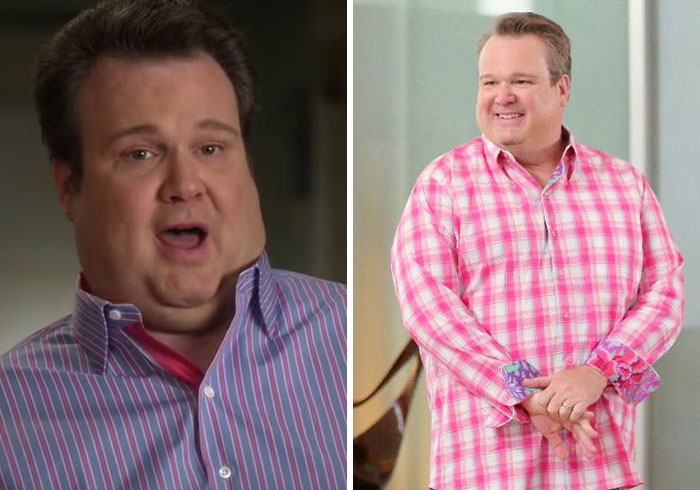
Cam Tucker is written as nearly the polar opposite of his partner Mitchell. He’s warm, sensitive and emotional while Mitch is uptight and logical. Cam is affectionate, and he cries easily. So obviously he has higher emotional intelligence, right? He has more empathy?
Well Cam certainly understands emotions, but the problem is his are apparently the only ones that matter.
The writers actually use this aspect of Cam’s personality for comedy in Season 11, Episode 7 (“The Last Thanksgiving”). It’s revealed that Cam once invented a breakup with Mitchell to find out how much support he’d get from their friends. He portrayed himself as devastated and Mitchell conversely unaffected, so everyone was naturally very sympathetic towards him over Mitchell.
In real life, that would be a pretty terrible thing to do, both to Mitchell and their friends. It’s a sitcom, so we’ll accept some absurdity for comedic effect, but even so, it shows that Cam uses his sensitivity as a weapon. Though he’s supposedly more caring, he takes advantage of this reputation to convince others he’s more deserving of love and affection than other people whom he supposedly cares for. It even raises the question of whether his empathy is even real or just a front.
This presents itself within the actual timeline of the show as well. In Season 2, Episode 9 (“Mother Tucker”), Cam’s mother repeatedly touches Mitchell in ways that make him uncomfortable. Instead of supporting his partner’s right to set boundaries, Cam becomes emotional, threatens to cry and gaslights Mitchell by painting the whole thing as stemming from his own emotionally cold upbringing.
Being the first person to cry doesn’t make someone right. Being emotional doesn’t make someone right. Cam knows he can manipulate people and get what he wants by using the typical emotional expression of a victim.
It’s not sensitivity and empathy. It’s pure toxicity.
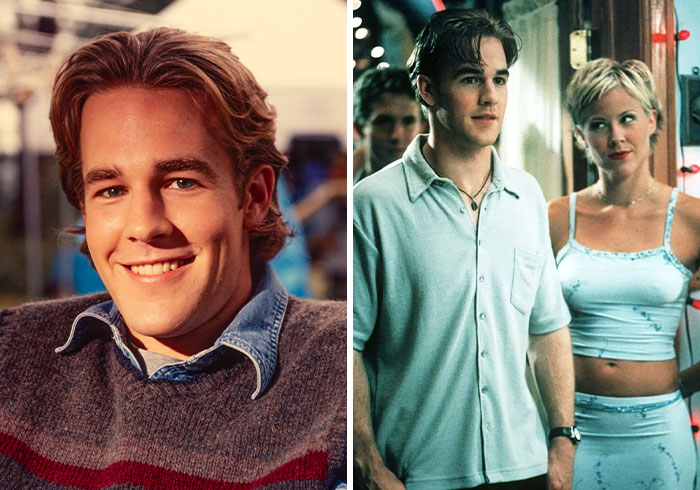
Dawson Leery is the show’s titular character. Obviously we are supposed to like and root for him. The writers take it to an exaggerated degree, though. He’s portrayed as the ultimate “boy next door,” an idealistic teenage romantic and the moral center of the show. His foil is Pacey, the troublemaking rebel, making him the naive, wholesome kid who always tries to do the right thing.
In reality, Dawson is the perfect example of the toxic “nice guy” who believes he’s entitled to women, friends, relationships and pretty much anything from anyone thanks to his moral uprightness, which is dubious anyway when his character is analyzed any more closely than his politeness in public.
As an aspiring filmmaker, he seems to think everyone around him, especially women, should follow the script he’s written for them in his head, including the character he’s imagined for them. For example, his reaction to Jen’s sexual history early on shows he treats people terribly when they veer from his ideal.
His treatment of Joey, though, is the worst example. When she romantically turns to Pacey instead of him, he essentially throws a massive self-righteous tantrum and tries to sabotage their relationship with an ultimatum.
The boat race in Season 3, Episode 21 (“Show Me Love”) is where his possessiveness and treatment of Joey as a prize for his behavior rather than an autonomous human being reach absurd levels. He treats the regatta as a competition for Joey and behaves so recklessly that he puts them all in physical danger.
Dawson does eventually tell Joey to go to Pacey, so there’s some growth there, but just consider what the show is asking us to celebrate. Dawson is finally accepting that Joey can choose her own boyfriend. He’s merely relinquishing an authority over her life that was never his in the first place.
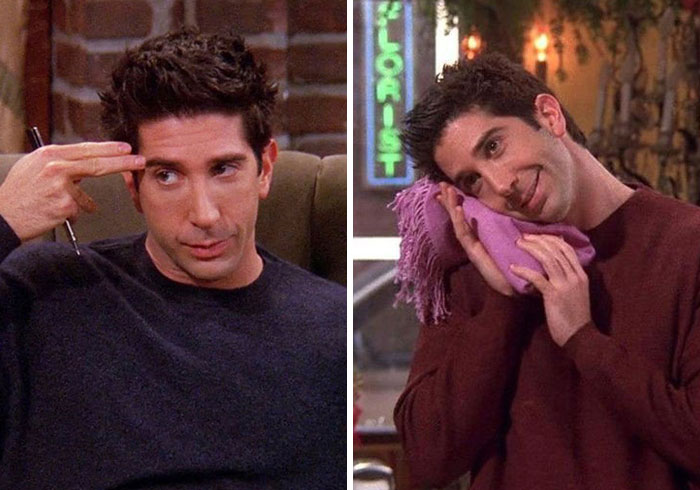
Ross is frankly so terrible that if it weren’t for a laugh track, he’d be the villain of the show. And I say this as someone who otherwise takes the side that yes, they were on a break.
To a certain extent, Ross’ toxic traits are flaws put there purposefully by the writers to drive conflict, and to the extent they cross the line into truly unacceptable social behavior, we give them some poetic license for absurdity for comedic effect.
But let’s truly take a look at the downright awful things Ross does. I don’t mean yelling at his boss for eating his sandwich. I mean actively sabotaging Rachel’s life at every turn despite supposedly loving her.
Rachel’s first job at Bloomingdale’s and the start of her fashion career are major milestones for her character. Her main flaw as presented in the pilot is that she’s a rich daddy’s girl who doesn’t know how to fend for herself, so starting an actual career is major growth. Ross, however, immediately becomes jealous of the time she spends away from him (and with Mark) to the point he ultimately sets her desk on fire (okay, on accident).
To make matters worse, Ross never grows. In Season 10, Episode 15 (“The One Where Estelle Dies”), he still can’t accept Rachel’s independence and tries to bribe her boss with dinosaur toys to keep her from going to Paris.
Ross is jealous, possessive and borderline violent. He doesn’t see the women in his life as people but objects for him to control. Just consider that he confesses that at a party in 1987, he went into the bedroom and kissed a sleeping woman he thought was Rachel only for it to be revealed it was really Monica.
This makes it absolutely heartbreaking that Rachel’s character arc ends with her giving up her dreams for Ross. Ross is an even more toxic version of the dynamic Rachel had with her father and fiancé that led her to run away from her own wedding in the pilot. Ross totally destroys all Rachel’s character growth. Friends is not a comedy. It’s a tragedy.
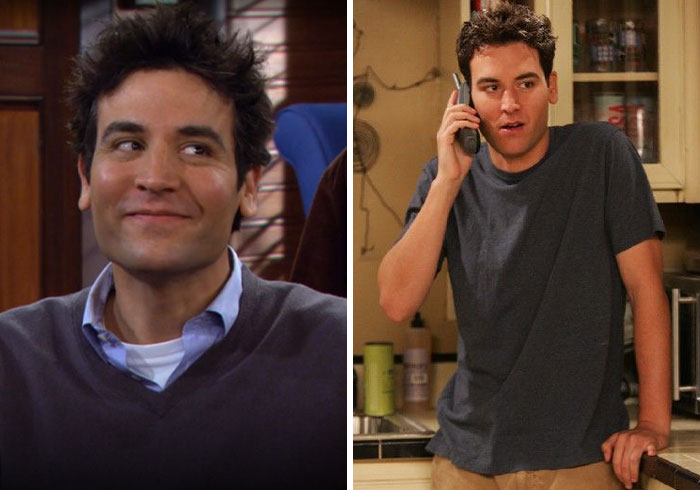
We’re supposed to admire and root for Ted Mosby because he’s the ultimate hopeless romantic. He has so much love to give, and we feel for him with each breakup and obstacle along his way to finding “The One.” The problem is that that is all a facade. He doesn’t have a heart bursting with love—well, not for anyone other than himself, that is.
Ted doesn’t love the numerous women he dates and pursues throughout the show. He loves the narrative he’s constructed in his head. All his romantic interests are just props in this narrative that serve his costume as the hero. After all, the whole show is a story he’s telling.
But what’s critical is that what these women actually want or care about is wholly irrelevant to Ted.
This is obvious in the show’s principal storyline: Ted’s pursuit of Robin. Robin tells him from the very beginning she’s not interested in a serious relationship, but he doesn’t accept that. He turns to manipulation and outright crime to ignore her wishes. He throws three parties just to run into her, hires a string quartet to guilt-trip her and even steals a blue French horn. I’m not a lawyer, but I’m pretty sure that’s at least a misdemeanor in the State of New York, and if the instrument was worth more than $1,000, Ted’s a straight-up felon.
Throughout the show’s nine seasons, Robin’s desires could not be more clear. She does not want to develop a serious relationship, get married and form a family like Ted does. Ted, however, lies for years to disrespect that. He’s just fine with being her friend even though later actions prove he’s not. He’s supportive of Robin and Barney even though he undermines their relationship at nearly every turn. Even when he finally meets “The One,” his dead wife and allegedly the whole reason he’s telling his kids this ridiculous story, he’s not over their “Aunt Robin.”
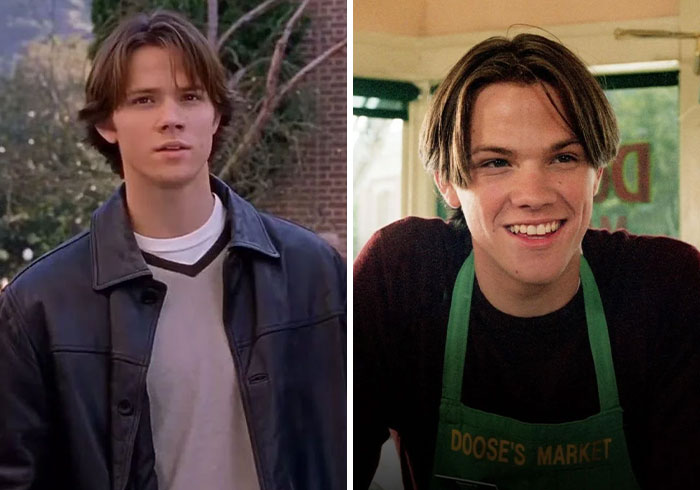
While Gilmore Girls fans obsessively debate Logan versus Jess as the better boyfriend for Rory, Dean gets pushed to the back burner as her first high school boyfriend. A simple relationship that just didn’t last. A learning experience for everyone.
However, as a character, Dean is pretty troubling.
While they’re dating in Season 2, Dean is jealous and possessive. To an extent, his jealousy isn’t even entirely unfounded. Rory is developing feelings for Jess after all. But he tries to control and force the situation in a way mature adults would recognize as counter-productive. He calls Rory excessively and leaves passive-aggressive voicemails.
Eventually, Dean becomes outright belligerent. He disrupts Rory’s rehearsal of Romeo and Juliet. Finally, in Season 3, he publicly dumps and humiliates her at the Stars Hollow Dance Marathon, screaming at her in front of the entire town.
Okay, he’s a teenager. Whose first high school relationship is totally healthy?
Later, though, in Seasons 4 and 5, it’s revealed Dean maintains a similar dynamic with his wife Lindsay. He marries her even though he’s still not over Rory, then he sleeps with Rory, telling her that his marriage is effectively over.
However, apparently that’s just in his head, if even true. Lindsay is totally unaware their marriage is ending, and when Dean gets home, he berates her for answering his phone.
Basically, Dean wants—no, demands—love and respect from the women in his life but is incapable of or unwilling to reciprocate.
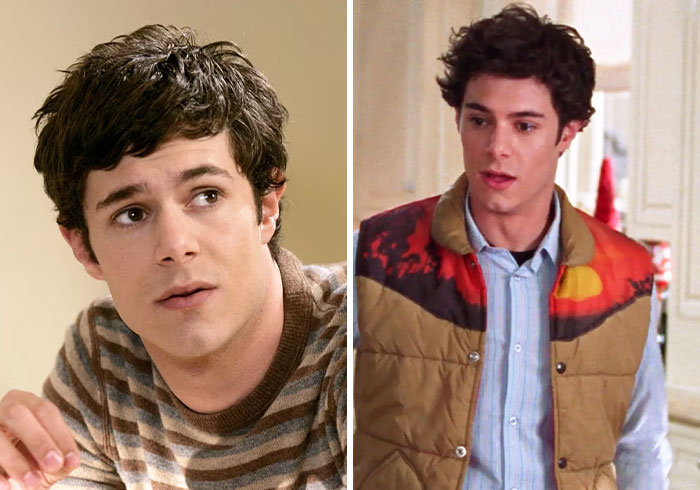
Seth Cohen is a sensitive nerd in a town full of obnoxious rich kids. He likes comic books (this was the early ‘00s, so that still wasn’t cool). He’s awkward around girls. He makes witty observations about said obnoxious rich kids.
This all makes him very sympathetic to us, the audience. None of it inherently makes him a good person.
The moment Seth actually starts getting attention from the cool kids, he has no problem being blatantly terrible to them and doing all the things he normally acts morally above. For instance, when he starts getting attention from both Anna and Summer, he’s awfully comfortable enjoying it at their expense. At Thanksgiving in Season 1, Episode 11 (“The Homecoming”), he tries to juggle both girls in the same house rather than just be honest. Girls overlooking him based on their own tastes and preferences was some kind of great social injustice, but actively misleading them when they start to notice him? Just understandable comedic confusion!
But it’s the Brown storyline that really brings Seth’s twisted psychology to bear.
In Season 3, he misses his admissions interview after getting high and then lies to Summer about it. Later, when Summer gets accepted and he doesn’t, he lies about that too. He justifies this by claiming she might otherwise give up Brown to stay with him, but as Ryan points out, this would be her decision to make.
And that’s what’s wrong with Seth and every real-life “nice guy” like him with a victim complex. The cool kids didn’t exclude Seth because they thought he was inferior. They excluded him because he thought he was superior. He has internalized an intellectual and moral superiority to such an extent that he thinks he can make everyone else’s decision for them. Then they have to deal with the consequences.
Jack Shephard is the hero of Lost. He is written as the classical hero archetype who has greatness thrust upon him. He reluctantly takes the lead after the circumstances of the crash force his hand.
In the hero’s journey or classical epic cycle, a hero is supposed to be flawed. In fact, they have a fatal flaw, or hamartia, which they must confront. They must then sacrifice their ego to save their people.
Jack’s fatal flaw is that he’s a control freak. In Season 3, Episode 1 (“A Tale of Two Cities”), when his wife Sarah leaves him, he refuses to let her move on until she tells him the name of her new partner. He goes so far as to stalk her, steal her phone and physically attack his own father out of paranoia.
Then in Season 3, Episode 9 (“Stranger in a Strange Land”), while in Thailand, he becomes obsessed with finding out what his lover Achara does for a living. He spies on her to discover she’s a tattoo artist and demands she tattoo him. When she refuses, he grabs her and physically forces her to do it.
Many fans say Lost fell apart in the later seasons, and a big reason for this is that Jack never confronts this flaw. He never sacrifices his ego. He’s an overly aggressive paternalistic fixer with a savior complex until the end. In Season 5, he is willing to literally detonate a nuclear bomb just so he doesn’t have to admit he isn’t in control.
Ironically, the writers seemingly accidentally included a better hero as a foil character: Sawyer. He starts as a selfish con man, but over six seasons, he genuinely surrenders his ego and risks his own life so other members of the group can make it to safety. He ends up spending three years in the 70s as head of security keeping everyone alive through level-headed leadership only to have Jack return in 1977 and destroy the whole thing because he can’t stand a world where he isn’t the savior.
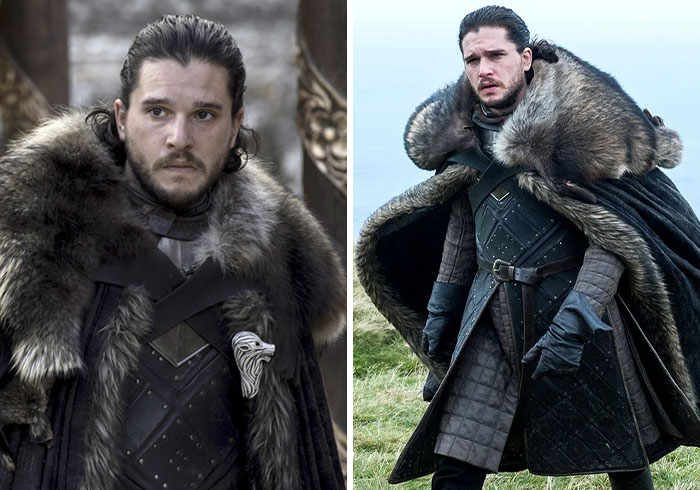
Jon Snow is presented in Game of Thrones as the lone beacon of Ned Stark-style honor and decency. Yet in reality, he’s hardly “honorable” and more self-righteous and arrogant.
Jon consistently makes impulsive decisions based on his own pride and then expects everyone else to clean up the mess. Before the Battle of the Bastards, Sansa warns him explicitly not to fall for Ramsay Bolton’s psychological traps. Jon ignores her completely, charges solo across the battlefield like an idiot, and dooms his entire army to slaughter. Then Sansa has to save him by risking the Knights of the Vale, all so he can then take the crown as the King of the North.
He doesn’t really evolve as a character in this regard either. By Season 8, his passive martyrdom turns lethal. When Daenerys is grieving, isolated and begging for emotional partnership, Jon uses his pseudo-honor as an excuse to abandon her. He reduces his entire vocabulary to “she’s my queen” while refusing to actually communicate or share the burden of leadership. Of course, this contributes to her breakdown, after which he stabs her in the heart mid-embrace—a super honorable way to kill someone, right?—and walks away looking sad about it.
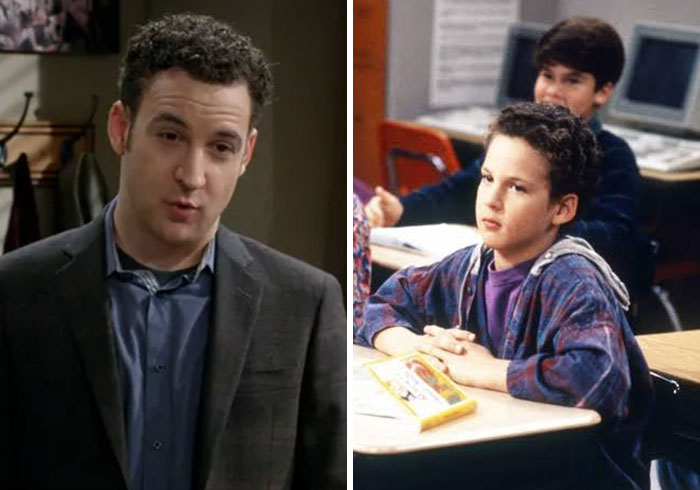
Cory and Topanga’s love story is lauded as something everyone should aspire to. They’re childhood sweethearts. They’re destined to be together, right?
Well apparently “destiny” has to do a lot of heavy lifting when it comes to excusing Cory’s actual behavior.
And I’m not just talking about the writers here. From a purely practical standpoint, obviously a TV show like Boy Meets World has a resolution for which all prior conflict is merely an obstacle. No, I’m highlighting how Cory—and people like him—use narrative, romanticism and history to manipulate others.
Consider the ski trip in Season 5. Cory hurts his ankle and spends the night talking to a girl named Lauren who works at the lodge. He’s young, and developing an unexpected connection with someone isn’t in and of itself a moral failure, but how he handles it is.
Once his ankle is better, Cory lies to Topanga so he can stay behind and keep talking to Lauren, who ends up kissing him. When Cory finally talks to Topanga about it, he announces that honesty is the most important thing in a relationship, confesses to deceiving Topanga to stay with Lauren, but then conceals the kiss. He even outright denies anything else happened. He goes on to trickle truth the whole thing and portray himself as the victim, and Topanga only learns about the kiss from Lauren herself.
The larger problem is that Cory takes his relationship with Topanga as a foregone conclusion rather than a social contract they’re both participating in. It’s clear that, to him, his bad behavior is exactly what it serves as for the writers of the show: a learning experience, an obstacle to be overcome. How it affects Topanga and that she might not want to continue the relationship regardless of their romantic history are irrelevant to him.
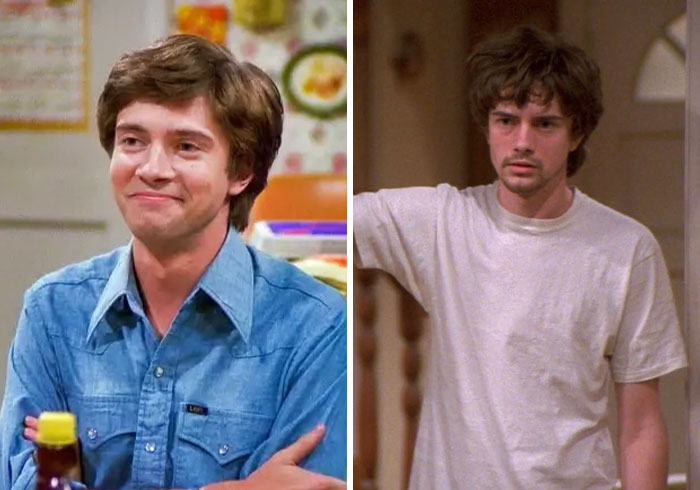
Eric Forman’s insecurity is presented in That ‘70s Show as a charming part of his protagonism. He’s a scrawny teenager with an intimidating father and a girlfriend who seems considerably more outgoing and confident than him. We can understand his perspective, why he worries that he isn’t good enough for her.
That may be a good reason to pity someone. It may be a good reason to recommend them a therapist. But I’m sorry, it is not a good reason to root for them as a romantic hero, and it is not a good reason to be in a relationship with them.
Just look how much Donna has to pay for his insecurity with her own emotional well-being throughout the show.
Season 3, Episode 25 (“The Promise Ring”) is an early example. Eric gives a promise ring to her as a symbol that they’ll be together forever, but he’s not really telling her what he wants, he’s sneakily trying to get her to concede to what he wants. Donna loves him, but she isn’t ready to promise the rest of her life to him. They’re in high school. She can imagine a future that hasn’t already been settled. She returns the ring, and Eric breaks up with her.
Fast forward three seasons and Eric refuses to reciprocate this very level of absolute commitment he demands from his partner. In Season 6, as their wedding approaches, he vanishes, only to return and acknowledge they aren’t ready to get married. He still wants a relationship, though.
When Donna has doubts, Eric turns it into a relationship-ending crisis. When he has doubts, he has no problem giving himself space.
In other words, he doesn’t demand commitment from Donna because that’s what he actually wants. He demands it because he’s insecure and needs the assurance she’ll be there for him—even if that’s not what he wants. He needs her to be more vulnerable than he is and pay for that dynamic with her independence.

Frankly? The way the character is written, is spot on to how young men and boys behaved in the 1970's.
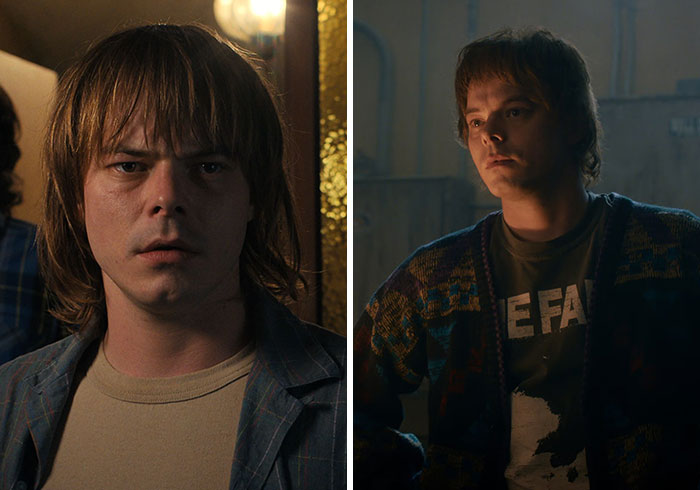
Not gonna beat around the bush. Jonathan Byers starts the show taking voyeuristic photos of Nancy during a private moment without her consent. Kind of an obvious red flag—and arguably a crime—that’s hard to move on from.
For the sake of argument, let’s cast the photos as an early character flaw, though. Jonathan does go on to apologize, and we know he’s a lonely outsider with a struggling family.
Jonathan does not repeat the offense or do anything quite so severe, but his relationship with Nancy in later seasons shows that his psychology is not fully rehabilitated.
Namely, Jonathan deceives Nancy about their college plans. She believes he’s waiting to hear from Emerson, where they’ve planned to go together. He’s actually planning to go to community college in California so he can stay close to his family.
He doesn’t have to go to the same college as Nancy or even stay with her, but obviously she should be able to make decisions on their relationship based on the same information he has.
Just like when he was taking pictures of her through a window, it doesn’t actually matter to Jonathan what Nancy wants at all. Frankly, he’s not interested in being in a relationship with the autonomous human being that is Nancy Wheeler. He wants to be in a relationship with the idea of her, and her active participation ironically derails that.


















 No fees, cancel anytime