Get Premium
Dark mode theme is available exclusively for premium users. Learn more about the benefits of subscribing.
No fees, cancel anytime.

 Dark Mode Ad-Free Browsing Unlimited Content
 Ad-Free Browsing Unlimited Content Dark Mode
Join 1.2 million Panda readers who get the best art, memes, and fun stories every week!
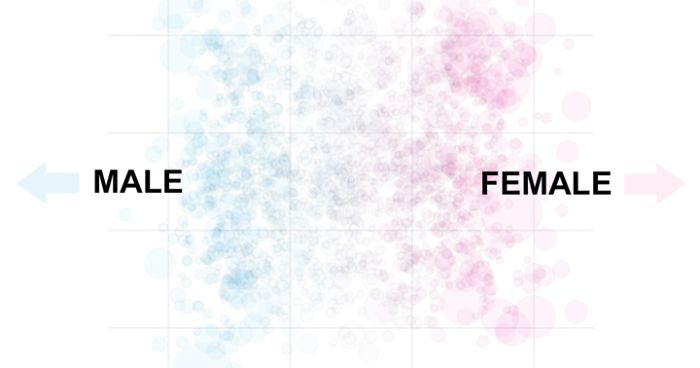
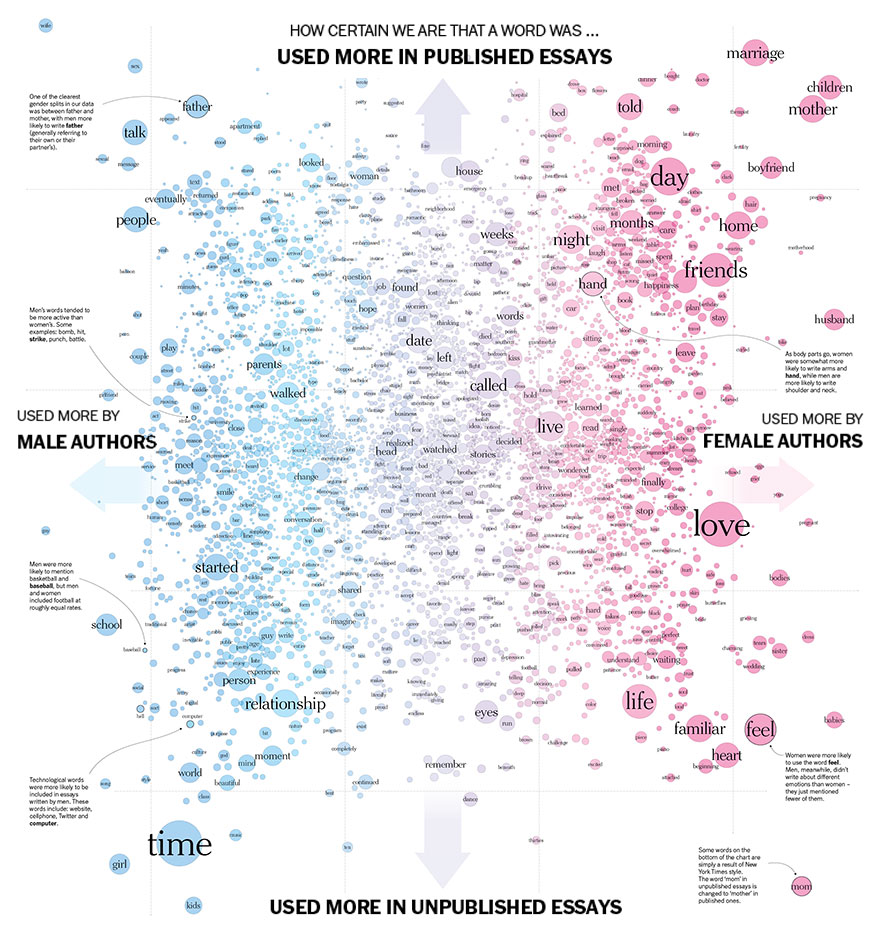
As gender roles are merging and same-sex romance has become accepted more than ever, Josh Katz, Claire Cain Miller and Kathleen A. Flynn have decided to determine if men and women speak the same language when they talk about love. To determine that, they have examined modern love essays, submitted to The New York Times. “We examined the last four years of essay submissions and charted the words along two dimensions: whether the essay was published and the author’s gender,” they wrote.
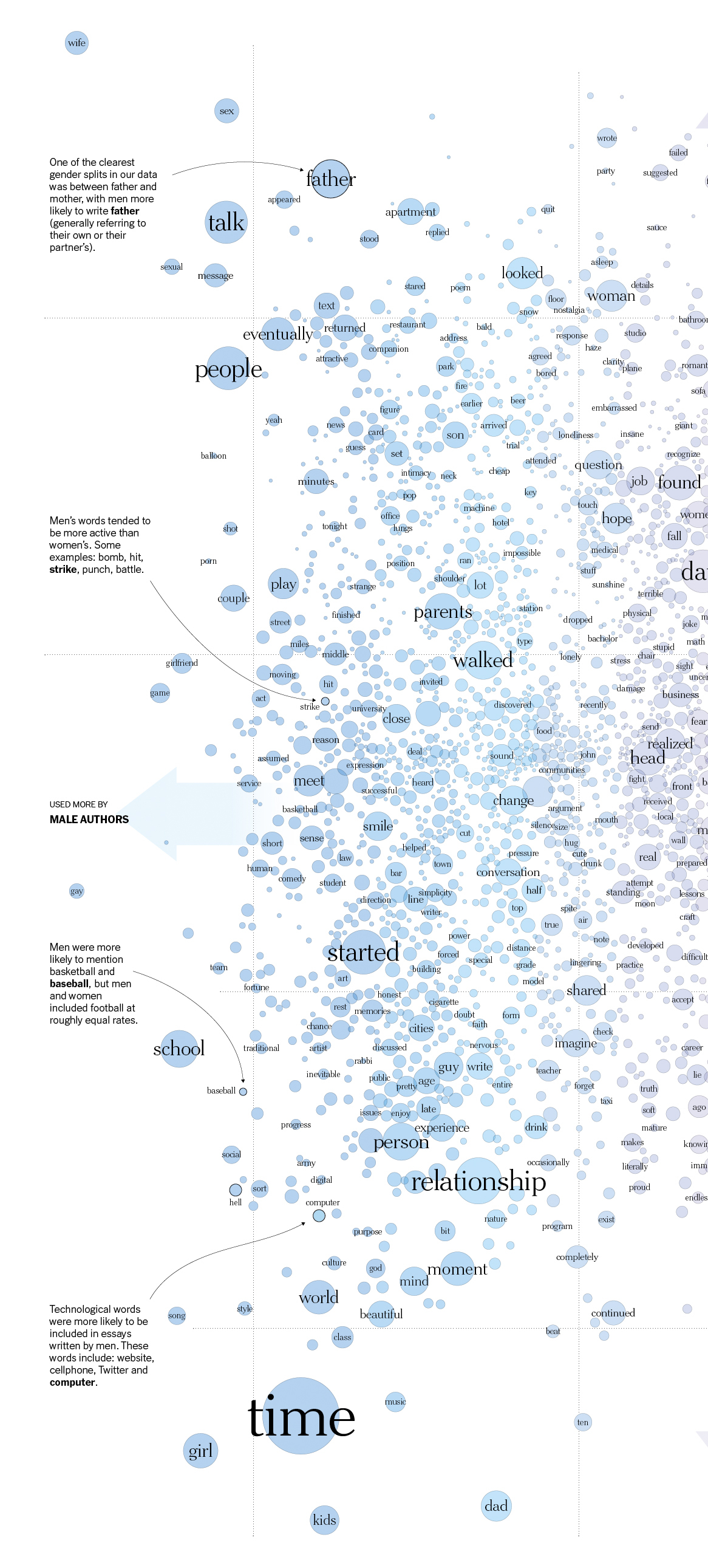
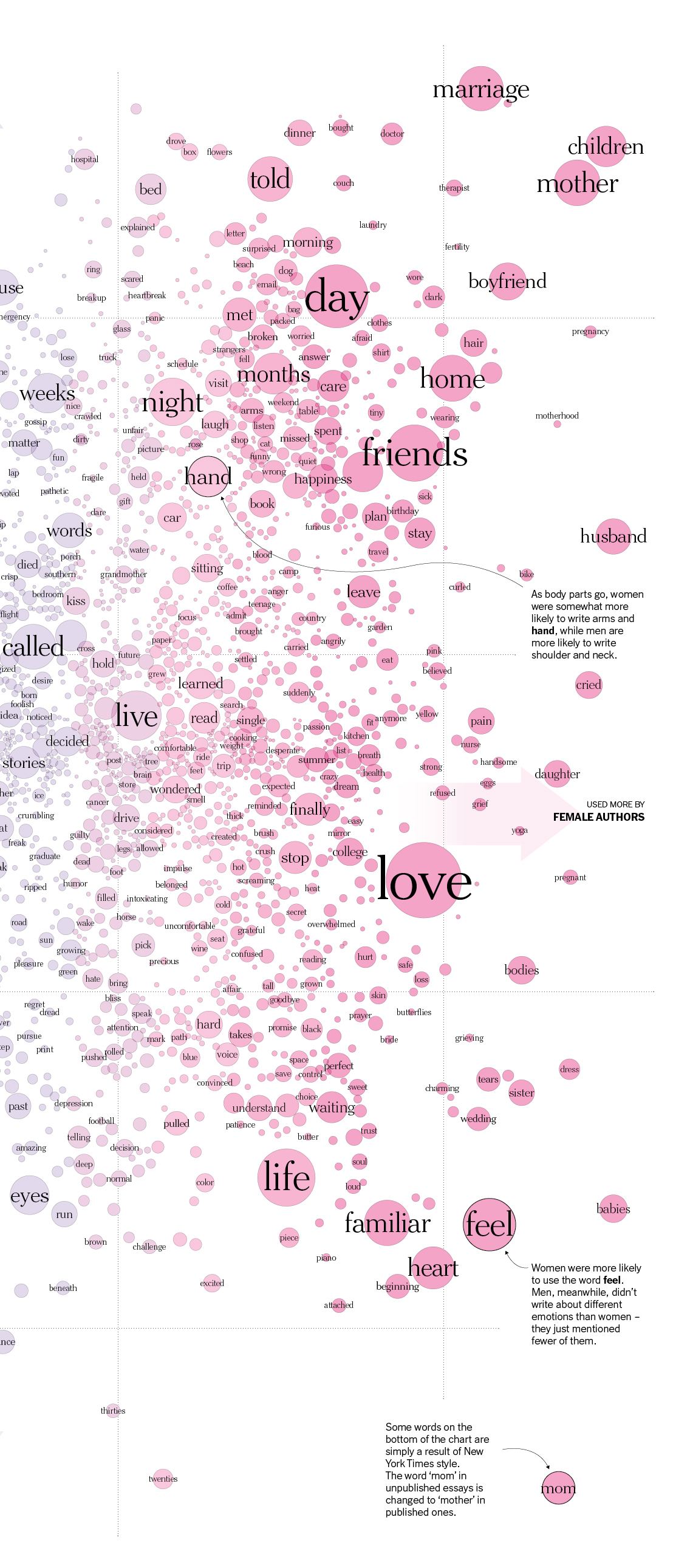
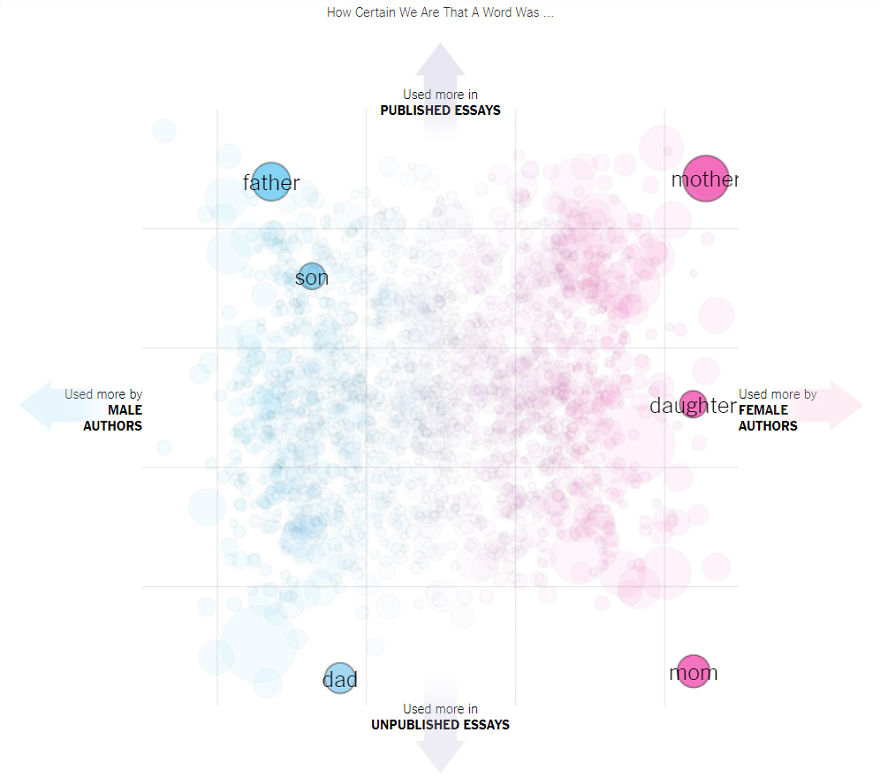
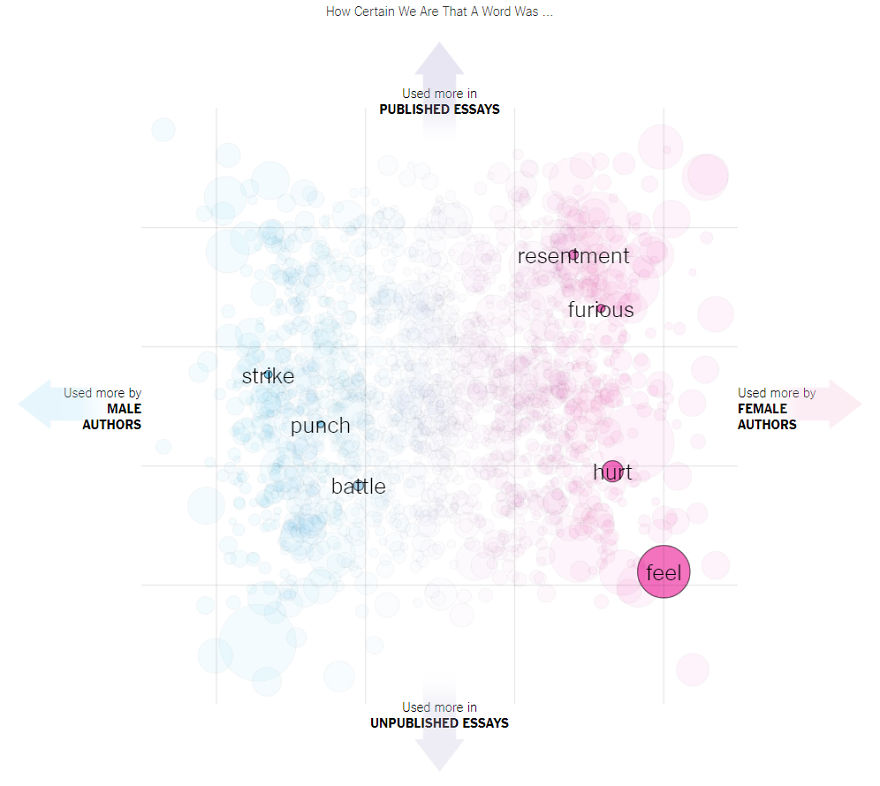
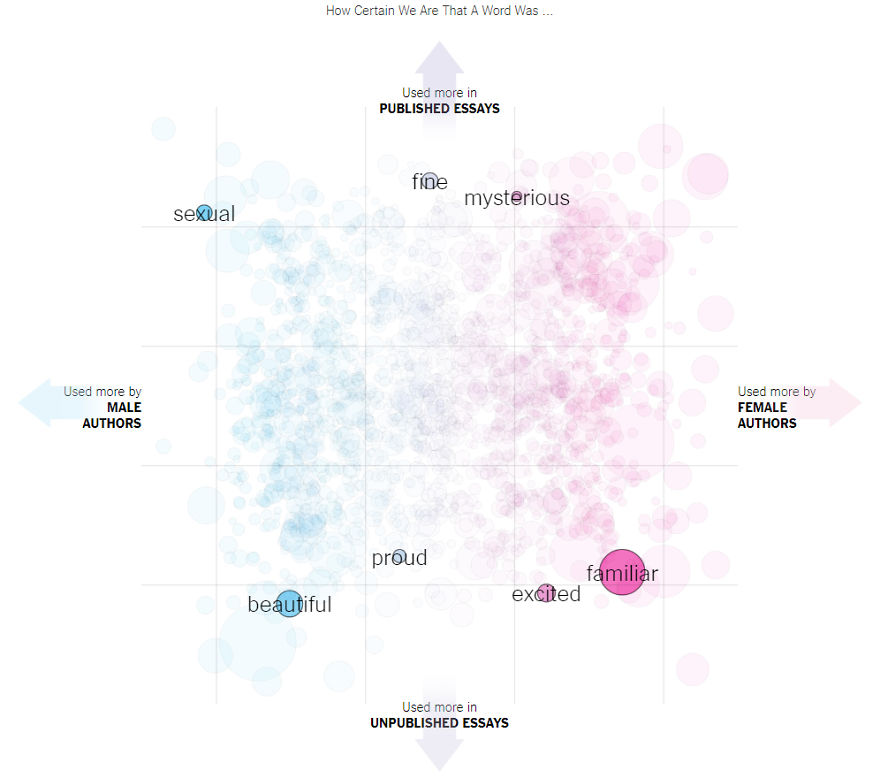
Words towards the top of their chart are more likely in published essays, and those at the bottom are more likely in rejected ones. Moreover, the words on the right side are more likely to be written by women, and those on the left are more likely in essays by men. “We found overlap in both dimensions, represented by words in purplish circles near the center of the chart. But there were striking differences, too.”
First, let’s examine the difference between men and women. “When men wrote about family, they used words like ‘father,’ ‘dad’ and ‘son,’ while women used ‘mother,’ ‘mom’ and ‘daughter.’ (And we checked — in these essays, the writers were almost always referring to their own or their partner’s family members, not themselves.)”
A study by Michael Baker and Kevin Milligan backed up these findings, stating that parents’ feelings are stronger towards a child of the same sex with who they ten to spend more time with.
Another paper suggests that women express more emotions than men. This was also evident in the essays. “Men’s words tended to be more active: ‘bomb,’ ‘hit,’ ‘strike,’ ‘punch,’ ‘battle.” Women were more likely to describe feelings: ‘resentment,’ ‘furious,’ ‘agony,’ ‘hurt;’ they were also significantly more likely to use the word ‘feel.'” Men, however, weren’t writing about different emotions; they were simply mentioning fewer of them.
When talking about rejected and published essays, the analysis points out the nouns at the top of the chart. “They suggest specific characters who might stride through a story — one’s father, doctor, children, mother, boyfriend or therapist — as well as where it might unfold: at a party, in an apartment, on the couch, at dinner, in bed, on a futon, at the altar, in the hospital. That specificity appears to have caught an editor’s attention and made for engaging reading.”
Judging by this data, it is safe to say that when writing about love, men are more likely to write about sex, and women about marriage. Also, women focus more on feelings, men – on actions. The authors of the study state that the report might represent an unrepresentative sample, but what do you think about their findings? Let us know in the comments below.
More info: The New York Times



Agreed. I don't think it reflects anything at all - it's very stereotypical.
Load More Replies...
Maybe men use "father," "son," and "dad" because they are more likely to be in that role, yes? It seems that the actual graphic is more interesting than the analysis of it; the authors mainly pick and choose the elements that fit their preconceptions. What about men using the word "couple" more frequently? Or "play"? Or "relationship"?
Well it's not. But it's intriguing. This is bored panda. If you're here then you're bored. Why does it need to be important? Importance doesn't fix boredom, interest does.
Load More Replies... Agreed. I don't think it reflects anything at all - it's very stereotypical.
Load More Replies... Maybe men use "father," "son," and "dad" because they are more likely to be in that role, yes? It seems that the actual graphic is more interesting than the analysis of it; the authors mainly pick and choose the elements that fit their preconceptions. What about men using the word "couple" more frequently? Or "play"? Or "relationship"?
Well it's not. But it's intriguing. This is bored panda. If you're here then you're bored. Why does it need to be important? Importance doesn't fix boredom, interest does.
Load More Replies...













 No fees, cancel anytime



167
51