Get Premium
Dark mode theme is available exclusively for premium users. Learn more about the benefits of subscribing.
No fees, cancel anytime.

 Dark Mode Ad-Free Browsing Unlimited Content
 Ad-Free Browsing Unlimited Content Dark Mode
Join 1.2 million Panda readers who get the best art, memes, and fun stories every week!

Laws are not meant to be broken but that doesn't mean they can't be bent or twisted a little bit to perfectly fit a given scenario. Seeking out legal loopholes is a big part of a lawyer's job. They get paid massive amounts of money to use their eagle eyes to find that one tiny clause that'll make a big difference to their clients' lives, and often bank accounts.
We've heard of billionaires using loopholes to get out of paying taxes, or even criminals exploiting an unexpected loophole to get out of jail free. But there are some perfectly legal ways for ordinary people to beat the system too, as we discovered while reading through an intriguing online thread.
Someone had asked lawyers to share some of the most interesting laws or loopholes they've encountered on the job. And legal experts weren't afraid to speak up. No less than 5,000 comments came pouring in. Some were clever, others absurd and a few were actually entertaining.
Bored Panda has put together a list of the best for you to scroll through before you ever find yourself on the wrong side of the law. We also take a look at some infamous times people have found a loophole and managed to exploit the heck out of it. You'll find that info between the images.
This post may include affiliate links.
 When you pay to park somewhere, and they hand you that ticket that says they are not responsible for any damage to your car? That's a lie. They absolutely are and they just want to scare you off. They took a bailment on your car.
“A loophole is an unintended consequence, which happens when the law in text is then applied to our complex real world, and it simply doesn’t cover all potential situations,” explain the experts at legal recruitment agency JMC. “So, the loophole goes against the purpose of the law, but doesn’t break it.”
People have been exploiting loopholes for years, and not just when it comes to taxes, parking tickets or employment contracts. Some have done it for bizarre, or even legendary reasons.
Take David Phillips for example... When the American civil engineer discovered that Healthy Choice Foods pudding cups came with airline mile stickers, he cooked up a plan to beat the system.
“Through careful calculation, he realized he could buy over a million air miles for just $3,000 worth of pudding in 1999,” reports go2tutors.com. “The promotion offered 500 miles per pudding cup, but Phillips found that buying in bulk from warehouse stores made the math work in his favor.”
Of course, the company had never thought that anyone would buy pudding by the pallet. So Phillips ended up with enough miles for decades worth of free flights, without technically doing anything wrong.
 In Oklahoma, if you are an adopted child, you will be considered an heir of both your adoptive parents AND your biological parents. Double Inheritance!
 Lawyer here. Most people don't know this, but if you have enough money and are white enough, I can get you off of pretty much anything.
In another case, a famous British poet used a loophole to teach Trinity College a lesson in being specific. Lord Byron attended the college between 1805 and 1808, and was rather miffed that he was not allowed to bring his pet dog to stay with him in the dorm rooms.
"Infuriated by this rule, he decided to protest by purchasing another animal: a living, breathing bear. Technically speaking, the college rules did not specify that the poet could not be accompanied by a bear, during his stay," reports ListVerse.
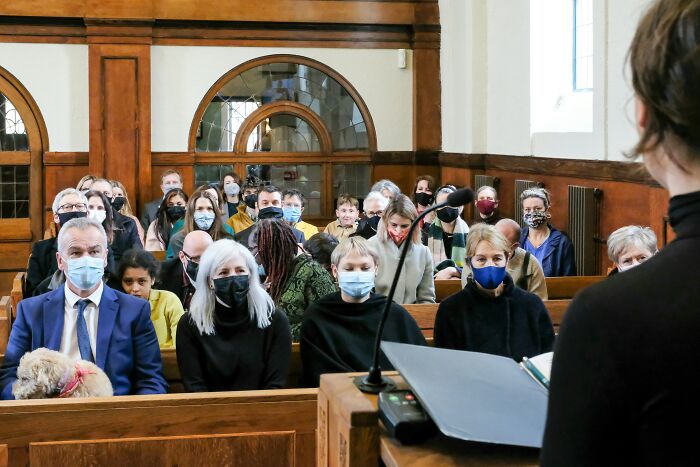 Jury nullification.
A jury chosen by your peers may choose to "nullify" the law even though the evidence proves beyond a reasonable doubt they you are guilty of the charges. They can do this if they disagree with the law or think that rendering a guilty verdict under the circumstances would be unconscionable.
Jury nullification is a constitutional right, but lawyers or the court do not have to instruct jury's on this right. Most jury's are not aware of it.

its also very complex and very limited when it can be done and can easily be overturned by an appeals court. Further the jury needs to legally explain why the law should be nullified and have that reason accepted by the judge. The reason why they dont instruct, is bc very few cases this would even play a part in, and even in those, its so complex and hard to actually do it.
 If you live in an oil producing state, odds are you don't own the rights to the oil under your land. However, the person who does own the oil rights is fully entitled to come on your land, set up a drilling rig, lay pipelines, install storage tanks, build a frac water pond, and do basically anything needed to get the oil out of the ground. They don't need your permission to do this (it is not trespassing). And there is virtually nothing you can do to stop them.
//oil and gas lawyer. Edit: added qualifier.

 In Canada it is legal to pirate movies/games/music/apps as long as you don't make a profit from it.
So if any Canadians here get a letter from their ISP telling them to stop, just ignore it. They can't do anything in court.

How can this be true? They don't have intellectual property laws in Canada?
According to Cambridge Seminar College's site, Lord Byron won the argument against the college. Not only did the bear stay with him in his room, but he would also walk it around the college grounds on a chain.
"Furthermore, Byron tried to get the bear enrolled as a student, he was unsuccessful with this however," adds the site. "Possibly because one thing to make a students exams more stressful would be to have a bear sat next to them!"
His act of malicious compliance went down in the history books for being just as good, if not better than some of his work.
 IANAL, but my boss homebrews beer, and he found out that in Texas, if you brew the beer yourself you can legally consume it even if you are underage. You can even buy all the needed equipment while underage too.

 At one point, it was almost impossible to get no-fault a divorce, in Canada. A divorce based on adultery is still quicker.
As a result, a married couple would work together so that one of them would be caught having an affair. "We'll be in this hotel room tomorrow night. Feel free to barge in."
You'd even see people filing affidavits admitting that they'd banged their tennis pro.

Same in the UK at one stage - there were 'partners' you coild hire so that the maid at the hotel could say she saw you and the partner first thing in the morning (and there was only one bed - gasp)
 As a lawyer I'm going to give a serious answer, which may not be super-interesting to the layman, but is an example of a true "loophole".
In Australia (as in most developed countries) we have a set of laws designed to stop company management from improperly fleecing the creditors of limited-liability companies. So, for instance, if your company is going down the tubes and so you decide to simply transfer all of the company's assets to yourself, or if you keep running up debts you could not possibly pay, then you can be held liable.
In order to be held liable for the above, the company's liquidator needs to be able to prove that the company was insolvent at the time you engaged in the improper conduct, which necessarily requires analysing the company's financial records. If the company never kept financial records (which is itself a breach of the law) then insolvency is presumed, to avoid company directors being able to avoid liability in that way.
Now for the loophole: The above presumption only applies if your company did not "keep" or "retain" financial records. However, the instant your company is in liquidation (the equivalent of "bankruptcy" in the USA) a company director ceases to be an agent of the company. So if they take the company's books and destroy them, then the presumption of insolvency does not apply, since it was not the "company" that destroyed them.
You can be prosecuted for the destruction of the company's books, but it's basically a slap on the wrist fine in practice. So long as you can live with that, it means you can get away with virtually any unlawful conduct you engaged in while running the company.
The above may not be something that pops up every day, and it may not make for great party conversation, but it is a rather gaping loophole that makes a huge difference to a director's responsibility in Australia.
TL;DR - If you are a company director in Australia and you improperly looted your insolvent company, you can get away with it if you destroy the company's financial records *after* the company goes into bankruptcy.
"Raines law" is a typical example of how legal loopholes were exploited in the 19th Century. The law was implemented in New York by Senator John W Raines, in a bid to crack down on Sunday drinking.
It stated that restaurants had to sell meals along with every drink sold, and was meant to ensure that people ate something and didn't drink on an empty stomach. But things didn't quite go according to the Senator's plan...
 If you work retail you're not required to have public restrooms unless the store exceeds a certain size. On the flipside, if you're a pregnant woman, it's illegal for any business to deny you a bathroom.
IANAL.

Some cities or counties in the US have restroom access laws that would compel a business to offer a non-public or employee restroom to a pregnant woman. But it's not law on any State or Federal level.
 In Ohio, you may be convicted of drunk driving (OVI) for operating a bicycle under the influence of alcohol, but NOT for riding a unicycle or tricycle in the same condition. O.R.C. 4511.01(A).
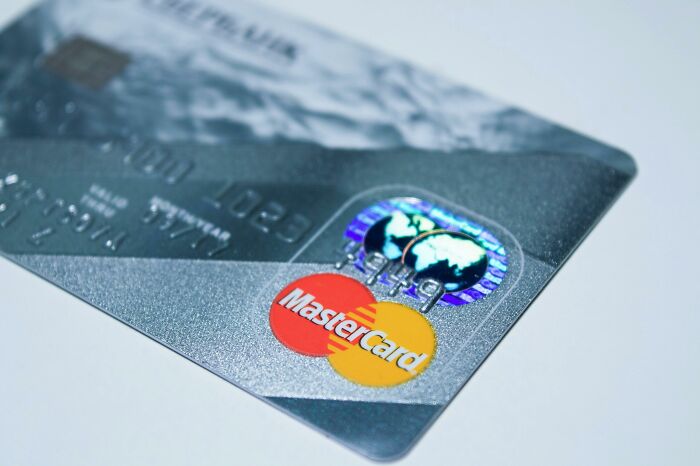 When you pay for something with a Visa or Mastercard, if the clerk asks you for your ID you can simply refuse provided the back of your card is signed. No matter what the clerk, supervisor, or manager say, if they want to continue to accept Visa/Mastercard they must abide by the merchant agreement in place.
The merchant agreement specifically states that a signature is all that is required to process the payment, unless the signature doesn't match the back of the card. They cannot force you to produce your ID no matter what they say about it being their store policy.
Also, they cannot impose a minimum amount for you to use your credit card. Merchants do this to avoid the charge they incur for processing the payment, but they are explicitly not allowed to.
Sneaky restaurant and bar owners decided to supply each customer with a sandwich upon the purchase of a beverage.
"Before they were given a chance to consume the product, it was taken away from them and provided to the next customer," Listverse.com reports. "Using this system, a single sandwich would often last an entire day, without any rules or laws being broken."
 I regularly tell people there is no "magic number" on a DUI charge.
While there is a legal DUI limit (.08 in the states), above which you are automatically considered impaired so long as the reading is considered valid and admissable, most states have laws which allow ANY amount of alcohol in your system to qualify for the charge if the state can show the amount, no matter how low, sufficiently impaired your ability to operate the vehicle.
Here we have DUI (driving under the influence) and DWI (Driving while intoxicated) as, basically, separate laws. The first requires a .08, the second requires a showing you were intoxicated to a point your ability was sufficiently lessened.
Fun fact to throw out at the local bar when someone starts talking about how they had three beers and are below the legal limit, and therefore won't get a DUI as a result.
 It's okay to dump DMSO down the drain in our lab as long as you dilute it with water because the law says it has to be under a certain concentration to dump, but you're still dumping the same amount of DMSO, it's just not as concentrated.
It's the same with radioactive material. If you dilute it down to what is the same as the background radiation, there's absolutely zero consequences from it. All chemicals pretty much exist in some concentration everywhere in nature.
 You can legally marry your first cousin in IL if 1.) Either party is over the age of 55 and 2.) they are sterile with a doctors note stating such.
This is true in half of the US States. 13 of those States allow it without any extra legal conditions. Interestingly, in Wisconson, it is a felony for first cousins to have intercourse UNLESS they are married!
 I work at a petrol station in the UK. If you fill up your car and walk into the shop without a suitable means of pay ( forgot your cash, card doesn't work) we will give you an IOU form and you are not legally required to come back and pay the balance. We can send you a maximum of 3 letters and that's it! It would cost is more for court costs etc to get the cash off you. ( sorry I ain't pertaining to op's lawyer answers but I thought you would find this useful).

Don't count on this. Bilking (as it is known) is a serious offence. There is a difference between intentionally not paying and merely forgetting your wallet. It will be up to the individual retailer to decide whether an IOU is sufficient or whether they wish to call the police there and then!
 I got married young so my husband was legal to drink, and I wasn't. When I did get drunk they tried saying they could charge my husband with contributing to a minor.
His response: "She's my wife, what am i going to do? Tell her no?"
Since I was technically emancipated because I was married then I was responsible for myself, despite not being 18. They just told me to go sleep it off.
It must be bizarre to live in a country where it's illegal to even drink alcohol under 18. In every country I've lived it, it's perfectly legal, but not to buy in public (ie illegal to sell to you).
 Back in my days of habitually roaming the streets drunk, I was arrested under CA penal code 647(f) a couple times, the law against "public drunkenness."
Being the functional drunk that I was, I took the time to look into the law and learned that to be arrested under 647(f) requires more than just being intoxicated. It also specifies that you must be either unable to care for yourself OR be blocking public access (like a sidewalk or a freeway). They dropped my case both times before going too far, but I was prepared to go to court over it.

In most places this would be applied by the police, i.e. they would not/could not arrest you simply for being drunk, only if you were causing a disturbance of some sort. Staggering down the road could easily be construed as causing a danger or blocking access, so if you're obviously, visibly, drunk then you're probably not going to be able to use that defence.
 Lawyer here.
If you set off the alarm walking out of a retail store, just keep walking. The store personnel has no right to detain you unless they have an actual basis for doing so (e.g., someone saw you taking stuff off the rack and putting it into your bag).
Absent such cause, touching you could be civil battery, false imprisonment, and a host of other things. Have them call the cops; they'll say the same thing.
(Edit: This is the *general rule* and may not actually be the law wherever it is that you live and/or shop!).
This may or may not be technically correct where the OP is, but as a general rule it's a pretty s****y bit of advice. All else part, assuming I'm completely innocent and it's just that the cashier has forgotten to remove the tag, I want to make sure it's properly removed so I can actually use the item when I've got home.
 At some universities, like the University of Victoria (where I'm from, the parking around campus is surveyed by campus security. If you don't pay for parking, you get a ticket for "x" amount of cash. If you don't pay that ticket, what do they do? They freeze your grades and assign you a mark of incomplete. However, if you don't actually go to the school, there isn't anything they can do about it!
 Minors _can_ enter into legal contracts, but they can also break them without penalty.

This is different to something that I read the other day regarding child marriages. Apparently a marriage is considered a contract and a child can legally marry (in some states in the US. A major problem is that in many states, minors cannot legally file for divorce or annulment on their own behalf because marriage is considered a contract, and minors generally lack the legal capacity to enter into or dissolve contracts independently. So they can enter into a legal marriage contract but lack the mental capacity to decide to divorce they're not allowed to.
 I'm not a lawyer but a paralegal in various capacities... you can pretty much claim anything as a work-related injury. If you get carpal tunnel for example, you can also say that your carpal tunnel causes you depression, anxiety and insomnia. If they're not disputing the carpal tunnel, they probably won't dispute anything else you add on. If they want to dispute it, they will have to pay for the doctor to prove you don't have depression/anxiety/insomnia and they would rather just give you the money as part of your settlement.
Also, Wills and Trusts are pretty fun. You can pretty much do whatever you want. It's like creating a little fantasy world for after you die and everyone will be obligated to honor your wishes the best they can.

"as best they can"...you can state that you want everyone to dress as penguins for your funeral, if they want to receive any inheritance...they do not have to comply.
 Exceeding the posted speed limit in Texas (and a few other states) is not technically a crime... its just *really really* good evidence that you were speeding.
It falls under the umbrella of 'prima facie' law, which means on the face of things. Speeding is loosely defined as driving too fast for the given conditions. So if you are going over the posted speed limit but driving "safely" according to a set of standards and conditions, you are not speeding.
Good luck convincing a judge though lol.
 You can form a family LLC, keep 1 or 2% voting shares, transfer 99 or 98% non-voting shares, then gift or sell the LLC shares to an irrevocable trust at a substantial discount (up to 35%) with your children as beneficiaries, to leverage your gift tax exemption up to $5M each this year. oh sorry, you said interesting.

Uh, this would mean you have enough money to make the expense of the trust worth it. The beanie baby collection that's been in the basement since 1997 and the $18 in my savings account isn't worth setting up a trust for.
 If you own a company, don't pay yourself as an employee.. Instead set it up as a corporation and pay yourself dividends.. you pay way less in taxes.
This is a fairly widespread understanding. In the UK they stopped 'one man bands' from doing this as contractors with (iirc) IR35. For multiple owners it's perfectly legal in many situations. Beware of getting a mortgage, however. Banks won't regard your dividends as regular income! I paid myself a standard salary and the rest any way I wanted. Bank was fine with my standard salary, even though I owned the company.
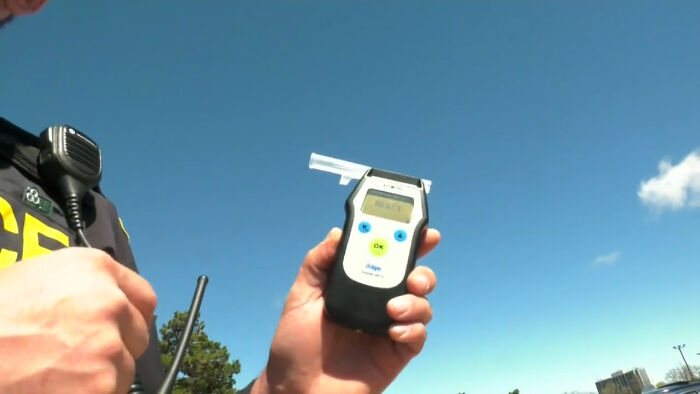 Best practical advice? If you get a DUI, refuse the breathlizer. Always refuse it, regardless of state laws, there's no upside; you can fight the mandatory license suspension at an admin level, and if they get a reading, you are going to have a really hard time beating the charge.
Also, a prosecutor I used to work with said, if you want to get away with a serious crime, its easy:
1) DONT TELL ANYONE. MOST IMPORTANT; 90% of SERIOUS CRIMES ARE ADMITTED TO TO SOMEONE (MOST OFTEN THE POLICE)
2) Don't use your cell phone in or around the crime
3) Don't talk to the police (lawyer up, see rule 1) if you become a person of interest
Its really hard to prosecute with no admission, no cell phone records. Eyewitness testimony is not enough typically. Can't use DNA evidence with out circumstantial evidence.

Don't try it in UK, because failing to provide a specimen is a disqualification offence.
 Germany: If you take something, that's not yours, with the honest intention to bring it back later, without diminishing its value, it is not stealing and totally legal. With the exception of bicycles, though.
But wouldn't not having access to my stuff when I need it diminish its value?
 Non-lawyer here. i was arrested and i FOIAed the GPS records for the vehicle used to transport me. police denied request. i appealed to city manager, he upheld the denial because the police GPS records are managed and stored for them by a private company so he doesn't consider them "public records". loophole = if you're the cops and you don't want the public to be able to access your records, just pay a private company to house them. bingo! not FOIA-able.
 In Louisiana, children cannot sue their parents (they have to emancipate themselves first) but parents can sue their children.
I think this has something to do with insurance.
 This is not intended as legal advice, etc.
I've always been a little troubled by location-based federal jurisdiction over state crimes. That is, any ordinary state-level crime (e.g., DUI, indecent exposure... whatever) can be prosecuted at the federal level if the crime is committed on federal property (national park, federal highway, airplane, etc.). This could mean big differences in charges (misdemeanors vs. felonies) and sentencing conditions (including term, parole eligibility, federal vs. state prison, etc.), even if you're only a few feet over the property line.
While not really a loophole, checks are fun. You can do all sorts of things with special endorsements... if where ever you write them is dumb enough to take them.
I always like to write stupid things on checks I'm cashing just to see if the tellers will take it rofl. They usually do, but every once in a while I get it sent back with a polite "uhhhhhh, yeah, I can't take that."
A guy a while back won a case against Best Buy because they accepted a check that he had endorsed with conditions that essentially said if they mailed him any advertisements (which, duh, of course they will) he can settle for something like $500 a pop LOL. Held up in court, too.
If someone steals something from you, you can legally steal it back. I think there are some rules, like you can't hurt anyone, but you can basically bust on in to someone's house and steal your stuff back with impunity.
Not sure about this one, but I found it fascinating and hilarious. In the UK, a hackney carriage (basically a taxi) is legally required to either carry a bale of hay in the back to feed at least one horse, or at least have the capacity to carry said hay.
A well accepted myth. When there were horse-drawn hackneys they had to feed the horses hay, or corn...but they did not have to carry it...they did have to clear up any spilled feed though, which is where the "carrying" part of the myth came from. This requirement of feeding was dropped, with the switch to the internal combustion engine.
This is in the UK - if you receive a parking fine from a private parking company (at a supermarket or shopping centre for example) don't pay it. They're just invoices and practically unenforceable in court. They also can't charge you more than the loss incurred, which would just be the normal parking fee.
In the US they'd just tow the car... I used to get $50/per from the tow yard everytime I called in a car parked on my employer's property - happened at least once a week, a few times it was a couple dozen in one night (an airport car rental center shared by many companies, but each had their zones which they leased). Wasn't doing it to be petty - we needed the spaces we paid for for our own cars! But the extra cash was nice.
At the time you sign a contract, you have no idea what that contract might mean if it ever came time to have a court interpret it. The rules of contract interpretation can change, and often do, and sometimes your contracts are judged from a future perspective.
I always thought this was an incredibly interesting point - your legal rights are not established by the contract you sign based on the prevailing law at the time you sign it, which would seem to make the most sense. Instead, if you sign a contract that obligates you to pay $1.00 in late fees for every minute your payment to the bank is late, and that provision would be enforceable **now, today**, it might not be enforceable tomorrow.
This is a loophole, in a way, because it allows people to avoid contractual obligations that they purposely, intentionally, and voluntarily agreed to, knowing exactly what it meant.
Hm, okay. 544(b) of the Bankruptcy Code allows the trustee--basically a person appointed to look out for creditors--in a bankruptcy case to assert the rights that actual creditors could assert, in order to bring property into the estate. For example, let's say that you regularly lend money to a dry goods store. In return, you take a lien on their assets. One day, you walk towards the dry goods store, and you are happy. The sun is shining, and bluebirds are chirping in the branches of joyous trees.
But when you enter the store, your face falls. The inventory is there, but the owner is nowhere to be seen! You speak with the man behind the counter, and he tells you that the old owner sold him the store, and its inventory, lock, stock, and barrel. He has skipped town. Later on, you learn that he has filed for bankruptcy, and, naturally, you would like to get your money back. So, you'd like to slap a lien on the inventory of the store, and then sell it off and get your cheddar.
You can do this under non-bankruptcy law, because you are in a jurisdiction where the applicable bulk sale laws state that the seller's obligations to you follow the inventory he has sold. You are happy to learn that 544(b) of the bankruptcy code allows the trustee in bankruptcy to assert the same right to the goods.
The other creditors are overjoyed to learn that they have received a windfall. As it turns out, the goods have appreciated in value, such that they were worth substantially more than your loan. However, due to a Supreme Court case called *Moore v. Bay*, the balance of the loan will be split with the other creditors proportionately, even though, under non-bankruptcy law, only you could assert the claim against the goods, and you'd only receive compensation to the extent of your interest.
The other creditors are actually ecstatic to hear about you, because they realize that that "person" you made a loan to was actually a corporation. Recently, this corporation reorganized using a leveraged buy-out. Essentially, the corporation took out a loan from a bank, and used the proceeds to buy its own stock. Because this was a transfer not for reasonable value, and because it rendered the company insolvent, this was a fraudulent conveyance, that can be avoided under the Bankruptcy Code Section 548.
Because the trustee can use you to assert this claim under 544(b), the other creditors can now collect the amount of the transfer from the Bank, neatly sidestepping the problem of trying to collect from an insolvent debtor. And all because you decided to loan out some dough for dry goods!
**Tl;dr** don't go to law school, it is boring.
My brother (a lawyer) told me that you can only be charged with mayhem if your victim loses a body part.
If you watch someone drown, no liability. If you start trying to save them and give up, you're potentially liable.
In many civilised parts of the word there are 'good samaritan' laws that exempt you from liability if you're trying your best to help, and in some cases, notably in France, you are legally required to offer whatever assistance you can. So if you walk away from someone who dies drowning you could actually be prosecuted for manslaughter. It's rare, but it does happen. Oh, and addressing TM's post, which is hidden because of the URL, no, that is not the case in the UK.
This isn't technically a loophole, but store security has no more power over you than a normal citizen. So if you steal something and the store security tells you to stop, you can just keep right on walking.

I worked at Walmart for like 10 years in the Vision center, right in the front of the store, People would literally walk out the front door with TV's they hadnt paid for. Day 1 of training you are told you cannot stop someone & if they get out the door, and there is no police, they just won a free TV.
In Michigan, if A sues B and secures a judgment for money damages, these are the rules on what B can keep:
(a) All family pictures, all arms and accouterments required by law to be kept by any person, all wearing apparel of every person or family, and provisions and fuel for comfortable subsistence of each householder and his or her family for 6 months.
(b) All household goods, furniture, utensils, books, and appliances, not exceeding in value $1,000.00.
(c) A seat, pew, or slip occupied by the judgment debtor or the judgment debtor's family in any house or place of public worship, and all cemeteries, tombs, and rights of burial while in use as repositories of the dead of the judgment debtor's family or kept for burial of the judgment debtor.
(d) To each householder, 10 sheep, 2 cows, 5 swine, 100 hens, 5 roosters, and a sufficient quantity of hay and grain, growing or otherwise, for properly keeping the animals and poultry for 6 months.
(e) The tools, implements, materials, stock, apparatus, team, vehicle, motor vehicle, horses, harness, or other things to enable a person to carry on the profession, trade, occupation, or business in which the person is principally engaged, not exceeding in value $1,000.00.
I'm going to convert all my savings into hens to be on the safe side. Oh, wait, I don't live in Michigan 🙂
 There is a part of Idaho where you could commit a crime and the government would be constitutionally unable to charge you for it (though there are a bunch of caveats). The general gist of it is that the 6th amendment guarantees a jury consisting of people who live in the district and state that the crime was committed, and no one lives in that district of Idaho due to the fact that it is part of Yellowstone park. Also, I'm not a lawyer, so I probably wouldn't advise you all to head over there based on what I just said...
 If you own your own business you can buy a large SUV you will get a $25,000 tax CREDIT...yes CREDIT not deduction. So if you think about it, if you buy a SUV and sell it every year, you will make money on it.
If you dont believe me, Google Section 179 deduction.

This is wrong. It’s definitely a deduction no matter which entity type you have (1040, 1065, 1120, 1120s). Google “Publication 946” for the gory details.
 You can't arrest a husband and wife for the same crime.

A lot of these aren't loopholes, they are just strange laws or whatever.
I remember a story about some guy who threw a boomerang in his yard, it came back and hit him in the head. He sued "himself" and his homeowners policy paid out $300k! Dunno if true, or remember which country - but it's both funny and concerning. As much of a "loophole" as much of these, I guess.
Was a fake story in a trash "let's just make things up" paper. Details on snopes dot com .fact-check/goes-around-litigates-around/
Load More Replies... A lot of these aren't loopholes, they are just strange laws or whatever.
I remember a story about some guy who threw a boomerang in his yard, it came back and hit him in the head. He sued "himself" and his homeowners policy paid out $300k! Dunno if true, or remember which country - but it's both funny and concerning. As much of a "loophole" as much of these, I guess.
Was a fake story in a trash "let's just make things up" paper. Details on snopes dot com .fact-check/goes-around-litigates-around/
Load More Replies...



































 No fees, cancel anytime