Get Premium
Dark mode theme is available exclusively for premium users. Learn more about the benefits of subscribing.
No fees, cancel anytime.

 Dark Mode Ad-Free Browsing Unlimited Content
 Ad-Free Browsing Unlimited Content Dark Mode
Join 1.2 million Panda readers who get the best art, memes, and fun stories every week!
49submissions
1week left
When you think of a vending machine, things like snacks, sodas, or even pharmaceutical supplies may come to mind. But you might be surprised to know that the first ever vending machine actually dispensed holy water. Yep, people back then would insert a coin and receive just the right amount of holy water from temples in Egypt.
While the vending machine might seem like a fairly modern invention, it’s actually believed to have been around since the first century. It’s one of many historical inventions that were way ahead of their time. Bored Panda was intrigued to know what other creations have been around longer than we thought, so we took a deep dive through the passage of time to find out. From flying cars to ancient earthquake detectors to automated doors, it turns out the world has been filled with futuristic inventions far longer than we realized.
Click here & follow us for more lists, facts, and stories.
This post may include affiliate links.
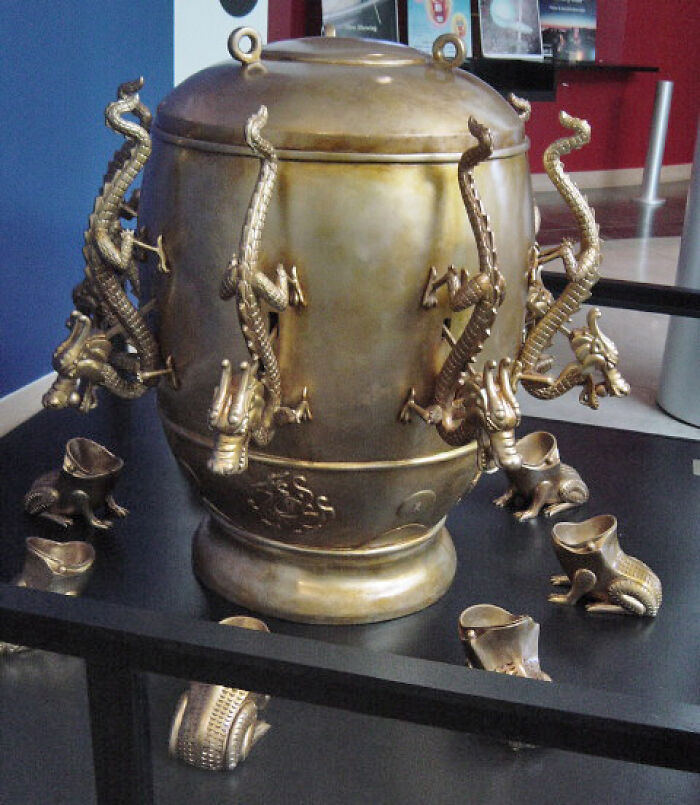
Today, seismologists use sensitive equipment to record tectonic movements deep within the Earth and analyze this data to predict earthquakes. Although seismometers are becoming more advanced each year, accurately predicting earthquakes is still an inexact science. More than 2,000 years ago, however, an ancient Chinese inventor, Zhang Heng, made the world’s first seismoscope which proved to be incredibly accurate. Called the Houfeng Didong Yi, Zhang Heng’s seismoscope was made in the shape of a jar with eight tubes extended from a circle of dragon heads on the exterior of the jar. When the device detected an earthquake, a small ball fell out of one of the dragon’s mouths and into the mouth of a toad figure affixed to the base of the jar. The toad indicated the direction the seismic wave was traveling.
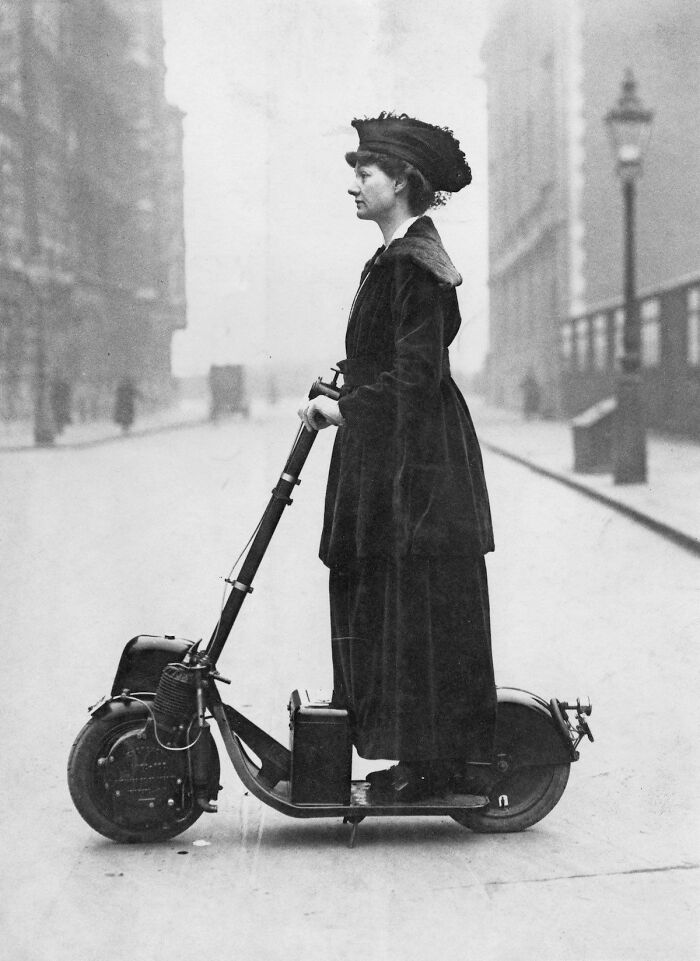
The Autoped was an early vision of today's scooters. This was a personal transport system originally developed in 1915. It boasted a 155cc air-cooled engine and a top speed of 20 mph. This scooter was well ahead of its time and included some neat design features that wouldn't look out of place on a similar modern device. It came with both head and tail lamps, a horn, and even a toolbox. It was also possible to fold the steering column down to make it easier to store. The Autoped might well have come about as a necessity due to wartime fuel rationing but it wouldn't catch on at the time - not something that can be said now. Another design well ahead of its time.
I had a random shower thought the other day... "Why do we say it's the best thing since sliced bread," if there have been so many more incredible and useful inventions since that bulky bread-cutting contraption was introduced to the world?
Seeing as I'm one who loves a good rabbit hole, I then ended up doing a deep dive into the origins of sliced bread. As it turns out, bread itself has been around for about 15,000 years.
According to scientists, our ancient ancestors were baking before they learned to farm properly. But it took thousands more years before humans were blessed with a machine that could cut perfect, equal slices of bread.
Today’s vending machines are typically stocked with unhealthy snack options, like candy bars, sodas, and chips. The first vending machines, however, dispensed a product that was good for your soul. These vending machines from the 1st century dispensed holy water. Hero of Alexandria, a Greek engineer, mathematician, and inventor built a box with a series of levers. When the user inserted a coin, it triggered the levers to open a valve and pour out a small amount of holy water.
The United States and Great Britain were able to communicate electronically via undersea cable - in 1858! Before then, it took ten days to communicate between the continents by ship. For reference, that's three years before the American Civil War. You know, when everyone still rode horses. It's two years before Louis Pasteur proved that germs caused disease. That's right, we had trans-continental electronic communications BEFORE it was common knowledge that germs caused disease! DEFINITELY ahead of its time.
When we say "the best thing since sliced bread," we're going back to July 6, 1928. It was on that day that the very first automatically sliced commercial loaves of bread hit the shelves in the United States. It wasn't a baker or an engineer who invented the bread cutting machine, but rather a jeweler called Otto Rohwedder.
Roman concrete, or opus caementicium, incorporated volcanic ash, making it incredibly durable. Structures like the Pantheon and aqueducts stand as testaments to its strength.
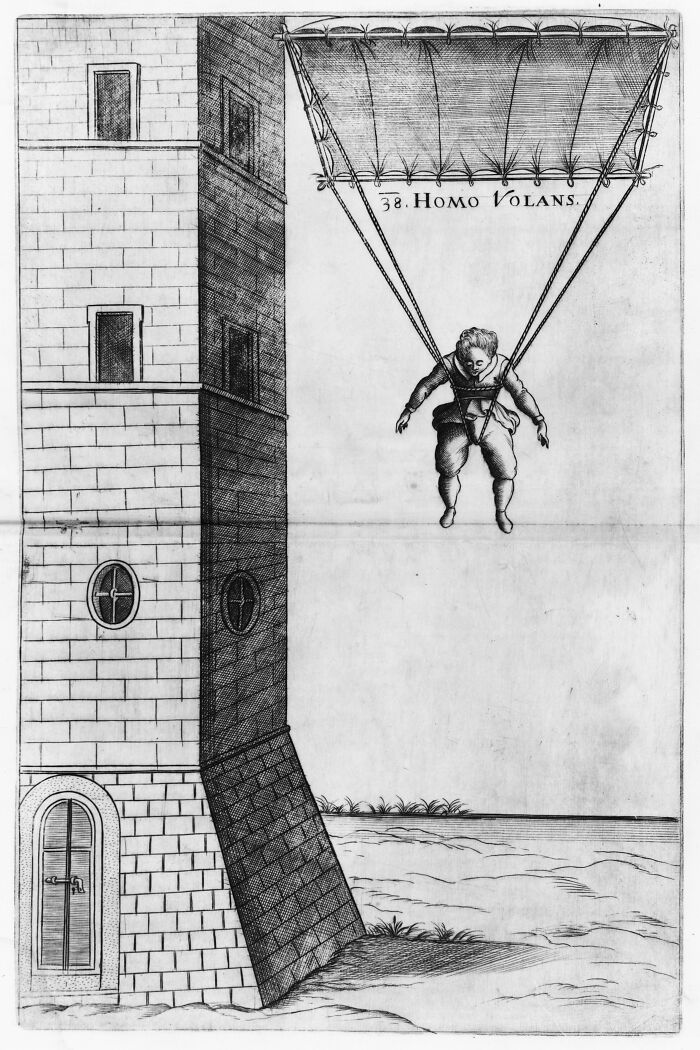
Leonardo da Vinci sketched a parachute design in the margin of his sketch book with the following text: If a man is provided with a length of gummed linen cloth with a length of 12 yards on each side and 12 yards high, he can jump from any great height whatsoever without injury. In 1617, the first successful parachute jump was made from a tower in Venice.
Designed by Archimedes, this device lifted water for irrigation. Its simple yet effective mechanism is still used in modern engineering for moving water and materials.
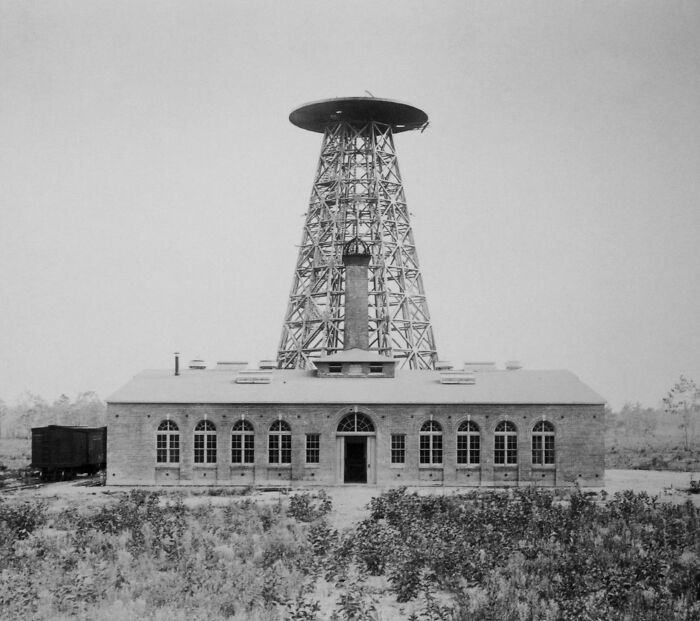
You know how we get radio, cell service, wi-fi, and television from signals that are broadcast through the air? Back in the early 1900s, genius inventor Nikola Tesla envisioned a system that would transmit electricity wirelessly through the air … free for anyone to use. He did more than just envision it. He conducted experiments and built a prototype to demonstrate the feasibility of his plan. Tesla’s Wardenclyffe Tower, located in Shoreham, New York, was supposed to provide free, wireless electricity, however Tesla ran out of money. He was unable to secure funds to bring his idea to fruition.
In the mid-1960s to the late years of the 1970s, French engineers were looking to create new transportation machines that included the Aérotrain, an experimental Tracked Air Cushion Vehicle. This machine was essentially a hovertrain and a variation of the maglev train design. It was designed to ride on an air cushion above the track and thereby avoid all resistance in order to reach unprecedented top speeds. In 1969, a rocket-equipped prototype achieved a record speed of 262 mph. The design faced numerous challenges, not least of which was the need for elevated guideways wherever the train was set to travel. Sudden changes in wind pressure could also cause problems. The project was eventually scrapped due to a lack of funds.
We might have received sliced bread even earlier were it not for nature saying, "No!" In 1917, a fire destroyed his prototype and blueprints. On top of that, bakers believed factory-sliced loaves would get moldy fast—or break apart.
But Rohwedder was determined. In1928 he rebuilt his “power-driven, multi-bladed” bread slicer. And fortunately, his friend Frank Bench had faith in him. And Chillicothe Baking Company tested his machine for all the world to see.
The Greeks did not have central heat in the same way that we have it today, but they were undoubtedly pioneers in the field of keeping homes warm. The system utilized by the ancient Greeks was first found in the Temple of Ephesus in 350 BC. The Ancient Greeks termed this system hypocaust, which means “under burnt.” While the Temple of Ephesus was the earliest building known to have this method of central heating, Vitruvius attributed the invention of central heating to Sergiu Orata in 80 BC. The practice remained in use through Ancient Rome. In Ancient Rome, it was found in hot baths and public buildings, and in the homes of the very wealthy because of the high cost. The hypocaust was created by making a structure under the floor of the building. The floor of the building was raised on pillars called pilae stacks. These pillars would have a layer of tiles above them which would be covered by a layer of concrete and then the floor tiles used for the building. A furnace would be lit and it would feed hot air and smoke into the space between the ground and floor of the building. The hot air and smoke then rose through the clay or tile flues that made up the walls of the building before traveling out through outlets in the roof. In this way, the system could also be used to heat multiple floors of a building. The system was very labor intensive and expensive to maintain. There would be a need for a s***e or a laborer to constantly maintain the fire at just the right level for the comfort of the people within the building. There were also designs of bronze ventilators which could be used to regulate the temperature.
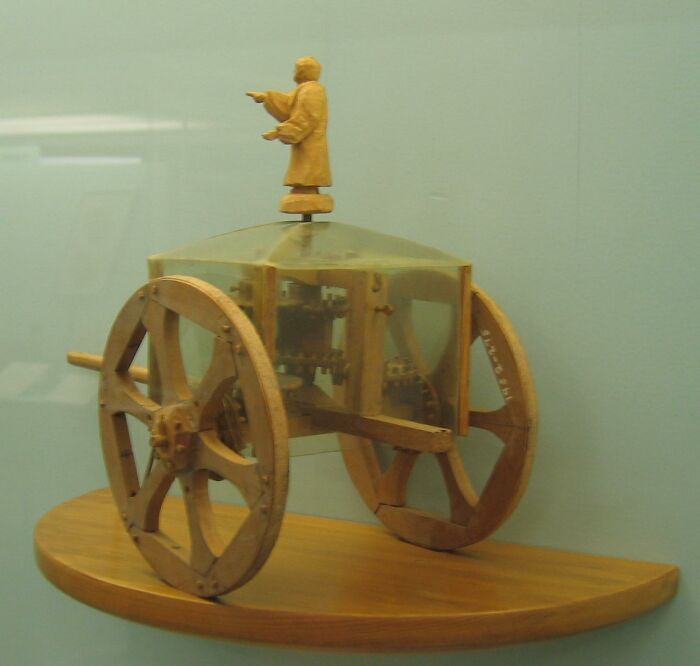
In our times, a car with a navigation system is nothing surprising. However, when 2,000 years ago, during the Three Kingdoms period, the Chinese inventor Ma Jun created a chariot with a built-in compass for Emperor Ming-di, it was a real wonder. There was no magnetic compass in the inventor's creation, so he had to come up with an alternative. On the chariot's roof, he attached an arrow, which, through a complex system of gears, could always point in one direction. At the beginning of the journey, when the cardinal directions were precisely known, it would be oriented to the south. Then the chariot would move, and every time it turned, the mechanism rotated the arrow to ensure it always pointed in the designated direction. It was purely mechanical with no magnetic compass - the Chinese only began using those in the 11th century. To create such a device, Ma Jun had to invent a differential gear and a reduction mechanism. According to historical records, these navigational chariots were used until the year 1300, and were essential for long journeys and reconnaissance expeditions.
As they say, they rest is history... and today, not only do we have sliced bread, but a whole bunch of innovative inventions we might never have been able to live without. Some are featured on this list. Others aren't. We use them and don't even realize we are taking them for granted!
Let us know in the comments which inventions you are thankful for, and what, in your opinion, is better than sliced bread...
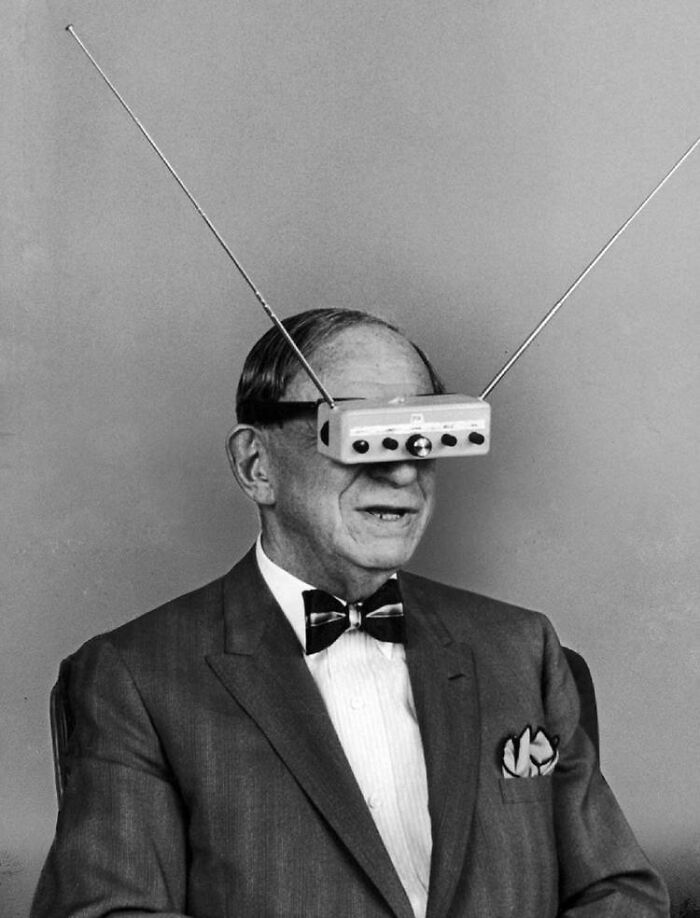
In 1963, avid inventor and tech enthusiast Hugo Gernsback was photographed by Life Magazine showing off his "teleyeglasses" - a precursor to modern head-mounted displays. Apparently, the idea of television eyeglasses came to the inventor in 1936, but it wasn't until the 1960s that advancements in tech made his vision possible. The television goggles used small cathode-ray tubes for the display and included a separate screen for each eye, much like modern VR headsets. The large antenna made this device look alien-like and it was certainly well before its time.
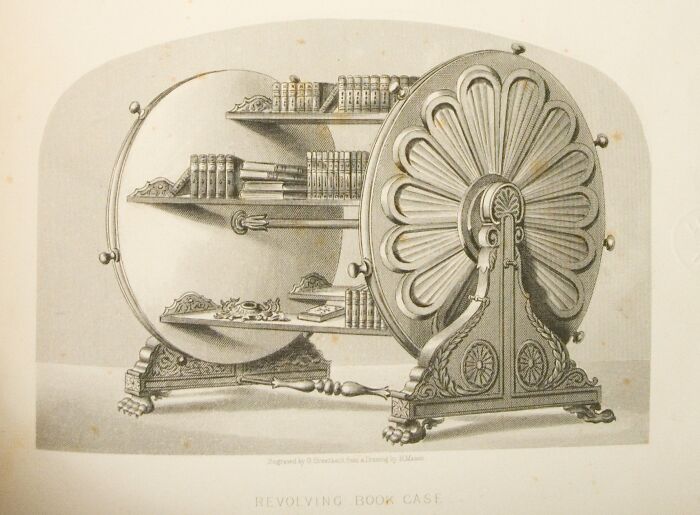
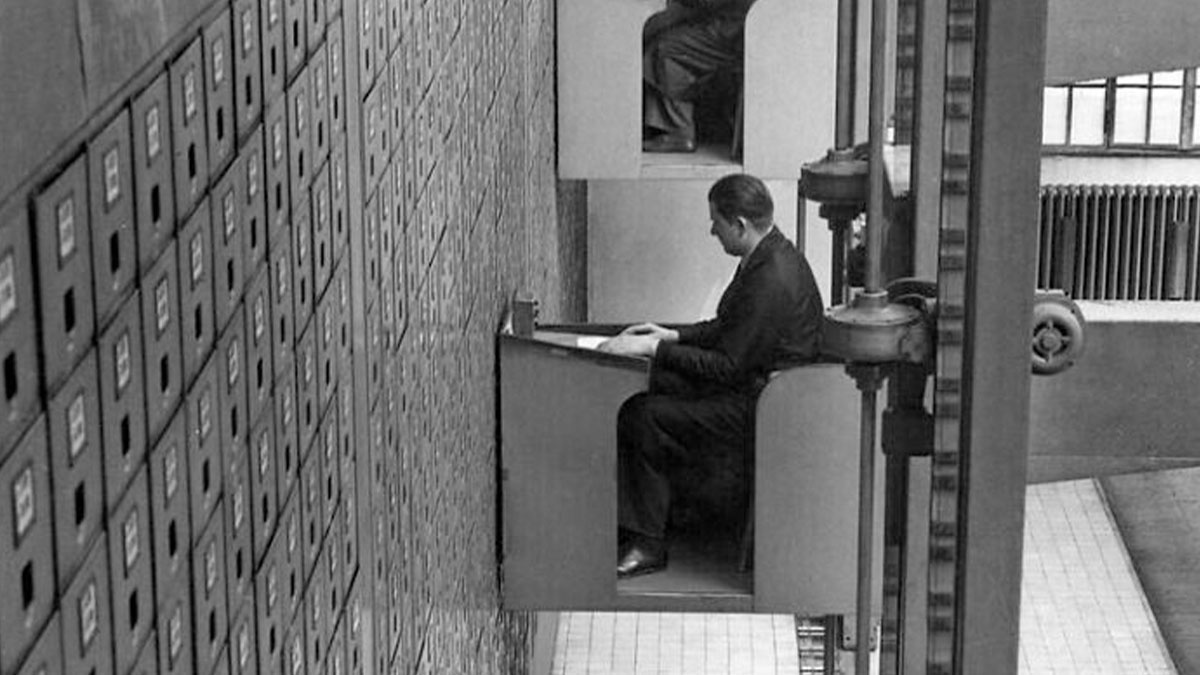
This piece of furniture certainly looks interesting. However, an upright bookshelf could fit the same number of books, take up much less space, and not require muscles to operate. Presumably, the appeal of a revolving book case is its novelty and design, in which case this one fits the bill.
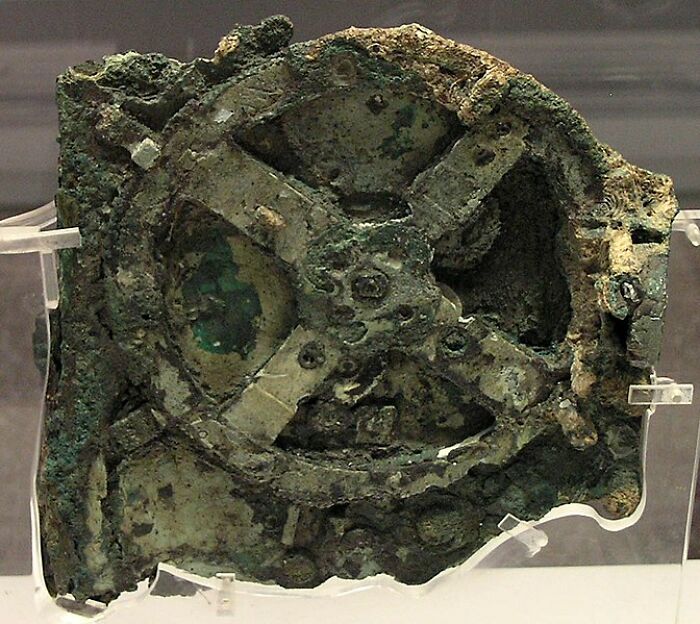
In 1901, sponge divers found a strange device off the coast of the Greek island of Antikythera in the Aegean Sea. The device is a wooden box with a complex system of gears and a hand crank. Analysis on the device showed that it dates back to the 1st or 2nd centuries BCE. As out-of-place as it seems, the Antikythera Mechanism is an ancient analogue computer that predates Apple Computers by centuries. Most experts believe that the Antikythera Mechanism was used to predict astronomical positions, like eclipses.
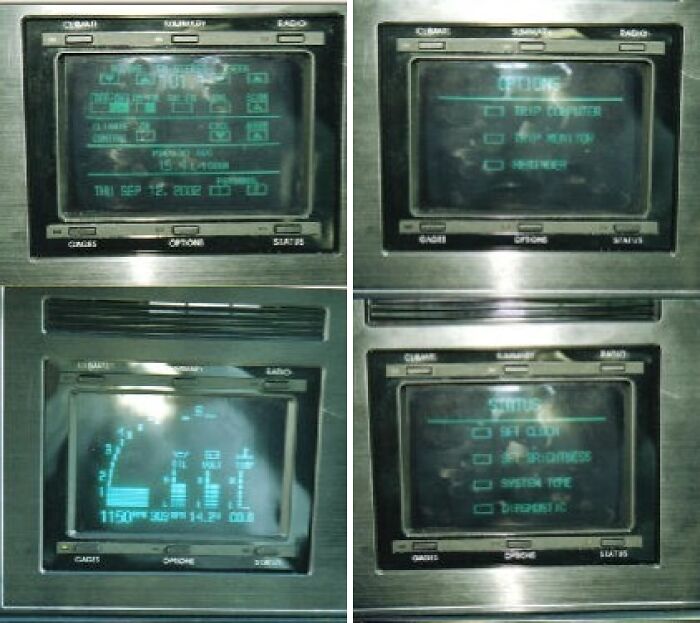
A few years ago, I had an '89 Buick Riviera with a touchscreen computer. You could monitor fluid levels, have it greet you on your birthday, adjust the radio station—all kinds of stuff. It wasn't perfect, but the green text on the black screen was really cool. I've never had a car before or since that had a built-in computer.
President Lyndon B. Johnson, a practical joker, owned an Amphicar … an automobile that could float on water and be piloted like a boat. He loved to take guests for a ride around his Texas ranch, then drive headlong into a lake. While his guests screamed and white-knuckled the dashboard, Johnson would shout about faulty brakes. The joke was on the unwitting victims. Johnson was one of the few proponents of the Amphicar, which was manufactured from 1961 to 1968 in West Germany. Demand for amphibious cars was limited. The Amphicar was discontinued, and the concept was relegated to Hollywood spy flicks and superhero movies.
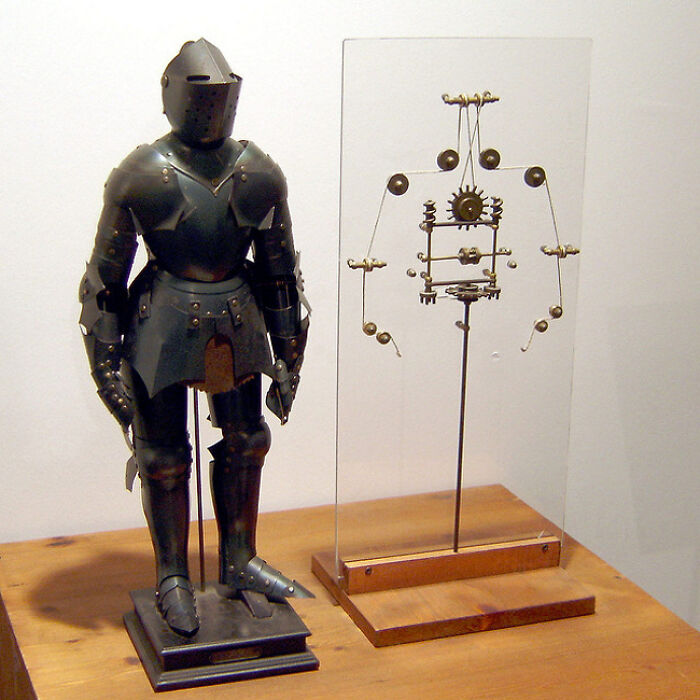
A robot based on Leonardo da Vinci's drawing: Leonardo da Vinci was not only an artist and painter, but he was a master of every branch of study including human anatomy, mathematics, and engineering. This robot was built based on a drawing by Leonardo, who can be credited with having a vision far into the future. Robots were unheard of during his time, and beyond human imagination.
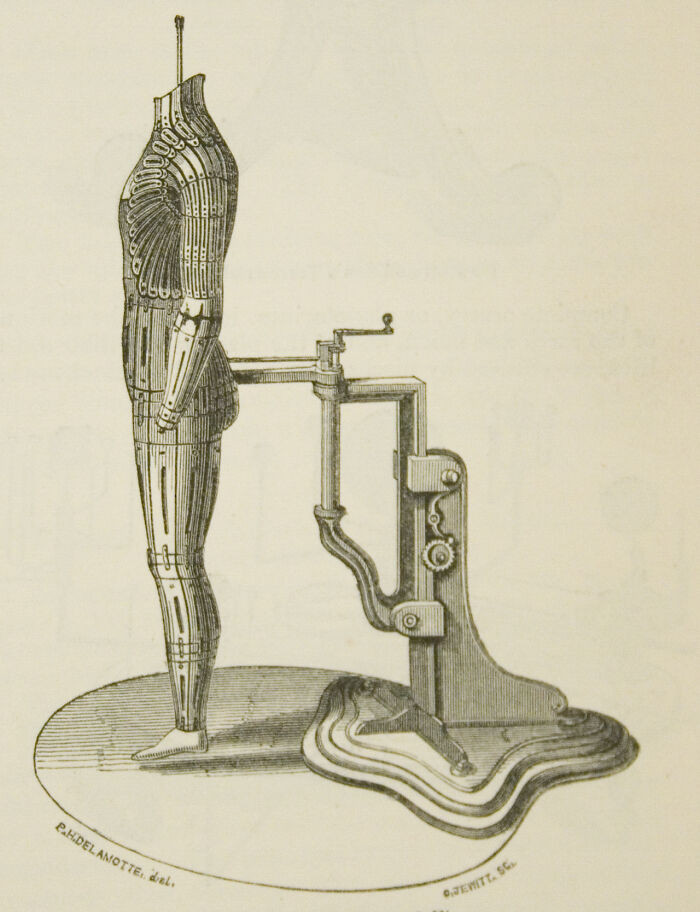
The fact that something invented over 150 years ago can still seem ingenious is impressive. This mannequin, which can adjust to be just about any size a human can be, is an example of such an invention. Although it does look a little funny, the real oddity of this device is that it hasn't gained popularity yet.
To enhance TV watching and create a more immersive experience for viewers, television manufacturers of the early 1960s dabbled in Smell-O-Vision. As the name implies, Smell-O-Vision sought to synchronize specific scents to the content being displayed on the screen. While Smell-O-Vision generated interest and curiosity, it faced too many challenges to make it marketable. TV sets had to come fully stocked with a wide range of scents. Customers complained that smells lingered or caused allergic reactions. And some were, in the words of Spongebob Squarepants, “Smelly smells that smells smelly.”
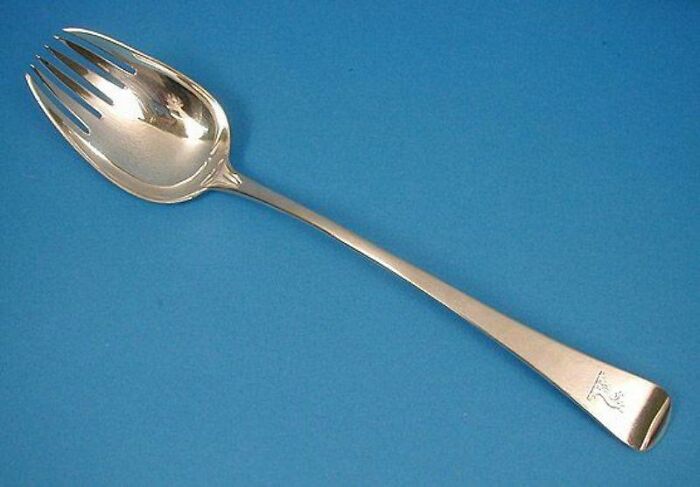
No doubt, the spork – half fork, half spoon – has revolutionized the cafeteria and take-out experience for the last couple generations. The 16th century invention, the Runcible Spoon, outshined the spork even though it failed to become the newest, trendiest dining utensil. Textual references to the Runcible Spoon tell us that this utensil combined the fork, spoon, and knife into one handy tool for cutting, jabbing, and slurping one’s dinner. Some descriptions of the Runcible Spoon remind us of a grapefruit spoon because it had a sharp, serrated edge along one or both sides of the spoon. Why didn’t the Runcible Spoon take off? No one can say for sure, but it could be that the utensil caused injuries.
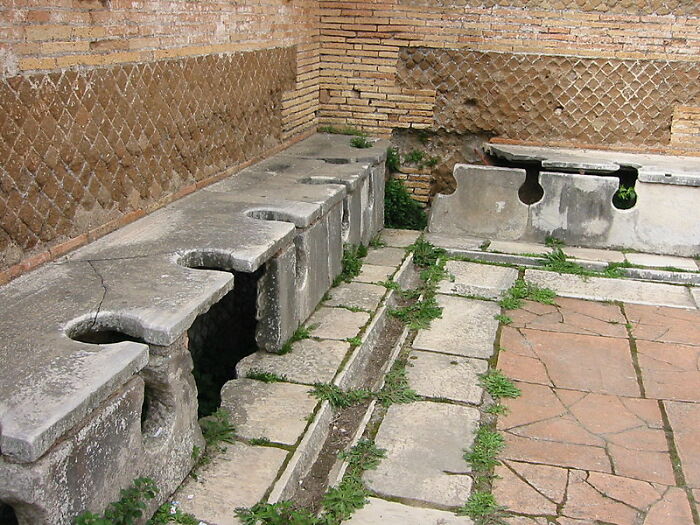
A self-flushing toilet and plumbing system in 1800 BC!? Yep, the Minoans had that in the bag 1000 years before Homer wrote his Odyssey. The Minoans were an advanced civilization which flourished around 4000 years ago on the island of Crete and preceded the civilization we know as ‘ancient Greece’. A culturally rich people who prized innovation, the Minoans were found to have advanced plumbing knowledge which allowed them to have self-flushing bathroom facilities thousands of years before ‘modern’ civilization. The Minoans had an advanced drainage and early aqueduct system which brought fresh water from streams in to the city and allowed storm water and sewage to be drained into gardens outside the city. Ground level latrines with overhead water reservoirs to be tipped in to perform the flush abounded in the savvy city.
Automated door technology appeared in 1931 and was considered one of the signs of the “modern” age. Yet, the world had already seen this technology back in 1 AD. So how did it work? If you wanted to open the door, a fire would need to be lit to generate heat, causing an atmospheric build-up in brass vessels. This vessel would then pump water in holding containers, and these functions would act as weights to open the door. Think of it as a hydraulic system. Unfortunately, the doors were not that practical and not as popular as the modern doors you have around your city. The ancient doors took hours to open, and the process was hard to stop once it started. So, this probably meant that you only opened your doors once a day.
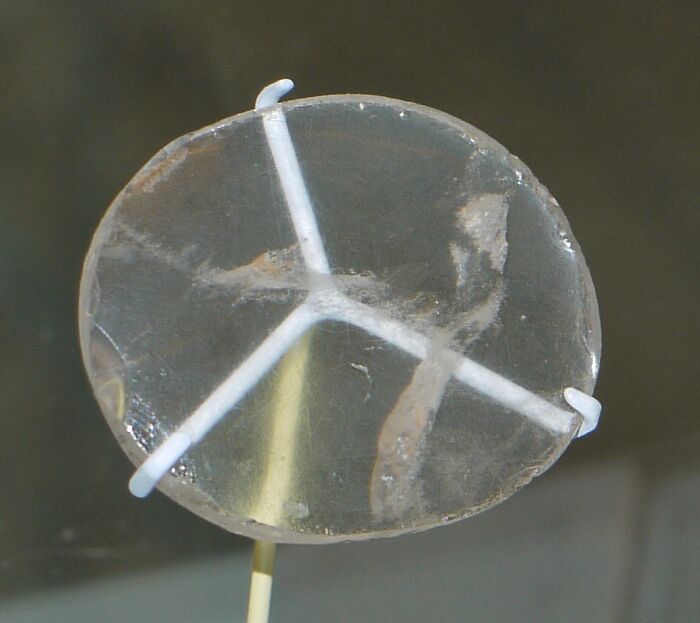
The Nimrud lens, a 3,000-year-old rock crystal discovered in 1850 at the Assyrian palace of Nimrud, is a fascinating ancient artifact. Roughly oval and with a focal length of 12 cm, it functions as a 3× magnifying glass, though its exact use is debated. Some believe it was a magnifying glass or burning-glass, while Italian scholar Giovanni Pettinato proposed it could have been part of an early telescope. This challenges the conventional belief that the telescope was invented by Hans Lippershey in 1608, suggesting that ancient civilizations may have had advanced knowledge of astronomy.
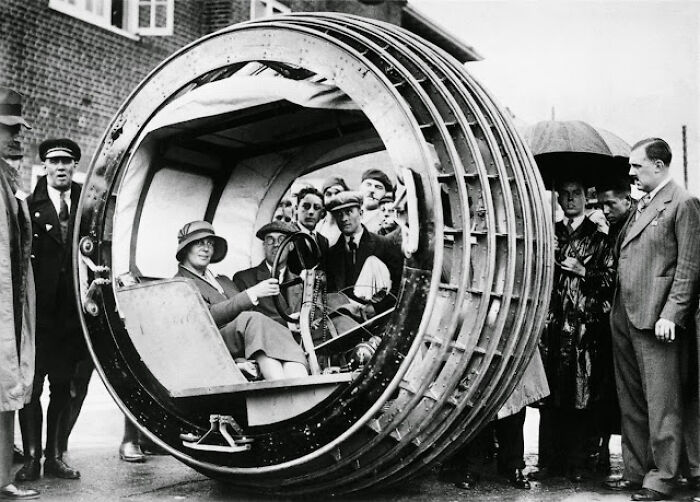
Why drive on four wheels when you can drive on one? In the early 1930s, Scottish engineer J.A. Purves created a zany monowheel vehicle called the Dynasphere. Purves viewed the monowheel as an alternative to traditional automobiles like the Model-T Ford. Imagine sitting inside a giant tire that rotates around you. That’s how the Dynasphere worked. Only the Dynasphere didn’t really work as it was intended to. The vehicle has issues with stability and maneuverability. It looks like a clown car. No wonder it failed.
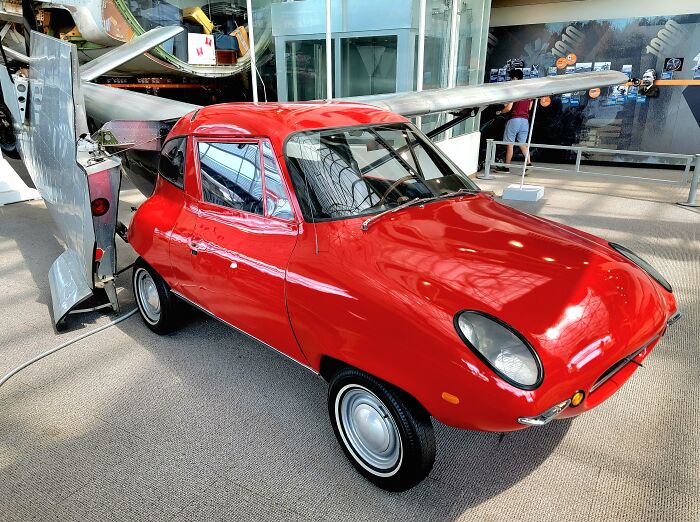
Although we now have drones that deliver our pizzas and Amazon packages, the public is still waiting for the day when we can all zip around in flying cars like George Jetson. The concept of flying cars has been a longstanding vision of the future … and the first flying cars were invented in the 1950s. Perhaps the most famous flying car prototype was the Aerocar. Designed by Molt Taylor, the Aerocar was a road-worthy aircraft with foldable wings and a detachable tail section. In theory at least, it was supposed to easily convert from a small airplane to a car. The Aerocar fell victim to practical challenges, safety concerns, and FAA regulations.
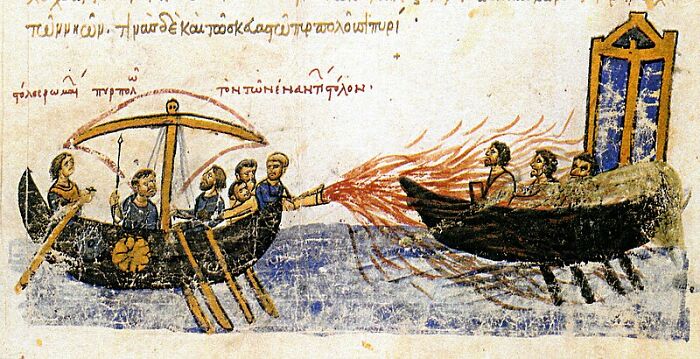
The Greeks created an incendiary weapon that was lit. Literally lit. Between the 7th and 12th century, the military of the Byzantine Empire had a secret weapon that made them virtually unbeatable in naval battles. That weapon was called Greek Fire. What was Greek Fire? We don’t know. The Greeks kept the formula a closely guarded secret … so secret that it has been lost to time. Greek Fire was described as “burning on water.” It was probably made of petroleum, quicklime, or other flammable chemicals that would float on the surface of the water as it burned.
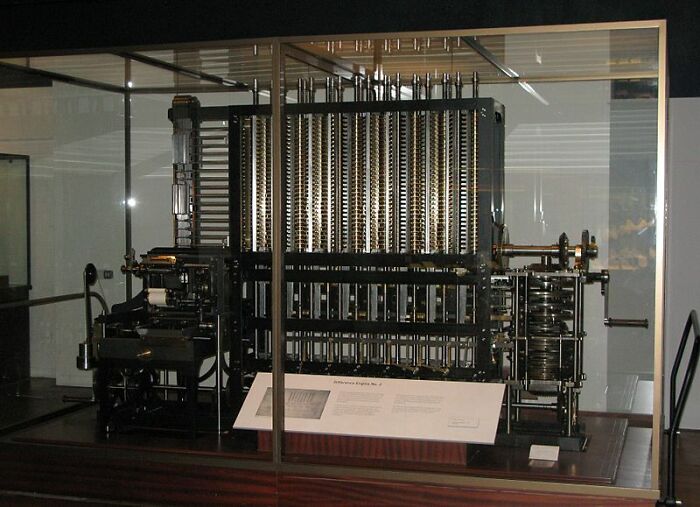
Though one was never built in his lifetime, Charles Babbage proposed his idea for a difference engine, a kind of minimalist steampunk take on what a computer should do. His ideas helped lay the foundation for the personal computers we have today.
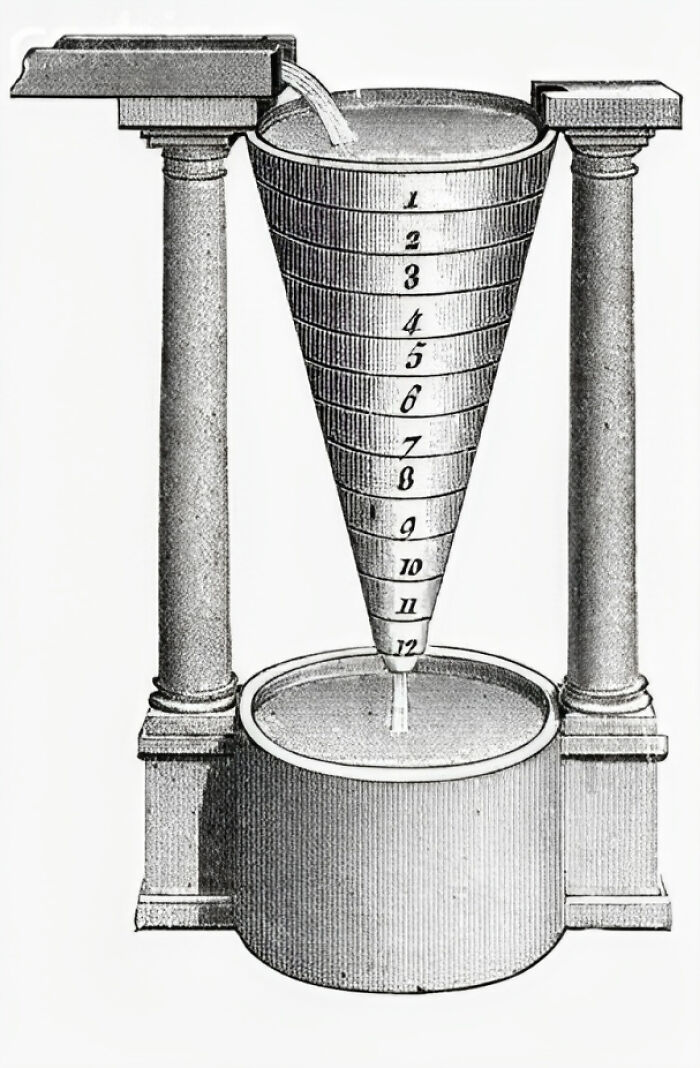
Remember that Jim Croce song about saving “time in a bottle?” The Ancient Greeks had something like this centuries before 1973. One of the earliest types of timekeeping device, the Ancient Greek clepsydra used the flow of water to measure the passage of time. Clepsydras used either intake or outtake methods … water filling a container or water emptying from a container … to measure time. Unfortunately, clepsydras were not portable. In fact, disturbing the clocks in any way messed up the timekeeping.
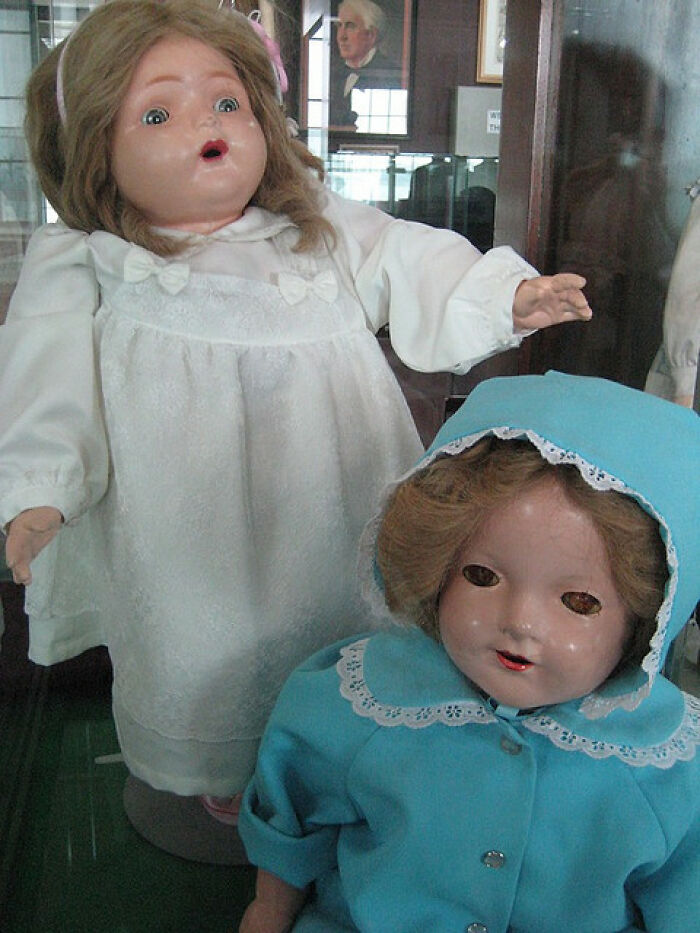
Thomas Edison invented the cylindrical phonograph in 1877 and was looking for ways to commercialize it. In 1888, Edison developed a china doll equipped with a cylindrical phonograph with pre-recorded messages. It was a commercial flop — consumers thought the dolls were creepy. Talking dolls did not enjoy commercial success until 1959 with Mattel's Chatty Cathy. Chatty Cathy could say 11 phrases and was the second most popular doll of 1960 (after Barbie)
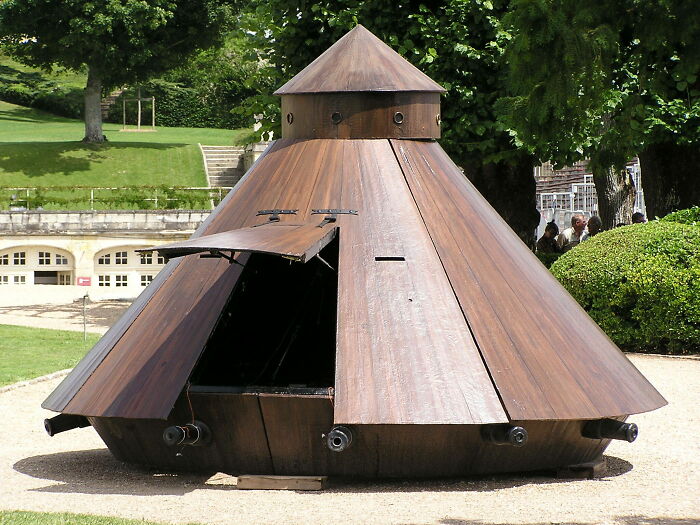
Leonardo da Vinci is well known for his various talents that included painting, sculpting, astronomy, botany, and cartography—as well as a flair for the sciences. He was also an inventor who crafted or conceptualized a multitude of designs for tech well beyond its time. Some of these concepts included things like the parachute and an early helicopter. Considering he was doing this back in the 16th century (he was born in April 1452) it was a staggering feat indeed. One of these visions of future tech included a fighting vehicle that was essentially a modern tank inspired by a turtle's shell. The design for this tank included a call for reinforced metal plates to protect the occupants, slanting sides to deflect enemy fire and an array of light cannons. It could barely be built at the time, but was an interesting vision of the future of warfare.
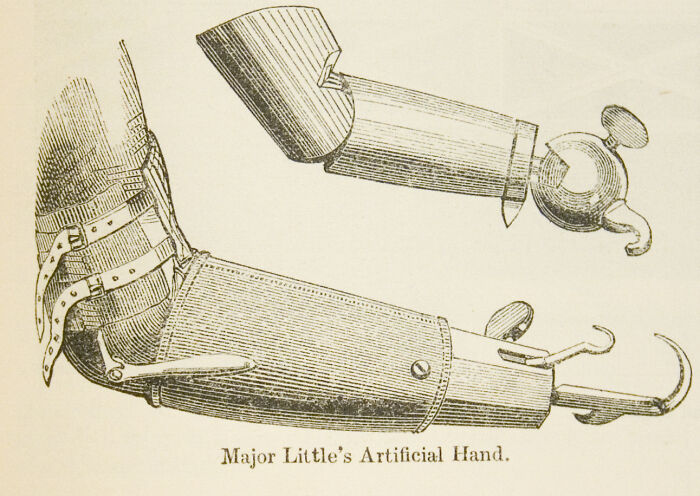
Major Little should have gotten a patent on this idea. Now everyone thinks it was Captain Hook's, although he wasn't even imagined until over 50 years later.
You might also like: Forgotten history: 83 rare images that reveal how people used to live





































 No fees, cancel anytime