Get Premium
Dark mode theme is available exclusively for premium users. Learn more about the benefits of subscribing.
No fees, cancel anytime.

 Dark Mode Ad-Free Browsing Unlimited Content
 Ad-Free Browsing Unlimited Content Dark Mode
Join 1.2 million Panda readers who get the best art, memes, and fun stories every week!

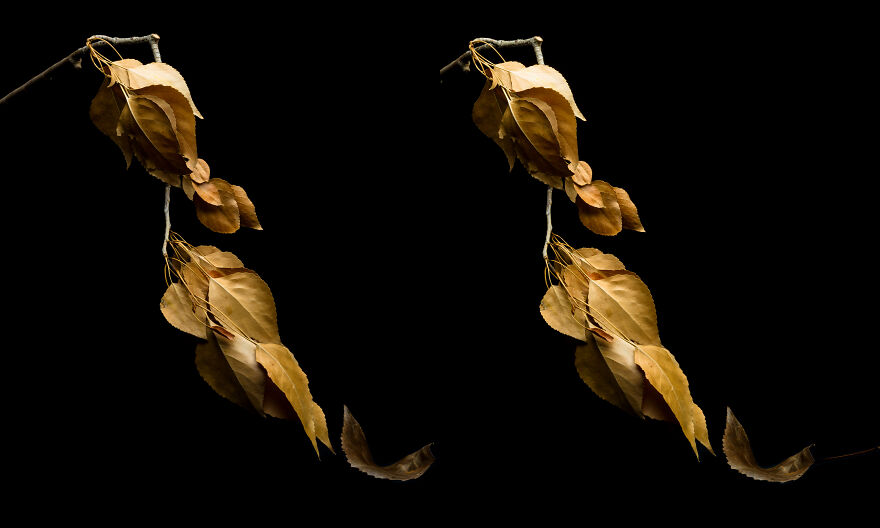
Ever since I was little and spent time rummaging through my grandparent’s house, I’ve been fascinated by stereoptic photography. Classically, those are the post cards with two nearly identical images you’d place into a viewer to see the images in 3D. I just thought the effect was surreal.
About 10 years ago, I started playing around with replicating the 3D steroptic effect, but with the same size cards and the same antique viewer. I had great success achieving the effect, but didn’t have a viable way to display or monetize the effect for my business.
About 2 years ago, I decided I wanted to do a really classic series of photos with lots of negative space and a simple yet attention-grabbing subject. I ended up shooting plant life to show the change of seasons where I am in Western Colorado. I was really happy with the results, but then it hit me that I could produce these photos in stereo. I had never seen gallery sized prints of stereo photos before. I tested the concept and immediately fell in love with the results. So, I started the project over.
About 6 months into restarting the project, I upgraded my camera and lenses from a Canon 1dx to a Hasselblad x2d. The color and clarity of the x2d was so much more refined than my Canon and this stereo project needed to have the best possible outcome. With a little regret and a lot of excitement, I started over again. This time there were no more hiccups. I just wanted to remain as authentic to the project as possible. Each set of images is true to our plant-life.
With the summer image completed just a few weeks ago, they have all been printed and framed at an image size of 20×24″ and everyone who has seen them has been blown away by the effect. So many people have assumed this was done with brand new technology. It’s great to see their faces when I tell them this concept was actually developed in 1832. I’m proud to bring back this concept to a new generation and share some antiquated technology in an increasingly AI world.
More info: mattjansonphotography.com


 No fees, cancel anytime
 then open in external browser


 and click "Open in External Browser"









0
0