Get Premium
Dark mode theme is available exclusively for premium users. Learn more about the benefits of subscribing.
No fees, cancel anytime.

 Dark Mode Ad-Free Browsing Unlimited Content
 Ad-Free Browsing Unlimited Content Dark Mode
Join 1.2 million Panda readers who get the best art, memes, and fun stories every week!
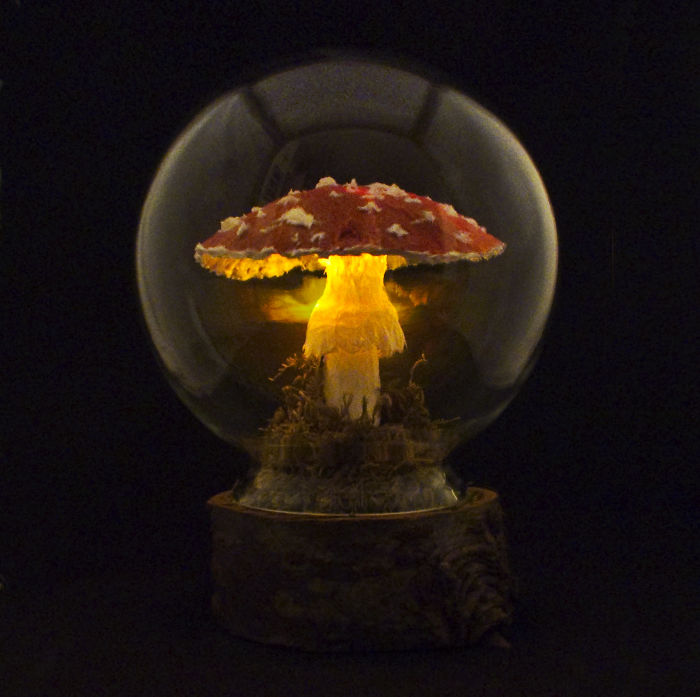
I have been fascinated by bioluminescence for a long time. Some animals and fungi emit light, in patterns or all over their body, flashing or continuous. It’s not just fireflies. Some species of plankton also emit light, as do fish, jellyfish, deep sea creatures – and some mushrooms. They look almost like fairytale creatures.
Electricity is a lot like magic. Everyone uses it, yet few people wonder why it works, or how. Often, electrical devices have typically technical designs: geometric and strong shapes are very common. Though sometimes playful or elegant, it never looks like nature. Yet electricity is a natural phenomenon.
We often use electricity as a light source. Bioluminescence is a form of light (chemoluminescence) that looks a lot like the electrical form of light (electroluminescence). This resemblance inspired me to make art that lights up. But not just any light would do: It had to look and feel natural. Not the light from a clearly visible lamp, but light from a natural phenomenon. The combined magic of bioluminescence and electroluminescence.
I started to create my Wisp Lights. They continue to provoke a specific question from my guests: are those real mushrooms?
More info: www.wisplights.com | instagram: @levend_lichtje
128views
Share on Facebook

I have just saved your shop and I surely wish I will be able to buy one of these in the future!
I have just saved your shop and I surely wish I will be able to buy one of these in the future!

































 No fees, cancel anytime





8
2