Get Premium
Dark mode theme is available exclusively for premium users. Learn more about the benefits of subscribing.
No fees, cancel anytime.

 Dark Mode Ad-Free Browsing Unlimited Content

 Ad-Free Browsing Unlimited Content Dark Mode
Join 1.2 million Panda readers who get the best art, memes, and fun stories every week!

Every relationship takes a certain amount of trust. Not to be too grandiose, but it’s very much how humans have survived, particularly during and after pregnancy. The modern world is a lot more safe, but that doesn’t mean we expect our partners to just be negligent.
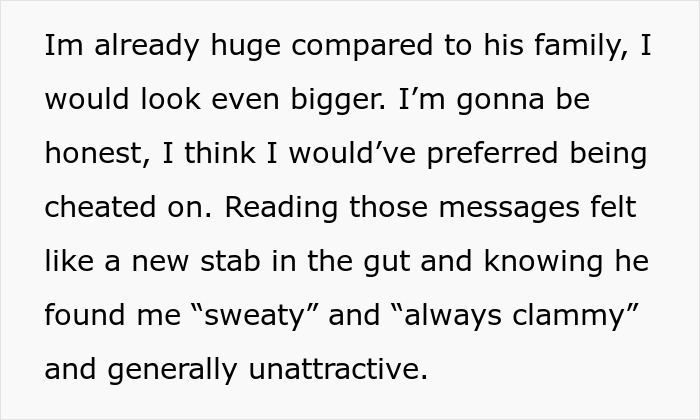
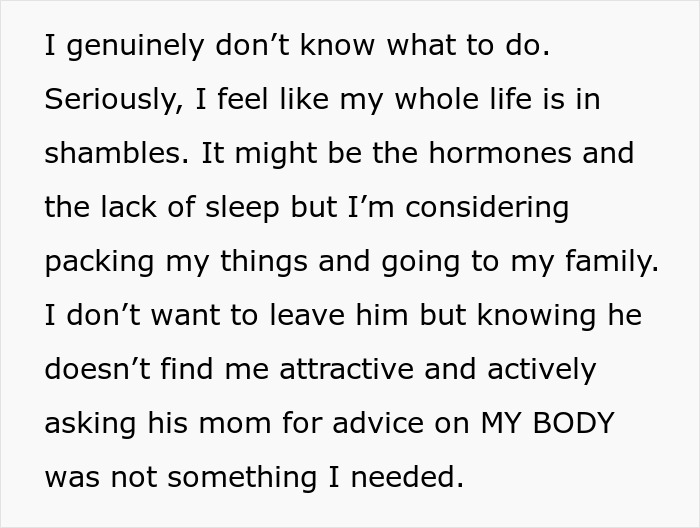
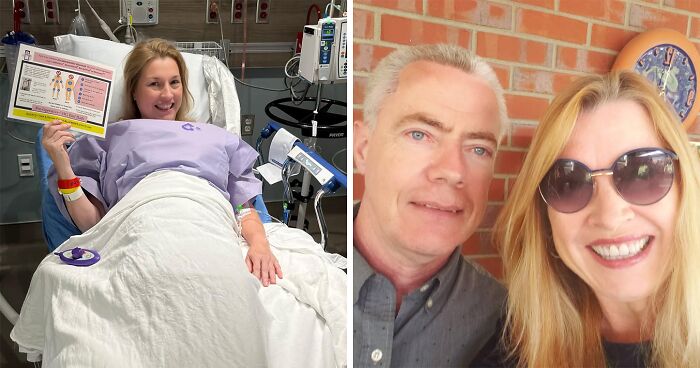
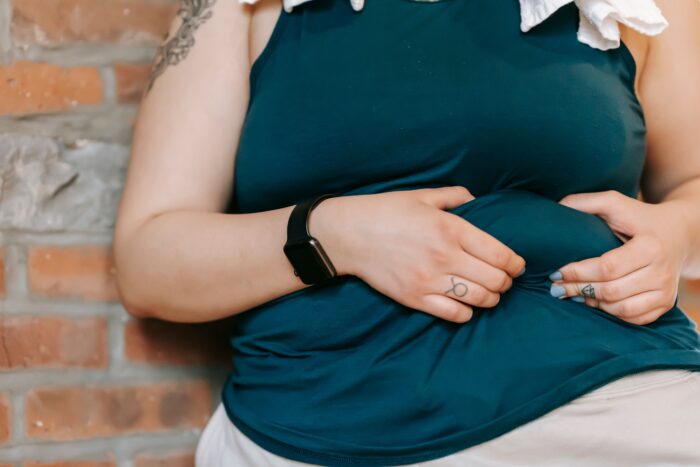
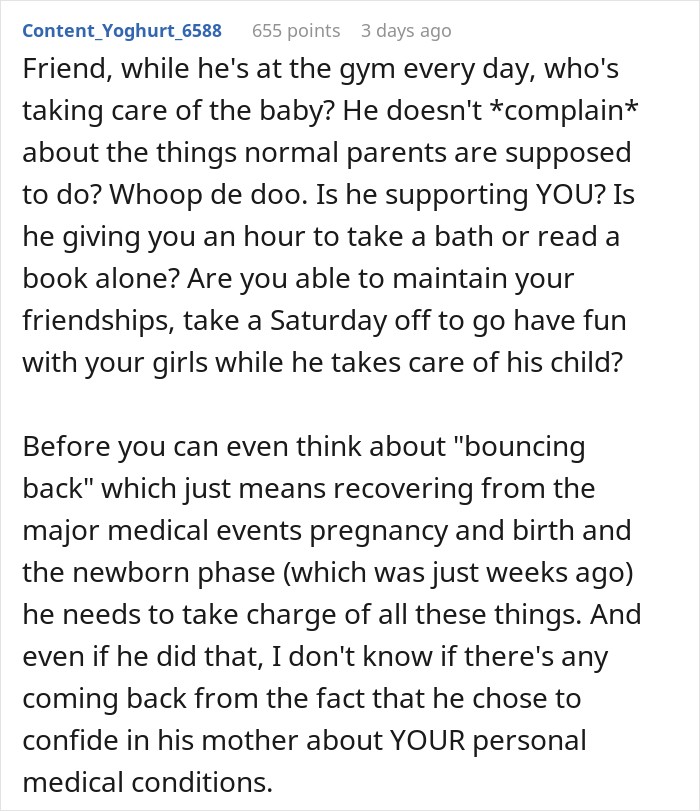
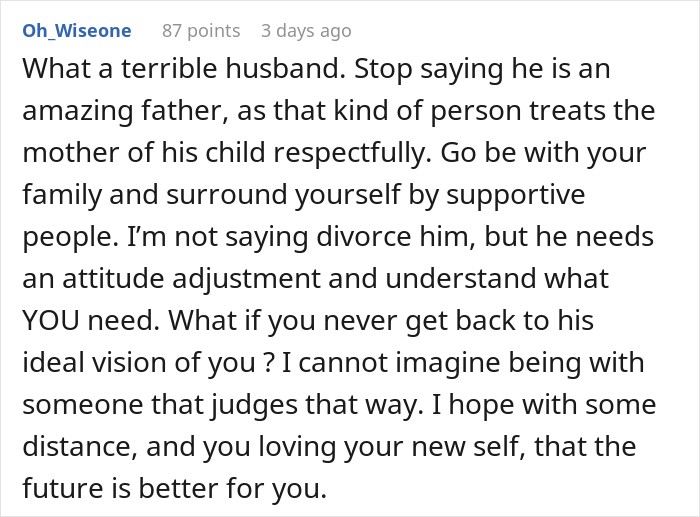
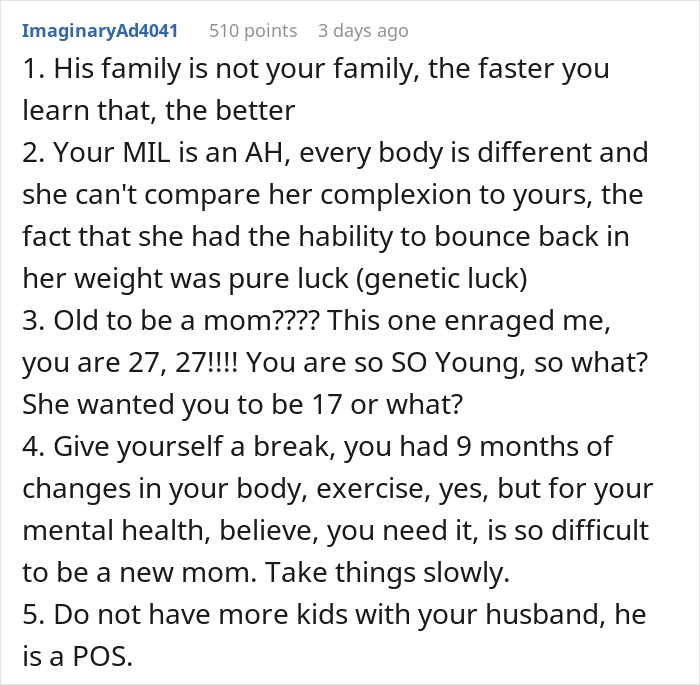
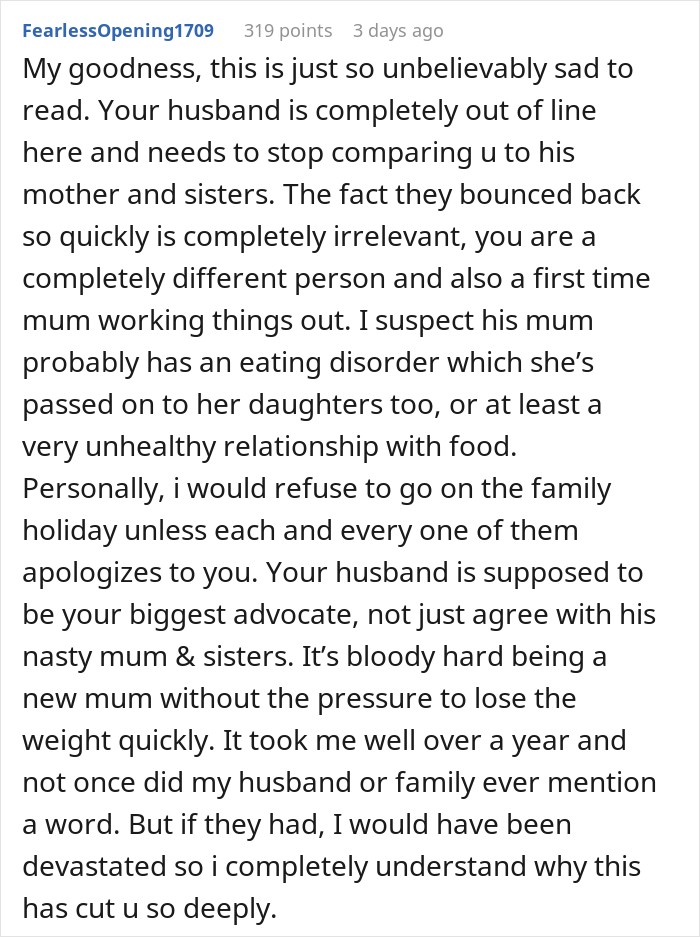
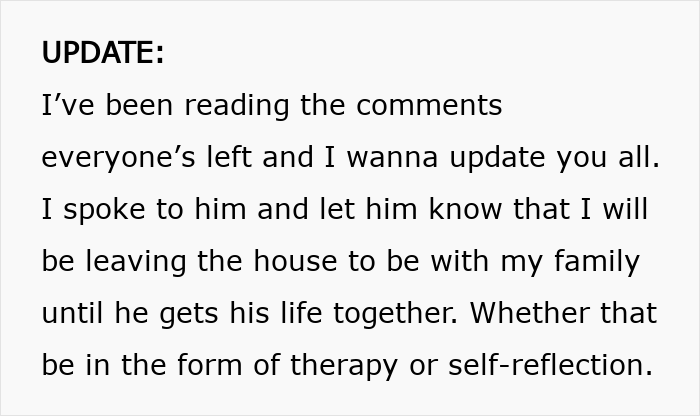
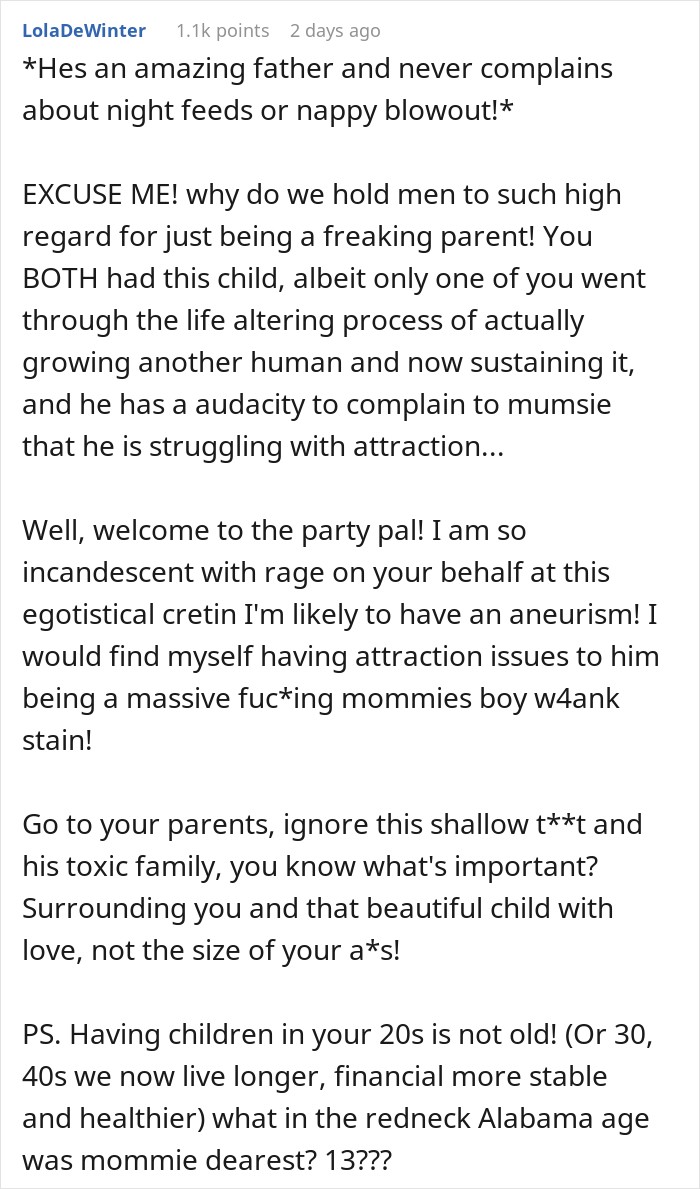
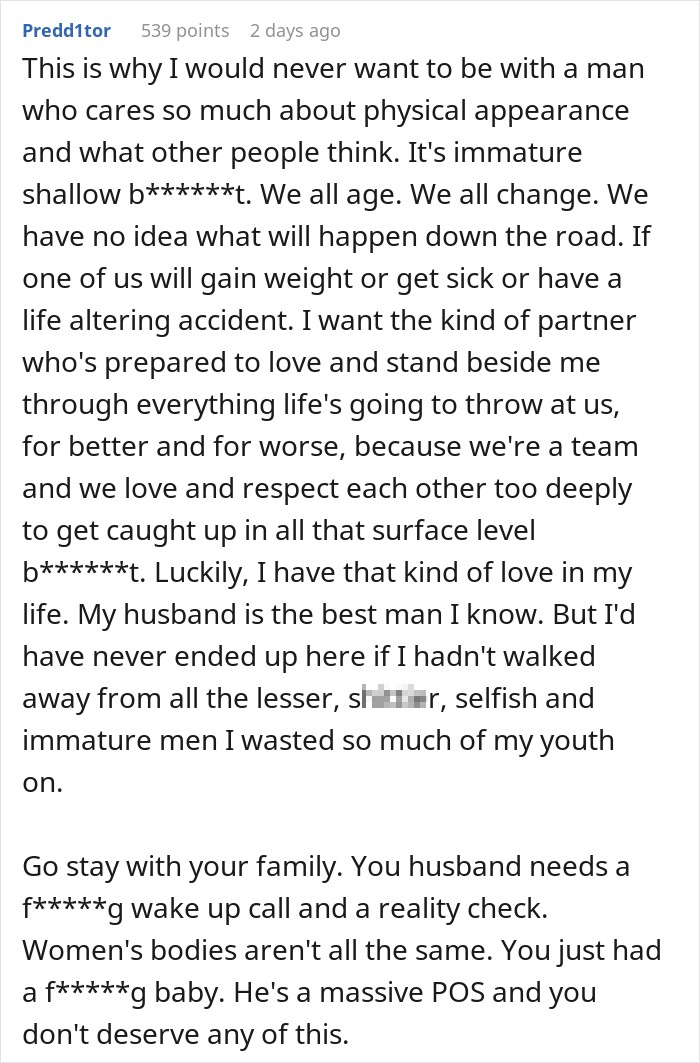
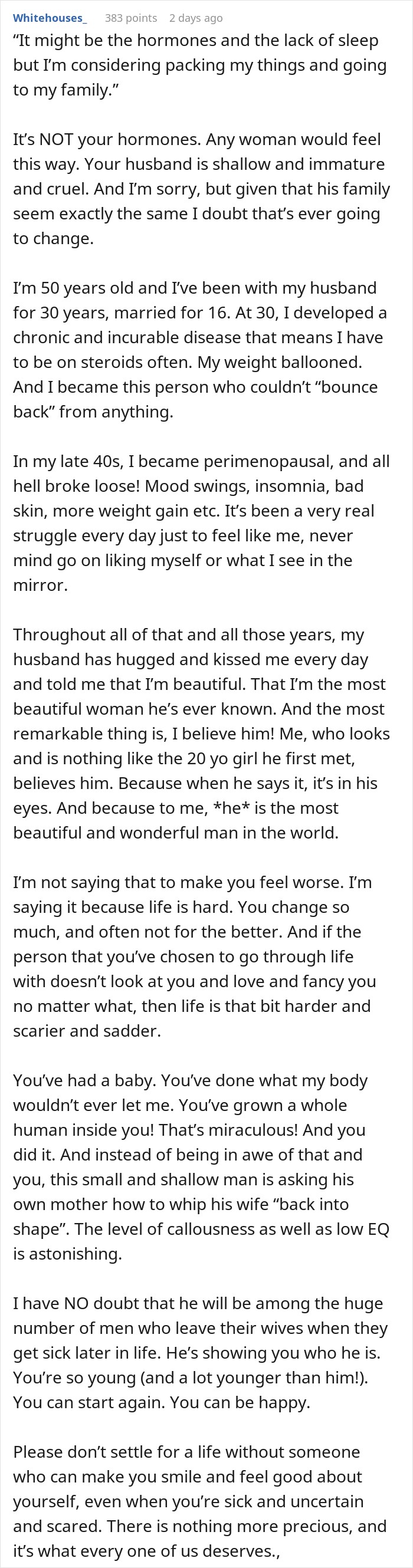
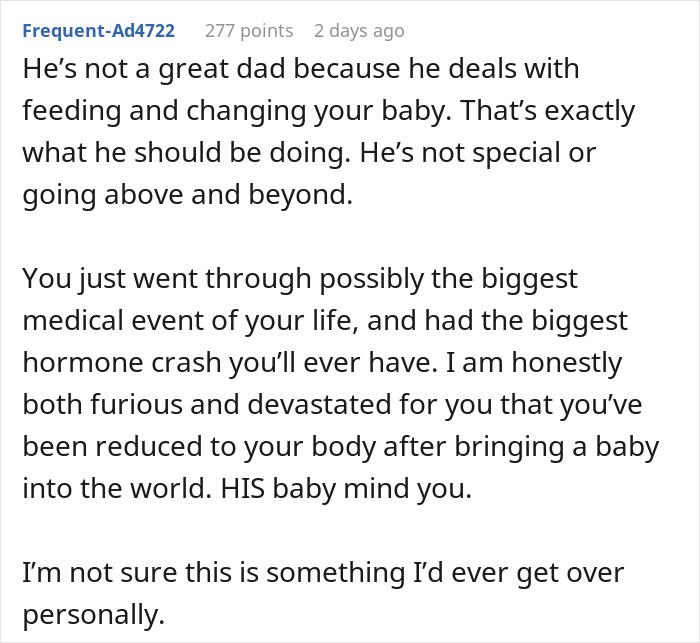
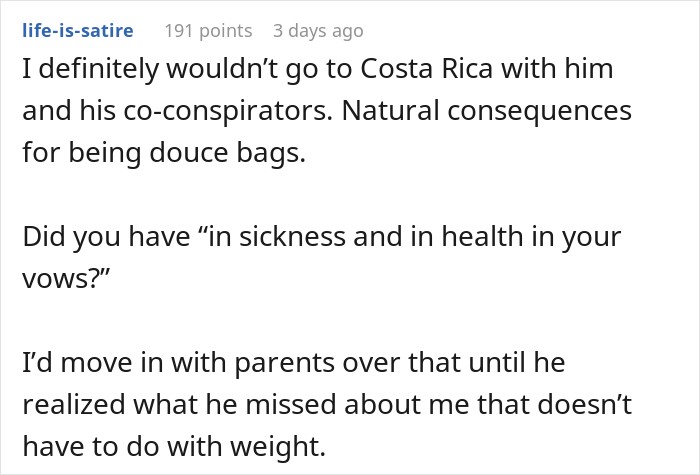
A woman turned to the internet for advice after discovering texts to his mom where he complained that she hadn’t “bounced back” from pregnancy as quickly as he would have liked. He was so concerned that an upcoming family trip had him worrying. Folks online weighed in and shared their suggestions.
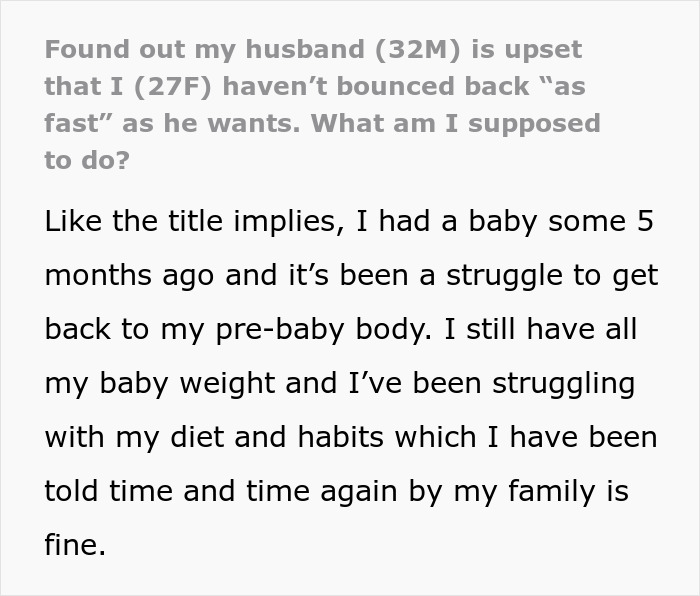
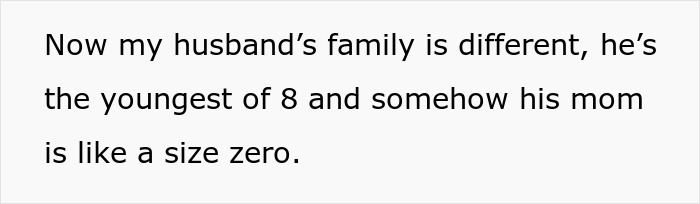
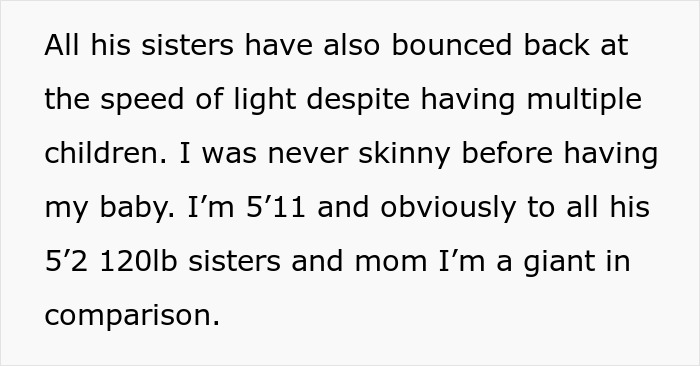
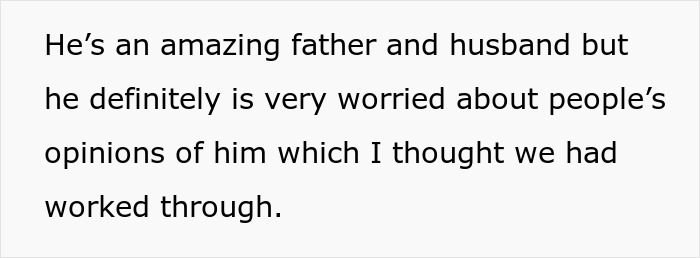
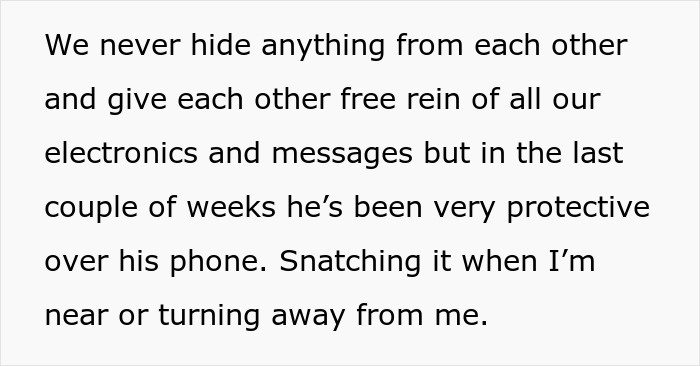
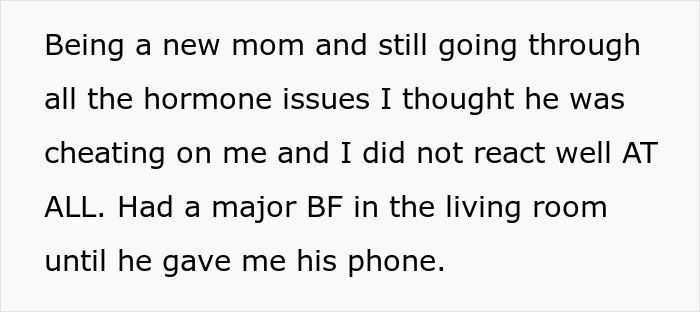
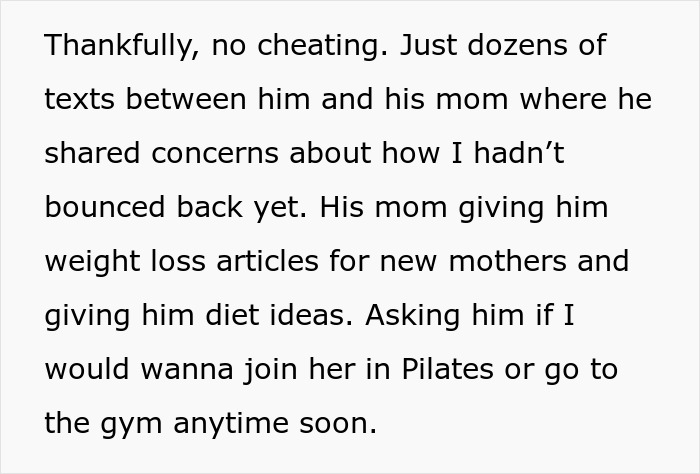
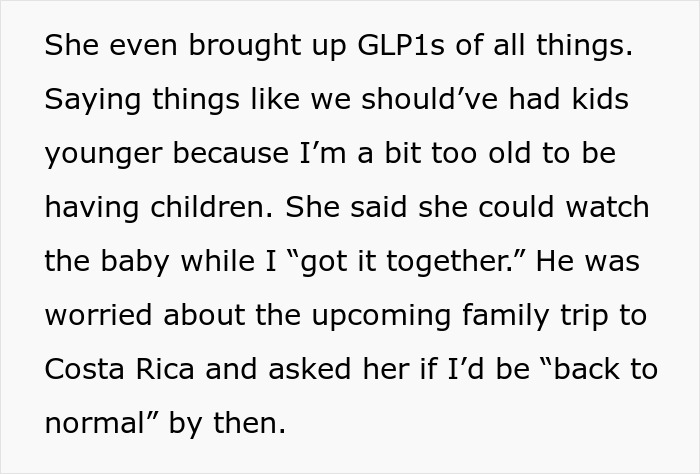
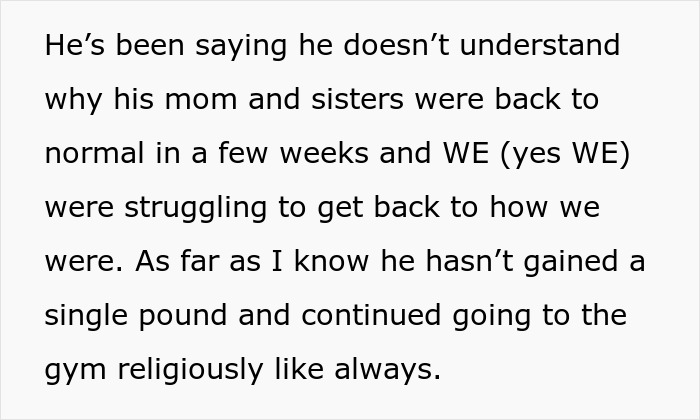
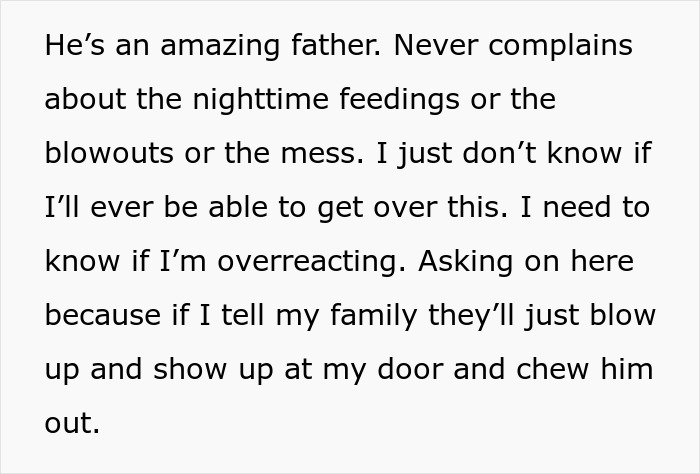
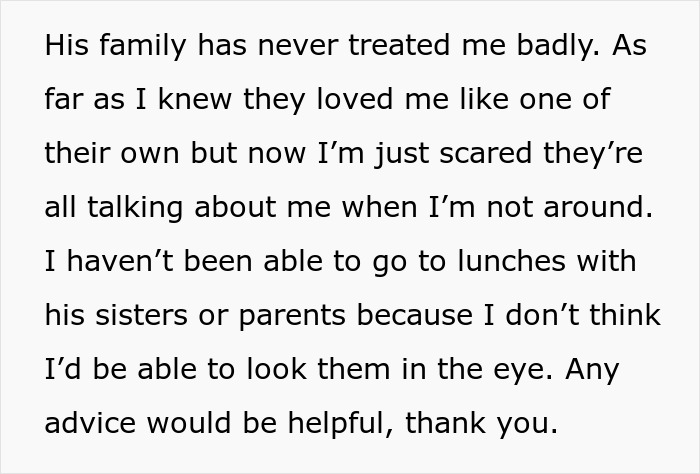
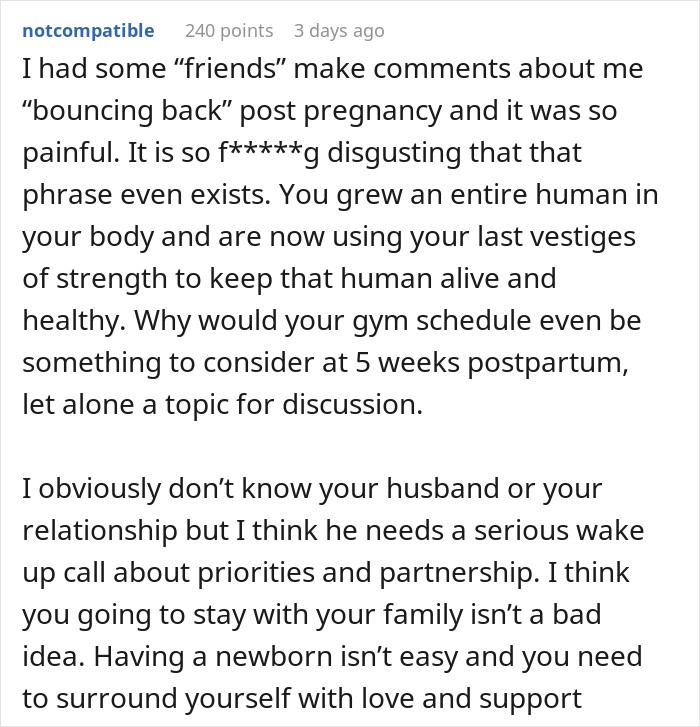
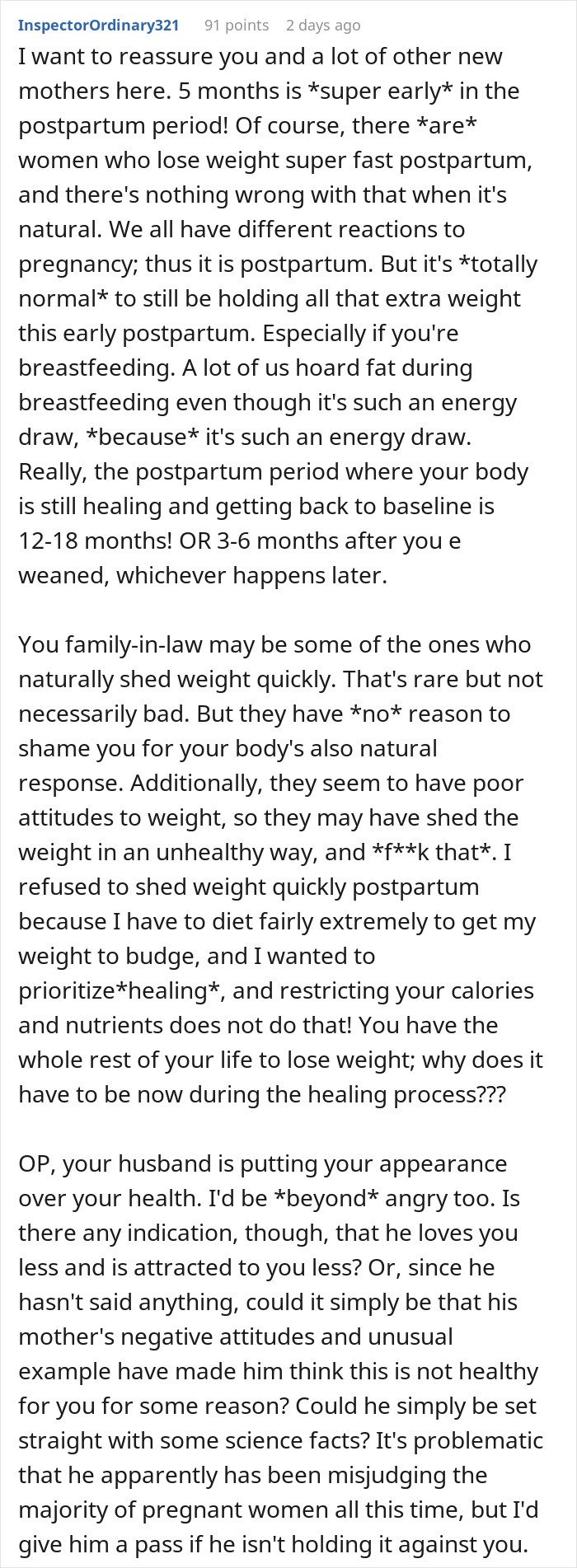
Postpartum bodies tend to be judged on a schedule that medicine never signed off on. The “bounce back” timeline, with its relatives who recovered in a few weeks and its celebrity photo shoots, has very little to do with how healing works. The American College of OB-GYNs has been urging doctors to treat the months after birth as an ongoing stage of care, with earlier follow up, instead of one checkup at six weeks. One provider fact sheet says it plainly: there is no recommended timeline for postpartum weight loss, most women need more than six months to reach their earlier weight, and some need a few years. Sources like The Bump add that it depends on highly individual factors, which makes measuring one woman against a family of different builds and different pregnancies a fairly useless exercise. Five months in, the woman in this story was not behind. There was no deadline to miss.
Then there are the details that got quietly turned into evidence. Sweating and feeling clammy are a hormonal classic. Estrogen and progesterone fall sharply after delivery, and the brain reads that dip as overheating, which is the same reason menopause brings hot flashes, as Cleveland Clinic explains. The sweats usually peak in the first weeks, though nursing keeps estrogen low and can stretch them out. A symptom like that calls for sympathy, or a chat with a doctor if it lingers, and not a running commentary between relatives.
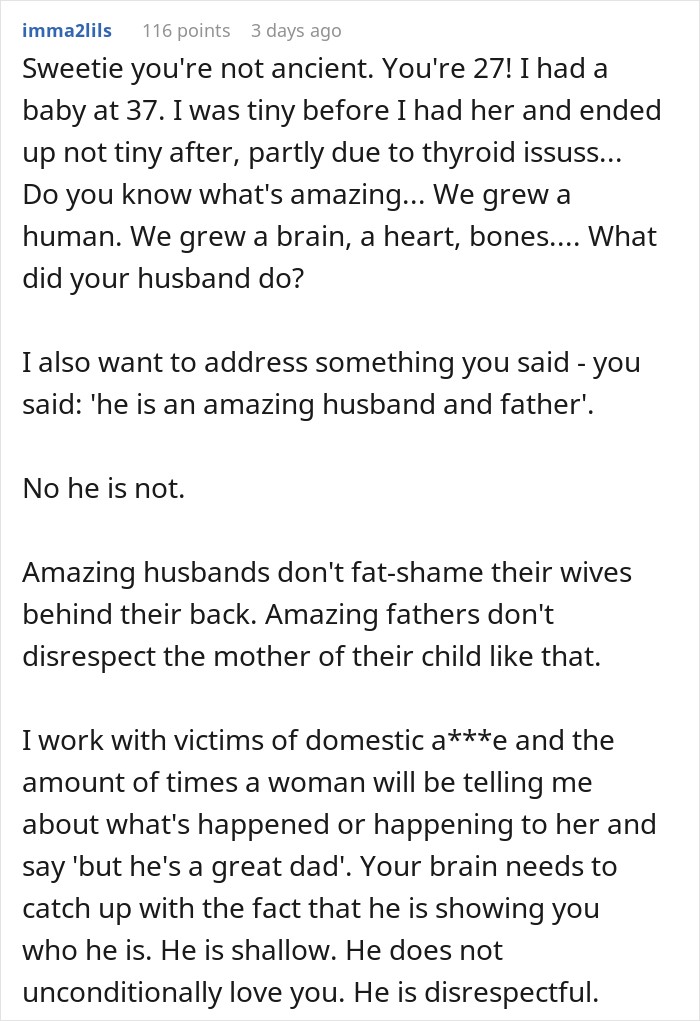
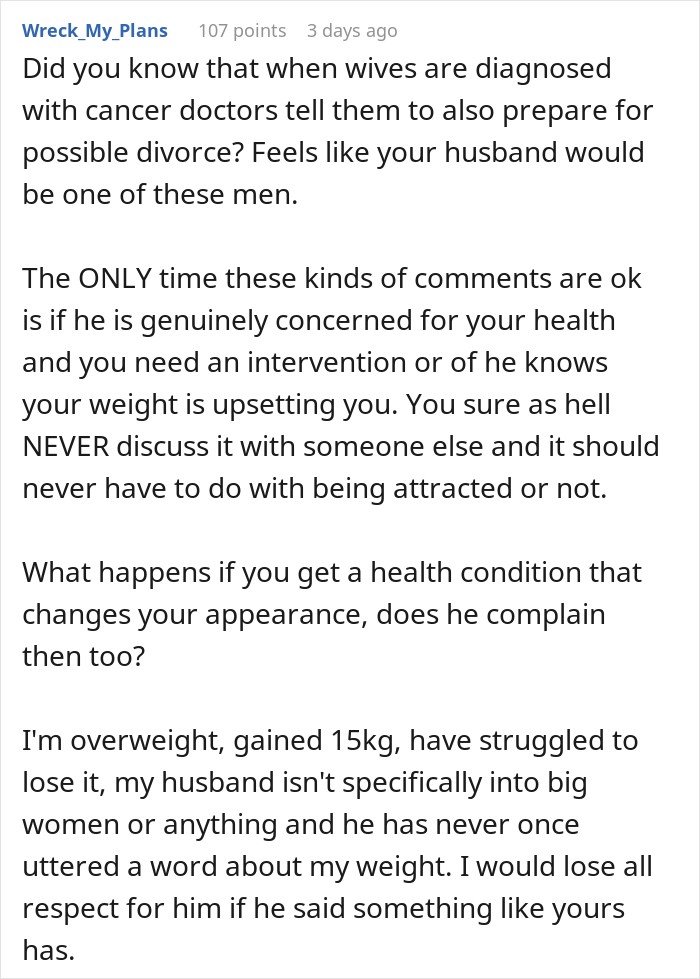
Researchers have looked at exactly this kind of commentary. A 2025 review of 36 studies, summarized by News Medical, found that supportive partners helped women feel better about their bodies, while appearance comments and pressure to bounce back made things worse. Even advice meant kindly counted as a risk. The pattern is especially painful because the pressure tends to return with force after birth, once the temporary relief of pregnancy fades. The senior author’s guidance for partners and family was refreshingly short: offer emotional support and avoid remarks about looks.
This is more than a matter of hurt feelings. An analysis in Frontiers in Public Health concluded that body dissatisfaction is consistently and moderately linked with depression during pregnancy and after birth. Separately, a systematic review from the University of Warwick tied poor quality partner support to depressive symptoms in new parents. The same review found the link held for fathers as well, a reminder that new parents are on the same team. Taken together, the findings suggest a partner’s words about her body are not small talk.
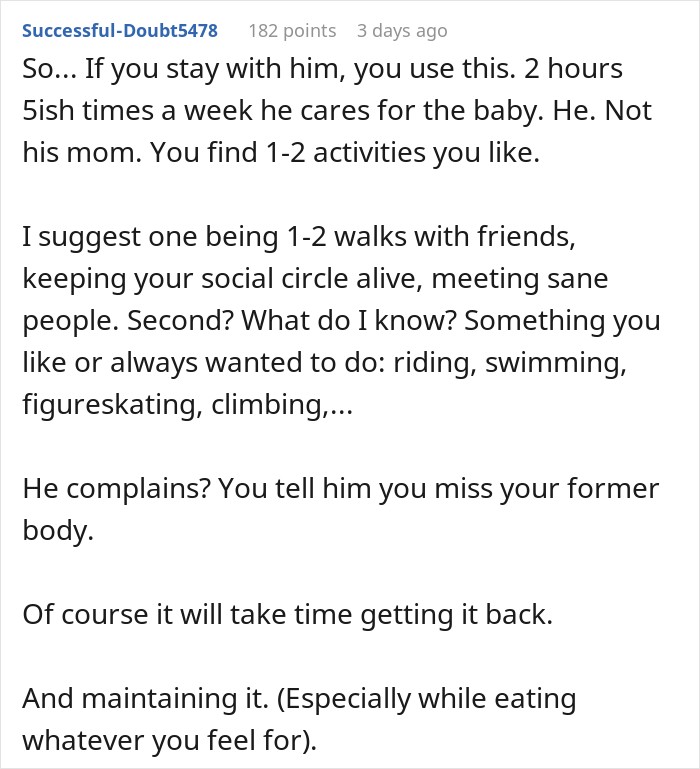
So what does support look like? Doing the night feedings counts, and it counts a lot, since broken sleep makes everything harder. But it is only half of the job. The other half is how a person talks about, and to, the one who is recovering. One expert quoted by Giddy pointed out that partners often lack education about postpartum changes and can help simply by learning what healing involves or showing up to follow up appointments. Asking a spouse how they are feeling before asking how the gym is going is a start. Bringing worries to the person they concern, rather than to a relative, is another. When something does bother a spouse, saying so directly gives the couple a chance to solve it together.
Even the mention of weight loss medication deserves a pause. ACOG recently issued new guidance on GLP1s around pregnancy and breastfeeding and noted that safety data for nursing parents remain limited. That is a decision for a patient and her own doctor, and not a topic for relatives swapping articles.

By entering your email and clicking Subscribe, you're agreeing to let us send you customized marketing messages about us and our advertising partners. You are also agreeing to our Privacy Policy.
Thank you! You've successfully subscribed to newsletters!

Reminds me of when my now-ex told me that my body "disgusted him" and that he was no longer "attracted to me physically" because I'd gained about 20 lbs (I was 5'5"/165cm and about 160lbs/72.5kg.) He blamed our "déad bedroom" of years entirely on my fatness. I think the real question for me and OP and anyone else in a similar situation is - even if you did lose weight to your partner's satisfaction so that they think you're hot/séxy again, do you really want to stay with someone so shallow, who places all (or at least a gigantic portion) of their attraction/affection on physical appearance/weight? Being unhealthily obese is one thing - a person may want their obese partner to lose weight for their health and wellbeing. But being icked out that your wife - who just grew and pushed out your offspring - hasn't lost her "baby weight" is absolutely abhorrent.


Reminds me of when my now-ex told me that my body "disgusted him" and that he was no longer "attracted to me physically" because I'd gained about 20 lbs (I was 5'5"/165cm and about 160lbs/72.5kg.) He blamed our "déad bedroom" of years entirely on my fatness. I think the real question for me and OP and anyone else in a similar situation is - even if you did lose weight to your partner's satisfaction so that they think you're hot/séxy again, do you really want to stay with someone so shallow, who places all (or at least a gigantic portion) of their attraction/affection on physical appearance/weight? Being unhealthily obese is one thing - a person may want their obese partner to lose weight for their health and wellbeing. But being icked out that your wife - who just grew and pushed out your offspring - hasn't lost her "baby weight" is absolutely abhorrent.























 No fees, cancel anytime




















32
6