Get Premium
Dark mode theme is available exclusively for premium users. Learn more about the benefits of subscribing.
No fees, cancel anytime.

 Dark Mode Ad-Free Browsing Unlimited Content
 Ad-Free Browsing Unlimited Content Dark Mode
Join 1.2 million Panda readers who get the best art, memes, and fun stories every week!
When people think about charisma, they picture bold personalities or magnetic confidence. But psychologists suggest something much simpler.
Likability is rarely built on grand gestures. It’s shaped by small, almost invisible behaviors that quietly influence how others feel around you.
If you’ve ever wondered how to get people to like you, the answer may lie in subtle, science-backed habits that show people you’re present and considerate.
And the best part? These everyday actions can shift the tone of a conversation in seconds.
This post may include affiliate links.
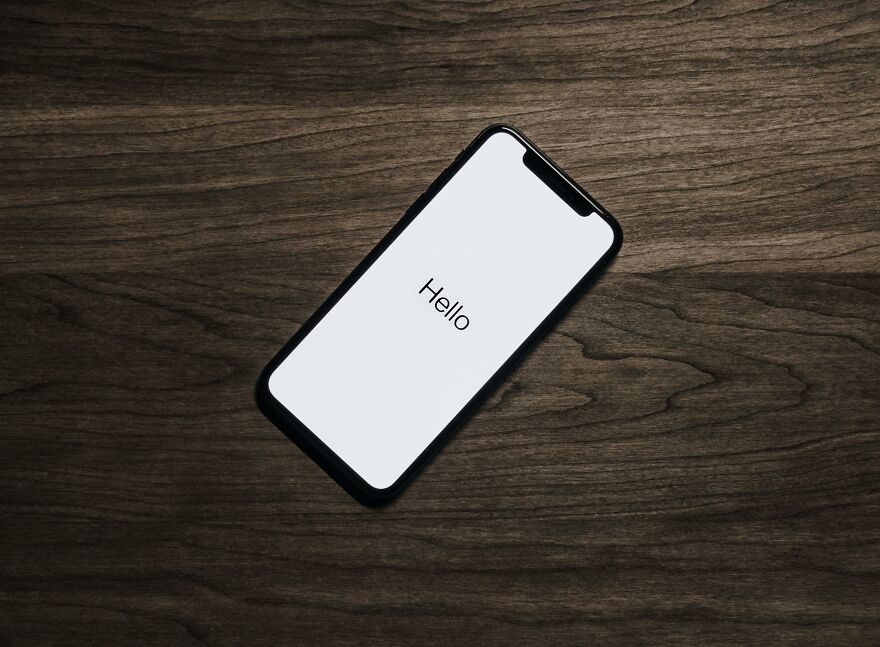
Before you even say a word, one subtle choice shapes how the interaction feels: where you place your phone.
When it’s visible on the table, friends can feel as though they’re competing with your screen. People don’t like that sense of divided attention, especially when discussing something meaningful.
Professor and research psychologist Andrew K. Przybylski published a study in the Journal of Social and Personal Relationships that found the mere presence of a mobile phone reduced closeness, trust, and perceived empathy during conversations. In other words, even an unused phone can quietly interfere with the connection.
A simple fix: put it in your bag or pocket before listening to someone. If it must stay nearby, turn it face down and explain briefly if you’re on call. That small adjustment signals presence, and people feel it.
Before you jump in with your reply, try doing nothing for a beat. A brief pause after someone finishes speaking can quietly change how you’re perceived.
In Psychology Today, career and personal coach Marty Nemko, Ph.D., writes that “allowing a one-second pause before responding shows respect for the speaker: It conveys that you weren't impatiently waiting for the person to finish so you could spout your pearls. Rather, you were listening, perhaps reflecting.”
In everyday conversation, this might simply mean taking one calm breath before you respond. Keep it natural, since too long a silence can feel awkward, but one thoughtful second often signals presence and respect.
Furthermore, that tiny pause makes you come across as a good listener, not someone competing for airtime. It also reduces the risk of interruption, which people tend to appreciate.
When you want to be liked, especially when meeting new people, it helps to notice how often you apologize for things that aren’t actual harms.
Instead of “Sorry I’m late” for a minor delay or “Sorry to bother you,” try “Thanks for waiting” or “Thanks for your time.”
Science communicator Dr. Vanessa Hill notes in her YouTube video that including a “sorry” in certain contexts can backfire, explaining that it turns out “including a ‘sorry’ in a rejection can lead to hurt feelings.” In low-stakes moments, repeated apologies can frame you as guilty rather than appreciative.
Research covered by the BBC also highlights that leading with gratitude, such as “Thank you for your patience,” can increase satisfaction compared to leading with “sorry.” Appreciation boosts the other person’s sense of value.
Most of us assume that people we like are the ones who help us. Psychology suggests the reverse can also be true.
Asking someone for a small, reasonable favor can actually increase how much they like you. In a Forbes article, psychologist Mark Travers, Ph.D., explains the “Ben Franklin effect,” noting that after doing someone a favor, “you actually begin to like them more”.
He describes how cognitive dissonance plays a role: if someone helps you, their brain may reason, “I wouldn’t do this for someone I dislike, so I must like them.” In everyday life, that might mean asking, “Could you send me that article you mentioned?” or “Would you mind sharing your opinion on this?”
Keep it small and sincere, because large or strategic requests create pressure. When it’s genuine and low-effort, a small favor can quietly build the connection.
When someone finishes a thought, most people instinctively pivot the conversation back to themselves. Instead, try asking one question that builds directly on what they just shared. If they say they’ve been stressed about a new role, you might respond, “What’s been the hardest part so far?”
That small shift is part of what researchers call high-quality listening. In a review published in Current Opinion in Psychology, Professor Guy Itzchakov, Ph.D., explains that high-quality listening fosters perceived responsiveness, which builds interpersonal connection and leads to positive downstream outcomes such as trust and willingness to engage.
This works because when people feel understood, they tend to evaluate you more positively. That only works, however, if it’s sincere. Ask one thoughtful question, then stay with their answer rather than redirecting the spotlight back to you.
Disagreements do not automatically damage a connection, but feeling unheard often creates distance. Psychologist and author Caroline Fleck explains that validation communicates, in her words, that “you’re there, you get it and you care,” in an article published in Psyche.
Research she reviews shows that validation improves relationships, decreases conflict, and increases trust because it helps people feel accepted rather than attacked. In practice, this can be as simple as saying, “I can see why you’d think that,” or “That makes sense from your perspective,” before offering your own view.
When people feel understood, they become less defensive and more open to dialogue, which naturally makes you seem more likable. Keep in mind that validation is about showing genuine interest in their experience, not about agreeing with them.
Giving specific credit is a great way to make friends, especially when you highlight exactly what someone did well. Instead of a vague “Good job,” try something like, “I really appreciated how clearly you explained that idea in the meeting.”
One sentence of thoughtful recognition can go a long way, according to a study published in Emotion by psychologist Sara B. Algoe and her colleagues.
They found that gratitude plays a powerful role in building relationships, and can be understood as a “detection-and-response system to help find, remind, and bind ourselves to attentive others.”
When it’s sincere and specific, it not only reinforces connection but also makes you more likable in the process. If you share that recognition publicly, make sure the person is comfortable with it.
If meeting someone new feels stiff, you can instantly soften that edge with a small shared moment of light humor. That one laugh can quietly help new people like us more, and it’s backed by science.
Research published in the European Journal of Social Psychology by behavioral scientist and wealth psychologist Stanislav Treger and his colleagues found that “humor was positively associated with liking and closeness” in initial social interactions.
As a quick disclaimer, humor works best when it makes both of you feel relaxed, not singled out. Your goal isn’t to show off, so no big punchlines or performances are needed.
It’s often enough to make a playful comment about the long coffee line or the awkwardness of networking events.
Owning a mistake quickly can protect a friendship more than defending yourself ever will.
If you realize you were wrong, try a simple line such as, “You’re right, that was on me. I’m sorry.” If needed, follow it with one clear repair step. That small gesture often carries more weight than a long explanation.
In work featured in the Journal of Personality and Social Psychology, social psychologist Ken-Ichi Ohbuchi and his colleagues found that when harm-doers apologized, victims “refrained from severe aggression” compared with when no apology was offered.
Aim for a short, responsible apology. When you start adding excuses or shifting blame, it can feel less genuine, and the moment of repair gets lost.
If you want to make others feel instantly more engaged in a conversation, give them space to talk about themselves. A single, well-placed question can help new friends open up naturally. Then notice what happens when you simply stay quiet and let them answer fully.
This is backed up by research from a Ph.D. Diana I. Tamir, Ph.D. Jason P. Mitchell of Harvard University, featured in PNAS.
They found that what researchers call self-disclosure is intrinsically rewarding. Participants were even willing to forgo money for the chance to share their thoughts.
That means when you invite someone to share, you are tapping into something people already enjoy. Just keep it light, as one thoughtful question works far better than turning the moment into an interview.
You don’t have to say much to make someone feel at ease. Sometimes your body does the work for you. If the person across from you leans in slightly or slows their speaking pace, try easing into a similar posture or tempo a few seconds later so it feels natural and unforced.
Social psychologists Tanya L. Chartrand and John A. Bargh found that this kind of subtle, unconscious mimicry can make interactions feel smoother and increase people's liking for one another. They described it as the Chameleon Effect in research published in the Journal of Personality and Social Psychology.
In real life, it might be as simple as settling back when they relax into their chair, or lowering your voice if they’re speaking softly. The trick is to keep it light. If it looks obvious, it can come across as performative. When it’s barely noticeable, it helps the conversation feel easy and comfortable.
If you’ve ever felt someone’s attention drift mid-conversation, you know how quickly the connection fades. One small shift can change that. When you’re speaking, hold eye contact for a few seconds at a time. It signals presence without saying a word.
Communication coach and Ph.D. Alex Lyon explains on his YouTube channel that “it’s worth it to take the time to make direct eye contact instead of glancing around the room and really focusing on another person and showing them that you like them and appreciate them.” He adds that when you communicate with immediacy, people respond more favorably.
The key is balance. Too little eye contact feels distracted, but staring can feel intense. Adjust to cultural norms and personal comfort, especially if sustained contact feels overwhelming.
A name in a conversation is a small detail that signals warmth and attentiveness, leaving a better impression. Research published in the Journal of Experimental Social Psychology by psychology professor Chris L. Kleinke tested how people evaluate someone who uses another person’s name in different situations.
Across three experiments, the pattern was clear: when name use felt like normal social tact, it was associated with more positive impressions, including higher reported liking in a non-ingratiating interview setting.
In real life, you can get the benefit without making it awkward. Use their name once in a way that fits the moment, such as “Good to see you, Maya,” or “Thanks for the help, Daniel,” as you’re wrapping up. It’s a small cue that signals attention and respect, and it often makes the interaction feel more personal.
A smile is a great way to make people like you more, especially in first impressions.
Research by Ph.D. Emma Otta, published in Perceptual and Motor Skills, found that smiling faces tend to be rated as warmer, including kinder and more attractive, than neutral expressions. In other words, a natural smile can shape how people read you within seconds.
In real life, it can be as small as a brief, relaxed smile when you say hello or shake someone’s hand. That quick moment matters because it sets a friendly tone and makes you easier to remember. Business Insider cites research suggesting that smiling can help people remember you in networking situations.
Aim for something genuine rather than polished. Forced smiles can feel off, and different cultures read smiling differently, so it helps to match the setting.
You don’t have to appear flawless, as a small, honest admission can sometimes make you more relatable. If you are discussing a topic and realize you are unsure, try saying, “I’m not sure about that. I’d like to learn more.” American psychologist Elliot Aronson described this dynamic in what became known as the Pratfall Effect.
In a TED podcast interview, Aronson explained that when someone seems highly competent, a small, genuine mistake can make them feel less intimidating and more approachable. As he put it, “If a person seems really terrific to begin with… when he makes a pratfall… it makes people feel closer to him.”
This works best when others already see you as capable and credible, and it should never be staged. A sincere moment of humility is enough to soften the edges and build the connection with both old acquaintances and new people.
The way you phrase a question can shape how much someone opens up. If you often ask people closed-ended questions, try asking an open-ended one, as they signal curiosity and genuine interest.
Clinical psychologist Dr. Julie Smith points this out on her YouTube channel, suggesting that instead of asking “Are you ok?” you might ask, “What’s on your mind?” The difference may seem subtle, but open-ended prompts give other people room to share their perspective rather than a quick yes or no.
In everyday conversation, this might mean asking someone what sparked their passion for a project instead of whether they enjoy it. Just be mindful not to stack too many questions in a row. A little curiosity goes a long way.
Research suggests that briefly reflecting someone’s meaning in your own words can make us seem more likable in conversation.
In research published in the International Journal of Listening, professor Harry Weger, Ph.D., found that when listeners paraphrased a speaker’s message, they were rated as more socially attractive than those who offered simple acknowledgments.
Still, you do not need to repeat everything they say, so one short reflection is enough. If they describe a stressful week, you might respond, “So the hardest part has been the constant changes.”
That small adjustment sounds conversational rather than scripted and signals that you were paying attention. Occasional paraphrasing helps people feel heard, and that feeling often strengthens the connection.
Sharing a secret can quietly shift the tone of a conversation. If you’re learning how to make someone like you, this is one of the simplest ways to create closeness without oversharing. It might be as subtle as admitting you were nervous before a presentation or that you almost backed out of an event at the last minute.
Psychologist Arthur Aron’s research, published by the Society for Personality and Social Psychology, shows that structured self-disclosure tasks can significantly increase feelings of closeness between strangers.
As people gradually exchange more personal information, they tend to feel more connected and open. To do this, share a short, context-appropriate detail and stop there.
When the depth matches the stage of the relationship, it feels natural and often encourages the other person to open up too.
What you say about others doesn’t just shape how they’re seen. It shapes how you’re seen, too. Social psychologist Dr. Lynda Mae describes this phenomenon, called spontaneous trait transference, in the Journal of Personality and Social Psychology.
The study found that communicators are often perceived as possessing the traits they describe in others. In other words, when you call someone thoughtful or resilient, those qualities can subtly reflect back on you.
That makes effort-based compliments a surprisingly powerful tool. Instead of praising talent, highlight process: “You handled that calmly,” or “I liked how you adjusted your approach.”
There’s a tricky flip side, though. If you regularly criticize others behind their backs, people may associate those negative traits with you as well.
If you want to understand how to get people to like you, pay attention to your body language while listening.
Social science professor Takayuki Osugi found that head nodding significantly increased ratings of likability and approachability compared with both head-shaking and neutral conditions (via Perception).
The study concluded that nodding is interpreted as a cue of approach-related motivation and enhances perceived likability.
In real life, this might mean nodding once or twice when someone makes an important point, rather than staying completely still.



























 No fees, cancel anytime