Get Premium
Dark mode theme is available exclusively for premium users. Learn more about the benefits of subscribing.
No fees, cancel anytime.

 Dark Mode Ad-Free Browsing Unlimited Content
 Ad-Free Browsing Unlimited Content Dark Mode
Join 1.2 million Panda readers who get the best art, memes, and fun stories every week!
Do you know that nearly 80% of dogs over three have some form of dental disease? That’s a lot of bad breath! As a vet and a dog owner, I know how important your furry friend’s health is to you. Regular teeth brushing is one of the best ways to keep their mouth healthy and their smile bright.
If you aren’t sure how to get started or have a pup who hates the process, don’t worry. I will break down exactly how to start brushing your dog’s teeth so you can keep those pearly whites shining.
The information provided herein is for informational purposes only. Please refer to our disclaimer for more details..
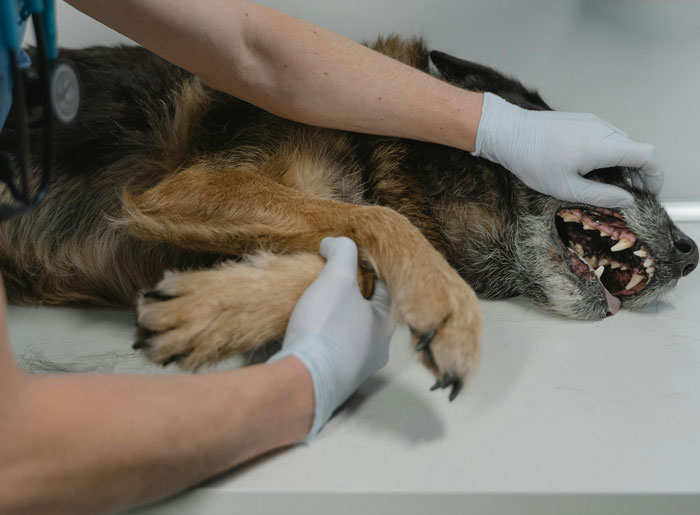 Image credits: Tima Miroshnichenko
Like us, dogs can develop plaque and tartar (calculus) buildup on their teeth. This buildup leads to gingivitis, an inflammation of the gums. If left untreated, gingivitis can worsen into periodontal disease, a severe infection that destroys gums and the bone supporting the teeth.
Periodontal disease causes pain and tooth loss and can even contribute to problems in your dog’s organs, like their heart, liver, and kidneys.
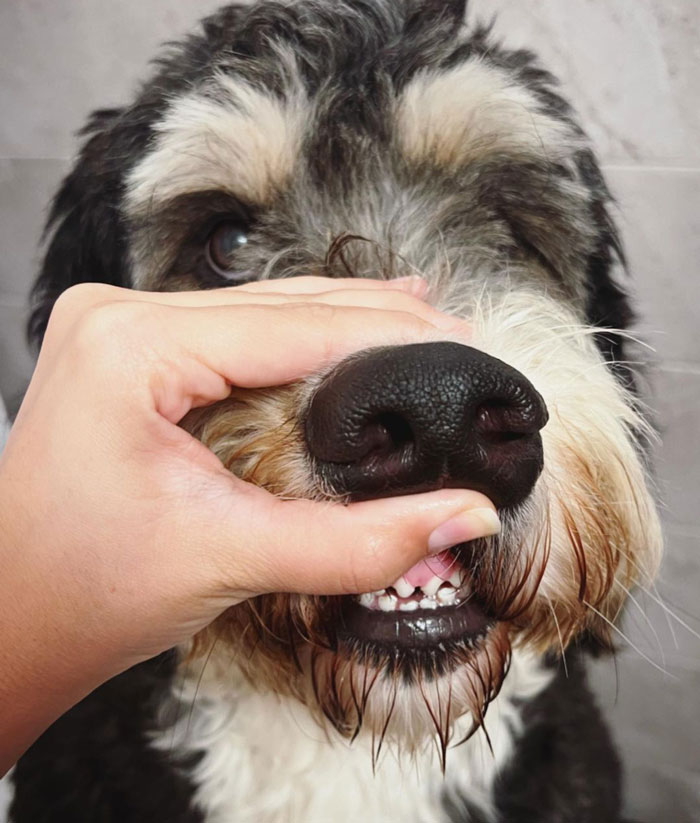 Image credits: macbernedoodle
To keep your dog smiling, I recommend brushing their teeth at least twice daily — like you brush yours! If that’s not possible, brushing at least three times weekly can significantly reduce tartar buildup.
Introduce brushing early while your dog is still a puppy for the easiest training experience, but don’t despair if you have an older dog—it may take a little longer, but with patience, you can teach your dog to accept this at any age.
Caring for your canine companion’s pearly whites is essential for their health and well-being. Like us, dogs can develop tartar and gum disease if their teeth aren’t brushed regularly. Let’s see how to introduce your furry friend to the world of dog dental hygiene!
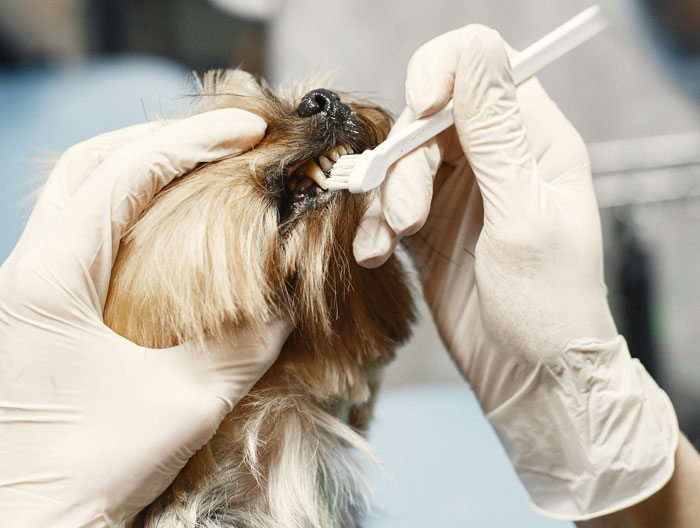 Image credits: Gustavo Fring
The key to success is easing your dog into the process. Choose a calm, quiet time and place — maybe after a nice walk or playtime when your dog is comfortable. Start by getting them used to the special tools. Choose a dog-specific toothbrush with soft bristles that fit comfortably over your finger or a traditional angled brush or finger toothbrush.
Always use toothpaste formulated specifically for dogs — human toothpaste contains ingredients like sodium, xylitol, and fluorides that harm our furry friends. Popular pet toothpaste flavors include poultry, peanut butter, and even beef!
Start slow and make it a fun experience! When they cooperate, it’s best to teach your dog this new skill with plenty of praise and the occasional tasty treat. This positive reinforcement is critical to helping your dog associate teeth brushing with good things.
Let your dog lick a pea-sized amount of dog toothpaste from your finger or the brush. This gets them used to the taste and texture.
Gently lift your dog’s lips and lightly massage their gums and outer teeth surfaces with your finger. This helps your dog get accustomed to your touch around their mouth.
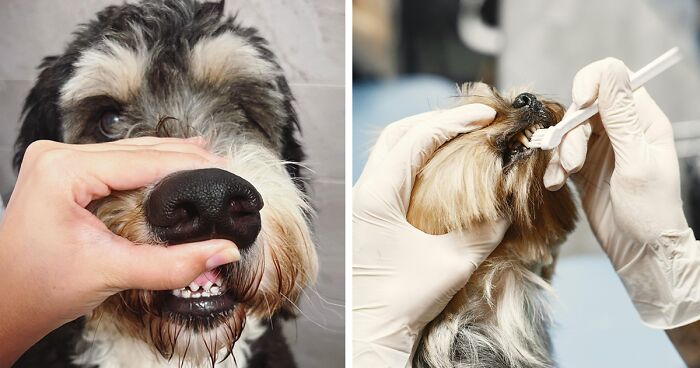
Start by gently lifting your dog’s lips. You can either push them up slightly with one finger or place your hand over the top of their head, using your thumb and index finger to raise the lips. Focus on the big cheek teeth and the long, pointy canines. This is where plaque tends to show up first.
You may need to open your dog’s mouth slightly to tackle the lower or back teeth. Tilt their head gently backward while holding onto the upper jaw for stability. Don’t stress about brushing the tips or the insides of the teeth just yet, especially if your dog isn’t entirely used to the process. Their tongue naturally cleans a good portion of the inner surfaces, and the most important thing is getting those outer areas where problems tend to develop.
To effectively brush your dog’s teeth, use a soft-bristled toothbrush or finger brush if you have a smaller dog. Angle the brush at a 45-degree angle, directing it toward the gum line. Then, brush gently in a back-and-forth motion, focusing on the outer surfaces of the teeth.
If your furry friend tolerates it, try brushing the insides of their teeth as well. Don’t worry about brushing for a long time when you first start – 30 seconds per side is a great goal to aim for.
You should brush your dog’s teeth daily to keep plaque and tartar at bay. But, if daily brushing isn’t feasible, aiming for every other day is still an excellent start. Consistency is essential for forming a good dental care routine. As your dog becomes more comfortable, you can naturally work up to brushing more frequently.
Offer your dog lots of praise and a special treat for a well-done job! And let them have a nice drink of water to rinse away any remaining toothpaste.
If your furry friend isn’t quite a fan of the dog toothbrush yet, don’t worry! Start with a finger brush or gauze wrapped around your finger. These options can sometimes feel less intimidating to dogs. And remember, dental chews or treats, designed explicitly for canine dental health, can be a great supplement to brushing, but they should never be entirely replaced.
Keep a watchful eye out for signs of dental trouble in your dog. Red or bleeding gums, persistent bad breath (“doggy breath” shouldn’t be super intense!), or loose teeth are all red flags. If you notice any of these concerning signs, schedule a check-up with your veterinarian as soon as possible. They may recommend professional dental cleanings to remove stubborn buildup and keep your dog’s teeth in tip-top shape.
Dental chews and treats can be valuable tools for your dog’s dental health. Look specifically for products with the Veterinary Oral Health Council (VOHC) seal of approval — this shows independent testing backs up their plaque and tartar-reduction claims.
But remember, not all chews are created equal. If your dog is a speed-eater, those treats will disappear in seconds, offering minimal dental benefits. For optimal effectiveness, a dental treat should take your dog 5-10 minutes to consume. Consider choosing a larger treat, and be sure to supervise your dog to prevent choking hazards. And, of course, adjust their regular food intake to make up for those treat calories!
Antlers, bones, and extremely hard chews pose a serious risk to your dog’s teeth. Generally, steer clear if you can’t easily break the chew with your hands or if it hurts when banged against your knee.
Hard chews can cause painful tooth fractures or even become lodged in your dog’s mouth. While dogs may love them, the potential harm far outweighs any enjoyment. I often say these chews are more of a liability than a treat.
416views
Share on Facebook

































 No fees, cancel anytime




2
0