Bored Panda works better on our iPhone app
Continue in app Continue in browser

The Bored Panda iOS app is live! Fight boredom with iPhones and iPads here.

How Rare Are Green Eyes, And What Genetics Says About Their Origins
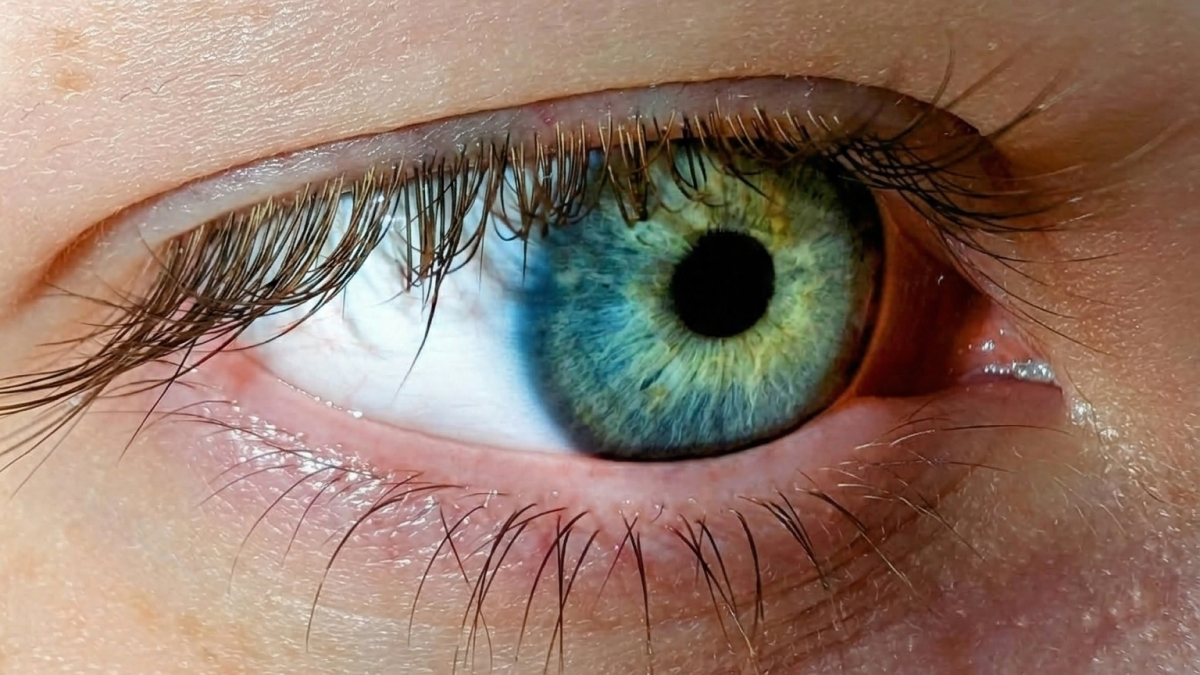
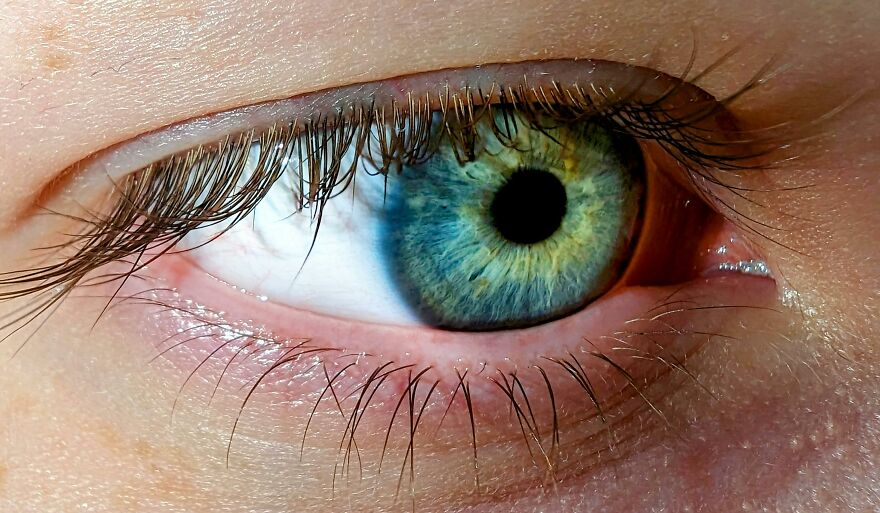
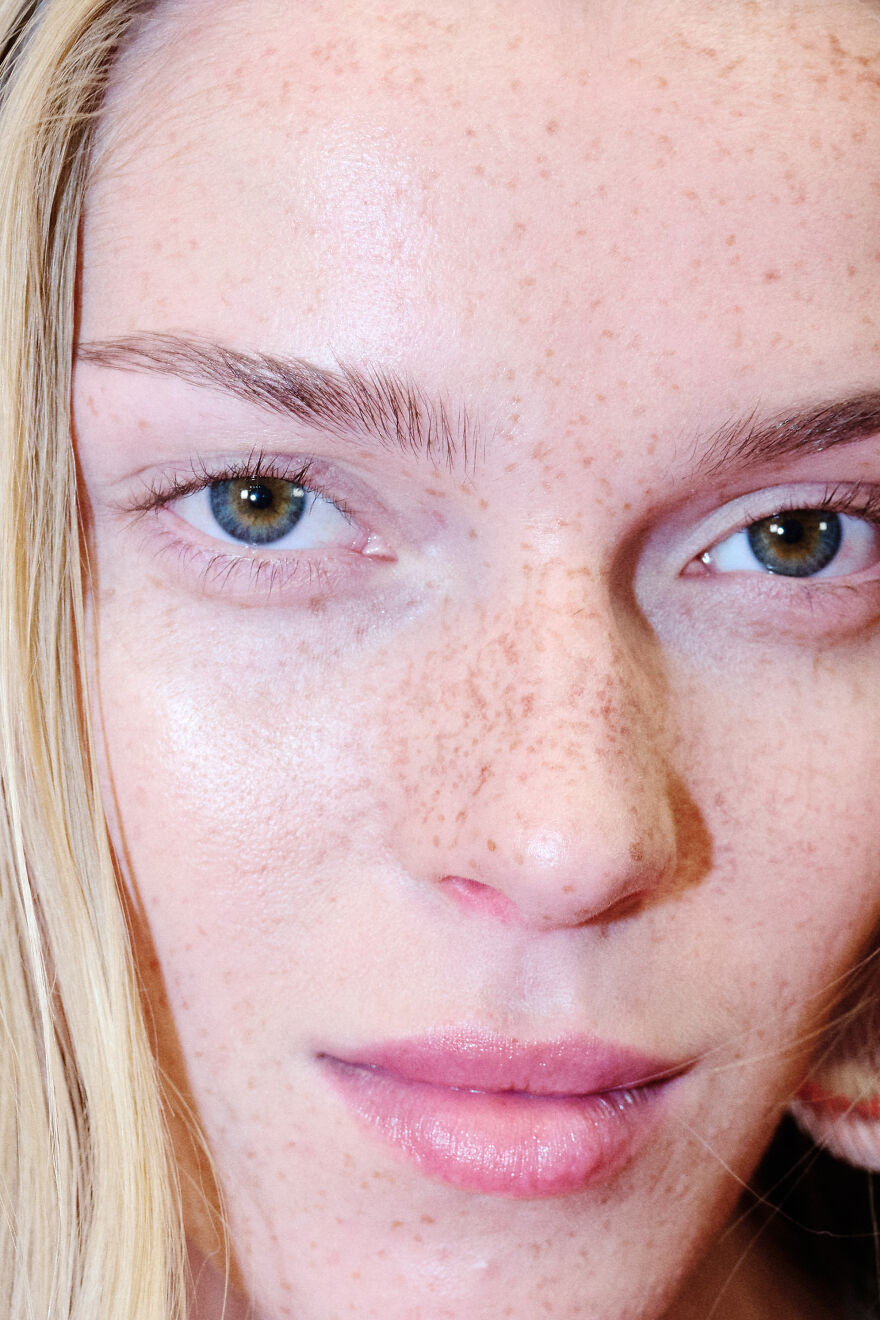
Close-up of a rare green eye showing detailed iris patterns and eyelashes under natural light.

How Rare Are Green Eyes, And What Genetics Says About Their Origins

32

ADVERTISEMENT

Cat-like eyes show up in searches everywhere. If the internet is this obsessed with eye color, how rare are green eyes in humans?

They’re uncommon enough that seeing them still feels like spotting a standout feature, even in a room full of people.

That gap between perception and reality is one of the most telling facts about green eyes.

Their rarity is also part of what makes them genetically intriguing and culturally overexposed. Green sits in the middle zone of pigment and optics, and it can show up in families in ways that don’t follow simple “like parent, like child” expectations.

Meanwhile, beauty culture and film treat green eyes as a shortcut for allure, sometimes spotlighting them on purpose.

RELATED:

    How Rare Are Green Eyes?

    Quick Stats: Global Eye Color Distribution

    🟤
    Brown
    ~79%
    🔵
    Blue
    8% – 10%
    🟡
    Hazel
    ~5%
    🟢
    Green
    2%

    Other (Gray/Red)
    <1%
    🟤 Brown
    ~79%
    🔵 Blue
    8% – 10%
    🟡 Hazel
    ~5%
    🟢 Green
    2%
    ⚪ Other (Gray/Red)
    <1%
    Sources: Journal of Cellular Physiology, American Academy of Ophthalmology.

    Green eye color is scarce in reality, loud in culture. Globally, most people have brown eyes. A 2020 mini-review in the Journal of Cellular Physiology estimates that about 79% of people worldwide have brown eyes, compared with roughly 8%-10% with blue eyes and 5% with hazel eyes.

    Only 2% of the world’s population has green eyes, ranking it near the bottom of the list. The same review notes that rare-colored eyes can include shades like gray, red, and violet.

    Part of why green eye color statistics vary across sources is the boundary problem between green and hazel. Hazel eyes contain a mix of green, brown, and gold, and depending on lighting, angle, and the observer, the same pair of eyes can read as either.

    ADVERTISEMENT

    Hazel is estimated at around 5% globally, putting it slightly ahead of green’s 2%, but the overlap means counts are rarely clean. If your eyes shift between green and brown depending on what you’re wearing, they’re almost certainly hazel.

    True green stays consistently green across different lighting conditions, with no brown flecks or gold shift.

    Those “red” or “violet” tones aren’t a typical natural eye pigment, though. Medical News Today notes that people with albinism can appear to have red or violet eyes in certain lighting conditions. And while green often gets labeled the rarest eye color in the world, the bigger takeaway is that true green is genuinely uncommon at a global scale.

    There’s also a deep-time reason brown dominates the chart. The American Academy of Ophthalmology notes that around 10,000 years ago, everyone on Earth had brown eyes, tying the shift toward lighter eye colors to changes affecting melanin production.

    Image credits: VD / Pexels

    ADVERTISEMENT

    Yet green eyes get a cultural spotlight that far outweighs their stats. In an All About Vision survey of more than 66,000 responses, 15.2% of readers picked dark blue, the kind of fixation usually reserved for legendary screen icons like Elizabeth Taylor.

    Another 16.0% chose hazel, 16.9% picked light blue, and 20.3% ranked green as the most attractive eye color.

    That’s why green is frequently highlighted in modern beauty standards as one of the most desirable eye colors. People tie green eyes to mystique and allure, and to that “chameleon-like” ability to change color, depending on lighting, angle, and surrounding shades.

    Because green eyes are most common in Northern and Central Europe, they’ve also been amplified within Western beauty ideals that historically prized lighter features. In places where green eyes are rare, they’re more likely to get framed as striking, exotic, and especially beautiful.

    And even though the statistics say only a small slice of the world’s population has green eyes, some of the most recognizable faces in pop culture have them naturally, which only fuels the fascination.

    Green eyes keep turning up on screen, not because they’re common, but because directors treat them as visual shorthand for intensity, and sometimes fake them entirely when nature doesn’t cooperate.

    Adele

    Her signature green eyes are often emphasized with a dramatic, classic liquid cat-eye eyeliner look.

    ADVERTISEMENT

    Image credits: adele / Instagram

    Joaquin Phoenix

    His green/hazel eyes have been part of his on-screen presence, including in his portrayal of Johnny Cash in “Walk the Line.”

    Image credits: joaquinphoenixupdates / Instagram

    Angelina Jolie

    She is known for her natural light eyes, which she sometimes enhances for red carpet appearances.

    Image credits: kinovolna / Instagram

    ADVERTISEMENT
    ADVERTISEMENT

    Daniel Radcliffe

    The “rare feature” obsession goes even further in film, where green eyes have been deliberately faked or attempted for iconic roles, another sign of how often this look gets chased in media.

    In “Harry Potter and the Sorcerer’s Stone,” production tried to have Daniel Radcliffe wear green contacts to match the book description, but he had a severe allergic reaction that made his eyes red and watery, so the plan was scrapped.

    Image credits: danielradcliffe_ig / Instagram

    Orlando Bloom

    In “The Lord of the Rings,” Orlando Bloom wore colored contact lenses to give Legolas his piercing, light-blue-to-green eyes throughout the trilogy.

    Image credits: toysassemblehk / Instagram

    The Genetic Lottery Behind Green Eyes

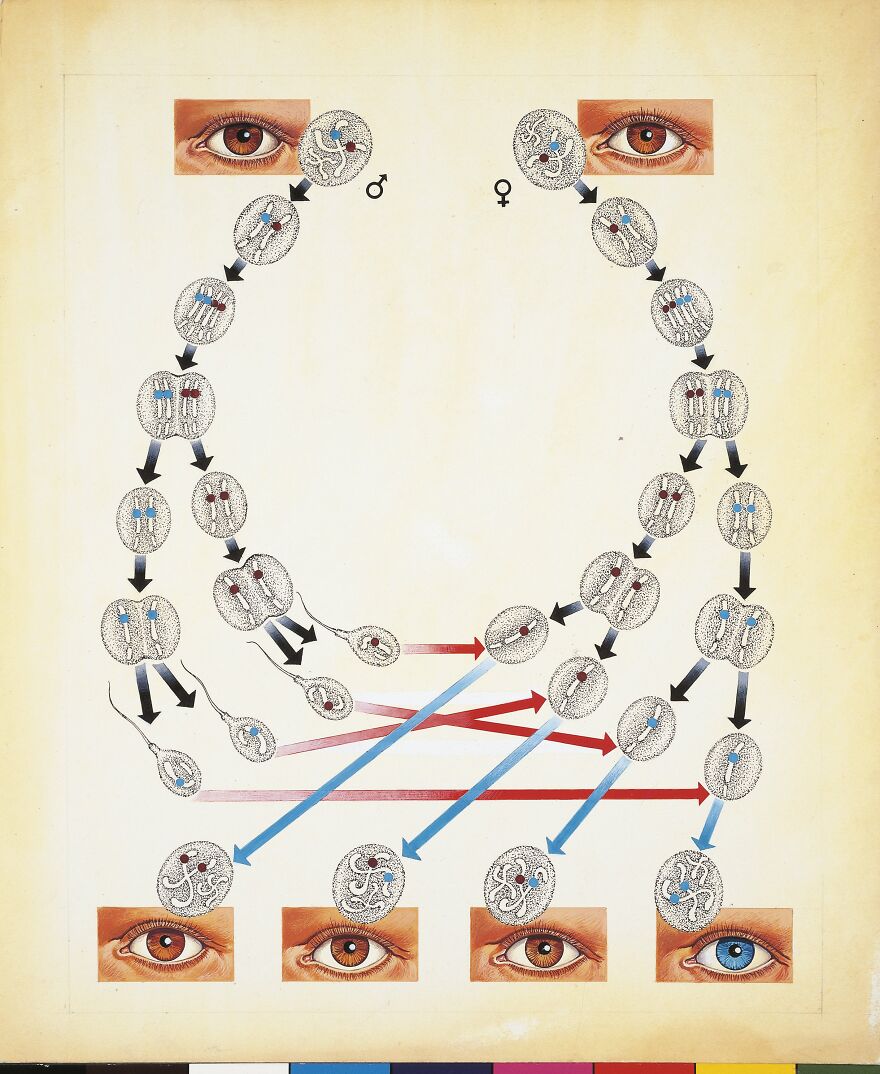
    After seeing just how few people have green eyes worldwide, the obvious question is why. Eye color is largely genetic, but it is also one of those traits where family patterns can surprise you. MedlinePlus notes that a person’s eye color comes from how much pigment is present in the iris, and that genetic variation can still lead to unexpected results even within the same family.

    When researchers zoom in on the DNA, one region keeps coming up. A Journal of Human Genetics review explains that human eye color is “mostly attributed” to two adjacent genes on chromosome 15, OCA2 and HERC2, and that variation in or near HERC2 can affect OCA2 expression, which helps determine how much melanin ends up in the iris.

    In other words, these genes can affect eye color by dialing pigment production and distribution up or down, which is why lighter shades like green and hazel tend to show up when melanin is reduced rather than missing entirely.

    Image credits: DEA PICTURE LIBRARY / Getty Image

    ADVERTISEMENT

    A review in the International Journal of Molecular Sciences highlights one especially famous marker in that same neighborhood: rs12913832, a variant located in an intron of HERC2, calling it the “most significant genetic influence” on eye color pigmentation. That is a big reason the HERC2–OCA2 area is often treated as the main “control hub” for the spectrum of common eye colors, including intermediate shades.

    Green also seems to sit in the messy middle, genetically and visually. Another Journal of Human Genetics study reports gene–gene interactions involving HERC2 that affect hazel, and it presents evidence for interactions that play into green eye color determination as well.

    On the biology side, the American Academy of Ophthalmology explains that eye color comes from the amount and distribution of melanin in the iris, and that green eyes are influenced not only by melanin levels but also by how light scatters in the eye.

    Put simply, brown eyes sit at the high end of iris pigment, blue eyes at the low end, and green or hazel shades often fall somewhere in between.

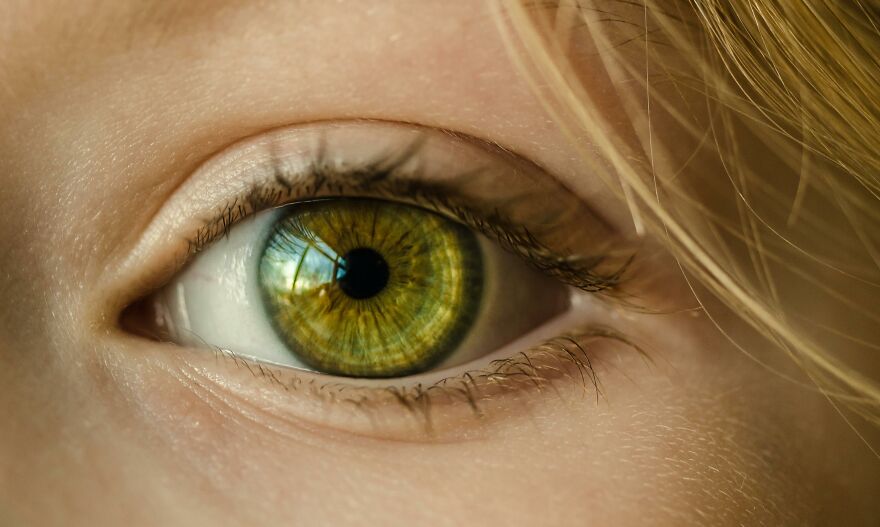
    Image credits: ClickerHappy / Pexels

    That “in between” status is also why the chances of having green eyes can feel like a roll of the dice. In an All About Vision breakdown, two brown-eyed parents are still given a 75% chance of a brown-eyed baby, an 18.8% chance of green, and a 6.3% chance of blue.

    Two green-eyed parents are listed at 75% green and 25% blue, while mixed pairings like brown plus green are estimated at 50% brown, 37.5% green, and 12.5% blue, and blue plus green at 50% blue and 50% green.

    The same source stresses there is no guarantee, since these are approximations and eye color reflects multiple genes interacting with melanin levels over time.

    Are Green Eyes Recessive?

    Green eyes don’t follow a simple dominant-or-recessive pattern, and that’s exactly why they keep showing up unexpectedly in families. Eye color is controlled by multiple genes, not a single switch, which makes the old “dominant brown beats recessive blue” model too simplified to hold up.

    That said, green sits closer to the recessive end of the spectrum than brown does. Brown eyes result from high melanin in the iris and are often genetically dominant.

    Green and blue, which reflect lower melanin levels, are more likely to appear when both parents carry the relevant variants, but neither is guaranteed.

    As the probability breakdowns above show, green eyes appearing “out of nowhere” in a family isn’t a fluke; it’s the normal result of multiple genes interacting across generations.

    Where Green Eyes Are Mostly Found

    Green eyes are not evenly spread around the world. The World Population Review breakdown says they cluster most heavily in Northern Europe, naming Ireland and Scotland as the standout hotspots and claiming that more than 75% of people born with green eyes can be found in Ireland and Scotland.

    It also lists elevated shares across the broader Northern and Central European belt, including Iceland (14.15%), Denmark (20.45%), and the Netherlands (11.4%), which helps explain why green eyes can feel noticeably more “normal” in that part of the map.

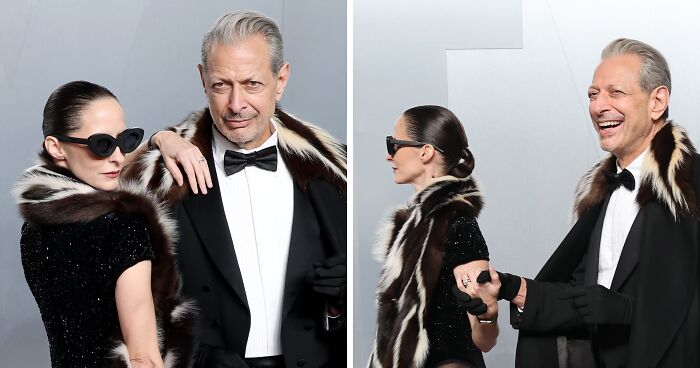
    Image credits: WWD / Getty Image

    That breakdown sources links this clustering to genetics and ancestry, noting that eye color is inherited and shaped by many genes.

    It also suggests green eyes are more common in Northern Europe because the relevant variants are more established in those regional populations.

    From there, it’s a fair inference that where these eye-color variants spread through family lines and population history, they’ll appear more often in regions shaped by shared ancestry and in places with large populations descended from those regions through migration.

    In other words, green eyes may read as “exotic” in regions where they’re uncommon, but in parts of Northern and Central Europe, they’re simply a statistically familiar trait rather than a rarity.

    Frequently Asked Questions

    Why is green eye color so rare?
    Green eyes require a specific combination: low-to-moderate melanin in the iris plus light scattering. Too much melanin results in hazel or brown; too little leads to blue. The genes responsible, primarily OCA2 and HERC2 on chromosome 15, must land in a precise range, occurring in only about 2% of the global population.
    What ethnicity mostly has green eyes?
    Green eyes are most concentrated in Northern and Central Europe, particularly Ireland, Scotland, and Scandinavia, according to World Population Review. Outside Europe, they appear at low rates in parts of the Middle East and North Africa due to ancestral overlap through ancient migration.
    Are green eyes a Viking trait?
    Loosely, yes, but the link is geographic. The largest-ever Viking DNA study published in Nature (2020) found that Danish Vikings typically had red hair with blue or green eyes. However, the study also showed that dark hair and eyes were far more common among Vikings than previously thought.
    What are the top 3 rarest eye colors?
    By global percentage: green (around 2%), gray (less than 1%), and red or violet, which appear almost exclusively in people with albinism, according to Medical News Today. Very dark brown eyes are sometimes listed separately but are technically an extreme of brown.

    Poll Question

    Total votes ·

    Thanks! Check out the results:

    Total votes ·
    Share on Facebook

    Explore more of these tags

    Ieva Bernotaite

    Ieva Bernotaite

    Writer, BoredPanda staff

    Read more »

    Hello, I’m Ieva, an SEO Content Writer at Bored Panda. I love turning well-researched ideas into engaging stories about pop culture, art, design, trends, and curiosities. I’m also pursuing an MA in Applied Art, which fuels my creative perspective.

    Read less »
    Ieva Bernotaite

    Ieva Bernotaite

    Writer, BoredPanda staff

    Hello, I’m Ieva, an SEO Content Writer at Bored Panda. I love turning well-researched ideas into engaging stories about pop culture, art, design, trends, and curiosities. I’m also pursuing an MA in Applied Art, which fuels my creative perspective.

    Emma A. Smith

    Emma A. Smith

    Writer, Entertainment Writer

    Read more »

    This lazy panda forgot to write something about itself.

    Read less »

    Emma A. Smith

    Emma A. Smith

    Writer, Entertainment Writer

    This lazy panda forgot to write something about itself.

    What do you think ?
    Julie S
    Community Member
    Premium
    1 hour ago (edited) Created by potrace 1.15, written by Peter Selinger 2001-2017

    I have green eyes and my mum, dad and brother all have brown.

    Shingo Murata
    Community Member
    1 hour ago Created by potrace 1.15, written by Peter Selinger 2001-2017

    2%. so "only" 200 Million people in the world...

    Michayla Jahn
    Community Member
    1 hour ago (edited) Created by potrace 1.15, written by Peter Selinger 2001-2017

    Everybody can earn 250$h+ 1k$ daily... You can earn from $6000-$13600 a month or even more if you work as a full time job...It's easy, just follow instructions on this page, read it carefully from start to finish..... It's a flexible job but a good earning opportunity. Go to this site home tab for more detail thank you .  Join This Right Now ____________­ F­i­n­d­J­o­b­s­1­.­S­i­t­e

    Load More Replies...
    Julie S
    Community Member
    Premium
    1 hour ago (edited) Created by potrace 1.15, written by Peter Selinger 2001-2017

    I have green eyes and my mum, dad and brother all have brown.

    Shingo Murata
    Community Member
    1 hour ago Created by potrace 1.15, written by Peter Selinger 2001-2017

    2%. so "only" 200 Million people in the world...

    Michayla Jahn
    Community Member
    1 hour ago (edited) Created by potrace 1.15, written by Peter Selinger 2001-2017

    Everybody can earn 250$h+ 1k$ daily... You can earn from $6000-$13600 a month or even more if you work as a full time job...It's easy, just follow instructions on this page, read it carefully from start to finish..... It's a flexible job but a good earning opportunity. Go to this site home tab for more detail thank you .  Join This Right Now ____________­ F­i­n­d­J­o­b­s­1­.­S­i­t­e

    Load More Replies...

    Related on Bored Panda
    Popular on Bored Panda
    Trending on Bored Panda
    Also on Bored Panda
    ADVERTISEMENT