Get Premium
Dark mode theme is available exclusively for premium users. Learn more about the benefits of subscribing.
No fees, cancel anytime.

 Dark Mode Ad-Free Browsing Unlimited Content
 Ad-Free Browsing Unlimited Content Dark Mode
Join 1.2 million Panda readers who get the best art, memes, and fun stories every week!
Hanukkah may come once a year, but the dreidel game is a classic you can learn (or revisit) anytime.
Google Dreidel is a simple online dreidel spinner that recreates the familiar “spin and see what you get” moment, no physical dreidel required.
It’s also part of Google’s long-running tradition of playful Easter eggs and interactive experiences built into Search.
Whether you’re curious about how dreidel works, need a quick activity for a classroom or family night, or just want to bookmark something handy for next Hanukkah, this digital version makes it easy to jump in within seconds.
Google Dreidel is a simple online dreidel spinner inspired by the traditional Hanukkah game. It’s a quick way to try the dreidel experience on a phone or laptop, whether you’re learning the rules, playing virtually with friends, or saving it to use during Hanukkah.
To launch it, search for “Spin a Dreidel” or “Google Dreidel” and you’ll see a 3D dreidel with a Spin button. Tap Spin and the dreidel lands on one of four Hebrew letters: Nun, Gimel, Hei, or Shin, which correspond to the standard rules of the game.
It’s an efficient way to allow those who want to participate in Hanukkah traditions to do so virtually or on the go.
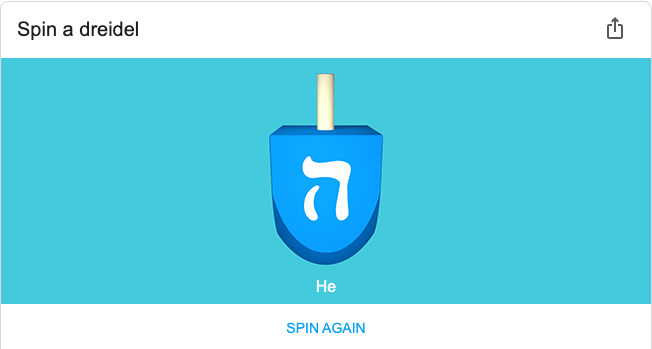
Image credits: Google
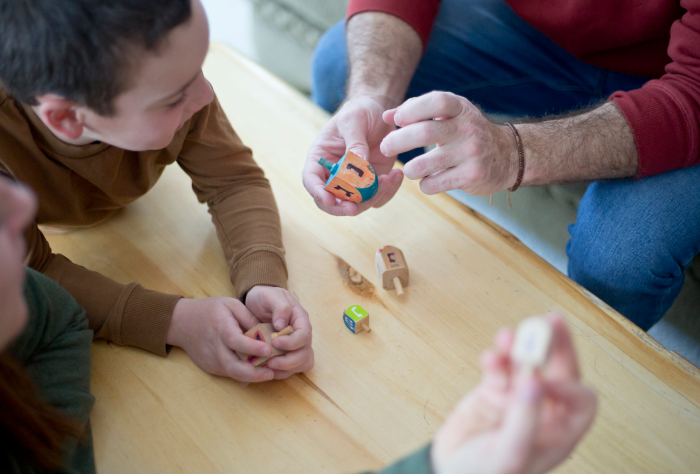
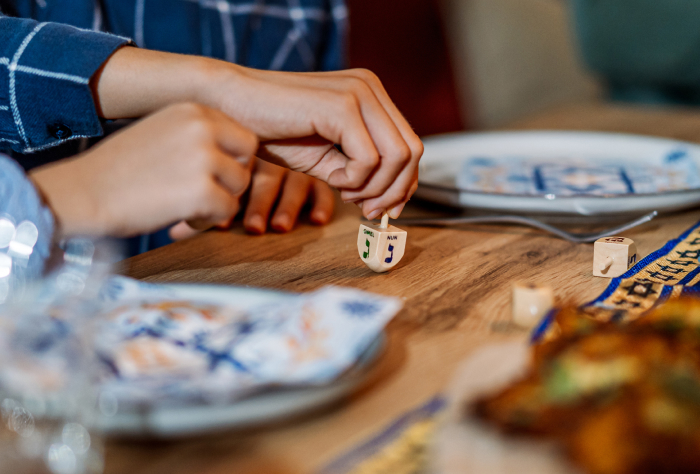
Whether playing virtually or in real life, it’s essential to know the rules of dreidel to fully engage in the festive spirit. It all starts with obtaining a dreidel, which is a spinning top with one of four Hebrew letters on each side.
The players then fill the pot with about 10-15 game pieces. In a traditional game of dreidel, everyone starts by filling the pot with Hanukkah gelt (aka chocolate coins), candies, nuts, chocolate chips, raisins, matchsticks, or coins — if your family is really hardcore.
Each of the letters on the four-sided spinning dreidel represents a different instruction. These entail:
Every player takes turns spinning the dreidel, usually starting with the youngest player. The game continues clockwise, following the rules.
Image credits: skynesher / Getty Images
If the pot becomes empty or has only one game piece left, each player adds another piece to the pot before the game continues. If a player has no game pieces left, they are either out or may ask a fellow player for a “loan.”
The dreidel game ends when one player has acquired all the game pieces. That player is declared the victor of the round.
The great thing about this game is that you can play multiple rounds, so different players can win. It’s also incredibly fun when played in large groups, because the goodies in the pot multiply that much faster.
Since there’s no competitive edge and the game is based on pure luck, it’s the perfect game to enjoy with friends and family during Hanukkah season (via My Jewish Learning).
Image credits: Anchiy / Getty Images
While Google has solved the challenge of procuring a digital dreidel, the key component of the game, managing the gelt in the pot, can still be a bit of a hurdle. However, it isn’t a dealbreaker, since there are many creative ways to seamlessly swap the stash in the pot for digital gelt to play a virtual game of dreidel.
One of the best ways to settle the gelt dilemma on FaceTime or Zoom is for each player to pile up chocolate gelt or pennies at their own desk. Participants can collectively choose a starting number, and players claim their virtual game pieces based on the spin’s outcome, while everyone else moves their pieces to a lost pile.
Players can even get creative and assign funny penalties to those who spin a Shin.
If you’re playing with kids, you can keep it simple with chocolate coins or points instead of real money.
For adults who want a playful twist, you can set a small Venmo “pot” (for example, $0.25 or $1 per piece). When someone lands on Shin, they add to the pot. At the end of the game, the winner receives the total via Venmo.
Image credits: Nathan Bilow / Getty Images
The four letters on the dreidel are commonly read as an acronym for “Nes Gadol Hayah Sham” – “a great miracle happened there”. They point back to the Hanukkah story, including the rededication of the Temple and the tradition of lighting the menorah for eight nights. (via My Jewish Learning).
Image credits: LordHenriVoton / Getty Images
Believe it or not, the dreidel game is not limited to Jewish culture and Hanukkah. It was originally played by people across a wide variety of cultures and regions for centuries.
The game was frequently played in England and Ireland during Christmas, where it was called totum or teetotum. The name comes from the Latin word totum, meaning “all,” and was first mentioned between 1500 and 1520.
By the year 1720, the game was known as T- totum or teetotum, and eventually by 1801, the four letters came to represent four specific words in English: T for take all, H for half, P for put down, and N for nothing. The Eastern European game of dreidel was actually derived from the German equivalent of this totum game.
In the German version, the letters stood for Nichts (nothing), Ganz (all), Halb (half), and Stell ein (put in). The spinning top in the German version was called a torrel or trundl, while in Yiddish it was called a dreidel or a fargl.
Eventually, when Hebrew was revived as a spoken language, the dreidel was given a new name: the sevivon (via My Jewish Learning).

By entering your email and clicking Subscribe, you're agreeing to let us send you customized marketing messages about us and our advertising partners. You are also agreeing to our Privacy Policy.
Thank you! You've successfully subscribed to newsletters!


































 No fees, cancel anytime









27
1