Get Premium
Dark mode theme is available exclusively for premium users. Learn more about the benefits of subscribing.
No fees, cancel anytime.

 Dark Mode Ad-Free Browsing Unlimited Content
 Ad-Free Browsing Unlimited Content Dark Mode
Join 1.2 million Panda readers who get the best art, memes, and fun stories every week!
26submissions
1week left

History is the study of the past, but as we all know, not everyone remembers stories the same way. Accounts aren’t always documented accurately, and over time, tales can be exaggerated or changed through word of mouth and desires to make them sound more exciting or palatable. Governments can tweak history to place their own nations on the “right side” of it, and readers are prone to believing everything that’s written in a history book.
Unfortunately, however, you can’t always trust the fun facts and stories you’ve been taught about the past. Sometimes, historical fallacies spread even more rapidly than the truth. One curious Reddit user started a conversation earlier this week about untrue parts of history that are widely considered to be facts, and many readers chimed in to dispel these rumors that you might have been taught as well.
Keep reading to also find an interview with Susan and Beckett, co-hosts of The History Chicks podcast, and be sure to upvote the responses that you would have appreciated hearing in history class. Then, if you’re interested in reading a Bored Panda article featuring fallacies that are widely believed, look no further than right here!
Click here & follow us for more lists, facts, and stories.
This post may include affiliate links.
The idea that Vikings (Early Medieval Norsemen) were dirty barbarians with shaggy hair and wild beards, who wore leathers and furs. In reality, Vikings were notorious for being very clean by medieval standards (bathing every day and washing their hair). They wore shoulder length, very well combed hair, which they sometimes lightly bleached with potash to accentuate the blond. They wore short, very neat beards and carefully trimmed stache. Later on in the Viking Age, some wore undercut/crewcut kind of a trim, but with longer bangs. Instead of leathers, which they almost NEVER wore, they had woolen clothes in bright colours; with blues and pinks being particularily popular. They almost never wore actual fur, they sold it all, and instead wore "fake fur" made of pulled wool (basically fur rug trims). Instead of crusty savages, they were fabulous, clean and neatly fashionable, to the point that the Church chronicles of England note tht this excessive dandiness was dangerous in itself, because it helped them lead Christian women astray. (Still of course, they were quite often murderers, slavers, thieves and raiders. Just FABULOUS ones.)
To learn more about some of the commonly spread historical myths, we reached out to two history buffs: Susan and Beckett, co-hosts of The History Chicks podcast, which shines a light on some of the most fascinating women in history. First, we wanted to hear what inspired these ladies to start The History Chicks and what they love most about studying history. "We launched the show in 2011 after Beckett realized there were not only no podcasts on a subject she wanted to learn about (Gilded Age Heiresses), but there were none about Women's History in general," the co-hosts told Bored Panda. "Uttering, 'How hard could it be?' she contacted Susan. 12 years later, we laugh because we knew the answer to her question was, 'Pretty darn hard, starting with a nearly vertical learning curve'."
"Our favorite part of studying history is discovering the interconnectivity of it all," Susan and Beckett shared. "That people in history aren't all that different from us, they just lived in different times and those times (and people) connect all the way through to modern-day in the most interesting ways."
 The Lady who sued McDonalds didn't do so frivolously. She received third degree burns from how hot that coffee was, and needed a skin graft. It was quickly found that that location was keeping the coffee well above the temperature you can legally serve a hot drink in a cup at. The fact that most people think this suit was over the temperature of the coffee, and not the debilitating burns that woman recieved, is one of the PR worlds greatest triumphs. You are not immune to propaganda.
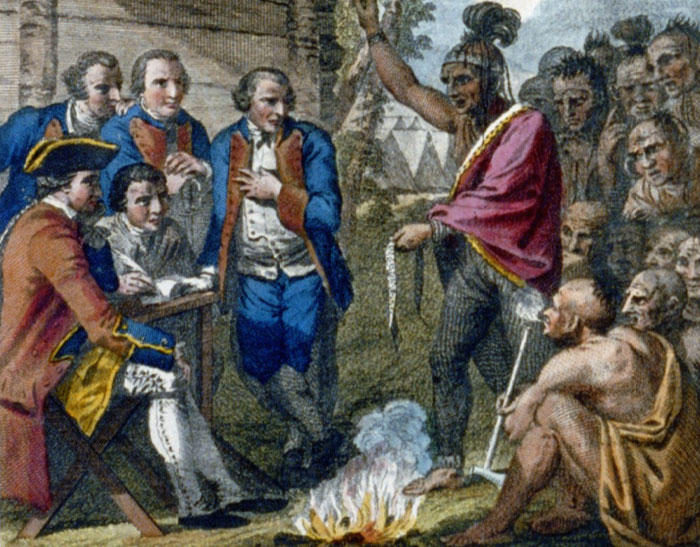 That when Europeans first arrived on the East Coast of what is now the US, the land was very sparsely populated and so there was a lot of free land to settle. (At least that's what I've been taught in school.) In reality it turns out the coast was densely populated with Native settlements, to the point where Europeans couldn't even disembark because the Natives wouldn't allow them - they would keep them at the bay just to trade and then force them to turn back. It wasn't until European diseases spread through the continent that 95% of the indigenous population died, and that's when the first colonies began in the US, so that's why we now have the misconception of there always having been lots of open land. In general there are tons of misconceptions about Native Americans and colonial history. I recommend the book 1491 by Charles C. Mann which clears up a lot of these misconceptions (it's where I got the above information from as well.)
We also asked Susan and Beckett if they could share some of the most widely spread fallacies that they were taught or have heard. "For starters people who did Big Things, usually didn't do them alone," they noted. "Paul Revere, for example, wasn't the only one traveling with a message that night (and he didn't shout 'the British are coming' because people would have just thought he was coming from a pub since everyone in the Colonies was British.)"
"Sybil Ludington did a similar ride in Connecticut, truly alone, all on a horse, and remained uncaptured, and she was only a teenager at the time," Susan and Beckett told Bored Panda. "It's a way cooler story, but history often only remembers the people with the sizzle, or the louder mouths or, like in Paul's case, their names rhyme with enough words for Henry Wadsworth Longfellow to write a poem about him nearly 100 years after the fact."
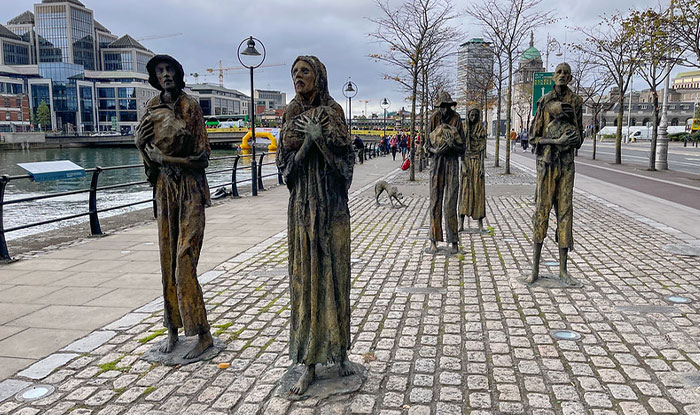 The Irish famine wasn’t just a natural disaster - there was plenty of food in Ireland, it was just exported to Britain
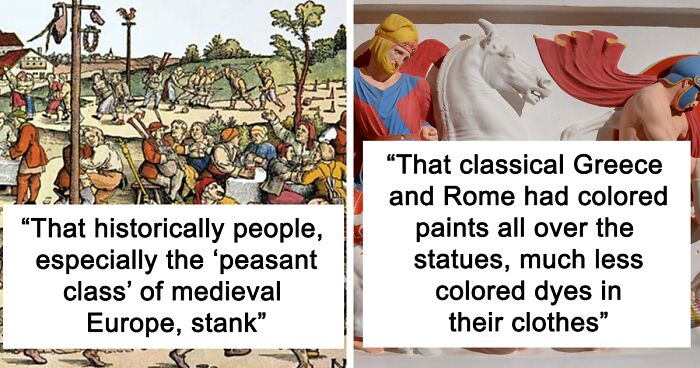
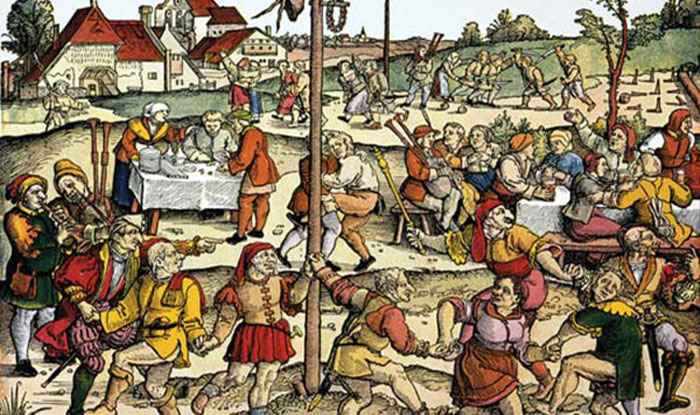 That historically people, especially the 'peasant class' of medieval Europe, stank. This is born of two factoids: firstly that people very rarely if ever had baths, and secondly that people rarely if ever washed their clothes. Both are kind of true but misleading and with massive caveats. First, bathing. Think of the amount of work involved in preparing a bath in the days before hot running water. You go to the well, get a bucket of water, lug it back across the village to your house, put it in a pan over the fire to heat it up. That's one bucket. You'd have to do that half a dozen times at least. Even if you've got servants to do all the actual work, it would take a lot of servants a lot of time to get you a bath ready. But that doesn't mean people didn't wash! Most people washed daily - using a basin of water and a cloth, basically a sponge bath. Soap made of animal fat and ash has been around for thousands of years and is pretty effective at lifting dirt off the skin. As any one of us who's had to sponge bathe for a while (e.g. After a surgery) will know, it may not be ideal, but it gets the job done. Films generally portray "peasant" with smudges of dirt all over the face but that's just lazy costuming. And now the clothes. True, the outer layers - the layers that we see - were very rarely washed becausd most people only owned one set and they could be very difficult to wash effectively, but you have to remember people, even peasants, wore a *lot* of layers, so that the layer we see was really the equivalent of a coat, and was never really against the wearer's skin gathering sweat. How often do you wash your outer coat? For people in roles where external dirt was very likely to get onto the clothes, aprons and other easily removable garments were used. The layers worn right against the skin - a full dress-like smock for women and a long shirt for men (long enough to tuck around the [private parts] and b**t and also do the job of underpants) - *were* changed and washed as often as possible, because they were the layers that got the body sweat etc on them. They were made more simply and usually of cheap, hardy fabrics specifically designed for easy laundering. Tl;dr medieval peasant were not filthy and stinking. They washed their clothes and bodies as best they could.
"Sometimes embellished (or truly fake) stories are remembered because they are convenient or romantic, and telling them sweetly and simply allows people to accept the behavior," the co-hosts explained. "It makes the story less messy, and also, less true, like the story of Pocahontas. There was no romance with John Smith. He was a scoundrel, for starters, and she was a kid when their paths crossed. She also was later kidnapped by the British, forced to change her identity, ignore her Powhatan heritage, and marry a white man, but those facts are often omitted."
"Sometimes propaganda justifies mistreatment," Susan and Beckett pointed out. "By making someone sound of worse character than they actually were, it lets us think, 'They deserved what they had coming.' Dismissing them with a catchy, oft-repeated, and fabricated phrase like, 'Let them eat cake,' which Marie Antoinette never said, is very effective in reshaping history to fit a purpose."
A women's place has always been in the home. For thousands of years women did basically whatever her husband did whether that be farming, baking, brewing alcohol, sewing clothes, or selling things in the market, sometimes the man would take the stuff to the market while the woman stayed on the farm to tend to the animals or crops and vise versa. The only professions women did not take part in were, law, politics, and military work, and even this was only kind of true as women influenced their husbands politics, and were expected to help during sieges (which happened a lot.) The idea that a women's place is taking care of the house and not working is a 19th century idea that came about after the industrial revolution.
So why is it important to learn history accurately? "It's important so that we don't perpetuate half-truths, misconceptions, and downright lies," the History Chicks told Bored Panda. "To understand history, we have to see the whole story, not just the soundbites of history. If we just repeat an oversimplified version lacking perspective and context, we only think we know the whole story, but we're not even close. And here's a riddle: Can history repeat itself if the history we're repeating is wrong and incomplete?"
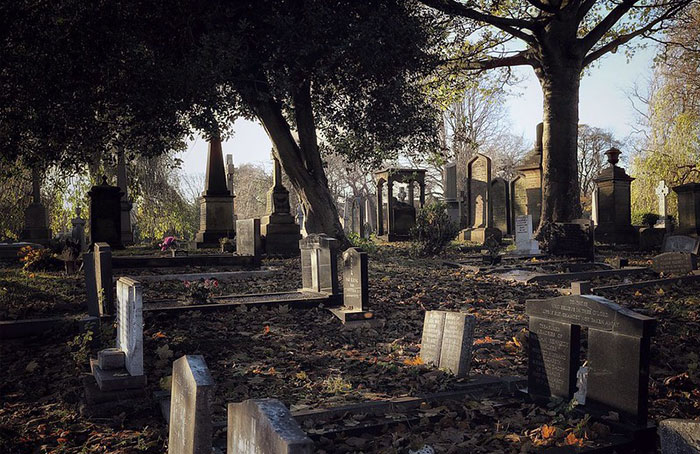 So many people completely misunderstond pre-industrial lifespans. The average age of death was 30 not because our bodies wore out faster, but because of how averages are calculated. A lot of people died as children. A much larger chunk of the population died in wars. If you got in an accident, healingb without modern medicine was difficult. But for people who reached adulthood, and then avoided violence, injury, and plague, living to be 60 or 70 was pretty normal.
 Einstein never failed math, the rumor started from Ripley’s Believe It Or Not and Einstein actually responded to them saying “I never failed in mathematics. Before I was 15 I had mastered differential and integral calculus.” He wasn’t very good at the non-science related classes though and did fail French.
And if you're looking to further your history studies and correct any false tales you've been taught, Susan and Beckett say that, "The greatest resource available to anyone is a library card. It gives you access to passionate advocates for knowledge (commonly known as 'librarians') and to apps like, Libby, which are packed with digital resources you can access from any place you have an internet connection."
"We think a great place to start learning history is small: with one person," the co-hosts shared. "Learn about that person, and you will understand their times, their limitations, their societal challenges, their geography... Their world. Learning about that world will always lead you to another."
If you'd like to learn stories about some of the world's most fascinating women (who you might have never even heard of!), be sure to check out Susan and Beckett's podcast The History Chicks right here.
 Ninjas dressed in all black to stay stealthy in the night or something like that. Ninjas dressed like normal people to blend in, the all black look stemmed from Japanese theatre to make it more obvious to the audience who the ninjas were. If they wore all black it'd be quite obvious and they'd stick out like a sore thumb EDIT: most of you pointed out it also came from stagehands, that makes a lot of sense too
 A stegosaurus fighting a t rex. They lived millions of years apart . Stegosaurus 144 lived million years ago T rex 65 million years ago. Insane difference. Still almost most every dinosaur related media places them together.
Corsets were not typically tight laced. They were only tight laced by the highly fashionable women, and usually only for particular events or portraits. Corsets were designed to be comfortable. Women wore a cotton layer underneath the corset, so it didn't rub against the skin. The corset was more like a bra, bit instead of using the shoulders to support it used the whole torso. Some people claim they are much more comfortable than modern bras. The intense proportions of the past were achieved with Corsets AND padding. Tight lacing was uncommon, but layers of petticoats or hoops or [b**t] rolls or whatever else at the time was very common to give women the trendy body shape at the time.
That everything in Australia is trying to [end] you. Everything here CAN [end] you, but most likely won’t because killing you is an awful lot of effort and aussies are generally just too laid back to put in that much effort.
That the past was some idyllic wholesome time. Any nostalgia really. I grew up in the 80s and loved it. I have happy memories of my youth. And like many would love to go back to those days. But I also am very cognizant of how memory is vastly unreliable and inaccurate. And that we romanticize and cleanse our nostalgic recollections. And in many many cases, fabricate memories that never even occurred.
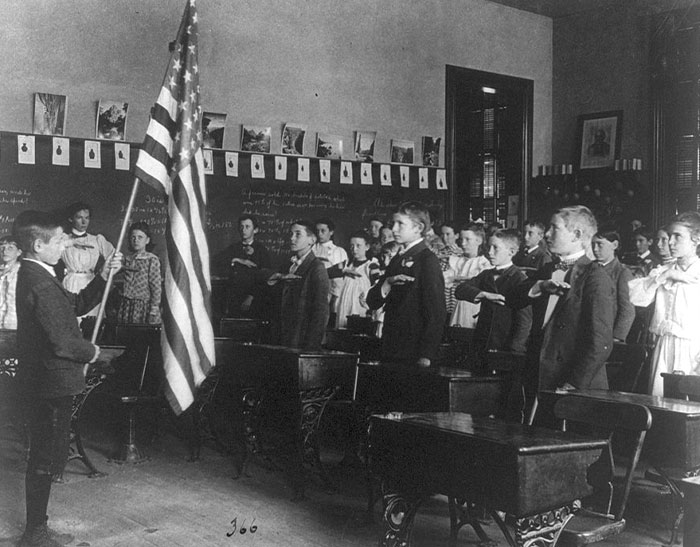 “Under God” was not in the original version of the [Pledge of Allegiance.](https://www.ushistory.org/documents/pledge.htm). The Pledge was written in 1892. It wasn’t until 1954 that President Eisenhower added “under God” in response to fear of communism during WW2. Also - when first implemented, during the pledge people raised their right arm forward so the hand was level with their eyes (directed at the flag) however this was changed during WW2 because it resembled the N**i salute. The procedure was changed to place the right hand over the heart.
 Carrots are good for eye health, but won't improve your eyesight. Nevertheless, people have been telling me all my life I should eat carrots to see better. The reason people think that is during WW2 the Royal Air Force had this new Radar system and they didn't want the Germans to know about it, so they spread the rumor that the reason their pilots could find their planes so fast was that they ate carrots.
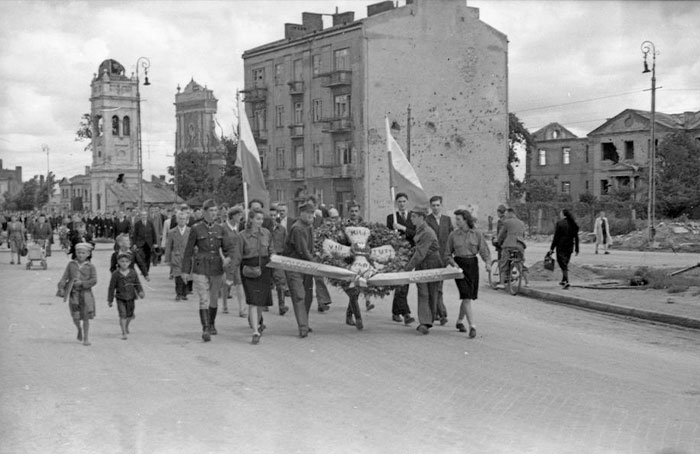 Not sure if quite at the level you're asking for, but it seems to be common knowledge that people didn't fight back against Germans in WW2 and it's because they didn't have guns or were cowards. They fought back a lot. The largest was likely https://en.m.wikipedia.org/wiki/Warsaw_Uprising. It just turns out that normal people fighting against a military tend to do poorly.
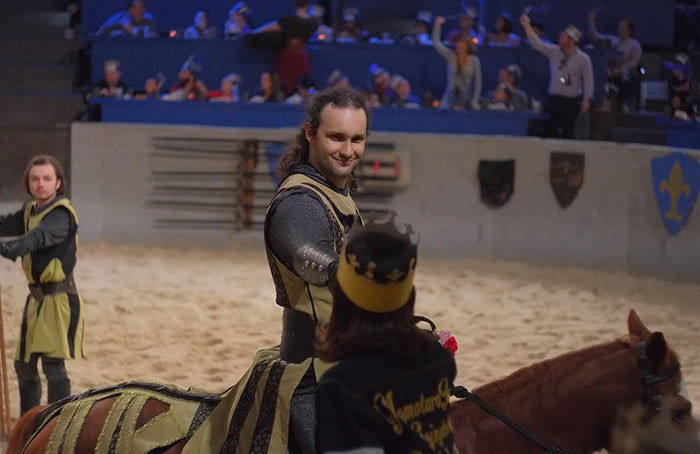 Almost everything about the medieval times. Our image of it is highly influenced by Hollywood.
Pretty much most of the common public image of the "stone age". Paleolithic peoples didn't primarily live in caves. They were used for habitation sometimes, but tents or even relatively permanent huts were probably far more common. "Art caves" like those found in France and Spain often show no signs of habitation at all. They weren't stupid, brutish "ape people". Anatomically modern humans emerged at least ~~70-100k~~ 200k years ago (thanks to several comments who pointed out my mistake) and there's nothing to suggest they would have been intellectually inferior to us. Even Neanderthals probably were relatively close to us and it's questionable if you'd even realize it wasn't a [intimate] sapiens if you met one. H. sapeins *definitely* and Neanderthals probably wore ornaments of various kinds. *Even* H. erectus likely was broadly human in appearance and behaviour. You have to go back in time a *long* way before you'd consider early hominids more animal than human. Generally, even imagining "*the* Stone Age" as some sort of coherent period of human history is misleading. It's a periodisation based on materials used. Even though there is sometimes a remarkable cultural uniformity over long periods of time and large distances in Stone Age Europe, even single "cultures" span many thousands of years. World views and even life styles must have changed many times even during periods we now consider "uniform". In fact, even the name "Stone Age" is misleading. A lot of tools were made from flint or similar material, if available, but that's just the material that preserves the best. Wood, bone, clay, plant fibres, furs, etc. were also used, they just usually didn't survive long enough for us to find. It's likely that South East Asian pre-metallic cultures even used bamboo in a similar way flint and bone was used in Europe.
That George Washington had wooden teeth. He had false teeth, yes. But they were made of ivory. He never had wooden teeth.
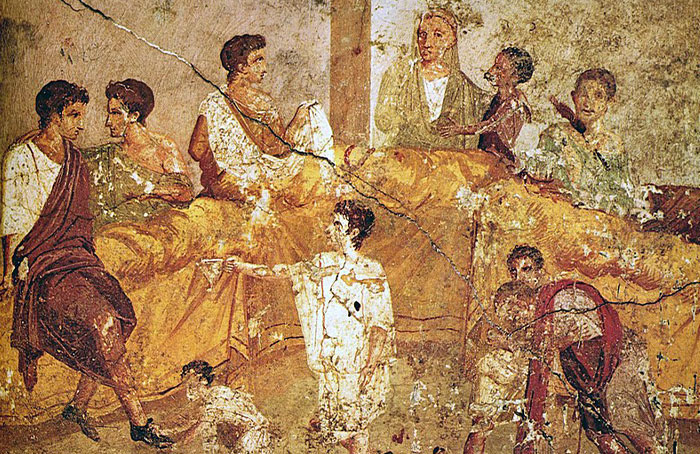 "Romans indulged in food so much they had a special place to go and vomit so they could eat more" Maybe that has been dispelled by now but many still believe it.






















 No fees, cancel anytime