Get Premium
Dark mode theme is available exclusively for premium users. Learn more about the benefits of subscribing.
No fees, cancel anytime.

 Dark Mode Ad-Free Browsing Unlimited Content
 Ad-Free Browsing Unlimited Content Dark Mode
Join 1.2 million Panda readers who get the best art, memes, and fun stories every week!
We live on a pretty incredible planet, surrounded by beautiful nature everywhere we look. Yet despite seeing it every day, most of us probably know far less about the world around us than we think. There’s always something new to discover, no matter how much you’ve learned already.
So, we’ve rounded up some interesting facts shared by the Instagram page “Explaining The Wild.” From surprising animal habits to fascinating scientific findings, scroll down to read them and upvote your favorites.
This post may include affiliate links.
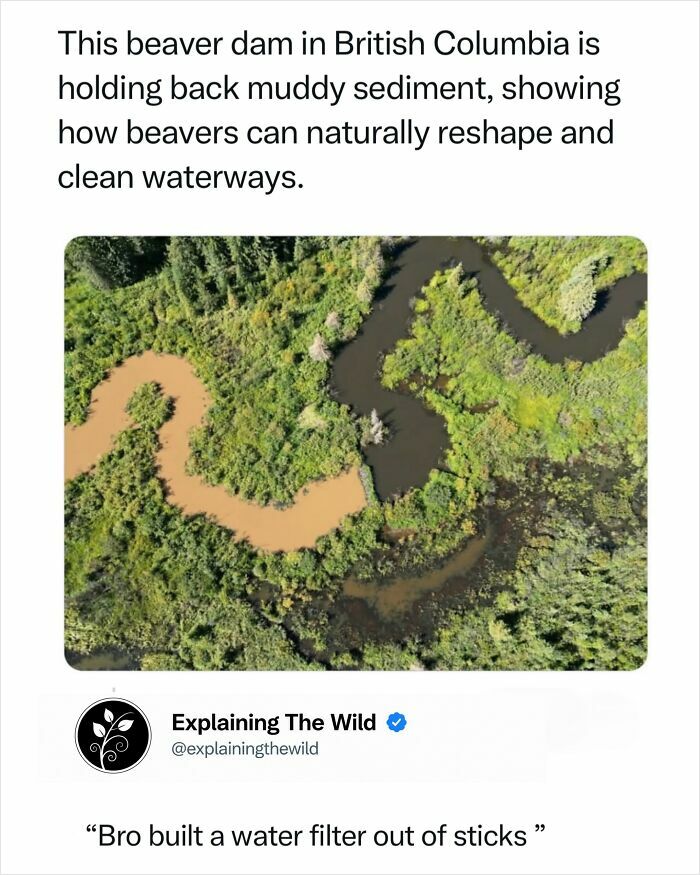
Beaver dams do much more than create ponds. They slow moving water, which gives mud, sediment, and other material a chance to settle instead of continuing downstream.
That can turn beavers into surprisingly effective ecosystem engineers. Their dams reshape waterways, create wetlands, and can help improve water quality ,all without a construction crew.
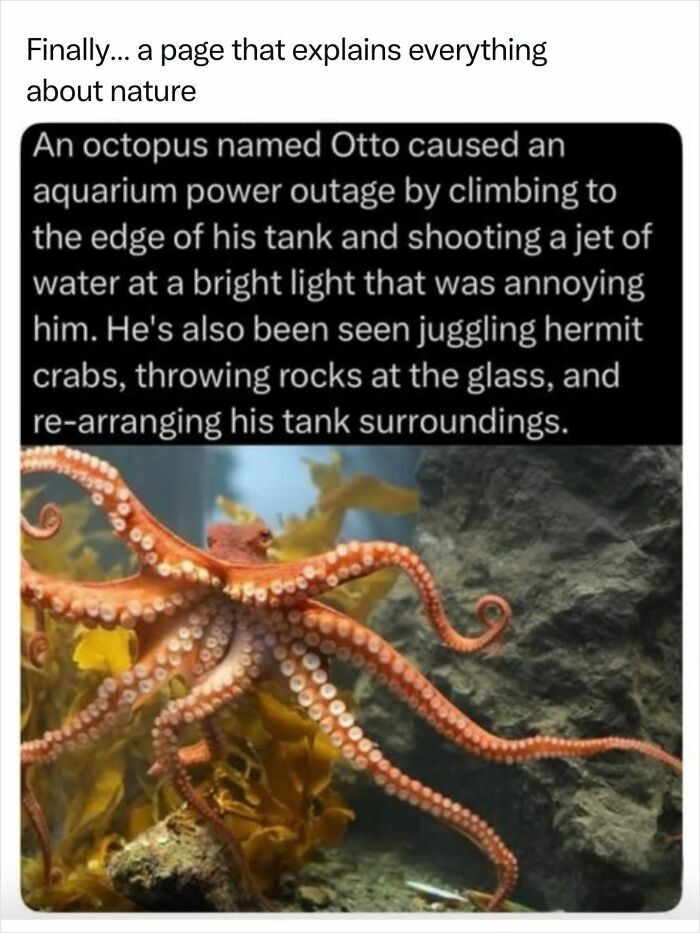
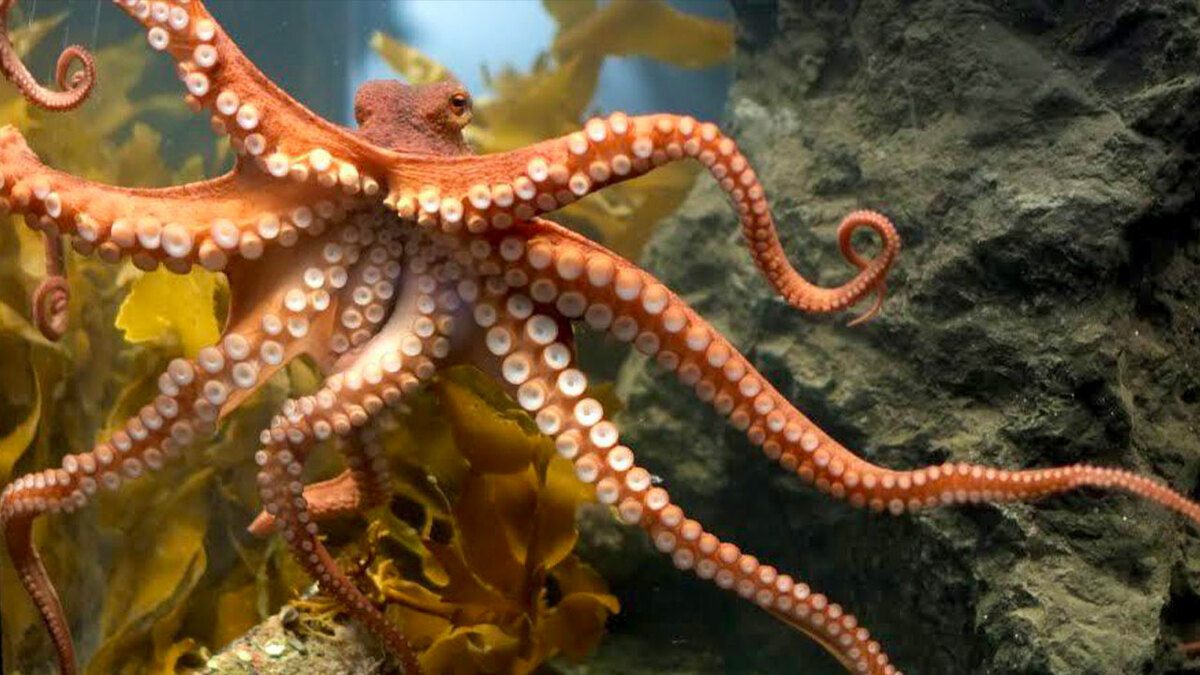
Otto the octopus proved that these cephalopods are far more than just deep sea residents. They are highly intelligent and easily bored. At the Sea Star Aquarium in Germany, Otto became frustrated by a bright overhead light that was disturbing his sleep. He climbed to the rim of his tank and accurately fired a jet of water at the bulb, causing a short circuit that plunged the entire building into darkness.
His mischievous streak did not stop at electrical sabotage. Staff members observed Otto performing impressive physical feats, such as juggling hermit crabs and throwing stones against the glass to get attention. He even took it upon himself to constantly renovate his environment by moving rocks and decorations around. This behavior highlights the complex problem-solving skills and distinct personalities that make octopuses some of the most fascinating creatures on Earth.
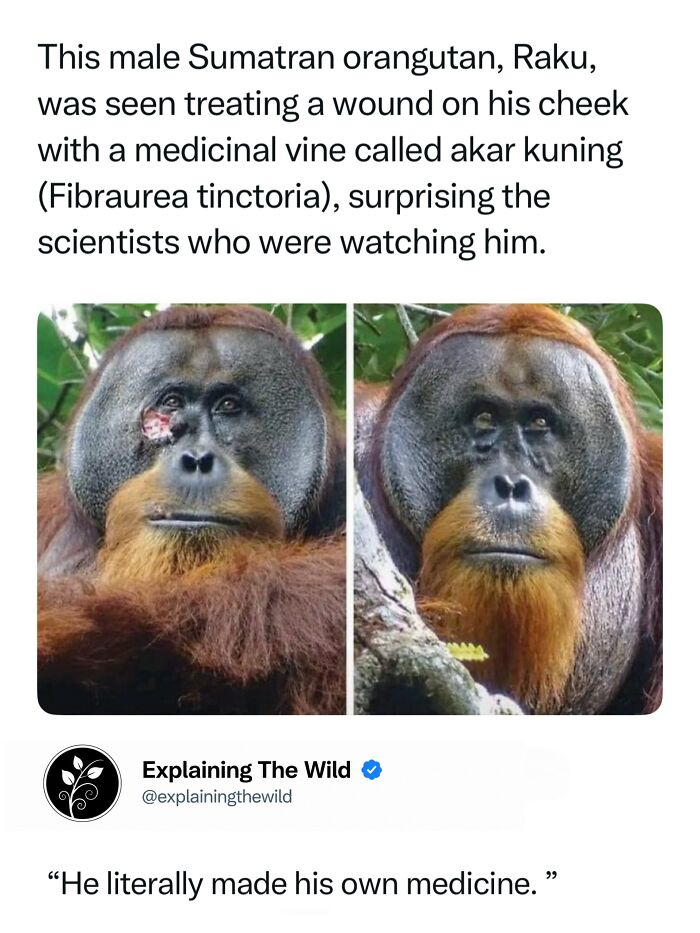
In 2022, researchers studying a wild Sumatran orangutan named Raku witnessed something never before documented in the wild. After suffering a facial wound, Raku chewed the leaves and stems of a climbing vine called akar kuning (Fibraurea tinctoria), then carefully applied the plant’s juices directly onto the injury. The plant is known for its antibacterial and anti-inflammatory properties and has long been used in traditional medicine.
Over the following days, Raku repeatedly treated the wound. It closed without becoming infected and healed completely within about a month. The observation is the first documented case of a wild great ape deliberately using a medicinal plant to treat an open wound, offering remarkable insight into the intelligence and behavior of our closest relatives.
As fascinating as nature is, our relationship with it has changed quite a lot over time. We can learn about animals from our phones and watch some of the most remote places on Earth from our sofas. Yet for many of us, actually spending time around nature has become something we have to make an effort to do.
And research suggests that this disconnect has been happening for a long time. In a 2025 study published in the journal Earth, University of Derby professor Miles Richardson used a computer model to look at how people’s connection with nature may have changed since 1800.
His model estimated a decline of around 60%. Interestingly, the use of nature-related words such as “river” and “blossom” in books also fell by roughly the same amount at its lowest point.
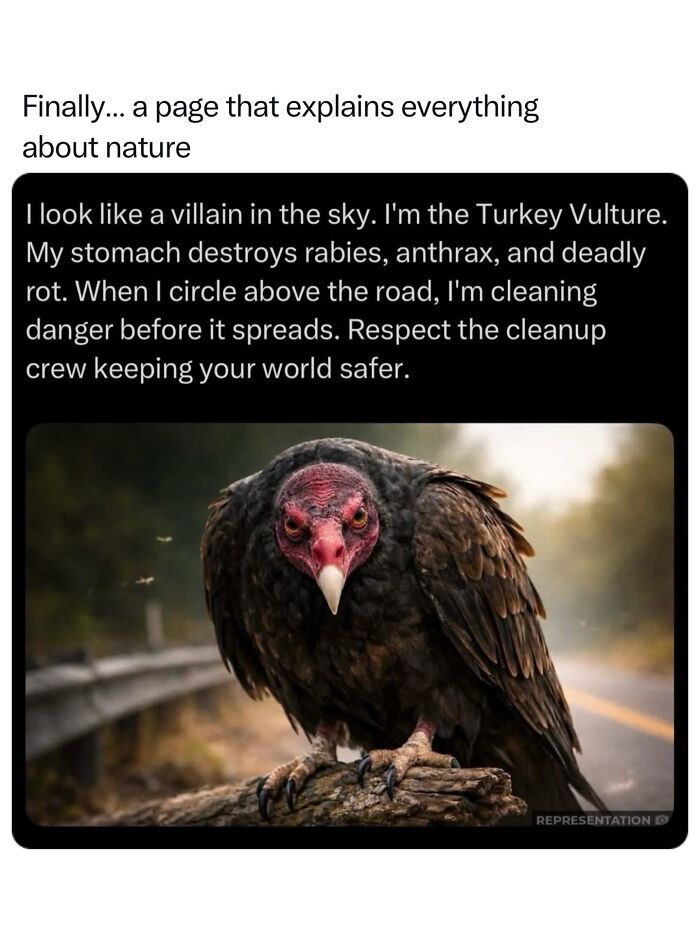
The Turkey Vulture is one of nature’s most sophisticated biological filtration systems, designed to “delete” deadly pathogens from the environment before they can trigger an outbreak. While their circling silhouette might look ominous, their internal engineering is a high-tech defense mechanism. A vulture’s stomach acid is nearly ten times more acidic than a human’s, sitting at a pH level close to zero. This extreme chemical environment is powerful enough to neutralize catastrophic diseases like anthrax, botulism, and rabies.
Beyond their internal “bio-reactors,” these birds utilize advanced sensory tech to locate their targets. Unlike most birds, Turkey Vultures have an incredibly acute sense of smell, powered by a massive olfactory bulb that can detect the molecular signature of decay from over a mile away. By consuming carcasses that would otherwise become breeding grounds for bacteria, they act as a natural “cleanup crew” that prevents the spread of infection. They are the essential maintenance workers of the sky, proving that even the most “villainous” looking creatures are vital to a healthy, functioning planet.
My son spotted one a couple of days ago, scavenging pigeon remains off of streetcar tracks here in downtown Toronto (near the Don Valley; like much of the local wildlife, populations tend to be focused on our many ravine ecosystems).
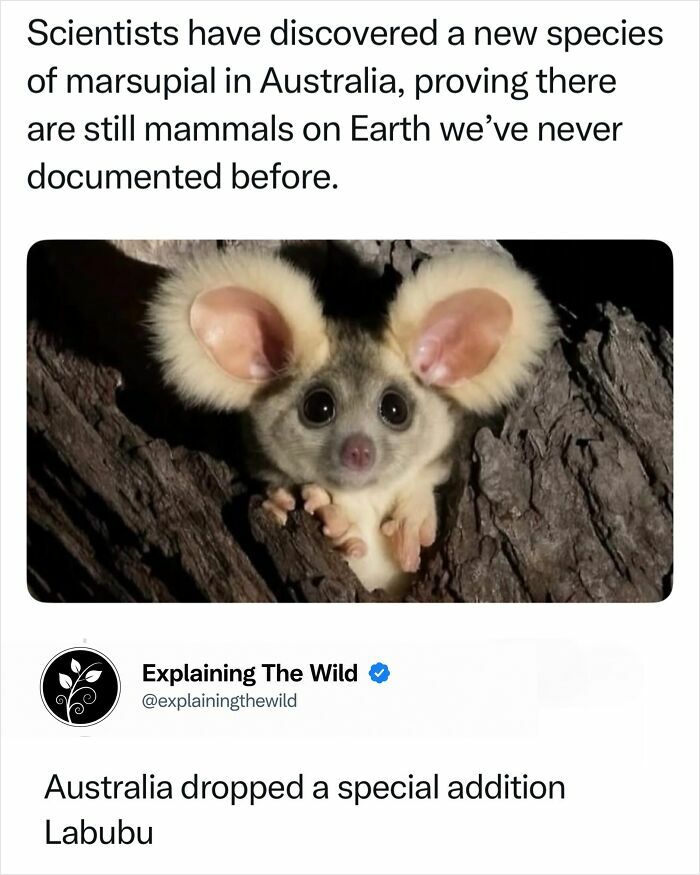
Researchers recently identified a new species of carnivorous marsupial in Australia, reminding us that even today, science is still discovering previously unknown mammals. Despite being one of the world’s most studied continents, Australia’s remote habitats continue to reveal species that have gone unnoticed for centuries.
New species aren’t always found because they’re newly evolved. Many have simply lived in isolated environments, hidden in plain sight until advances in genetics and field research reveal they’re different from their closest relatives. Every discovery helps scientists better understand biodiversity and protect species before they’re lost.
There's a new cat discovery as well in Bolivia as of today: The Tilcayo tiger cat, a small feline with a spotted, leopard-like coat, was identified in the mountainous Yungas region near the capital, La Paz.
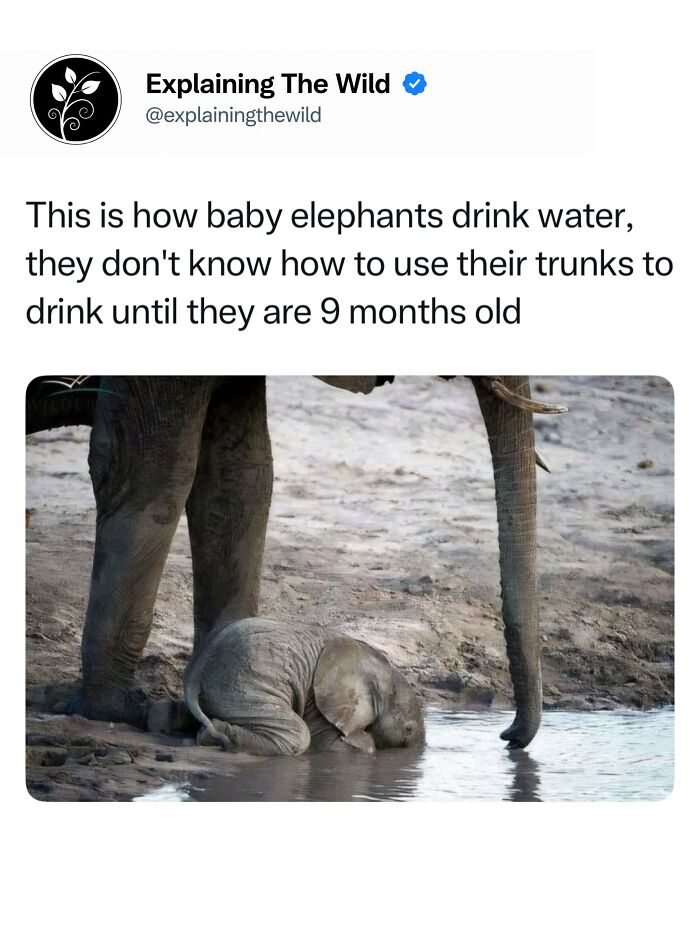
An elephant’s trunk contains around 40,000 muscles, but newborn calves aren’t born knowing how to control it. During their first several months of life, they often drink water directly with their mouths because coordinating such a complex organ takes time and practice.
As they grow, young elephants gradually learn to use their trunks for drinking, feeding, smelling, touching, and communicating. An adult elephant doesn’t drink through its trunk like a straw. Instead, it sucks water into the trunk and then sprays it into its mouth, a skill every calf has to master.
When you think about modern life, that probably isn’t too hard to believe. Plenty of us live in cities and spend most of the day indoors. We get around by car or public transport, then a lot of our free time ends up being spent looking at a screen.
Sure, some people are much more outdoorsy than others, but for many of us, going for a hike feels like an activity we specifically plan rather than a normal part of the day.
Even our relationship with food can feel pretty removed from nature. Most of us can walk into a supermarket and buy whatever we need without thinking much about how it grew or where it came from. Growing your own vegetables or spending an afternoon working in a garden isn’t part of everyone’s routine anymore.
Richardson’s research also points to the importance of parents passing their own interest in nature on to their children, meaning that this disconnect can continue from one generation to the next.
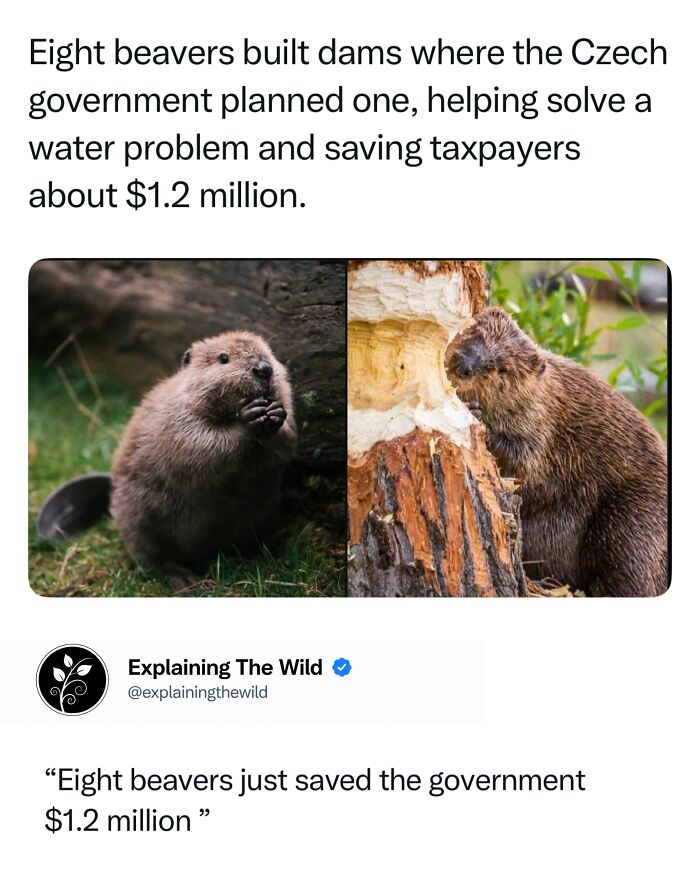
Officials in the Czech Republic had spent years planning a dam to help protect the Klabava River from sediment and acidic water. Before construction could begin, eight beavers built their own dams in the same area.
Their work created a larger wetland than the planned project and achieved many of the same environmental goals. The estimated savings were around $1.2 million — all thanks to some very busy beavers.
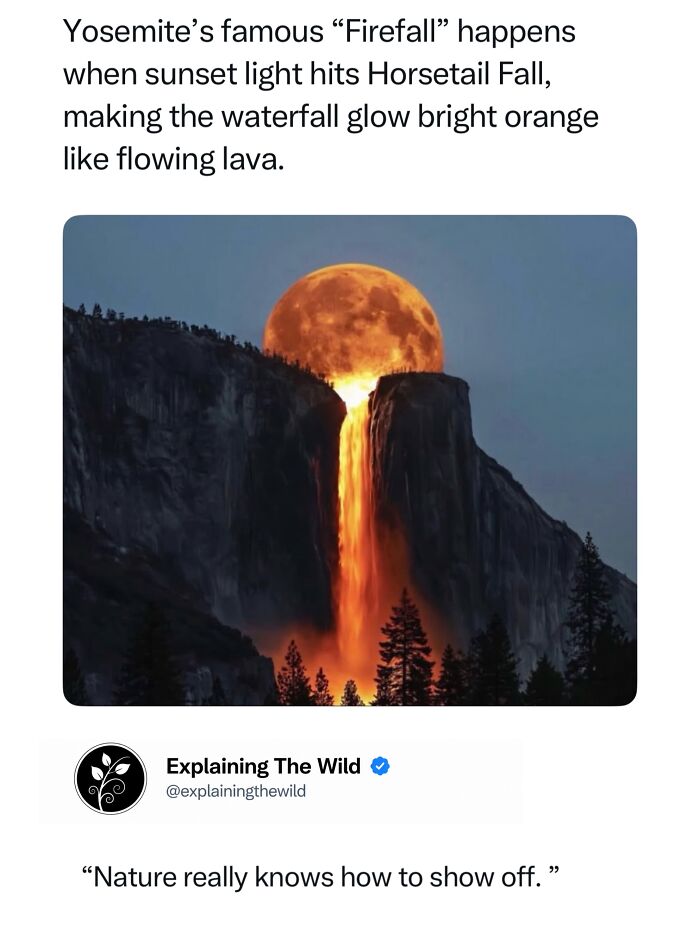
For a few weeks each February, the setting sun can hit Horsetail Fall at just the right angle, turning the water into a brilliant orange stream. The effect is so striking that it looks like molten lava pouring over the cliff.
It only happens when the waterfall has enough water, the sky is clear, and the sunlight lines up perfectly. That tiny window is what makes Yosemite’s Firefall so special.
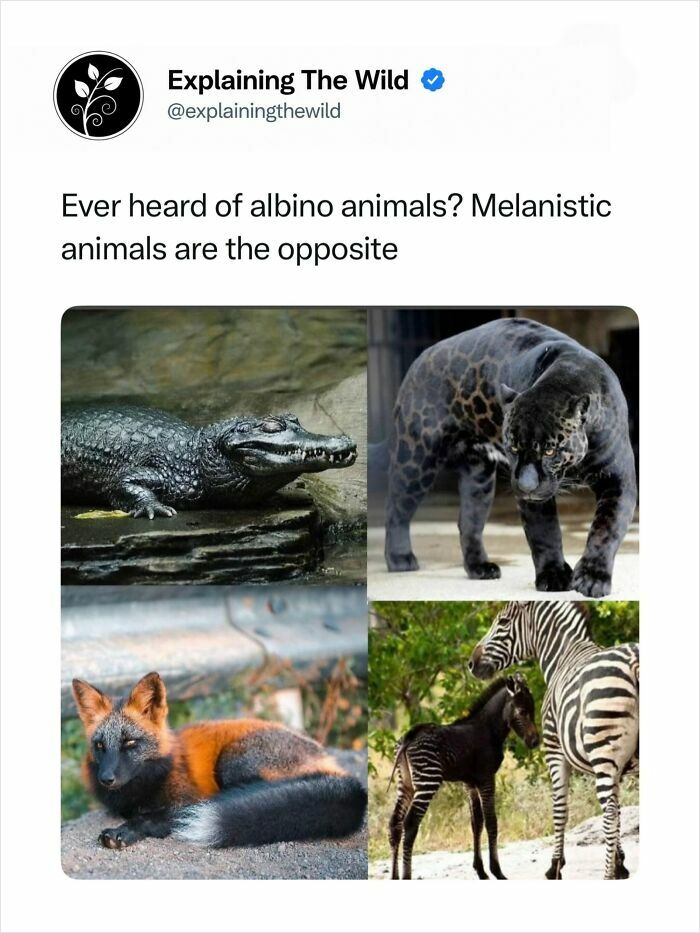
Most people have heard of albinism, a rare genetic condition that greatly reduces or eliminates melanin, giving animals white or pale coloring. Melanism is the opposite. It causes an overproduction of melanin, turning an animal’s fur, feathers, or skin unusually dark or completely black.
Melanism has been seen in leopards, jaguars, wolves, foxes, squirrels, snakes, and many other species. In some habitats, the darker coloration may even provide better camouflage, showing that nature can solve the same survival problem in completely different ways.
That matters because staying connected with nature is genuinely good for us. According to the Mental Health Foundation, people who feel a stronger connection with nature tend to be happier and are more likely to feel that their lives are worthwhile.
Nature connectedness has also been linked with lower levels of depression and anxiety. Spending time engaging with natural surroundings may help with concentration too.
And connecting with nature doesn’t require disappearing into the mountains for a week. You can make a difference simply by paying more attention to what’s around you, whether that means listening to birdsong on a walk or noticing the texture of tree bark as you pass by.
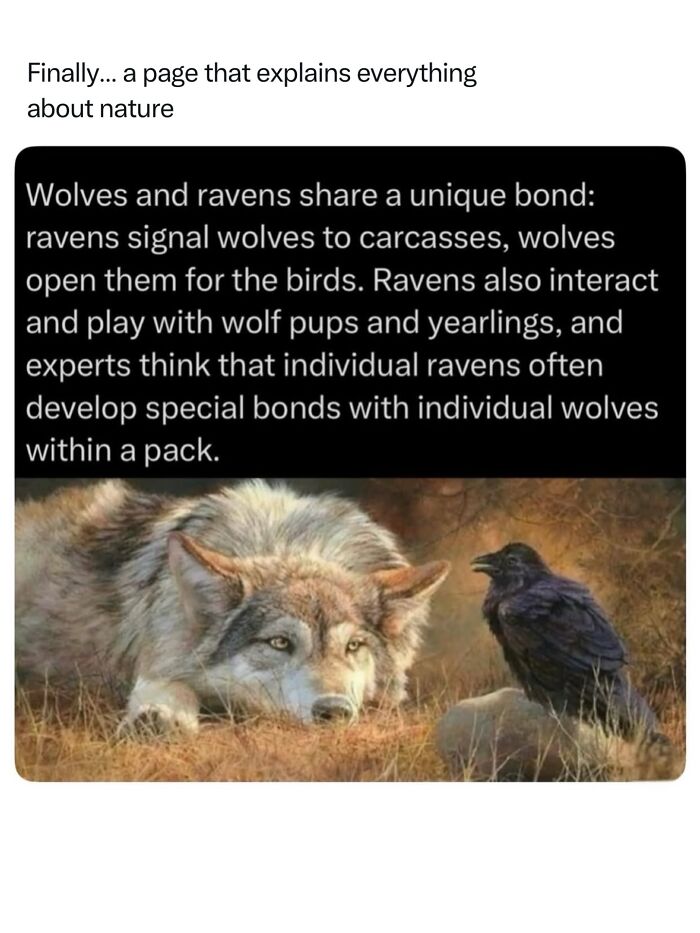
The alliance between wolves and ravens is one of the most sophisticated examples of interspecies cooperation in the natural world. Often referred to as “wolf-birds,” ravens act as the aerial reconnaissance for the pack, using their high-altitude vision to spot carcasses or injured prey that the wolves cannot see from the ground. Once a target is located, the ravens use specific vocalizations to “lead” the wolves to the site. This biological partnership is mutually beneficial: the wolves use their powerful jaws to open the tough hides of large ungulates, providing the ravens with access to a food source they otherwise couldn’t reach.
Beyond mere survival, this bond is deeply social and suggests a high level of cognitive engineering in both species. Ravens have been observed playing “tug-of-war” with wolf pups and even nipping at the tails of yearlings to initiate a chase. Experts believe that individual ravens often form lifelong, “first-name” relationships with specific wolves within a pack, following them for miles and sharing a level of trust rarely seen between a bird and a mammal. This complex social loop proves that intelligence in the wild isn’t just about competition, but about building strategic, long-term friendships across the species barrier.

Ironically, I had a co-worker named Raven, and he and I became good friends! XD
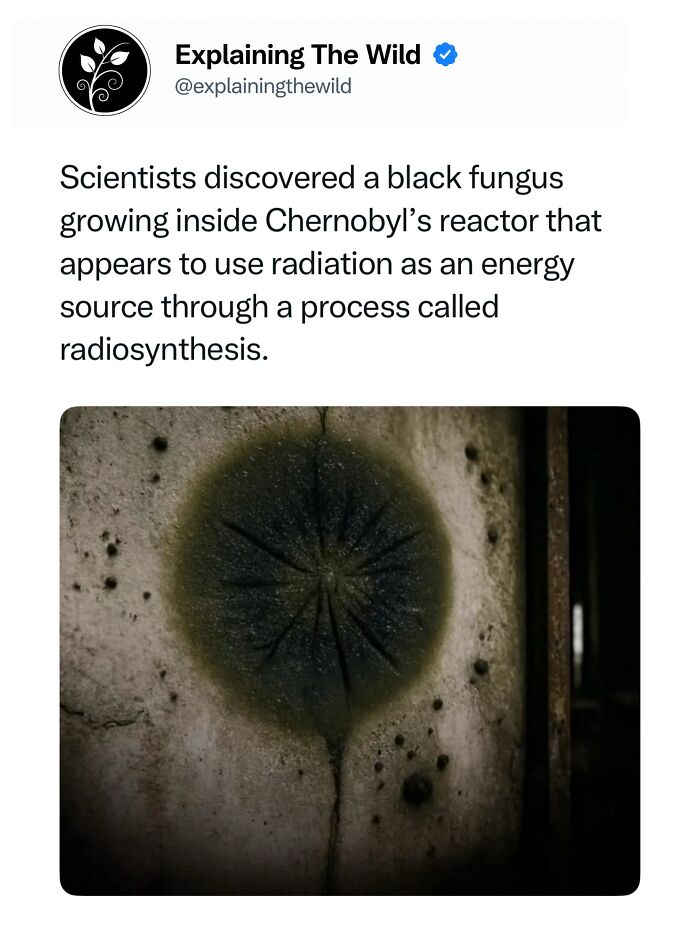
After the 1986 Chernobyl nuclear disaster, scientists found several species of dark, melanin-rich fungi thriving on the reactor’s highly radioactive walls. One of them, Cladosporium sphaerospermum, drew particular attention because experiments suggested its melanin may enable it to use ionizing radiation in a way that’s somewhat analogous to how plants use sunlight, a process researchers call radiosynthesis.
Scientists are still studying exactly how much energy these fungi gain from radiation, and they don’t literally “eat” radiation. Instead, the evidence suggests radiation may alter the fungus’s melanin in ways that enhance its growth under certain conditions. It’s one of the most remarkable examples of life adapting to an environment once thought too hostile to survive.
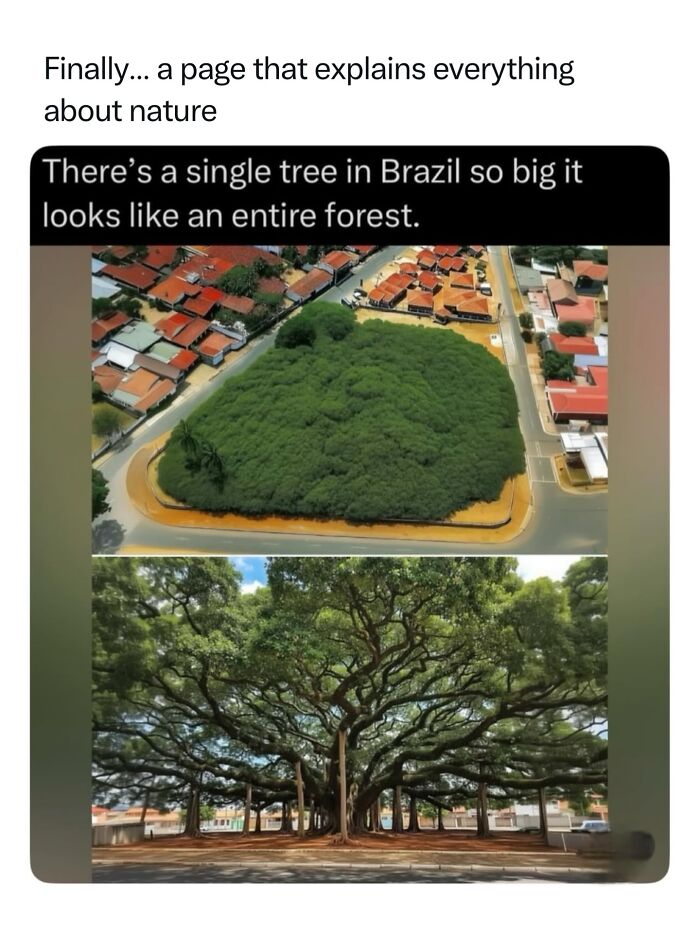
Deep in the heart of Brazil, there exists a biological wonder that challenges everything we know about “forests.” The Jequitibá-rosa, often referred to as a “living monument,” can grow so massive that its canopy functions as an entire ecosystem for hundreds of other species. These giants can live for over 3,000 years, standing as silent witnesses to the rise and fall of civilizations while reaching heights equivalent to a 20-story building.
What makes these trees truly incredible is their architectural engineering. To support their immense weight in the soft, rain-soaked earth, they develop massive “buttress roots” that flare out from the base like the fins of a rocket. This natural tripod system prevents the tree from toppling during tropical storms, allowing it to remain the dominant “skyscraper” of the Atlantic Forest for millennia. It is a breathtaking example of how nature builds for maximum stability and longevity.
Once people start feeling closer to nature, they usually also become more interested in looking after it. The Mental Health Foundation notes that people with stronger nature connectedness are more likely to report environmentally friendly habits, including recycling and buying seasonal food.
It makes sense that we’re more likely to care about something when we actually notice it and feel that it’s part of our everyday lives.
Hopefully, all these photos and facts have inspired you to pay a little more attention to what’s happening outside your window. There’s an enormous amount going on around us that’s easy to miss when we’re busy with everything else.
So maybe the next time you have a free afternoon, put the phone away for a bit and head outside. Or, as the internet loves to say, go touch some grass.
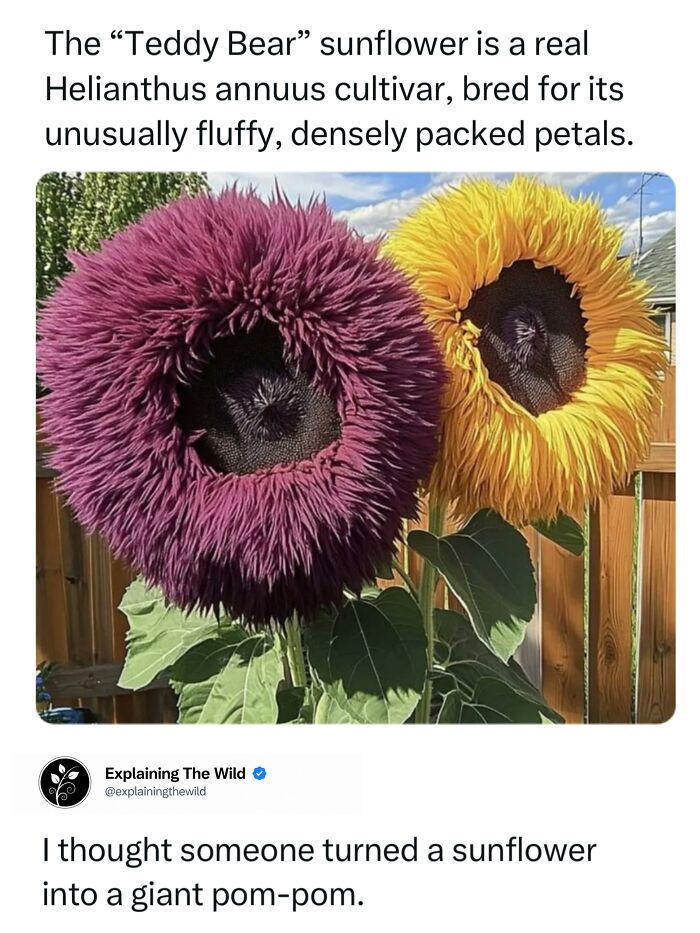
The Teddy Bear sunflower is a cultivated variety of the common sunflower, Helianthus annuus. Instead of the familiar flat ring of petals, its flowers are packed with layers of short, fluffy petals, giving the blooms their unusual teddy-bear-like appearance.
One important detail: the classic Teddy Bear sunflower is naturally yellow. Purple or unusually colored versions circulating online may be digitally altered or represent a different cultivar, so the image should not be taken as a typical Teddy Bear sunflower.
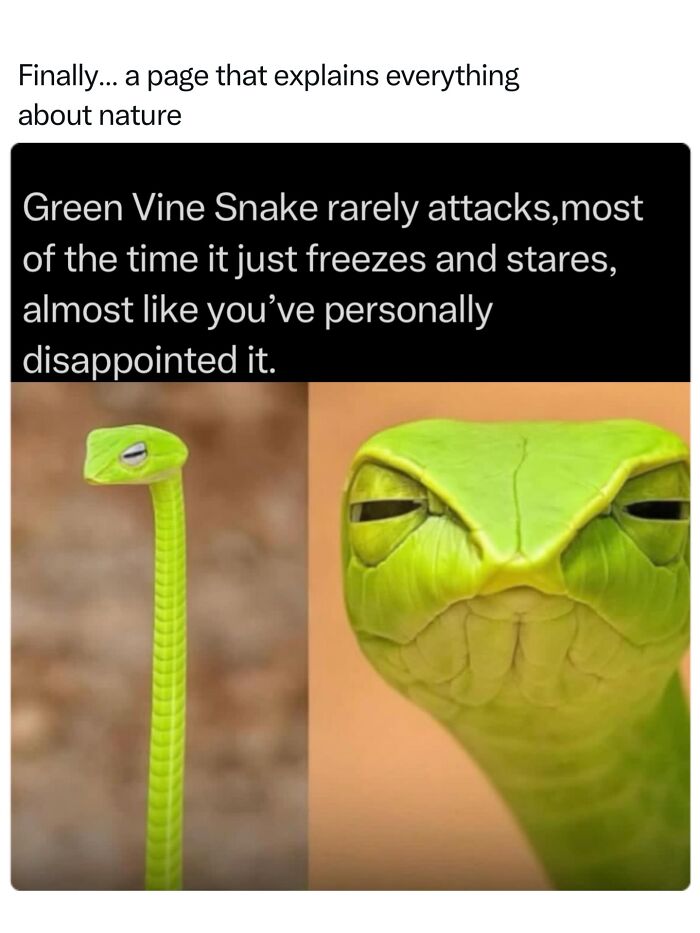
The Asian Green Vine Snake is a master of the “long game” when it comes to self-defense. Unlike many snakes that strike or flee at the first sign of trouble, this slender reptile has a hilariously judgmental defense mechanism: it simply freezes. If it feels threatened, it will extend its body and remain perfectly still, staring intensely at the intruder with its unique horizontal pupils. Because it is so thin and a vibrant leaf-green, it relies on this mimicry to blend in with the surrounding vines and branches, hoping its “disappointed” stare is enough to make a predator lose interest.
This behavior is backed by some impressive biological hardware. The Green Vine Snake is one of the few reptiles with binocular vision, meaning its eyes are positioned to see depth and detail much like a human’s. This allows it to track the exact movement of prey—or perceived threats—without having to move its head and break its camouflage. If the staring contest doesn’t work, it may open its mouth wide to reveal a dark interior as a warning, but it would much rather stay frozen in time, waiting for you to move along so it can go back to being a master of the canopy.
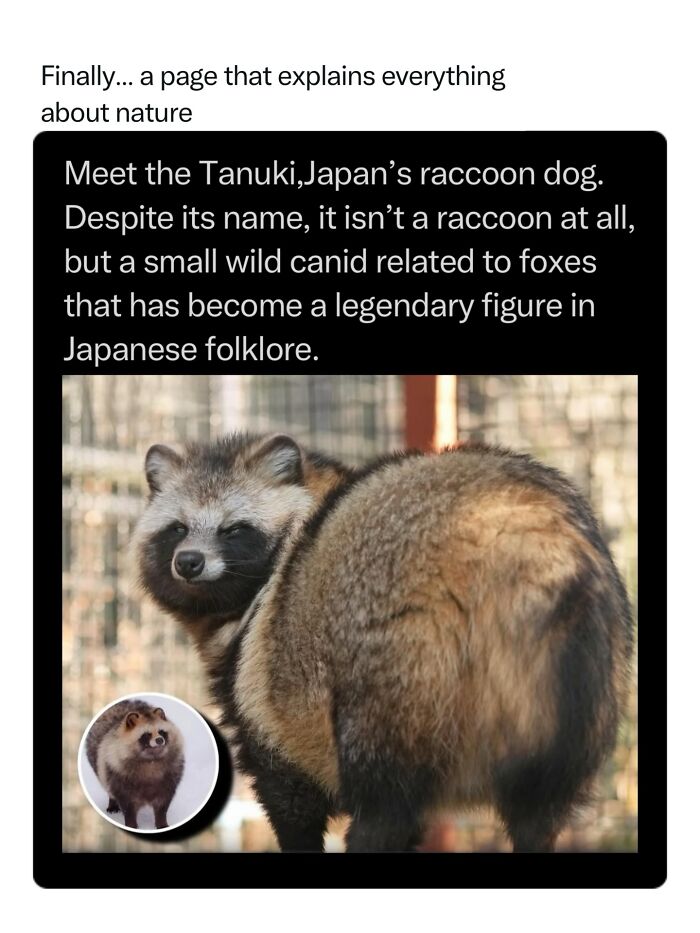
The Tanuki is one of the most misunderstood animals in the wild, often confused with raccoons or badgers due to its masked face and fluffy fur. In reality, it is a primitive member of the dog family, more closely related to foxes and wolves than anything else. Unlike other canids, Tanukis are famous for being the only members of their family that hibernate through the winter, slowing down their heart rate and hunkering down in burrows to survive the cold. They are incredibly adaptable, eating everything from berries to small rodents, which has allowed them to thrive across the Japanese landscape for thousands of years.
Beyond their biology, Tanukis hold a massive place in Japanese culture, where they are seen as mischievous shape-shifters that bring good fortune.
Folklore depicts them as belly-drumming tricksters with the ability to transform into everyday objects like tea kettles. This mix of real-world survival skills and legendary status makes them a true icon of Japan’s wildlife. Whether they are navigating the deep forests or scavenging in suburban areas, the Tanuki remains a unique evolutionary branch that looks like a raccoon but acts with the cunning intelligence of a fox.
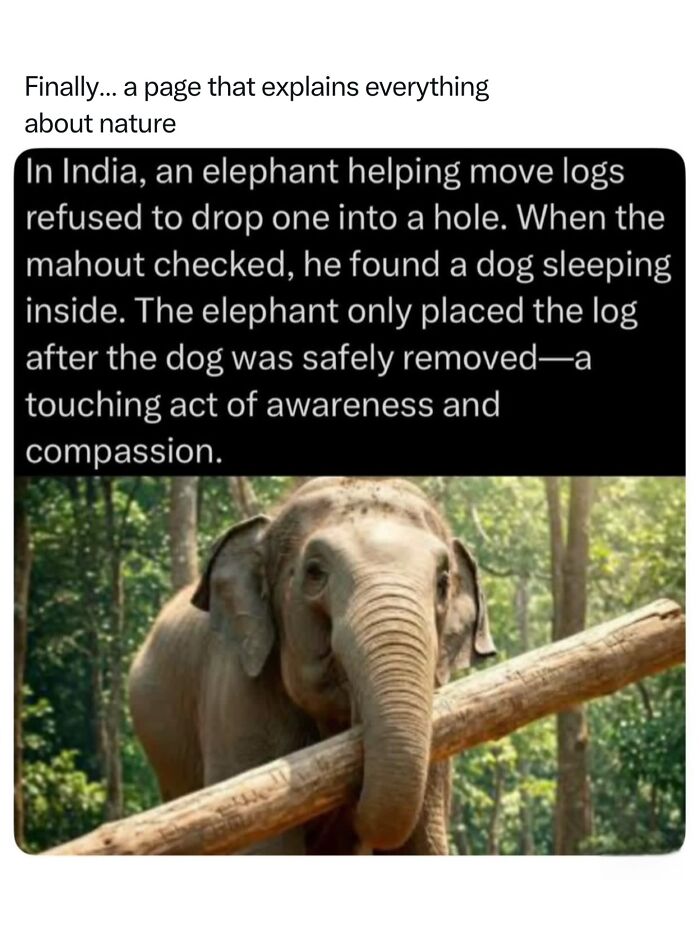
Elephants are widely recognized for their massive strength, but this famous story from India highlights their incredible capacity for empathy and situational awareness. While helping a mahout move heavy logs into pre-dug holes, one elephant suddenly stopped and refused to complete the task. Despite repeated commands, the elephant held the log suspended in the air. Upon investigation, the mahout discovered a stray dog sleeping soundly at the bottom of the hole. The elephant had recognized a life in danger and chose to ignore its training to avoid causing harm.
This behavior points to a high level of “theory of mind,” where an animal can understand the perspective or needs of another species. Elephants have a highly developed hippocampus and cerebral cortex, which are linked to complex emotions and problem-solving. By waiting for the dog to be safely moved before dropping the log, the elephant demonstrated that its actions aren’t just based on instinct or habit, but on a conscious decision to protect a smaller creature. It’s a powerful example of the deep emotional intelligence that exists within the animal kingdom.

We really don’t give animals enough credit. We aren’t the only intelligent species on this planet. And some days I wonder if we’re really intelligent at all
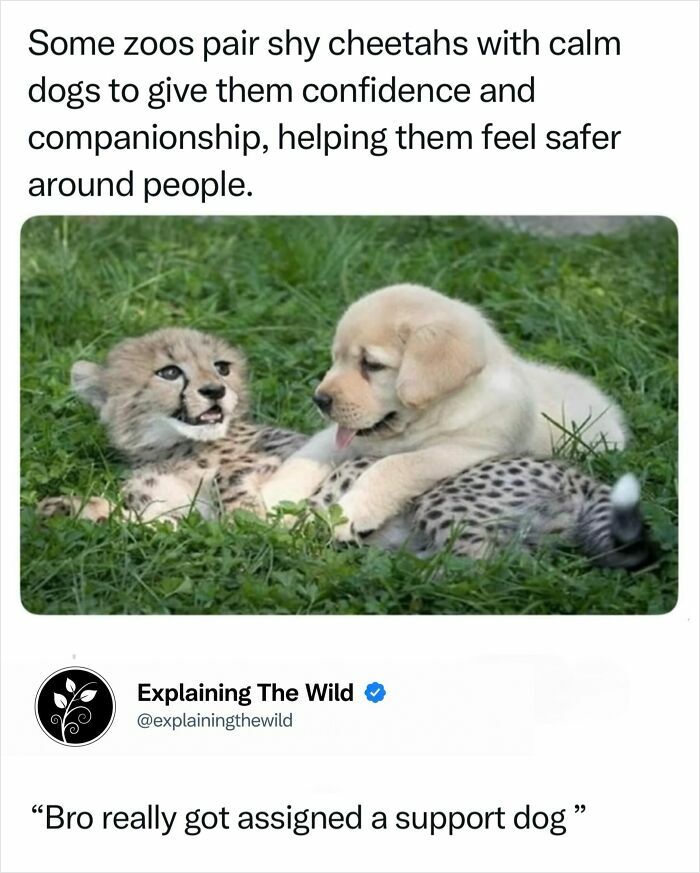
Cheetahs can be shy and easily stressed, especially in captivity. Some zoos introduce them to calm, friendly dogs that become their companions and can help them feel more comfortable in their surroundings. The dogs aren’t just there to look cute. Their presence can encourage the cheetahs to relax, explore, and interact more confidently with their keepers. And somehow, they end up looking like the most unlikely best friends.

From Discover Wildlife (BBC Wildlife Magazine - Ryan Keane Published: August 18, 2026) - "Whilst wild-cheetah attacks on humans are virtually unheard of, the picture in captivity looks slightly different.” “Interestingly, there have been no confirmed cases of wild cheetahs attacking and trying to eat a person. Of course, it’s possible a wild-cheetah attack on someone might have occurred, but there’s no credible evidence for this."
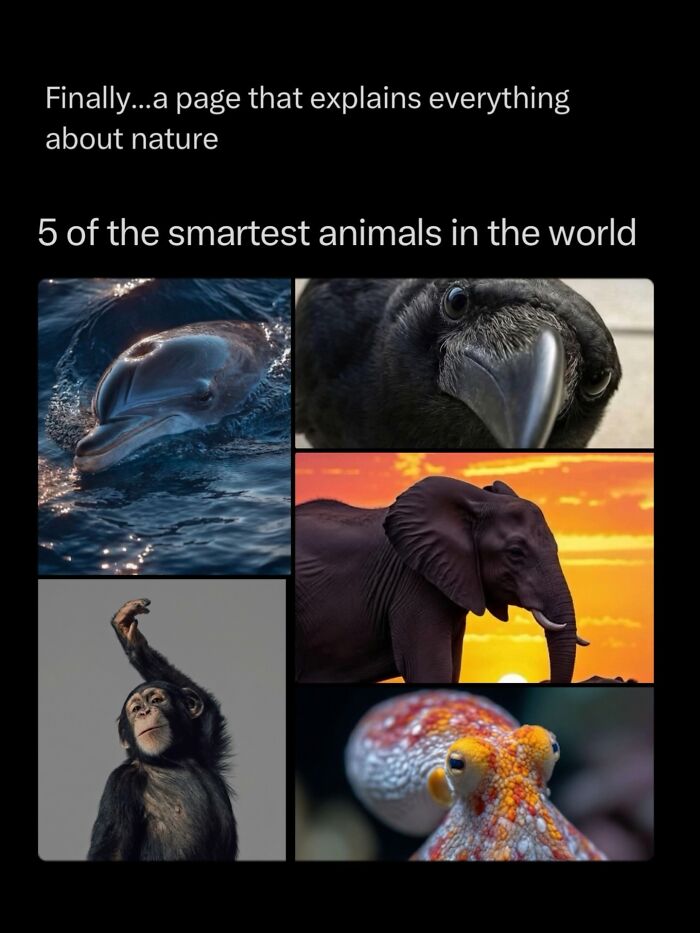
We often think we are the only geniuses on Earth, but these five species prove otherwise.
Dolphins possess brains complex enough to recognize themselves in mirrors and use specific names for their friends. Chimpanzees are master strategists who plan for the future and can memorize numbers better than humans.
Then there are crows, the engineers of the bird world who build tools and hold grudges for years. In the ocean, the octopus uses its nine brains to pick locks and vanish in plain sight. Finally, elephants demonstrate profound emotional intelligence, mourning their dead and organizing complex rescues just like we do.
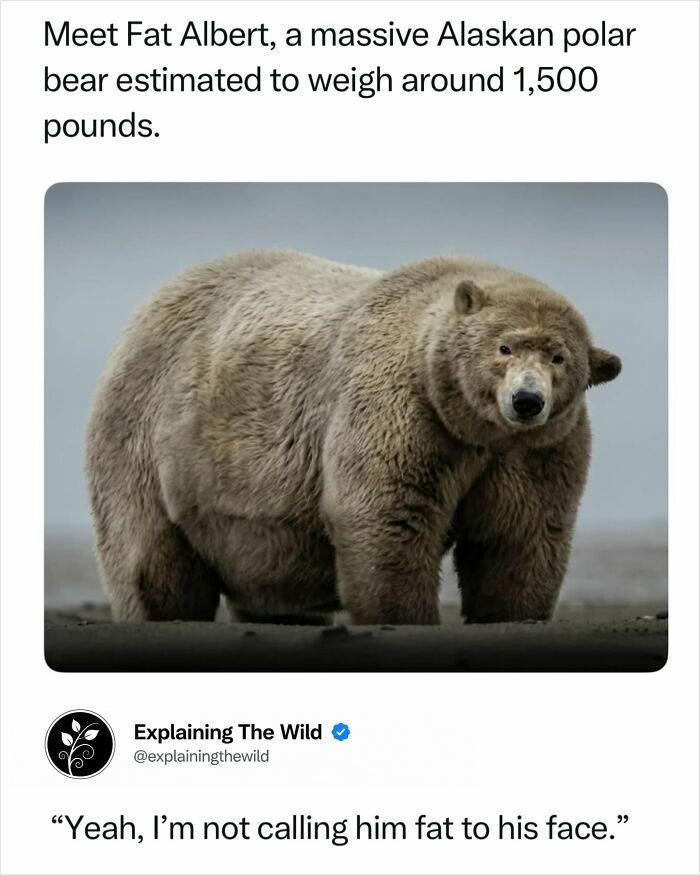
Fat Albert is a huge male polar bear known around Kaktovik, Alaska. His weight is commonly estimated at around 1,400 to 1,500 pounds, although he has never actually been weighed, so the number is an estimate.
Polar bears are already enormous animals, and large males can reach the upper end of the species’ normal size range. Fat Albert just happens to be an especially ridiculous example.

Ridiculous? don't call him that to his face. He's just cuddlesome.
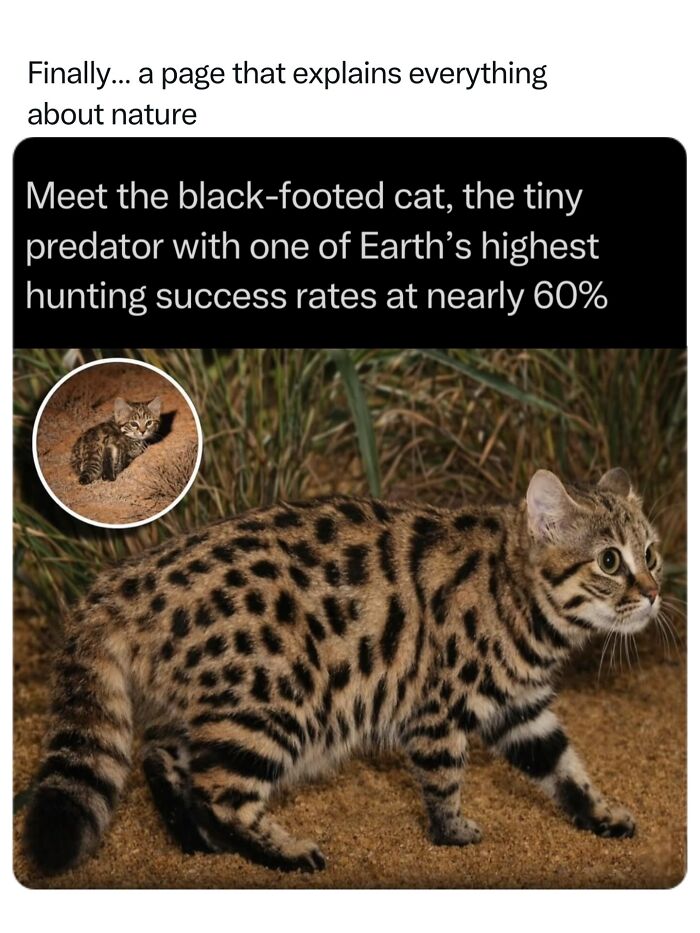
The black-footed cat may look like a small house pet, but it is actually the deadliest feline on the planet. Weighing only about three to five pounds, this tiny hunter achieves a staggering 60% success rate in its hunts. To put that in perspective, a lion only succeeds about 25% of the time. This diminutive predator is an eating machine, often catching up to fourteen small animals in a single night to fuel its incredibly high metabolism.
Living in the arid regions of Southern Africa, these cats rely on their exceptional night vision and hearing to track prey in the dark. They are strictly nocturnal and can travel over twenty miles in a single evening looking for food. Because they are so small, they face many threats from larger predators, leading them to be incredibly secretive and fierce. They prove that in the wild, size has very little to do with being an elite apex predator.
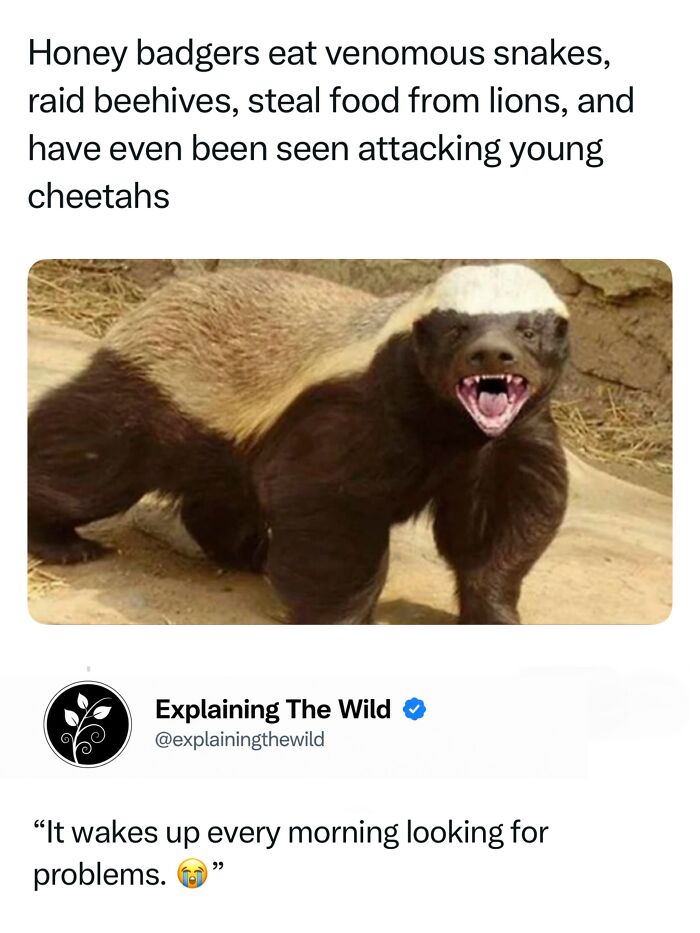
The honey badger has earned a reputation as one of the most fearless mammals on Earth. It feeds on almost anything it can overpower, including venomous snakes, porcupines, rodents, birds, and insects. Thick, loose skin helps protect it during fights, while a remarkable resistance to some snake venoms allows it to survive encounters that would kill many other animals.
Honey badgers are also notorious scavengers and opportunists. They raid beehives for honey and bee larvae, steal food from larger predators when they get the chance, and have even been documented attacking young cheetahs and other vulnerable animals. Small in size but incredibly bold, they survive by refusing to back down.
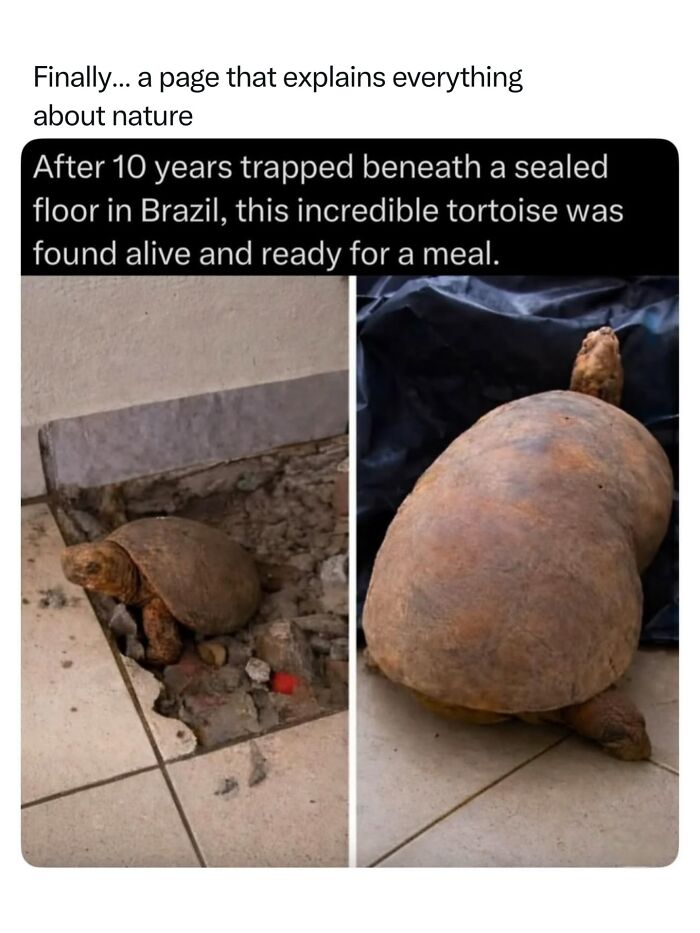
In 2013, a family in Rio de Janeiro made a shocking discovery while cleaning out a storage room. Manuela, a red-footed tortoise who had gone missing in 1982, was found alive inside a box under a pile of old electronics. She had survived for thirty years in a locked, cluttered room that the family assumed was empty. It was a miracle that redefined what experts knew about the resilience of these reptiles.
Tortoises are famously hardy, but thirty years without a steady food source is extreme. Biologists believe Manuela survived by eating termites and licking moisture off the walls or floor. Her slow metabolism allowed her to go long periods without traditional meals, essentially entering a state of semi-hibernation. This incredible story of survival highlights the biological adaptations that allow tortoises to endure even the most impossible conditions.
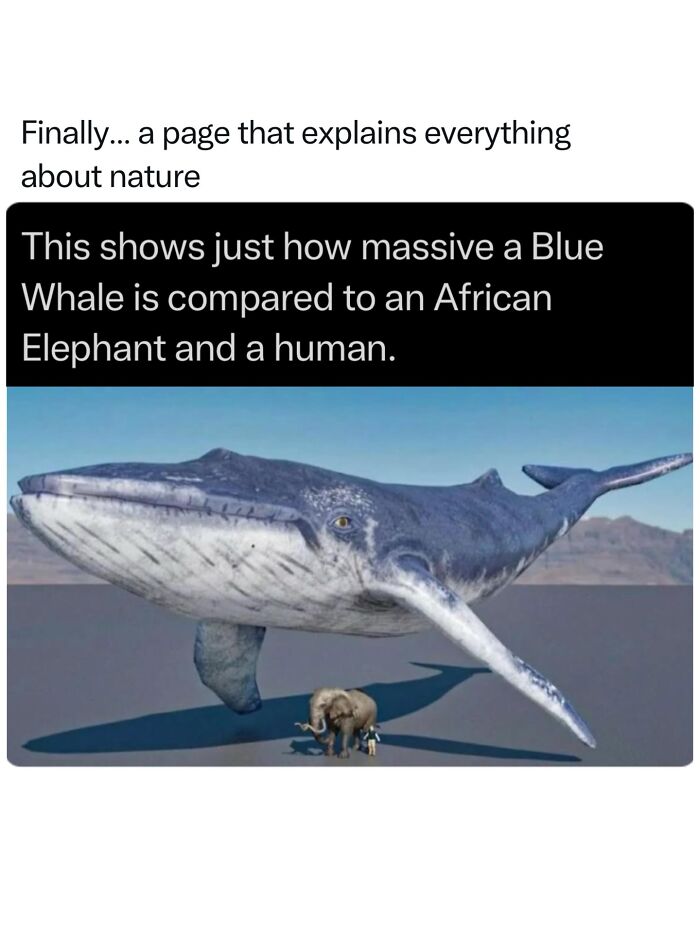
Seeing a Blue Whale alongside an African Elephant—the largest land animal—is the only way to truly grasp the scale of these ocean giants. A Blue Whale can grow to over 100 feet long and weigh up to 200 tons. To put that into perspective, a single Blue Whale is equivalent in weight to about 30 adult elephants. Even their individual organs are record-breaking; a Blue Whale’s heart is roughly the size of a bumper car, and its tongue alone can weigh as much as an entire elephant.
The reason they can reach such massive proportions is thanks to the buoyancy of the water. On land, an animal that size would be crushed under its own weight because gravity would collapse its skeleton and organs. In the ocean, the water supports their massive frame, allowing them to grow far larger than any dinosaur that ever walked the Earth. They are a marvel of biological engineering, fueled entirely by tiny shrimp-like krill, proving that the ocean’s smallest creatures support its greatest living wonders.
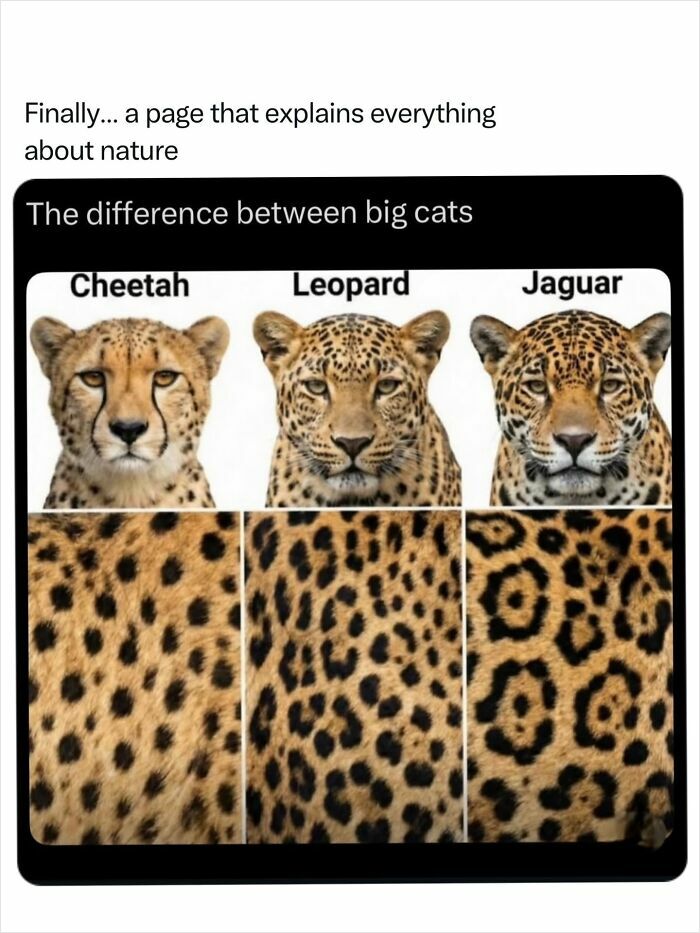
The term “Big Cat” is often used loosely, but biologically, it refers to the genus Panthera, which includes the tiger, lion, jaguar, and leopard. The defining “technology” that separates these elites from all other felines is a specialized, two-piece hyoid bone in the throat. This anatomical structure, combined with a thick ligament, allows these cats to roar—a high-decibel acoustic signal used for territorial defense. In contrast, smaller cats (and the cheetah) have a rigid hyoid that only allows them to purr, proving that even in the wild, your “vocal hardware” determines your social status.
Beyond the roar, each species is engineered for a specific hunting niche. The Tiger is the heavy-duty model, built with massive muscle mass for solo forest ambushes, while the Lion is the social strategist, optimized for group endurance on the open savannah. The Jaguar possesses the most powerful “bite-tech” relative to its size, capable of crushing turtle shells, while the Leopard is the ultimate vertical specialist, with a skeletal structure designed to haul prey twice its weight up into trees. This diverse lineup shows that the feline blueprint can be retooled for power, speed, or stealth depending on the environment.
Only "purr"? That is not what the cats sounded like outside my bedroom window last night.
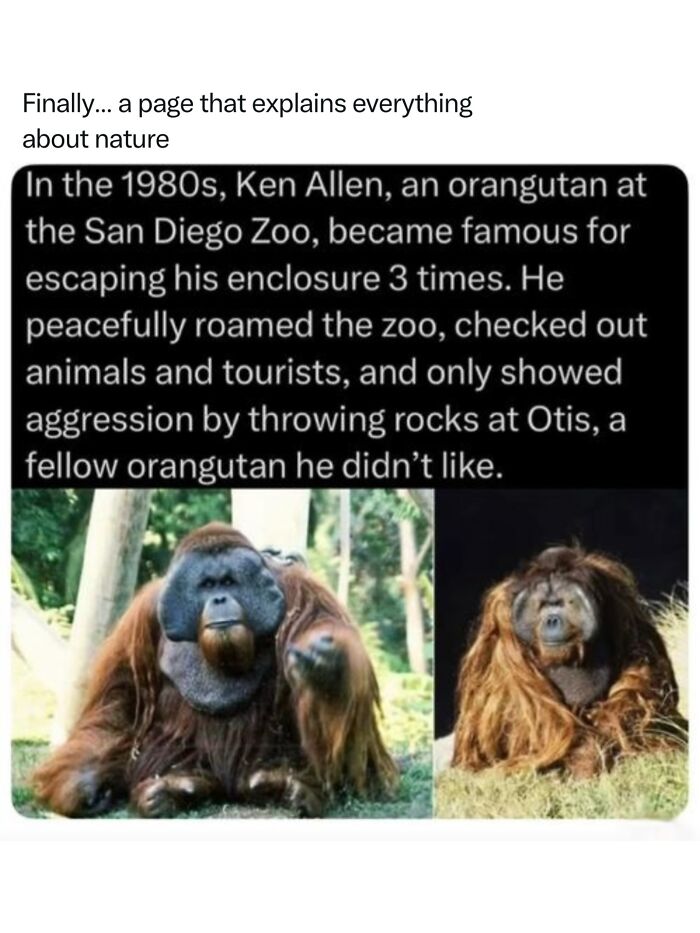
Ken Allen was a legendary Bornean orangutan at the San Diego Zoo who became a folk hero in the 1980s. Known as the Hairy Houdini, he managed to escape his enclosure three times using expert climbing skills and sheer intelligence. Unlike most escaped animals, Ken was perfectly calm. He would simply stroll through the park, stopping to look at other animals or watch the crowds of tourists who were stunned to see a 250 pound ape walking among them.
The only time Ken showed any temper was toward another orangutan named Otis. On his adventures, he would stop to throw rocks at Otis, whom he clearly disliked, before continuing his peaceful tour. The zoo spent thousands of dollars on security, even hiring undercover staff to watch him, but Ken always found a way out. He eventually became so popular that he had his own fan club and inspired a local song about his clever antics.
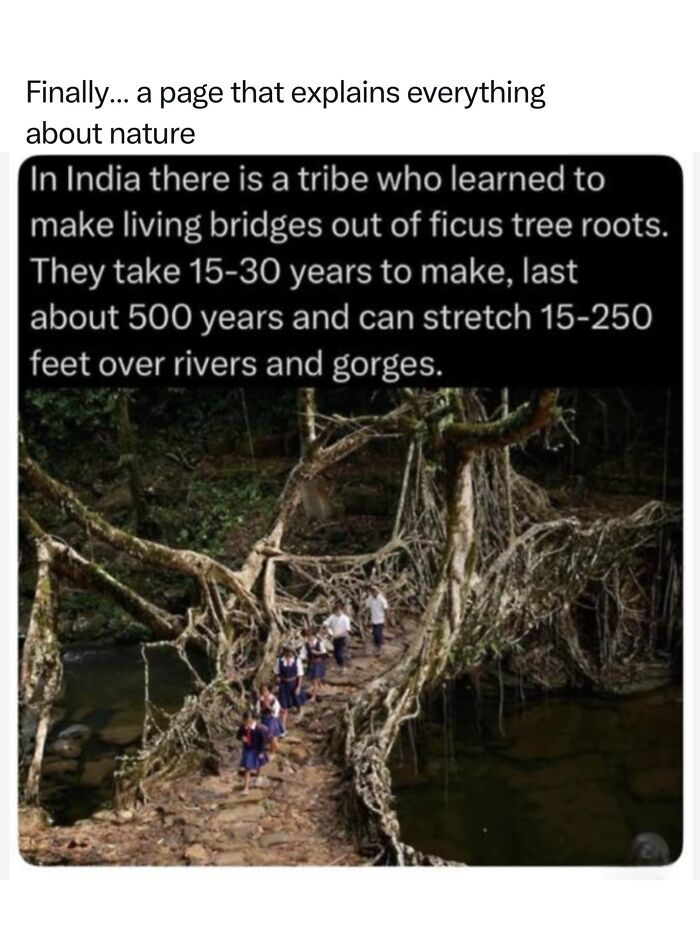
In the rainforests of Meghalaya, India, the Khasi people build bridges that are actually alive. They use the roots of Ficus trees to create sturdy walkways over rushing rivers. By guiding these roots through hollowed trunks, they slowly weave a bridge across deep gorges. This incredible process takes up to 30 years to finish.
These living structures are stronger than steel or wood in this humid climate. Instead of rotting, the roots grow thicker and tougher over time. Some of these bridges are over 500 years old and can hold dozens of people at once. They are a perfect example of humans working in harmony with the natural world.
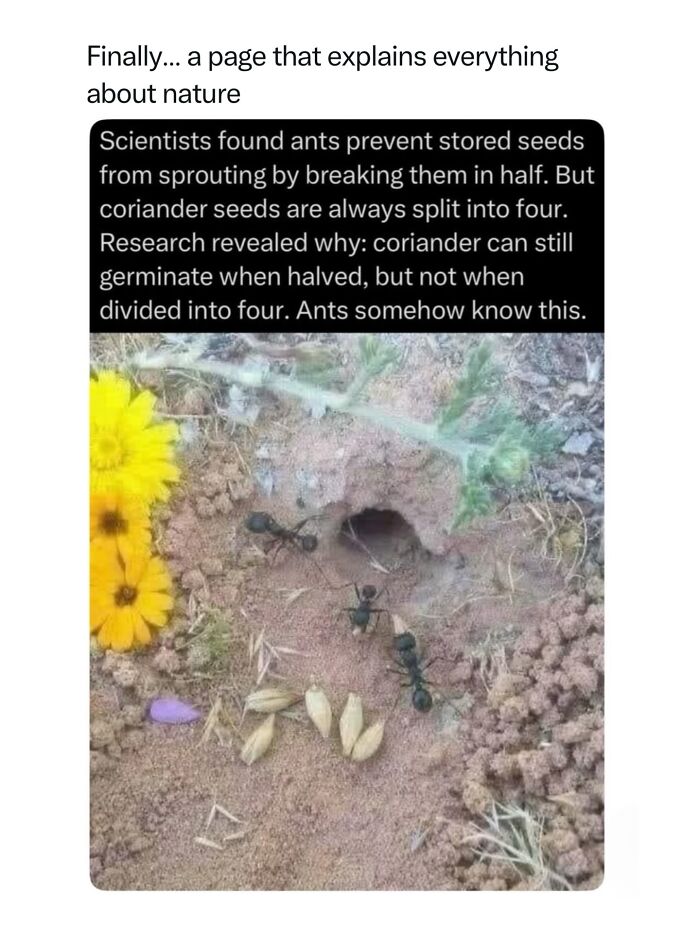
Ants are known for their incredible collective intelligence, but their understanding of botanical physics is truly next level. To ensure their food supply doesn’t literally grow out of their underground granaries, harvester ants systematically break stored seeds in half to prevent them from sprouting. However, scientists noticed a strange exception with coriander seeds: the ants always split them into exactly four pieces instead of two.
It turns out that coriander is uniquely resilient, and a seed split into just two halves can still successfully germinate and ruin the nest. The ants have somehow “learned” that a four-way split is the only way to completely neutralize the seed’s growth potential. This level of biological engineering shows that ants don’t just act on simple instinct; they possess a complex, passed-down knowledge of their environment that allows them to manage their resources with surgical precision.
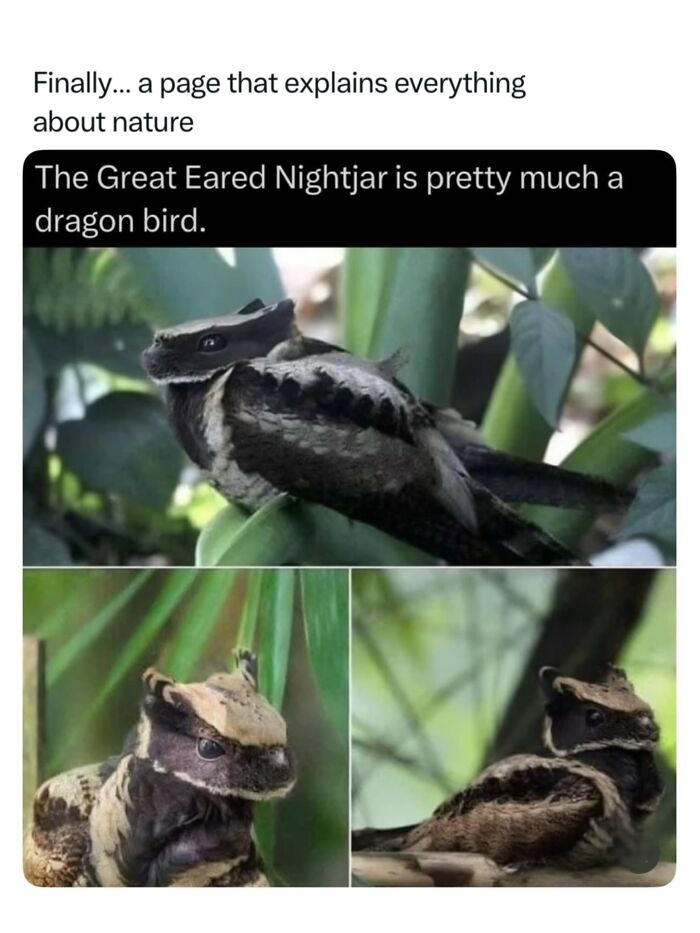
The Great Eared Nightjar is often described as a “dragon bird” due to its incredible prehistoric appearance. These nocturnal birds are masters of camouflage, featuring long, tufted feathers on their heads that resemble ears or horns, further adding to their mythical look. They are primarily found in Southeast Asia, where they blend seamlessly into the forest floor or low branches during the day to avoid predators.
Unlike many other birds, the Great Eared Nightjar does not build a traditional nest; instead, it lays its eggs directly on the leaf litter of the forest floor. Their cryptic plumage allows them to remain nearly invisible while brooding, appearing as nothing more than a pile of dead leaves to the untrained eye. At night, they take to the skies, using their wide mouths to catch insects in mid-air, embodying the true spirit of a miniature, feathered dragon of the forest.
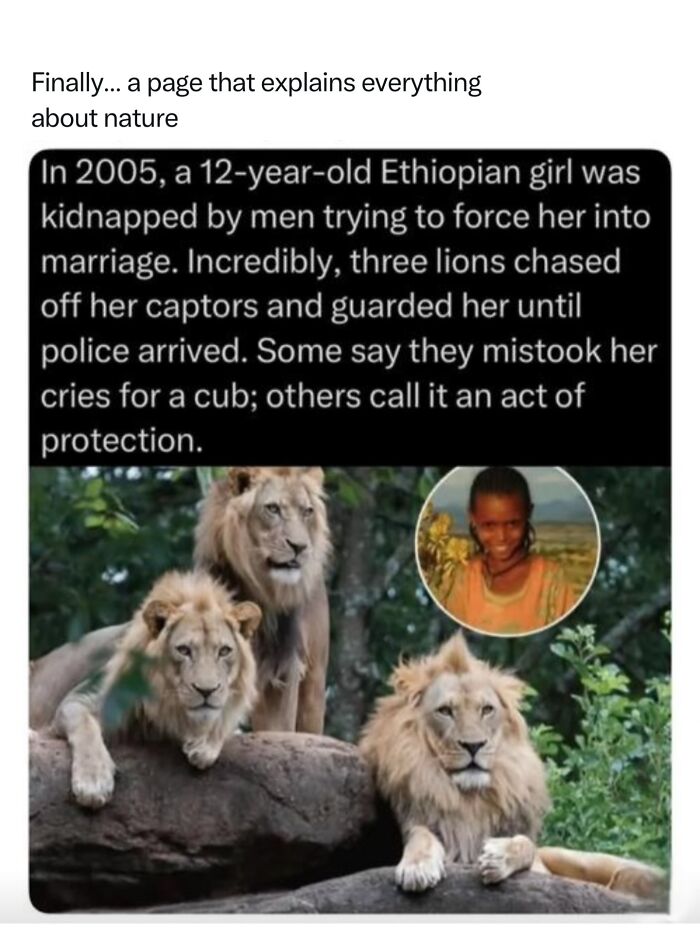
In 2005, a 12-year-old Ethiopian girl experienced a survival story that sounds like a legend. After being kidnapped by men intent on forcing her into marriage, she was missing for a week. Her situation seemed hopeless until a small pride of three lions intervened. The lions chased away her captors and stayed with her for over half a day without harming her.
When the police and the girl’s family finally arrived, the lions simply walked away into the forest as if their job was finished. Wildlife experts have debated the reason for this behavior for years. Some suggest the girl’s terrified cries may have sounded like the mewing of a lion cub, triggering the lions’ maternal instincts. Whatever the reason, the presence of these apex predators saved her life during a moment of extreme danger.
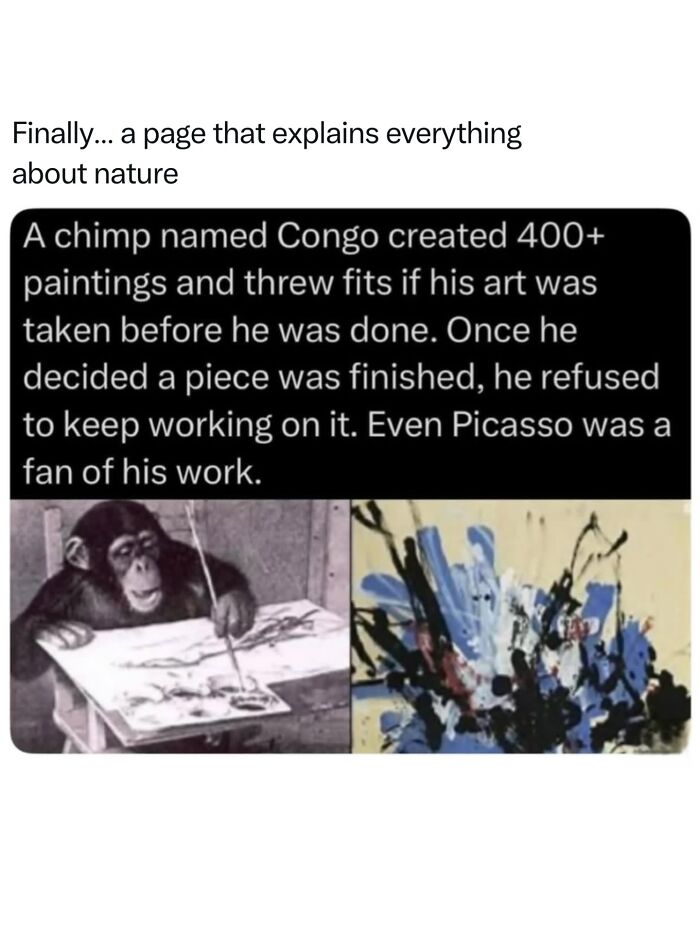
Congo the chimpanzee was far more than just an animal with a paintbrush; he was a true artist with a clear sense of vision and “artistic integrity.” In the 1950s, he produced over 400 paintings and drawings, and his behavior during these sessions stunned researchers. If his paper was pulled away before he felt he was finished, he would scream and throw a tantrum. Conversely, once he decided a piece was complete, no amount of coaxing could get him to add another stroke. He understood the balance of his compositions and refused to “overwork” his art.
The quality of his work was so impressive that it caught the eye of some of the world’s greatest human artists. Pablo Picasso was reportedly a fan and even hung one of Congo’s paintings on his own wall. Congo didn’t just scribble randomly; he showed a deliberate use of symmetry and color, often focusing on a central point and radiating outward. This suggests that the drive to create and the appreciation for visual balance might be a deep-seated trait we share with our closest relatives, proving that the roots of “fine art” are much older than human civilization.
Picasso, he had more respect for that chimp than he did for women. Anyway, I'm not surprised Congo liked to make art.
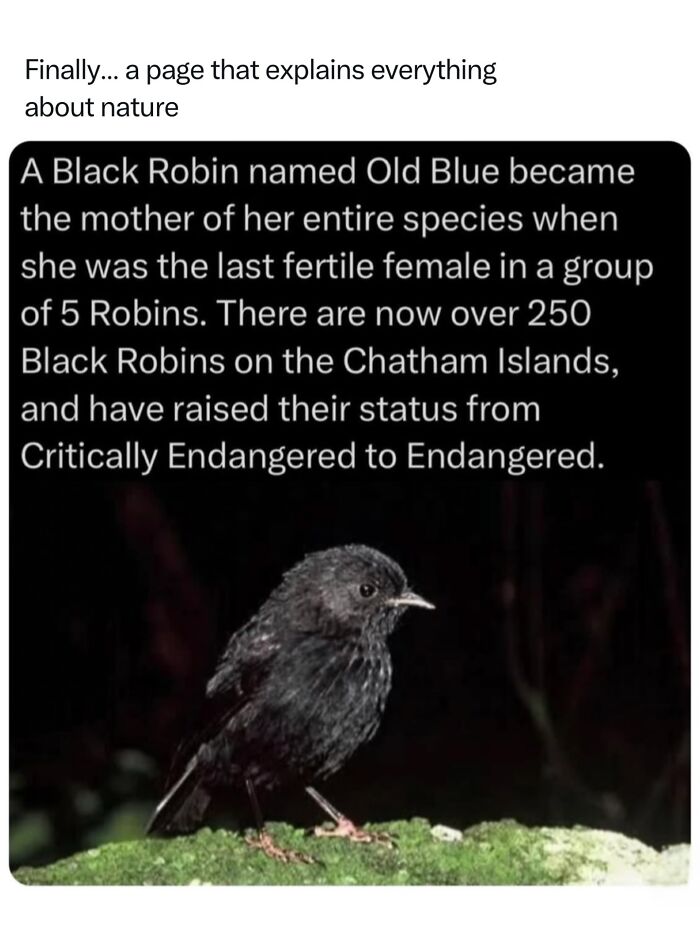
In the 1980s, the Chatham Island Black Robin was the rarest bird in the world, pushed to the absolute brink of extinction with only five individuals remaining. Among them was a single fertile female known as “Old Blue,” who became the unlikely matriarch and savior of her entire species. Through an intensive conservation effort that involved cross-fostering her eggs with other bird species to increase survival rates, Old Blue beat the odds and successfully raised a new generation of wild robins.
Today, the population has soared to over 250 birds, moving their status from Critically Endangered to Endangered—a recovery widely considered a biological miracle. Every Black Robin alive today is a direct descendant of Old Blue, making her one of the most genetically significant individuals in the history of conservation. Her story is a powerful testament to how the resilience of a single animal, combined with dedicated human intervention, can pull a species back from the very edge of vanishing forever.

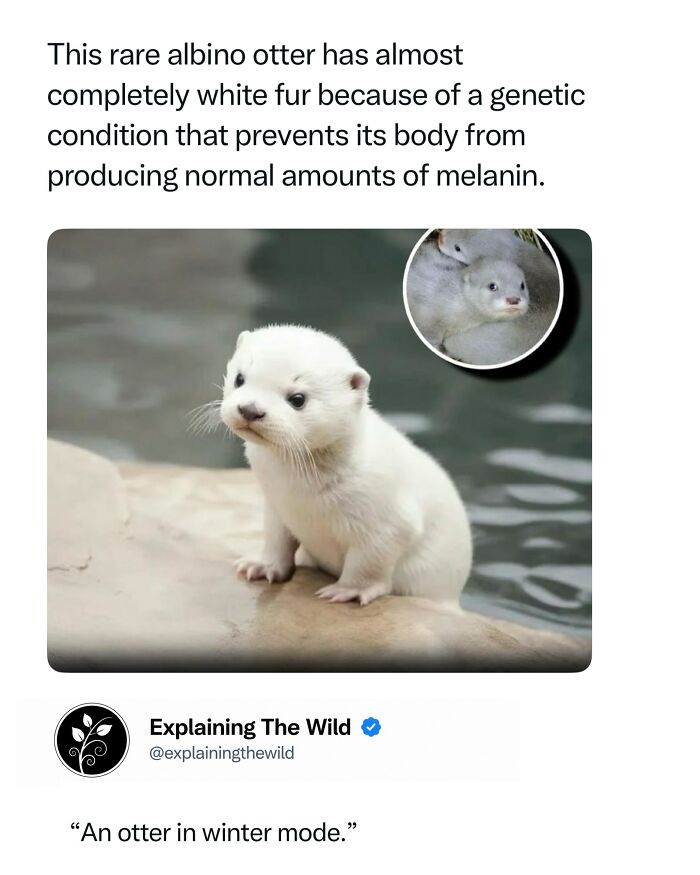
Albinism is an extremely rare genetic condition caused by little or no melanin production. In an albino otter, this can result in striking white or cream-colored fur, along with very pale skin and eyes. It is different from leucism, which can cause white fur while leaving the eyes normally pigmented.
The unusual coloring can make survival harder in the wild because camouflage is important for many animals. Albino individuals may also have light sensitivity and vision problems, making sightings like this exceptionally rare.
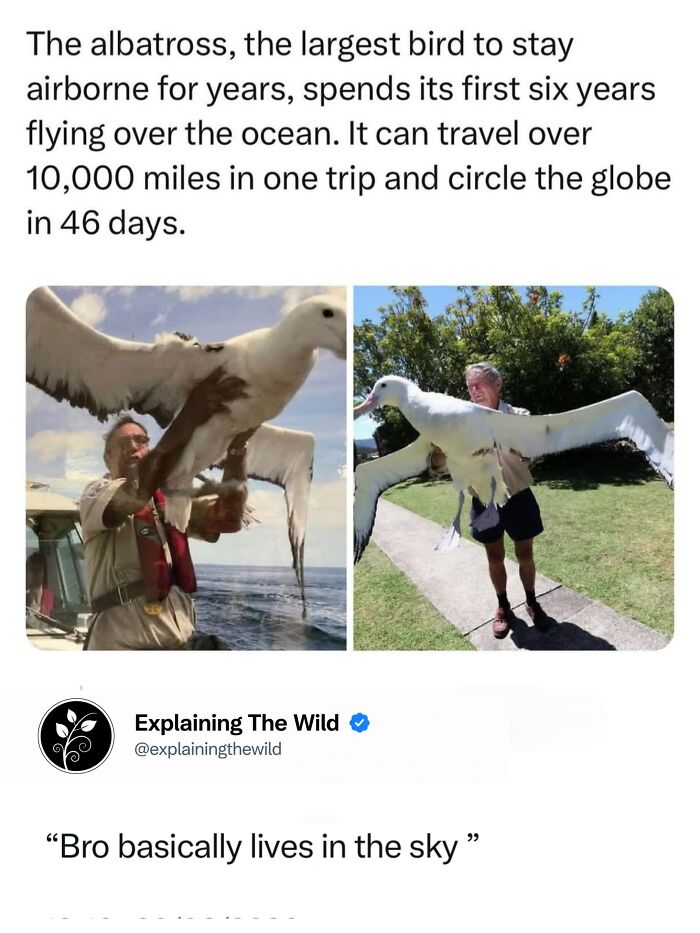
Albatrosses are built for life over the ocean. Their enormous wings let them glide for hours with barely any flapping, using wind and air currents to travel huge distances while searching for food.
Young albatrosses can spend their first several years at sea before returning to land to breed. Some species can travel tens of thousands of miles during a single journey.
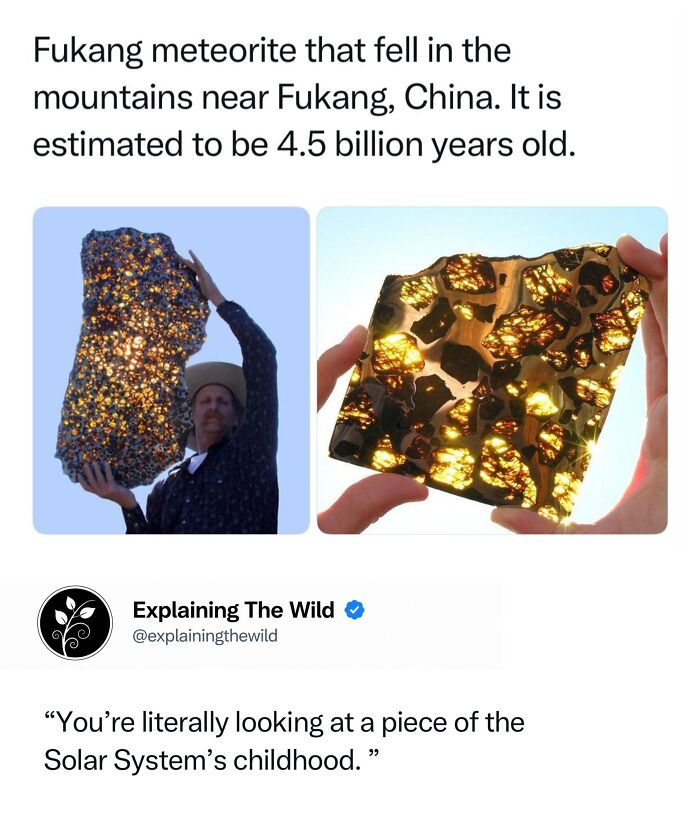
The Fukang meteorite was discovered near Fukang, China, in 2000 and is estimated to be about 4.5 billion years old. It belongs to a rare class called pallasites, made of iron-nickel metal surrounding translucent olivine crystals, which gives the meteorite its striking honeycomb-like appearance.
Pallasites are thought to have formed inside ancient asteroids, near the boundary between their rocky mantle and metallic core. When those asteroids were shattered by collisions, fragments were scattered through space until some eventually reached Earth. The Fukang meteorite is essentially a preserved piece of the Solar System’s earliest history.
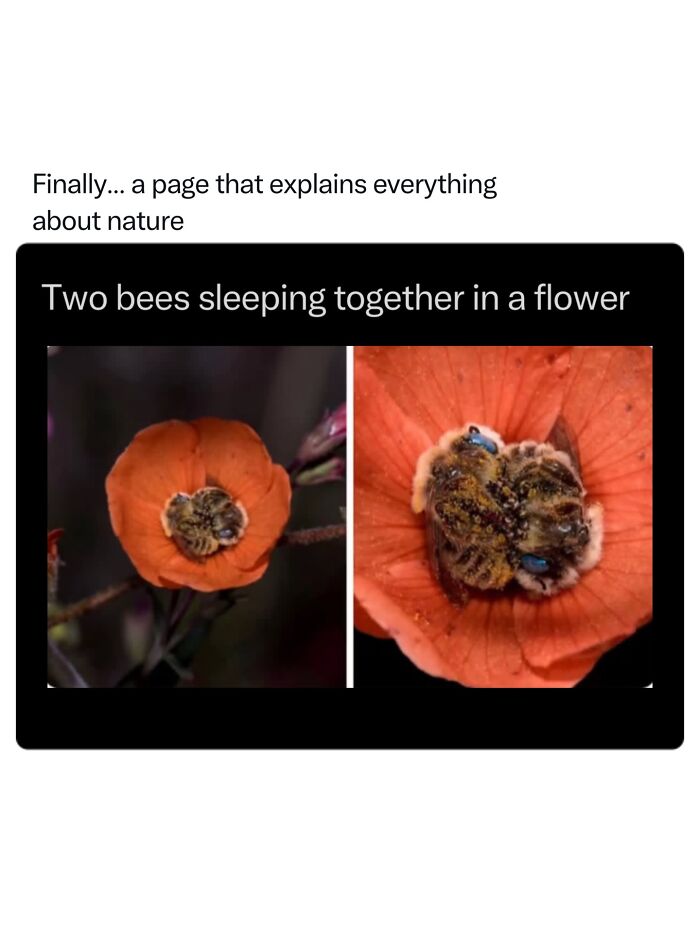
Finding two bees curled up together inside a flower is a rare glimpse into the quieter side of insect life. While we usually see bees as tireless workers, they actually need regular rest to keep their wings and muscles functioning. Some species, particularly solitary bees like Globe Mallows, often use flowers as a safe, warm bed for the night. As the sun goes down and the temperature drops, the flower petals often close up, acting like a natural sleeping bag that protects the bees from predators and the morning dew.
The reason you might find them huddled together is often down to heat conservation and limited “real estate.” By sharing a bloom, the bees can benefit from each other’s remaining body heat, which helps them stay warm enough to “wake up” their flight muscles when the sun rises. They typically grip the flower with their jaws so they don’t fall out if the wind picks up. It’s a peaceful reminder that even the busiest creatures in the garden have a social, vulnerable side that requires a safe place to recharge before the next day’s work begins.
I've seen this, I recorded a flower closing up around the bee for the night.
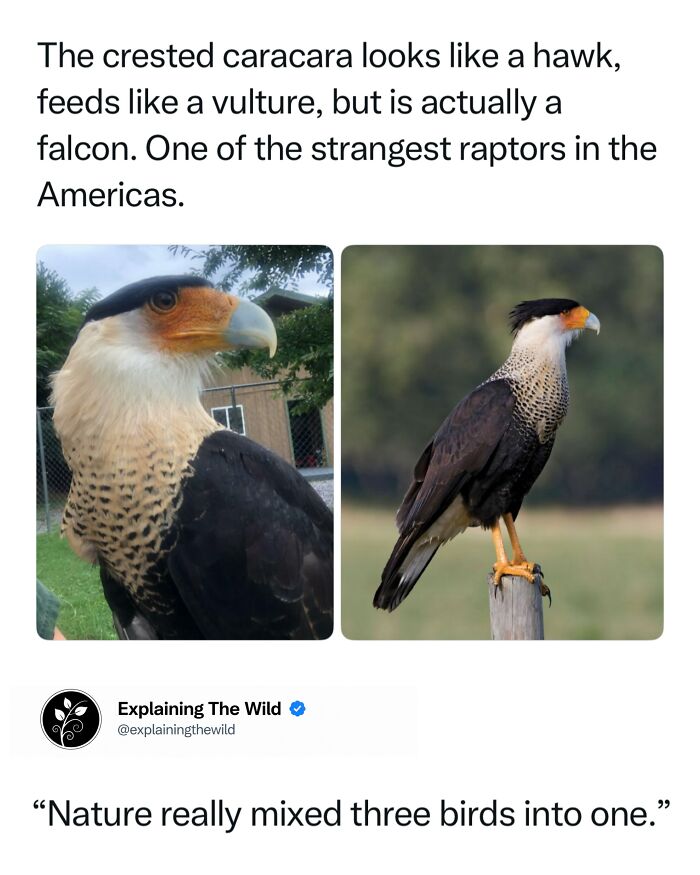
The crested caracara is a member of the falcon family, but it behaves very differently from the fast-flying falcons most people picture. It regularly walks around on the ground, searches for insects and small animals, and joins vultures at carcasses to feed on carrion.
It is found from the southern United States through Mexico, Central and South America, with its range extending as far south as Tierra del Fuego. Its strange combination of falcon ancestry, scavenging behavior and long-legged ground hunting makes it one of the most unusual raptors around.
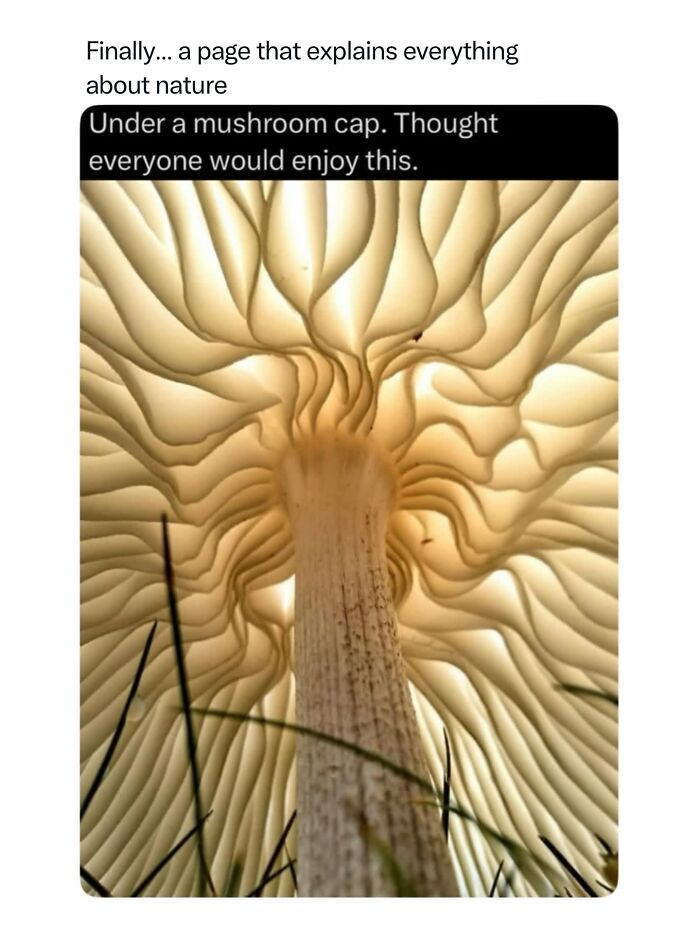
Looking under the cap of a mushroom reveals one of nature’s most efficient designs for reproduction. These thin, paper-like ridges are called gills, and their job is to maximize the surface area for producing millions of microscopic spores. By stacking these gills vertically and closely together, the fungus can pump out a massive amount of “seeds” into the air without needing a giant, bulky structure. It is a brilliant bit of natural engineering that allows a tiny mushroom to populate an entire forest floor from just one small cap.
The reason these gills are tucked underneath is all about protection. Since spores are incredibly light and sensitive, the overhanging cap acts like a natural umbrella, keeping them dry from rain and shielded from direct sunlight until they are ready to be carried away by the wind. Some mushrooms have even evolved to change the color of their gills as they age, signaling when they are at peak fertility. This hidden, geometric world beneath our feet is a perfect example of how even the smallest parts of the ecosystem have a specific, vital role to play in the cycle of life.
Point Nemo, officially known as the Oceanic Pole of Inaccessibility, is the most isolated location on Earth. It’s located in the South Pacific Ocean, about 2,688 kilometers (1,670 miles) from the nearest islands in every direction. Because the International Space Station orbits roughly 400 kilometers (250 miles) above Earth, astronauts have occasionally been closer to Point Nemo than any person standing on land.
Its extreme isolation has also made Point Nemo the world’s “spacecraft cemetery.” Since there are no shipping lanes or permanent residents nearby, dozens of retired satellites and spacecraft have been deliberately guided to crash into these waters, making it one of the most unusual places on the planet.
You can be closer to the ISS than any other humanity without even leaving Australia. It's not that difficult.
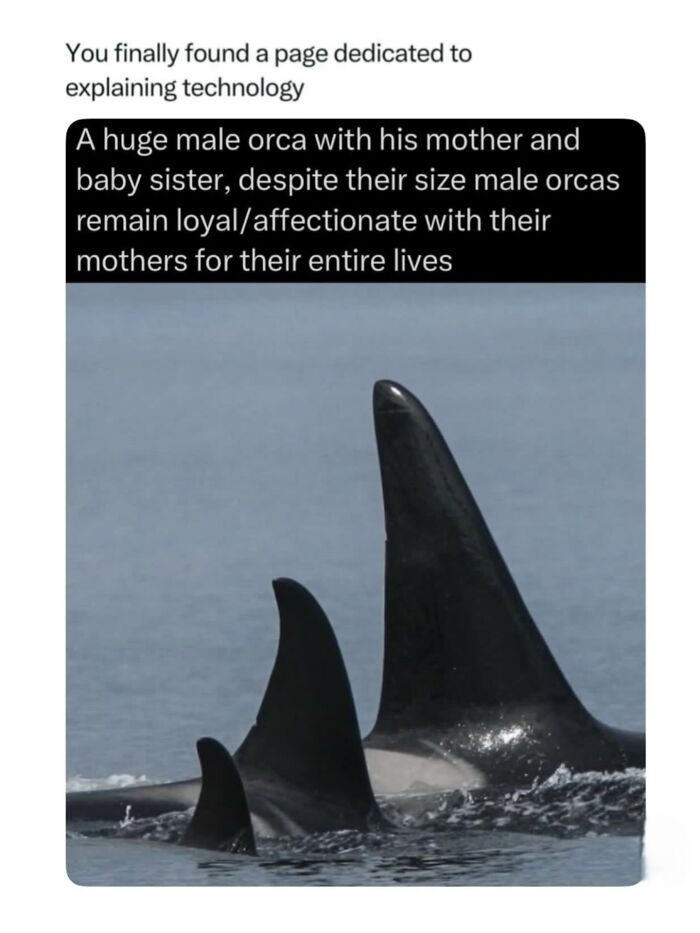
Orcas are famous for being the ocean’s most dominant predators, but behind the scenes, they have some of the most devoted family lives in the animal kingdom. Even when a male orca grows to a massive size—sometimes reaching 20 feet and weighing over six tons—he rarely ever leaves his mother’s side. Unlike many other mammals where males strike out on their own, male orcas stay in their mother’s pod for their entire lives. They are often seen traveling, hunting, and resting right next to her, showing a level of lifelong loyalty that is almost unheard of in the wild.
This bond is actually a vital survival strategy. Mother orcas are the keepers of knowledge; they know the best hunting spots and how to navigate through dangerous waters. Studies show that a mother’s presence significantly increases the survival rate of her adult sons, as she often shares her catch with them and guides them through lean times. Watching a giant male swim gently alongside his mother and baby sister isn’t just a sweet moment; it’s a look at a complex social structure where family connection is the key to ruling the ocean.
We cannot begin to understand the emotional intelligence of orcas. The area of our brain that deals with social and family bonds is many times larger in an orca brain than in a human brain, and has far more connections. Family bonds are everything to an orca.
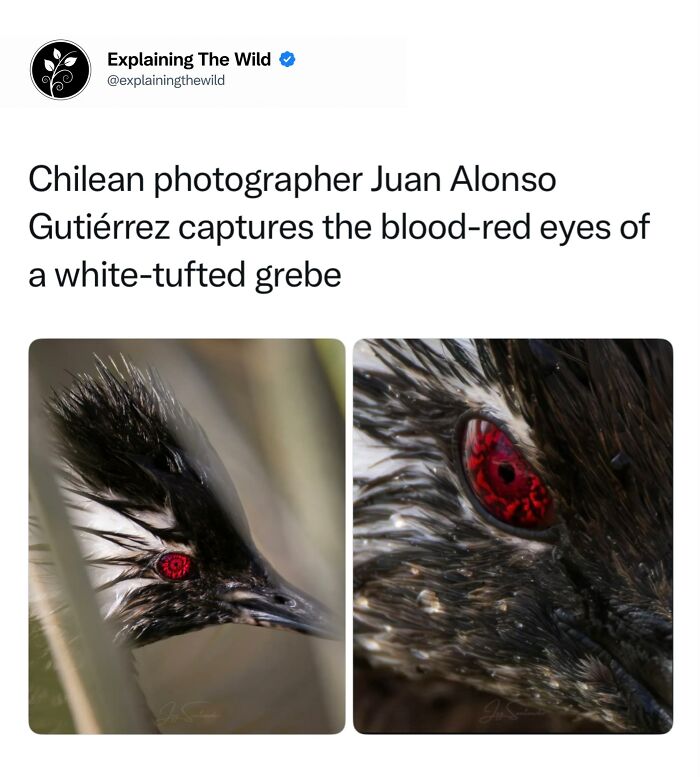
The white-tufted grebe, Rollandia rolland, is a small diving bird found across much of South America. Its most striking features are the bright red iris and the white fan of feathers behind each eye.
It spends much of its time on freshwater lakes and ponds, diving underwater to catch small aquatic invertebrates and fish. Despite those intimidating-looking eyes, this bird is only around 20 to 30 cm long.
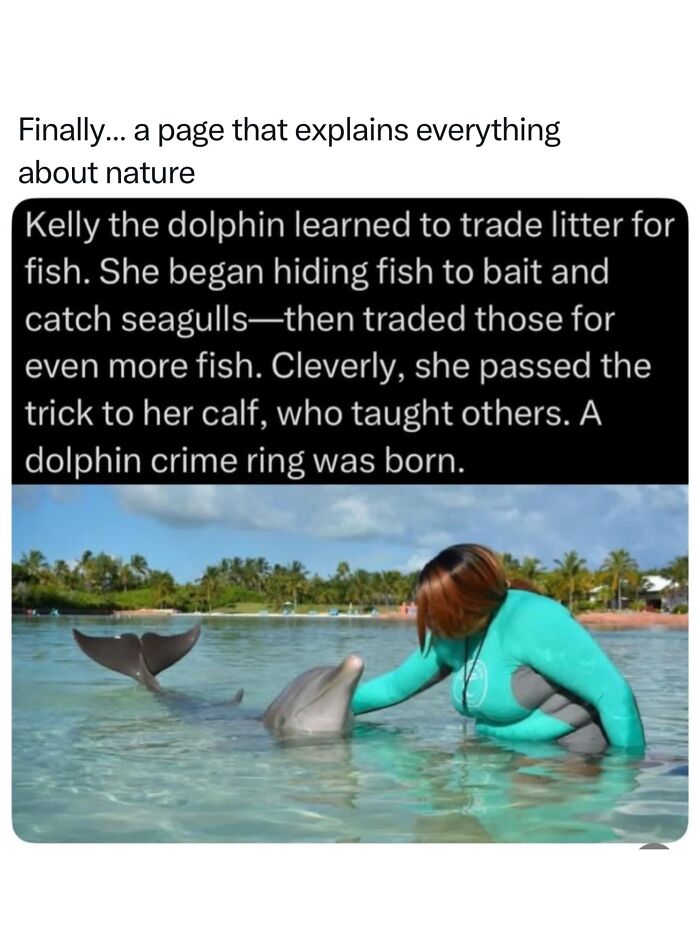
Kelly the dolphin at the Institute for Marine Mammal Studies is the mastermind behind one of the most sophisticated “economies” ever seen in the animal kingdom. It started when her trainers began rewarding her with fish for every piece of litter she cleared from her pool. Kelly quickly figured out a loophole: if she found a large piece of paper, she would hide it under a rock and tear it into tiny scraps, trading each small piece individually for a separate fish. By “investing” her time this way, she maximized her profits far beyond what the trainers intended.
But Kelly didn’t stop there. She eventually realized that a single fish could be used as bait. She would hold onto a fish, wait for a seagull to land on the water to grab it, and then catch the bird. Since her trainers gave her a huge reward of fish for every seagull she caught, she had essentially created a biological “multiplier” for her food supply. Most impressively, she taught these exact tactics to her calf, who then passed them on to the rest of the pod. This deliberate sharing of a complex, multi-step trick is a clear sign of how dolphins use culture and communication to outsmart their environment.
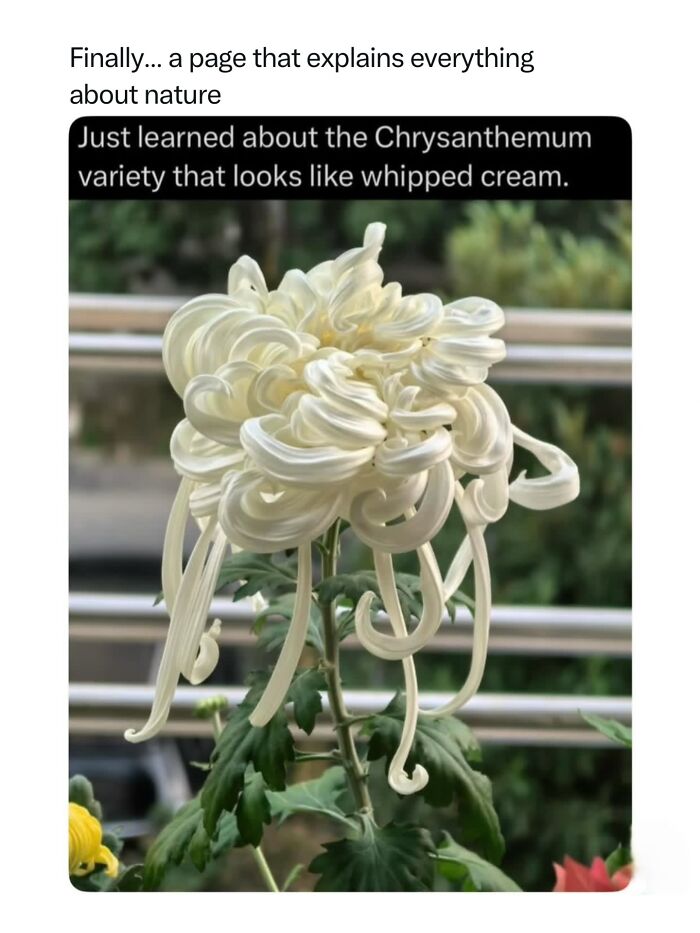
The “Saffina” Chrysanthemum is a stunning example of how nature can create shapes that look almost delicious. These flowers are often called the “whipped cream” variety because their petals curve inward in thick, fluffy layers that look exactly like a swirl of topping on a dessert. This specific look is the result of centuries of selective breeding, where gardeners focused on a trait called “incurved” petals to create a bloom that is dense, perfectly round, and incredibly soft to the eye.
While they look like a treat, this design actually serves a purpose in the garden. The tight, overlapping layers of petals help protect the center of the flower from rain and wind, keeping the reproductive parts dry and safe. These blooms can grow to be surprisingly large and heavy, requiring strong, sturdy stems to hold up their “fluffy” heads. It is a beautiful reminder that plants don’t just grow for survival—they can also create patterns that are purely mesmerizing and show off the incredible diversity of the floral world.
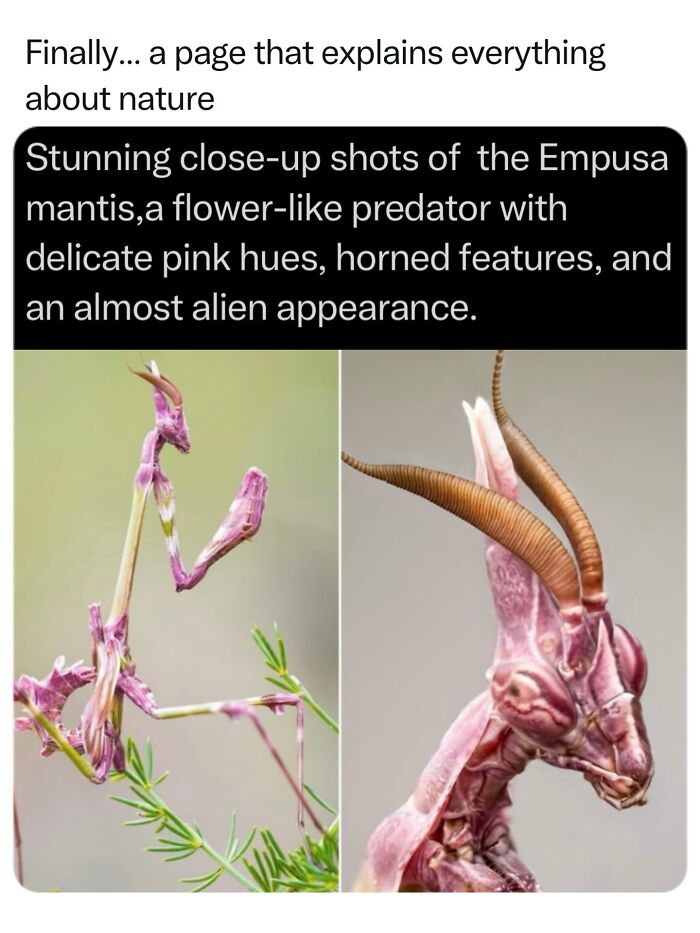
The Empusa mantis is a master of floral mimicry, utilizing delicate pink hues and jagged, leafy textures to blend into Mediterranean shrubs. This camouflage allows it to remain invisible to unsuspecting pollinators.
Its striking “horned” crest and slender, alien-like anatomy are specialized tools for survival. These features break up the insect’s silhouette, confusing birds while providing the mantis a clear advantage as an ambush predator.
There's some very heavy editing going on here. Those solid-looking brown structures are actually feathery antennae. I don't know why they feel the need to do this when the reality is so cool.
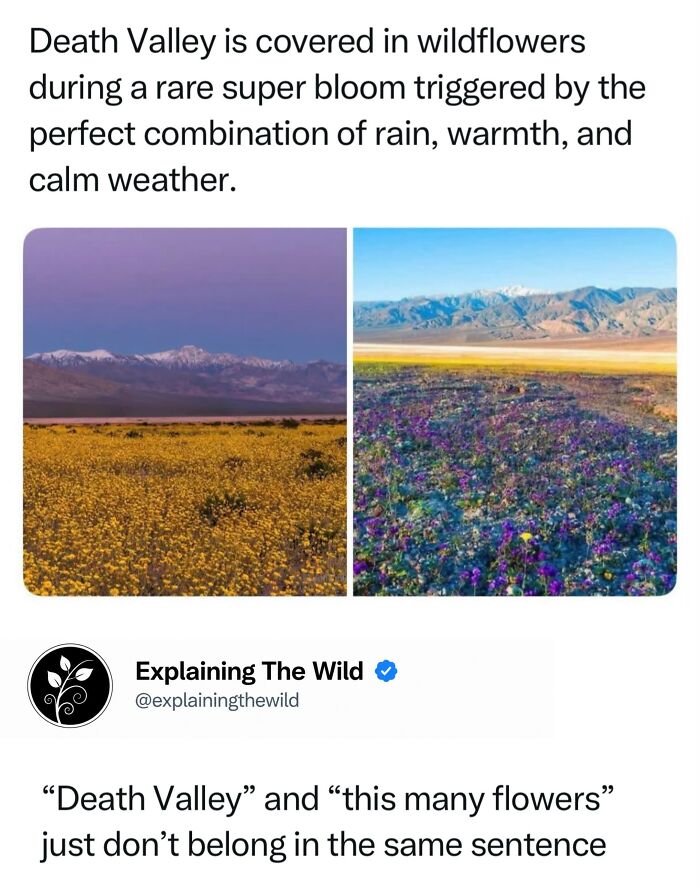
Death Valley is one of the driest places in North America, but every few years, the desert can completely transform. When enough rain reaches the ground at the right time, followed by favorable temperatures and conditions, thousands of wildflowers can suddenly appear.
These spectacular super blooms are rare because the conditions have to line up almost perfectly. For a landscape this harsh, seeing it covered in flowers is honestly wild.
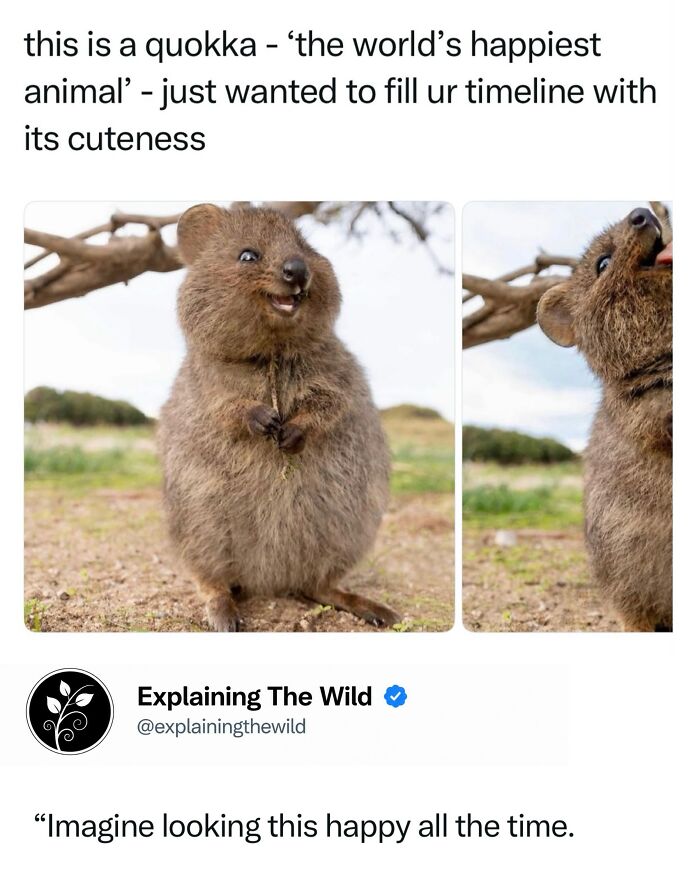
Quokkas are small marsupials found mainly on Rottnest Island and a few isolated areas of Western Australia. Their upturned mouths and relaxed facial features give them a permanent smile, earning them the nickname “the world’s happiest animal,” even though they’re not actually smiling like humans.
Despite their cheerful appearance, quokkas face real challenges in the wild, including habitat loss and introduced predators such as foxes and cats. Thanks to conservation efforts and protected habitats, their populations have remained stable in key areas, allowing these adorable marsupials to continue charming people from around the world.
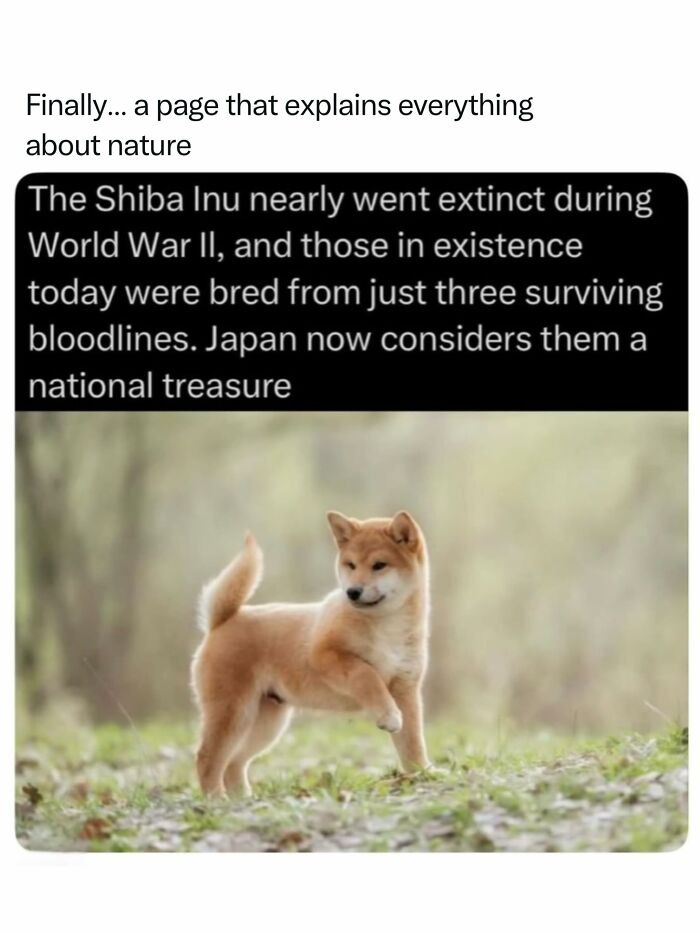
The Shiba Inu nearly went extinct during World War II due to a devastating combination of severe food shortages, wartime bombing raids, and a post-war outbreak of distemper. By the end of the conflict, the ancient breed was nearly wiped out entirely, leaving only a handful of dogs scattered across remote mountainous regions. To save the breed from permanent erasure, dedicated preservationists painstakingly tracked down the remaining survivors, ultimately rebuilding the entire modern population from just three distinct surviving bloodlines, known as San’in, Mino, and Shinshu.
Today, every single Shiba Inu in existence traces its ancestry directly back to those three heroic canine lineages. In recognition of their deep cultural significance, incredible resilience, and ancient heritage, Japan officially declared the Shiba Inu a precious national treasure. This prestigious status ensures the breed is legally protected and celebrated as a symbol of national pride, transforming them from the brink of total extinction into one of the most beloved and recognizable dog breeds in the world.
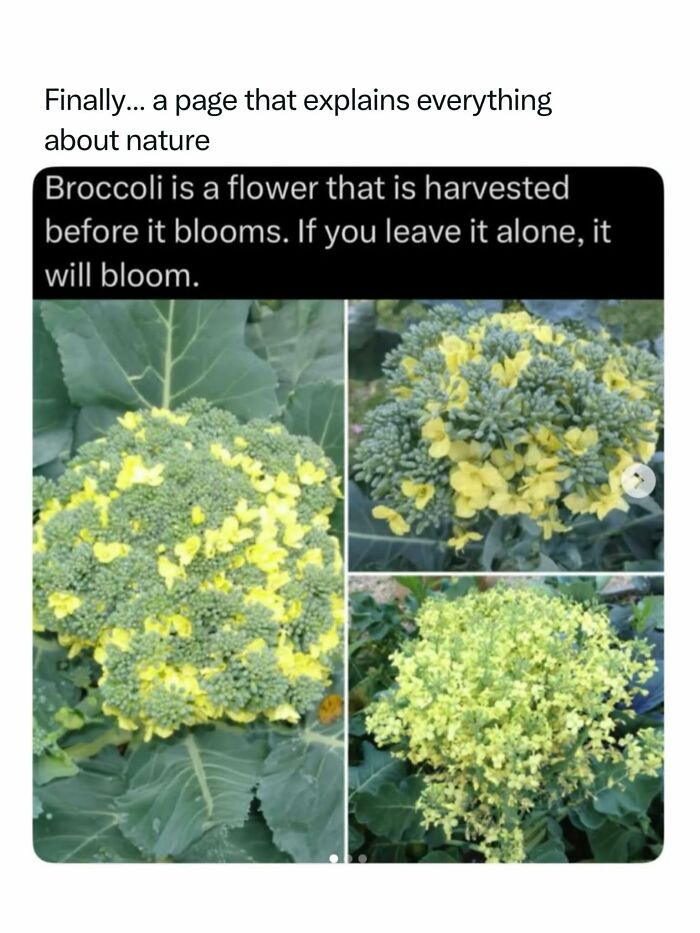
Broccoli is actually a dense cluster of hundreds of immature flower buds that is harvested right before it has a chance to bloom. The thick central stalk supports tight green clusters, called florets, which are tightly packed head-to-head. If a farmer leaves a head of broccoli alone in the field instead of cutting it down for harvest, those tiny green bumps will slowly swell, separate, and burst open into a vibrant blanket of small yellow flowers.
Once the plant enters this blooming stage, the transformation changes its entire composition. The thick stalk becomes incredibly woody and tough, while the natural sugars redirect into growing the flowers, leaving the rest of the plant bitter and completely unpalatable. This natural lifecycle is why timing is everything in agriculture, as farmers must pick the vegetable during a very strict window while the buds are still dormant, closed, and packed with nutrients.
Forest air feels instantly refreshing because trees release a natural compound called alpha-pinene, an aromatic chemical found in high concentrations within conifer trees like pines, firs, and spruces. This organic compound belongs to a class of defensive chemicals known as phytoncides, which plants secrete to protect themselves from harmful microbes and insects. When you breathe in the crisp air of a dense pine forest, you inhale these airborne molecules, giving the environment its distinct, sharp, and invigorating woody scent.
Once inside your body, alpha-pinene acts as a highly effective natural bronchodilator, meaning it relaxes the muscle bands around your airways and causes them to dilate. This opening of the air passages allows your lungs to take in significantly more oxygen with less physical effort, directly mimicking the physiological effects of modern asthma treatments. This immediate biological response clears the respiratory system, reduces inflammation, and triggers a deep sense of physical relief, proving that the soothing effect of a forest walk is a concrete chemical reaction.
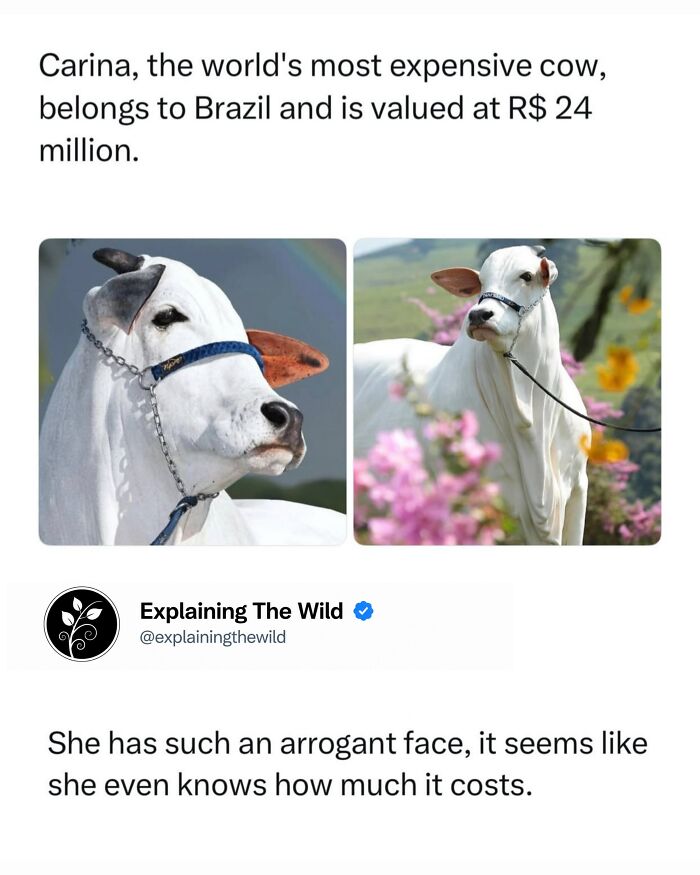
Carina is a Nelore cow from Brazil and is considered the most valuable cow ever sold. Her extraordinary value comes from decades of selective breeding, exceptional genetics, fertility, and the ability to pass desirable traits to future generations through breeding programs. The Nelore breed is famous for thriving in hot climates, resisting parasites, and producing high-quality beef. For elite animals like Carina, their genetic potential is often worth far more than the animal itself, making them some of the most valuable livestock on Earth.
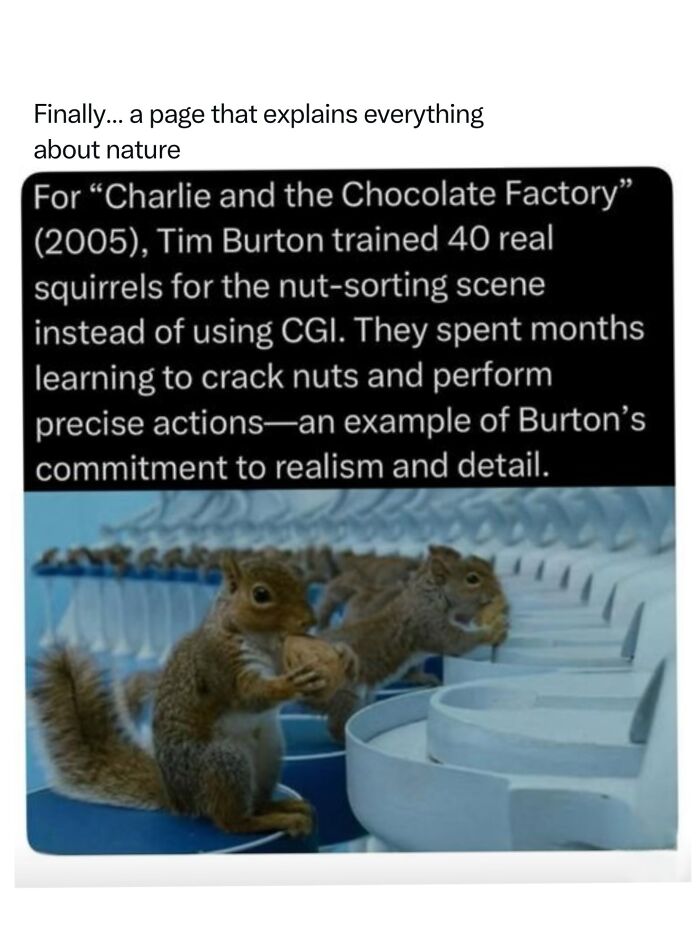
For the 2005 film Charlie and the Chocolate Factory, director Tim Burton chose an incredible path to realism. Instead of relying on digital effects for the nut sorting scene, he decided to use forty actual squirrels.
Professional animal trainers spent nineteen weeks teaching these squirrels how to sit on little stools, tap a nut to see if it was rotten, and then drop the good ones onto a conveyor belt.
The squirrels started their training at just a few months old to ensure they were comfortable with the complex tasks. While CGI could have easily replicated the scene, Burton wanted the unique, unpredictable movements that only real animals provide. The result is a memorable cinematic moment where every nut cracking motion was performed by a living, breathing creature. It remains a legendary example of practical filmmaking and extreme patience on a movie set.
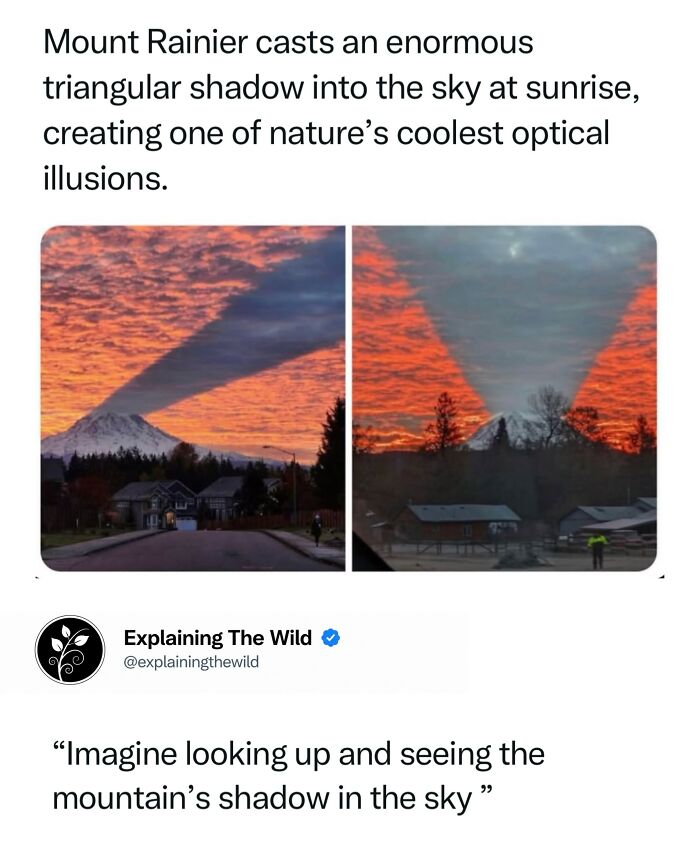
At sunrise, when the Sun is behind Mount Rainier, the mountain can cast a huge triangular shadow through the atmosphere. From the right viewpoint, the shadow appears to rise into the sky behind the mountain.
The effect is especially striking when clouds are lit by the rising Sun, making the dark outline of the mountain stand out against the glowing sky.
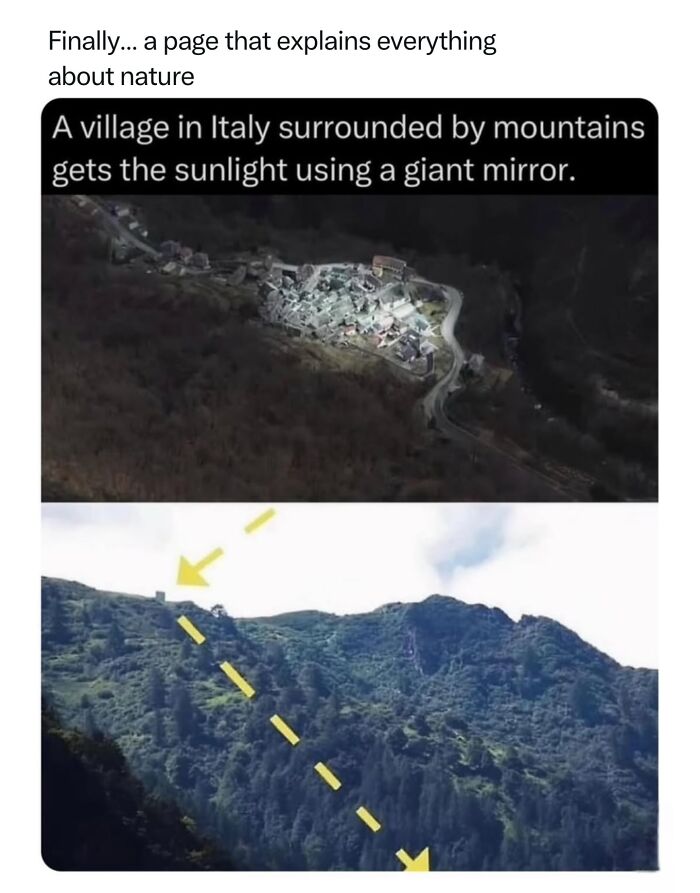
Deep in a valley of the Italian Alps, the tiny village of Viganella used to spend nearly three months of every year in total darkness. From mid-November to early February, the surrounding peaks are so steep that the sun never rises high enough to clear the ridgeline, leaving the town square in a freezing, perpetual shadow. In 2006, the town’s mayor and a local architect implemented a brilliant engineering solution: a 40-square-meter steel mirror installed on the mountainside 870 meters above the village to catch and reflect the sun’s rays.
This “computerized sun” is programmed to track the sun’s path across the sky, tilting and rotating in real-time to precisely aim a beam of light onto the town’s main piazza. While it doesn’t warm the entire valley, it provides enough light and heat to transform the square into a communal gathering spot during the harshest winter months. This project has since inspired other “dark” towns, such as Rjukan in Norway, proving that with a bit of mirrors and physics, humans can overcome even the most daunting geographical barriers.
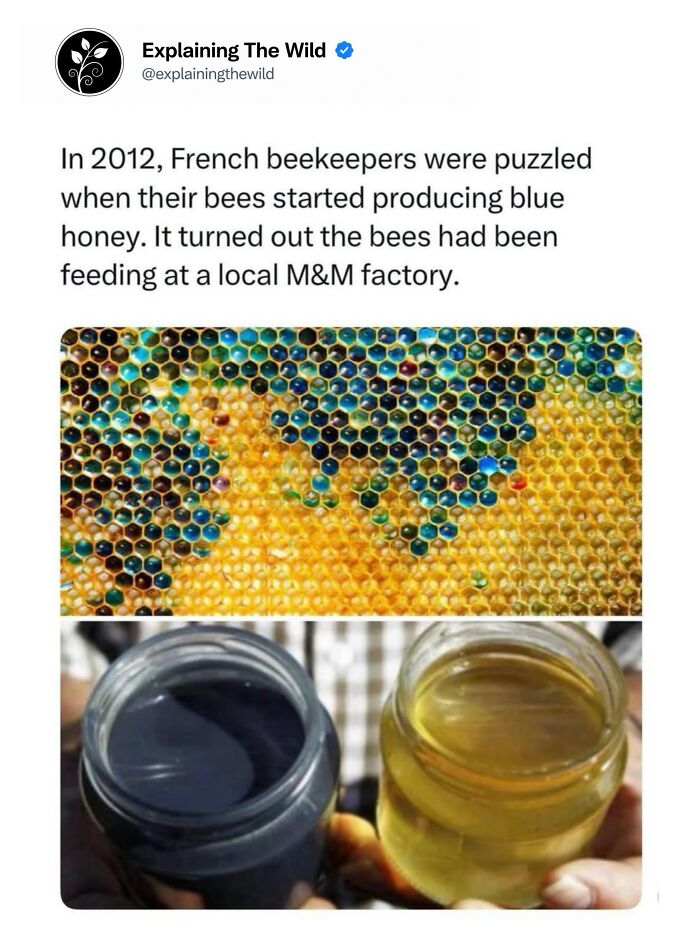
Beekeepers in Ribeauvillé, France, were shocked when some of their hives started producing honey in unusual shades of blue, green and even brown. After investigating, they traced the problem to a nearby biogas plant processing sugary waste from a Mars confectionery facility.
The bees had been feeding on the exposed candy waste instead of sticking to flowers. The resulting honey was considered unsellable, and the facility later changed how the waste was stored to keep the bees away.
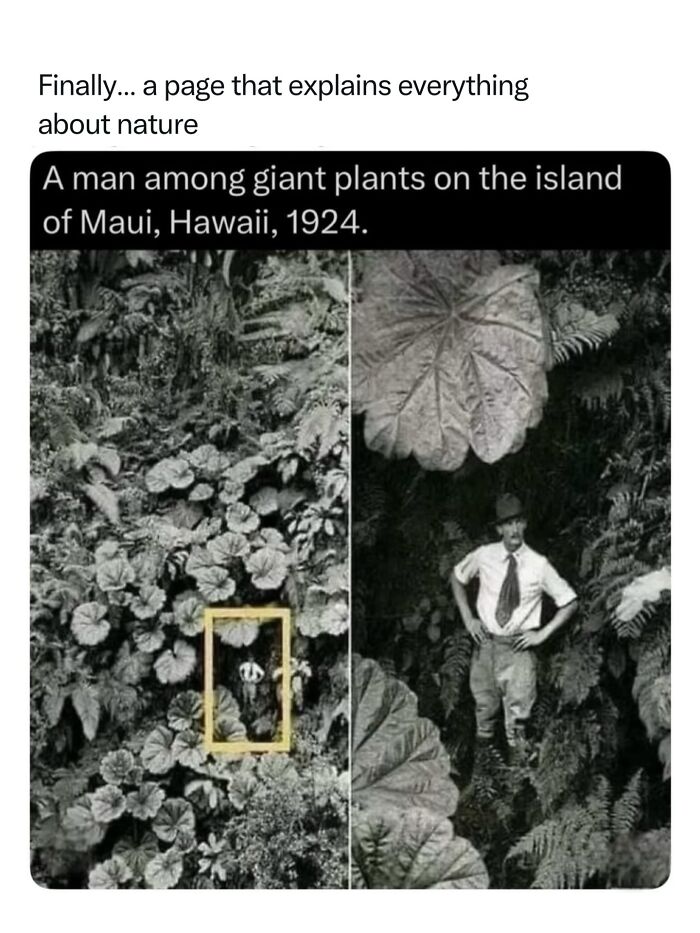
If you think this looks like a scene straight out of a sci-fi movie or Jurassic Park, you are not alone. This surreal photograph from 1924 shows a man completely dwarfed by massive plants on the island of Maui, Hawaii.
How do plants get this ridiculously big? Hawaii provides the ultimate recipe for extreme botanical growth. The islands boast a perfect combination of heavy tropical rainfall, consistent warm temperatures, and incredibly nutrient-rich volcanic soil. This volcanic earth acts as a natural super-fertilizer, allowing certain tropical plants, like giant elephant ears, to grow leaves large enough to easily be used as actual umbrellas.

The rhubarb family is called Gunnera which has many varieties & sizes. Even in northern Europe we get very large ones. But they are all poisonous except our small rhubarb.
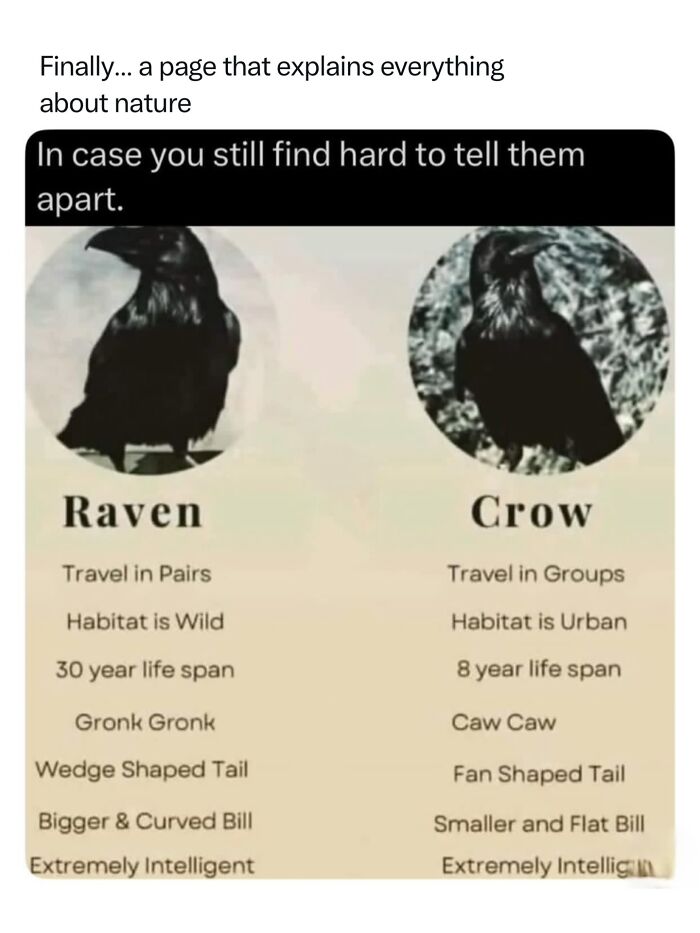
Telling the difference between a crow and a raven usually comes down to scale and silhouette. Ravens are significantly larger, roughly the size of a red-tailed hawk, with a thick, heavy beak that looks like it belongs on a much bigger bird. When they are in flight, the easiest way to identify them is by looking at the tail; a raven’s tail feathers grow in a distinct wedge or “V” shape, while a crow’s tail is much shorter and rounded like a fan.
Their behavior and “voices” are also completely different. Crows are social city-dwellers that travel in large groups and make the classic, high-pitched “caw-caw” sound. Ravens, on the other hand, are more solitary or travel in pairs, preferring wilder landscapes like deep forests or mountains. Instead of a caw, they produce a deep, croaking “gronk” sound that vibrates through the air. If you see a bird performing acrobatic flips or soaring like a hawk, it’s almost certainly a raven, as crows tend to flap more consistently and rarely glide.
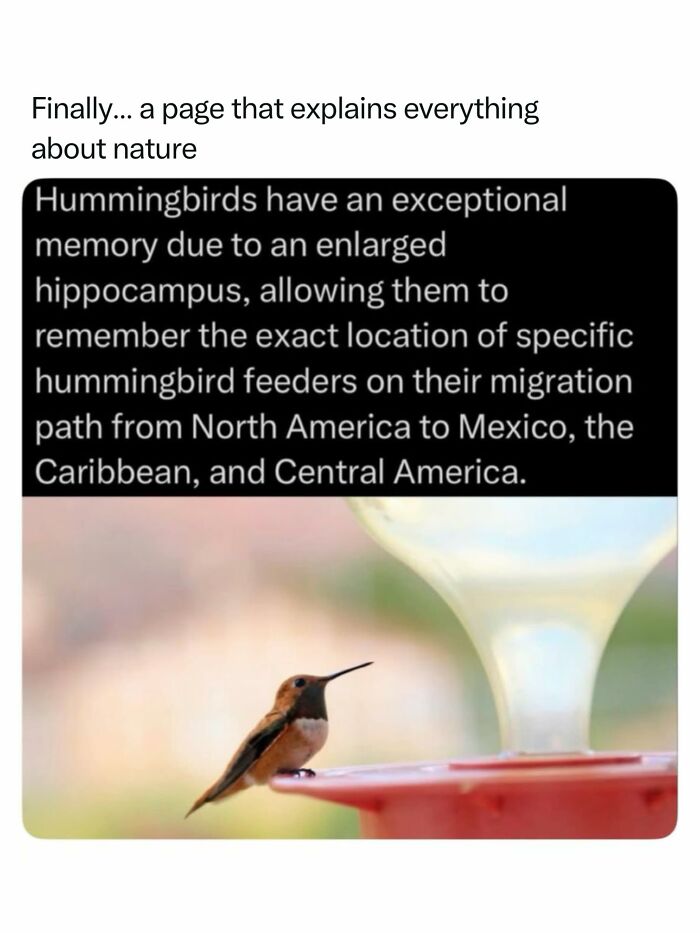
Hummingbirds possess an exceptional memory due to an enlarged hippocampus, the specific region of the brain responsible for spatial learning and memory. Relative to their overall body size, their hippocampus is significantly larger than that of any other bird species. This advanced brain structure allows them to map out and remember the exact geographic location of specific hummingbird feeders and patch works of flowers along their immense migration paths.
This precise mental map is absolutely vital for their survival as they travel thousands of miles from North America down to Mexico, the Caribbean, and Central America. Hummingbirds have an incredibly high metabolic rate, requiring them to consume up to double their body weight in nectar every single day. By remembering which yards have reliable feeders and exactly when specific flowers bloom from year to year, they can refuel efficiently without wasting precious energy searching blindly for food during their exhausting journey.
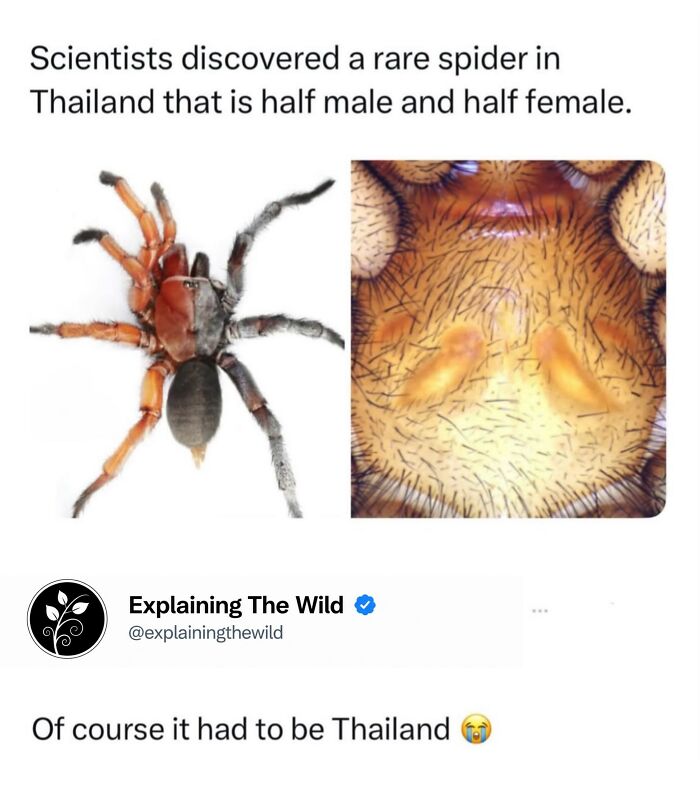
Researchers in Thailand discovered an extraordinarily rare spider with a condition called bilateral gynandromorphism. The spider developed with male characteristics on one side of its body and female characteristics on the other, making it one of the most unusual animals ever documented. This isn’t the same as being intersex.
Gynandromorphism happens because of an error during the earliest stages of development, causing different cells to develop as male or female. It has been recorded in butterflies, birds, crustaceans, and a few spiders, but it’s exceptionally rare.
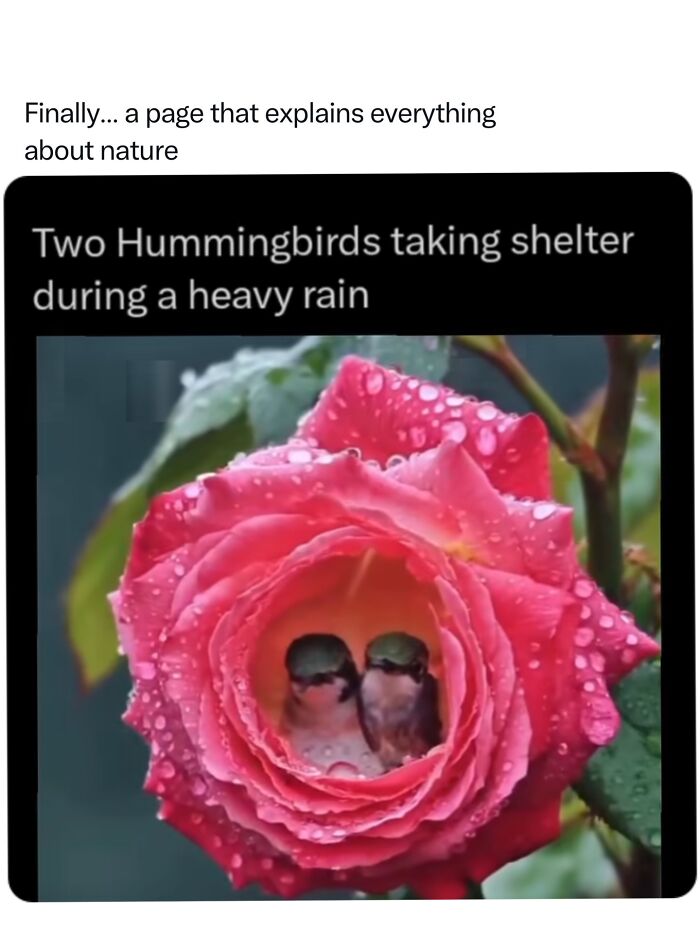
Hummingbirds are the world’s most high-performance aerial machines, but their extreme “speed-tech” comes with a massive biological cost: they are incredibly vulnerable to heavy rain. Because their feathers are so small and specialized for hovering, a single large raindrop can hit with the force of a falling brick relative to their body mass. To survive a storm, these birds enter a state of clinging torpor, finding a sheltered branch where they can tuck their heads and remain motionless to prevent their wings from becoming waterlogged and heavy.
The engineering behind this survival strategy is centered on heat conservation. During a heavy downpour, a hummingbird’s internal “engine” can’t keep up with the cooling effect of the water, so they seek out micro-climates under broad leaves or dense canopies. By huddling together or staying perfectly still, they minimize the surface area exposed to the elements. This “standby mode” allows them to wait out the weather without burning through their limited nectar reserves, proving that even the fastest pilots in the sky know when it’s time to ground the fleet.
Nope. This one's made up, never recorded in nature, and the pic is ai.
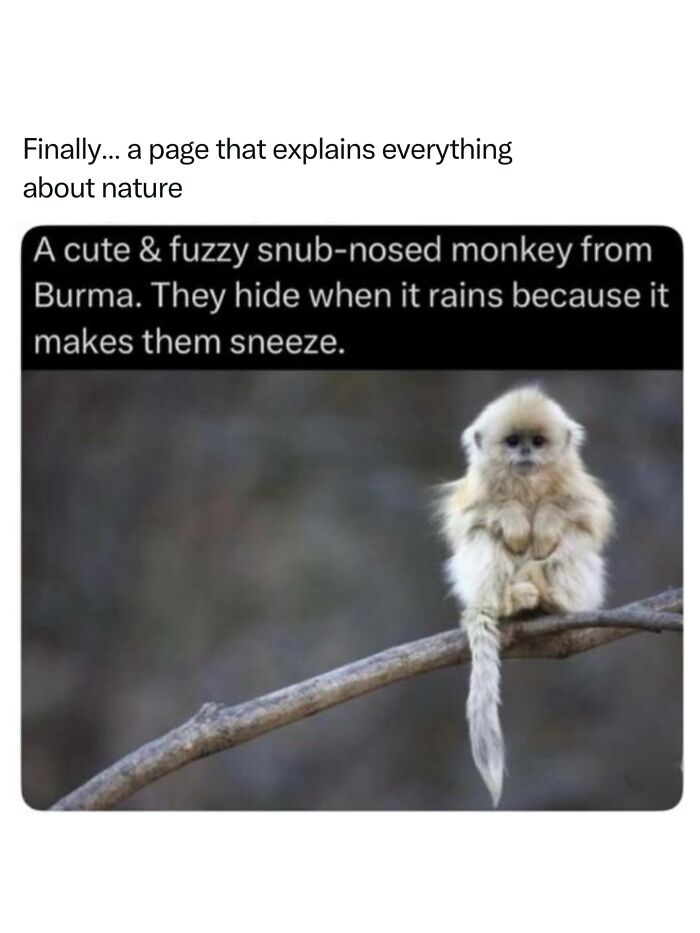
The Myanmar snub nosed monkey is one of the most unique primates on the planet. Its most striking feature is its upturned nose with nostrils that face directly upward. This physical trait presents a major challenge during the monsoon season. When it rains, water easily falls straight into their nose, causing uncontrollable and loud sneezing fits.
To avoid being detected by predators while sneezing, these monkeys have developed a clever survival tactic. During rainstorms, they tuck their heads between their knees or hide deep within thick tree branches to keep their faces dry. They live in high altitude forests and are incredibly rare, making every sighting of these fuzzy creatures a significant event for conservationists.
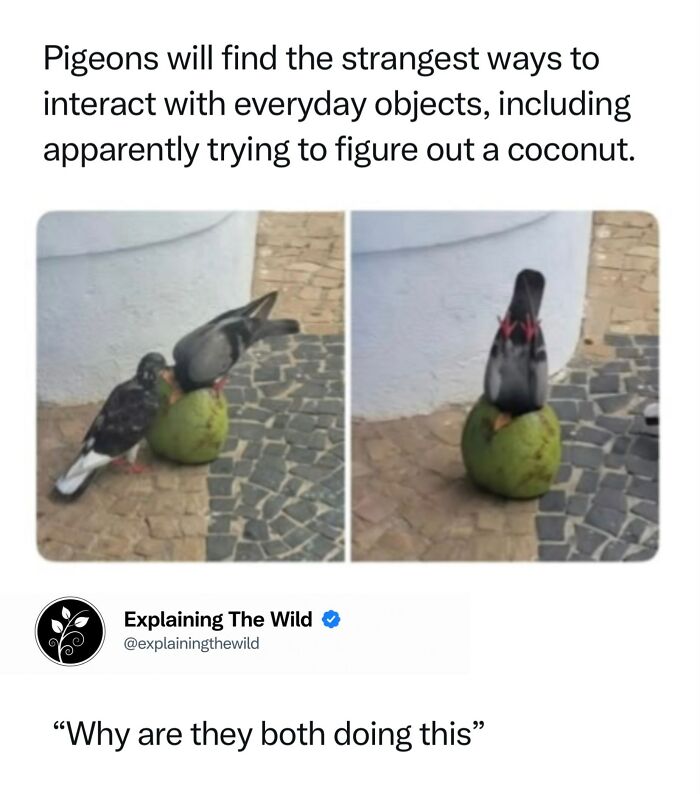
Pigeons are surprisingly curious birds, and they’ll peck, investigate, and poke at unfamiliar objects they come across. In this case, two pigeons seem very interested in a coconut — although there’s no evidence they’ve actually developed some special “coconut extraction technique.”
Still, watching pigeons confidently do completely random things never gets old.

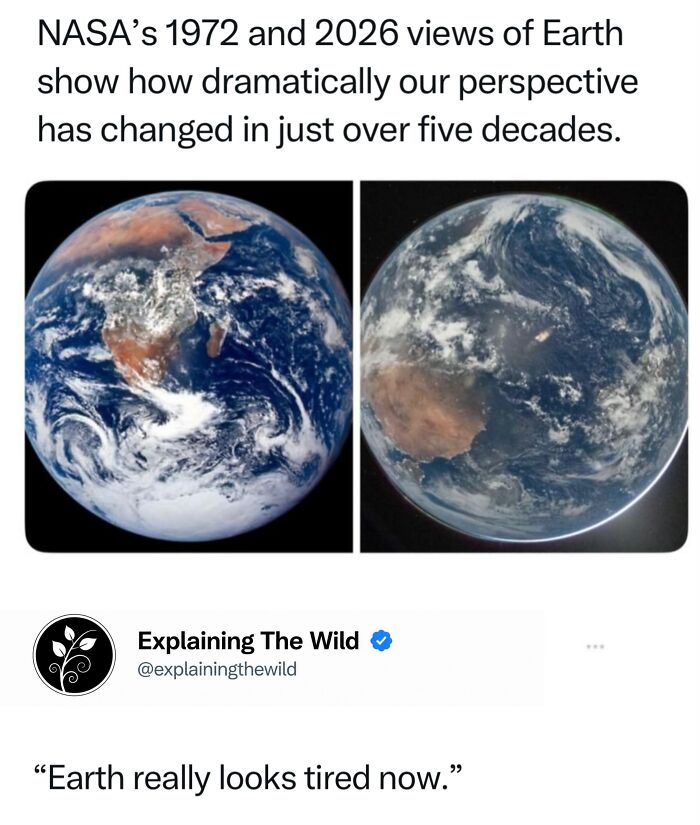
The 1972 image is NASA’s famous “Blue Marble,” photographed by the Apollo 17 crew on their way to the Moon. The 2026 image comes from the Artemis era, when astronauts once again photographed Earth from deep space.
The two images aren’t scientifically comparable as a before-and-after picture of Earth’s condition. They were taken from different missions, at different times, with different cameras and viewing conditions. But seeing them side by side is still a pretty striking reminder of how far our ability to photograph and study Earth has come.
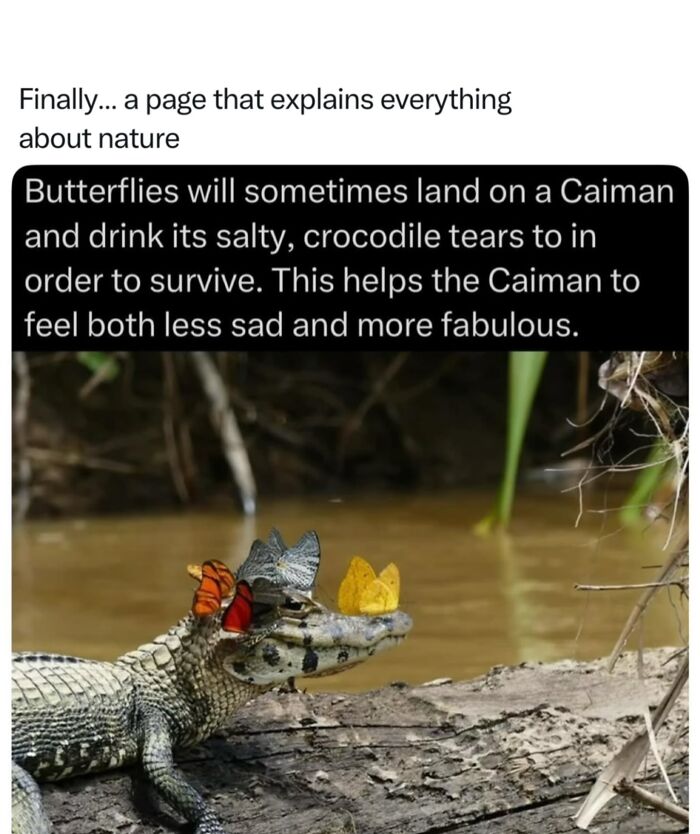
In the Amazon rainforest, survival often requires a bit of unusual teamwork. Butterflies are frequently seen clustering around the eyes of caimans to drink their tears—a behavior known as lachryphagy.
The butterflies aren’t there for comfort; they are seeking essential salts and minerals, particularly sodium, which are scarce in their nectar-heavy diet but abundant in the reptiles’ secretions. While it might look like a spa day for the caiman, it is a vital nutritional boost for the butterflies that helps them stay healthy and find mates. It’s a stunning example of how even the smallest creatures find ingenious ways to thrive in a competitive ecosystem.
It does NOT make the caiman feel less sad and more fabulous. It's extremely annoying and sometimes painful. Where do you think those tears come from in the first place.
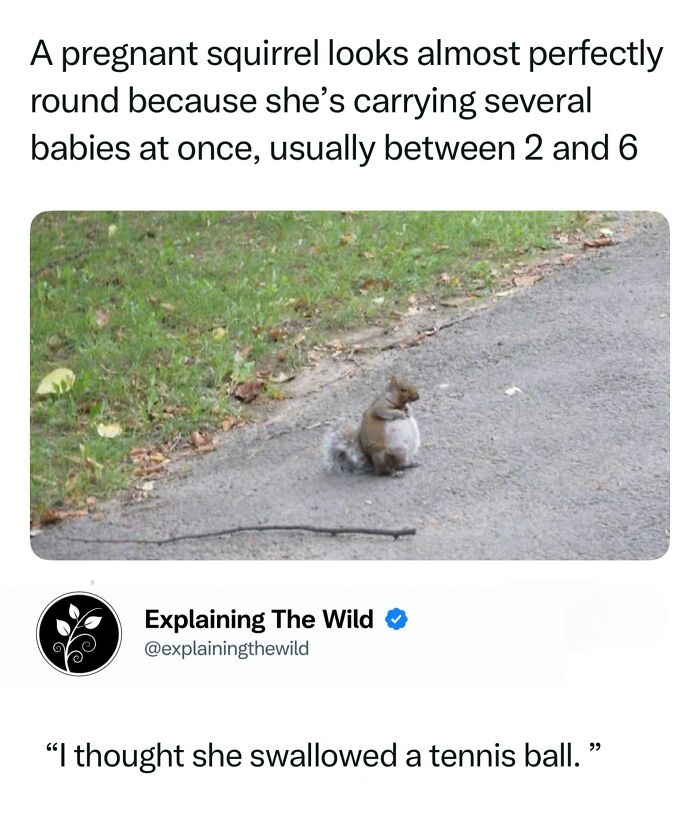
Female squirrels are pregnant for only about 38 to 46 days, but during the final weeks their tiny bodies become noticeably round as their babies grow. Most litters contain between two and six young, though larger litters can happen when food is plentiful.
Not long after giving birth, the mother raises the babies alone in a nest called a drey, feeding and protecting them until they’re ready to explore the world on their own. Seeing a pregnant squirrel in the wild is uncommon because they spend much of this time hidden away and staying cautious.
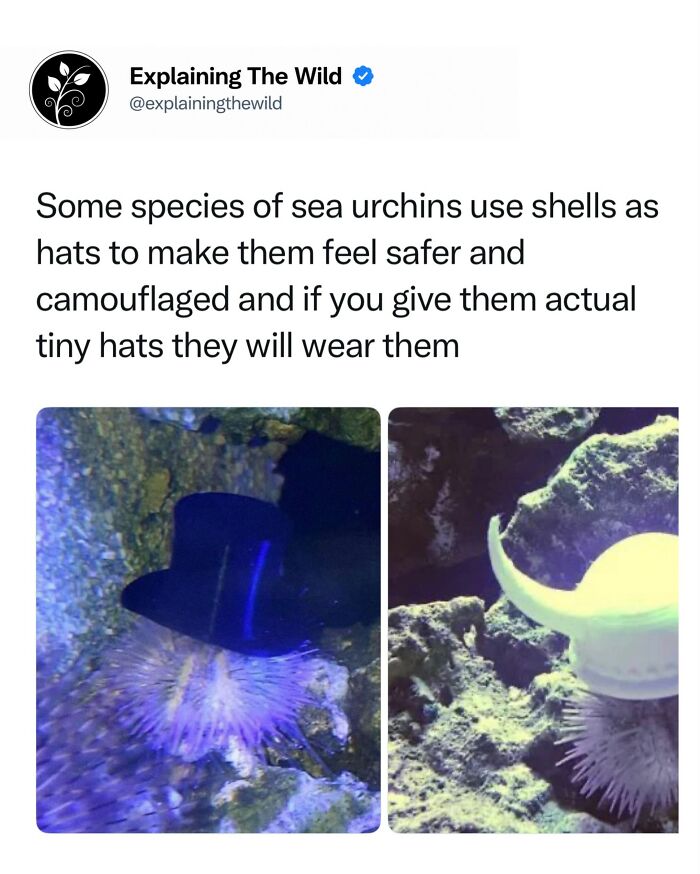
Many sea urchins practice a behavior called covering. Using their tube feet and tiny pincer-like structures called pedicellariae, they place shells, rocks, seaweed, and other objects on top of their bodies. This extra cover helps camouflage them from predators and can also protect them from strong sunlight and waves.
Scientists have even discovered that if you offer them tiny hats or other lightweight objects, they’ll often pick them up and wear them just like they would a shell. They don’t know they’re wearing a hat, of course. They’re simply following one of nature’s clever survival instincts.
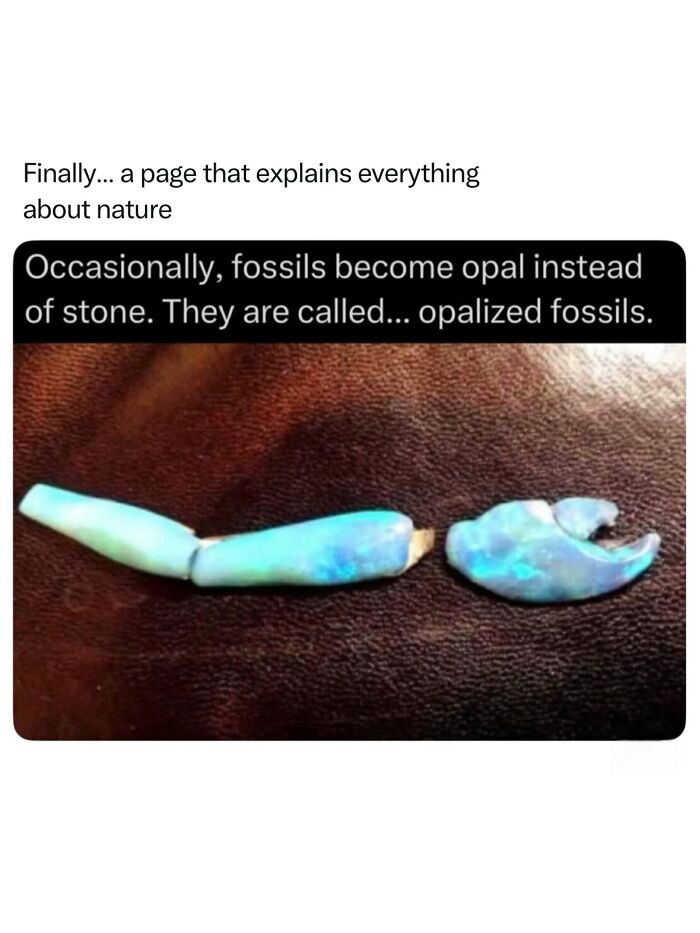
One of the rarest and most visually stunning phenomena in geology is the creation of opalized fossils. While most fossils are formed through “permineralization”—where minerals like silica or calcite turn bone into stone—opalized fossils undergo a much more complex chemical transformation. This happens when silica-rich water seeps into the cavities left by decaying organic matter, such as shells, wood, or even dinosaur bones, and slowly solidifies into precious opal
The biological “blueprint” of the creature is preserved, but the material is replaced by a lattice of microscopic silica spheres. The way these spheres are stacked determines how they diffract light, creating the iconic “play of color” that opal is famous for. Because this process requires very specific environmental conditions—usually involving ancient inland seas and volcanic activity—the majority of the world’s opalized fossils are found in the Australian Outback, particularly in places like Coober Pedy and Lightning Ridge.
These specimens are not just beautiful; they are high-definition records of prehistoric life. Scientists have discovered entire “ghost” skeletons of marine reptiles and prehistoric pinecones that have been turned into shimmering, rainbow-colored gems. It is a masterclass in natural engineering, proving that under the right pressure and time, the remains of the past can be transformed into the Earth’s most brilliant treasures.
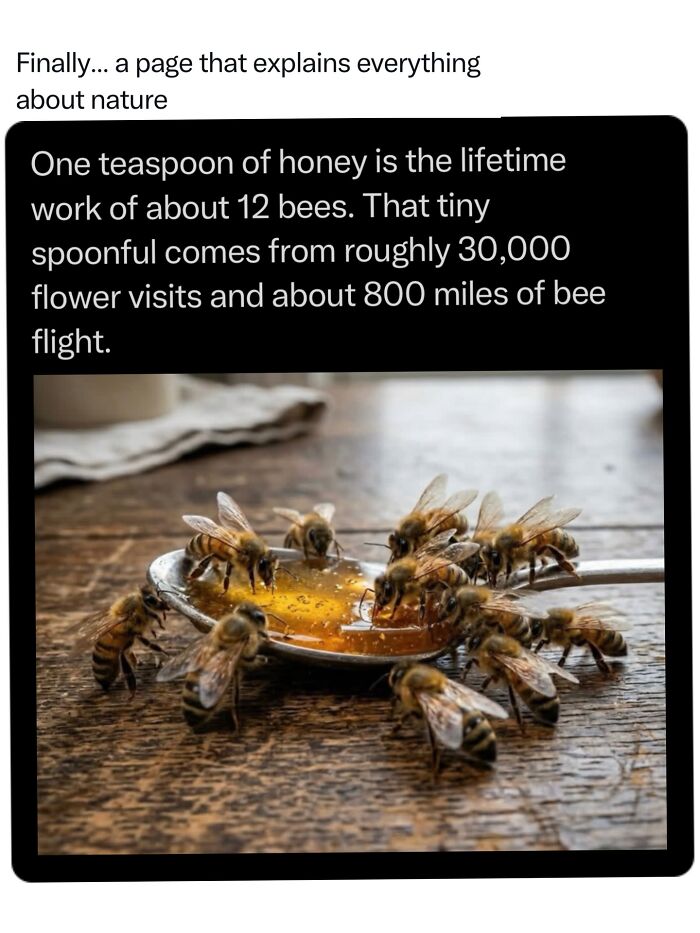
Every time you dip a teaspoon into a jar of honey, you are looking at the combined life’s work of twelve individual honeybees. A single worker bee only produces about one-twelfth of a teaspoon of honey in her entire lifetime, which lasts just a few weeks during the busy summer months. To gather the nectar required for that one small spoonful, bees have to visit roughly 30,000 flowers, flying a combined distance of about 800 miles. It is a staggering amount of physical labor for a creature that weighs less than a gram.
The process is an incredible display of natural teamwork and chemistry. Bees don’t just collect nectar; they transport it back to the hive and pass it from mouth to mouth, adding enzymes that break down complex sugars. Once stored in the honeycomb, they fan the liquid with their wings to evaporate the water until it thickens into the honey we know. This liquid gold is the colony’s essential fuel for survival, and knowing that it takes a dozen lives to fill just one spoon puts the immense value of these tiny pollinators into perspective.
Save wild bees. They are the main pollinators and are more endangered by bringing domesticated bees in who steal their food.
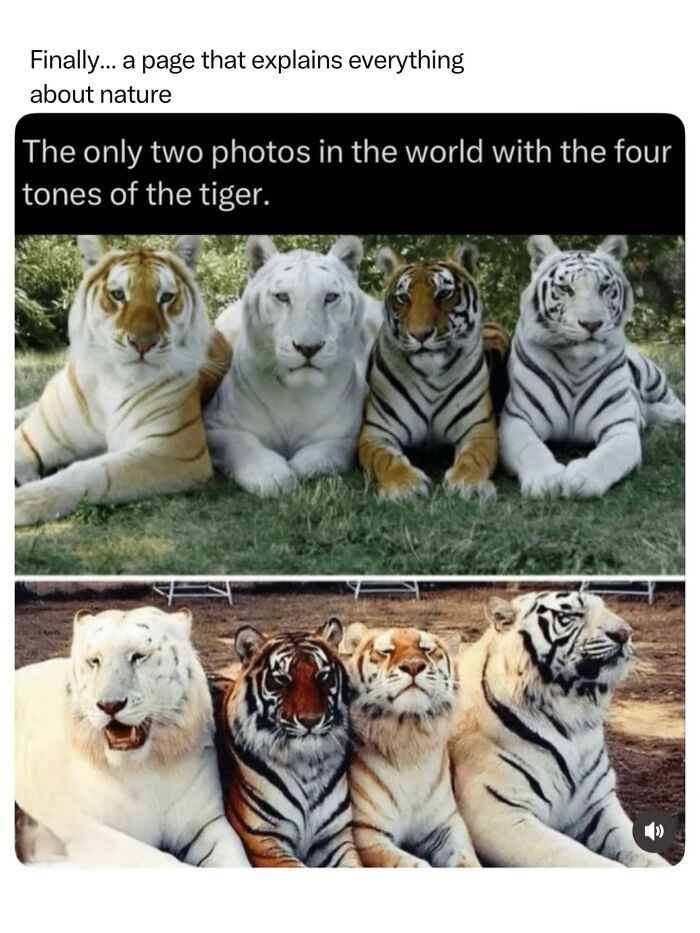
The tiger is a masterpiece of mammalian genetics, and seeing all four of its known color variations in a single frame is one of the rarest events in wildlife photography. These four tones—Standard Orange, White, Golden Tabby, and Snow White (Stripeless)—are not separate species, but the result of specific recessive genes interacting within the Bengal tiger lineage. While the standard orange coat provides high-definition camouflage in the dappled forest light, the other three variations are biological anomalies that rarely survive in the wild due to their high visibility to prey.
The “Golden Tabby” is perhaps the most unique, featuring a strawberry-blonde hue and faded stripes caused by a “wide-band” gene that suppresses the production of black pigment. On the other end of the spectrum, the “Snow White” or “Pure White” tiger lacks almost all striping, a result of double-recessive alleles that strip away the classic “disruptive coloration” technology tigers use to hide. Seeing these four together highlights the incredible diversity tucked away in a single DNA strand, proving that nature’s “code” can produce a stunning spectrum of beauty from a single ancestral blueprint.
These are farmed animals for the purpose of making money. Once their usefulness and cuteness wears off, they are often culled or sold indiscriminately to the highest bidder, no matter how unsuitable. Because of the extreme inbreeding, they often suffer from genetic diseases and are completely useless for rewilding or breeding programs. Attempts to 'rescue' these animals divert much-needed funds from conservation programs. No genuine rehabilitation wildlife service will allow you to handle their animals. If you are cuddling a baby animal, or washing an elephant, then you are being swindled into believing you are helping.
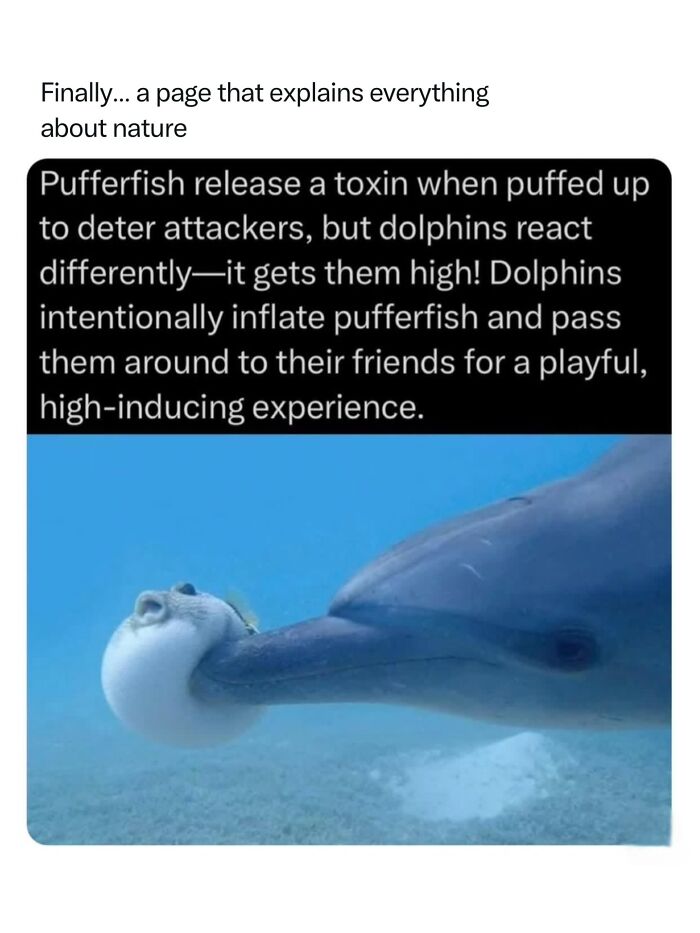
Dolphins are widely considered some of the most intelligent creatures in the ocean, but they also have a surprisingly rebellious side. While most marine animals avoid the toxic pufferfish at all costs, dolphins have been observed intentionally nipping at them to trigger a defense mechanism. When the pufferfish “puffs up” in distress, it releases a potent toxin called tetrodotoxin, which dolphins seem to use for a playful, high-inducing experience.
Rather than eating the fish, the dolphins carefully pass the inflated pufferfish around to their friends in what looks like a coordinated social circle. This behavior suggests that dolphins are capable of complex, recreational activities that go far beyond simple survival. It is a fascinating look at the intricate social lives and high-level brain function of these aquatic mammals!
Nope. There is no evidence for this at all. There was one short piece of footage taken, which the BBC incorporated into a documentary where they made this claim without any scientific support at all. Biologists do not support the theory, and it has not been recorded since.


They're copied from another page, as you can easily see. There's no fact checking done here.
Load More Replies... They're copied from another page, as you can easily see. There's no fact checking done here.
Load More Replies...



































 No fees, cancel anytime