Get Premium
Dark mode theme is available exclusively for premium users. Learn more about the benefits of subscribing.
No fees, cancel anytime.

 Dark Mode Ad-Free Browsing Unlimited Content
 Ad-Free Browsing Unlimited Content Dark Mode
Join 1.2 million Panda readers who get the best art, memes, and fun stories every week!
29submissions
Finished
High cost, not the highest quality — that’s how most people describe the healthcare system in the US. After all, Americans spend more on health emergencies than people elsewhere, yet the US trails far behind other high-income countries on access to care, administrative efficiency, equity, and outcomes. But while anyone who has experience with the system can tell you how expensive it can be, they always hold a dash of hope to receive fair treatment. Something they usually don’t get.
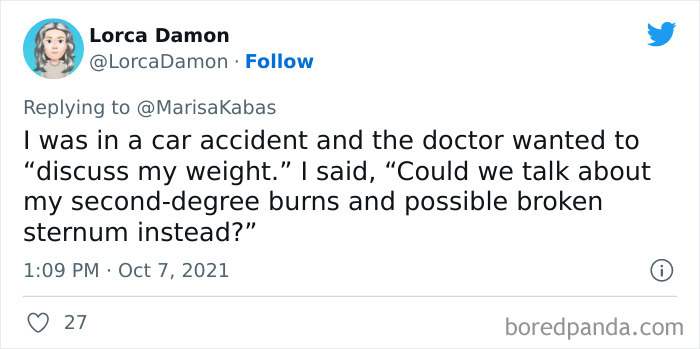
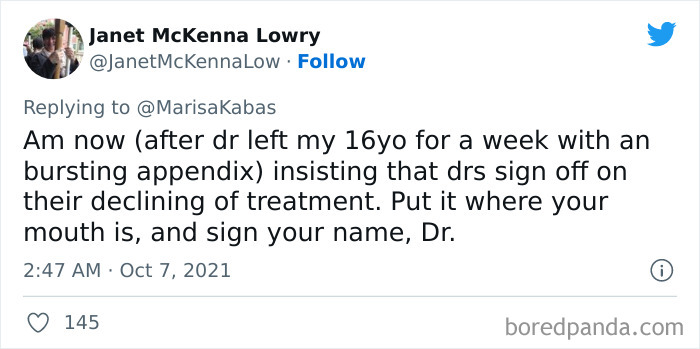
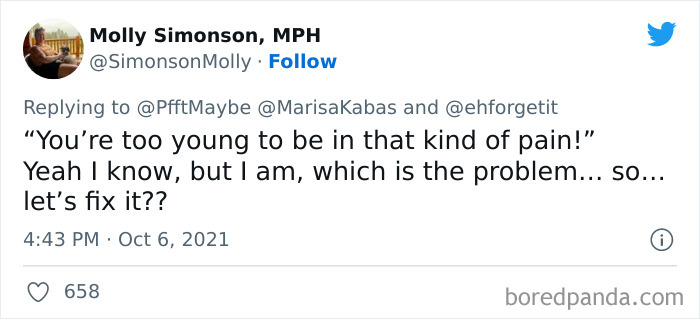
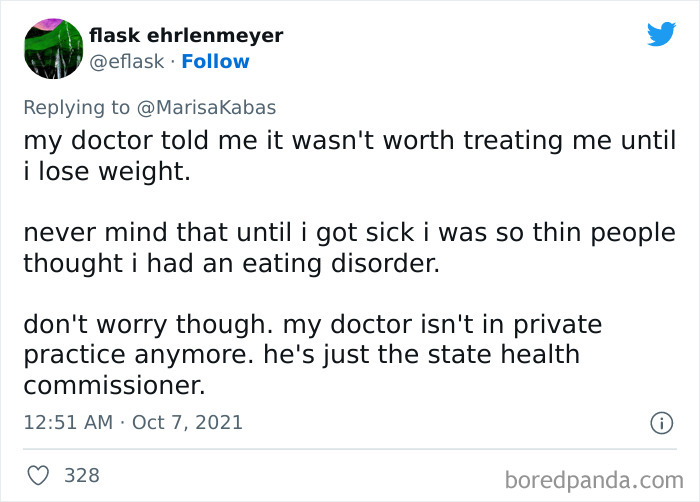
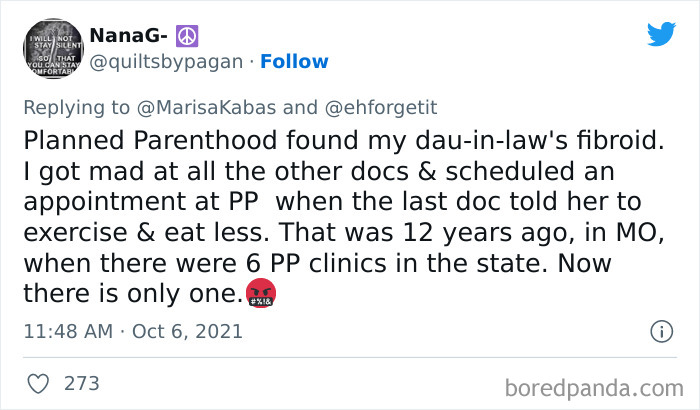
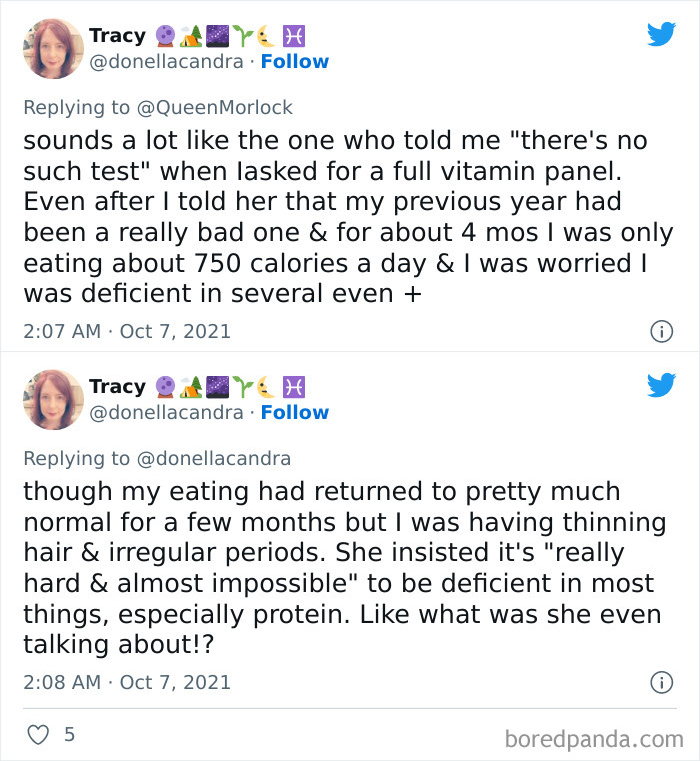
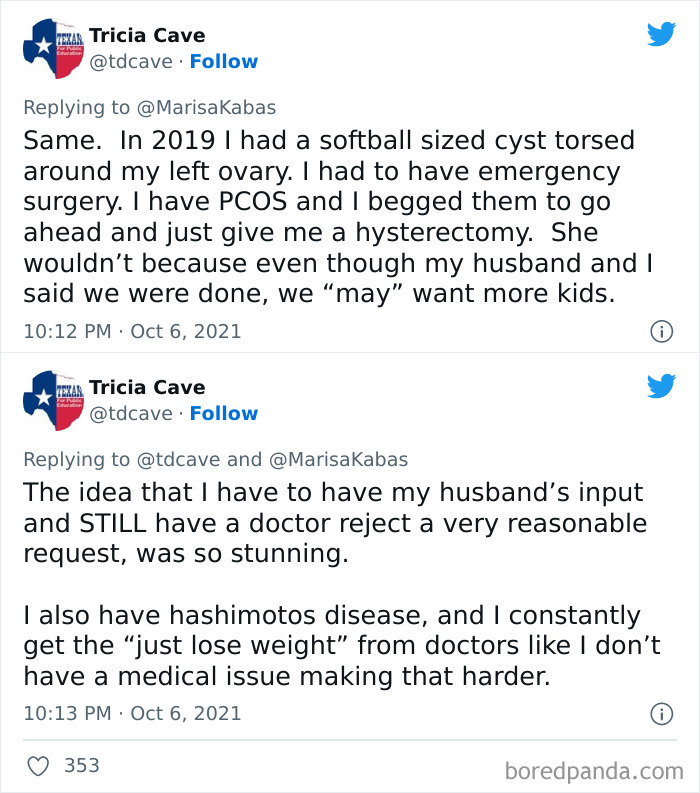
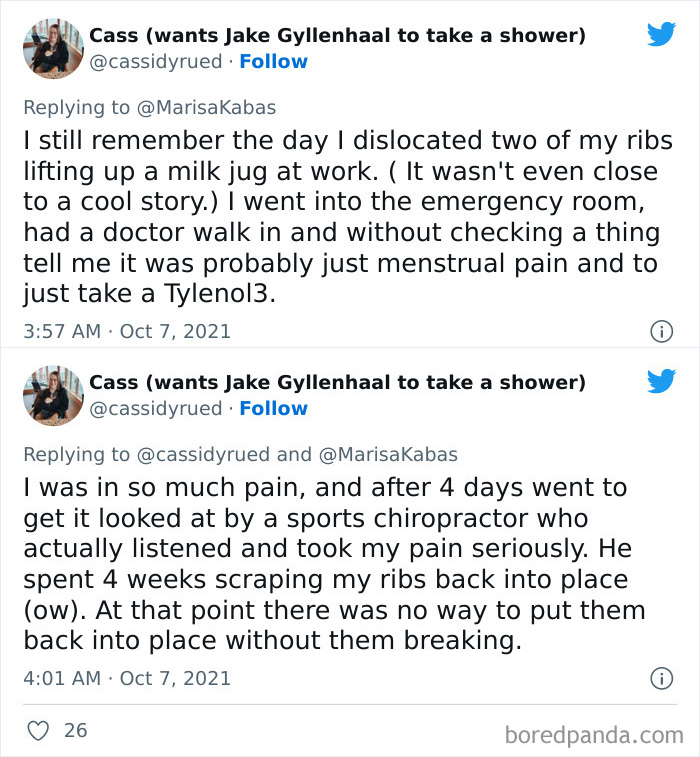
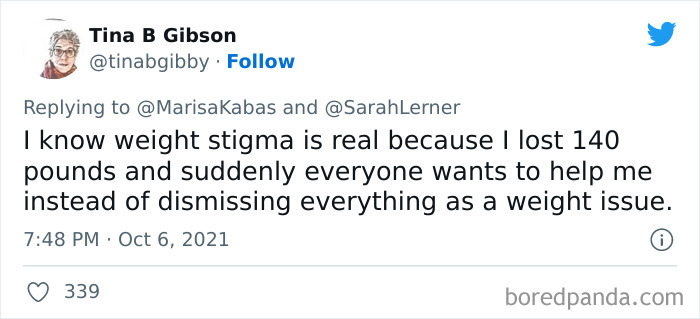
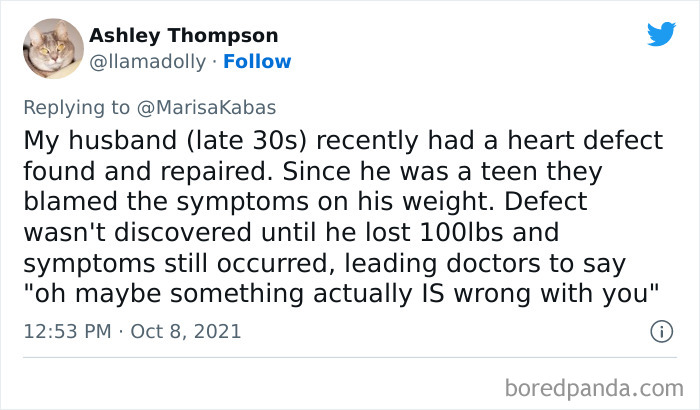
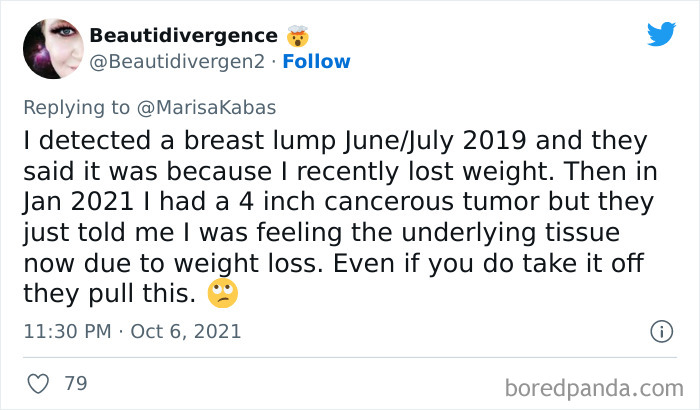
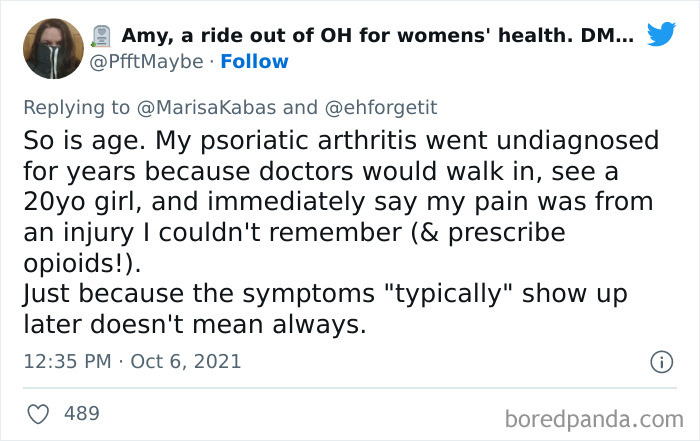
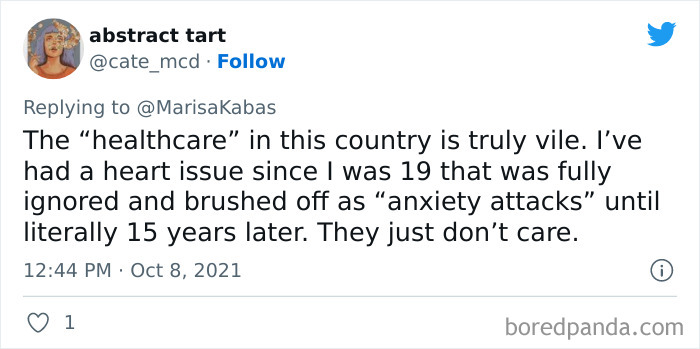
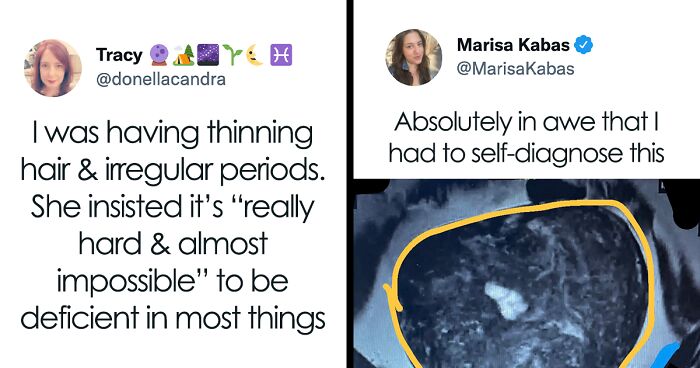
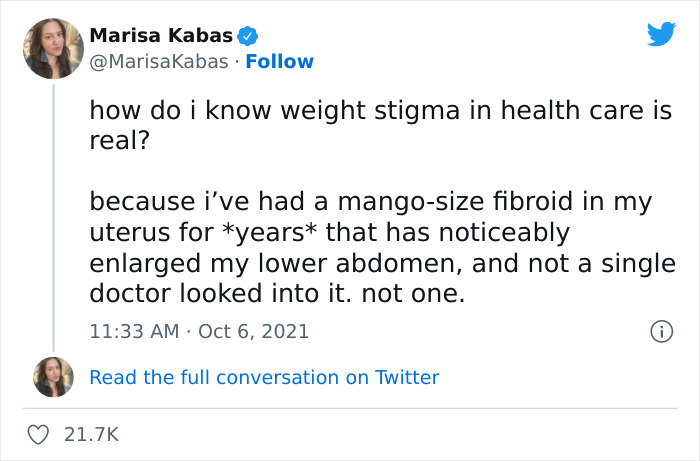
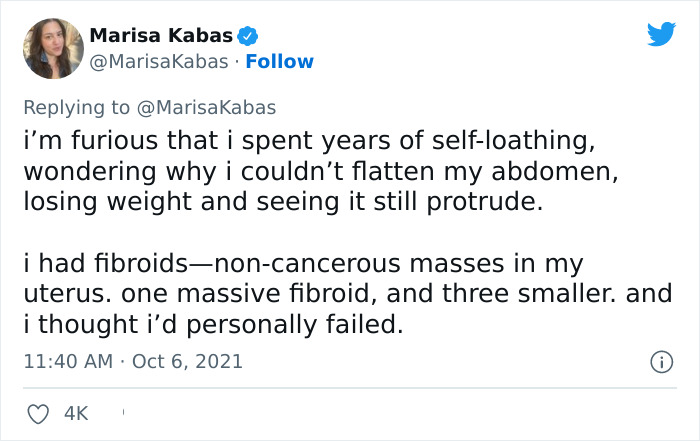
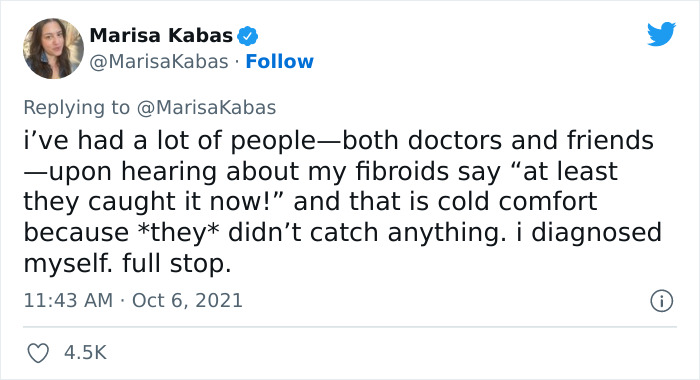
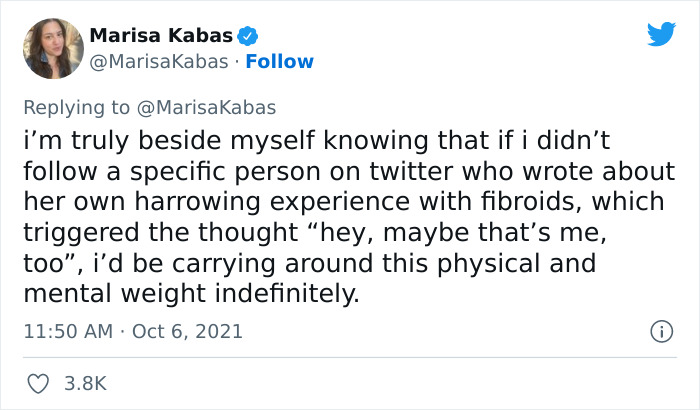
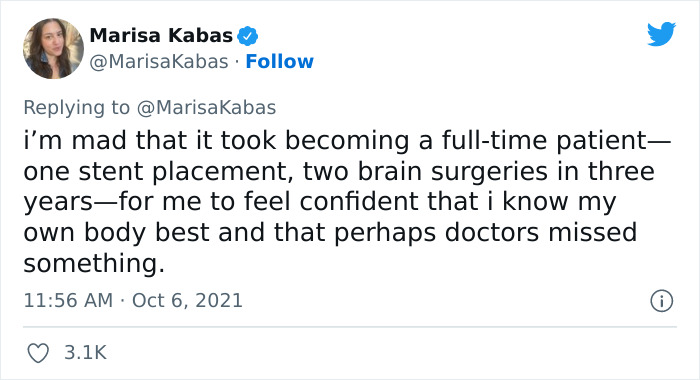
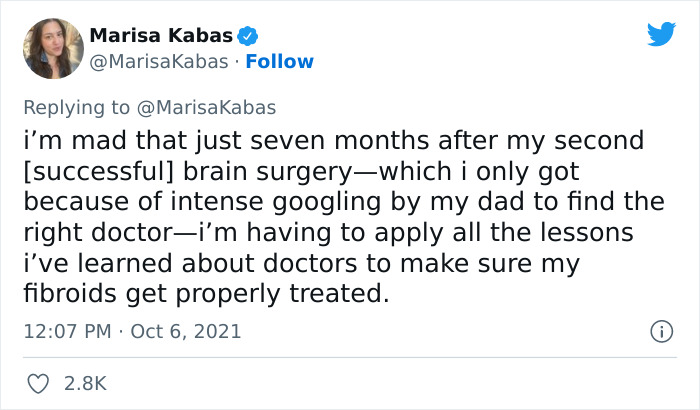
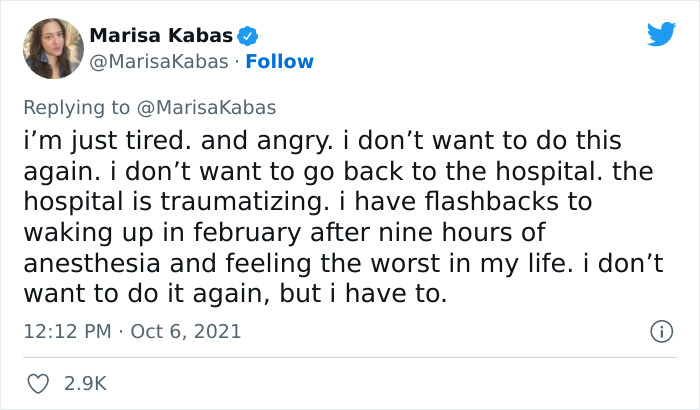
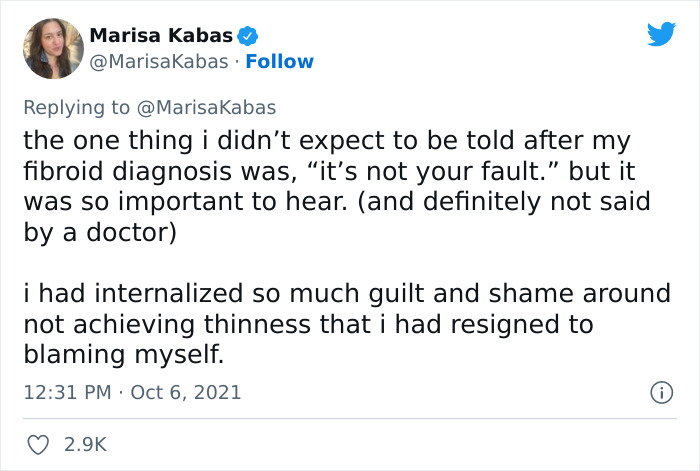
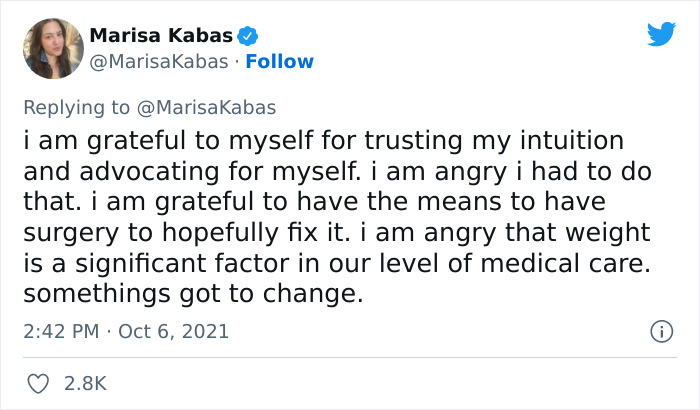
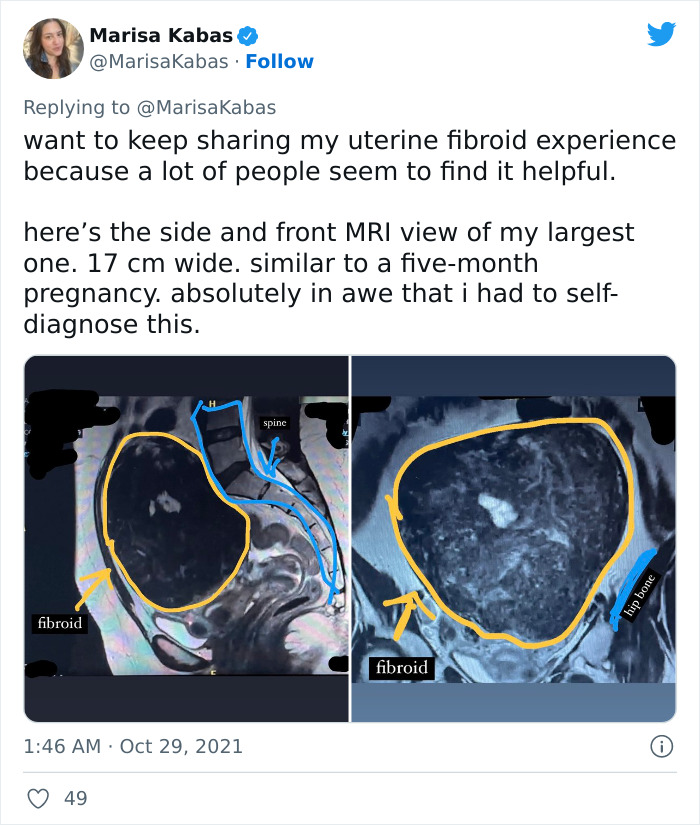
That’s precisely what happened to writer and reporter Marisa Kabas. Last year, she kicked off a viral thread by sharing her infuriating story on Twitter. "How do I know weight stigma in health care is real?" she asked. Well, a mango-sized fibroid growing in her uterus overlooked by every single doctor she ever consulted gives a hint. And what’s even more disturbing? Most medical professionals dismissed her symptoms as signs that she needed to lose weight.
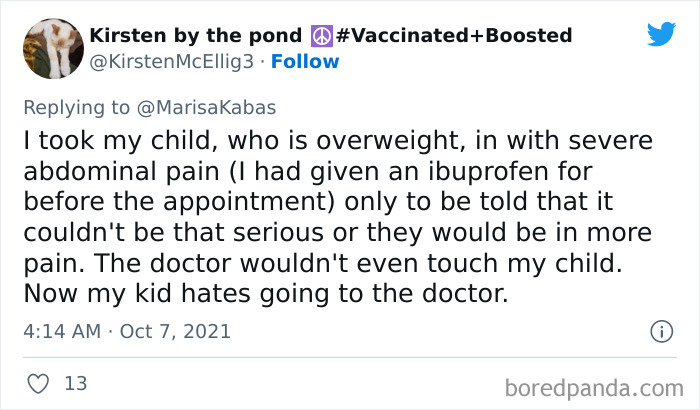
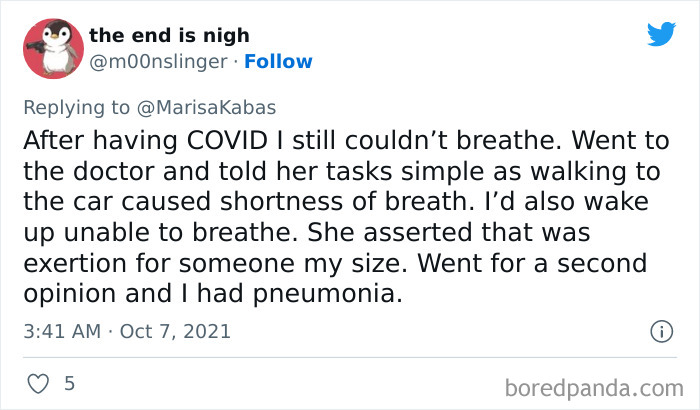
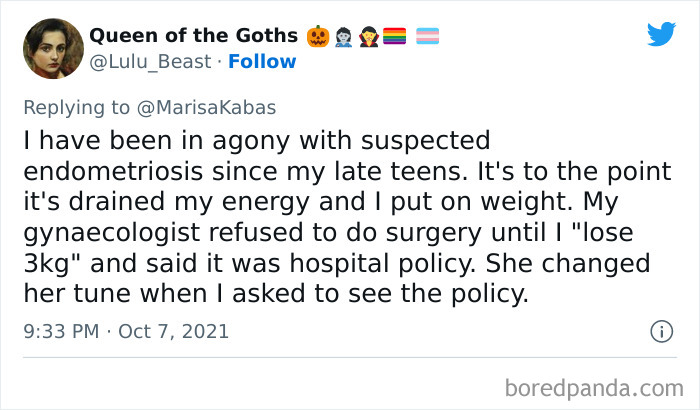
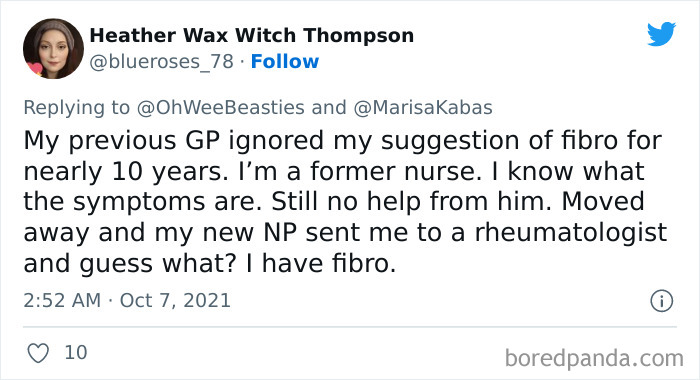
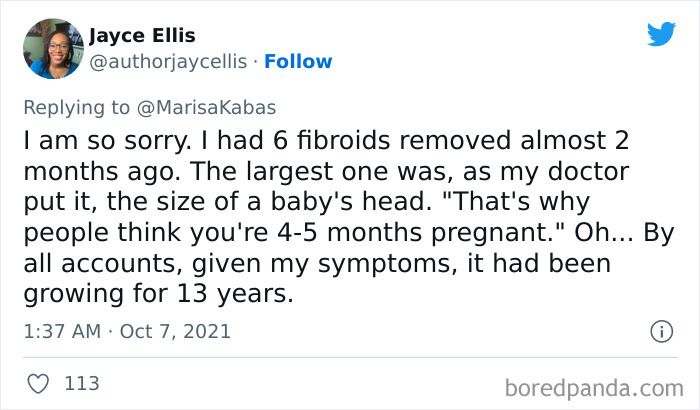
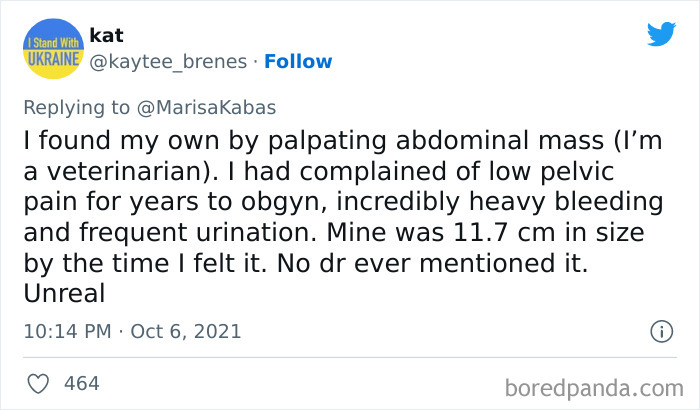
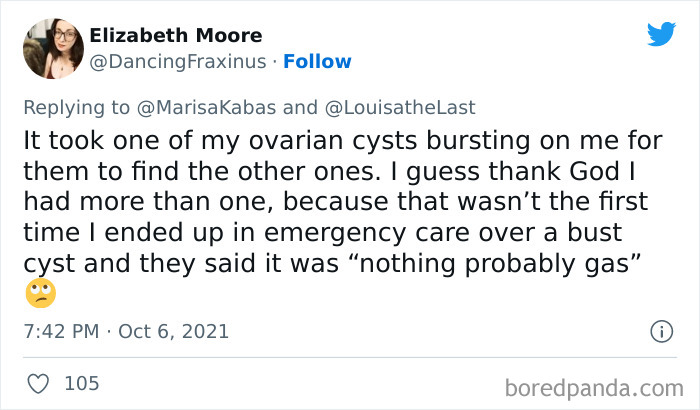
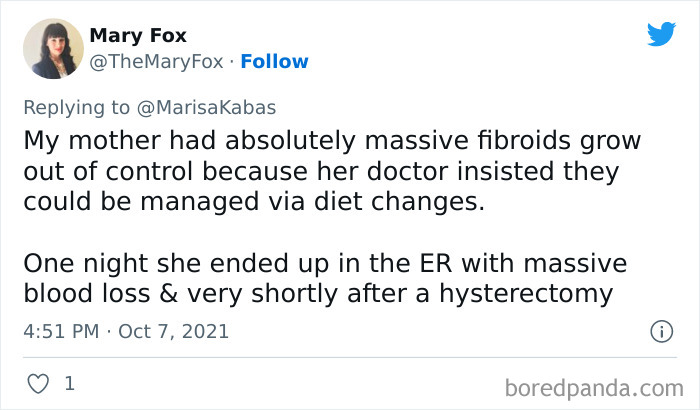
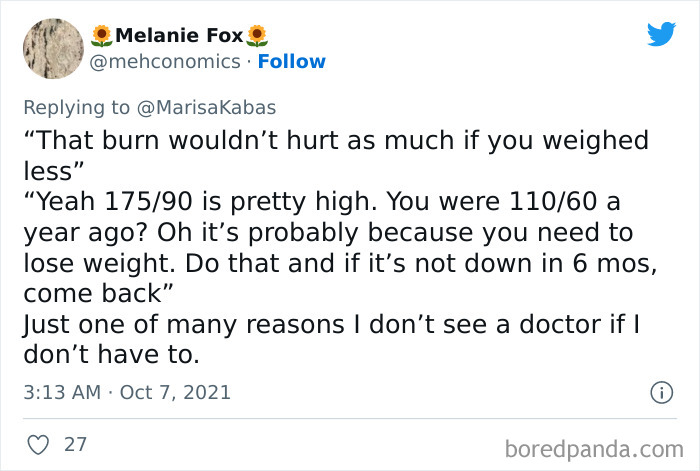
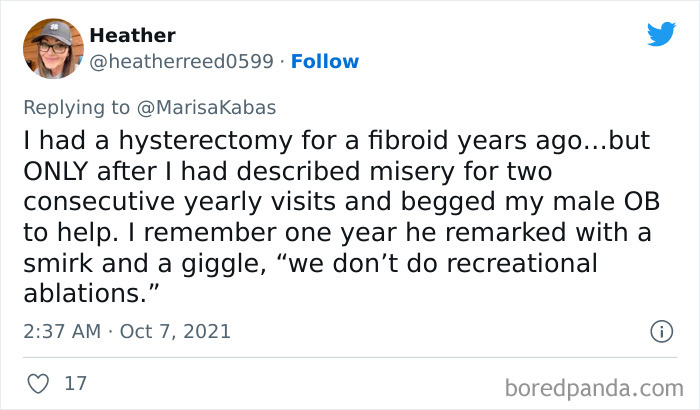
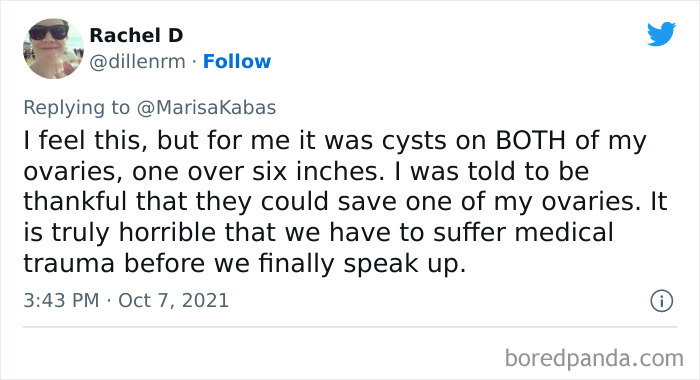
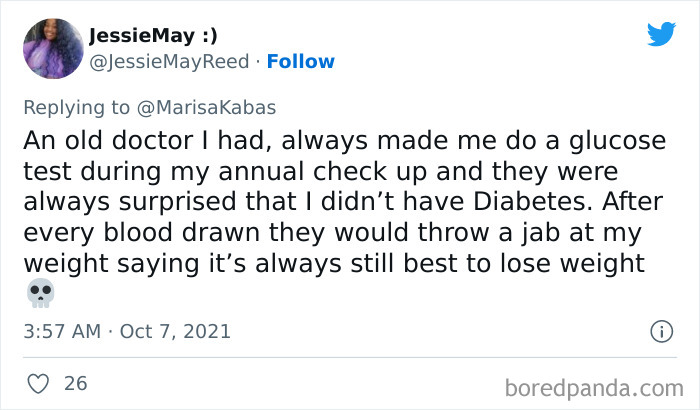
The woman’s thread sparked an important conversation and inspired thousands of women to chime in with their stories. From similar cases with weight-biased attitudes to simply unfortunate situations, we’ve gathered some of the most upsetting and illuminating responses to share with you all. Continue scrolling to read through the responses, and if you would like to participate in the discussion, be sure to share your experiences with us in the comments.
Click here & follow us for more lists, facts, and stories.
This post may include affiliate links.
"Everything seems fine! Come back again in a few months if you’re still having trouble," is something thousands of women around the world would do anything not to hear again. Yet, they experience it multiple times. Far too often, women can’t shake the feeling that something is not quite right with their bodies and turn to healthcare professionals hoping to find answers and some peace of mind. But unfortunately, doctors often let them down by downplaying or downright dismissing their worries.
Kabas’ viral thread has reached thousands of women who chimed in with extremely infuriating answers that show just how frequently physicians fail to provide proper treatment. For many, these stories act as a wake-up call about the seriously flawed medical system and the reality of how common it is for women’s concerns to be ignored because of deeply-rooted gender stereotypes.
"It’s a huge issue in medicine," Dr. Tia Powell, a bioethicist and a professor of clinical epidemiology and population health at Albert Einstein College of Medicine in New York, told the New York Times. According to her, health care providers may have implicit biases that affect the way women are heard, understood, and treated. "Medical schools and professional guidelines are starting to address this problem, but there’s still much to be done."
Not only do female patients experience a lack of care in the healthcare system, but female doctors find their symptoms aren’t being taken seriously as well. And Dr. Powell knows this from personal experience. "A while back, I lost 10 pounds over a couple months, so I went to my doctor and told him I thought it was a sign I was having a recurrence of an old illness. He gave me a few reasons he disagreed and added, 'Plus, you’ve been on a diet.'" Since Dr. Powell never said this to her doctor herself, this immediately struck her as odd. Moreover, she began to question whether the physician would have said the same to a male patient. Luckily, she turned to another doctor who ran a set of tests, confirmed her suspicions, and began treating her immediately.
"It can be hard to speak up if you feel you’re not being treated fairly," Dr. Powell said. "I’m a professor at a medical school and I struggled with it."
Sadly, gender bias is evident in the medical system. A recent study by National Pain Report and non-profit foundation For Grace found that women report significant discrimination against them. They conducted a survey of 2,400 women with chronic pain that revealed over 90 percent of them feel the gender bias is real, and many of the respondents said they sense discrimination in the way their pain is treated by doctors.
Moreover, 65 percent of women revealed their pain is taken less seriously because they are female, and 84 percent said they are treated differently by doctors because of their [intimacy]. "I think this survey is extraordinarily important because I think the experiences of women in pain need to come out in the open and really need to be publicized," psychologist Steve Passik, Ph.D., said.
"At times like now, when there’s a stigma to being a chronic pain patient and when there’s a stigma for taking controlled substances for pain, the last thing anyone needs is an additional unseen bias to make it worse. And the idea that women have a struggle that’s differentially worse is something that needs to come to light."
Interestingly, there’s one concerning reason why physicians are likely to misdiagnose or gaslight women’s health issues. Women’s symptoms are often seen as "hysterical" in the medical world, whether consciously or not. In an interview for Northwell Health, Dr. Stephanie Trentacoste McNally explained it’s no accident that the word "hysteria" originates from the Greek word for "uterus."
The specialist pointed out that there’s still a pervasive belief that anytime a female complains about her health, it’s either related to her hormones or all in her head. "Female hysteria was once a common medical diagnosis for women, applied whenever women displayed 'inappropriate' emotions such as anxiety, anger and even sexual desire. For centuries, it was believed that the uterus itself was the cause of a woman’s 'hysterical' symptoms."
"Unfortunately, these sorts of beliefs still carry on today. How often does a woman get angry, only to be asked if she’s about to get her period? How often does a perimenopausal woman go to her doctor’s office to complain about weight gain, only to be told that it’s related to hormones? Our hormones aren’t making us anxious or upset—these condescending attitudes are."
But this does beg the question: why, in this day and age, do so many women continue to face gaslighting in the healthcare system? Of course, we see an undeniable change in the way women are being cared for today, but there’s still plenty of room for improvement. Dr. Bella R. Grossman noted in the interview that psychological and social influences play an important part in how women are treated.
"For example, men have a tendency to be more vocal and more persistent with their concerns. Women may have a harder time pushing back and advocating for themselves. They feel like they need to be good patients, which means accepting what their doctors tell them. But by doing so, they’re stripping themselves of a voice," she said.
If you can relate to any of these stories shared in this list, certain actions can help make sure physicians actually listen and heed your voiced concerns. The Society to Improve Diagnosis in Medicine (SIDM) suggested it’s important to find a professional you can trust. Moreover, they advised asking doctors who ignore your symptoms certain questions, such as "What might this be?" and "What do I do if these symptoms get worse?" This should make them stop and take time to consider your other options.
And as people say, knowledge is power. It’s helpful to go to the doctor’s ready to present your issues clearly and factually and also be prepared with research on what types of tests and screenings should be performed for patients your age. But, most importantly, speak up. SIDM explained that expressing the depth of your concerns may help you receive your diagnosis faster. "Be willing to fight for yourself and your body but don’t be willing to put on the boxing gloves when you first walk in," they wrote.
You might also like: 19 People Share The Most Ridiculous Things They Have Ever Seen In An ER
























 No fees, cancel anytime