Get Premium
Dark mode theme is available exclusively for premium users. Learn more about the benefits of subscribing.
No fees, cancel anytime.

 Dark Mode Ad-Free Browsing Unlimited Content
 Ad-Free Browsing Unlimited Content Dark Mode
Join 1.2 million Panda readers who get the best art, memes, and fun stories every week!
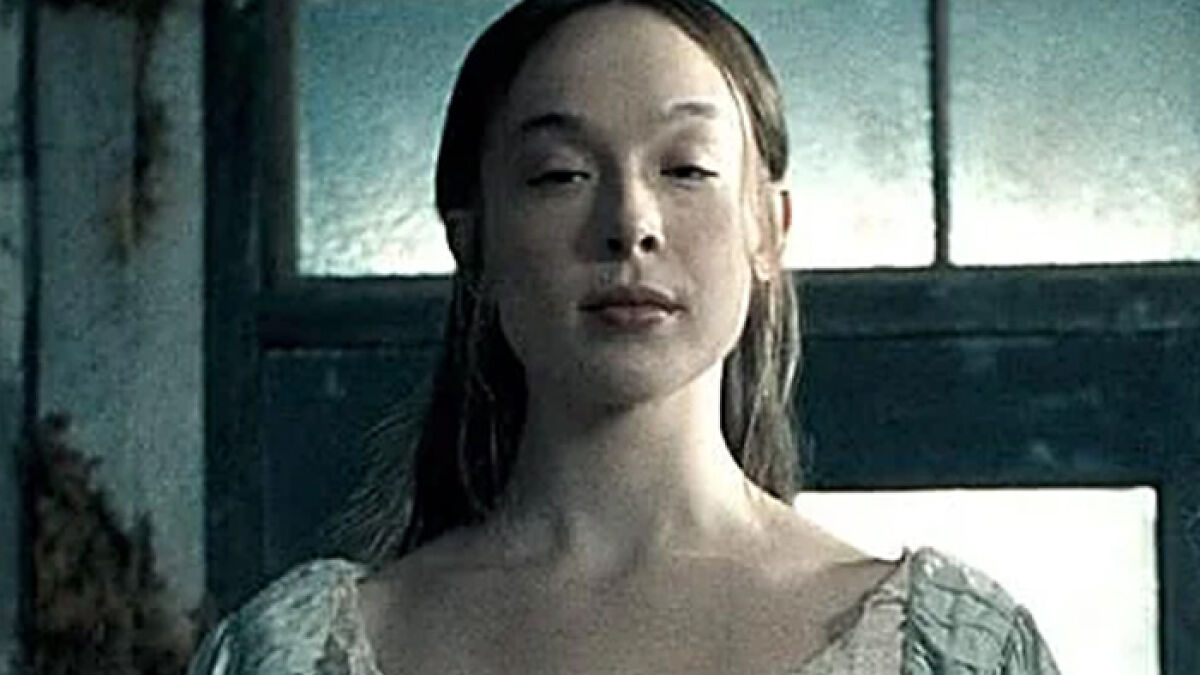
More than 130 years after Lizzie Borden became the central figure in one of America’s most infamous true-crime mysteries, Netflix is revisiting the case with a new eight-episode season of Monster.
Monster: The Lizzie Borden Story is the fourth installment of Ryan Murphy and Ian Brennan’s anthology series, with Ella Beatty portraying Lizzie alongside Vicky Krieps as the Borden family’s maid, Bridget “Maggie” Sullivan.
Charlie Hunnam, who previously portrayed Ed Gein in Monster: The Ed Gein Story, takes on the role of the Borden family patriarch, Andrew Borden, while Rebecca Hall plays Lizzie’s stepmother, Abby Borden, and Billie Lourd portrays her older sister, Emma Borden.
The series premiered globally on Netflix on September 17, 2026.
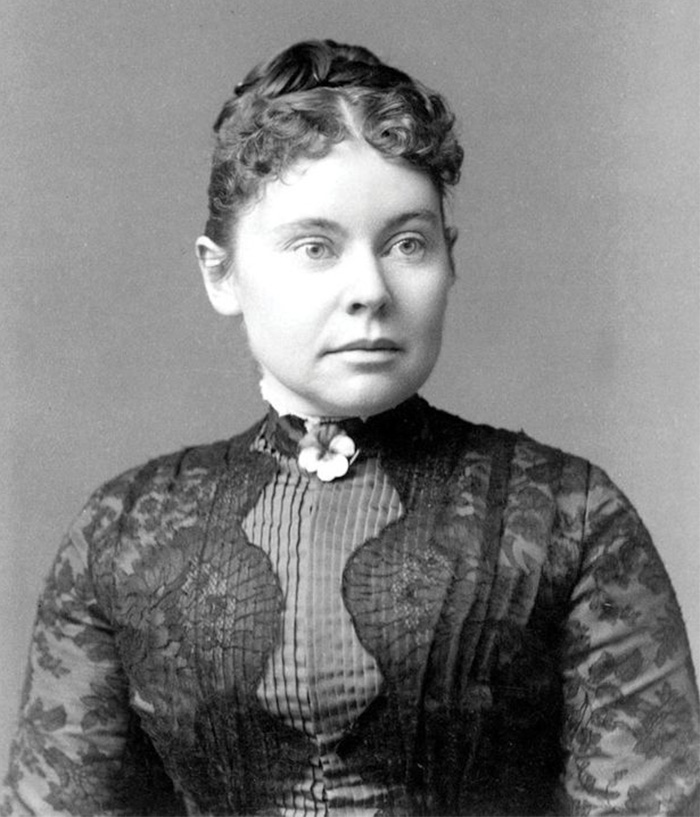
The real story, however, began more than a century ago, on August 4, 1892, when Andrew and Abby Borden were found deceased inside their home in Fall River, Massachusetts.
Lizzie, Andrew’s 32-year-old daughter, was arrested and charged in connection with the case before going on trial in 1893.
Despite the prosecution presenting a largely circumstantial case, an all-male jury acquitted her, and no one was ever convicted for the two homicides.
More than a century later, the case remains one of America's most enduring true-crime mysteries.
The facts surrounding the case are already extraordinary enough to have inspired countless books, films, and television adaptations.
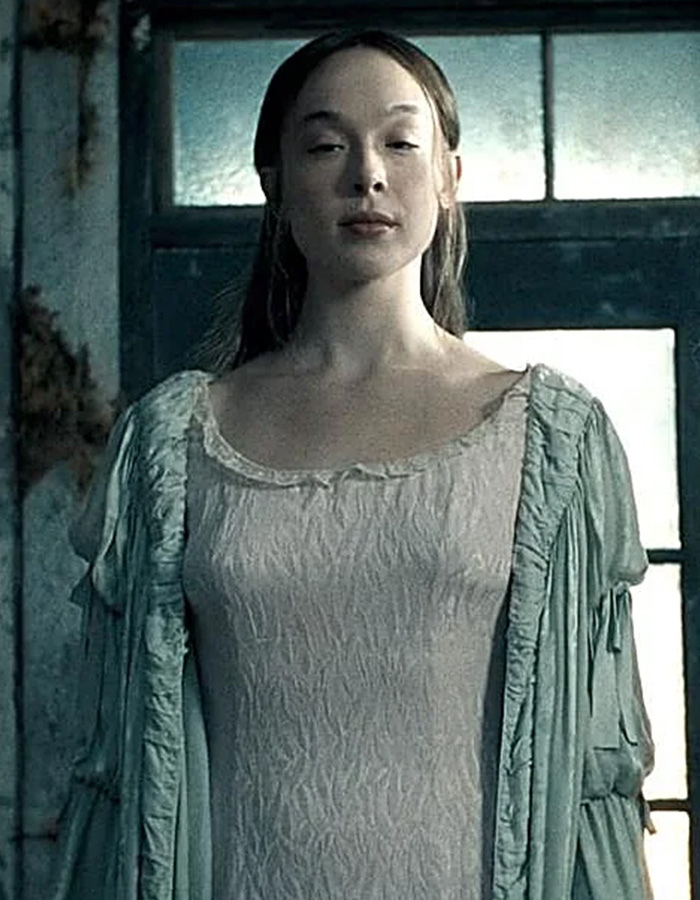
But Monster takes the story considerably further, filling historical gaps with fictionalized relationships, imagined events, and some decidedly unexpected connections.
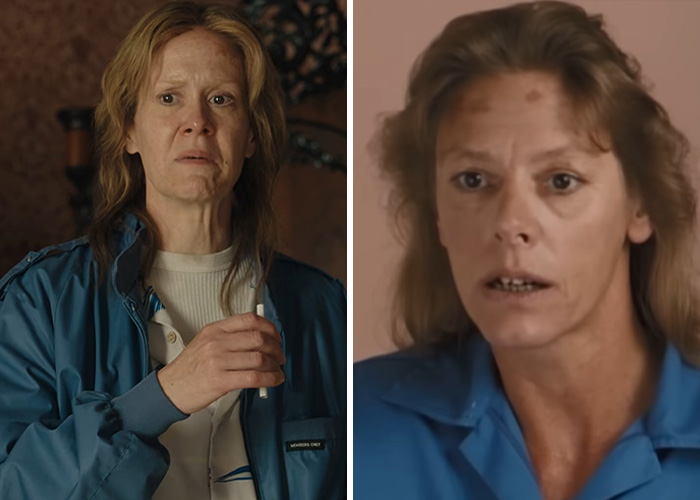
For instance, in a surprising leap across time, the series brings Sarah Paulson’s Aileen Wuornos, another notorious criminal, into the story as part of a thematic connection between two infamous female figures.
But how much of what viewers see actually happened?
While the series preserves some important details from the Borden case, it also significantly changes the historical record.
Here are six details in Monster: The Lizzie Borden Story where Netflix took creative liberties with the real-life events.
This post may include affiliate links.
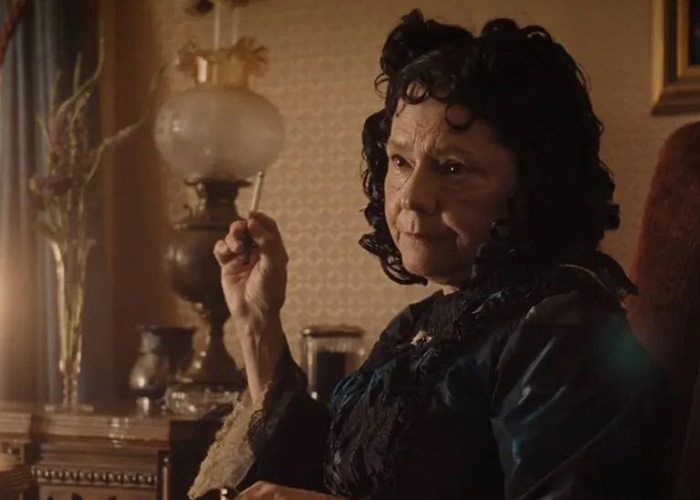
The Netflix series wastes little time telling viewers how it wants them to see Lizzie Borden.
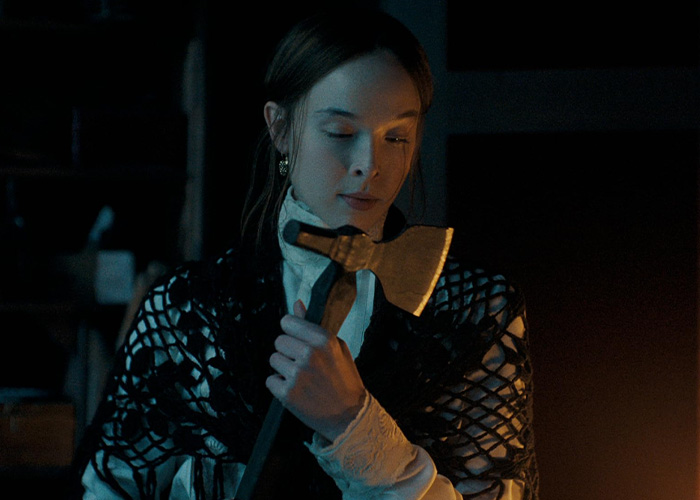
From the very beginning, its logo and opening imagery depict Lizzie swinging a hatchet at her parents, effectively presenting her as the person responsible for the infamous 1892 homicides.
That is a striking departure from the real case, where Lizzie was never convicted of taking her parents’ lives.
After Andrew and Abby were found deceased inside their home in 1892, investigators turned their attention to Lizzie, who was eventually arrested and charged.
But the prosecution’s case was largely circumstantial, and Lizzie was acquitted after her 1893 trial.
More than 130 years later, the question of whether Lizzie actually committed the homicides remains unresolved.
There is evidence that has led some historians and writers to believe she was responsible, while others have continued to question whether the case against her was strong enough to establish her guilt.
The historical record therefore does not provide the definitive answer that the Netflix opening appears to give.
The decision was deliberate. 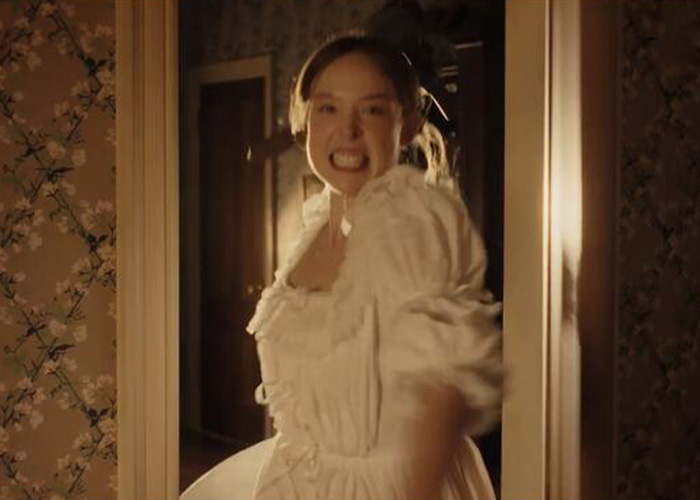
Netflix
Rather than building the series around the familiar “Did Lizzie do it?” mystery, the show uses the historical case as the foundation for a much more fictionalized psychological drama.
Co-creator Ian Brennan has acknowledged that because the evidence surrounding Lizzie was circumstantial, the writers chose to extrapolate from the gaps in the historical record and lean into the mythology that has surrounded her for generations.
That choice changes the question at the heart of the story.
Instead of asking viewers to decide whether Lizzie was responsible, the series largely asks them to consider what could have driven her to such violence, while exploring its fictionalized depiction of her life inside the Borden household.
The opening visuals also establish the show's theatrical and deliberately stylized tone.
By placing Lizzie's alleged actions right at the forefront, the series signals that it is less concerned with recreating every detail of the 1892 investigation and more interested in its own interpretation of the woman who became one of America's most enduring true-crime figures.
This particular portrayal of Lizzie as responsible for her parents’ passing has also drawn intense criticism from viewers and critics, with the series earning a 40% “rotten” score on Rotten Tomatoes.
One of the biggest changes made to the story is the portrayal of Bridget “Maggie” Sullivan, the Borden family’s Irish maid.
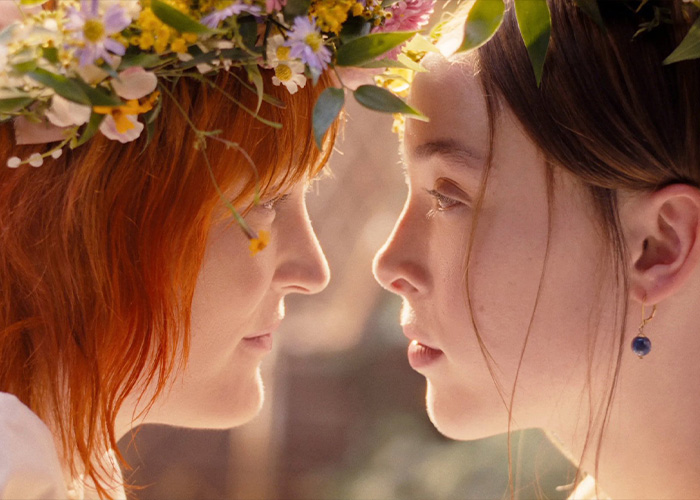
In the series, Bridget and Lizzie develop an intimate romantic relationship that eventually turns them into partners in the crimes against the Borden family.
Their relationship becomes one of the central forces driving the story, with Bridget encouraging Lizzie to push back against her parents and ultimately helping her carry out the homicides.
The real Bridget Sullivan, however, was a 26-year-old Irish immigrant who worked as a live-in domestic servant in the Borden household.
She had been working for the family for nearly three years by the time Andrew and Abby were found deceased in August 1892.
Even her name was changed inside the household: Bridget testified at Lizzie’s trial that Emma and Lizzie sometimes called her “Maggie,” after a previous maid who had worked for the Bordens.
No historical evidence establishes that Bridget and Lizzie were lovers or had the kind of intimate relationship shown in the Netflix creation.
The idea has appeared in later fictional accounts and has been revisited by filmmakers, but historical records and Bridget’s trial testimony do not establish a romantic relationship between the two women.
In fact, the historical Bridget played a very different role in the case.
She was the only other person known to have been in the Borden home on the morning of the homicides and later became an important witness during the 1893 trial.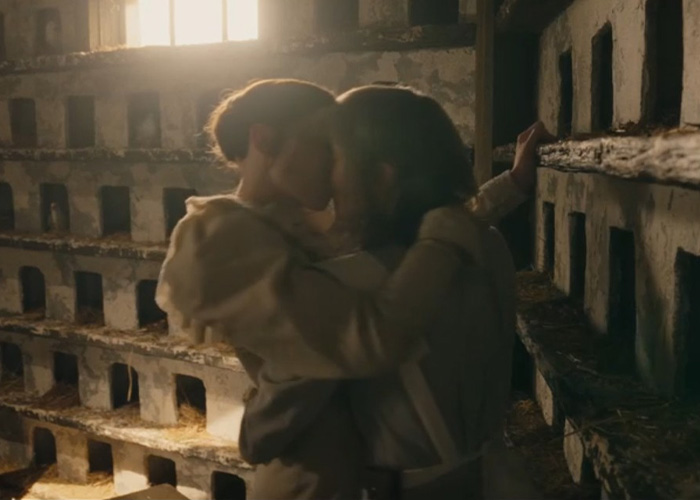
Netflix
She testified about what she saw and heard that day, including the fact that she saw no blood on Lizzie after the alarm was raised.
“I did not see any blood on her,” Bridget reportedly told prosecutors, adding that, as far as she could remember, Lizzie’s hair was in order.
That testimony differs sharply from Bridget's role in Monster.
Rather than helping Lizzie create an alibi after the homicides, the real Bridget testified about what she actually observed and was never charged as a co-conspirator.
Her account did not prove Lizzie’s innocence, but it was part of the evidence considered during the trial.
The series also gives Bridget a personal reason to resent the Borden family that goes far beyond what is known about her real life.
In Netflix’s version, she becomes deeply involved in Lizzie’s rebellion against Andrew and Abby and eventually assists Lizzie with the attacks.
The show even incorporates the real detail of Bridget washing windows on the morning of the homicides, but transforms it into part of a deliberate plan to establish an alibi.
The real Bridget’s life after the trial was far less dramatic.
Historical accounts place her later in Montana, California, where she married John Sullivan and lived a private life until her passing in 1948.
Unlike the series’ romantic ending, there is no evidence that she returned to Fall River to reunite with Lizzie or remained romantically connected to her.
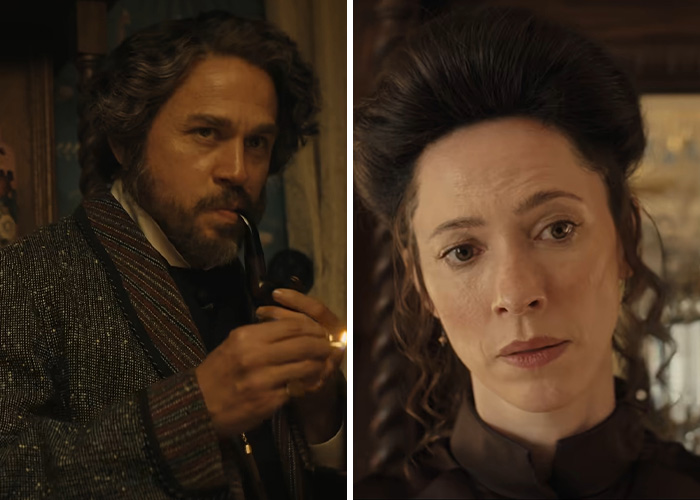
Netflix takes considerable liberties with the way Andrew and Abby Borden are portrayed, turning the couple into far more openly cruel and a**sive figures than the historical record can establish.
Throughout the series, Lizzie and Emma’s home is depicted as a deeply oppressive environment, with the sisters subjected to disturbing treatment by their parents.
That gives the fictionalized Lizzie a much clearer emotional motive for rebelling against her family, but there is no solid historical evidence establishing the kind of physical a**se shown in the series.
The real Borden household was certainly far from a picture of domestic harmony.
Lizzie and Emma had a strained relationship with their stepmother, Abby, and both daughters resented their father’s decisions involving money and property.
Andrew was also known for being extremely frugal despite his considerable wealth, and the family lived on Second Street rather than in Fall River’s more fashionable neighborhood.
But the tension appears to have been considerably more complicated than the house of horrors presented in Monster.
Much of the documented conflict revolved around finances, property, and inheritance.
Lizzie and Emma were allegedly upset after Andrew purchased a house for Abby’s half-sister, believing that their stepmother’s family was benefiting at their expense.
Their resentment reportedly grew so deep that Lizzie stopped calling Abby “Mother” and instead called her “Mrs. Borden.”
The series also takes one of the nastiest stories ever associated with Andrew and turns it into a graphic part of his character. 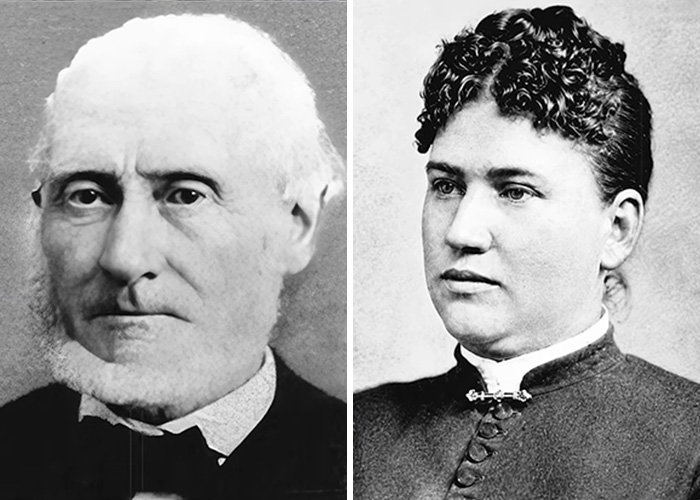
Timeline - World History Documentaries
Andrew had worked in businesses connected to woodworking and casket-making earlier in his career, but the claim that he deliberately chopped the feet or legs from corpses so they could fit into cheaper coffins was a rumor rather than an established fact.
The story appears to have circulated as local gossip about Andrew’s reputation for extreme frugality.
However, the series presents the gruesome practice as something Andrew actually did, turning a historical rumor into part of his on-screen identity.
That distinction matters because Andrew was not simply a casket maker.
By the time of his passing, he was a wealthy, prominent businessman with interests in real estate, textile manufacturing, and banking.
Whatever his reputation for being tight with money, the historical record does not establish that he mutilated corpses to save money.
The show's portrayal of Abby is similarly heightened.
Rather than simply depicting a complicated stepmother-daughter relationship marked by resentment and emotional distance, the series presents Abby as an a**sive presence inside the home.
Yet available historical accounts do not establish that she physically tormented Lizzie and Emma as the show depicts.
Even Bridget Sullivan, the family's maid, provides an important contrast to the series' version of the household.
She lived and worked in the Borden home during that period and later testified at Lizzie's trial.
Her testimony does not provide the kind of evidence of constant physical violence that the Netflix drama depicts.
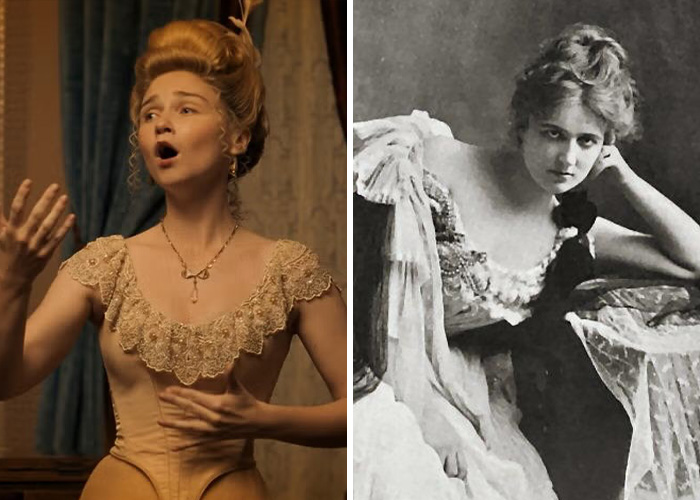
The Netflix series makes one of its biggest timeline changes by bringing actress Nance O’Neil into Lizzie’s life long before the two women actually met.
Jessica Barden plays Nance as an actress who becomes closely involved with Lizzie before the homicides.
She even helps Lizzie prepare for her trial, coaching her on how to present herself before the jury and encouraging her to play the part of a vulnerable, innocent woman.
That entire setup is fictional.
In reality, O’Neil was a highly successful American stage actress who became a close friend of Lizzie’s, but their relationship began in 1904, more than a decade after Lizzie had been acquitted.
Nance therefore had nothing to do with the 1892 investigation or the 1893 trial.
The real-life friendship reportedly began after Lizzie attended one of Nance’s performances in Boston.
Fascinated by the actress and her theatrical career, Lizzie reached out to her, and the two soon developed a close bond.
O’Neil eventually spent time with Lizzie at Maplecroft, the Fall River home Lizzie shared with her sister Emma.
Their friendship became significant enough to cause friction between the sisters, particularly as Emma allegedly disapproved of Lizzie’s increasingly social lifestyle and her association with Nance.
Emma moved out in 1905, and the sisters never reconciled.
Nance and Lizzie’s relationship has also attracted speculation over whether they were romantically involved.
No definitive historical evidence shows they were lovers, but their closeness and Lizzie’s financial support of Nance have fueled decades of speculation.
What Netflix changes is not the existence of their friendship, but almost everything about when it happened and what Nance did.
The series essentially pulls a real relationship from Lizzie’s later life and places it directly inside the m**der story.
That lets Nance become part of the courtroom drama, with her theatrical background providing a fictional explanation for how Lizzie presents herself during the trial.
Interestingly, Lizzie really did cultivate a delicate, feminine image before the jury, but Netflix gives Nance the credit for coaching her.
Historical accounts instead suggest that Lizzie’s lawyers encouraged this feminine presentation, not the actress.
Co-creator Ian has acknowledged that the decision was deliberate.
He explained that trial episodes can be difficult to dramatize and that the real-life fact that Lizzie eventually became friends with an actress gave the writers a way to make the courtroom proceedings more theatrical.
So while O’Neil really was an important figure in Lizzie’s later life, she was nowhere near the Borden household when Andrew and Abby were ki**ed.
The series takes another major liberty with the timeline by transforming the real m**der of Bertha Manchester into the fictional first step of Lizzie and Bridget’s ki**ing spree.
In the Netflix version, Bertha is portrayed as an older neighbor and family friend of the Bordens who employs Bridget as a maid.
After Bertha discovers Bridget’s relationship with Lizzie, she subjects her to a brutal punishment, prompting the two women to plot their revenge.
Lizzie and Bridget then decide to use Bertha as a “trial run” before going after Lizzie’s parents.
When they enter Bertha’s home, Bridget freezes in fear, leaving Lizzie to carry out the attack herself with a hatchet.
Netflix’s own episode summary confirms that the attack on Bertha is presented as a practice run before the Borden homicides.
However, in real life, Bertha Mabel Manchester was a real 22-year-old woman from Fall River, Massachusetts.
She passed away following a brutal axe attack on May 30, 1893, nearly ten months after Mr. and Mrs. Borden were found deceased.
By the time Bertha lost her life, Lizzie was already imprisoned and awaiting trial, so she could not have carried out the attack portrayed in the series.
The real-life Bertha also had no documented connection to the Borden family or Bridget.
She was not an older neighbor who employed Bridget, as the series suggests.
Moreover, Manchester was ki**ed at her family’s home, and José Correa de Mello, a Portuguese immigrant who had worked on the Manchester farm, was convicted in connection with the crime.
Later accounts have described that conviction as wrongful.
However, the Manchester case became relevant to the Borden trial for one reason.
Because another woman in Fall River had lost her life after being attacked with an axe shortly after the Borden case, it became part of the wider public discussion surrounding Lizzie’s trial and the possibility that someone other than her could have been responsible for the Borden tragedy.
The series takes its biggest leap away from historical reality when it brings Aileen Wuornos into Borden’s story.
Played by Sarah Paulson, the real-life serial ki**er appears in the series nearly a century after the Borden homicides.
Monster presents Wuornos as someone deeply fascinated by Lizzie, suggesting that the earlier woman’s story became a source of inspiration as she struggled with her own violent past.
There is no historical evidence that this connection ever existed.
Aileen and Lizzie lived in completely different eras and had no known real-life relationship.
Netflix’s own account acknowledges that there is no evidence the real Wuornos was fixated on the Borden case.
Instead, the show deliberately imagines Aileen as an “inheritor” of Lizzie’s legacy as part of its broader exploration of female rage and why women become violent.
The series takes that fictional connection even further by having Wuornos and her girlfriend, Shelby, travel to Fall River and stay at the Borden family home, which is presented as a bed and breakfast.
That part of the story is also impossible.
The Borden house remained a private residence for more than a century after the 1892 homicides.
It was not converted into a bed and breakfast until 1996.
By then, Wuornos had already been arrested, convicted of multiple homicides, and was incarcerated in Florida.
Aileen was arrested in 1991 and remained behind bars until her e**cution in 2002, meaning she could not have visited the property as an overnight guest when it first became a B&B.
There is also no record that she ever visited the house or stayed there.
The fictional visit allows the series to create a supernatural connection between the two women.
While staying at the house, Wuornos experiences visions involving Lizzie, effectively turning the latter into a ghostly predecessor whose story follows another woman almost a century later.
The show's creators have been open about the fact that this connection was intentional rather than historical.
While creators and the cast described Aileen as part of the season's larger attempt to explore a supposed legacy of female rage across different periods, the decision to connect the two women drew criticism from reviewers who felt the Wuornos storyline pulled the series even further away from the historical case.
Vulture was particularly harsh, arguing that the series gained nothing historically meaningful by placing Wuornos alongside Lizzie.
The review described the sequence as the show's lowest point and wrote, “We learn nothing about Lizzie Borden, or about her world, from having her ghost listen to Aileen’s very sad and violent, very real-life story.”
“It’s the show’s lowest point; the re-creations of her trial testimony and e**cution are abhorrent.”


Netflix didn't get anything wrong. It's Ryan Murphy. Ryan (nor anyone else) claimed it to be accurate, a documentary, or anything of the like. Just like all his other stories, they are not supposed to be information sources, but entertainment

Braveheart is a phenomenal movie, and it's not historically accurate. Accuracy isn't the problem; our society's fundamental lack of media literacy is.
Netflix didn't get anything wrong. It's Ryan Murphy. Ryan (nor anyone else) claimed it to be accurate, a documentary, or anything of the like. Just like all his other stories, they are not supposed to be information sources, but entertainment
Braveheart is a phenomenal movie, and it's not historically accurate. Accuracy isn't the problem; our society's fundamental lack of media literacy is.






















 No fees, cancel anytime