Get Premium
Dark mode theme is available exclusively for premium users. Learn more about the benefits of subscribing.
No fees, cancel anytime.

 Dark Mode Ad-Free Browsing Unlimited Content
 Ad-Free Browsing Unlimited Content Dark Mode
Join 1.2 million Panda readers who get the best art, memes, and fun stories every week!
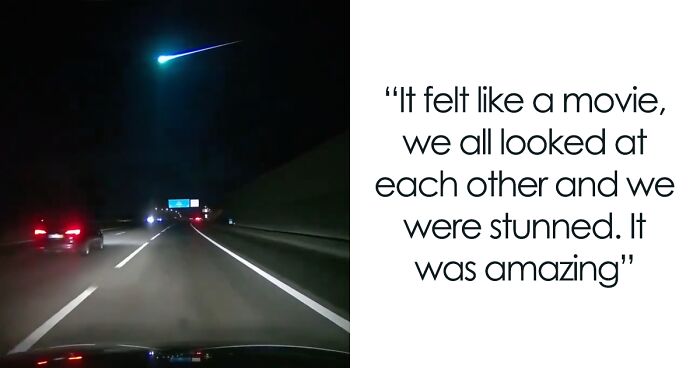
The darkest U.S. total solar eclipse for 217 years with a view of the sun’s corona during totality, an enchanting T Coronae Borealis burst in the sky, the extreme solar storm that brought the best auroras in 20 years, and now an unexpected movie-like event, with a piece of a comet suddenly turning the night skies in Portugal and Spain bright blue.
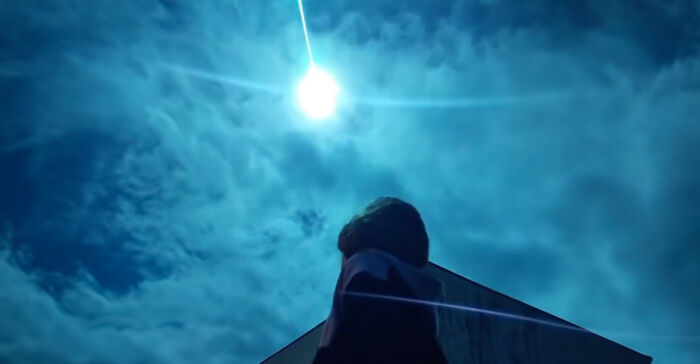
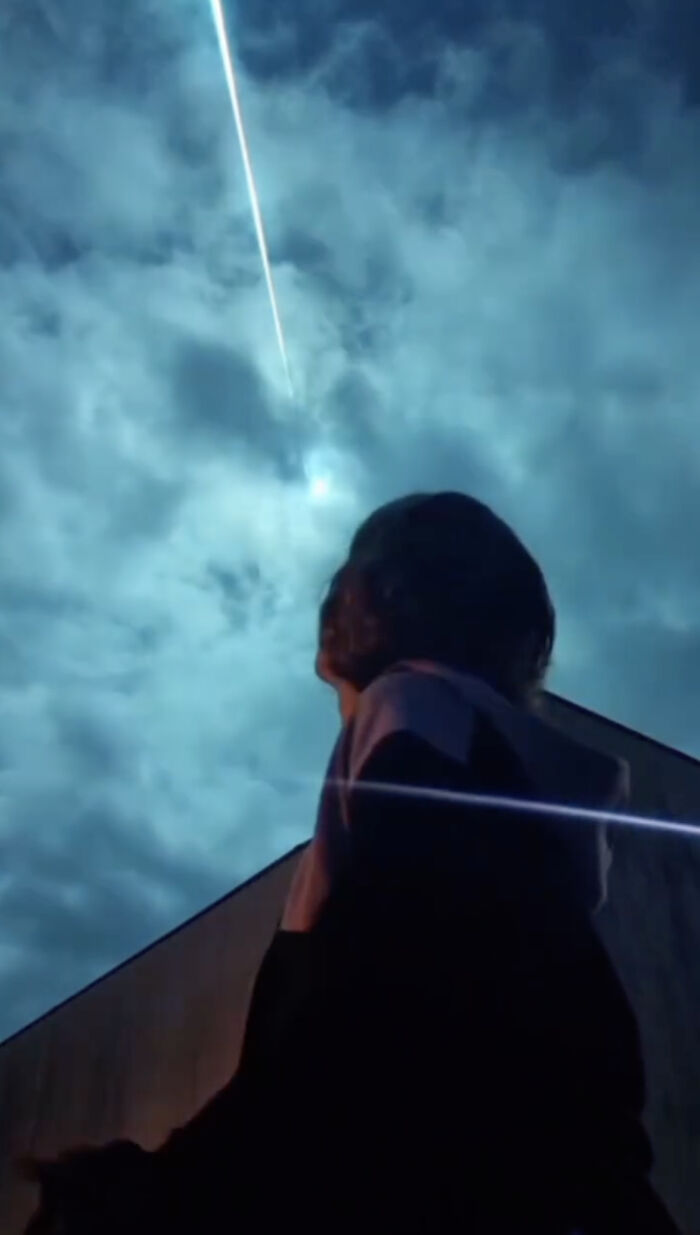
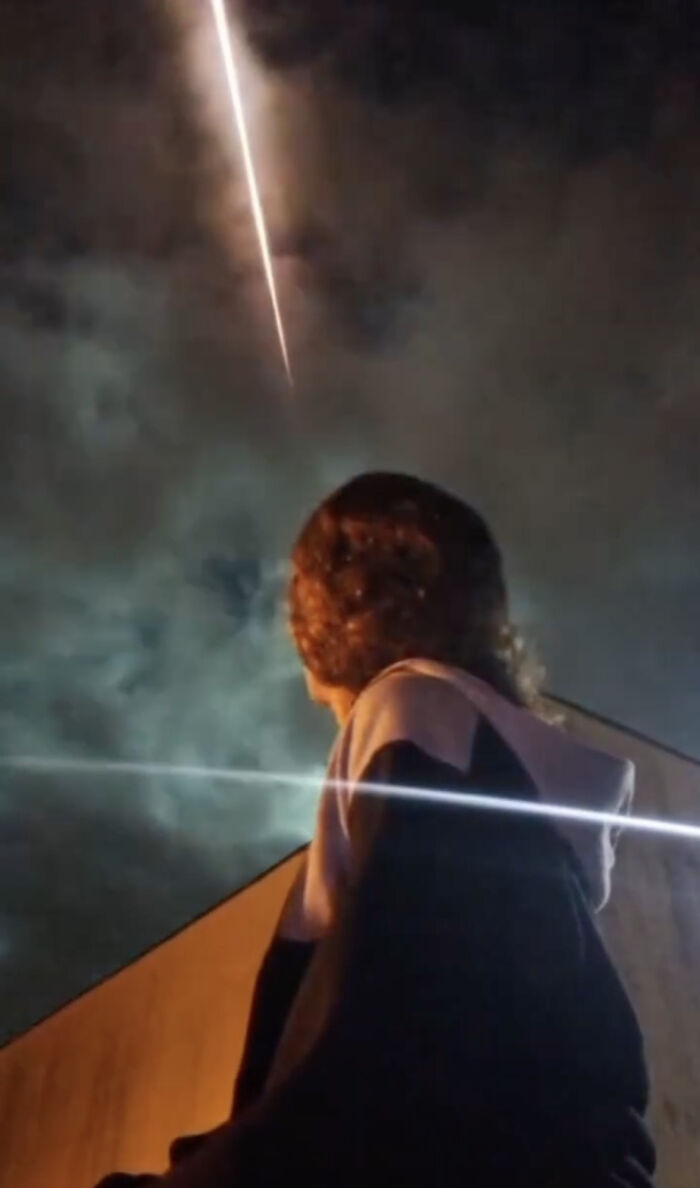
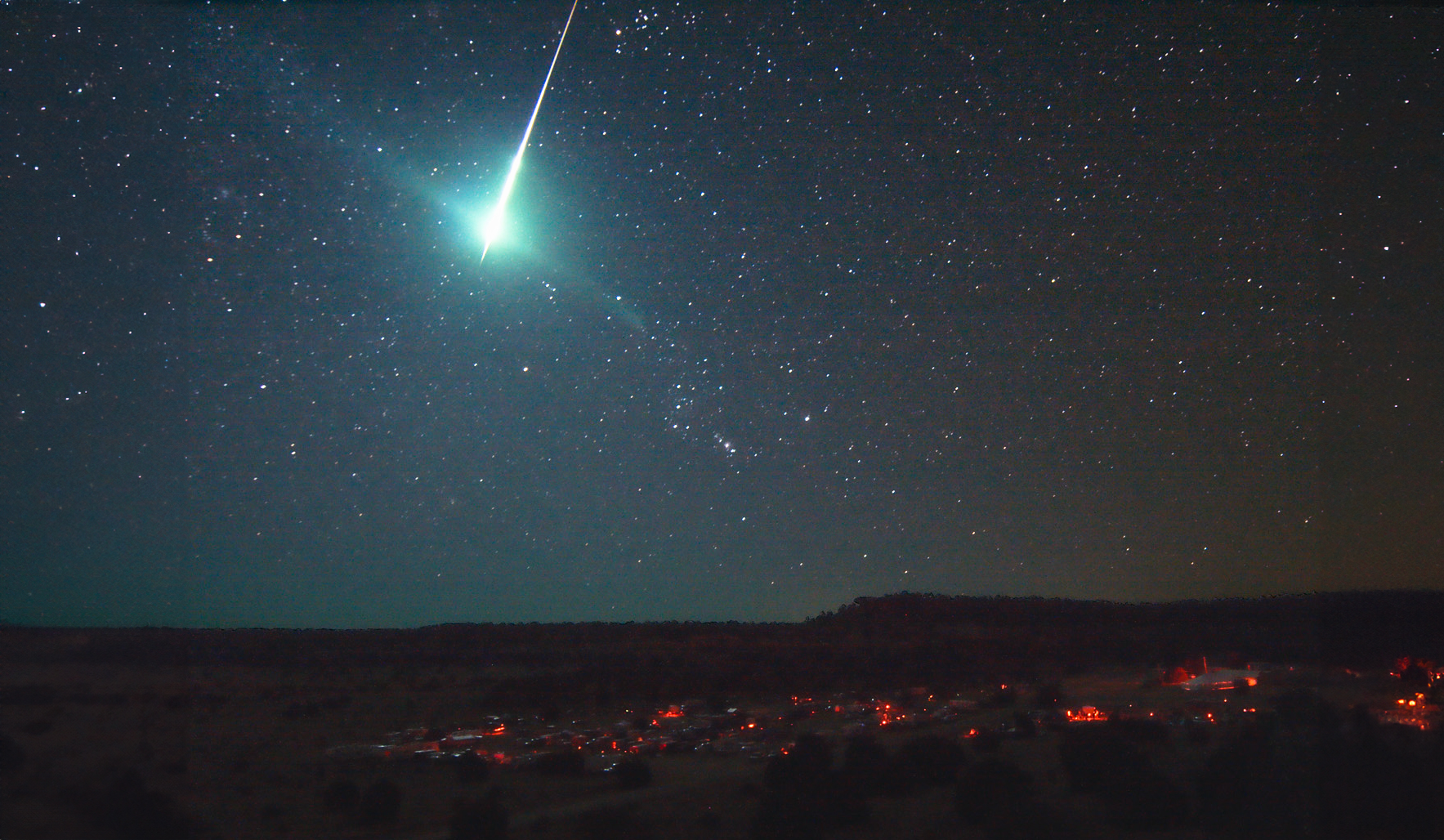
Milena Refacho probably made the video of her life when she accidentally recorded a massive blueish fireball zipping through the atmosphere on Saturday evening.
More info: Milena Refacho
Image credits: Milena Refacho
Image credits: Milena Refacho
Image credits: Milena Refacho
Image credits: Lisboa Live
In the video that instantly went viral all over the world, a girl is seen calmly sitting under the night sky and about to take a selfie or a video when the sky suddenly turns bright blue, leaving her speechless. “I am completely blown away by this, we caught on live what we least expected,” Milena shared on her Instagram account.
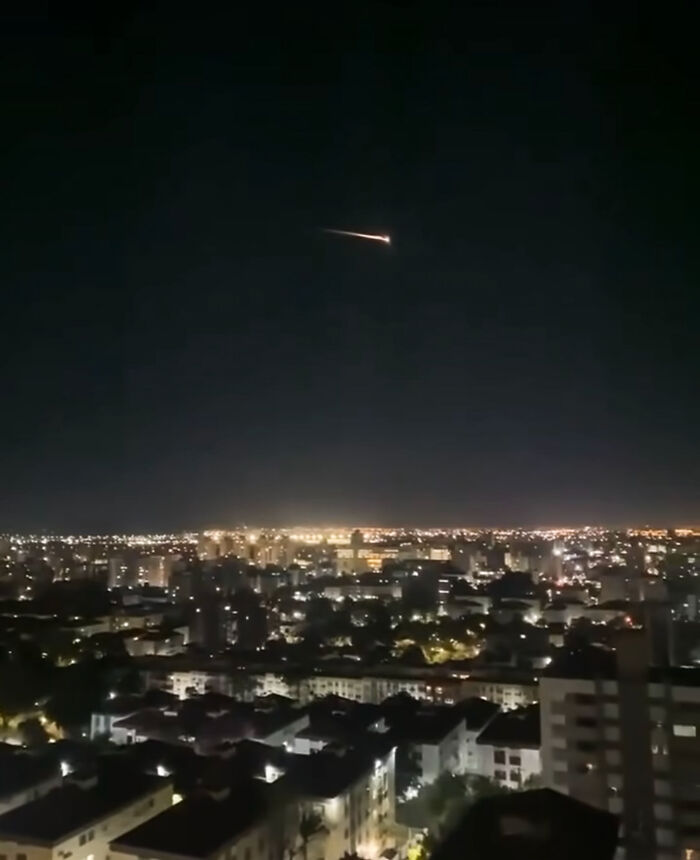
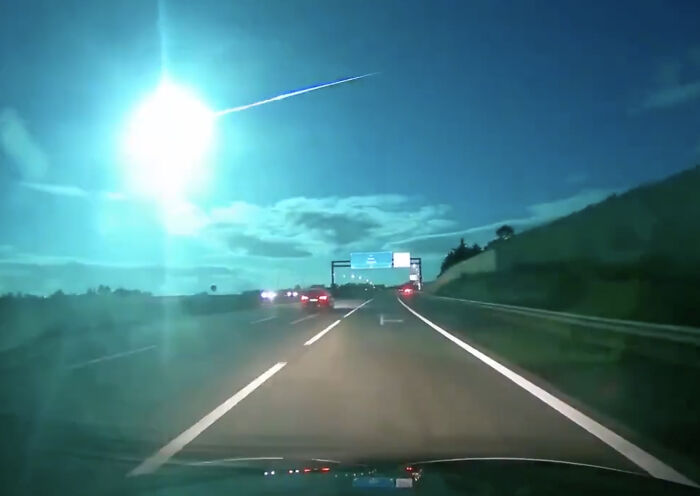
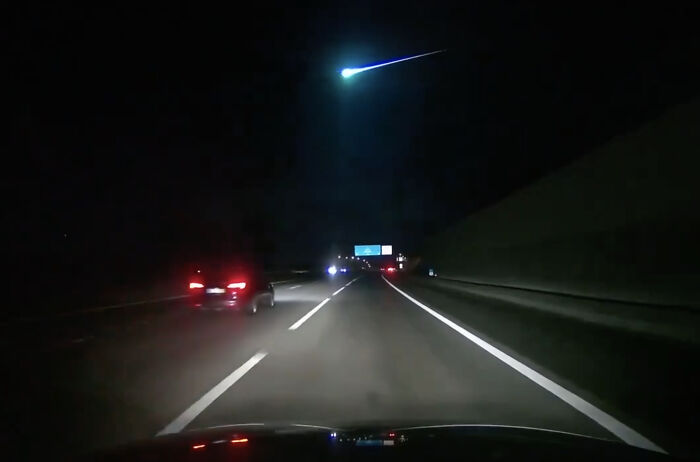
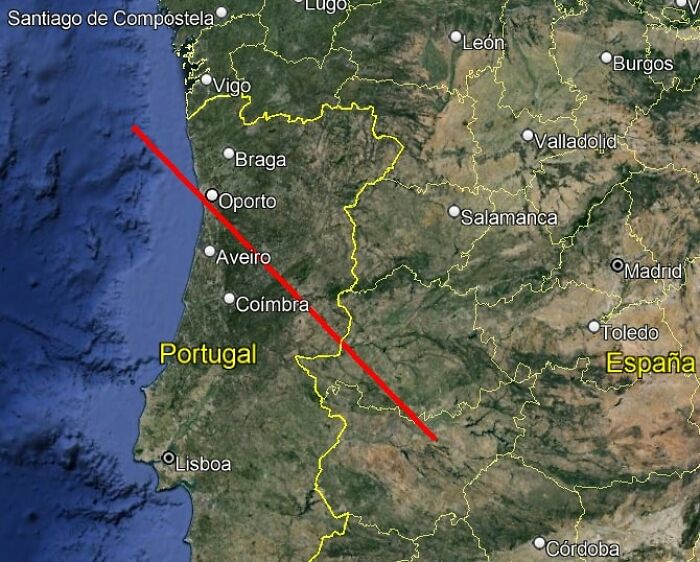
An intense flash of light, between blue and green, illuminated the sky over Portugal for a few brief seconds. The phenomenon was seen from the north to the south of the country, including Lisbon, when it was around 11:45 pm on Saturday, May 18th.
Bernardo Taborda, who’s a resident of Lisbon, Portugal, was in the city with his friends when the sky suddenly turned bright. “It almost looked like daylight… we all looked back and saw it. It felt like a movie, we all looked at each other and we were stunned. It was amazing,” shared the excited Bernardo.
“This is insane. Early reports claim that the blue flash could be seen darting through the night sky for hundreds of kilometers. At the moment, it has not been confirmed if it hit the Earth’s surface however some reports say it may have fallen near the town of Castro Daire. Other reports say it was closer to Pinheiro,” X user Colin Rugg shared on social media.
The European Space Agency’s (ESA) fireball camera in Cáceres, Spain, spotted this stunning blue night event, too. Later, the agency shared more information on their Twitter account: “It appears that this object was a small piece of a comet. We estimate that it flew over Spain and Portugal travelling at ~45 km/s before burning up over the Atlantic Ocean at an altitude of ~60 km. The likelihood of any meteorites being found is very low.”
The Spanish Observatorio de Calar Alto also confirmed that the “object had a cometary origin.” The observatory believes that the fireball first became visible as it burned up over Europe at an altitude of 122 km (76 miles) and then lit up the sky for the next several seconds as it fragmented and flamed out by the time it was at a height of 54 km (34 miles).
Speaking about objects that approach our planet Earth from time to time, I guess it would be nice to give some clarity regarding the differences between asteroids, comets, meteors, meteorites, and meteoroids.
Image credits: Miguel Gata
Image credits: Miguel Gata
Image credits: Meteorologia, Clima e Ambiente
Our solar system is filled with countless chunks of rock, ice, and metal left over from the formation of our solar system 4.6 billion years ago. Currently, it’s estimated that there are about 1.3 million known asteroids and more than 3,800 known comets. Some of them come close to the Earth, some enter our atmosphere and even make it to the ground, and others remain far away, yet all of them are scientifically interesting.
Asteroids are small, rocky, or metallic objects orbiting the Sun and are usually defined as being larger than 1 meter (3.28 feet) in diameter. Interestingly enough, asteroids have remained largely unchanged, making them time capsules that can teach us a lot about the origin and evolution of our solar system.
Free-floating rocky objects smaller than asteroids are called meteoroids, and those larger than asteroids are called dwarf planets. Most asteroids are located in the asteroid belt between Mars and Jupiter, but some come near to or cross the Earth’s orbit. Meteoroids are rocks that are still in space, and they range in size from dust grains to small asteroids.
When meteoroids enter Earth’s atmosphere or another planet at high speed and burn up, the fireballs that look like ‘shooting stars’ are called meteors. According to scientists, an astonishing 48.5 tons of meteoritic material falls on Earth every day. Meteor showers occur annually as the Earth passes through the trail of dusty debris left by comets, and perhaps the most famous are the Perseids, with their peak in August. Every Perseid meteor is a tiny piece of the comet Swift-Tuttle, which swings by the Sun every 135 years.
When a meteoroid survives a long trip through the atmosphere and finally hits the ground, then it’s called a meteorite. More than 60,000 meteorites have been found on Earth, and the biggest one was the Hoba meteorite, discovered in Namibia in the 1920s. It weighed roughly 60 tonnes and was, therefore, so heavy that it was never moved from where it was found.
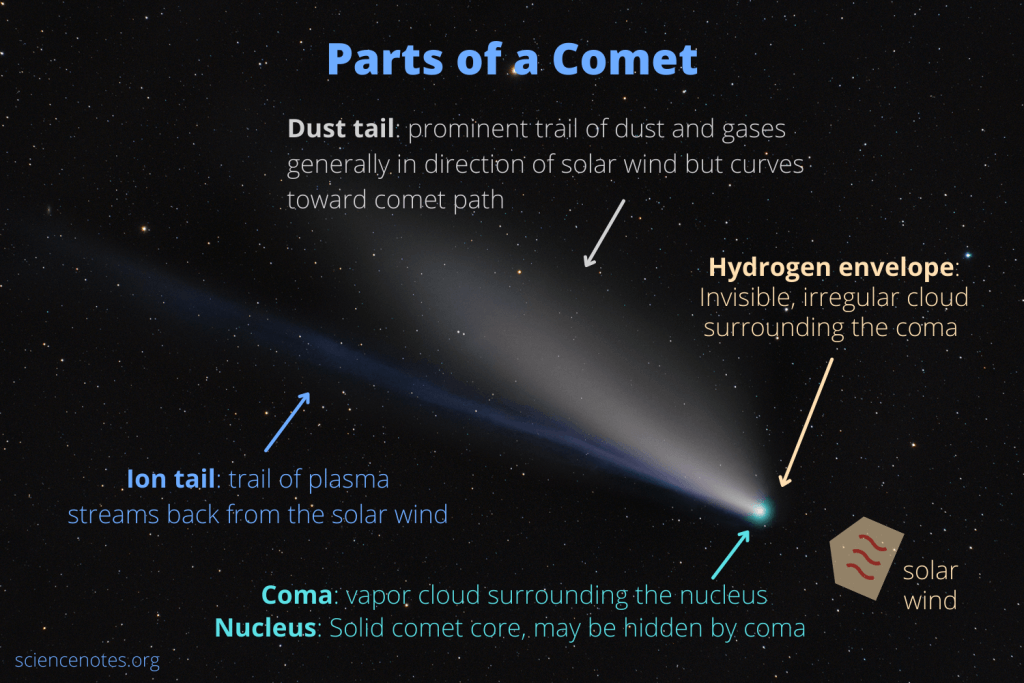
Comets are small, icy, and dusty objects formed in the outer solar system, far away from the Sun, where ice is stable. They range from a few miles to tens of miles wide. They spew gases and dust into a glowing head that can be larger than a planet and can have a tail that stretches millions of miles. It’s likely that there are billions of comets orbiting our Sun in the Kuiper Belt and even more distant Oort Cloud. The largest comet ever discovered is Comet Bernardinelli-Bernstein, which is 120 kilometers (75 miles) wide.
Image credits: NASA
Image credits: Science Notes
Image credits: UOL
As I watch Milena’s video over and over again, I can’t help but think of one of my favorite movies ‘Melancholia’ and how time mystically slows down in such moments. What an incredible feeling it must have been to witness the magic of the universe in its purest form, I would definitely make a wish!
Image credits: KevinMNelsonUSA
Image credits: Michaeldfl
Image credits: Feni__Sam
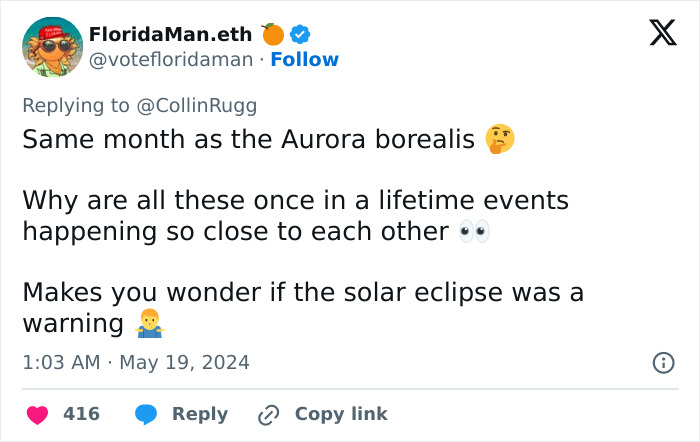
Image credits: votefloridaman
Image credits: GuntherEagleman
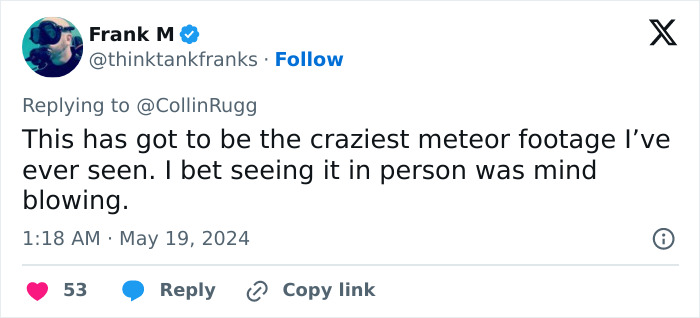
Image credits: thinktankfranks
Image credits: Liberacrat_
Image credits: phi_ci

By entering your email and clicking Subscribe, you're agreeing to let us send you customized marketing messages about us and our advertising partners. You are also agreeing to our Privacy Policy.
Thank you! You've successfully subscribed to newsletters!



Eglė Tenikytė - thank you for another fascinating article! I always look forward to whatever you post!
Thank you so much Multa Nocte! ☺️ The universe continues to surprise us in such incredible ways, right? ✨
Load More Replies...
Eglė Tenikytė - thank you for another fascinating article! I always look forward to whatever you post!
Thank you so much Multa Nocte! ☺️ The universe continues to surprise us in such incredible ways, right? ✨
Load More Replies... 






































 No fees, cancel anytime








50
4