Get Premium
Dark mode theme is available exclusively for premium users. Learn more about the benefits of subscribing.
No fees, cancel anytime.

 Dark Mode Ad-Free Browsing Unlimited Content
 Ad-Free Browsing Unlimited Content Dark Mode
Join 1.2 million Panda readers who get the best art, memes, and fun stories every week!

For many of us, visiting grandma and grandpa during the summer or holidays was one of the best parts of growing up. There was something special about being spoiled with homemade food, staying up a little later, exploring the backyard, and generally getting away with things our parents might not have allowed. But as wonderful as those visits can be, most kids probably expect to go home with their parents afterward—not move in with their grandparents permanently.
Well, in today’s story, a woman thought she was in a happy and serious relationship with her boyfriend, who had also built a fun bond with her two children. During a holiday visit to his parents, everyone seemed to be having a wonderful time, and her kids especially loved the experience. But then her boyfriend made a suggestion she absolutely wasn’t expecting. He thought her children should stay with his parents. Keep reading to find out what happened next.

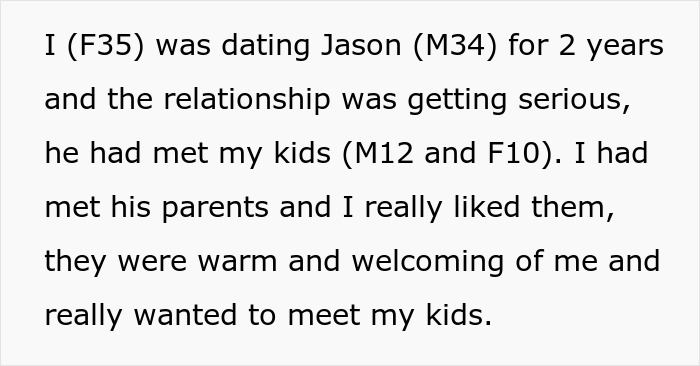

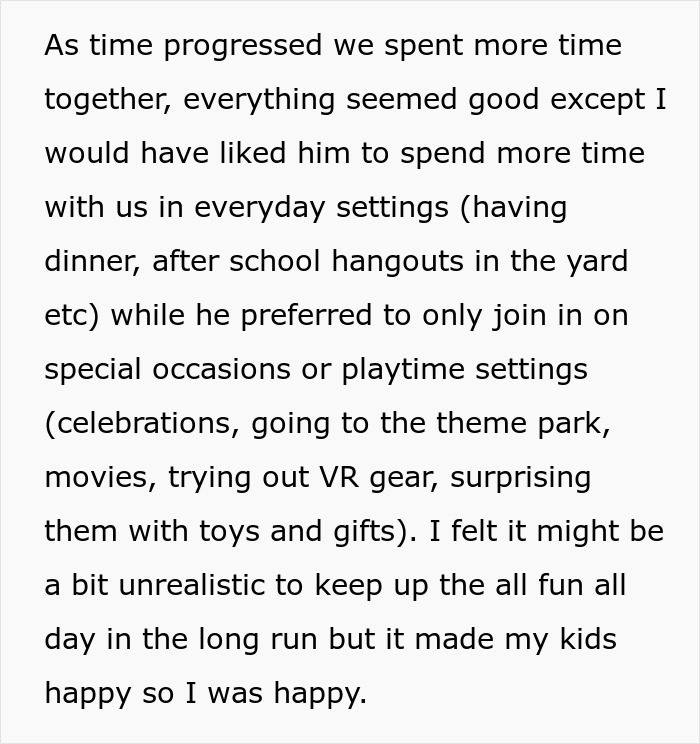
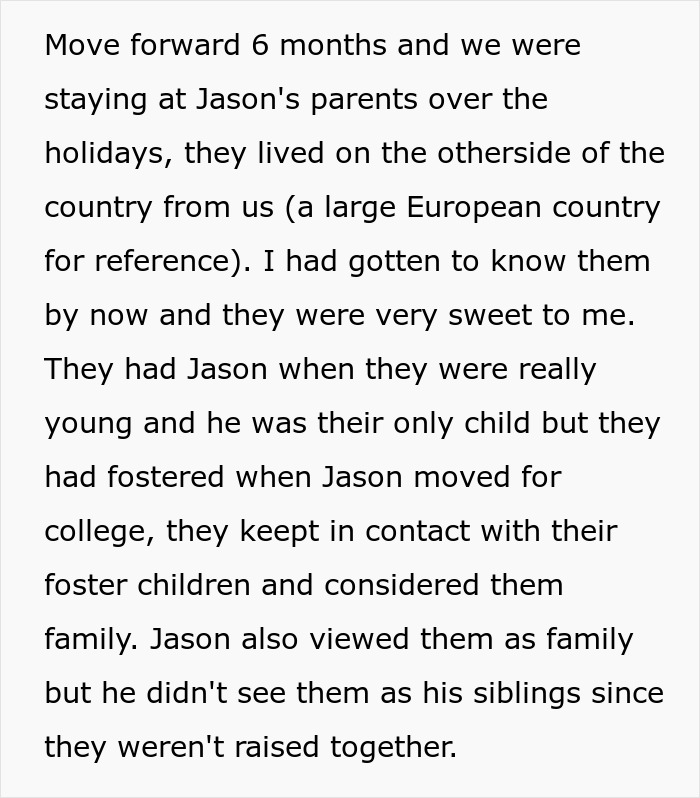







Grandparents often play a special role in family life. They’re the ones who spoil the kids a little, share stories from when their parents were young, offer advice when it’s needed, and sometimes step in with practical help when life gets hectic. For many children, grandparents can be another source of comfort and stability. And this kind of close relationship is more common than you might think. According to a U.S. Census Bureau report, about 6.7 million adults aged 30 and over lived with their grandchildren in 2021, accounting for about 3.3% of adults in that age group.
Beyond the hugs, homemade meals, and seemingly unlimited supply of treats, living with grandparents can also offer practical advantages. Multigenerational households can let different generations share responsibilities, expenses, and everyday life rather than everyone managing independently. One highly regarded book on the subject, Together Again: A Creative Guide to Successful Multigenerational Living by Sharon Graham Niederhaus and John L. Graham, explores how families can make this kind of arrangement work while navigating the challenges that naturally come with sharing a home.
One of the biggest potential benefits is financial security. When several generations live together, families can pool resources and share costs such as housing, utilities, groceries, and childcare. Grandparents may also provide trusted supervision, which can reduce some of the financial pressure associated with childcare. Grandparents often help financially in other ways, too. A UK study found that grandparents were willing to give substantial amounts of money to their grandchildren, with the average grandparent having already spent around £1,633, while 6% had given gifts worth more than £10,000. Of course, not every family can or should combine finances, but when everyone is comfortable with the arrangement, the support can make a meaningful difference.
Children can also benefit emotionally. Having grandparents around gives kids another set of trusted adults they can turn to, whether they need advice, reassurance, or simply someone willing to listen to a very long story about what happened at school. Grandparents can also help pass down family traditions, cultural practices, and stories that might otherwise disappear between generations. Research by Dr. Robyn Fivush at Emory University has found that children who know more about their family history tend to develop stronger identity narratives and higher self-esteem. In that sense, grandparents can be more than babysitters or occasional visitors—they can help children understand where they came from.
And children don’t necessarily need to live under the same roof to benefit from that relationship. Research from the Oxford University Centre for Family Research has highlighted the value of meaningful grandparent involvement, with emotional closeness and regular contact being more important than simply living nearby. A grandparent who regularly calls, shares family stories, attends important events, or even sends letters can still play a significant role in a child’s life. Sometimes a weekly video call where grandma asks approximately 47 questions about school can be just as valuable as a visit.
The benefits can extend to parents, too. Having grandparents nearby can give younger parents an additional support system, whether that means occasional childcare, help with household responsibilities, or simply another person to turn to when parenting becomes overwhelming. That support can make it easier for parents to focus on work, education, or other responsibilities without feeling like they have to do absolutely everything themselves. Of course, the key is that the help should feel supportive rather than intrusive—there’s a big difference between having someone lend a hand and having someone constantly tell you how to raise your children.
Grandparents can also benefit from multigenerational living. Older adults can face loneliness and social isolation, with studies suggesting that these issues affect a significant proportion of older people. Sharing a home with children and younger adults can provide regular companionship and a stronger sense of connection and purpose. Instead of spending long stretches of the day alone, grandparents may become part of the everyday rhythm of family life—from breakfast conversations to school pickups and evening meals. For some, simply having people around to talk to can make a huge difference.
There can also be a practical advantage when it comes to caring for ageing parents. Living together allows adult children to notice changes in their parents’ health, mobility, or daily routines much earlier. It can make it easier to attend appointments, help with household tasks, or respond quickly if something goes wrong. That doesn’t mean grandparents should automatically become dependent on their adult children, but being nearby can make it easier for families to support one another as circumstances change.
Clearly, living with grandparents can have plenty of advantages, but it isn’t automatically the perfect arrangement for every family. Sharing a home across generations can also bring disagreements over parenting, privacy, household responsibilities, finances, and personal boundaries. What works beautifully for one family might feel overwhelming for another. The most successful arrangements usually depend on everyone understanding their role, respecting each other’s space, and communicating openly about expectations before small frustrations turn into much bigger problems.
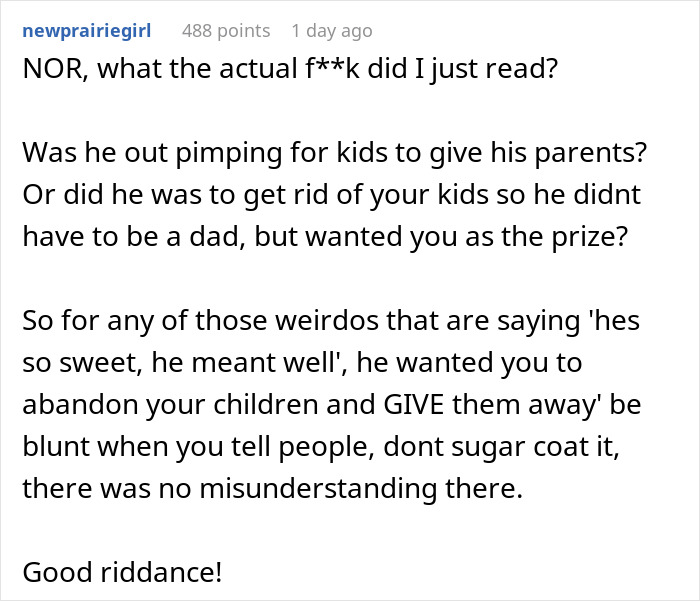
Coming back to today’s story, there’s no doubt that the boyfriend’s parents seemed to genuinely enjoy having the children around, and it sounds like the kids had an amazing time too. But suggesting that his girlfriend should leave her children with his parents permanently—especially when he had already made it clear that he had no intention of moving back there himself—was a very different proposition. A fun holiday with grandparents is one thing; asking a mother to send her children across the country without her is something else entirely. What do you make of his suggestion, Pandas? Would you have been just as shocked?











By entering your email and clicking Subscribe, you're agreeing to let us send you customized marketing messages about us and our advertising partners. You are also agreeing to our Privacy Policy.
Thank you! You've successfully subscribed to newsletters!



Wow. Something similar happened to me. My son was 2 years old and the guy I was dating suggested that my parents "keep" my son. Absolutely not! Then he suggested that his parents "keep" my son ..."so we could have a fresh start and make our own babies". My brain kinda short circuited. I didn't fully comprehend what he was saying. He told me to think about it and then he left. We weren't living together. It hit me that he wanted my son out of the way! I never called him again. He stopped by when I would return his calls. I said we were done. It was nice, but it's over. I closed the door on him. I closed that chapter of my life.

Its so interesting that we have this huge taboo on women trying to "change" or "fix" their man, yet statistics on men demanding their "standards" be met just to be part of a woman's life are ALMOST as frightening as those on mothers of children actually being willing to meet them.

I'm sorry, are you saying Jason was correct? Btw women don't want to fix or change a man, that was invented by men because women asked for basic boundaries to be respected, like don't scream in my face or cheat on me.
Load More Replies... Wow. Something similar happened to me. My son was 2 years old and the guy I was dating suggested that my parents "keep" my son. Absolutely not! Then he suggested that his parents "keep" my son ..."so we could have a fresh start and make our own babies". My brain kinda short circuited. I didn't fully comprehend what he was saying. He told me to think about it and then he left. We weren't living together. It hit me that he wanted my son out of the way! I never called him again. He stopped by when I would return his calls. I said we were done. It was nice, but it's over. I closed the door on him. I closed that chapter of my life.
Its so interesting that we have this huge taboo on women trying to "change" or "fix" their man, yet statistics on men demanding their "standards" be met just to be part of a woman's life are ALMOST as frightening as those on mothers of children actually being willing to meet them.
I'm sorry, are you saying Jason was correct? Btw women don't want to fix or change a man, that was invented by men because women asked for basic boundaries to be respected, like don't scream in my face or cheat on me.
Load More Replies...




































 No fees, cancel anytime








36
7