Get Premium
Dark mode theme is available exclusively for premium users. Learn more about the benefits of subscribing.
No fees, cancel anytime.

 Dark Mode Ad-Free Browsing Unlimited Content
 Ad-Free Browsing Unlimited Content Dark Mode
Join 1.2 million Panda readers who get the best art, memes, and fun stories every week!

My older daughters are 11, and they don’t like to read. They watch videos, play games, and draw really well—they’re very creative kids—but they don’t read anything other than graphic novels. As someone who used to read literally everything they could get their hands on at their age, I just can’t understand it.
Well, I can understand it, but I can’t accept it. I get it because it’s pretty much the norm around the world now. And high-schoolers struggling with basic knowledge that was a piece of cake for 10YOs decades ago is also part of the world we live in. So today’s story from the user u/SecretaryPresent16 is exactly about this process.
More info: Reddit
Image credits: vh-studio / Freepik (not the actual photo)
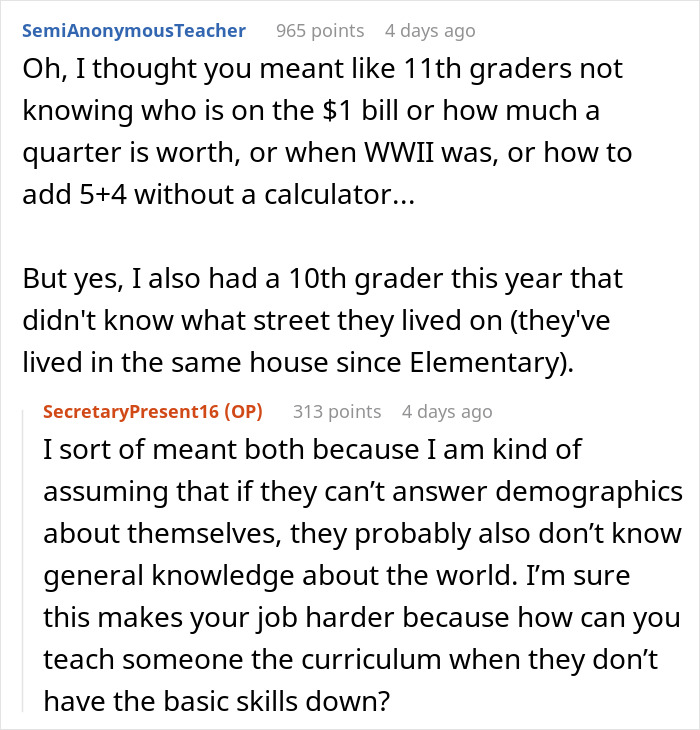
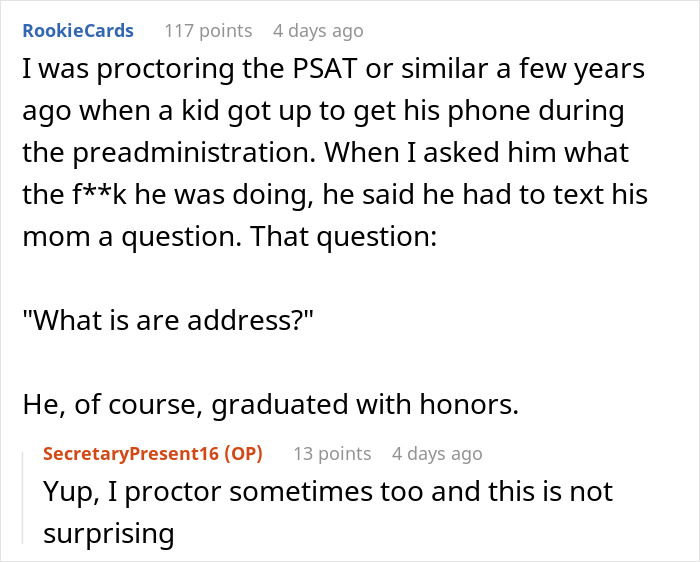
Image credits: SecretaryPresent16
Image credits: eugeneshemyakin9 / Freepik (not the actual photo)
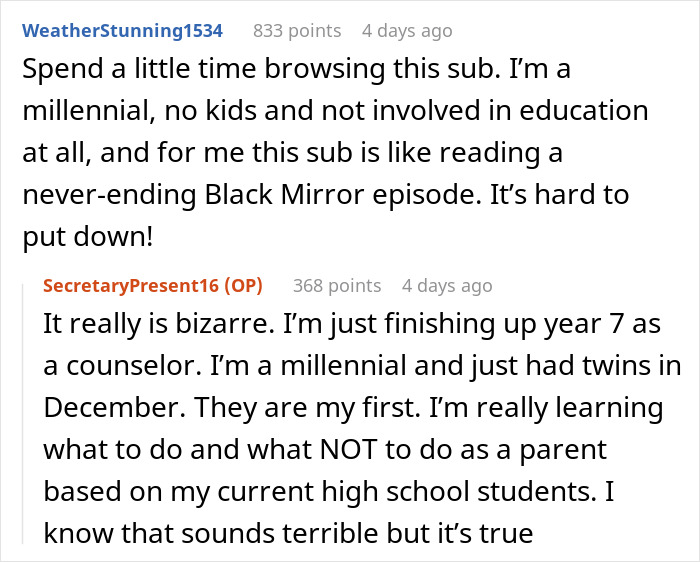
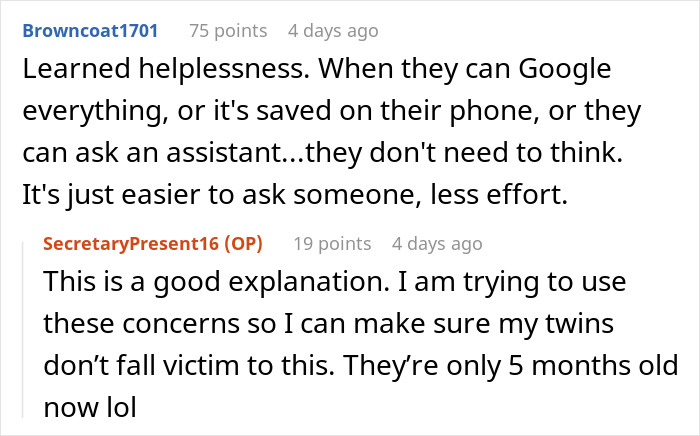
Image credits: SecretaryPresent16
Image credits: stockking / Freepik (not the actual photo)
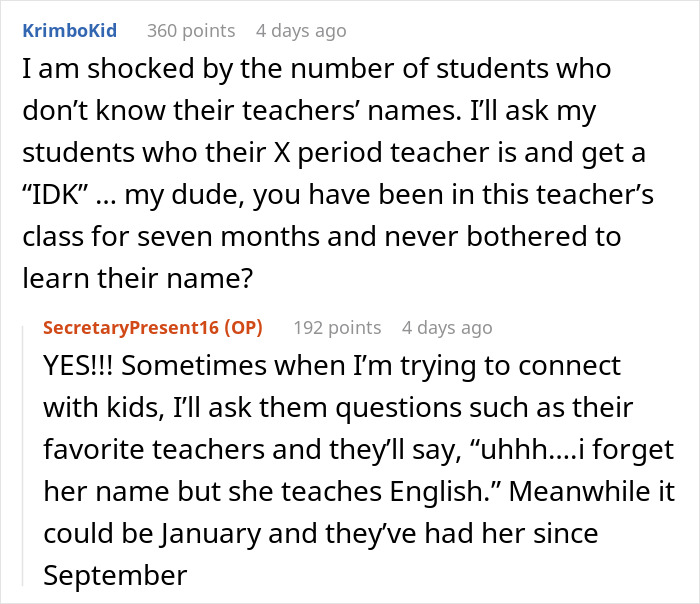
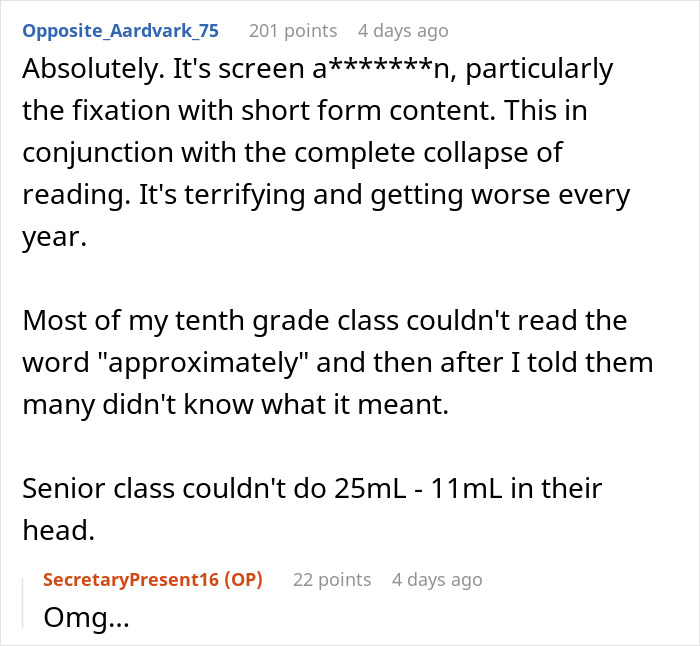
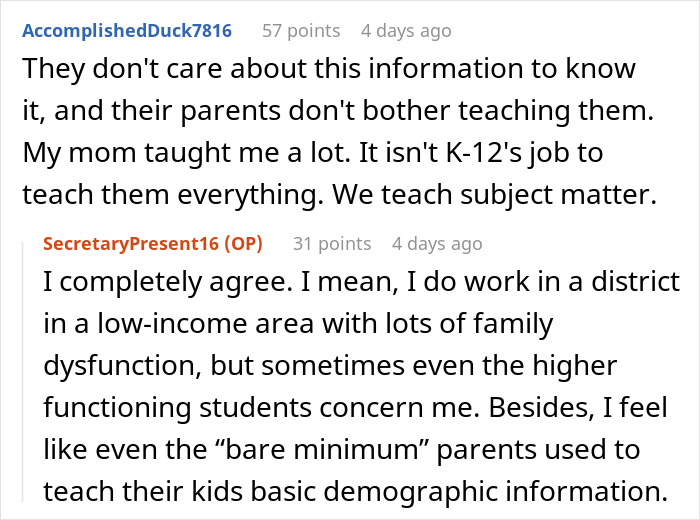
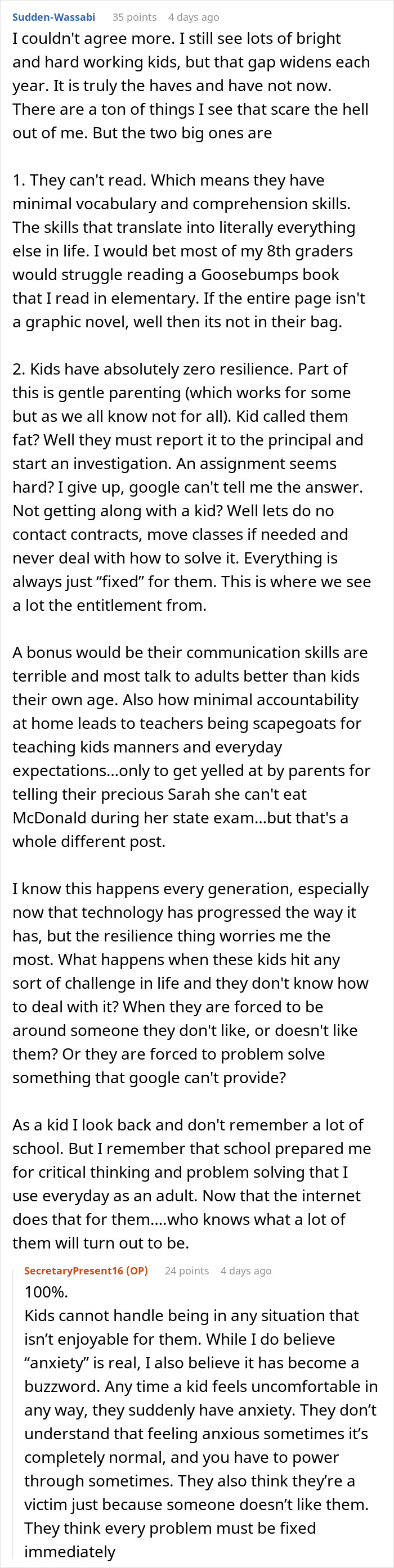
Image credits: SecretaryPresent16
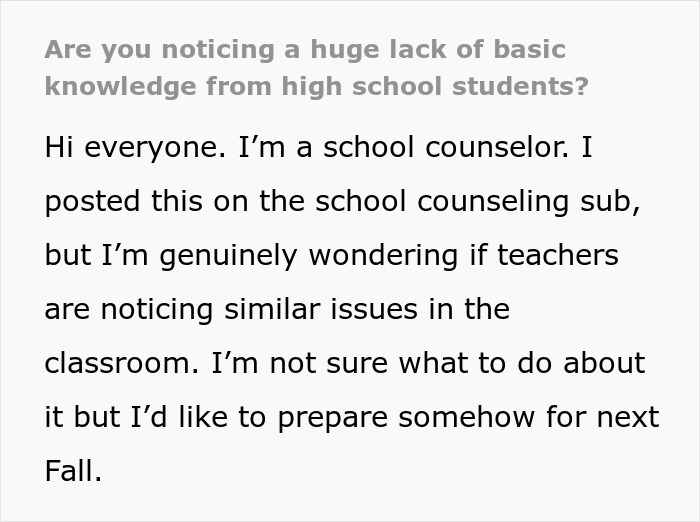
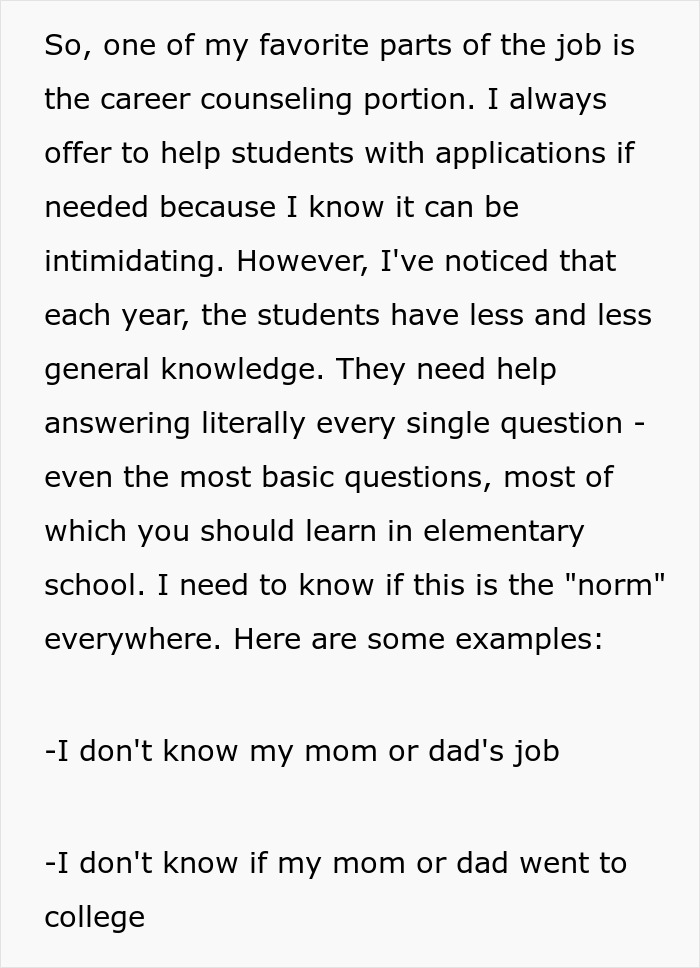
So, the Original Poster (OP) tells us that they work as a high school counselor, and one of the parts of their job is the career counseling portion. Usually, the author helps students with applications if needed, but every year, in their own words, they see how students have a huge lack of something that the OP considers just basic knowledge.
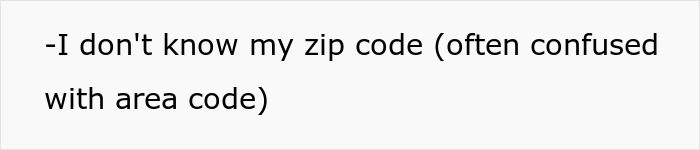
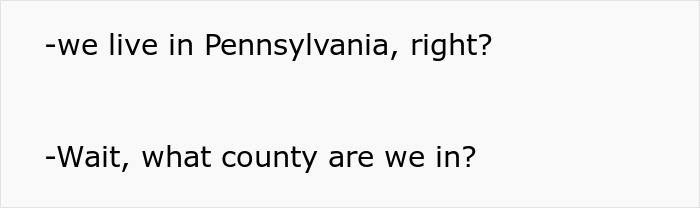
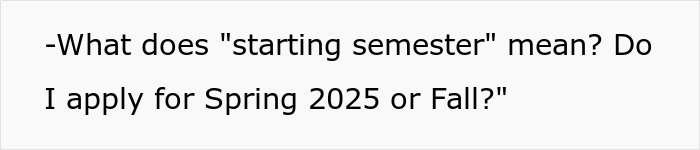
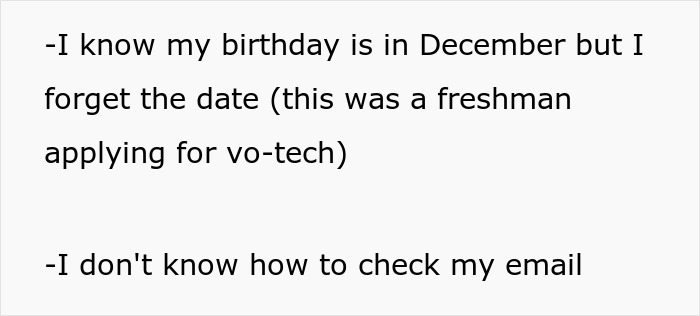
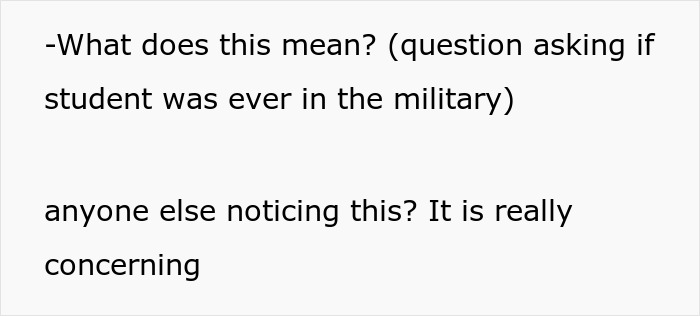
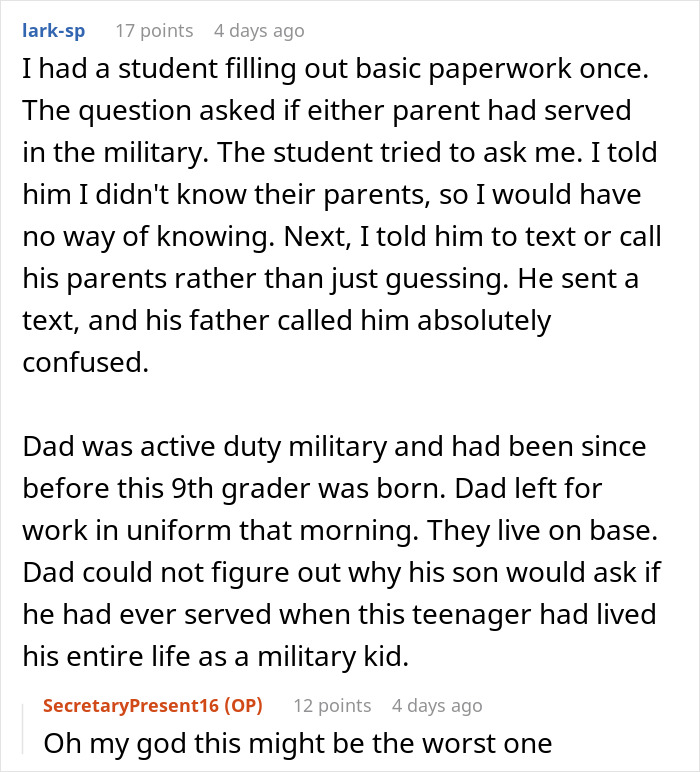
For example, they may not know what their parents’ job is, they may not know their own ZIP code (or even have no idea what that actually is). They’re confused about the counties they live in – and they may not even know what state they are in. Furthermore, someone doesn’t know whether their parents went to college or not, whether any of them were in the military, and, finally, they’re confused about their own date of birth.
The original poster says that they have met students who sincerely admit that they don’t know how to check their email, and this is still an Internet skill, even if someone may consider it quite obsolete today. Of course, the author helps students and explains all these facts and processes to them, but each new case makes them sadly shake their heads.
The author says they’ve already spoken to colleagues online, and many other high school counselors are in a similar situation. Now, they took this online to the teacher community to ask if the educators have encountered manifestations of something similar in the classroom and, of course, to find out what they see as the reasons for this alarming process.
Image generated by Bored Panda using ChatGPT
Perhaps the main problem here is that kids have stopped reading. No, that’s not it. They have stopped reading books. They regularly read texts and posts on social networks on smartphones, but reading books for fun seems to be a thing of the past. Every year, data from a test administered by the National Center for Education Statistics shows that more and more children in the U.S. don’t meet the standards for reading proficiency.
For example, if only 37% of fourth graders were proficient in reading in 2017, then by 2019, this figure had decreased to 35%, and by 2024, it would have decreased by another 5%. Children just don’t want to read.
“I have noticed is that the belief that reading both enlarges and enlivens life itself has largely vanished from the lives of my young students,” Detroit News quotes Jeremy Adams, a high school and college political science teacher.
The reason? Well, most likely, the rapid growth of the Internet and its penetration into literally all spheres of our lives. Children, in general, choose easier and more enjoyable activities, and watching short videos and playing games on the phone are easier and simpler than reading. They don’t think that by doing so, they are reducing their own skills and level of understanding of the world. The parents… well, many parents just don’t care.
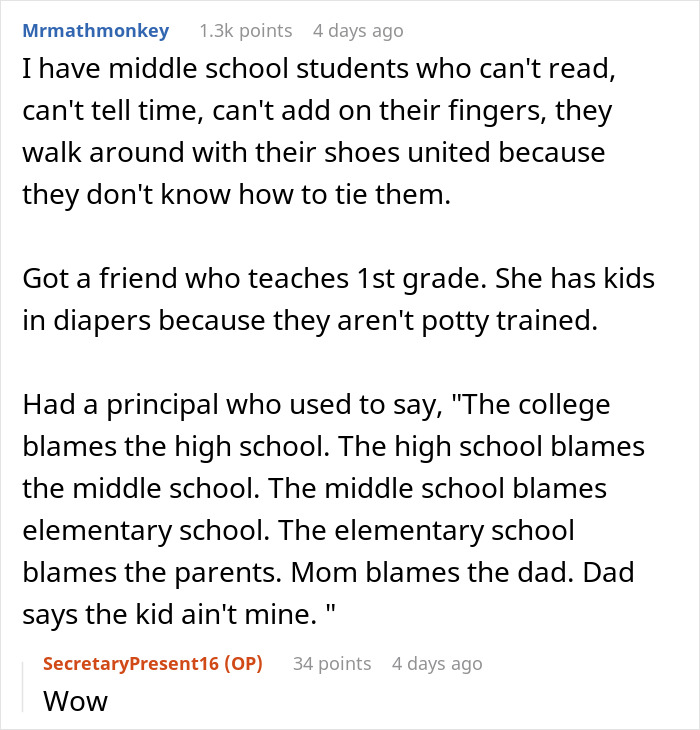
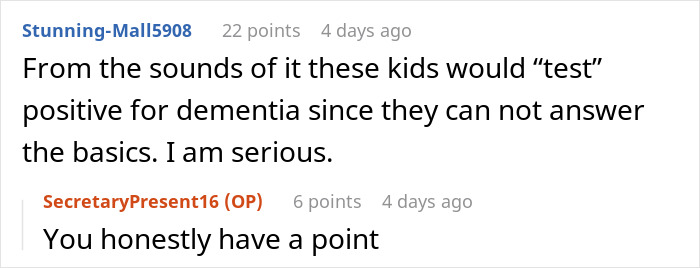
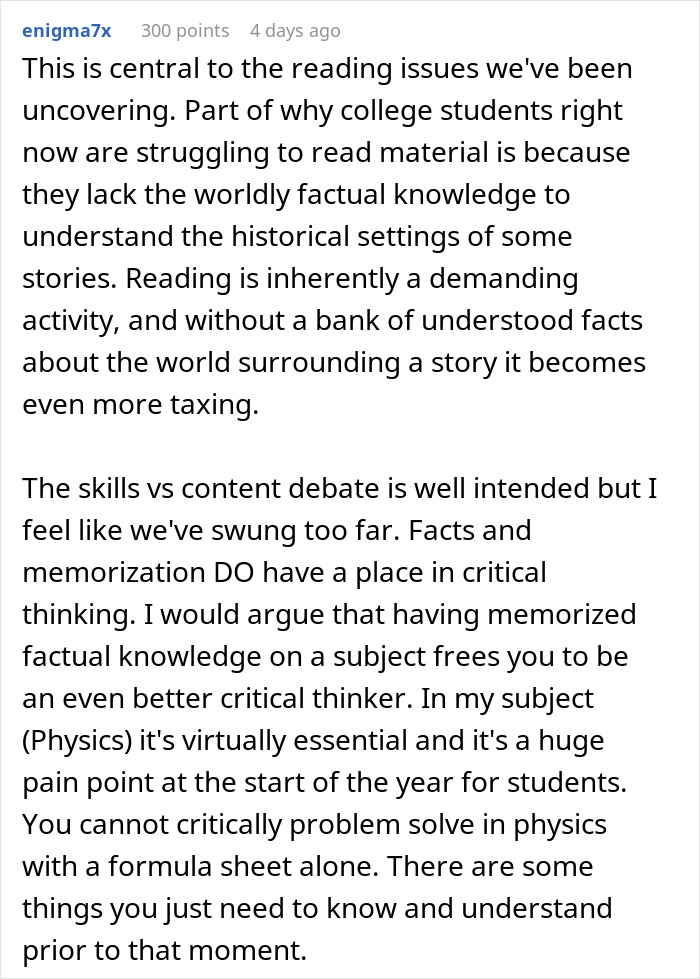
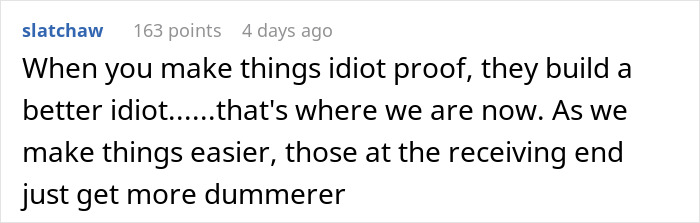
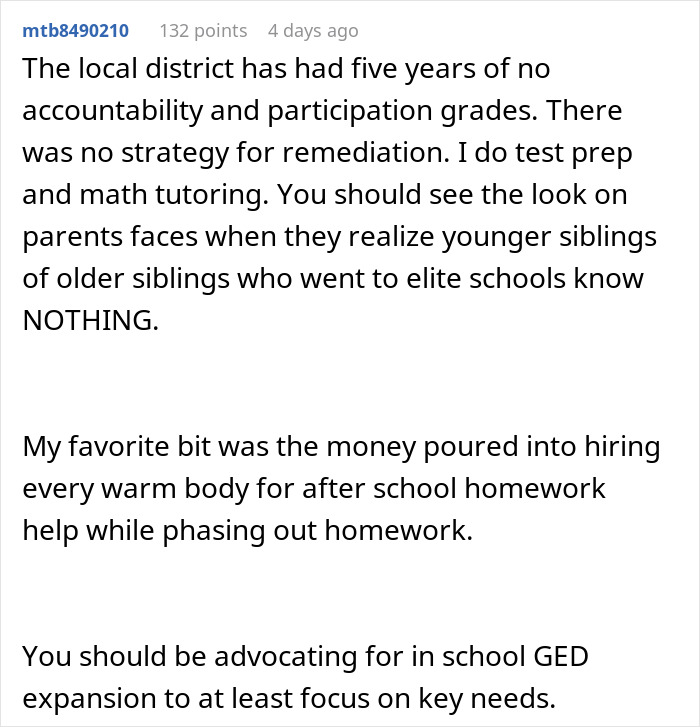
Teachers in the comments to the original post gave even more alarming examples. Schoolers simply don’t care about all this information and don’t intend to remember it, and many parents don’t try to show and explain to them the importance of this knowledge.
As a result, we have rapidly deteriorating indicators of school education—and teachers, alas, don’t know what can be done about it. Because the world is changing—and this process cannot be stopped.
Yes, the world is not always changing for the better, and our social and emotional development doesn’t keep up with the speed of technological progress. Where I take a book to have some fun, my kids play mobile games and watch shorts… By the way, how are things with you, our dear readers? Please feel free to share your thoughts about this in the comments below.

By entering your email and clicking Subscribe, you're agreeing to let us send you customized marketing messages about us and our advertising partners. You are also agreeing to our Privacy Policy.
Thank you! You've successfully subscribed to newsletters!

We've got a daughter who is about to be 5 and will start kindergarten in the fall. I think one of the most important things we've done as parents, and one of the most difficult, is to tell her no. Can you take my dress off? No, you can do it. Can you wipe my butt? No, you can do it. Can you get me some water? No, you can do it. It's tough because I know we can do it faster and better, but she's got to fail at things in order to learn how to do them by herself.

This! I struggled with penmanship when I was small, so my mother had me write our grocery lists. The patience needed to say "Milk...m-i-l-k; bread...b-r-e-a-d; cheese...c-h-e-e-s-e" each week is staggering. Years later Mom told me it nearly killed her not to just do it herself, but she knew I had to learn.
Load More Replies...
Some of the kids I teach don't even know ALPHABETICAL ORDER. Most can't multiply, even small numbers. Lots of them don't know the difference between lower-case B and D (hence writing that they "bib something" or about their pet "bog" or they like to play with a "dall"). These are kids in Grade 5. It gets worse every year. I have 40 kids in my class and I think only 10% even study for exams, if that. They don't understand how to answer questions. If you have 1a) and 1b), they don't understand that the two questions are related. If you ask, "How do we know that..." (i.e. asking for a REASON we know something), a lot of them will just write, "Yes/No." I've had to dumb down my English so much it's ridiculous. I can't ask questions the proper way because the kids don't know what is being asked.


Covid did a number on education too. My oldest was in 1st grade when covid hit. And digital lessons did NOTHING for her, so the remainder of 1st and all of 2nd grade were just terrible, and you can tell she didn't create that foundation of learning before being ushered to the next grades (because NOBODY was getting held back those years.)

This is what I found too. Our government sent out resources and parents complained that it was just puzzles, books, paper and pens, nothing fun. Yeah it was because you were supposed to actually engage with your children and play with them! Not dump them in front of a screen and disappear for a cuppa elsewhere. We've lost the art of learning together, spending quality time with our children and enjoying them. You don't stop playing because you grow old, you grow old because you stop playing.
Load More Replies... We've got a daughter who is about to be 5 and will start kindergarten in the fall. I think one of the most important things we've done as parents, and one of the most difficult, is to tell her no. Can you take my dress off? No, you can do it. Can you wipe my butt? No, you can do it. Can you get me some water? No, you can do it. It's tough because I know we can do it faster and better, but she's got to fail at things in order to learn how to do them by herself.
This! I struggled with penmanship when I was small, so my mother had me write our grocery lists. The patience needed to say "Milk...m-i-l-k; bread...b-r-e-a-d; cheese...c-h-e-e-s-e" each week is staggering. Years later Mom told me it nearly killed her not to just do it herself, but she knew I had to learn.
Load More Replies... Some of the kids I teach don't even know ALPHABETICAL ORDER. Most can't multiply, even small numbers. Lots of them don't know the difference between lower-case B and D (hence writing that they "bib something" or about their pet "bog" or they like to play with a "dall"). These are kids in Grade 5. It gets worse every year. I have 40 kids in my class and I think only 10% even study for exams, if that. They don't understand how to answer questions. If you have 1a) and 1b), they don't understand that the two questions are related. If you ask, "How do we know that..." (i.e. asking for a REASON we know something), a lot of them will just write, "Yes/No." I've had to dumb down my English so much it's ridiculous. I can't ask questions the proper way because the kids don't know what is being asked.
Covid did a number on education too. My oldest was in 1st grade when covid hit. And digital lessons did NOTHING for her, so the remainder of 1st and all of 2nd grade were just terrible, and you can tell she didn't create that foundation of learning before being ushered to the next grades (because NOBODY was getting held back those years.)
This is what I found too. Our government sent out resources and parents complained that it was just puzzles, books, paper and pens, nothing fun. Yeah it was because you were supposed to actually engage with your children and play with them! Not dump them in front of a screen and disappear for a cuppa elsewhere. We've lost the art of learning together, spending quality time with our children and enjoying them. You don't stop playing because you grow old, you grow old because you stop playing.
Load More Replies...

















 No fees, cancel anytime












54
77