Get Premium
Dark mode theme is available exclusively for premium users. Learn more about the benefits of subscribing.
No fees, cancel anytime.

 Dark Mode Ad-Free Browsing Unlimited Content
 Ad-Free Browsing Unlimited Content Dark Mode
Join 1.2 million Panda readers who get the best art, memes, and fun stories every week!
Family dynamics can be complicated, and misunderstandings are bound to happen. But when malicious intentions and health problems enter the picture, even small incidents can lead to serious consequences.
And there’s a post on the subreddit r/JUSTNOMIL by platform user ImNotAWitch-ImUrWife that describes how dangerous these scenarios can be.
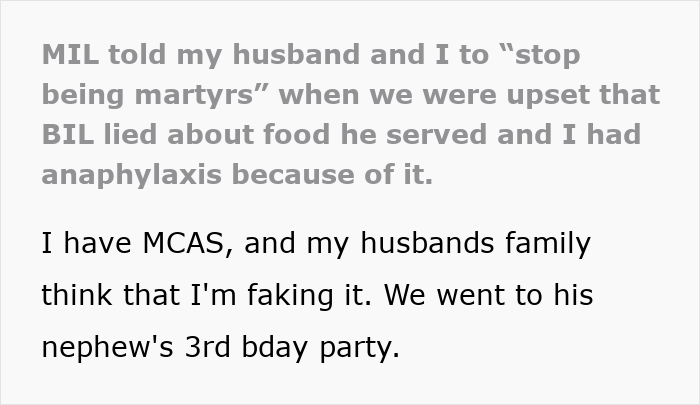
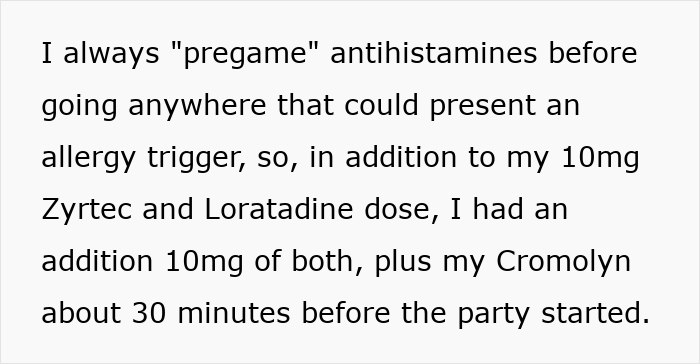
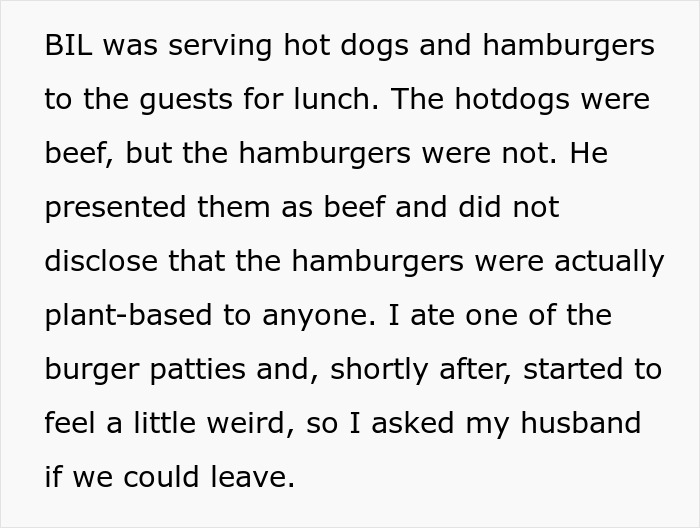
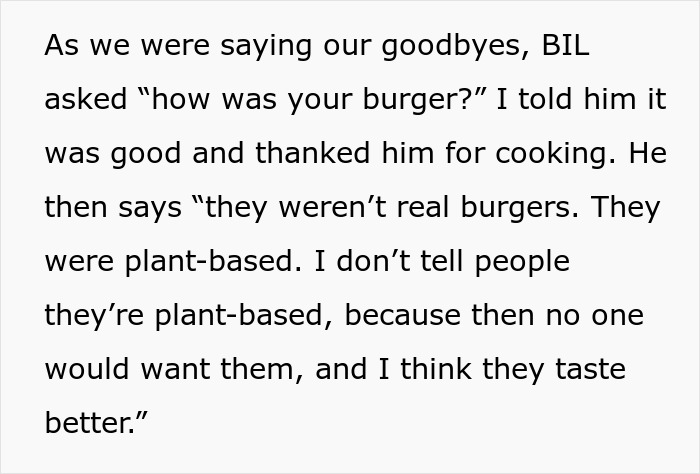
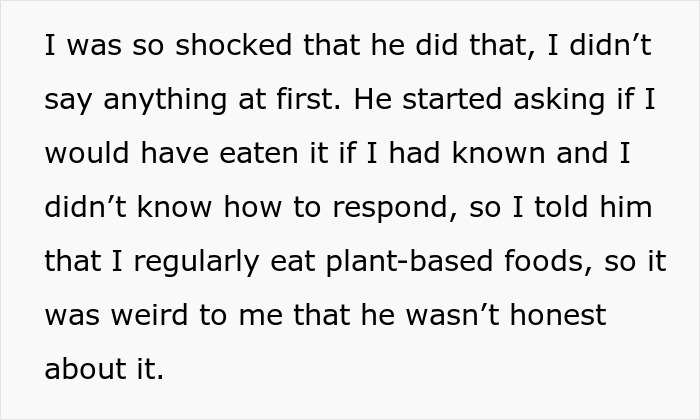
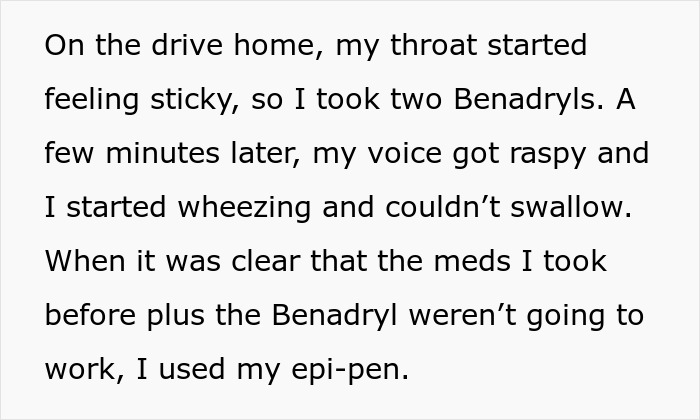
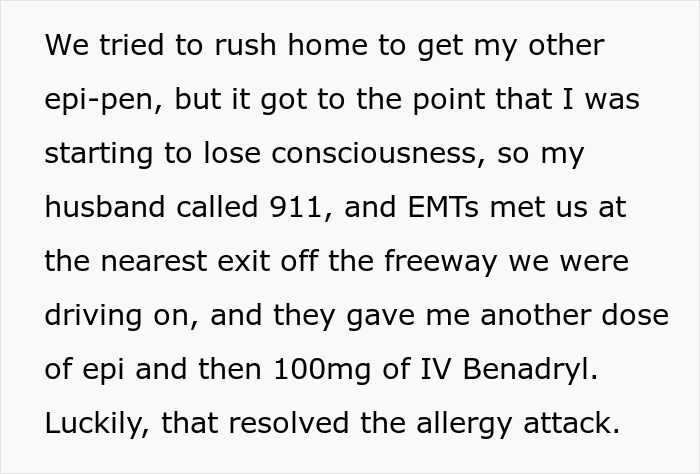
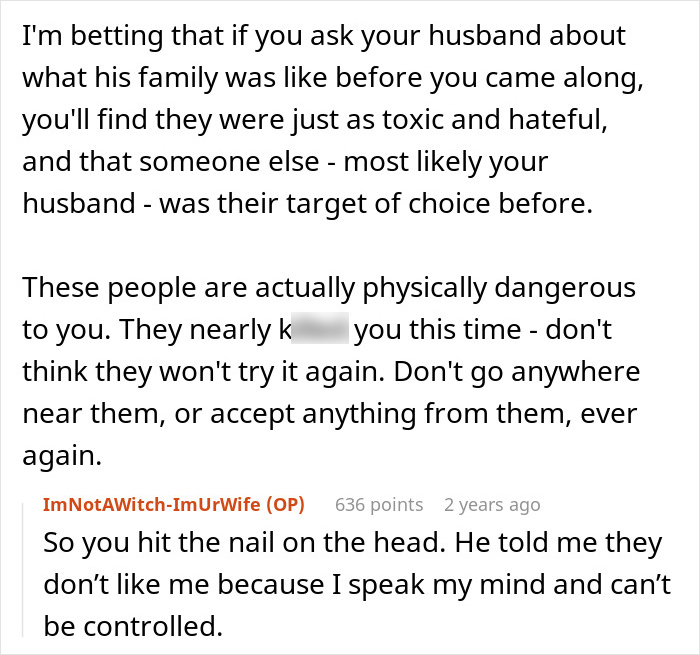
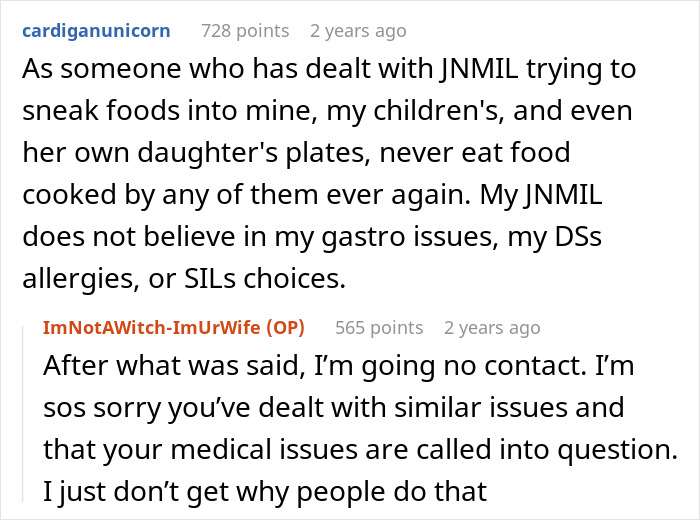
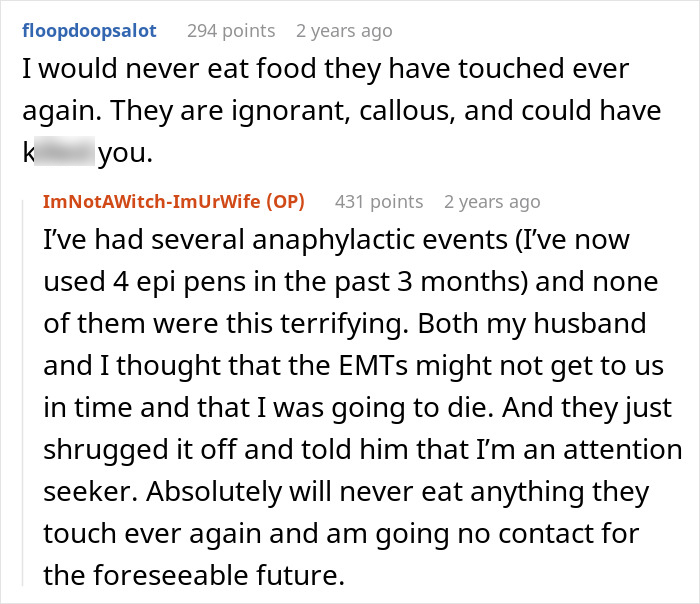
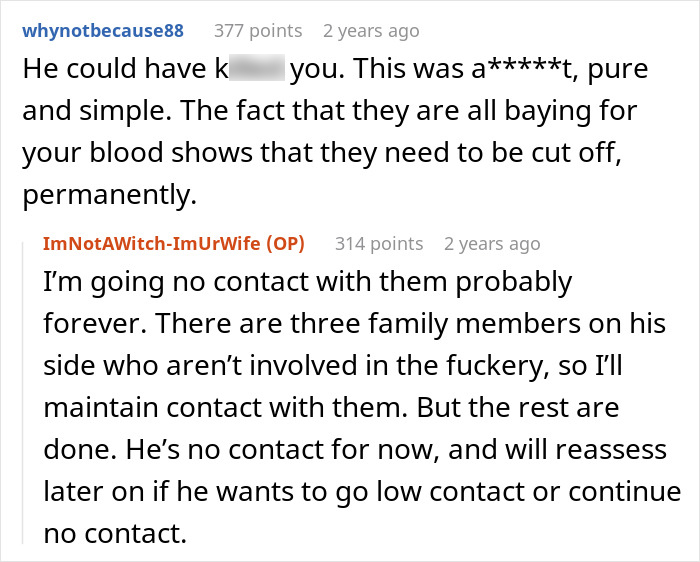
The woman says she has mast cell activation syndrome (MCAS), a condition caused by mast cells (mistakenly) alerting your immune system that there’s something harmful in your body. But her in-laws believe she’s faking it for attention. So during a party, her husband’s brother lied about what was in the food to see her reaction.
Image credits: Freepik (not the actual photo)
Image credits: Jimmy Chan/Pexels (not the actual photo)
Image credits: Allen Beilschmidt sr./Pexels (not the actual photo)
Image credits: RDNE Stock project/Pexels (not the actual photo)
Image credits: ImNotAWitch-ImUrWife
Image credits: Towfiqu barbhuiya/Pexels (not the actual photo)
Mast cells are a part of our immune system. Their usual function is to help protect the body from invading germs (pathogens — like parasites or viruses) or other harmful substances.
They sit in our tissues, and when they recognize something they think is harmful, they release histamine and other chemicals to activate the immune system and try to flush out the intruder.
Mast cell activation syndromes are divided into three groups: primary, secondary, and idiopathic.
Primary disorders of mast cell activation usually happen when there’s a problem with the mast cell or its parent cells, which causes an excessive production of mast cells. This problem may occur when there is a mutation in a gene called KIT. These primary disorders of mast cell activation include mastocytosis, monoclonal mast cell activation syndrome (MMAS), mast cell sarcoma, mast cell leukemia, and mastocytoma.
Secondary disorders of mast cell activation happen when the body encounters a trigger that causes it to produce too many mast cells. This trigger could:
No one knows the exact cause of the idiopathic mast cell activation syndrome. The name comes from the fact that it’s not caused by any other disease or related to a clear allergy. People who have this syndrome might have a hard time pinpointing the exact thing that triggers the symptoms, and new triggers might come up a lot.
In general, many different symptoms affect lots of the body’s systems all at once. These can happen after eating foods, smelling certain fragrances, exercising, etc.
Some key symptoms include:
But MCAS may also cause symptoms that involve the brain and nerves, including memory problems, headaches, balance problems, fainting, brain fog, anxiety, shortness of breath, mood swings, heart palpitations, and, as we learned from the study, can lead to a life-threatening reaction called anaphylactic shock.
In a comment our Redditor left under another post, she mentioned that her MCAS comes with postural orthostatic tachycardia syndrome, or POTS.
This condition results in too little blood getting to the heart when she stands up after lying down. It causes:
So this woman’s case is no joke.
Image credits: Pixabay/Pexels (not the actual photo)
To determine how big the problem of people faking illness really is, a team of researchers conducted a study based on survey data from the Netherlands.
975 adults participated in the study, and even though many believe that faking illness is something that happens only very rarely, the results paint a different picture.
The respondents said they believe about one in every three people (31.2%) fake illness to achieve some sort of goal. Participants also reported that 22.7% had a person in their family who had done this, 24.9% knew someone like this among their friends, and 15.4% said such a person was part of their neighborhood.
The highest percentage was reported for colleagues at work (38.9%). About 14.3% of participants in the study even admitted that they had faked illness themselves, with 55% having faked physical symptoms, 7.4% having faked mental symptoms, and 37.5% having faked both physical and mental symptoms. Most people who had faked illness themselves felt guilty about it (80.6%), and a few also felt that it was thrilling (16.5%).
However, tricking a doctor into writing you a note so that you can skip work is one thing. Faking a condition like MCAS in front of everyone you know for your entire life would be… a much bigger act. I mean, can you imagine convincing the paramedics to help you?

By entering your email and clicking Subscribe, you're agreeing to let us send you customized marketing messages about us and our advertising partners. You are also agreeing to our Privacy Policy.
Thank you! You've successfully subscribed to newsletters!

If you need an epi injection, you need to go to the ER for follow up. It's not like on TV, it's more likely than not that the reaction is only suppressed and will return when the epi is metabolised. Especially if it's food related because the food is still in your system. It isn't like a bee sting where, in theory, the allergen can be removed and the exposure stopped. If this woman's doctor told her otherwise it's malpractice.

Exactly. I was so confused on why they were trying to get home to her other EpiPen and weren't already heading to the hospital.
Load More Replies...
Gods, I absolutely cannot stand the "I have never been personally affected by [issue], so it can't be real." crowd. Especially when it comes in the form of cartwheeling out of the way of personal accountability.

Frankltly, it's a sign of low intelligence and lack of cognitive empathy.
Load More Replies... Where TF did this attitude of allergies not being real come from? I am 64, and never ever have I heard of a doctor telling someone, especially parents, to ignore an allergy and force feed tons of the allergen to themselves or their child and that way they’ll develop an immunity to it. NEVER. I have no idea where that f****d up line of “reasoning” came from, but it is incredibly dangerous. There are people who could die from exposure to their allergen, ffs. Everyone I have known, and every doctor I have ever gone to or spoken to takes allergies very seriously, so would never say to just go ahead and expose someone to their allergen, as that can be considered a*****t, ffs.

Recently a grandmother ended up in jail because she refused to believe granddaughter had an allergy and gave her the coconut she was allergic to and granddaughter died.
Load More Replies... If you need an epi injection, you need to go to the ER for follow up. It's not like on TV, it's more likely than not that the reaction is only suppressed and will return when the epi is metabolised. Especially if it's food related because the food is still in your system. It isn't like a bee sting where, in theory, the allergen can be removed and the exposure stopped. If this woman's doctor told her otherwise it's malpractice.
Exactly. I was so confused on why they were trying to get home to her other EpiPen and weren't already heading to the hospital.
Load More Replies... Gods, I absolutely cannot stand the "I have never been personally affected by [issue], so it can't be real." crowd. Especially when it comes in the form of cartwheeling out of the way of personal accountability.
Frankltly, it's a sign of low intelligence and lack of cognitive empathy.
Load More Replies... Where TF did this attitude of allergies not being real come from? I am 64, and never ever have I heard of a doctor telling someone, especially parents, to ignore an allergy and force feed tons of the allergen to themselves or their child and that way they’ll develop an immunity to it. NEVER. I have no idea where that f****d up line of “reasoning” came from, but it is incredibly dangerous. There are people who could die from exposure to their allergen, ffs. Everyone I have known, and every doctor I have ever gone to or spoken to takes allergies very seriously, so would never say to just go ahead and expose someone to their allergen, as that can be considered a*****t, ffs.
Recently a grandmother ended up in jail because she refused to believe granddaughter had an allergy and gave her the coconut she was allergic to and granddaughter died.
Load More Replies...































 No fees, cancel anytime



























45
53