Get Premium
Dark mode theme is available exclusively for premium users. Learn more about the benefits of subscribing.
No fees, cancel anytime.

 Dark Mode Ad-Free Browsing Unlimited Content
 Ad-Free Browsing Unlimited Content Dark Mode
Join 1.2 million Panda readers who get the best art, memes, and fun stories every week!
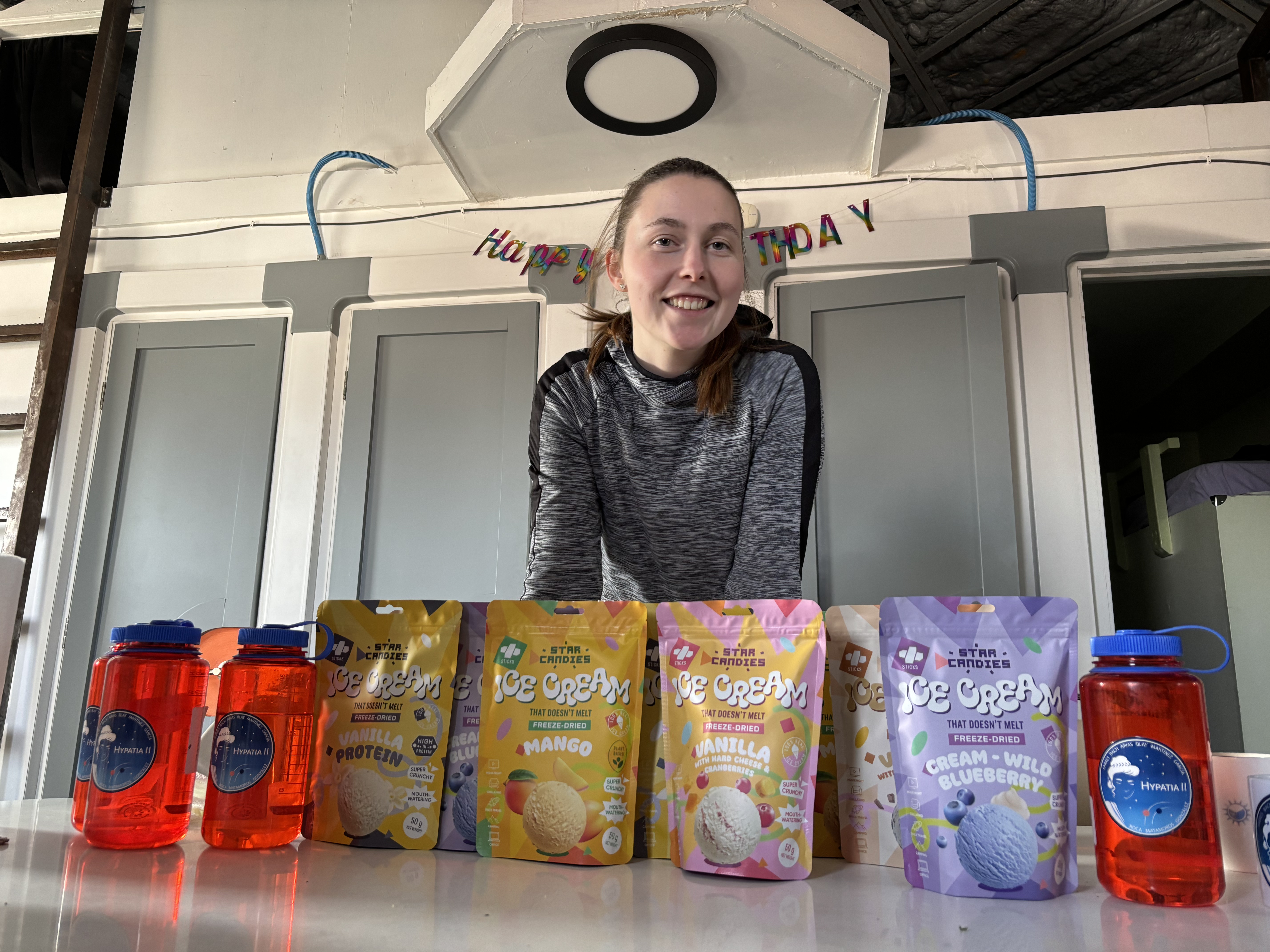
Imagine celebrating your birthday not on Earth, but on a simulated Mars mission in the middle of the Utah desert, and surprising your all-female crew with a dessert they’ve never seen before.
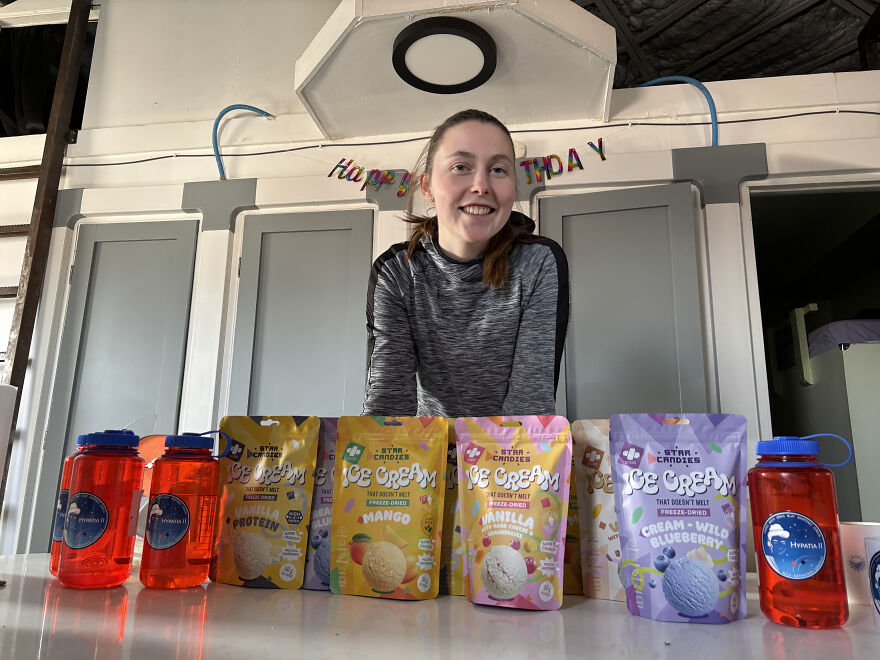
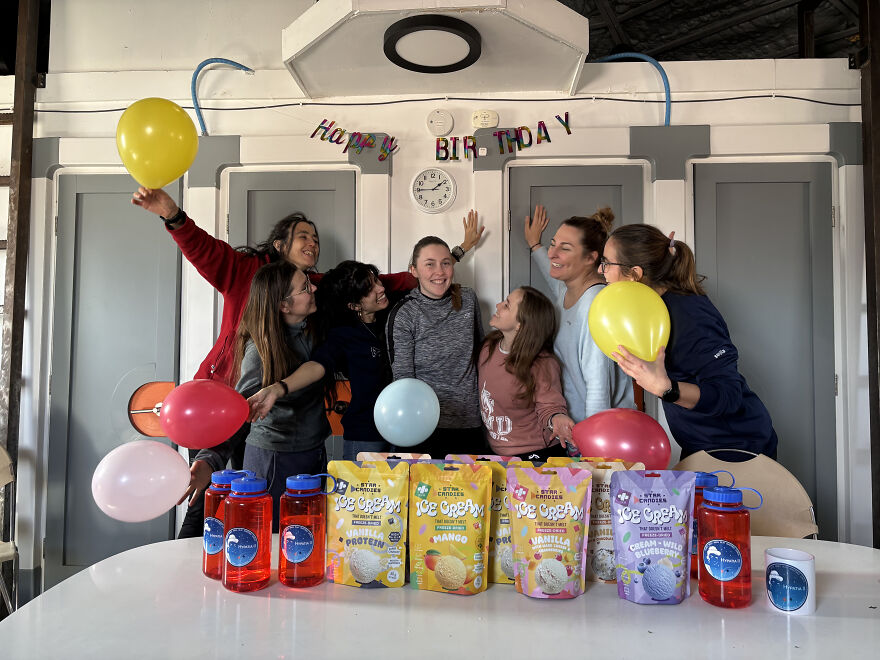
That’s exactly what Helena Arias, a Spanish engineer and crew member of the Hypatia Mars 2025 mission, pulled off. Midway through two weeks of grueling experiments simulating life on Mars, Arias orchestrated an unexpected moment of joy: a birthday party complete with Lithuanian freeze-dried ice cream smuggled in her suitcase.
“I kept the Star Candy ice cream hidden under a box in my luggage so no one would find it,” Arias recalls. “On day seven, after a simple meal of pesto chicken pasta, I opened the box and brought out the surprise. Some of my crewmates didn’t even know freeze-dried ice cream existed!”
The crew gathered around, sampling the crunchy, melt-in-your-mouth treats—products originally designed for astronauts. “We saved a few for later, but by the next day, they were all gone,” she laughs. “It was one of those small, human moments that made our ‘Mars’ routine feel a little closer to home.”
The sweet surprise was more than just a quirky treat. It highlighted a growing shift in how food is viewed in space missions—not just as fuel, but as a crucial source of comfort, connection, and psychological well-being. Arias specifically reached out to the Lithuanian company Super Garden, known for its innovative freeze-drying technology, before the mission, asking to include their snacks in the journey.
But why Lithuanian ice cream in the middle of a Martian simulation? According to Laura Kaziukonienė, founder of a company creating feeze-dried snacks, Super Garden, space food is evolving. “Astronauts need more than calories—they need little reminders of normal life, especially during long, isolated missions. Celebrations, sweet moments—they’re not luxuries, they’re necessities.”
The Hypatia Mars 2025 mission, held at the Mars Desert Research Station (MDRS) in Utah, gathered nine female scientists and engineers from Spain and Catalonia, led by NASA scientist Dr. Ariadna Farrés Basiana. Beyond testing new technologies and simulating extreme conditions, it stood as a symbol of advancing gender equality in space exploration.
Interestingly, Lithuanian innovation seems to have carved out a unique spot in this cosmic narrative. Super Garden’s products have not only fueled birthday parties on Mars simulations—they’re also used by the European Space Agency and even support soldiers in Ukraine.
Looking ahead, the company is collaborating with European and French space agencies on something even more ambitious: creating snacks for European astronauts and even possibly integrating freeze-dried food with fresh, space-grown ingredients, like hydroponic vegetables and fish raised in microgravity farms. French scientists are currently developing smart greenhouses and aquaponic systems aimed at making sustainable, fresh meals possible on future missions to Mars or the Moon.
For now, though, a suitcase packed with freeze-dried ice cream and a surprise birthday party in the middle of an analog Mars mission is a reminder that even in the most extreme environments, a little sweetness goes a long way.


















 No fees, cancel anytime







-4
0