Get Premium
Dark mode theme is available exclusively for premium users. Learn more about the benefits of subscribing.
No fees, cancel anytime.

 Dark Mode Ad-Free Browsing Unlimited Content
 Ad-Free Browsing Unlimited Content Dark Mode
Join 1.2 million Panda readers who get the best art, memes, and fun stories every week!
Every year, the World Press Photo contest brings together some of the most powerful and thought-provoking images from across the globe. Celebrating the very best in photojournalism and documentary photography, the competition highlights stories that might otherwise go unnoticed, capturing moments of conflict, resilience, injustice, and humanity in a way that words alone often cannot.
Founded in 1955 in the Netherlands, World Press Photo has grown into one of the most respected platforms for visual storytelling, with exhibitions reaching millions of people worldwide. Its mission goes beyond showcasing striking imagery, it aims to deepen understanding, encourage dialogue, and inspire action through authentic and impactful reporting.
This year’s winners once again prove the power of photography to inform, challenge, and inspire. Take a look at the Photo of the Year and the finalists below.
More info: worldpressphoto.org | Instagram | Facebook | x.com | youtube.com
This post may include affiliate links.
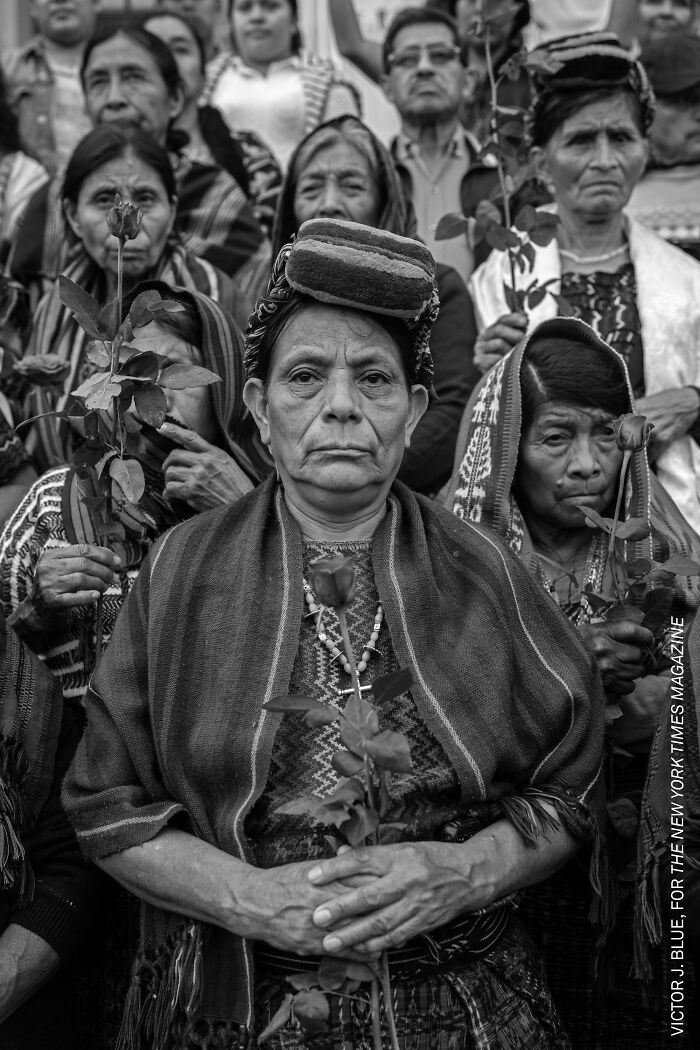
For four decades, a group of Indigenous Maya Achi women in Rabinal lived in the same communities as the men who had raped them, sometimes as neighbors. Guatemala’s civil war led to the genocide of thousands of Maya Achi people by the military and local state-backed paramilitary forces, who used sexual violence as a systematic weapon to subjugate Indigenous communities. In 2011, 36 women broke their silence, launching and winning a 14-year legal battle against their abusers. Their collective resilience is transforming a legacy of wartime impunity into a historic victory for justice.
About the photo:
"Doña Paulina Ixpatá Alvarado stands with other Achi women outside a Guatemala City court. That afternoon, three ex-civil defense patrollers were found guilty of rape and crimes against humanity and sentenced to 40 years in prison each. Guatemala City, Guatemala, 30 May 2025."
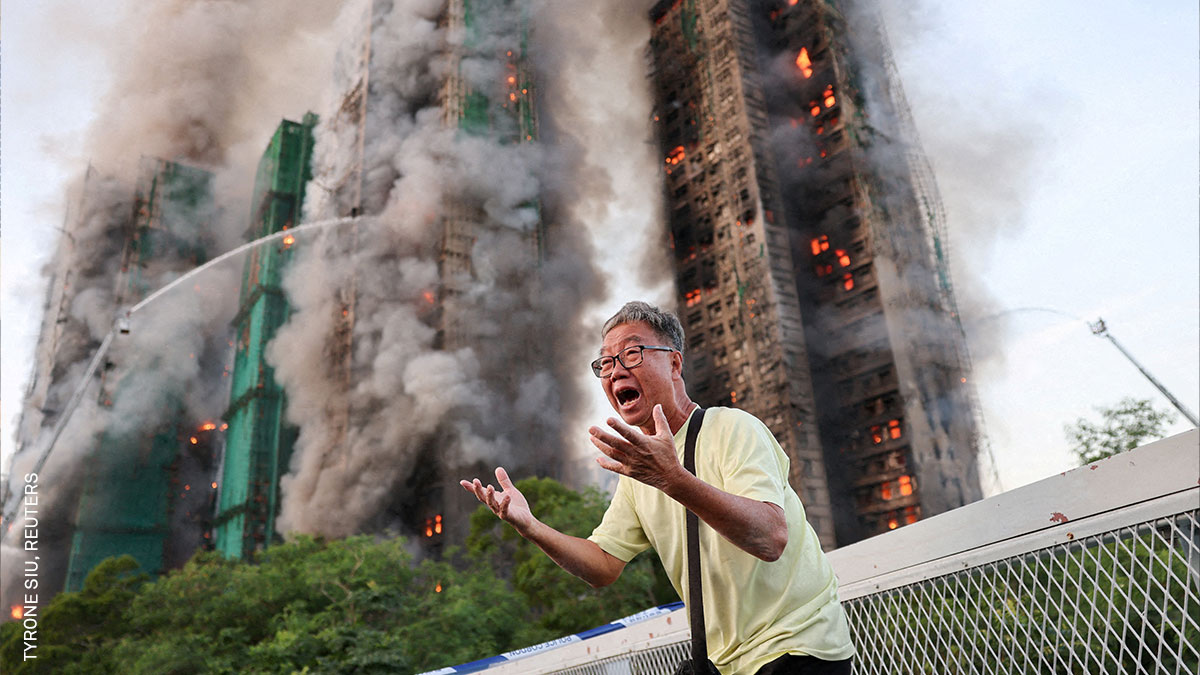
A massive fire at the Wang Fuk Court housing complex in Tai Po claimed 168 lives, becoming Hong Kong’s deadliest fire since 1948. While no official cause has been reported, investigations by Hong Kong authorities found that bamboo scaffolding, construction netting, and flammable Styrofoam boards on windows acted as accelerants for the fire, trapping residents inside. More than 2,000 firefighters were involved in rescue efforts, killing one and injuring twelve.
About the photo:
"Mr. Wong cries out in anguish as fire engulfs the Tai Po housing complex he calls home. Moments earlier, he phoned his wife, who was trapped in the building, and they exchanged what would be their final words. Hong Kong, 26 November 2025."
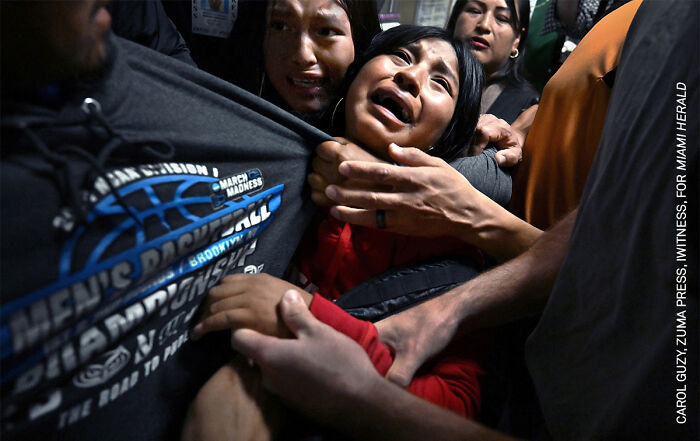
In 2025, shifts in US immigration policy transformed courthouses into focal points for mass deportation efforts by US Immigration and Customs Enforcement (ICE). Masked ICE agents detained undocumented migrants immediately following their hearings, often leading to deeply traumatic family separations. These aggressive tactics, coupled with severely overcrowded and unsanitary conditions at the 10th-floor holding facility in the Jacob K. Javits Federal Building in New York, prompted fierce public protests, class-action lawsuits, and the arrest of local elected officials demanding accountability.
About the photo:
"Distraught girls cling to their father, Luis, as ICE detains him following an immigration hearing. Luis served as the sole breadwinner for his family. New York City, New York, United States, 26 August 2025."

ICE out here grabbing up US citizens, staking out courthouses to grab people there to see the judge to finalize citizenship, people with valid visas, people with green cards, legal immigrants, basically they are grabbing and detaining anyone with brown skin and they don't care if they have to ram your car and break your windows to do it. MONSTERS every last one of them.
When Typhoon Wipha hit the Philippines and flooded Barasoain Church, Jade Rick Verdillo and Jamaica Aguilar faced a difficult decision: should they cancel their wedding or proceed with the marriage? The couple carried on despite high waters, a testament to love and resilience in the face of severe weather. Located on a delta, Bulacan province is vulnerable to more frequent and extreme floods caused by aging drainage systems, dredging projects, overextraction of groundwater, and climate change.
About the photo:
"Bride Jamaica Aguilar prepares to enter the flooded Barasoain Church for her wedding. The Barasoain Church, a national landmark, is situated in a region where nearly 75% of the population is exposed to flooding hazards.
Malolos, Bulacan province, Philippines, 22 July 2025."
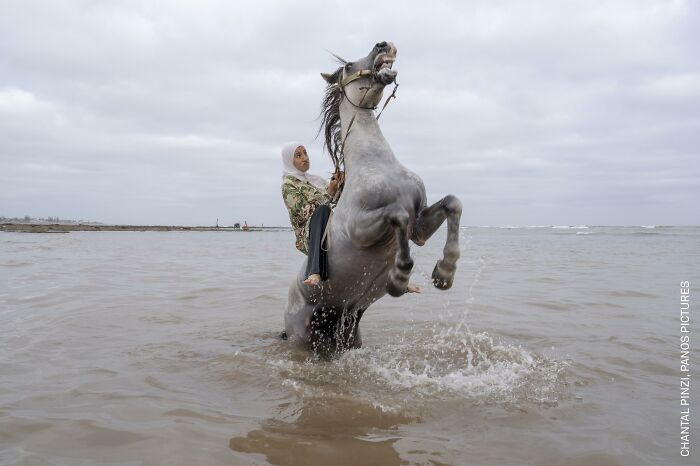
Tbourida is a UNESCO-recognized Moroccan equestrian tradition dating back to the 16th century. Troupes gallop in unison, firing rifles in a choreographed performance of cavalry warfare. Historically excluded, female riders have fought for inclusion since Morocco’s 2004 family code reforms strengthened women’s legal rights. Today, seven all-female troupes now ride among some 300. These farīsāt (horsewomen) bear significant personal costs, funding their own horses, costumes, and gunpowder permits. Their perseverance stands as a powerful claim to women’s rightful place in Moroccan cultural heritage.
About the photo:
"Ghita Jhiate manages her unruly stallion. Long forbidden by her father to participate in Tbourida, she finally realized her dream of riding alongside pioneer Zahia Aboulait in 2025. Sidi Rahal, Morocco, 6 August 2025."
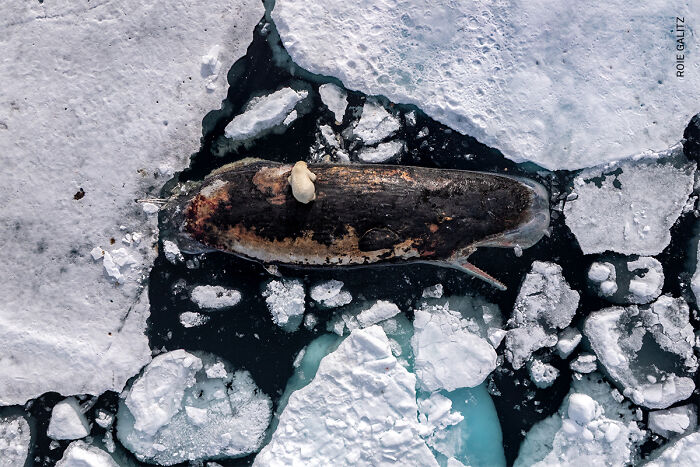
Polar bears are primarily seal predators, but as ice retreats in the summer and hunting becomes harder, they increasingly rely on opportunistic scavenging. Near Svalbard, the ice-free season has lengthened by 20 weeks in the last 30 years. Sperm whales typically avoid ice-covered polar waters, so this carcass was a rare sight. Scientists speculate that after dying, the male sperm whale drifted north, carried by winds and currents. The photographer spent two days observing the scene from a small boat, capturing it by drone to reveal a scale difficult to grasp from sea level.
About the photo:
"A female polar bear feeds on a sperm whale carcass in the polar pack ice north of the Norwegian archipelago, Svalbard. 82° North, International Waters, 8 July 2025."
Poor bears are starving as their food sources are being destroyed due to over fishing.
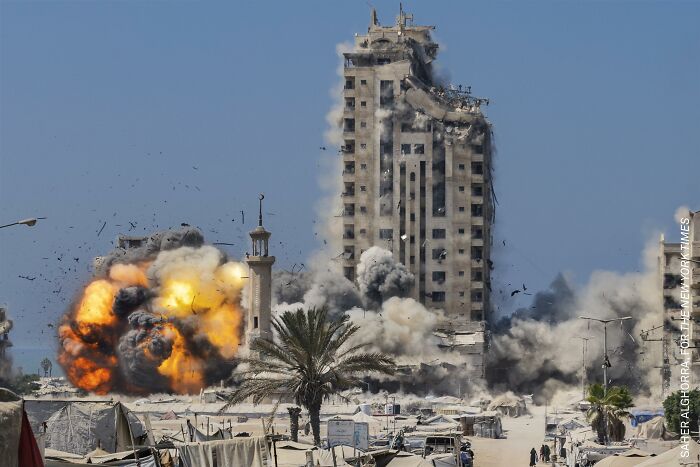
In 2025, civilians in Gaza endured starvation, famine, and relentless bombardment as the death toll surpassed 75,000 and Israeli authorities severely restricted the flow of humanitarian aid. A ceasefire agreement in October has yet to bring meaningful relief. Palestinian journalists – living through the reality they document – are the world’s few witnesses to what a UN Commission has concluded is a genocide. Israel disputes this. The photographer worked under immense danger, driven by a refusal to let the world turn away. “Even when everything around me told me to stop, I couldn't – silence would mean surrender.”
About the photo:
"The Mushtaha Tower collapses in a military strike, amid hundreds of makeshift tents sheltering displaced Palestinians, as Israel’s offensive on Gaza City intensified. Gaza Strip, 5 September 2025."
They now have snipers in position who are firing on anyone including children.
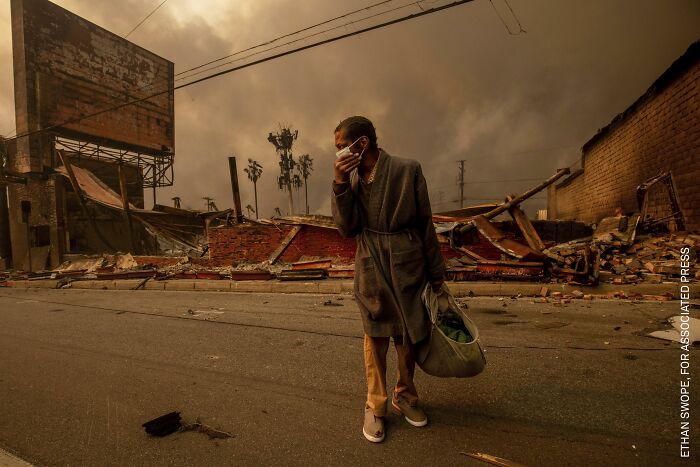
In January 2025, severe drought and 100-mph (roughly 160-kph) Santa Ana winds fueled 14 devastating wildfires across Los Angeles, destroying over 18,000 buildings and displacing 200,000 residents. While officials reported 31 direct fatalities, public health studies estimate 440 excess deaths linked to toxic smoke and disrupted medical care. In the disaster's aftermath, a stark wealth divide has defined recovery efforts, with lower-income residents facing displacement while wealthier communities leverage private resources to rebuild.
About the photo:
"A man walks past a business ruined by fire. The Eaton Fire heavily impacted working-class neighborhoods, where many underinsured homeowners now face gentrification and displacement. Altadena, California, United States, 8 January 2025."
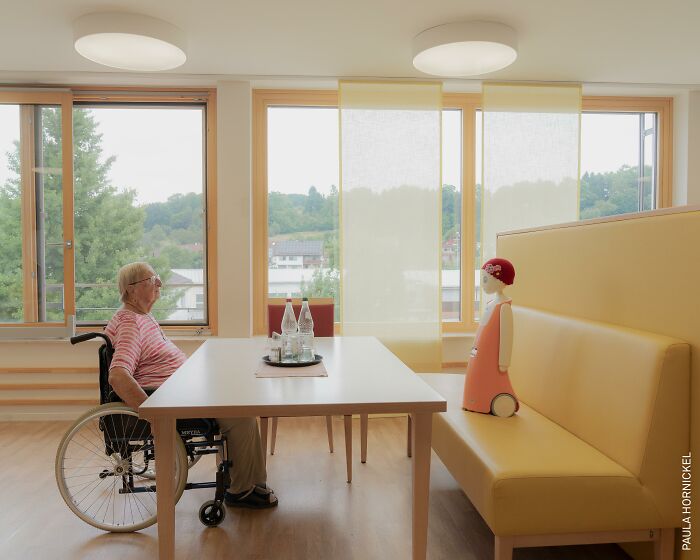
Germany’s care homes are facing two crises: staff shortages and loneliness. A 2023 study found that one in five residents aged 80 and older describe themselves as “severely lonely.” This reality has prompted trials of social robots like Emma, developed by a Munich-based startup. Waltraud, a resident of Haus im Wiesengrund in Albershausen, had her doubts but over time formed a bond with Emma. “When she tells her jokes, that’s really good. That’s my kind of humor,” says Waltraud, though she emphasizes that human contact is always preferable.
About the photo:
"Waltraud talks with Emma, a social robot that recognizes faces and remembers past conversations. Though skeptical at first, Waltraud says she felt connected to Emma over time. Albershausen, Germany, 3 July 2025."
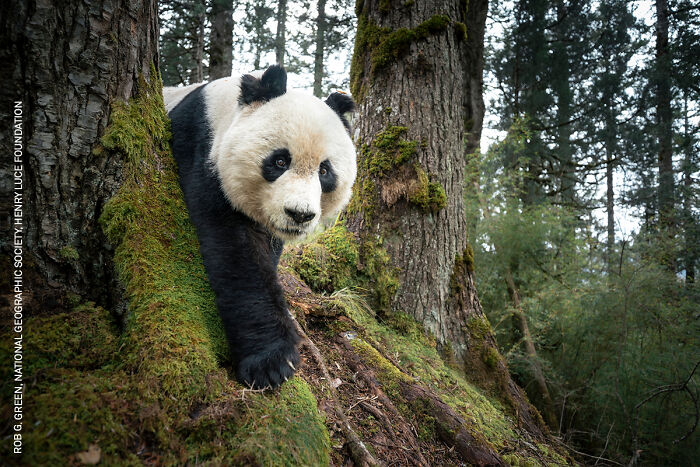
Recent population estimates suggest that fewer than 2,000 pandas remain in the wild, and only a few dozen individuals live within Wanglang National Nature Reserve’s 323-square-kilometer territory. This rare sighting was made possible through a pilot exchange program between the National Geographic Society and wildlife biologists, aimed at supporting wildlife monitoring efforts and fostering cross-cultural cooperation in conservation. Established in 1965, Wanglang is one of China’s oldest wild panda nature reserves and today serves as a key site for education and scientific research collaboration within the larger Giant Panda National Park system.
About the photo:
"A wild giant panda is captured by a camera trap in the Wanglang National Nature Reserve. Sichuan, China, 11 November 2025."
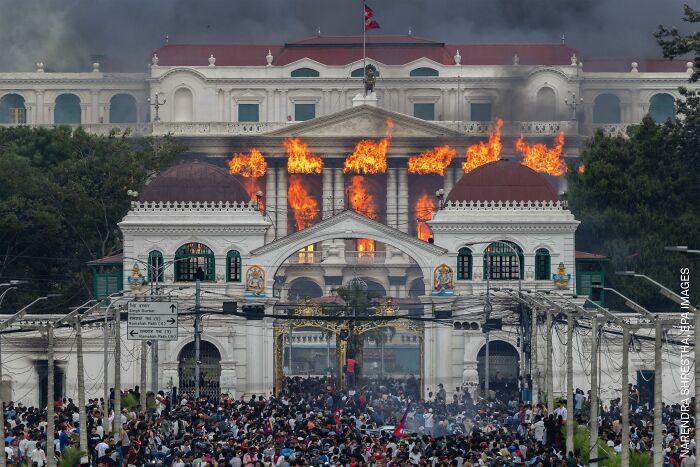
A government ban of 26 social media platforms on 4 September 2025 was the breaking point for Nepal’s youth. On 8 September, thousands took to the streets, part of a generation of young people around the world refusing to accept systems that perpetuate corruption, unemployment, and economic hardship. Within two days, 76 people were dead, most of them young demonstrators killed by police. Thousands more were injured. On 9 September, following Prime Minister KP Sharma Oli’s resignation, protesters stormed and set fire to Singha Durbar, the historic complex at the heart of Nepal’s government.
About the photo:
"Fire and smoke engulfed Singha Durbar after protesters stormed and set the government complex alight during violent demonstrations. Kathmandu, Nepal, 9 September 2025."
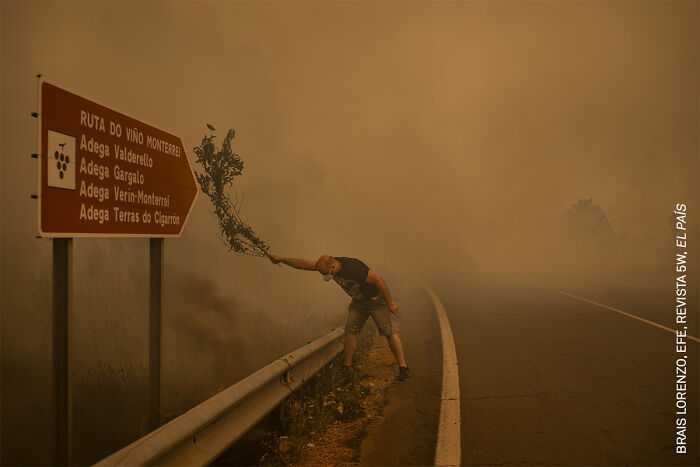
2025 was a record year for wildfires in Europe. More than 200,000 hectares burned across Galicia during Spain’s worst fire season in about three decades. The increasingly severe fires in this region are attributed to drought and heat intensified by climate change, rural depopulation, and shortsighted forest management policies, including the widespread planting of highly flammable non-native species. Born in Ourense, the photographer grew up with the smell of smoke every summer and has documented Galician wildfires since 2011.
About the photo:
"A man fights a wildfire with a branch in Cualedro. When resources are stretched, residents use whatever is available to extinguish flames, including branches, farming tools, and water hoses. Ourense, Galicia, Spain, 15 August 2025."
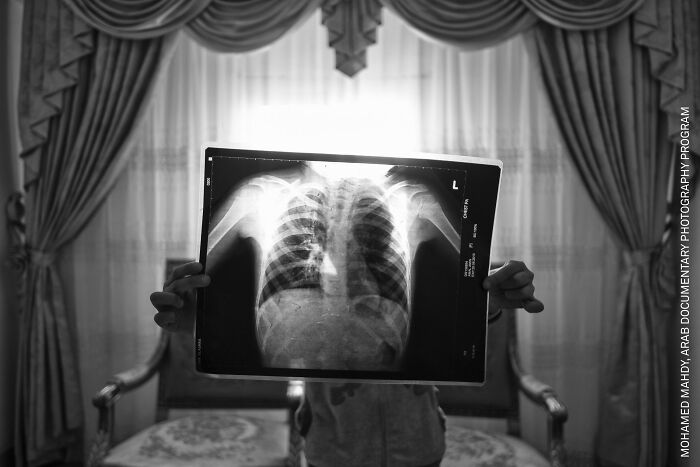
More than 30,000 residents of Wadi El-Qamar, also known as Moon Valley, in western Alexandria, Egypt, live less than 15 meters from a cement factory that fills their homes with toxic dust. Children are born with asthma. Families suffer from lung disease and irreversible respiratory damage. In 2016, the photographer – who lives nearby and has asthma himself – began documenting their stories and ongoing legal battles.
About the photo:
"Amal holds an X-ray of her lungs. She moved to Moon Valley at three years old and developed asthma within months. Alexandria, Egypt, 31 January 2018."
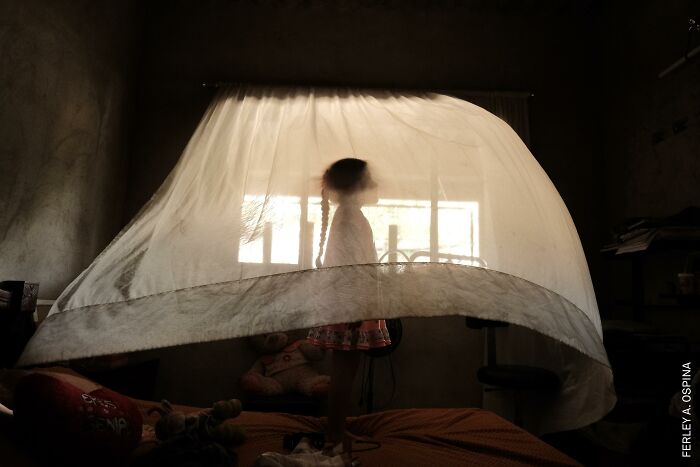
Colombia has the world’s highest rate of single mothers. The photographer and his family experience this reality not as a statistic but as a “recurring wound.” In 1999, Ferley Ospina’s father was murdered in the border region of Norte de Santander, forcing him to flee with his mother. Photographing the women in his extended family, Ospina seeks to understand the “weight of absence” and the systemic and personal impact of “growing up incomplete.”
About the photo:
"Valeria (5) plays behind a curtain at her aunt’s house. She is raised solely by her mother. In her region, 30% of households are headed exclusively by women. Los Patios, Norte de Santander, Colombia, 10 September 2025."
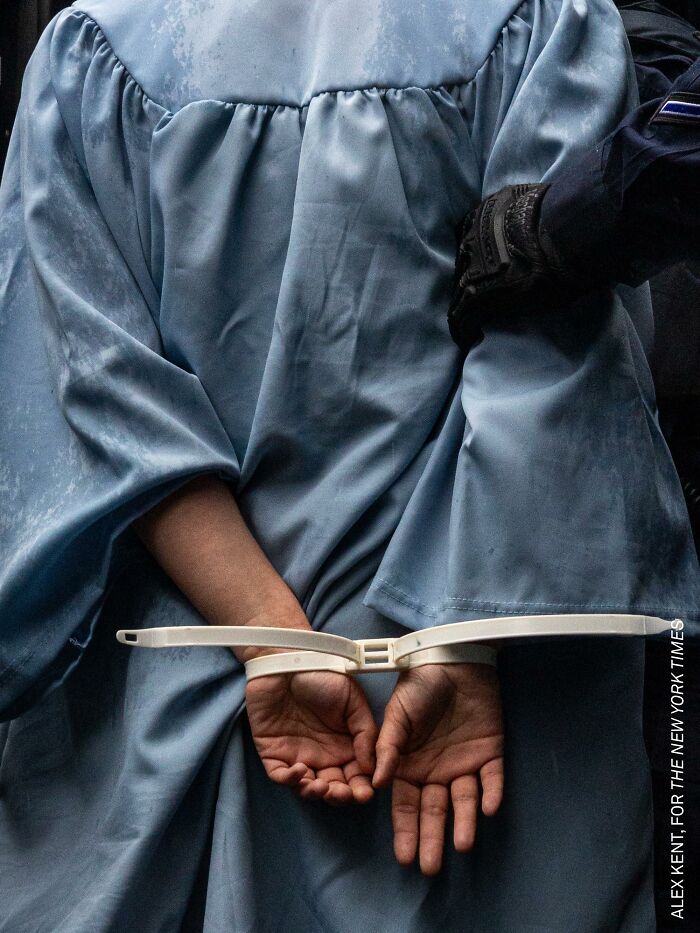
Facing intense political pressure to limit pro-Palestine demonstrations, many US universities became focal points in a national conflict over free speech and institutional independence. At Columbia University, the Trump administration suspended $400 million in federal funding to force a crackdown on campus protests, causing severe administrative upheaval. The students were caught in this institutional crossfire, but many members of the graduating class of 2025 as well as alumni chose to exercise their first amendment rights in protests and demonstrations.
About the photo:
"Barnard College alumna Jesse Pearce is arrested outside Columbia University’s commencement ceremony. Along with current students, alumni protested the institution’s ongoing financial ties to Israel. New York City, New York, United States, 21 May 2025."

Engla Louise, a former dancer, has lived with severe anorexia nervosa since she was ten years old. At 46, she weighs less than 25 kilograms and has been tube-fed since 2019. Researchers increasingly describe anorexia as a disease of both body and mind. Its causes – not fully understood – are thought to involve neurobiological, genetic, and environmental factors. After decades of treatment, Engla Louise is now considered therapy-resistant and receives palliative care at home. This project aims to broaden the discussion about care for people living with severe eating disorders.
About the photo:
"Engla Louise’s “bed ballet” – movements performed lying down – keeps her connection to dance alive. Every day at a specific time, she watches ballet on her iPad. Linköping, Sweden, 22 December 2025."
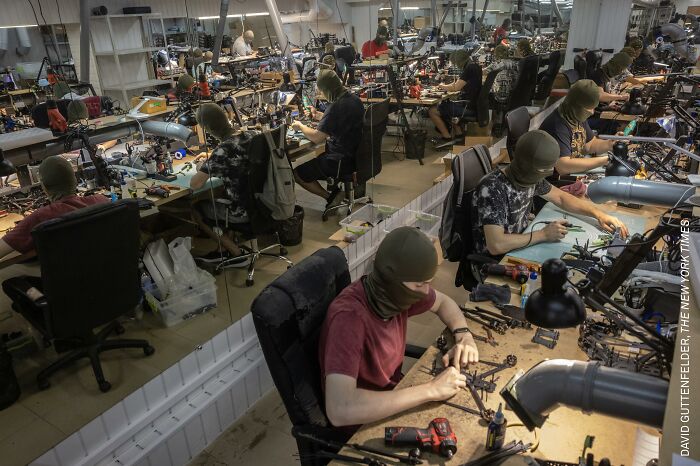
Ukraine’s battle against the Russian invasion is reshaping modern combat. Hobby drones are being repurposed into remote-controlled weapons, and mass-produced first-person-view (FPV) drones are piloted from kilometers away with deadly precision. These developments have triggered an unrelenting drone arms race and turned vast areas of Ukraine into “k*** zones”. Civilians are targeted and displaced, and soldiers spend most of their time in underground bunkers or basements, unable to be resupplied or casualty-evacuated. This story documents Ukraine's efforts to advance its drone capabilities, and the impact of Russian drone attacks on civilians.
About the photo:
"Ukrainian civilians, their identities concealed behind masks, assemble FPV drones in a basement factory. Both Ukraine and Russia now manufacture millions of battlefield drones a year. Central Ukraine, 6 September 2024."
The Ukraine has shown everyone what courage in the face of overwhelming odds looks like.
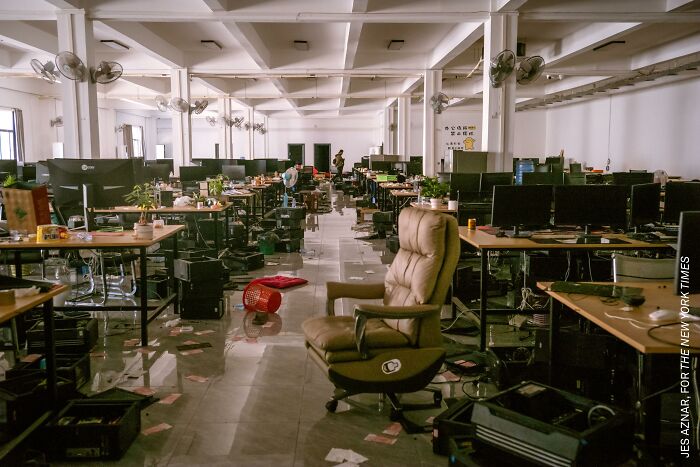
On 21 November 2025, the Karen National Liberation Army captured Shunda Park, a massive cyber-scam compound in Myanmar’s Karen State. As the country’s civil war intensifies, lawless border regions have become hubs for a lucrative online scam industry. Hundreds of thousands of people from around the world have been trafficked into Southeast Asia and forced into labor for these illegal enterprises. When rebel forces ousted the junta-allied militia guarding the park, thousands of workers from 30 nations were stranded in Myanmar.
About the photo:
"Offices in Shunda Park were left in disarray after a surge of fighting between the Myanmar military and the opposition militia nearby. Some parts of the complex resembled professional executive suites; others trapped workers in a “Sisyphean loop” of 12-hour shifts. Min Let Pan, Myanmar, 5 December 2025."
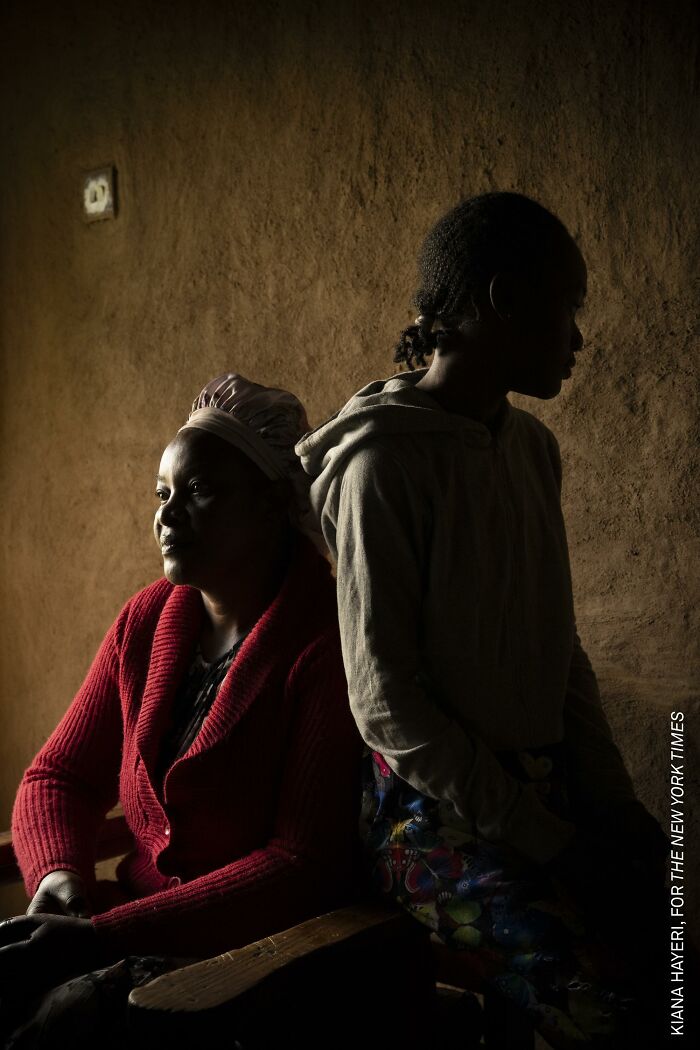
Tens of thousands of Kenyan women migrate to Saudi Arabia for domestic work, where many endure abusive conditions, including passport confiscation and withheld wages. While working there, Edith Magomere Ingasiani hid her pregnancy; unmarried women who give birth risk arrest. She delivered her daughter Blessings alone in January 2016, raising her in the shadows for years. When Edith tried to return home to Kenya, Blessings’ lack of documents trapped them in bureaucratic limbo. In 2024, they finally made it back. “Home is always the answer,” she says. “It took eight years to get there.”
About the photo:
"Edith Magomere Ingasiani and her daughter Blessings Iminza (9), at their home. Blessings was born in Saudi Arabia without a birth certificate. Vihiga County, Kenya, 30 August 2025."
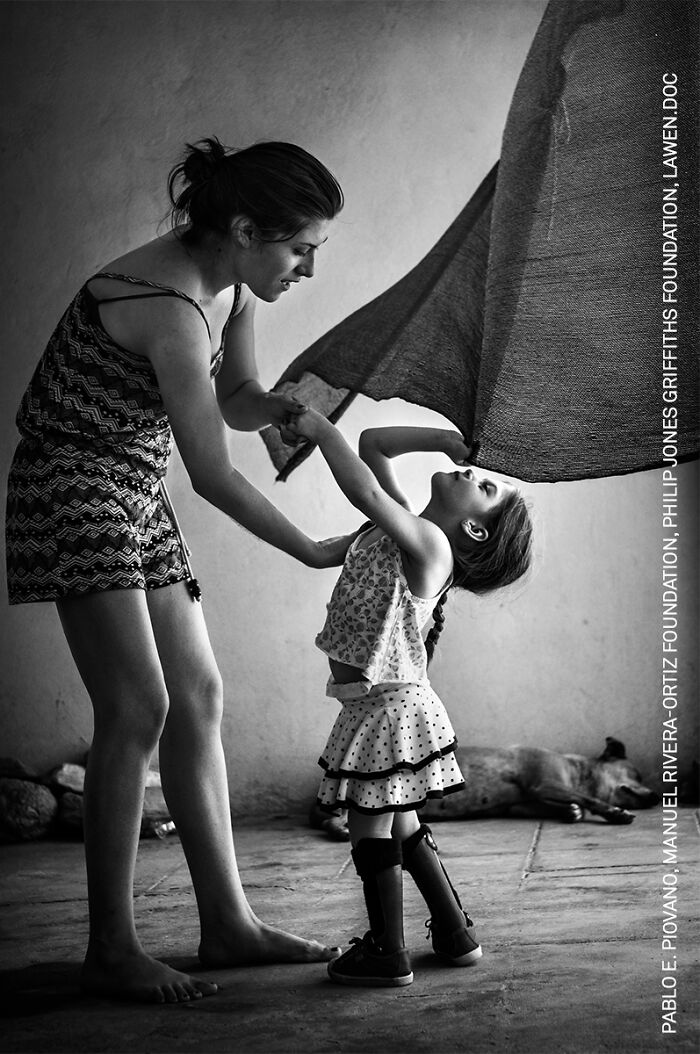
In 1996, Argentina approved genetically modified, herbicide-resistant soybeans paired with glyphosate-based herbicides, a policy adopted without independent research. In three decades, pesticide use skyrocketed from 40 million to 580 million liters annually. Today, 60% of Argentina’s cultivated land is sprayed, affecting 14 million people. Despite independent studies linking exposure to increased risks of cancer and congenital malformations, regulations continue to loosen even as agrochemical usage moves closer to human settlements. This project documents the human cost of an economic model that prioritizes agro-industrial profit over the lives of its rural citizens.
About the photo:
"Anita Sosa, born with hydrocephalus and spina bifida, plays with her sister. Doctors attributed her condition to pesticides used in the soybean fields that surround her town of 3,000 inhabitants. Chaco, Argentina, 29 November 2014."
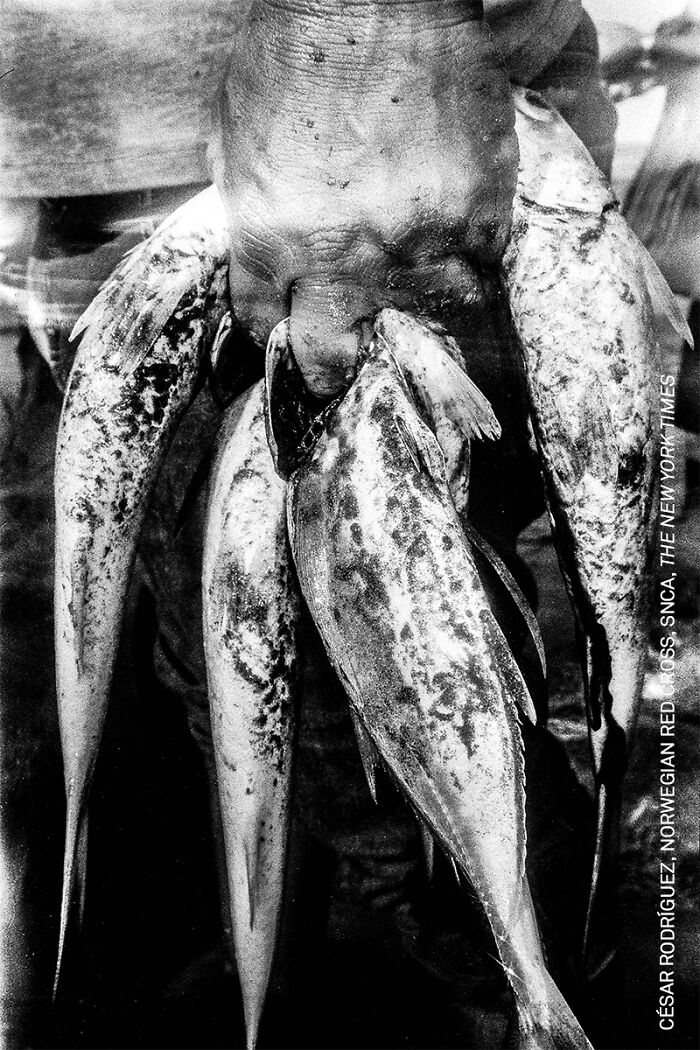
Mexico is especially vulnerable to climate extremes, with 52% of its territory situated in arid or semi-arid zones. Over the last two decades, environmental disasters have internally displaced approximately 2.7 million people, a figure projected to reach up to 8 million by 2050. This project documents the enormous cost of these changes on a human scale: from the rapid erosion of Tabasco’s coastlines, where sea levels are rising three times faster than the global average, to the systemic water scarcities in Monterrey and the State of Mexico, where renewable water availability has plummeted by 81% since 1950.
About the photo:
"A portion of Enrique’s catch. Fishing is becoming increasingly difficult in the area as beaches erode and changing conditions in the sea drive fish species elsewhere, transforming the marine ecosystem of the Gulf of Mexico. Las Barrancas, Veracruz, Mexico, 12 March 2025."
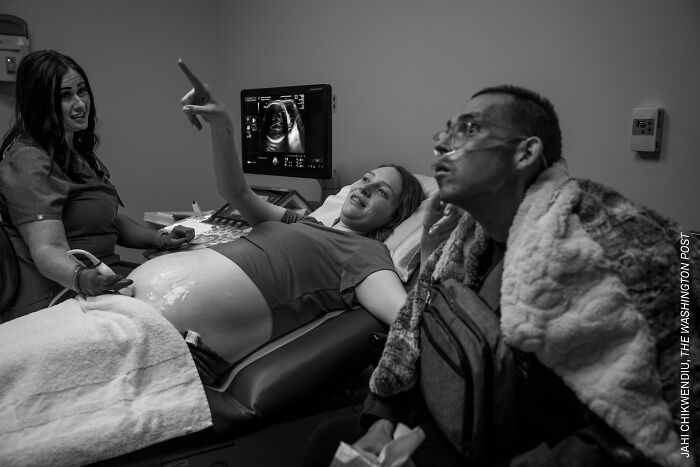
Diagnosed with Stage 4 colon cancer at age 25, Tanner Martin and his wife, Shay, raced to build a family despite a terminal prognosis. This intimate story documents the final months of Tanner’s life, culminating in the birth of his daughter, AmyLou, just 41 days before his death at age 30. His experience puts a human face on a staggering global trend: people born in 1990 now face a 200 to 300% increased risk of some early-onset cancers compared to previous generations.
About the photo:
"Shay and Tanner view sonogram images of their daughter during a prenatal checkup. Tanner’s one last wish was to fight cancer long enough to see his baby. Provo, Utah, United States, 15 April 2025."
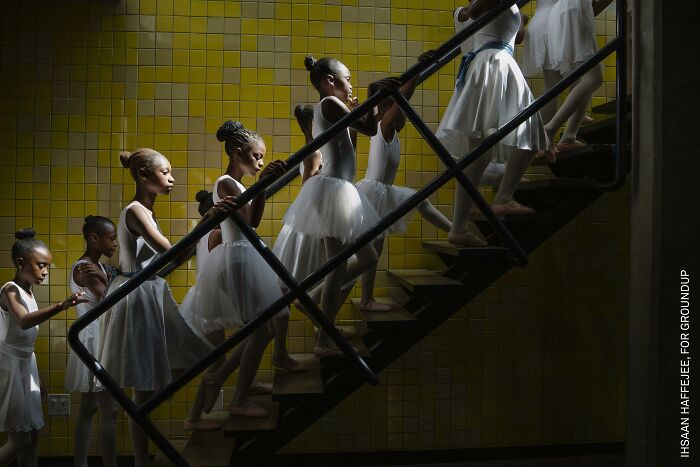
In apartheid South Africa, ballet was the preserve of white culture, inaccessible to people of color. Today, the Joburg Ballet School offers subsidized training to children from historically disadvantaged backgrounds, with locations in Soweto, Alexandra, and Braamfontein. Parents describe seeing their children learn ballet as something they never thought possible.
About the photo:
"Young dancers from the Joburg Ballet School backstage at the Soweto Theatre during their year-end performance. Soweto, South Africa, 7 December 2025."
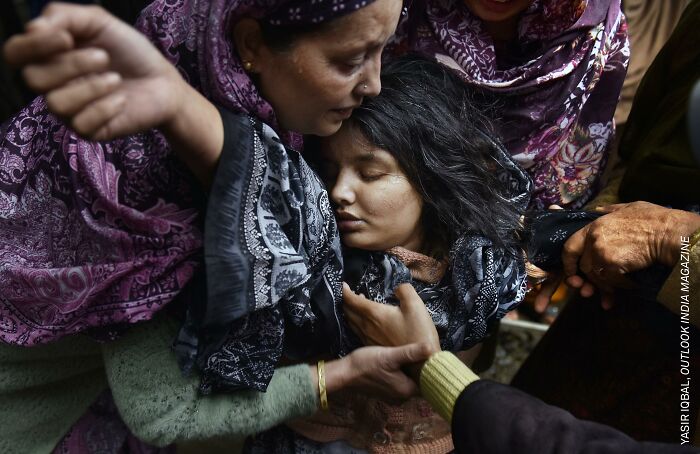
The Kashmir region has been contested between India and Pakistan since the 1947 partition of British India, a territorial dispute that has fueled decades of conflict. On 22 April 2025, an attack on tourists in Pahalgam k***ed 26 people. India blamed Pakistan-backed militant groups and responded with strikes on 7 May. Four days of intense cross-border shelling, drone attacks, and airstrikes followed. Thousands of civilians were displaced, dozens k***ed, and homes and infrastructure along the Line of Control (the de facto border) were destroyed. Widespread international pressure secured a ceasefire on 10 May, averting further escalation between the two nuclear-armed rivals.
About the photo:
"Sanam Bashir (21) collapses with grief at her mother’s funeral. Nargis Begum (45) died from shrapnel wounds after a mortar shell struck while the two were fleeing their home. Uri, Indian-administered Jammu and Kashmir, India, 9 May 2025."
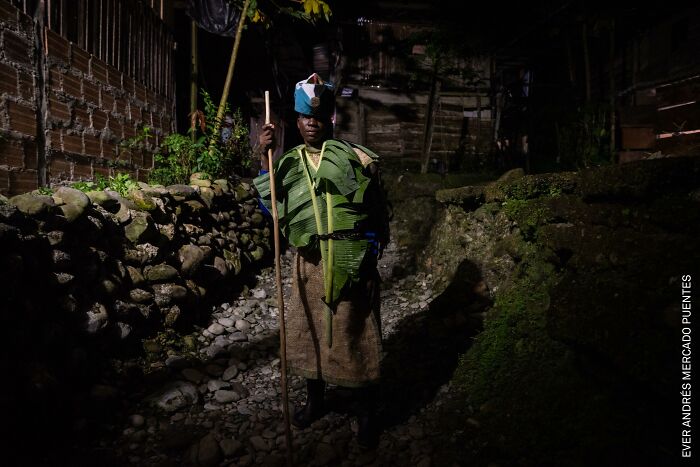
Juntas is an Afro-descendant community deep in the Colombian Pacific rainforest, accessible only by a ten-hour boat journey up the Yurumanguí River. Settled by descendants of enslaved Africans brought to the region in the 1700s, the community faces threats from illegal mining, logging, and armed conflict. Fiesta de los Manacillos is a traditional ritual enacted by the community during Holy Week activities that blends Catholicism with African spiritual traditions. More than just a celebration, the festival is a homecoming for a diaspora, representing a profound affirmation of cultural resilience.
About the photo:
"Eider Calimeño is one of 33 men who act as Matachín: those who commit to participating in the Manacillos. This responsibility is inherited from close male relatives and honors deceased or displaced ancestors. Juntas, Buenaventura, Colombia, 29 March 2024."
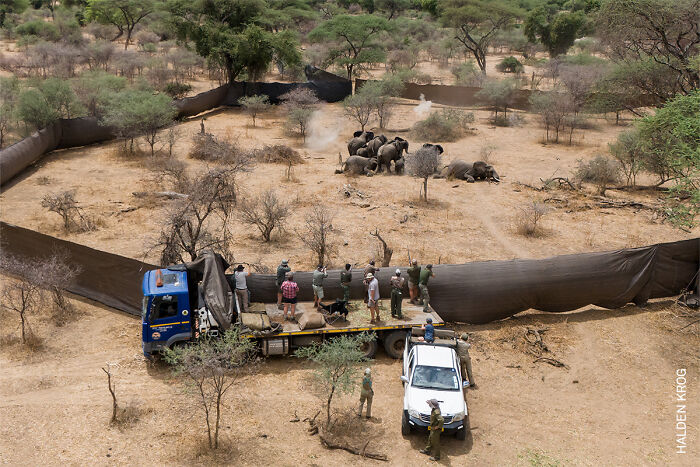
In 2025, the government of Zimbabwe authorized the culling (killing for the purpose of population control) of 50 elephants in the Savé Valley Conservancy. This decision followed a 2024 cull of 200. Authorities say the growing population has surpassed what the land can sustain, worsening human-wildlife conflict as drought drives elephants searching for food and water into closer contact with people. Wildlife organizations dispute claims of overpopulation and condemn culling. They have raised concerns including the fracturing of elephant social structures, and the trauma inflicted on surviving animals, which could increase aggression toward humans.
About the photo:
"Professional hunters shoot a family of elephants identified for culling. Sango Wildlife Conservancy, Savé Valley Conservancy, Zimbabwe, 23 October 2025."
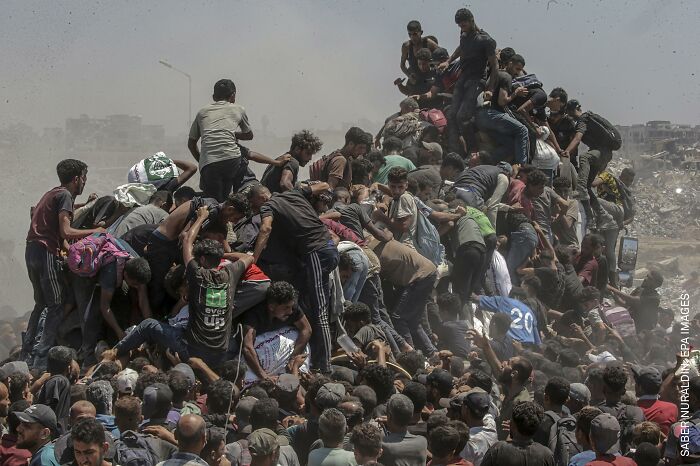
In 2025, famine took hold amid what a UN Commission has concluded is a genocide in Gaza, which Israel disputes. Israeli authorities imposed a complete aid blockade in March, a tactic described by humanitarian organizations as the weaponization of starvation. The UN reports that between 27 May and 31 July at least 1,373 Palestinians seeking food were k***ed at or near aid distribution sites. Despite a ceasefire agreement in October, more than 75% of the population still face hunger and malnutrition. The photographer was born in Gaza and has documented life there since 1997.
About the photo:
"Palestinians climb onto an aid truck as it enters the Gaza Strip via the Zikim Crossing in an attempt to get flour, during what the Israeli military called a 'tactical suspension' in operations to allow humanitarian aid through. 27 July 2025."
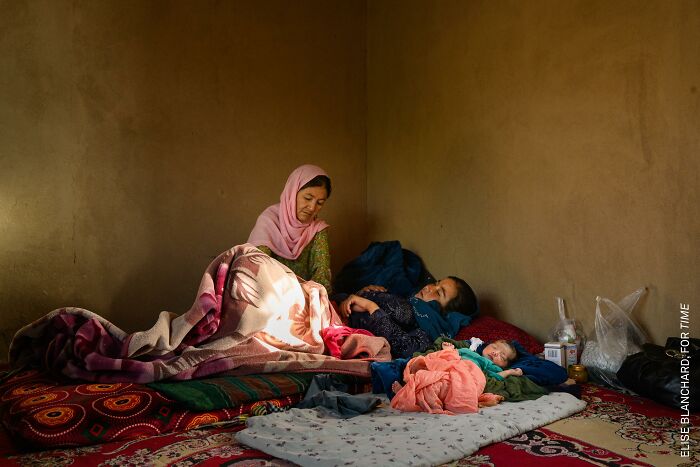
In Afghanistan’s remote Daikundi province, US aid cuts have left pregnant women without access to care, forcing many to give birth at home in a country with one of the world’s highest maternal mortality rates. The cuts have led to the suspension or closure of 422 health facilities nationwide, including small community clinics staffed by a single midwife, many of whom are now working without salary or supplies. This crisis compounds an already critical situation under Taliban rule; girls are banned from education beyond primary school, preventing a new generation from training as health workers.
About the photo:
"Gulshaman visits Fatemah, whose daughter Yasmin was born the previous day. Waras, Shahristan district, Daikundi province, Afghanistan, 27 July 2025."
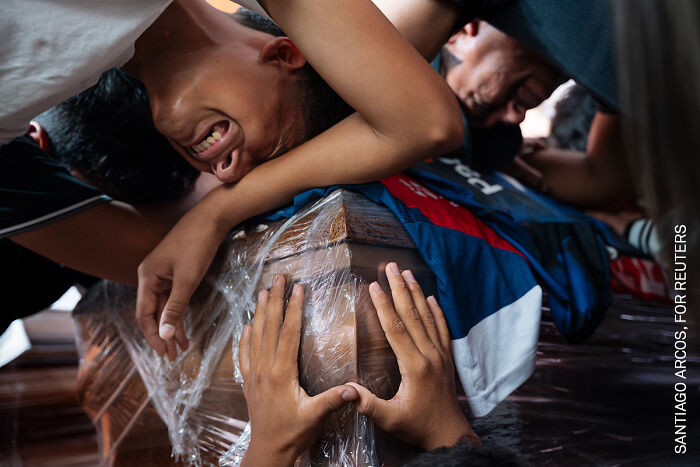
Ecuador’s militarized crackdown on transnational gangs has transformed vulnerable communities into targets for state violence. In December 2024, four Afro-Ecuadorian boys – aged 11 to 15 – disappeared after a neighborhood football practice in Guayaquil. The government initially denied involvement, then attempted to label the children as criminals. The discovery of their burned remains near an air force base shattered the Las Malvinas community and exposed the dangers of security policies that racially profile and criminalize marginalized youth.
About the photo:
"Teammates mourn Ismael Arroyo (15), who was tortured and m***ered by Air Force personnel. Families, neighbors, and residents of Las Malvinas accompanied the coffins from their homes to the cemetery, turning the funeral into a massive public act of grief and protest. Guayaquil, Ecuador, 1 January 2025."
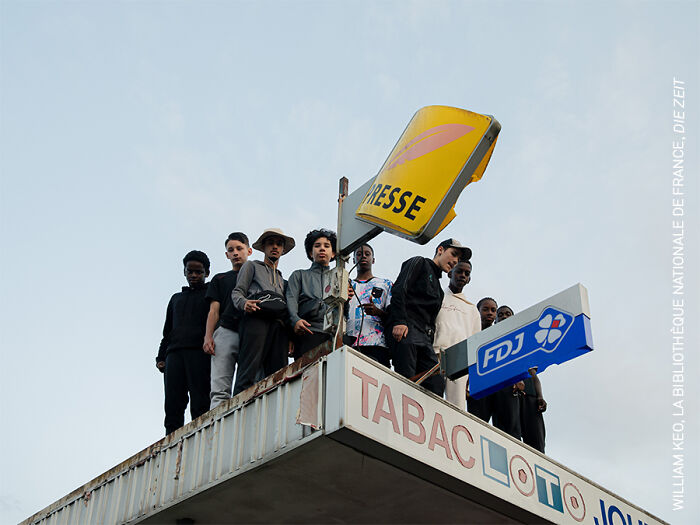
In the peripheral neighborhoods of France’s banlieues, migrant families navigate postcolonial legacies, higher rates of unemployment, and structural inequality. France’s integration system requires migrants to culturally assimilate while prejudice persists, leaving communities caught between exclusion and belonging. Yet these communities are also spaces of creativity and resilience that shape contemporary French culture. Documenting his friends and family, the photographer – born to Cambodian refugees – portrays lives in which community and solidarity are the clearest markers of identity.
About the photo:
"Young men gather on a rooftop in the Briques Rouges, one of Verneuil-sur-Seine’s largest social housing projects. France, 21 July 2023."
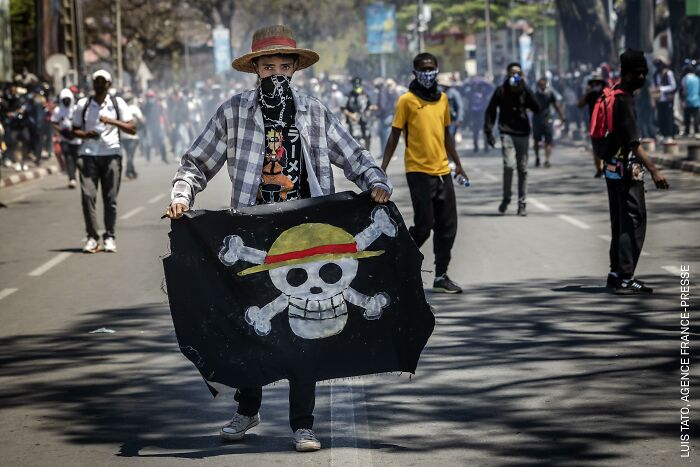
In September 2025, students began protesting across Madagascar over failing public services, corruption, and economic hardship. When President Andry Rajoelina dissolved his government but refused to resign, demonstrations intensified. On 11 October, the CAPSAT military unit defected to join the protesters, the same force that had installed Rajoelina in a 2009 coup. Days later, the military seized power, promising elections within two years. In a pattern seen across Gen Z uprisings in Bangladesh, Nepal, and Bulgaria, Madagascar’s youth forced regime change, but were excluded from shaping the political transition that followed.
About the photo:
"A student holds the flag adopted by Gen Z protesters globally. The symbol comes from the Japanese manga One Piece, in which pirates stand up to corrupt rulers. Antananarivo, Madagascar, 9 October 2025."
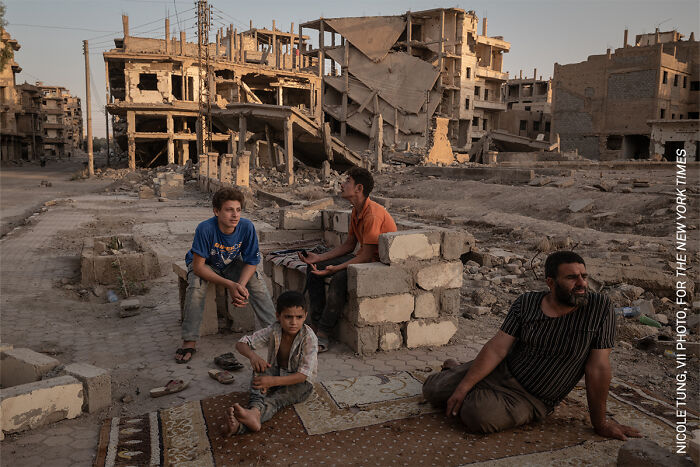
Long neglected by the Syrian state and one of the first cities to rise up in the 2011 revolution, Deir al-Zour endured years of siege, bombardment, and successive occupation by government forces, ISIS, and Kurdish-led fighters. The conflict left around 75% of the city’s infrastructure damaged or destroyed. In 2025, the Euphrates River marked a divide; the government controlled one bank, the Kurdish-led Syrian Democratic Forces (SDF) the other, complicating daily movement, trade, and access to services. For those who remained, and those who returned, rebuilding continued regardless.
About the photo:
"Abdelatif Daham Al Hummada (right) sits with his sons and nephew on the street outside their heavily damaged home, where the family often sleeps. Deir al-Zour, Syria, 20 August 2025."
Across the world, war, extremism, and displacement deny children the right to education. Schools are destroyed, teachers killed or forced to relocate, textbooks burned, and classrooms turned into barracks. The UN estimates that 85 million of the 234 million school-age children affected by conflict worldwide have no access to education at all. The consequences extend far beyond the classroom, impacting physical, emotional, social, and cognitive development. Since 2011, the photographer – son of a teacher and father of an 11-year-old – has documented this crisis across nine countries, from Western and South Asia, to Europe and South America.
About the photo:
"Girls attend an informal open-air school in Chaparhar District. The ban on girls attending school continues to undermine the right to education, affecting nearly 2.2 million students. Afghanistan, 12 November 2025."
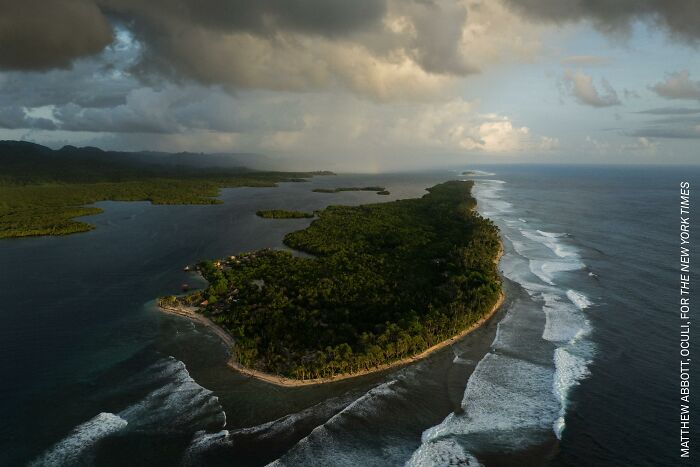
Fanalei, a low-lying island in the Solomon Islands, stands at a crossroads between contested tradition and a changing economy. For generations, dolphin hunting provided food and income, with dolphin teeth used as ritual currency for bride-price and other forms of local exchange. Today, as rising sea levels displace the community and threaten its future, seaweed farming is providing an economic alternative to the seasonal hunt. As seaweed farming expands, fewer people are available for the collective efforts upon which dolphin hunting depends. This story captures a community reshaped by environmental pressure and shifting traditions.
About the photo:
"Fanalei Island has been reduced to a narrow strip of sand and coral by rising seas. Residents believe the settlement, once home to dozens of families, will become uninhabitable in the near future. South Malaita, Solomon Islands, 6 February 2025. "
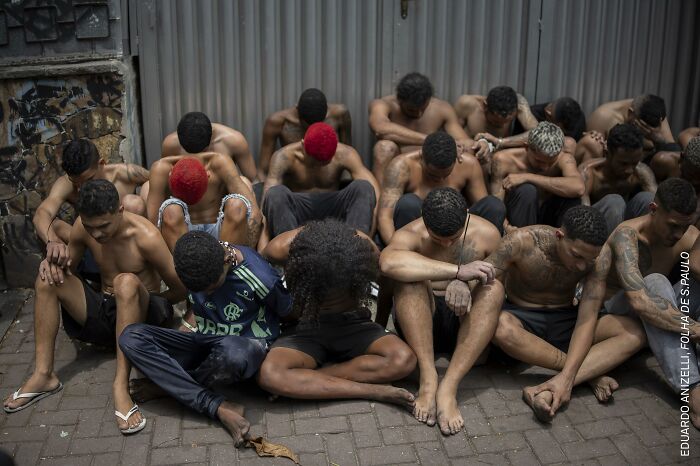
In October 2025, a massive police operation targeting the Comando Vermelho criminal syndicate unfolded in Rio de Janeiro’s Complexo do Alemão and Penha favelas. Deploying a record 2,500 local and military officers, the raid was the deadliest police operation in Brazilian history. Of the 122 who were k***ed, the vast majority were Afro-Brazilians. In the aftermath, authorities failed to deploy forensic teams, forcing the community to bear the physical and emotional weight of carrying their own dead.
About the photo:
"Suspects sit with their heads bowed to protect their identities. Authorities targeted over 50 individuals in the operation, but only a few of these were arrested and none were killed. Rio de Janeiro, Brazil, 28 October 2025."
After the death of her only child, retired doctor Sheng Hailin sought in vitro fertilization treatment (IVF) and gave birth to twin girls named Zhizhi and Huihui at the age of 60. This story follows Sheng Hailin’s family over 15 years, offering a portrait that is both extraordinary and mundane, but always filled with enduring love. In China, Sheng Hailin is only one of many shīdú, parents who have lost their only child born during China’s one-child policy era.
About the photo:
"Zhizhi and Huihui attend dance training. The cost of the girls’ education and extracurricular activities placed a significant financial burden on the aging family. Hefei, Anhui Province, China, 23 May 2021."
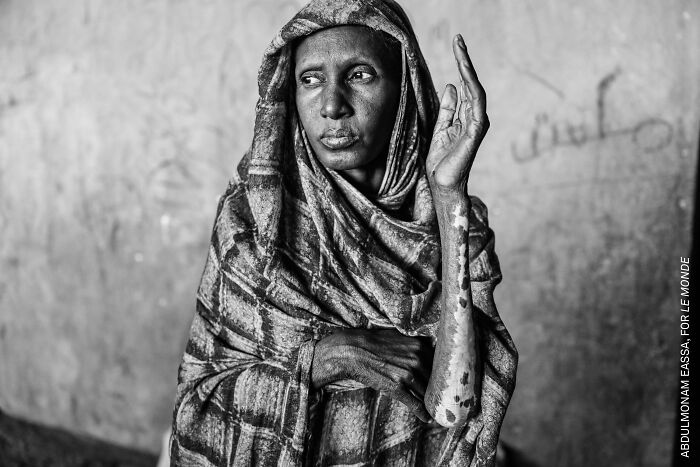
After a 2019 revolution overthrew decades of dictatorship, Sudan’s democratic hopes were crushed by a military coup in 2021. Two years later, the army and paramilitary forces turned on each other, beginning a war that has spiraled into one of the world’s worst humanitarian crises. As famine spreads and essential services collapse, foreign powers continue to fuel the conflict with weapons. Over 13 million people have been displaced, and at least 150,000 killed. The UN reports that civilian killings more than doubled in 2025 compared with the previous year.
About the photo:
"Alhaja Abdallah, a displaced woman from Bara, shows her scars from a fire at Al-Mohad camp. Paramilitary forces have set multiple displacement camps ablaze. El-Obeid, Sudan, 10 December 2025."
































 No fees, cancel anytime