Get Premium
Dark mode theme is available exclusively for premium users. Learn more about the benefits of subscribing.
No fees, cancel anytime.

 Dark Mode Ad-Free Browsing Unlimited Content
 Ad-Free Browsing Unlimited Content Dark Mode
Join 1.2 million Panda readers who get the best art, memes, and fun stories every week!
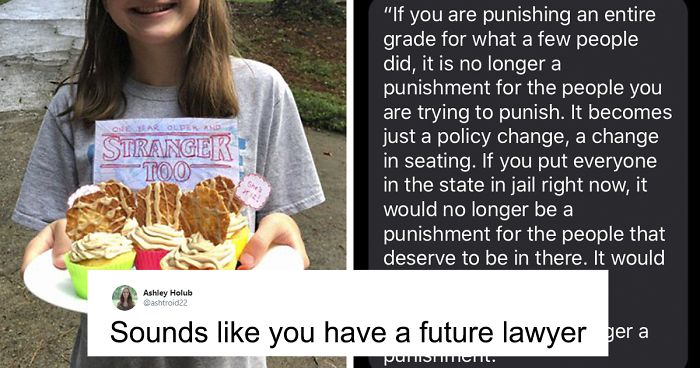
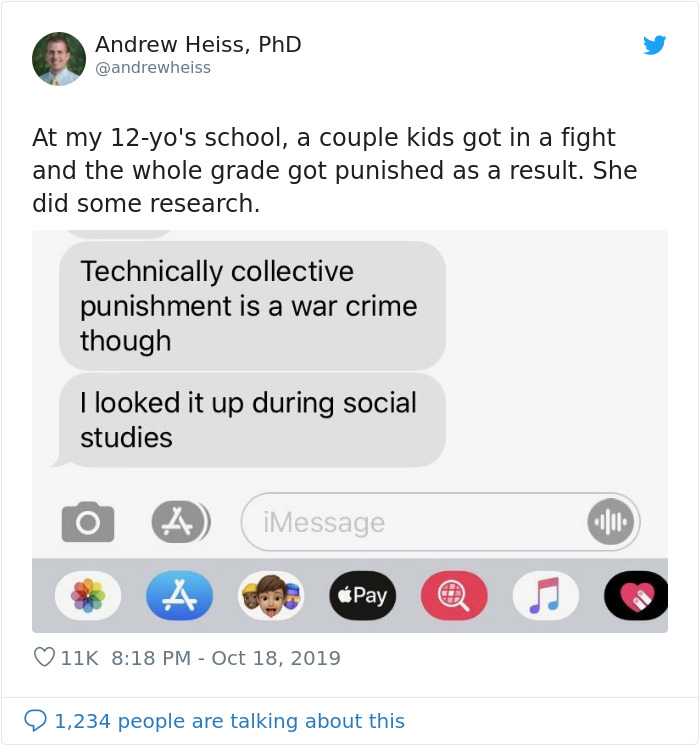
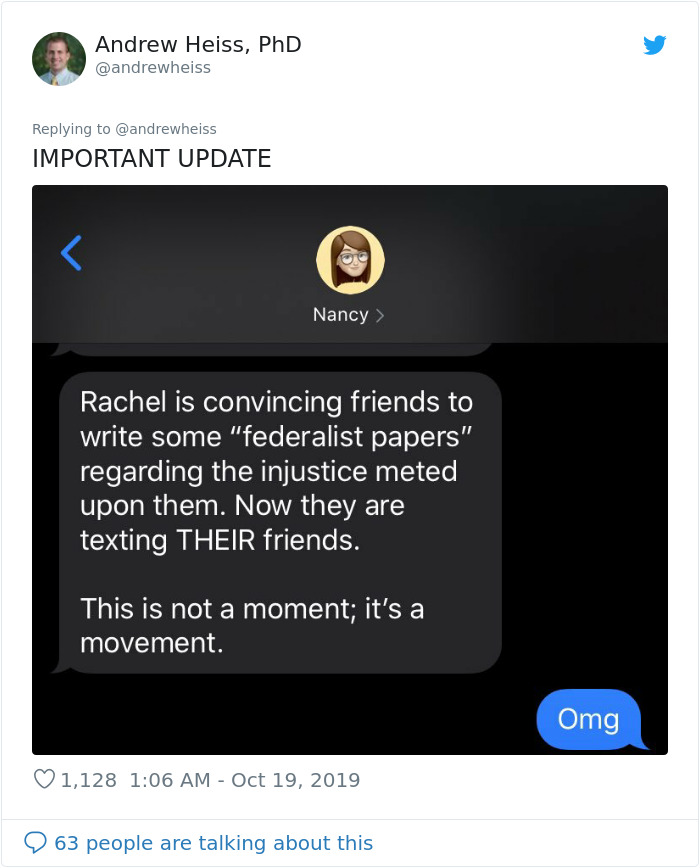
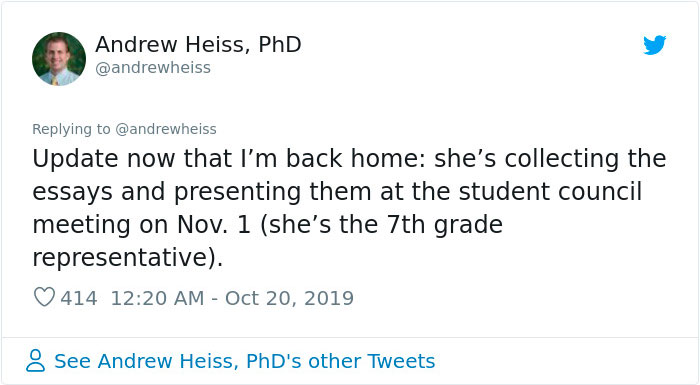
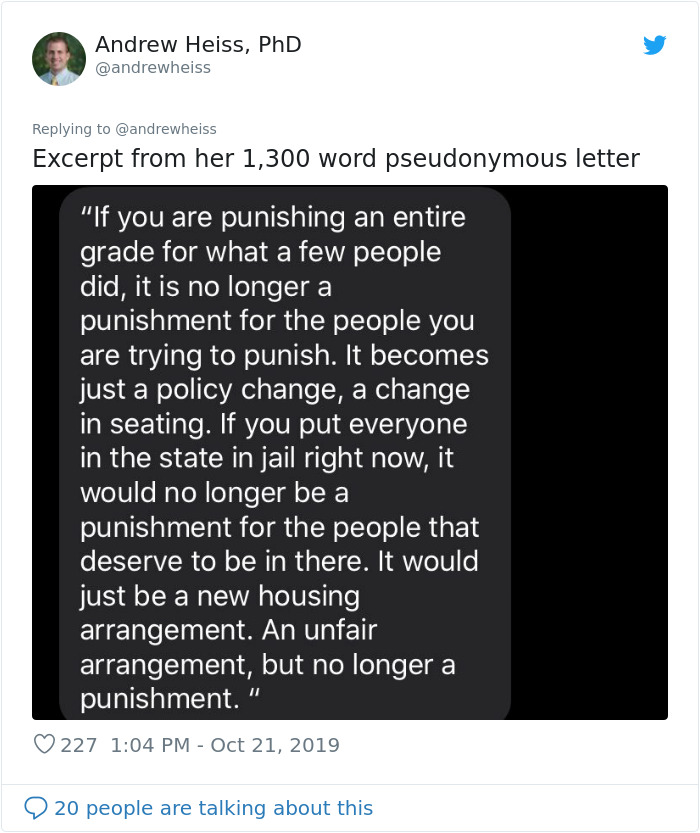
There’s a 12-year-old girl who’s probably gonna become a lawyer. In her first case, she’s comparing a common practice among teachers to war crimes, making some compelling arguments too. Everything started when Andrew Heiss’ daughter got punished together with the whole grade for a fight between a couple of kids. After doing some research, she voiced her concerns to her father. But the little girl didn’t stop there. She started sort of a resistance movement and is addressing the student council on Nov. 1. Something tells me she’s going there prepared.
More info: Twitter
Image credits: andrewheiss
Image credits: andrewheiss
Image credits: andrewheiss
Image credits: andrewheiss
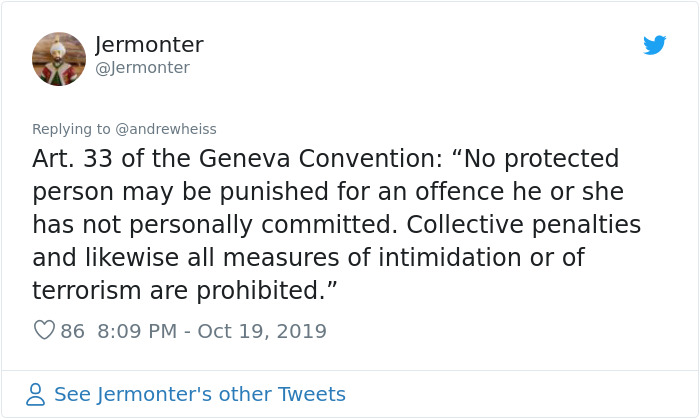
Andrew’s daughter is probably talking about the Geneva Conventions, a series of international treaties established between 1864 and 1949. Specifically, the second protocol, Protocol II, which extended human rights protection to persons involved in severe civil conflicts. Collective punishment is prohibited for prisoners of war, and Article 33 in the fourth Convention says “no protected person may be punished for an offense he or she has not personally committed.”
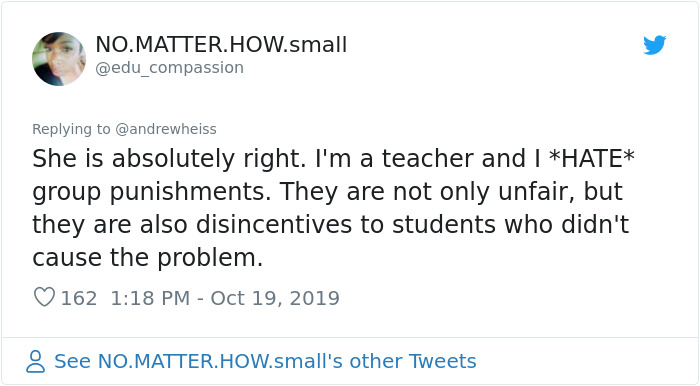
Image credits: edu_compassion
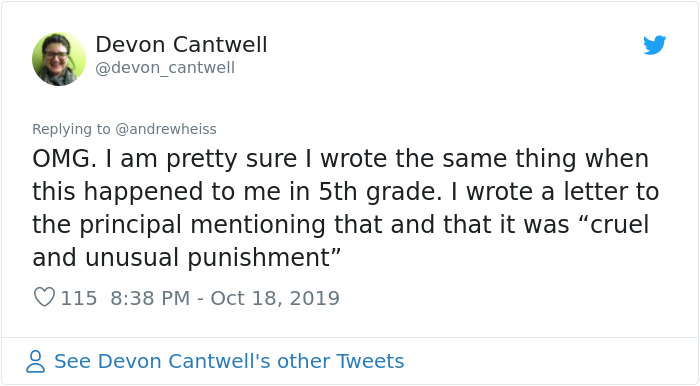
Image credits: devon_cantwell
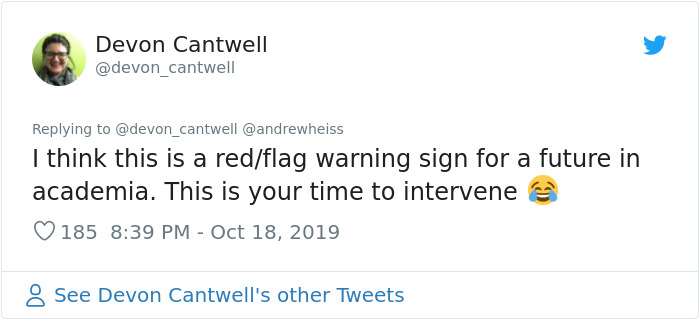
Image credits: devon_cantwell
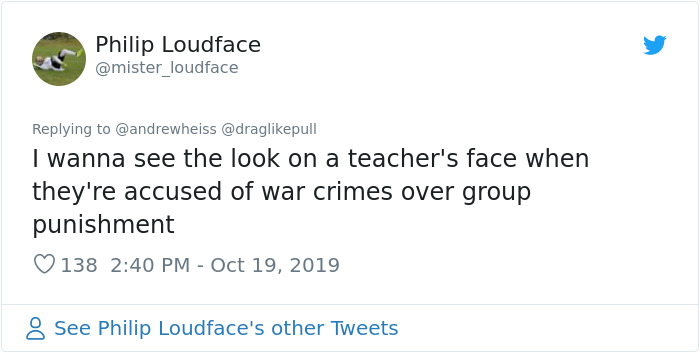
Image credits: mister_loudface
Image credits: Jermonter
Image credits: ashtroid22
Image credits: HayesBrown
Image credits: Victor_Asal
Image credits: Chrishenrichsen
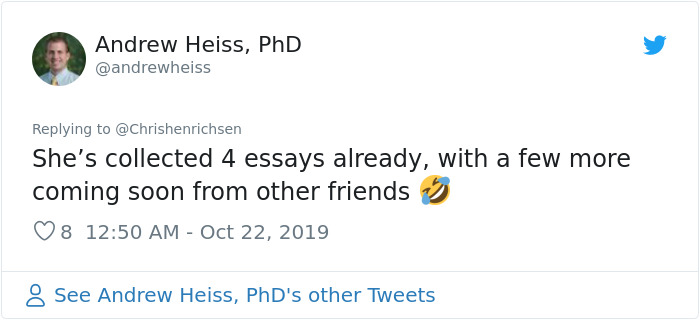
Image credits: andrewheiss
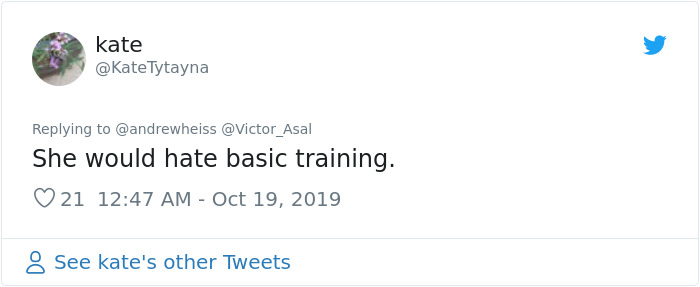
Image credits: KateTytayna
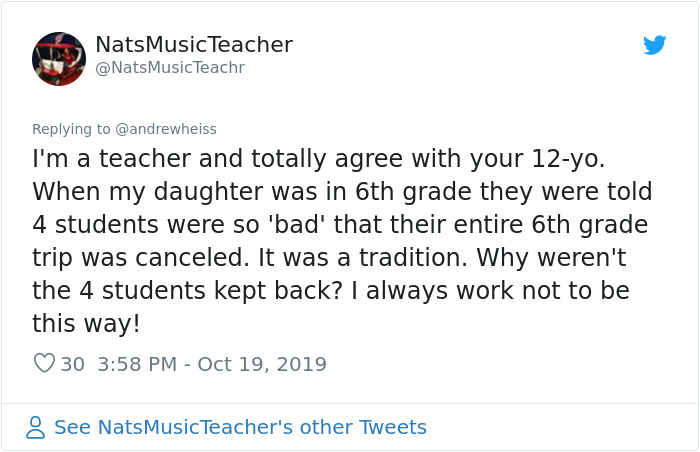
Image credits: NatsMusicTeachr
Image credits: draymir
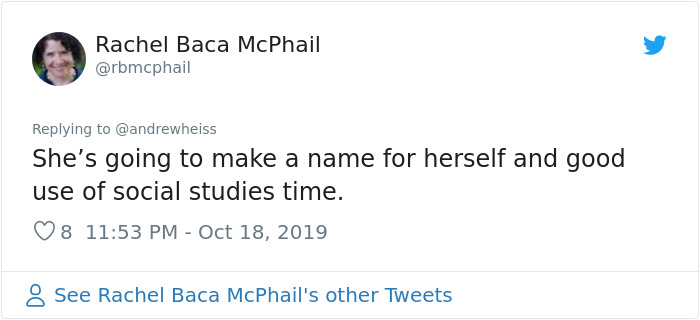
Image credits: rbmcphail
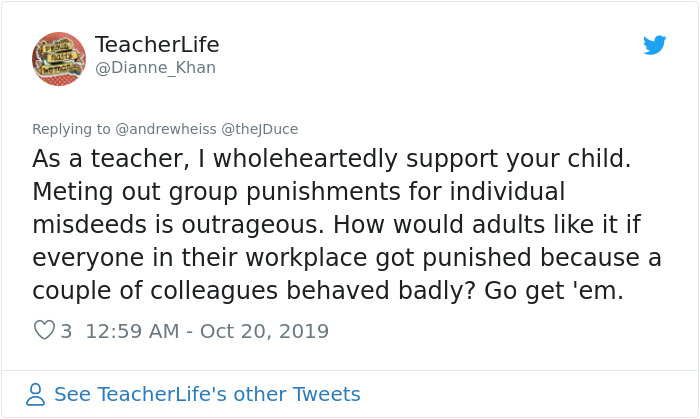
Image credits: Dianne_Khan
Image credits: stateofdnile
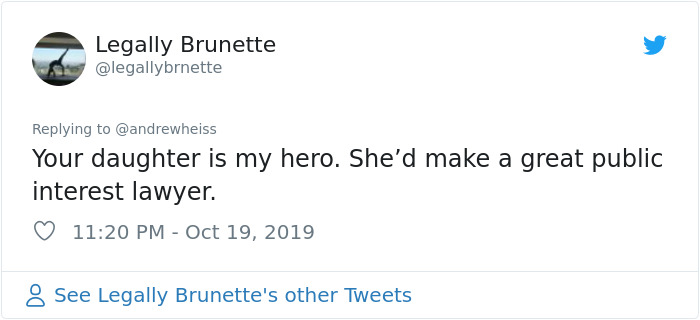
Image credits: legallybrnette
Image credits: pie_r_round
Collective punishment is supposed to promote compliance. And, just like other forms of punishment, it relies on the idea that the experience imposed by the teacher will be unpleasant enough to condition the students to change their behaviour in the future. Behaviourists first used this technique successfully animals in the 1960s. Behaviour modification strategies were then adopted by schools in various forms and are still used extensively today.
Some think collective punishment is effective due to peer pressure. It’s a common practice in sports and the military. However, there are critics who believe this strategy should be dropped. One of the main reasons, according to them, has to do with moral values. The idea a group should be responsible for the actions of the few is at odds with the theories of individual responsibility in western, liberal societies. There, each individual is in control of their own actions and must bear the consequences of those actions individually.

One person can change how we see the world. Amazing group of kids these days; so many examples of school age kids standing up for their beliefs and being heard. As an adults, are we as brave? What would you stand up for? Start local.
After the first few days of school, I was approached by a group of serious kindergartners. They asked me to beat up a third grade bully at the next bus stop. I explained violence wasn't the best answer, but promised to help. The next day I got on the bus and talked to the bus driver. She knew what to do. Big smiles on the bus. I was impressed. The kids worked as a group to solve a problem. No crying, just a sound plan. Which grown-up could help and what do we need --- no messing around. Clear and direct, using the power of a group. If the kids are punished as a group, who teaches them to act as a group? Adults tell me they don't know how to make a difference. Ask a kid.
Load More Replies...
Collective punishments teach children three things, none of them any good. First, that the world is not fair (so why wait for someone to be unfair to you, go be unfair to them first!), second, that anyone in a position of power is free to misuse that power, and third, that if you are being unfairly trampled upon, there is nothing you can do about it! As a parent, I would have had a very serious discussion with the principal the moment I heard about this. It is outrageous. Kudos to the girl who is acting much more like a grown-up than her teacher. Maybe Greta Thunberg is liberating many closeted fighters for causes that are simply ... right!

I've never liked the idea of group punishments, for exactly the reasons you stated. School should be about teaching children knowledge and to think for themselves and how to behave in society, not mindless compliance.
Load More Replies...
WHAT'S WORSE - I remember when one student was bullying another the teacher would tell both kids to knock it off, or stop.
It gets complicated so quickly. Often the parents are bullys, too. My ex stopped coaching because if he made any comment to the bullys, their parents were in his face. It got out of control so quickly. Armed police on the local soccer fields? Not sure what can be done.
Load More Replies... One person can change how we see the world. Amazing group of kids these days; so many examples of school age kids standing up for their beliefs and being heard. As an adults, are we as brave? What would you stand up for? Start local.
After the first few days of school, I was approached by a group of serious kindergartners. They asked me to beat up a third grade bully at the next bus stop. I explained violence wasn't the best answer, but promised to help. The next day I got on the bus and talked to the bus driver. She knew what to do. Big smiles on the bus. I was impressed. The kids worked as a group to solve a problem. No crying, just a sound plan. Which grown-up could help and what do we need --- no messing around. Clear and direct, using the power of a group. If the kids are punished as a group, who teaches them to act as a group? Adults tell me they don't know how to make a difference. Ask a kid.
Load More Replies... Collective punishments teach children three things, none of them any good. First, that the world is not fair (so why wait for someone to be unfair to you, go be unfair to them first!), second, that anyone in a position of power is free to misuse that power, and third, that if you are being unfairly trampled upon, there is nothing you can do about it! As a parent, I would have had a very serious discussion with the principal the moment I heard about this. It is outrageous. Kudos to the girl who is acting much more like a grown-up than her teacher. Maybe Greta Thunberg is liberating many closeted fighters for causes that are simply ... right!
I've never liked the idea of group punishments, for exactly the reasons you stated. School should be about teaching children knowledge and to think for themselves and how to behave in society, not mindless compliance.
Load More Replies... WHAT'S WORSE - I remember when one student was bullying another the teacher would tell both kids to knock it off, or stop.
It gets complicated so quickly. Often the parents are bullys, too. My ex stopped coaching because if he made any comment to the bullys, their parents were in his face. It got out of control so quickly. Armed police on the local soccer fields? Not sure what can be done.
Load More Replies...





























 No fees, cancel anytime









165
49