Bored Panda works better on our iPhone app
Continue in app Continue in browser

The Bored Panda iOS app is live! Fight boredom with iPhones and iPads here.

Sand Cats: Where The Adults Are Kittens And The Kittens Are Also Kittens
User submission
78.2K

Sand Cats: Where The Adults Are Kittens And The Kittens Are Also Kittens

176

ADVERTISEMENT

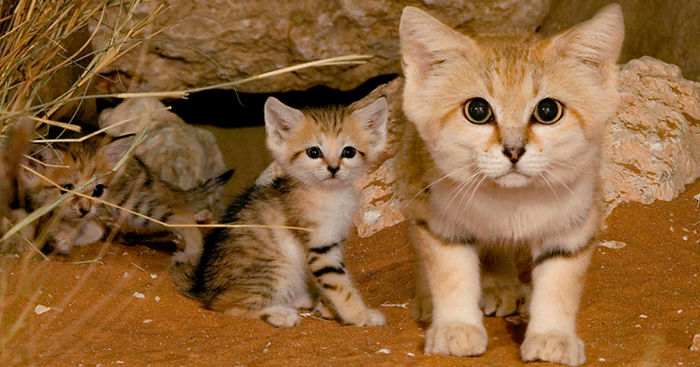
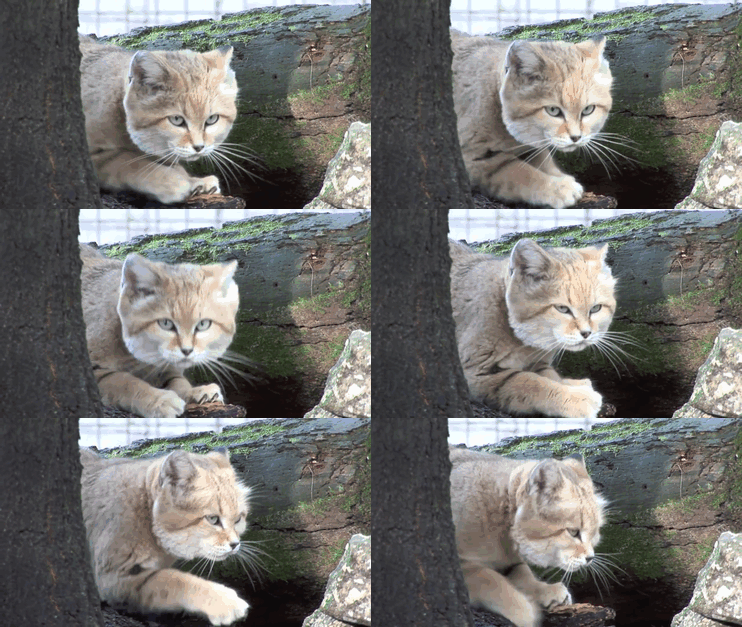
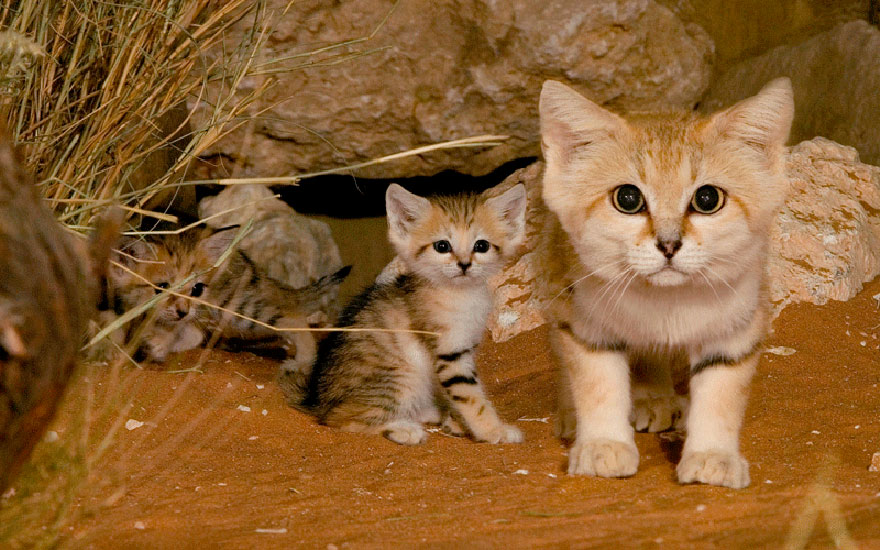
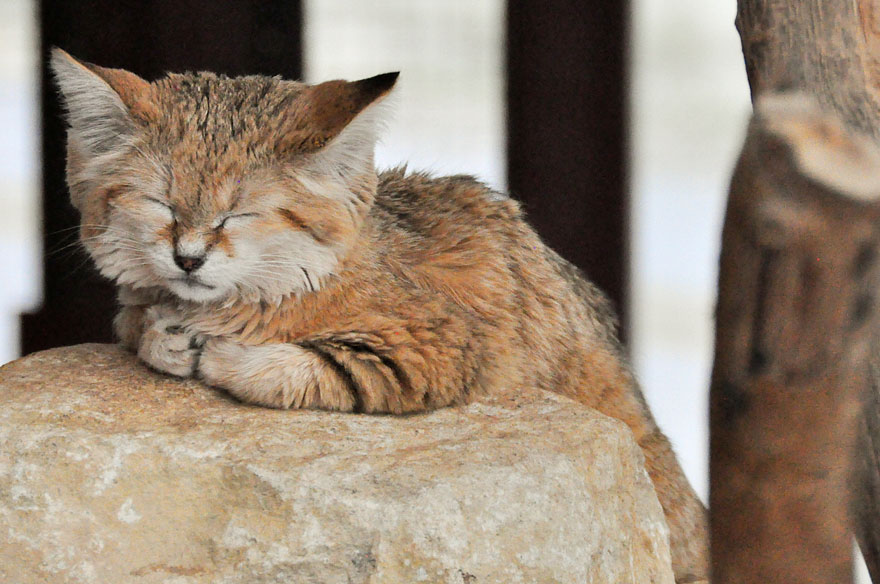
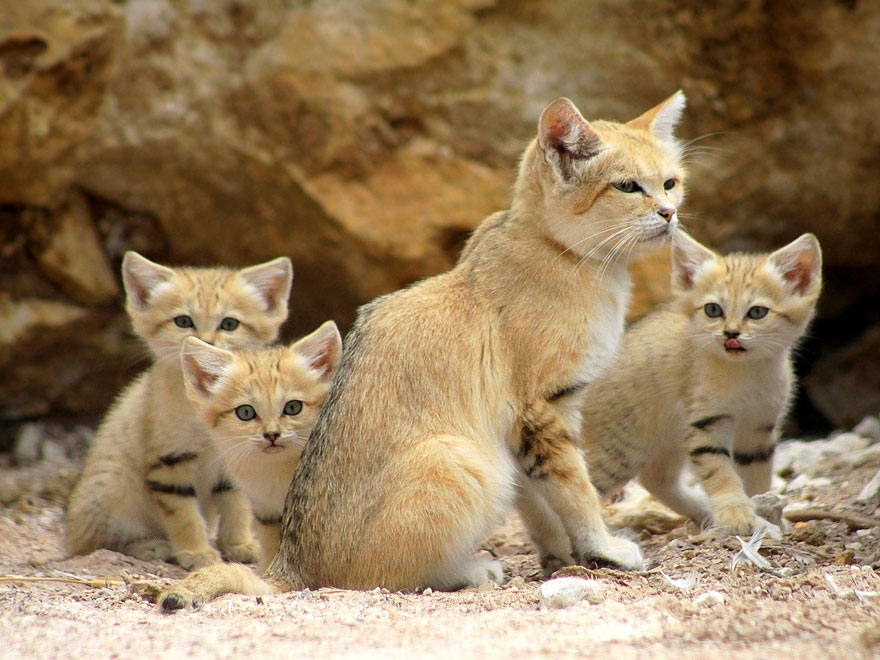
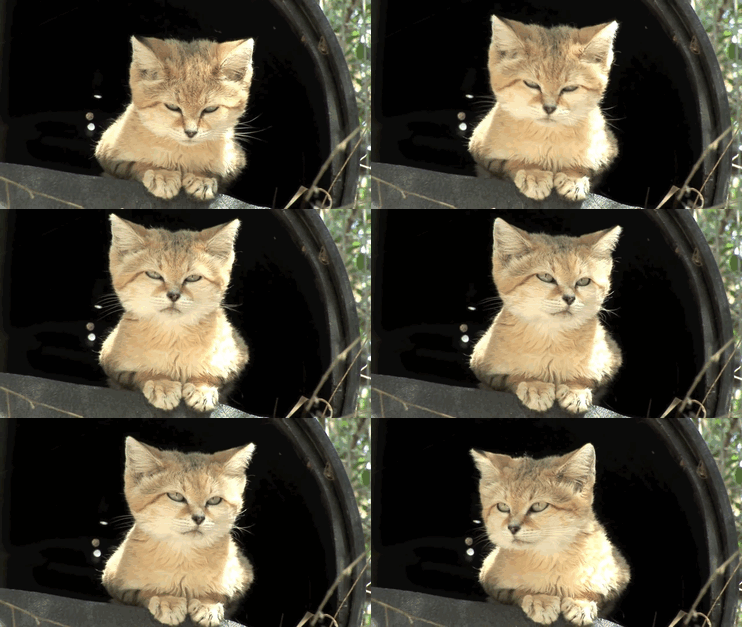
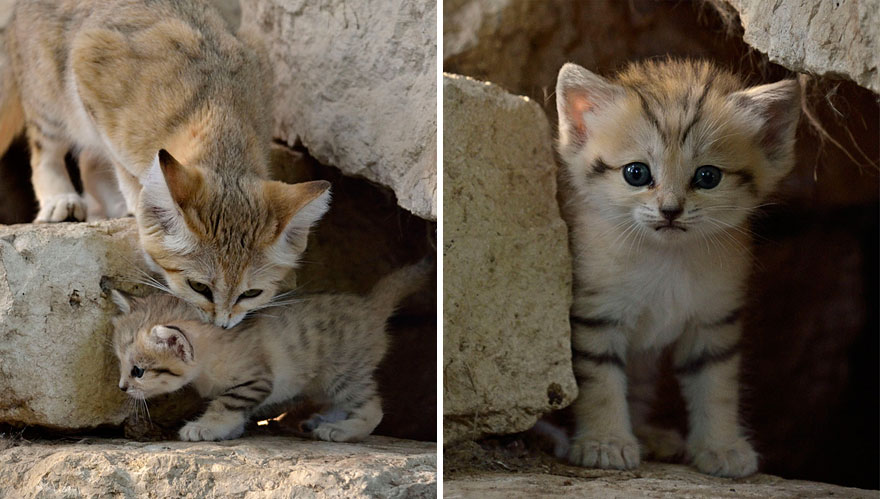
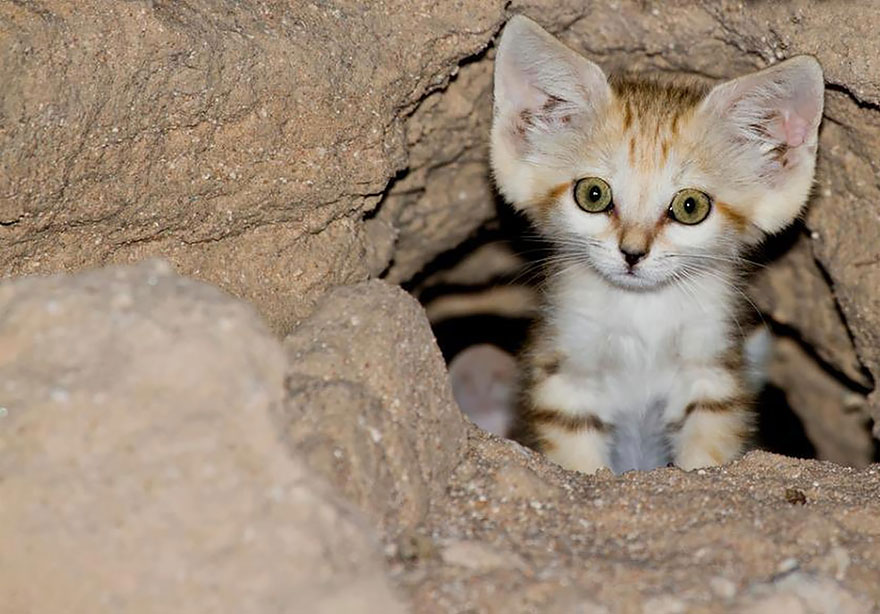
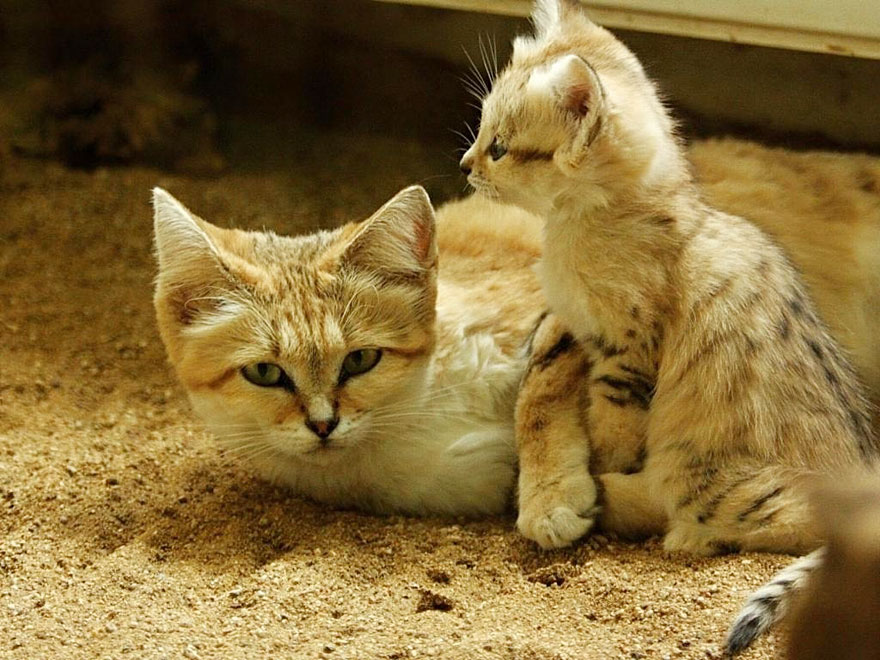
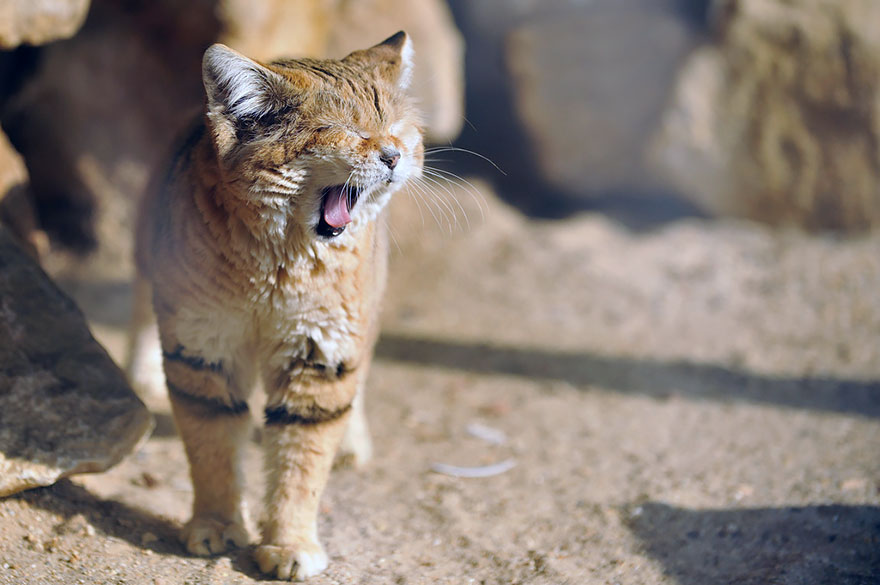
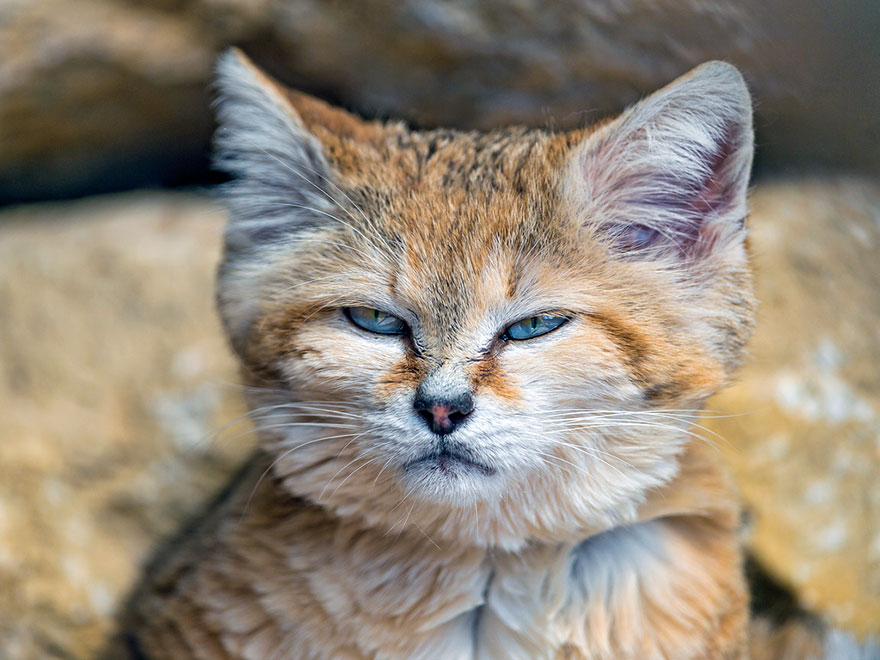
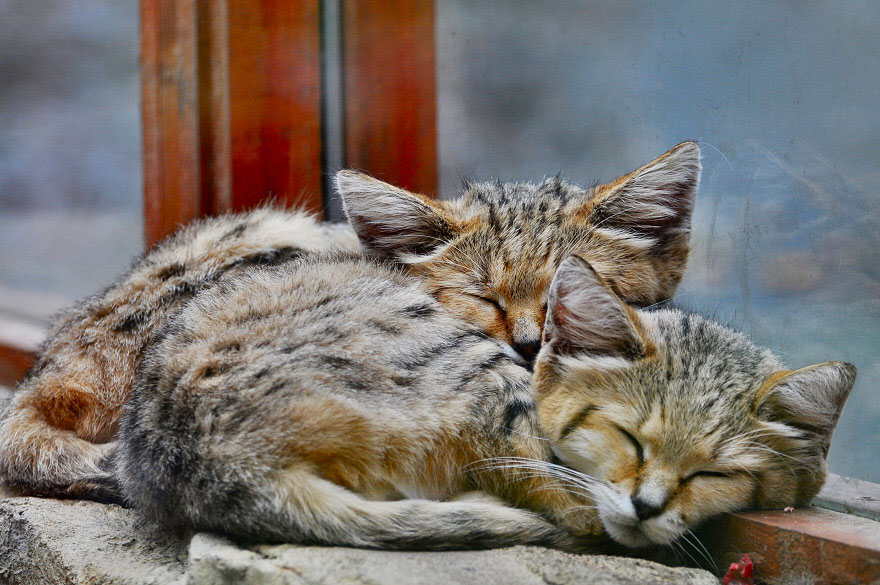
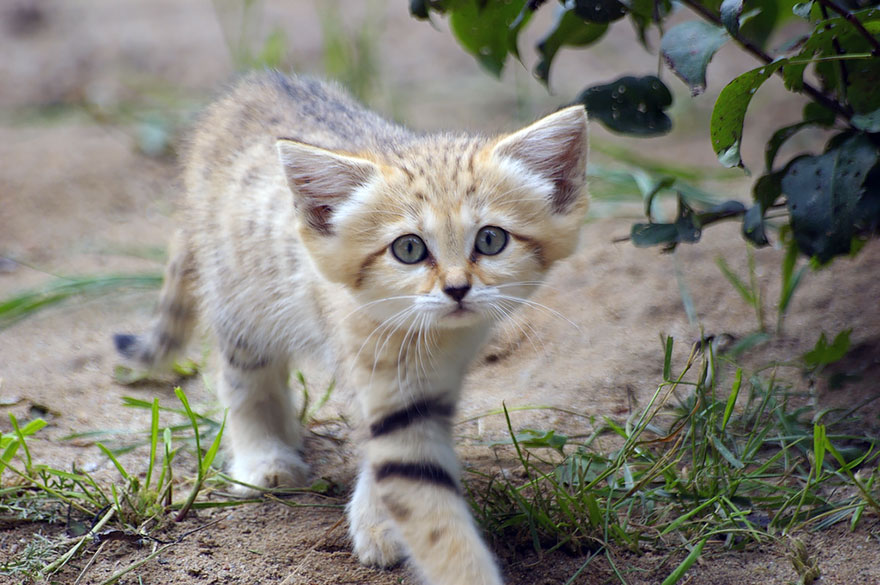
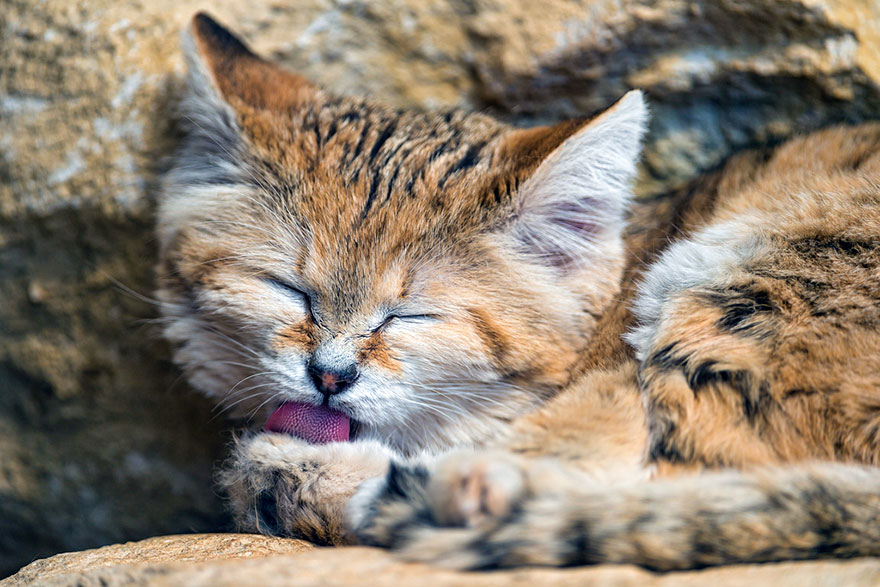
Sand cats are the Peter Pan of felines: they retain a kitten-like appearance their whole lives, giving the impression that they never grow up. Although they live in the desert Areas of North Africa, Arabia, Central Asia, and Pakistan, they are considered near threatened due to the illegal pet trade and sport hunting.

These cats are well adapted to their harsh environment. They can survive in temperatures between −5 °C (23 °F) to 52 °C (126 °F) and are able to survive for months on the water in their food. Unfortunately, a recent study indicated that only 61% of sand cats born in captivity live to day 30, primarily due to maternal neglect; they are also prone to various respiratory illnesses which makes them unsuitable as pets.

(h/t: thedodo)

RELATED:

    Image credits: adremeaux

    sand-cats-kittens-forever-12

    Image credits: John Jones

    sand-cats-kittens-forever-15

    Image credits: home_77Pascale

    ADVERTISEMENT

    sand-cats-kittens-forever-gif-3

    Image credits: Big Cat Rescue

    sand-cats-kittens-forever-10

    Image credits: goodnewsanimal

    ADVERTISEMENT

    sand-cats-kittens-forever-11

    sand-cats-kittens-forever-11

    Image credits: Big Cat Rescue

    Image credits: makhalifa

    ADVERTISEMENT

    sand-cats-kittens-forever-14

    Image credits: surfingbird

    Image credits: Ami211

    ADVERTISEMENT

    Image credits: Tambako

    sand-cats-kittens-forever-13

    Image credits: Mark Baldwin

    ADVERTISEMENT

    Image credits: mellting

    Image credits: Tambako

    ADVERTISEMENT

    305Kviews

    Share on Facebook

    Explore more of these tags

    Dainius

    Dainius

    Author, Community member

    Read more »

    This lazy panda forgot to write something about itself.

    Read less »
    Dainius

    Dainius

    Author, Community member

    This lazy panda forgot to write something about itself.

    What do you think ?
    Noor
    Community Member
    10 years ago Created by potrace 1.15, written by Peter Selinger 2001-2017

    "Unfortunately, a recent study indicated that only 61% of sand cats born in captivity live to day 30, primarily due to maternal neglect; they are also prone to various respiratory illnesses which makes them unsuitable as pets." Why is this unfortunately? I think it is great.. that way humans won't keep them as pets like that crazy fox lady does.. They belong in the wild and should do so. Not in cages in zoo's and with sick people that want a different kind of pet than the neighbor has..

    MaryAsh
    Community Member
    10 years ago Created by potrace 1.15, written by Peter Selinger 2001-2017

    It's unfortunate because captive breeding is one of the best hopes for continuing the species dumdum.

    Load More Replies...

    SusanBertke
    Community Member
    10 years ago Created by potrace 1.15, written by Peter Selinger 2001-2017

    There was an interesting article in National Geographic Magazine a few years ago about selective breeding to domesticate foxes in Russia. They documented what changes in appearance and behavior occurred with each generation. Domestication is not just behavior modification; it makes genetic changes. A truly domesticated animal is not the same as its wild cousin, just as a German shepherd is not the same as a wolf. Humans have domesticated many species for our own purposes, and I have no problem with that. But a wild animal rarely makes a good pet, and domestication does not preserve the original genome. Zoos try to maintain the original genetics, but a manmade environment does not teach survival skills and it's very tricky (though not impossible) to transition zoo-raised animals back to the wild. Ideally, we need to preserve the wild habitat and stop killing wild animals for stupid human reasons.

    OonaGillespie
    Community Member
    10 years ago Created by potrace 1.15, written by Peter Selinger 2001-2017

    awwwwwwwwwwwww!!!!!!!!! adorable

    GayleneRea
    Community Member
    10 years ago Created by potrace 1.15, written by Peter Selinger 2001-2017

    Right on Robyn. Why do comments have to always come down to name calling like children? That is SO FAR off the point of discussion. Opinions are great and interesting to read because there are so many of them. Let everyone have one and voice it without the added name calling, please. And by the way..They are such beautiful small creatures!!!

    Load More Replies...
    W.CleveBarkdull
    Community Member
    10 years ago Created by potrace 1.15, written by Peter Selinger 2001-2017

    SO cool...wonder if transplantation would work....the eastern Utah desert should be perfect for them, lots of little rodent, some water lots of cover for a small cat, they would learn how to thwart coyotes.....might be worth thinking about....

    TinaMLoonsfoot
    Community Member
    10 years ago Created by potrace 1.15, written by Peter Selinger 2001-2017

    They belong in the wild & left alone. They r so adorable...

    JanetZimand
    Community Member
    10 years ago Created by potrace 1.15, written by Peter Selinger 2001-2017

    They're such interesting and beautiful members of the feline family! They just should not be in captivity. Neither should I! I well understand, and people should observe these fascinating creatures fro afar - and let them live.

    TeleriNyfain
    Community Member
    10 years ago Created by potrace 1.15, written by Peter Selinger 2001-2017

    With cats, its all about them domesticating us.... cats are cats are cats. Sounds like this little cat has some built-in breathing thing that helps them in their own environment but hurts them elsewhere - sad because this means they are vulnerable as their native habitat changes/disappears :( But guess what - inter species breeding (which DOES happen in the wild) has historically helped solve problems like that. Keeping such critters 'pure' is just as unnatural as humans breeding animals for certain characteristics... They are uber-cute LOL

    Matthew Donovan
    Community Member
    3 years ago Created by potrace 1.15, written by Peter Selinger 2001-2017

    Are you seriously suggesting genetic alteration, as opposed to say, restricting human indulging in their native habitat in order to allow them to thrive where they are? Human genetic manipulation, as with with Ligers(a ridiculous experiment IMO, seemingly for human interest/amusement). As to inter-species breeding in the wild, you’re referring to retroactive postulates about breeding over literally millions of years and even those can be proven with absolute certainty. Please stop stating it as if it’s some kind of frequent enough, successful phenomena resulting in vibrant offspring within a shorter periods of time. Too often humans fancy themselves as being capable of manipulating things that otherwise took a very long time, and who knows what else to occur. Seems more simple to recognize their habitats and do our best to work around them, allowing them to thrive as is.

    Load More Replies...
    TollTolladay
    Community Member
    10 years ago Created by potrace 1.15, written by Peter Selinger 2001-2017

    Awwwwwwww!!!! Squee!!!! (sorry to lower the tone)

    LindaWark
    Community Member
    10 years ago Created by potrace 1.15, written by Peter Selinger 2001-2017

    Great, thanks for sharing now all the "It's so fluffy" types can ruin and breed to death yet another species.

    Load More Comments
    Noor
    Community Member
    10 years ago Created by potrace 1.15, written by Peter Selinger 2001-2017

    "Unfortunately, a recent study indicated that only 61% of sand cats born in captivity live to day 30, primarily due to maternal neglect; they are also prone to various respiratory illnesses which makes them unsuitable as pets." Why is this unfortunately? I think it is great.. that way humans won't keep them as pets like that crazy fox lady does.. They belong in the wild and should do so. Not in cages in zoo's and with sick people that want a different kind of pet than the neighbor has..

    MaryAsh
    Community Member
    10 years ago Created by potrace 1.15, written by Peter Selinger 2001-2017

    It's unfortunate because captive breeding is one of the best hopes for continuing the species dumdum.

    Load More Replies...
    SusanBertke
    Community Member
    10 years ago Created by potrace 1.15, written by Peter Selinger 2001-2017

    There was an interesting article in National Geographic Magazine a few years ago about selective breeding to domesticate foxes in Russia. They documented what changes in appearance and behavior occurred with each generation. Domestication is not just behavior modification; it makes genetic changes. A truly domesticated animal is not the same as its wild cousin, just as a German shepherd is not the same as a wolf. Humans have domesticated many species for our own purposes, and I have no problem with that. But a wild animal rarely makes a good pet, and domestication does not preserve the original genome. Zoos try to maintain the original genetics, but a manmade environment does not teach survival skills and it's very tricky (though not impossible) to transition zoo-raised animals back to the wild. Ideally, we need to preserve the wild habitat and stop killing wild animals for stupid human reasons.
    OonaGillespie
    Community Member
    10 years ago Created by potrace 1.15, written by Peter Selinger 2001-2017

    awwwwwwwwwwwww!!!!!!!!! adorable

    GayleneRea
    Community Member
    10 years ago Created by potrace 1.15, written by Peter Selinger 2001-2017

    Right on Robyn. Why do comments have to always come down to name calling like children? That is SO FAR off the point of discussion. Opinions are great and interesting to read because there are so many of them. Let everyone have one and voice it without the added name calling, please. And by the way..They are such beautiful small creatures!!!

    Load More Replies...
    W.CleveBarkdull
    Community Member
    10 years ago Created by potrace 1.15, written by Peter Selinger 2001-2017

    SO cool...wonder if transplantation would work....the eastern Utah desert should be perfect for them, lots of little rodent, some water lots of cover for a small cat, they would learn how to thwart coyotes.....might be worth thinking about....

    TinaMLoonsfoot
    Community Member
    10 years ago Created by potrace 1.15, written by Peter Selinger 2001-2017

    They belong in the wild & left alone. They r so adorable...

    JanetZimand
    Community Member
    10 years ago Created by potrace 1.15, written by Peter Selinger 2001-2017

    They're such interesting and beautiful members of the feline family! They just should not be in captivity. Neither should I! I well understand, and people should observe these fascinating creatures fro afar - and let them live.

    TeleriNyfain
    Community Member
    10 years ago Created by potrace 1.15, written by Peter Selinger 2001-2017

    With cats, its all about them domesticating us.... cats are cats are cats. Sounds like this little cat has some built-in breathing thing that helps them in their own environment but hurts them elsewhere - sad because this means they are vulnerable as their native habitat changes/disappears :( But guess what - inter species breeding (which DOES happen in the wild) has historically helped solve problems like that. Keeping such critters 'pure' is just as unnatural as humans breeding animals for certain characteristics... They are uber-cute LOL


    Matthew Donovan
    Community Member
    3 years ago Created by potrace 1.15, written by Peter Selinger 2001-2017

    Are you seriously suggesting genetic alteration, as opposed to say, restricting human indulging in their native habitat in order to allow them to thrive where they are? Human genetic manipulation, as with with Ligers(a ridiculous experiment IMO, seemingly for human interest/amusement). As to inter-species breeding in the wild, you’re referring to retroactive postulates about breeding over literally millions of years and even those can be proven with absolute certainty. Please stop stating it as if it’s some kind of frequent enough, successful phenomena resulting in vibrant offspring within a shorter periods of time. Too often humans fancy themselves as being capable of manipulating things that otherwise took a very long time, and who knows what else to occur. Seems more simple to recognize their habitats and do our best to work around them, allowing them to thrive as is.

    Load More Replies...
    TollTolladay
    Community Member
    10 years ago Created by potrace 1.15, written by Peter Selinger 2001-2017

    Awwwwwwww!!!! Squee!!!! (sorry to lower the tone)

    LindaWark
    Community Member
    10 years ago Created by potrace 1.15, written by Peter Selinger 2001-2017

    Great, thanks for sharing now all the "It's so fluffy" types can ruin and breed to death yet another species.

    Load More Comments
    You May Like
    Related on Bored Panda
    Popular on Bored Panda
    Trending on Bored Panda
    Also on Bored Panda
    ADVERTISEMENT