Get Premium
Dark mode theme is available exclusively for premium users. Learn more about the benefits of subscribing.
No fees, cancel anytime.

 Dark Mode Ad-Free Browsing Unlimited Content
 Ad-Free Browsing Unlimited Content Dark Mode
Join 1.2 million Panda readers who get the best art, memes, and fun stories every week!

Blood types are best known for their role in medical emergencies, but they can sometimes tell us much more than that. In one unusual case, they even helped expose an affair.
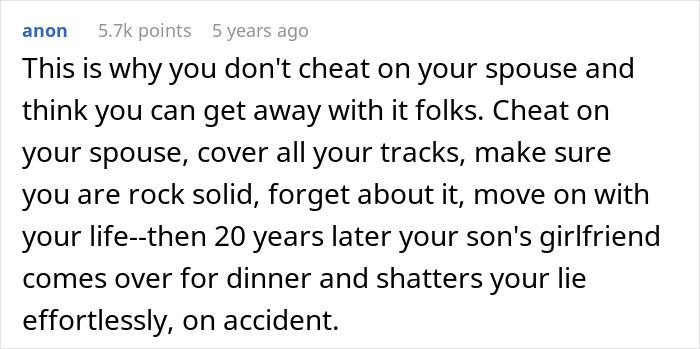
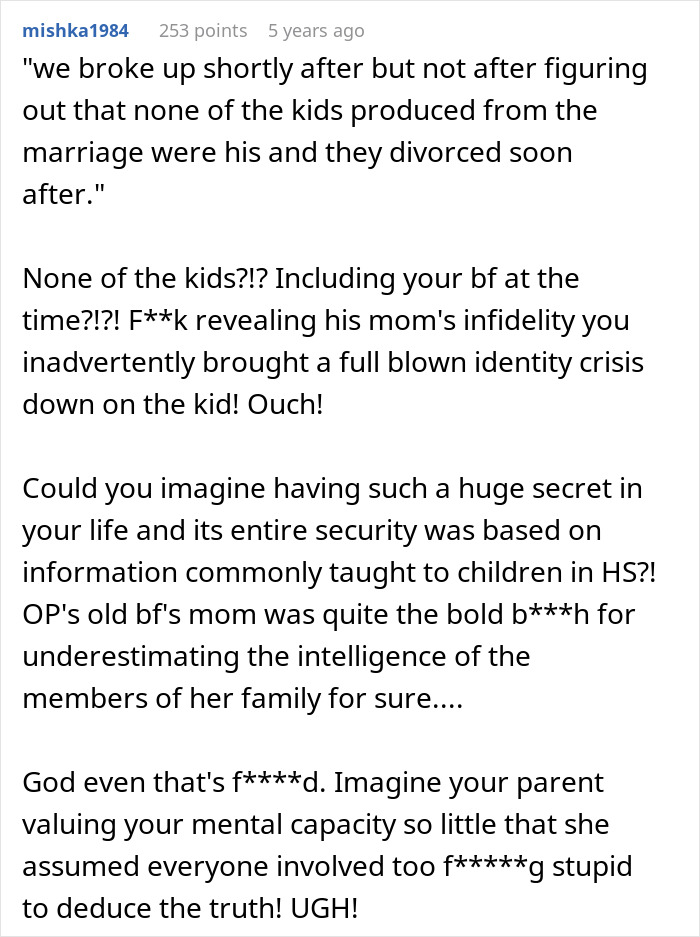
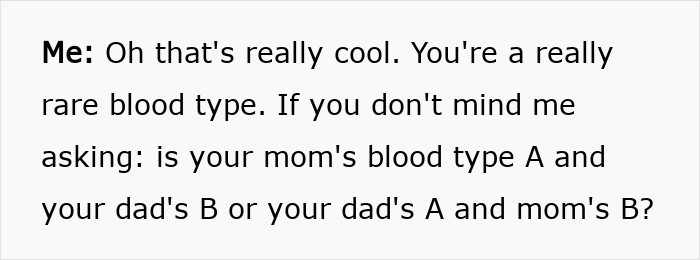
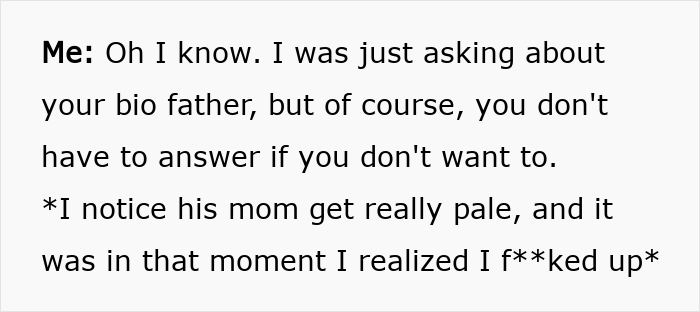
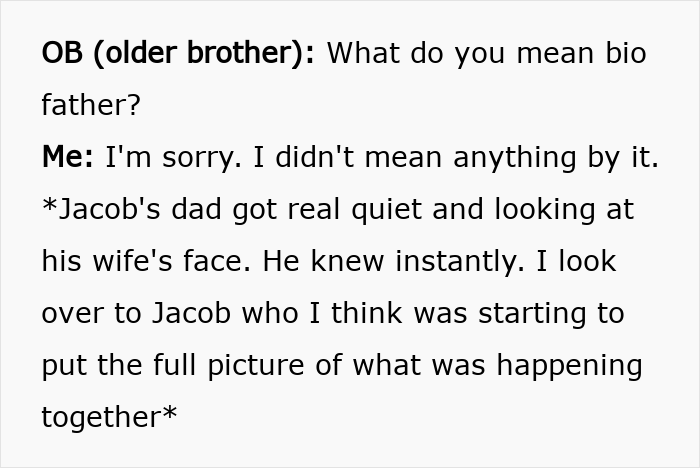
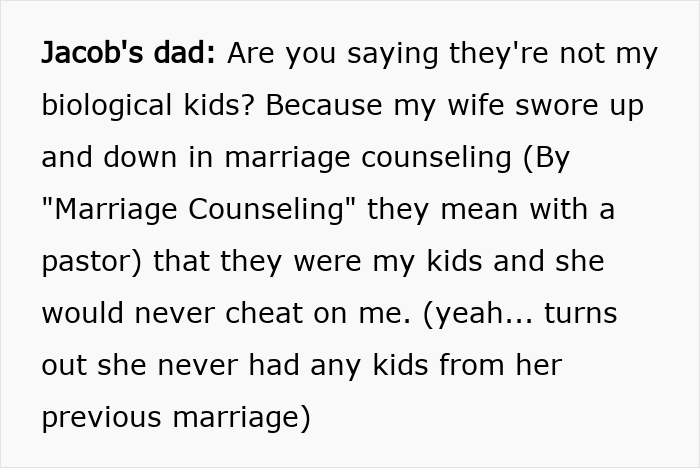
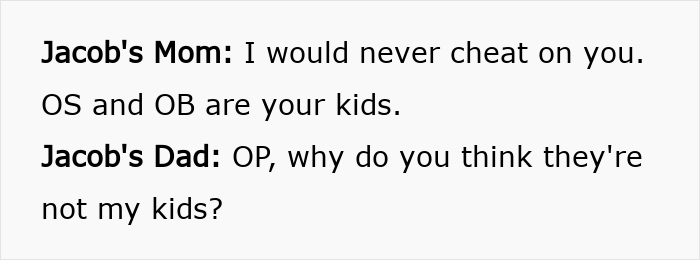
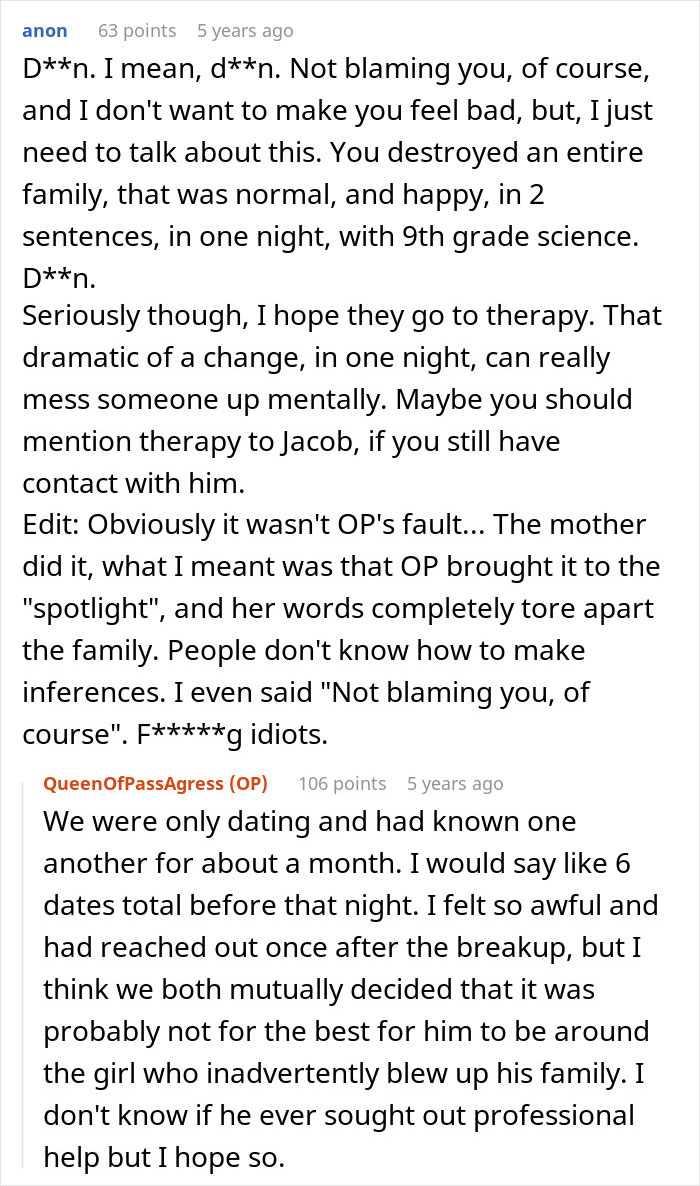
When one woman joined her boyfriend’s family for dinner, a casual conversation and her knowledge of blood types led to a shocking realization. She figured out that his mother had cheated, and that at least two of the children were not biologically his father’s. Needless to say, the meal did not end well.
Read on to find out how the entire room descended into chaos.
Image credits: freepik (not the actual photo)
Image credits: Iakobchuk (not the actual photo)
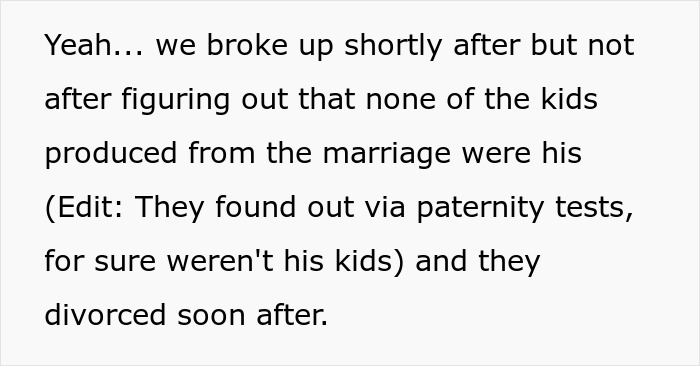
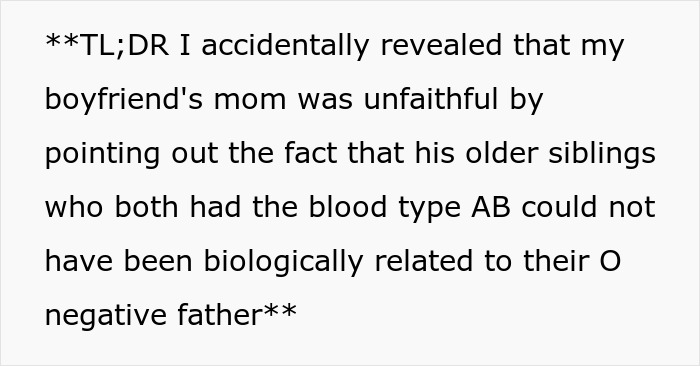
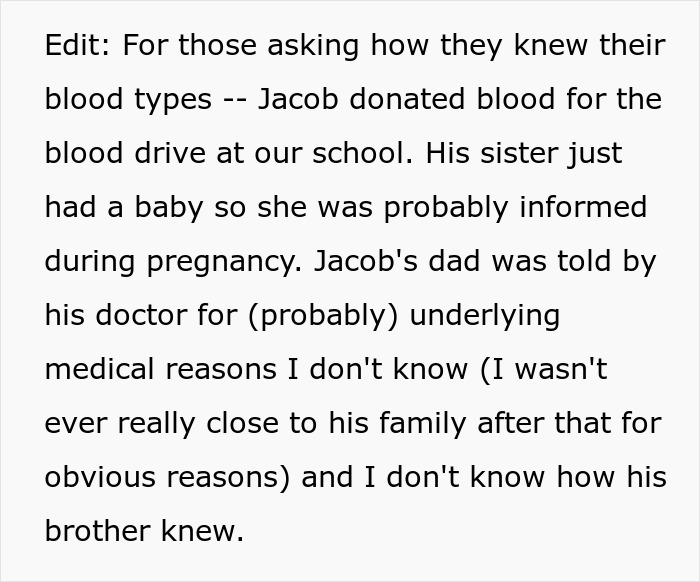
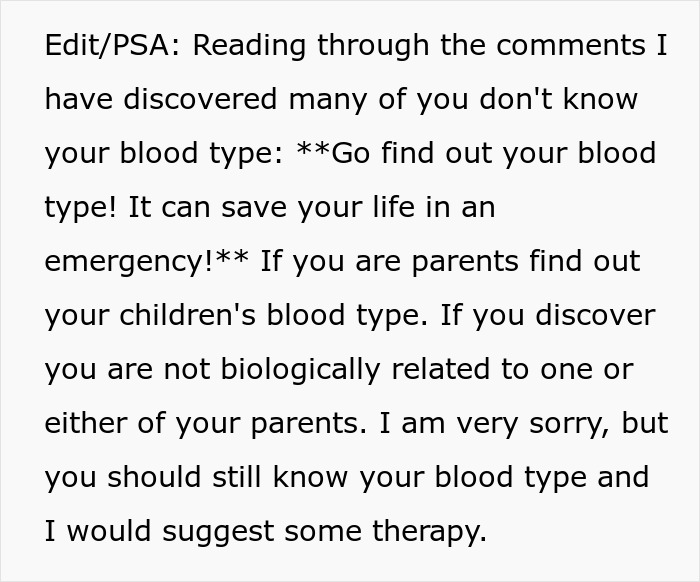
Image credits: QueenOfPassAgress
In most societies, cheating is considered a serious betrayal. It’s painful, heartbreaking, and clearly wrong—even people who do it know that. Yet it still happens frequently.
The exact numbers are difficult to measure because not everyone is willing to admit to infidelity, even in anonymous surveys. This means estimates can vary wildly depending on how researchers collect their data.
For example, University of Colorado scientists asked over 4,800 married women about infidelity during the previous year using two methods: face-to-face interviews and anonymous questionnaires. In the interviews, only 1 percent admitted to cheating. In the anonymous questionnaires, that number jumped to 6 percent.
A YouGov survey found that one-third of US participants admitted to cheating—either physically, emotionally, or both. Some studies report even higher rates, with 75% of men and 68% of women admitting to some form of infidelity at some point in a relationship.
Interestingly, while most cheaters don’t want their partners to find out, many eventually confess on their own. In this story, the mom clearly had no intention of ever revealing her secret. But sometimes the truth comes out in unexpected ways, and the aftermath can be explosive.
Image credits: Drazen Zigic (not the actual photo)
Can a relationship survive something as devastating as cheating? It’s a question many couples face.
The emotional impact is severe. People who’ve been cheated on experience anger, betrayal, insecurity, shame, guilt, jealousy, and profound sadness. Some research compares the trauma to the attachment injuries an infant experiences when separated from their mother.
The situation becomes even more complicated when children are involved. Kids depend on their parents for emotional and physical stability. Discovering a parent’s affair can shatter that foundation.
Family law attorney and mediator Susan Guthrie explains that children may blame themselves for the affair, develop trust issues that affect their future relationships, or see their academic performance suffer. The stability of their entire family unit is disrupted.
Despite all of this, there is one thing worth noting: cheating does not always mean a relationship is over. Some estimates suggest that 60% to 75% of couples reconcile after an affair, which shows that many do find a way to move forward.
In this case, however, the damage went far beyond a typical betrayal. Once paternity tests confirmed that none of the children were biologically the father’s, the marriage did not survive.
Image credits: The Yuri Arcurs Collection (not the actual photo)


















By entering your email and clicking Subscribe, you're agreeing to let us send you customized marketing messages about us and our advertising partners. You are also agreeing to our Privacy Policy.
Thank you! You've successfully subscribed to newsletters!

Don't do this, my fellow Pandas. A friend of my called me a few years ago, asking whether blood type can change in time. (No previous stem cell transplantation.) It turned out that decades earlier they were told one blood group, and the fresh test gave a different result. My answer was to contact the lab immediately, because either the sample was swapped or the reagent was spoiled. (The fresh result was the correct, and the previously given blood group was the false one.) Even if in the article, it was really the mismatched blood groups that revealed cheating, don't build your judgement over decades-old lab results.

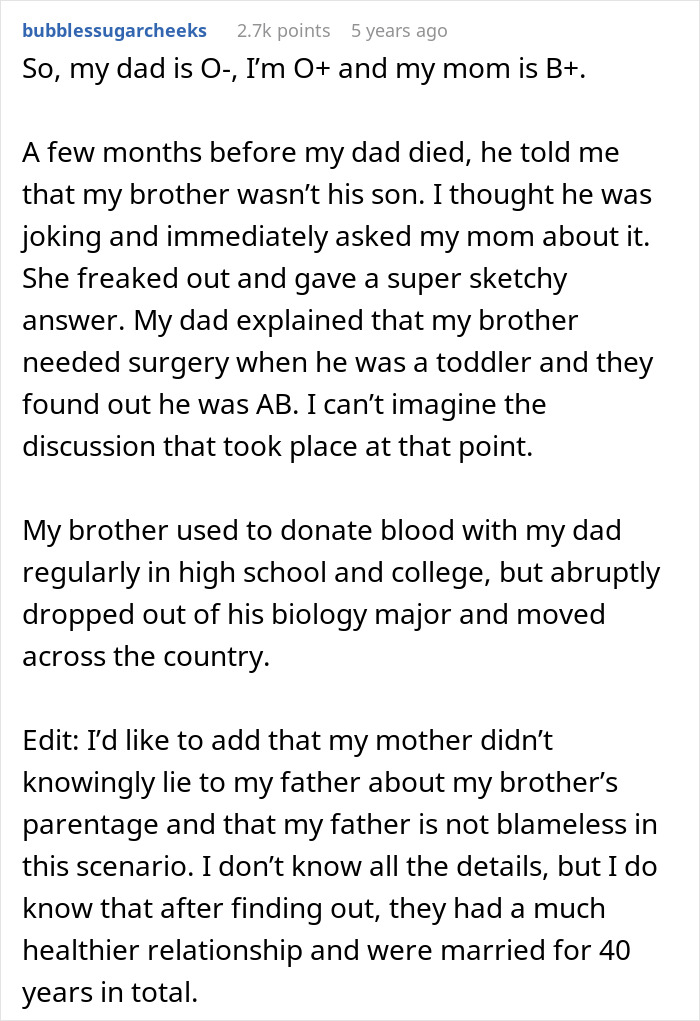
You know it is possible to be a different blood type than your parents. About 1 in every 6500 people have it, and there are genetic reasons for it (you will find that other blood type a generation or two further back). In the old days before DNA testing, they used the blood test to see parentage for courts, bc that was the best they had and the assumed the rarity of the blood types not matching, meant the test was accurate to use. Since DNA testing we do not use that old method. The issue is schools still teach it, without clarifying the rare situations that dont apply. I have a blood type that doesnt match my parents (but DNA shows I am their son from those family DNA testing kits).


Don't do this, my fellow Pandas. A friend of my called me a few years ago, asking whether blood type can change in time. (No previous stem cell transplantation.) It turned out that decades earlier they were told one blood group, and the fresh test gave a different result. My answer was to contact the lab immediately, because either the sample was swapped or the reagent was spoiled. (The fresh result was the correct, and the previously given blood group was the false one.) Even if in the article, it was really the mismatched blood groups that revealed cheating, don't build your judgement over decades-old lab results.
You know it is possible to be a different blood type than your parents. About 1 in every 6500 people have it, and there are genetic reasons for it (you will find that other blood type a generation or two further back). In the old days before DNA testing, they used the blood test to see parentage for courts, bc that was the best they had and the assumed the rarity of the blood types not matching, meant the test was accurate to use. Since DNA testing we do not use that old method. The issue is schools still teach it, without clarifying the rare situations that dont apply. I have a blood type that doesnt match my parents (but DNA shows I am their son from those family DNA testing kits).


















 No fees, cancel anytime
















44
27