Get Premium
Dark mode theme is available exclusively for premium users. Learn more about the benefits of subscribing.
No fees, cancel anytime.

 Dark Mode Ad-Free Browsing Unlimited Content
 Ad-Free Browsing Unlimited Content Dark Mode
Join 1.2 million Panda readers who get the best art, memes, and fun stories every week!

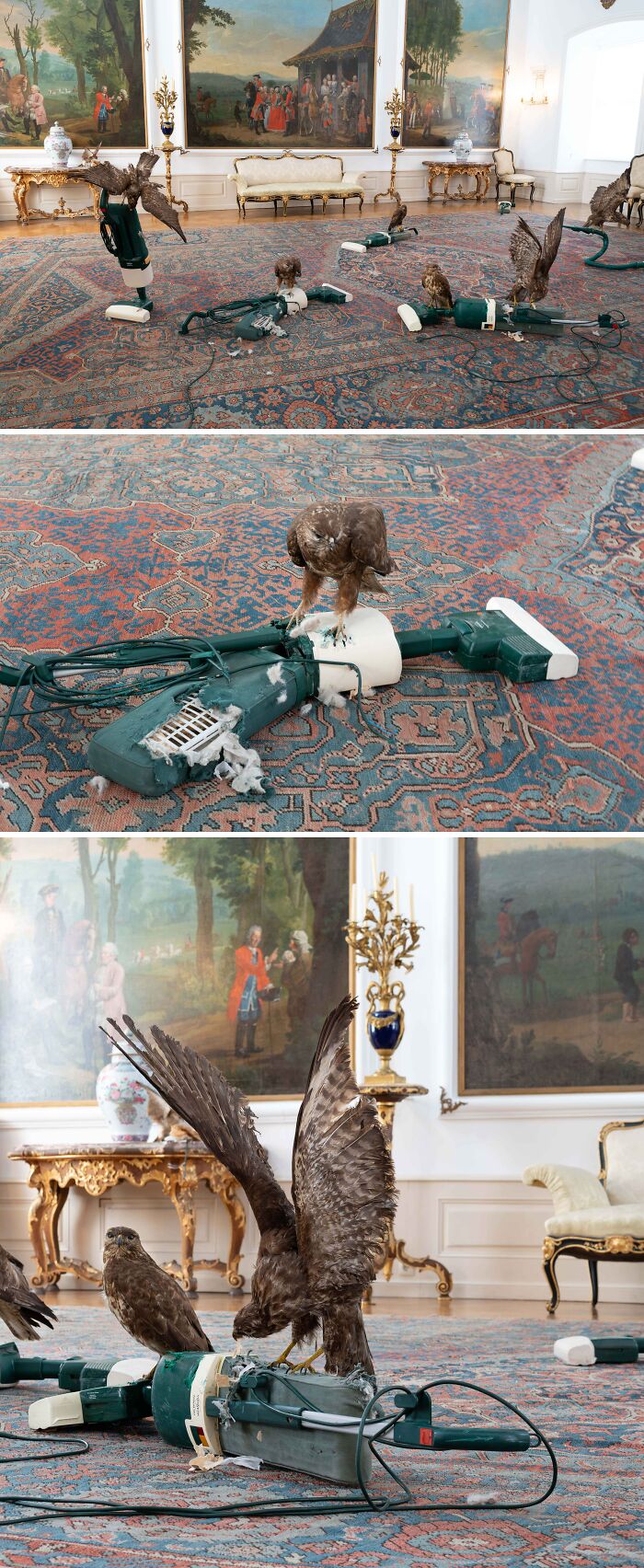
Art doesn’t always have to be subtle, and Marcel Walldorf’s creations are proof of that. His works are bold, strange, and sometimes even a little uncomfortable, but that’s exactly the point. By working with familiar objects, the artist transforms them into something unexpected, forcing viewers to step back and reflect on what they’re seeing.
Walldorf is a German artist known for blending humor, absurdity, and social commentary in his sculptures and installations. His work often explores human behavior, power, and societal norms, using irony and exaggeration to highlight things we usually overlook.
There’s often a sense of tension in his pieces, something that feels both familiar and slightly off at the same time. That mix of realism and absurdity is what makes his art so engaging and encourages viewers to interpret it in their own way.
Scroll down to explore some of Marcel Walldorf’s creations we’d like to highlight today, and to read our interview focusing on his taxidermy-based works. While they may seem shocking at first glance, they carry deeper messages beneath the surface.
More info: Instagram | marcel-walldorf.com
This post may include affiliate links.
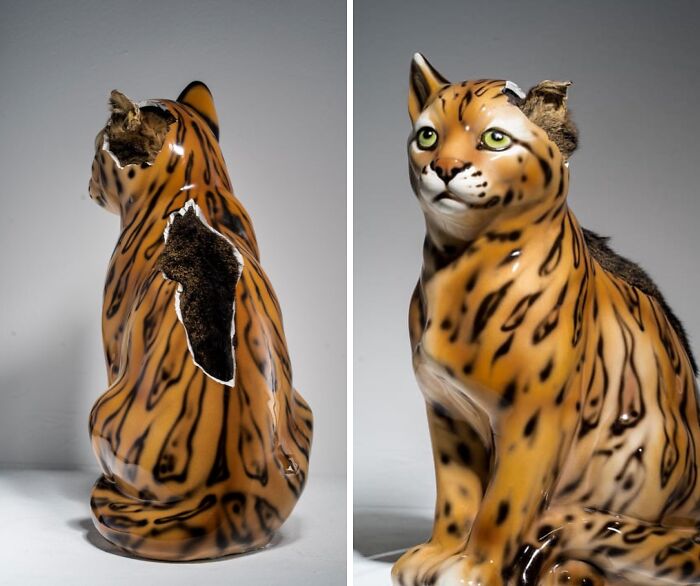
Bored Panda got in touch with Marcel Walldorf to learn more about the ideas behind his unusual and thought-provoking works, especially his series of mixed-media sculptures based on porcelain dog figurines. The artist explained that animals have long been a recurring motif in his work: "What interests me about them is that – much like in fairy tales or fables – they can reveal human contradictions, projections, power relations, care, absurdity, and vulnerability much more precisely than a direct representation of the human figure often can. Domestic animals in particular, such as dogs, cats, or horses, are emotionally charged and immediately familiar to most people. That is exactly what opens a door: through them, social and societal questions can be addressed without the work becoming closed off or overly theoretical from the outset."
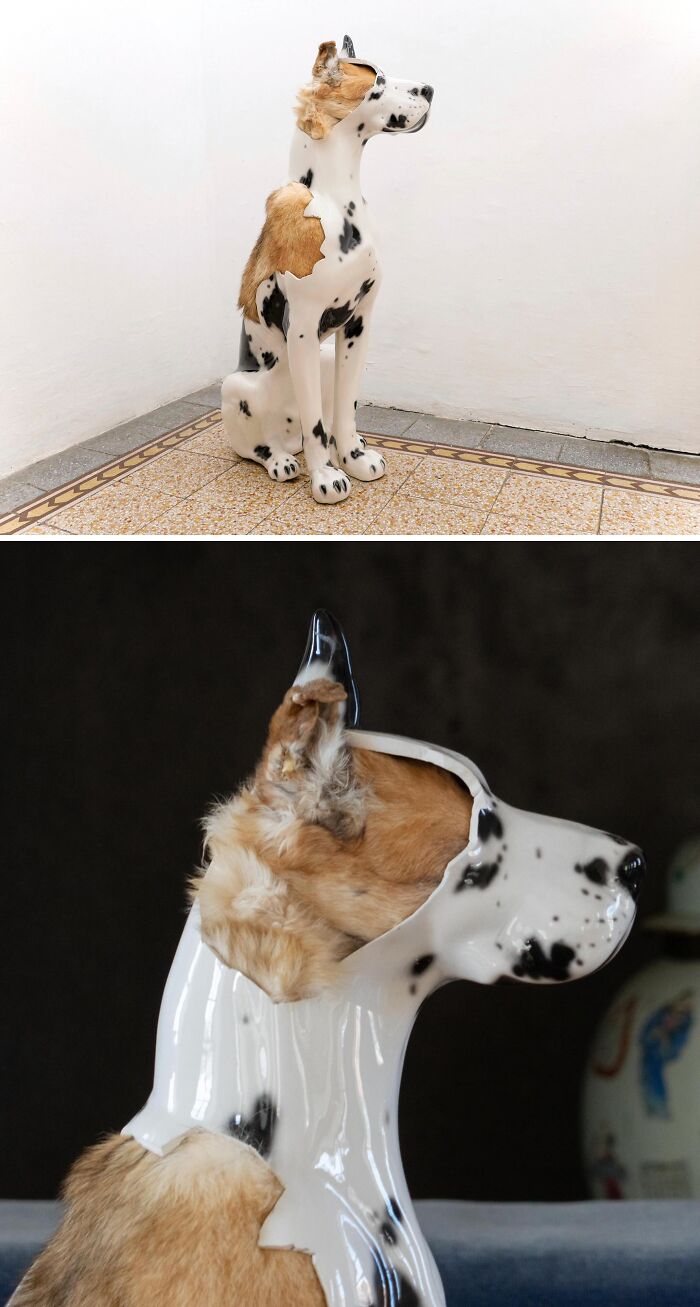
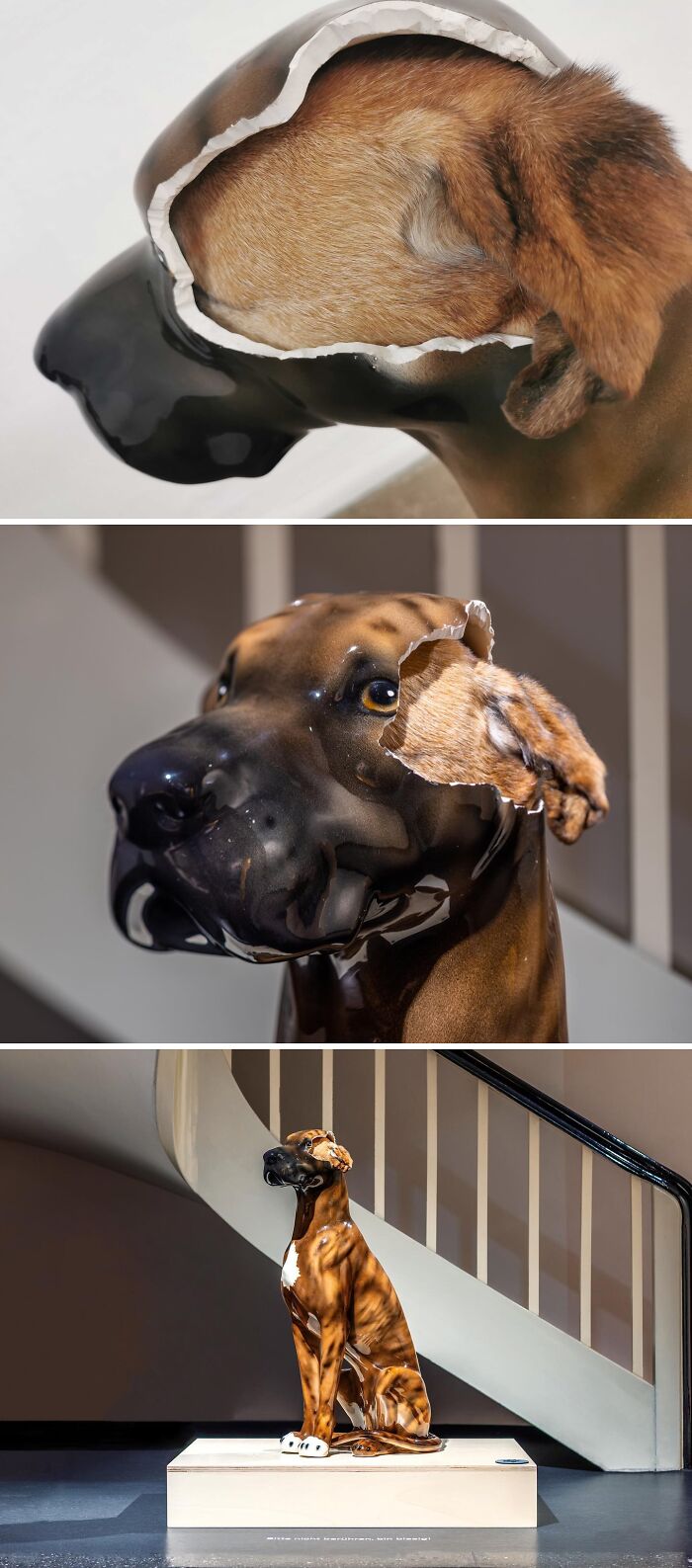
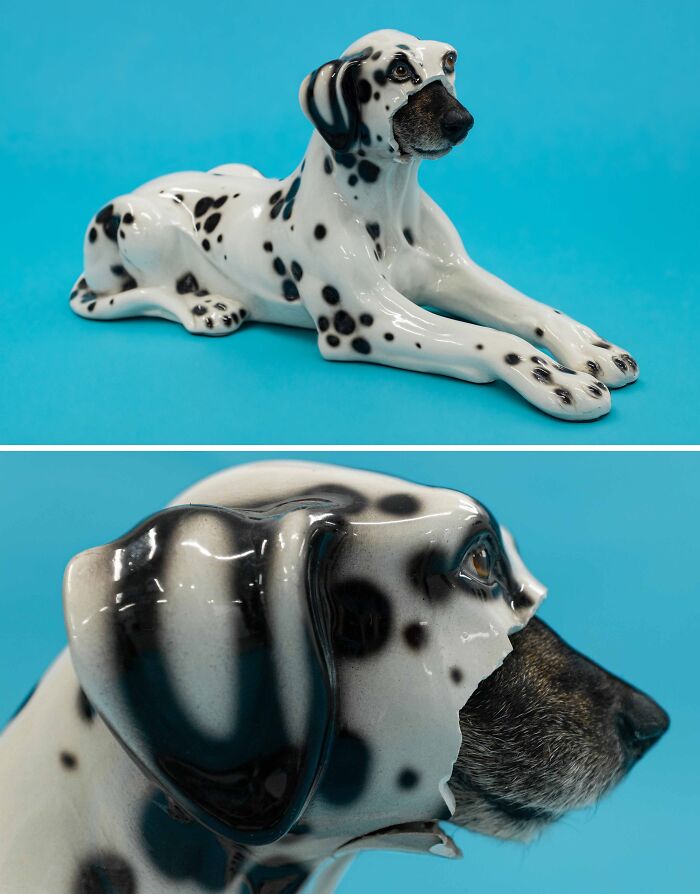
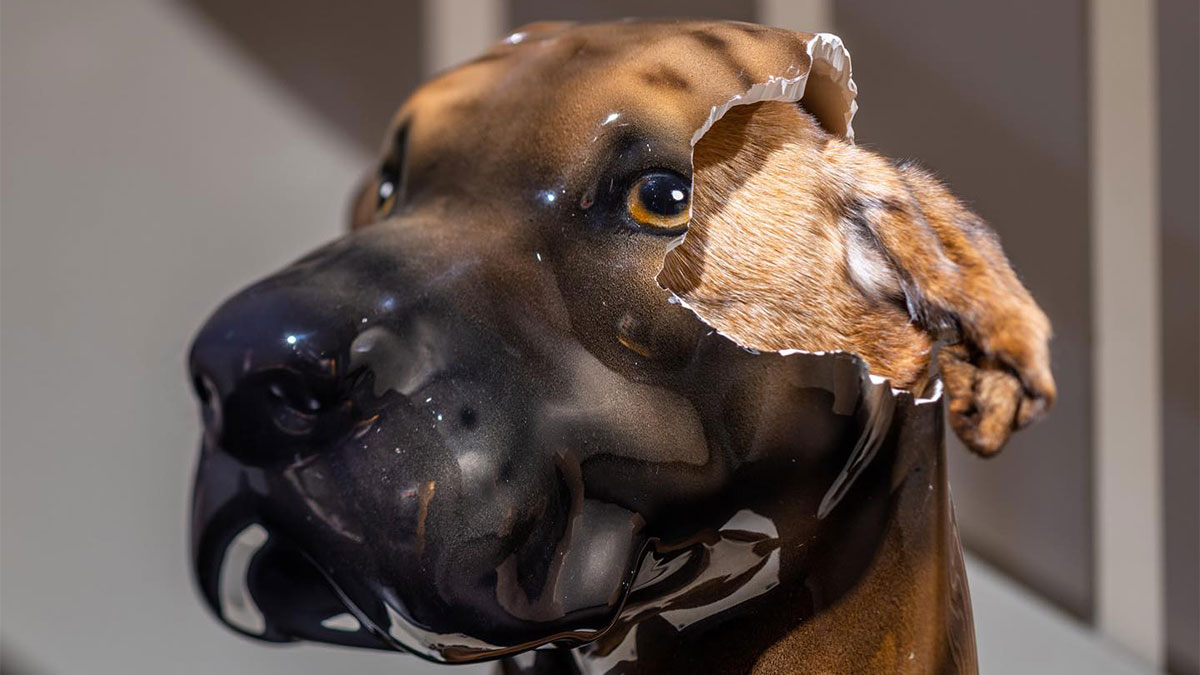
The sculpture entitled "Donatella" shows a human’s best friend trapped in a glazed porcelain replica of himself. Only in a few places can it be seen that this is a "real" living creature. “I’m interested in such ambivalent aesthetics. The work explores inner conflict, one’s own double standards, the tension between wanting to please and looking beautiful, and an authentic personality. The work also deals with the so-called tolerance of ambiguity, the ability to withstand cultural contradictions and adhere to social conventions, and always function."
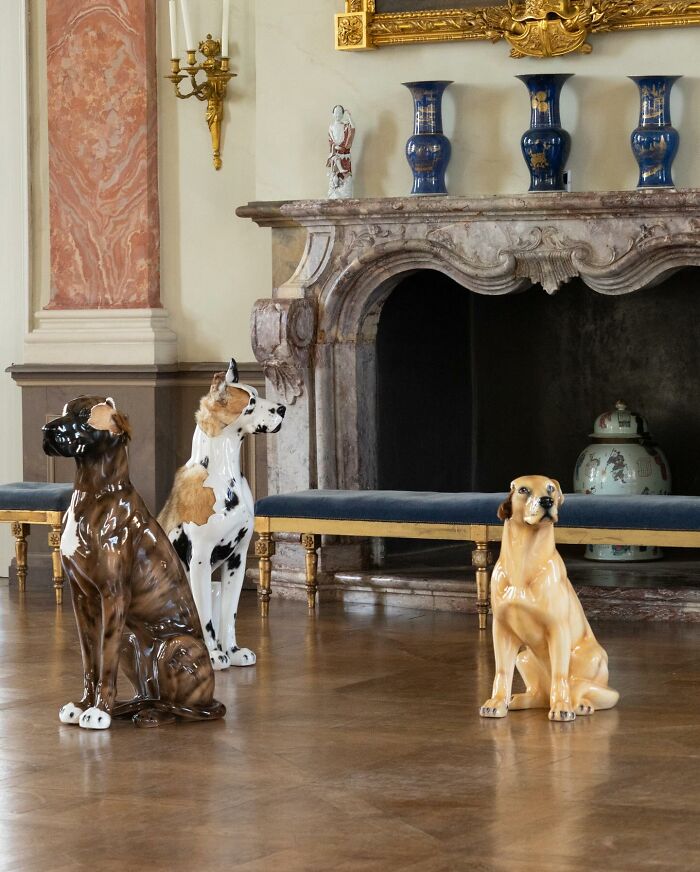
The artist shared that porcelain dogs held a particular fascination because of the meanings they already carry. "They come from a world of decoration, sentimentality, mass production, and a very tamed idea of taste. They are objects produced to be pleasing: smooth, harmless, polished, without edges, without resistance. In that sense, they do not simply depict a dog, but also show how something living is translated into a socially acceptable, pleasing form. The dog also becomes a stand-in for the human being in society."
Italian porcelain, taxidermied dog. 95 x 30 x 40 cm.
Walldorf also told Bored Panda, he’s drawn to the tension these figures create: "What interests me is precisely this tension between affection and control, between emotional attachment and normalization. At first glance, these figures may appear cute or nostalgic, but they also contain a desire for compliance, readability, and for a being that does not disturb. That is where their social dimension lies for me. I am interested in the moment when this smooth surface begins to shift and it becomes visible that beneath adaptation, something singular, wild, and unavailable is always still alive."
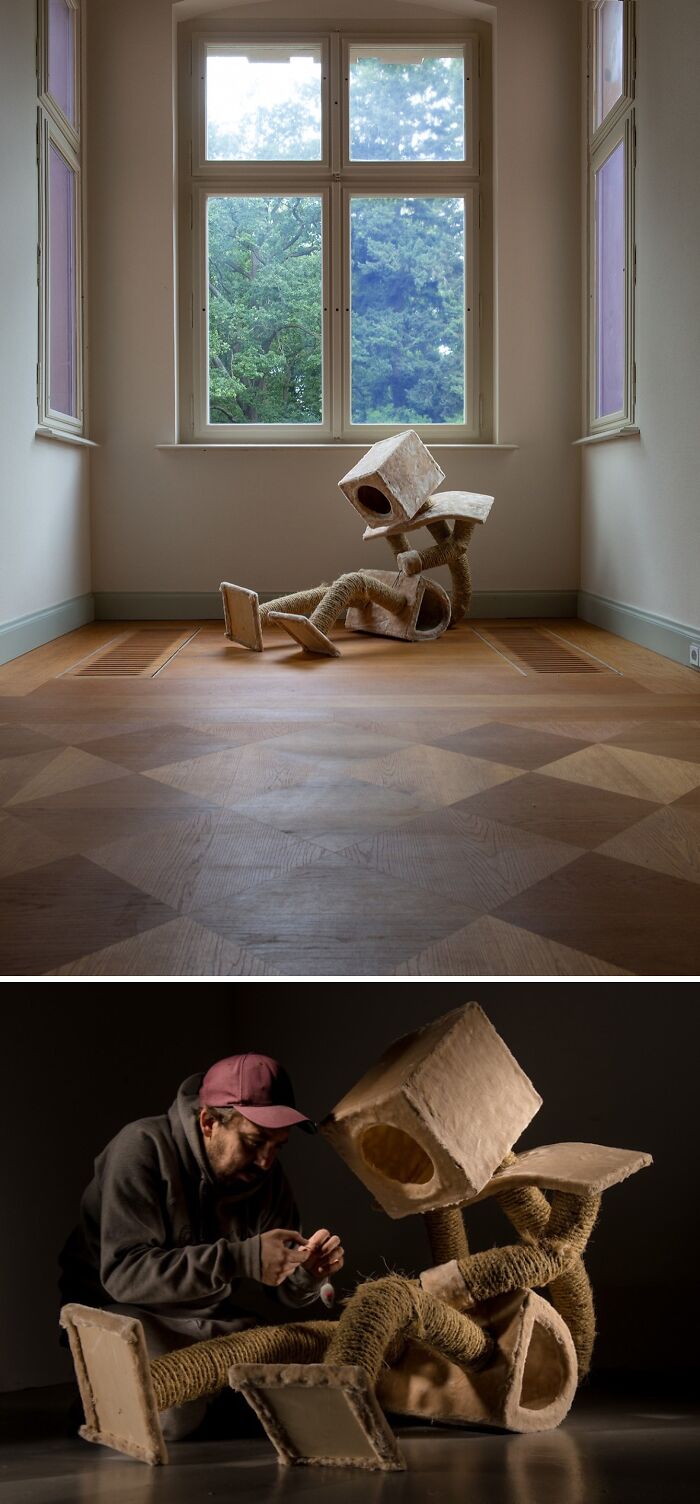
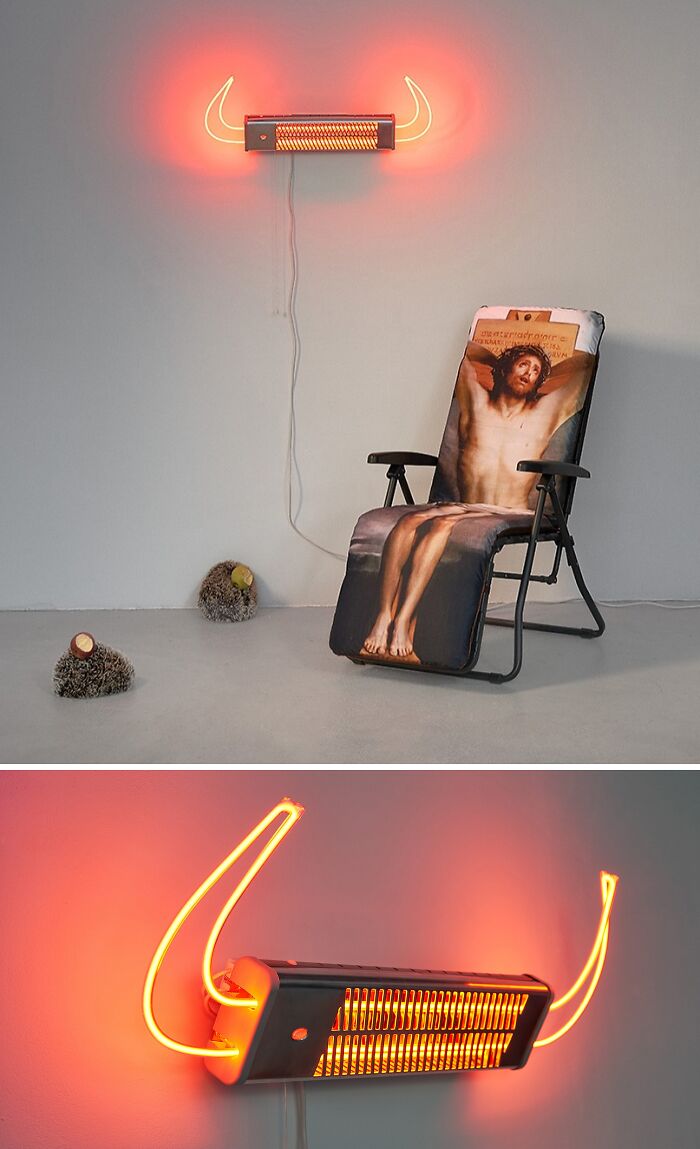
Neon light, heater housing, fake food, a relaxation chair, and fabrics. Room installation, dimensions variable.
Discussing his process, the artist highlighted the contrast between traditional sculpture and taxidermy: "Traditional sculptural materials such as porcelain, plaster, or epoxy give me a high degree of control. I can sharpen forms, smooth them, exaggerate them, or deliberately break them. Taxidermy, by contrast, brings a very different kind of presence. Nothing can be claimed or faked there. It is what it is. That is exactly where its particular power lies for me. It appears alive, while at the same time you know that it is dead. This double perception creates a hard-to-grasp feeling somewhere between attraction and repulsion, fascination and unease."
He added, "Taxidermy cannot simply be handled like a classical material. It has its own resistance and a reality that cannot be fully controlled. That is precisely why it meets porcelain in such a particular way, because porcelain tends to stand for smoothness, decoration, and social agreeableness. I am interested in that friction: when something extremely controlled meets something extremely real."
Walldorf also emphasized that no animals are harmed for his art, and told us: "It is very important for me to state clearly, though: no animal has ever had to die for my art. The animals used come from veterinary clinics, were euthanized, and released for artistic work. I stand by that completely."
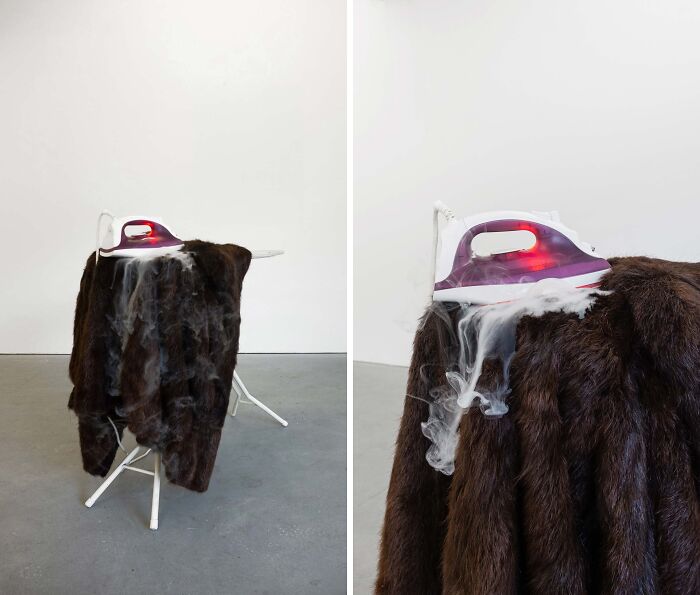
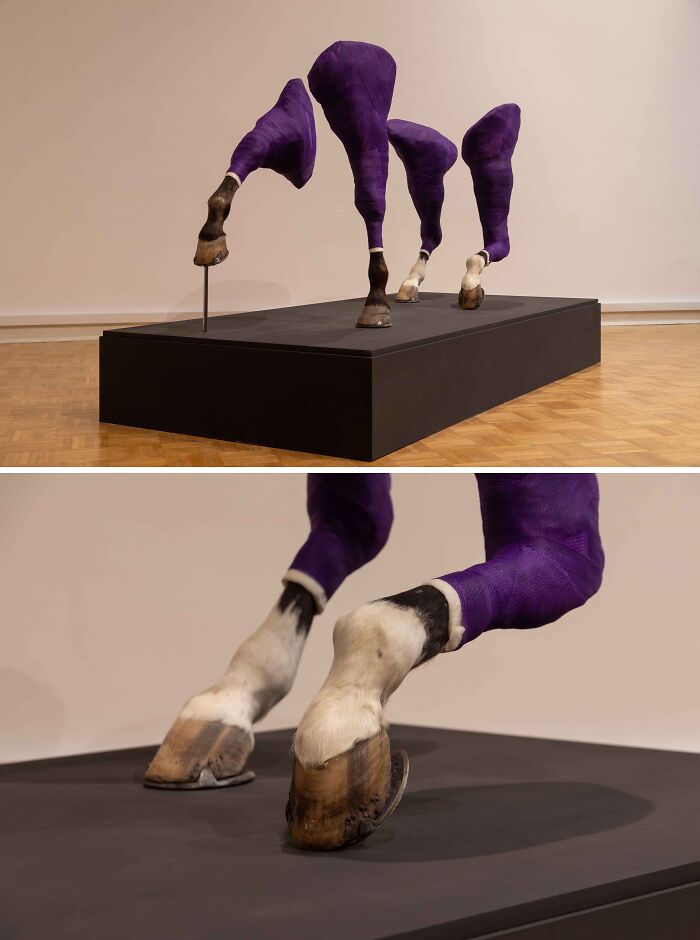
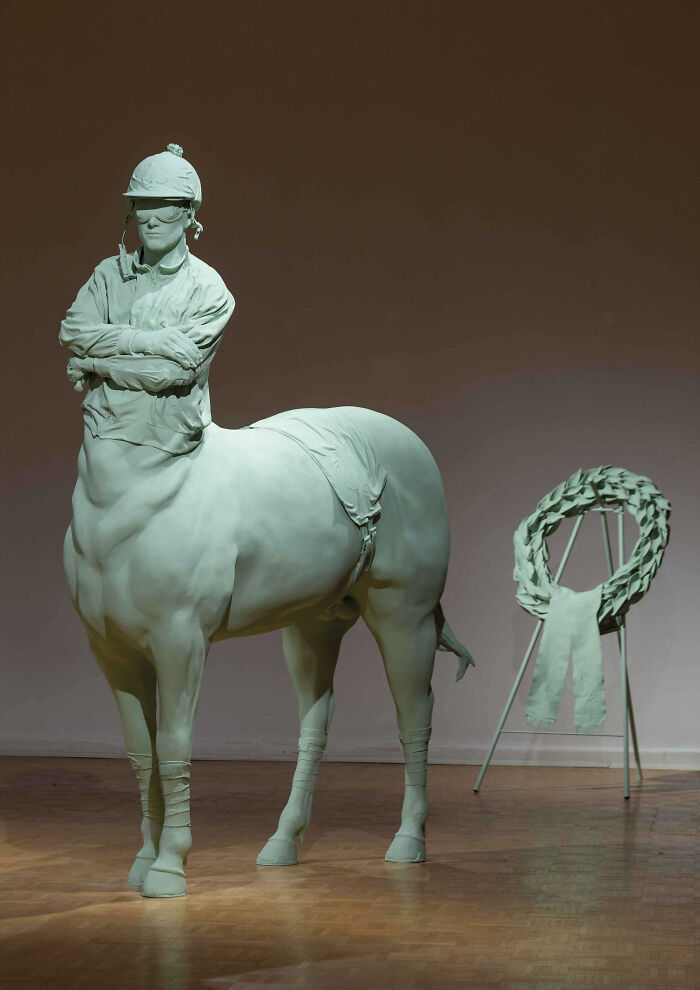
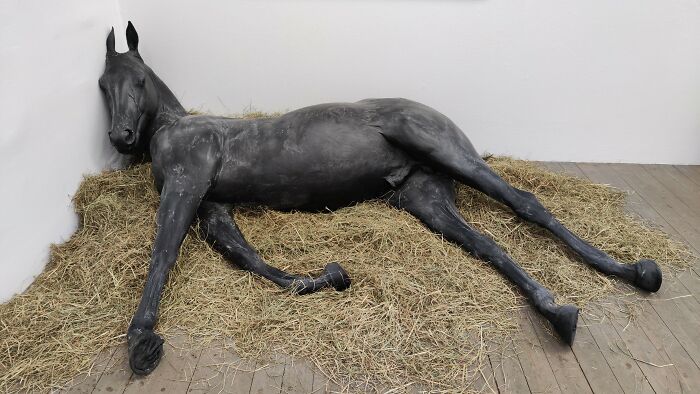
105x200x70cm, prepared horse legs, metal, polyurethane, and plastic bandages.
The artist noted that viewers often react strongly, especially when dogs are involved: "Many people immediately see only the shock or the projection, but no longer the construction of the image. That is exactly what interests me: that moment in which an emotion becomes so strong that it blocks questioning."
For Walldorf, the work isn’t about shock alone, but reflection: "I do not want to shock people. What interests me much more is that a work may first function through a strong emotional reaction and then perhaps open up a second step: the step of reflection. Ideally, people realize that it is not only about dogs, but also about ourselves."
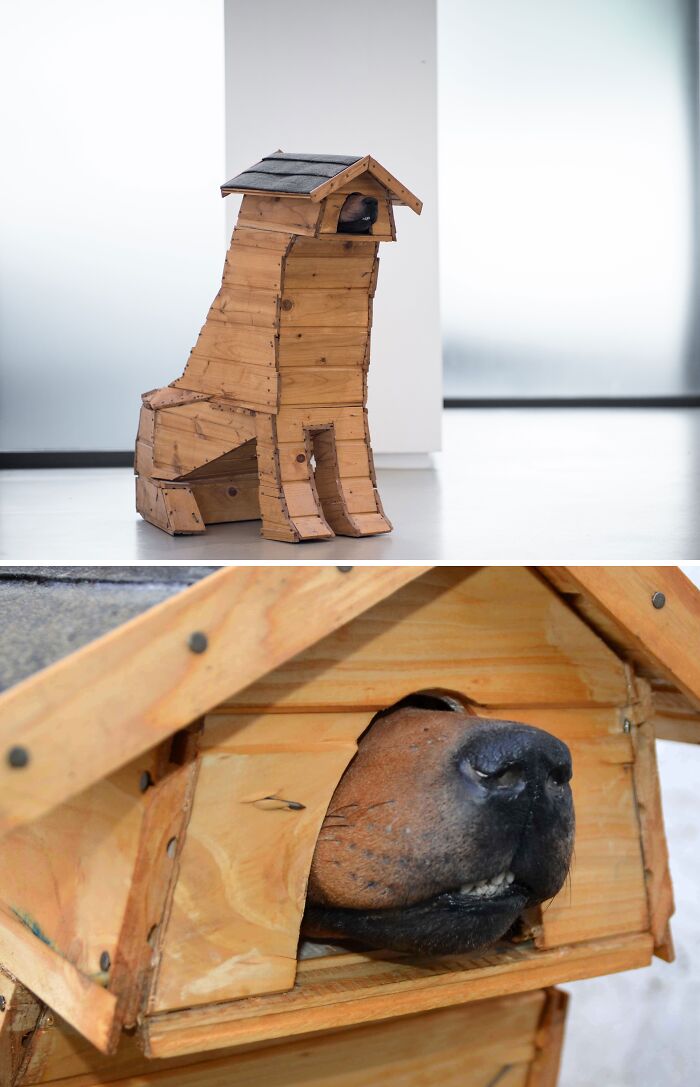
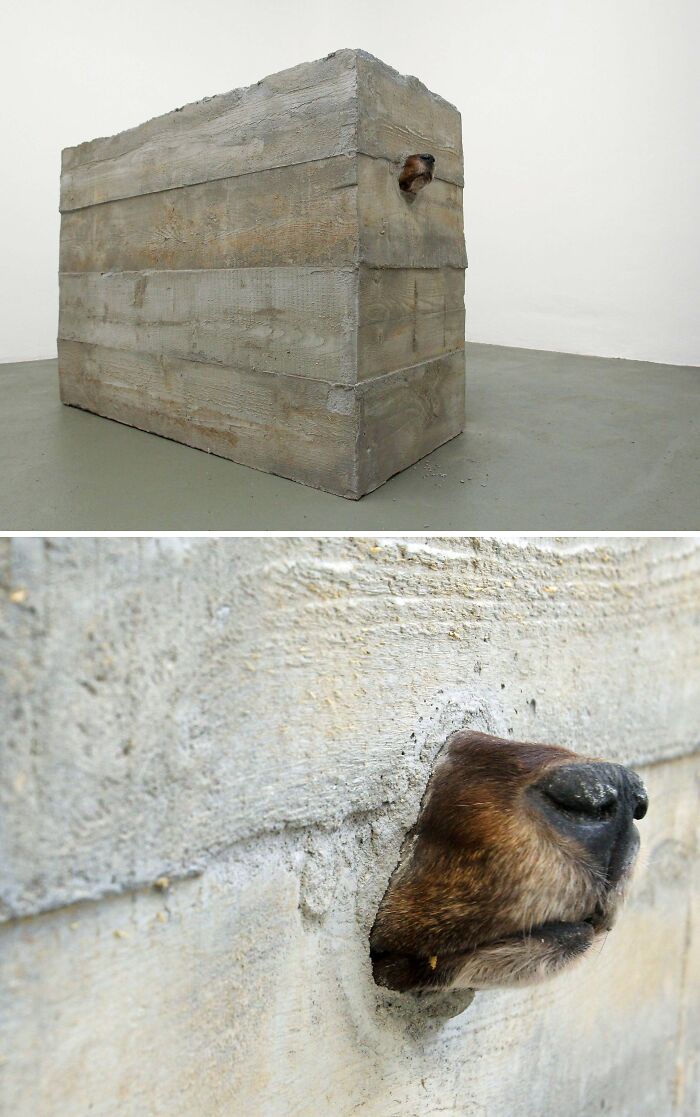
Wood, metal, roofing felt, wood protection glaze, and a taxidermied dog snout. 90 x 55 x 75 cm.
"For me, the porcelain dogs are stand-ins. They show how something living is translated into a smooth, pleasing, socially acceptable form. And that can be applied very directly to human beings as well. We, too, are often expected to be compliant—not too loud, not too contradictory, not too headstrong. Everything should remain readable, controllable, and as frictionless as possible.”
Finally, Marcel said: “What interests me, however, is precisely what cannot be fully smoothed out. The authentic, the raw, the uncontrolled do not simply disappear. If they are suppressed for too long, they eventually force their way back out. To me, that is almost a natural movement. Just as nature reclaims spaces, what has been repressed also returns. Perhaps that is the central idea of the series: that beneath every smooth surface, something singular, wild, and truthful continues to live.”
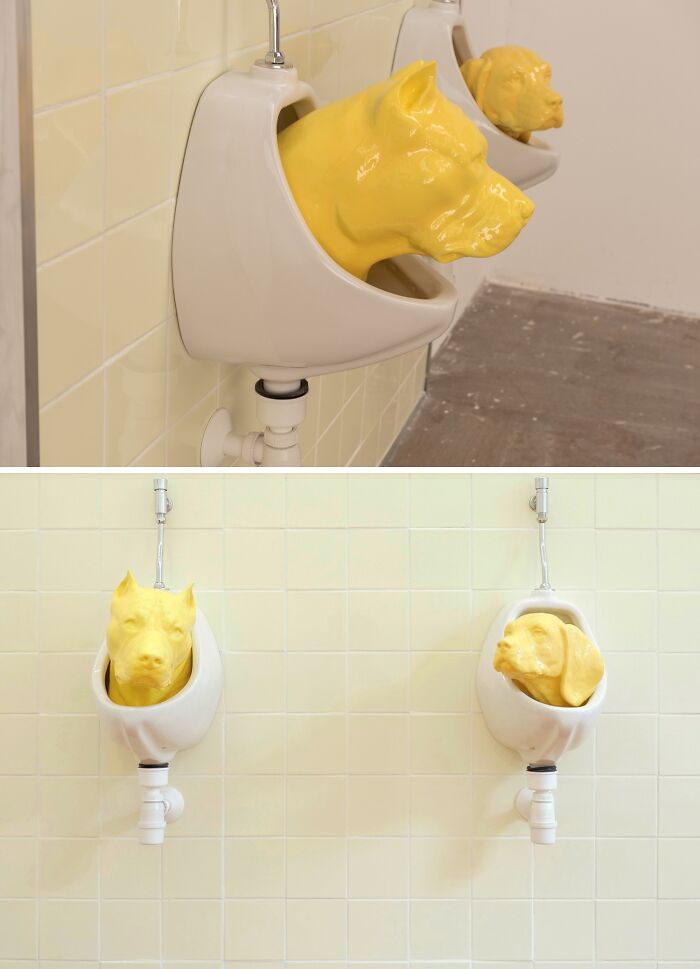
Material: porcelain, ceramic, epoxy, metal, wood, lacquer. Dimensions: 200 x 130 x 50 cm. "The artwork is a parody of male behavior in the toilet. The idea behind this representation is an associative staging of a secret comparison of manhood between men while going to the toilet together. This work is a satire of patriarchy and the urinal as the last surviving bastion of supposedly superior masculinity."
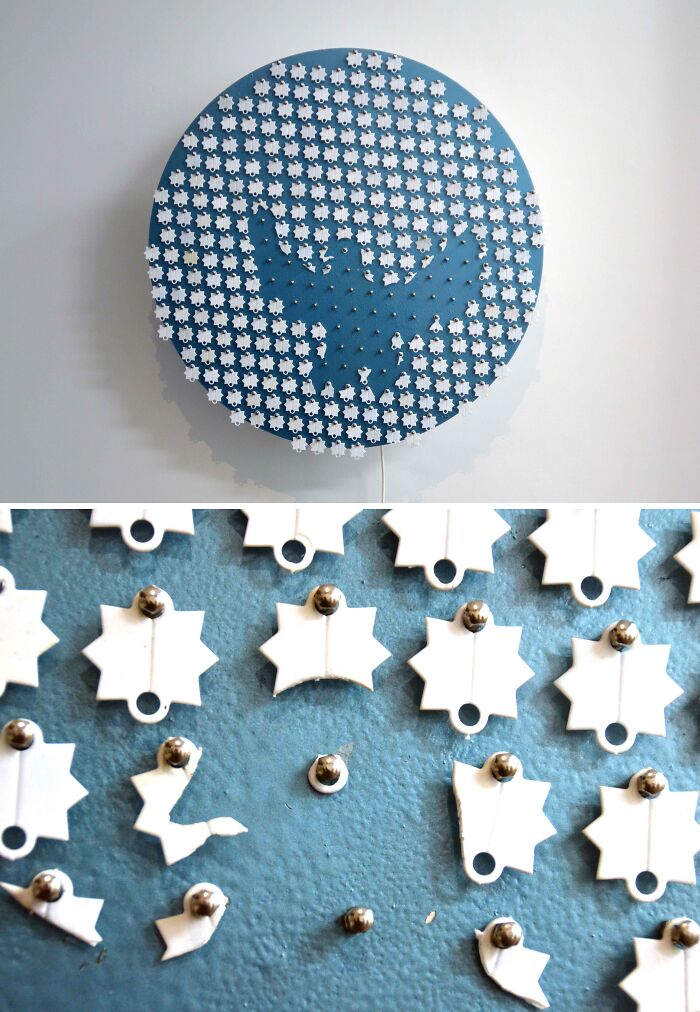
Metal, plastic, paint, electric motor, sound reproduction. 100 x 100 x 25 cm. A slowly rotating target with plastic stars. In a certain position of the turntable, the shooting stars form the image of a dove of peace for a very short moment.
Concrete, taxidermied dog's snout, sound and movement equipment. 110 x 130 x 55 cm. The dog´s snout moves, sniffs, and howls.
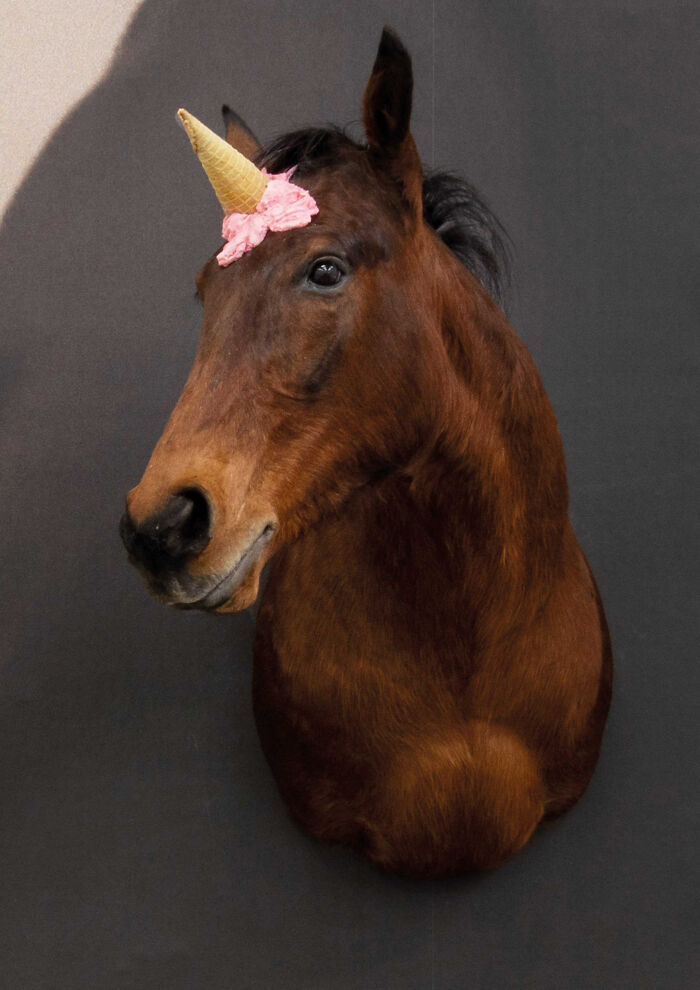
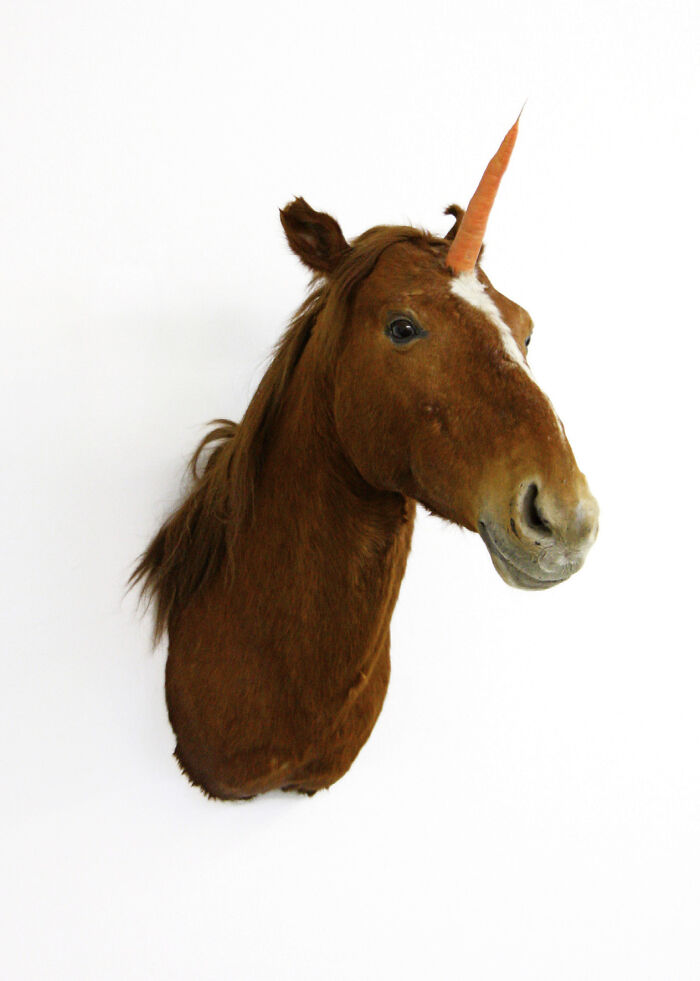
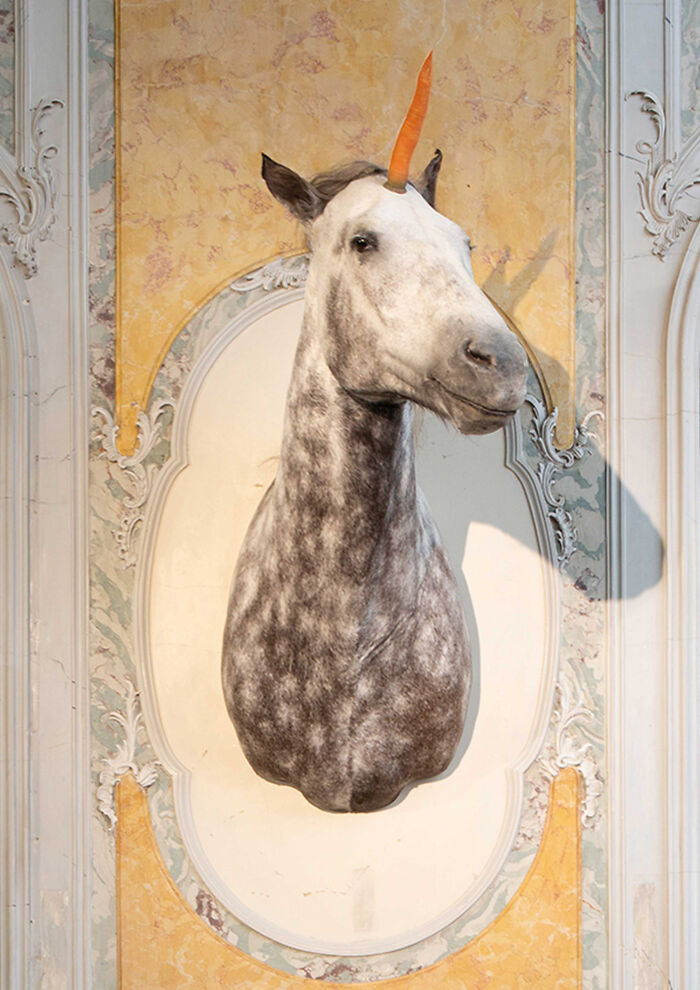
Taxidermied horse head, silicone. Life-size.
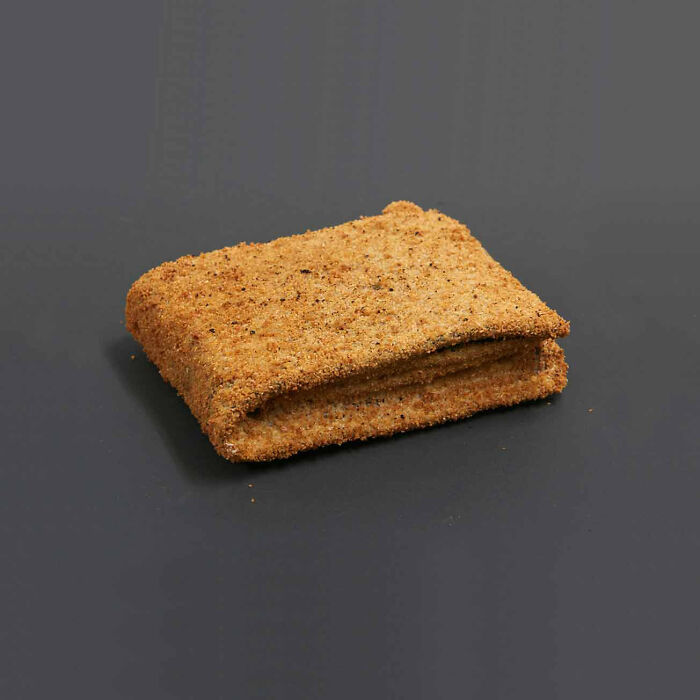
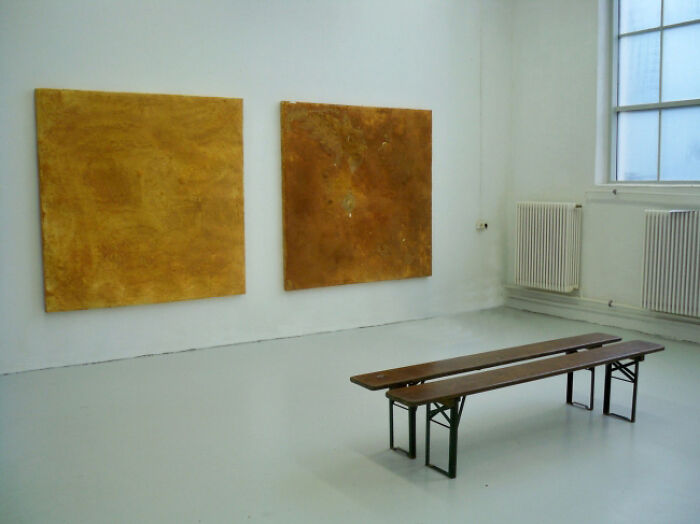
Eggs, breadcrumbs, canvas, frying oil,
each 200 x 200 cm.
Traditionally breaded and fried canvasses.
The art is well made but as a dog rescuer and I have seen some awful things, this is very triggering.
The art is well made but as a dog rescuer and I have seen some awful things, this is very triggering.







 No fees, cancel anytime