Get Premium
Dark mode theme is available exclusively for premium users. Learn more about the benefits of subscribing.
No fees, cancel anytime.

 Dark Mode Ad-Free Browsing Unlimited Content
 Ad-Free Browsing Unlimited Content Dark Mode
Join 1.2 million Panda readers who get the best art, memes, and fun stories every week!
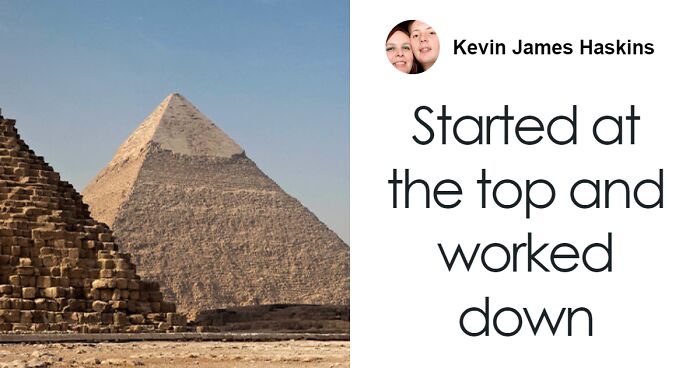
For years, scientists have wondered how ancient Egyptians transported the heavy stone blocks used to build the world-famous Giza complex over 4,000 years ago.
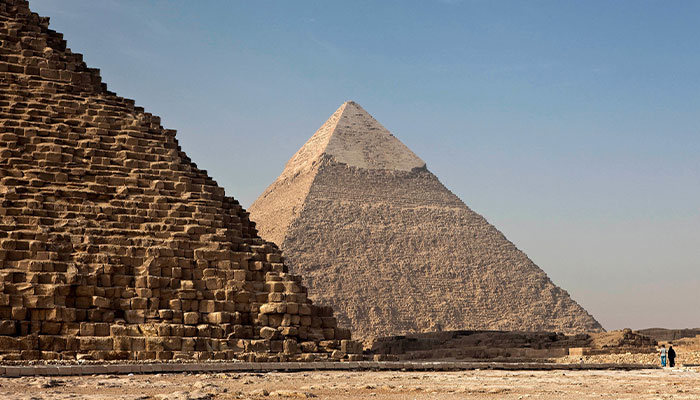
Now, they may have found the answer in a long-lost, ancient branch of the River Nile that once flowed alongside more than 30 pyramids in the northeastern corner of Africa.
A team from the University of North Carolina Wilmington used radar satellite imagery, historical maps, geophysical surveys, and sediment coring (a technique used by archaeologists to recover evidence from samples) to map the river branch, as per the BBC.
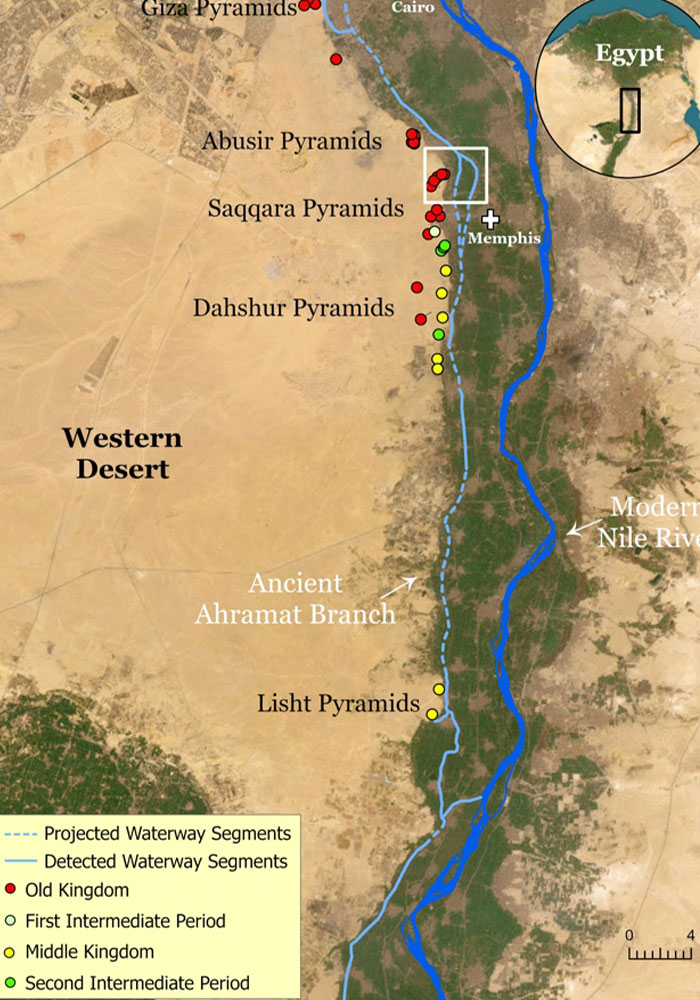
Image credits: CNN
The international team of researchers, who published their study in the Communication Earth & Environment journal on May 16, suggested that the ancient river branch was buried by a major drought and sandstorms around 4,200 years ago.
The river branch, named the Ahramat branch, with “ahramat” meaning pyramids in Arabic, was roughly 64km (39 miles) long and between 200-700m (656-2,296 ft) wide.
It bordered 31 pyramids (including the Great Pyramid of Giza, the largest Egyptian pyramid and oldest of the Seven Wonders of the Ancient World), which were built between 4,700 and 3,700 years ago.
Image credits: CNN
Scientists have long theorized that ancient Egyptians may have used a nearby waterway to transport the enormous materials needed to build the pyramids.
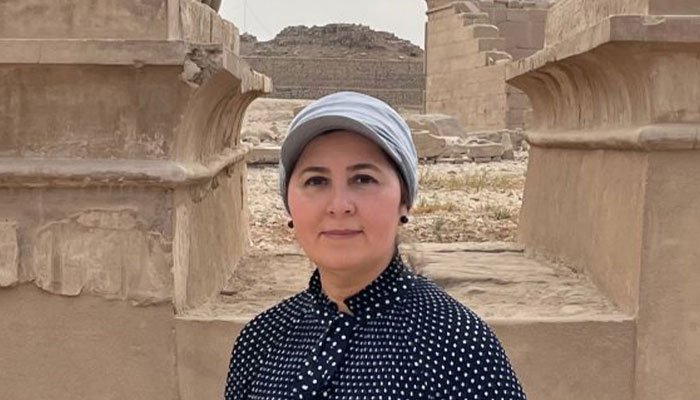
“But nobody was certain of the location, the shape, the size or proximity of this mega waterway to the actual pyramids site,” lead study author Eman Ghoneim of the University of North Carolina Wilmington in the United States told AFP.
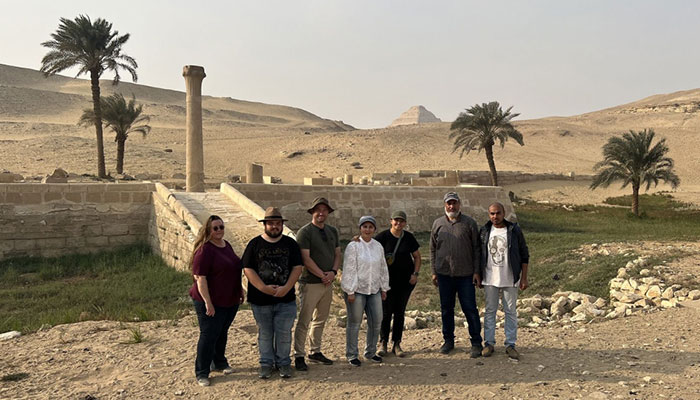
Image credits: Eman Ghoneim
“Locating the actual [river] branch and having the data that shows there was a waterway that could be used for the transportation of heavier blocks, equipment, people, everything, really helps us explain pyramid construction,” Dr Suzanne Onstine, one of the study’s co-authors, told the British broadcaster.
Image credits: Freepik
The existence of the river branch would explain why the 31 pyramids were built in a chain along a now inhospitable area of the Nile Valley.
Onstine added: “The discovery reminded me about the intimate connection between geography, climate, environment and human behavior.”


Just to remind people that they did not use slaves. The labourers were well paid and looked after.

They weren't paid in "money" as that concept hadn't been introduced yet, at least not in Egypt. But they were paid for in food, lodgings, and other necessities for themselves and their families,. And they complained, in writing, about the quality.
Load More Replies...
On a side note... 'ancient aliens'-theories always bother me. They are so racist! Ancient Rome and Greece have fabulous and very ancient buildings too, and there are plenty others around Europe (Stonehenge...). I have never heard or seen an ancient alient theories about these.

I dislike the alien theories too, but I’ve heard theories about aliens or previous civilisations secretly having power tools. I think I remember somebody on YouTube making a short debunking a guy who said the seven hundred years in the making Cologne Cathedral was made with power tools.
Load More Replies...
For anyone ignorant enough to dismiss how easy it is to move large stones, look up NOVA on youtube, "Secrets of Lost Empires". They show how in multiple places around the world (Egypt, Rome, Peru, England, Rapa Nui, etc.) that civilizations moved large stones without modern machinery. How do they prove it? BY MOVING 10-20 TON ROCKS with the tools available 2000-5000 years ago. The most interesting was the Pacific Islands, moving multiton rocks long distance with just canoes.
Just to remind people that they did not use slaves. The labourers were well paid and looked after.
They weren't paid in "money" as that concept hadn't been introduced yet, at least not in Egypt. But they were paid for in food, lodgings, and other necessities for themselves and their families,. And they complained, in writing, about the quality.
Load More Replies... On a side note... 'ancient aliens'-theories always bother me. They are so racist! Ancient Rome and Greece have fabulous and very ancient buildings too, and there are plenty others around Europe (Stonehenge...). I have never heard or seen an ancient alient theories about these.
I dislike the alien theories too, but I’ve heard theories about aliens or previous civilisations secretly having power tools. I think I remember somebody on YouTube making a short debunking a guy who said the seven hundred years in the making Cologne Cathedral was made with power tools.
Load More Replies... For anyone ignorant enough to dismiss how easy it is to move large stones, look up NOVA on youtube, "Secrets of Lost Empires". They show how in multiple places around the world (Egypt, Rome, Peru, England, Rapa Nui, etc.) that civilizations moved large stones without modern machinery. How do they prove it? BY MOVING 10-20 TON ROCKS with the tools available 2000-5000 years ago. The most interesting was the Pacific Islands, moving multiton rocks long distance with just canoes.




































 No fees, cancel anytime












75
20