Get Premium
Dark mode theme is available exclusively for premium users. Learn more about the benefits of subscribing.
No fees, cancel anytime.

 Dark Mode Ad-Free Browsing Unlimited Content
 Ad-Free Browsing Unlimited Content Dark Mode
Join 1.2 million Panda readers who get the best art, memes, and fun stories every week!

Someone who respects you might make a request, but never a demand. There are moments when people, even your relatives, behave in such an entitled way that all you can do is stop and stare, completely stunned, as they ignore any decency and trample all over your boundaries.
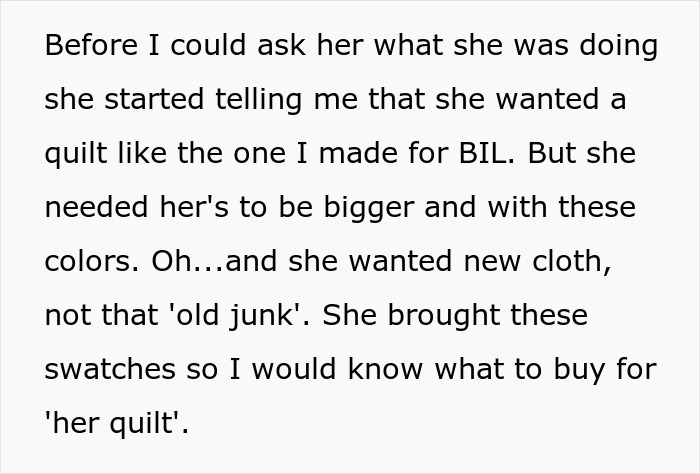
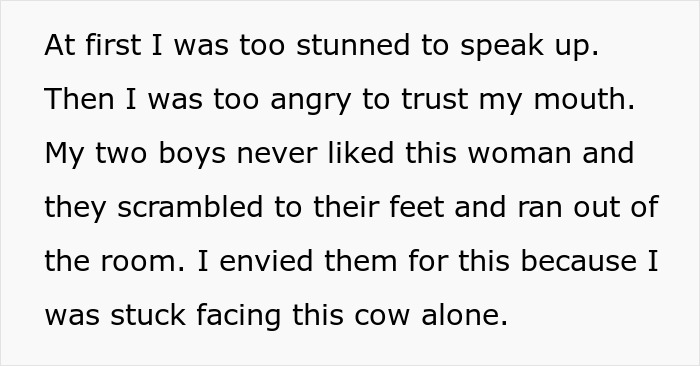
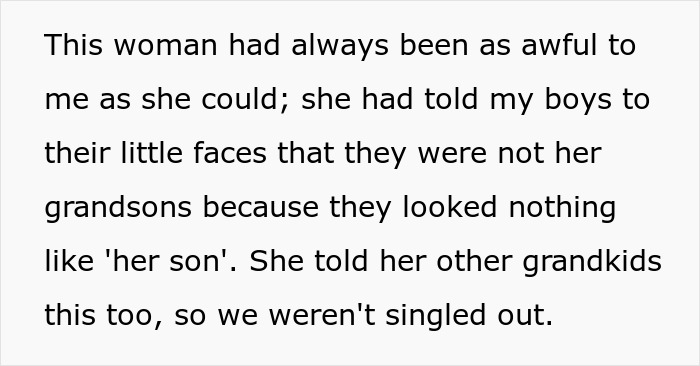
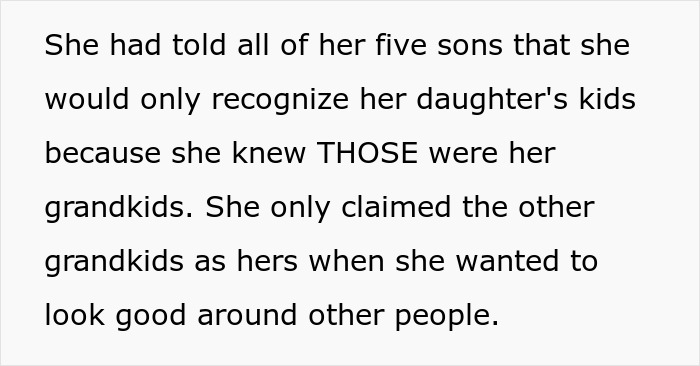
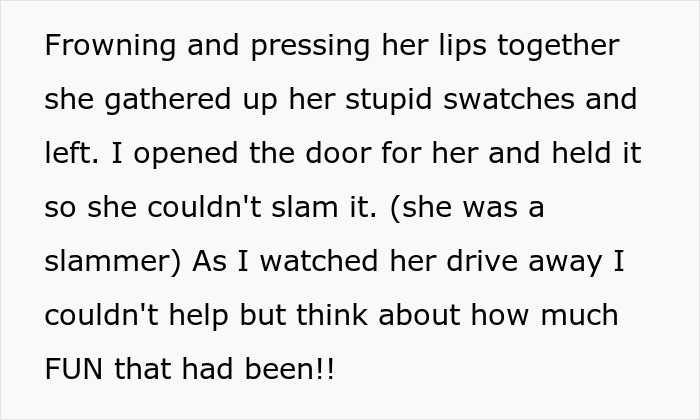
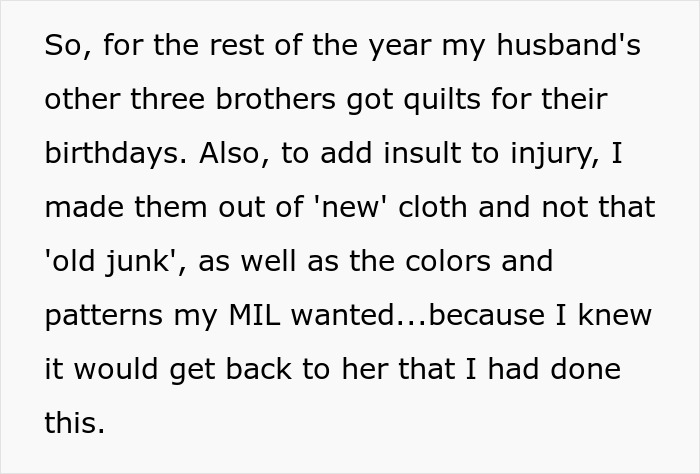
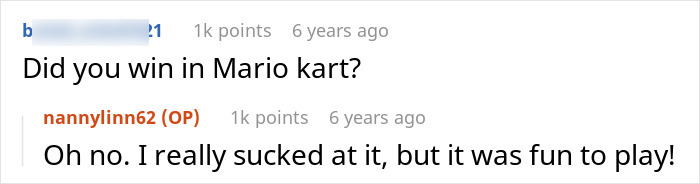
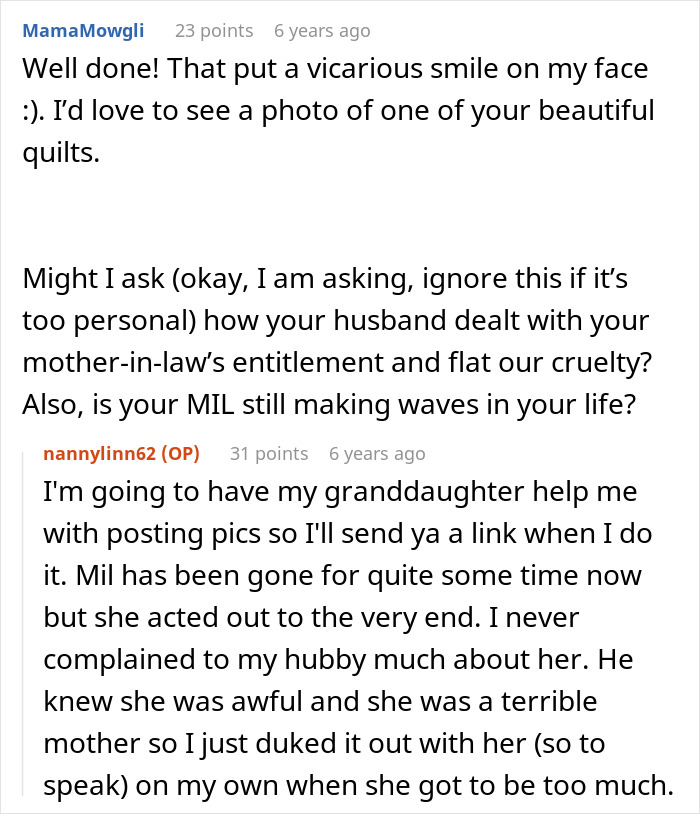
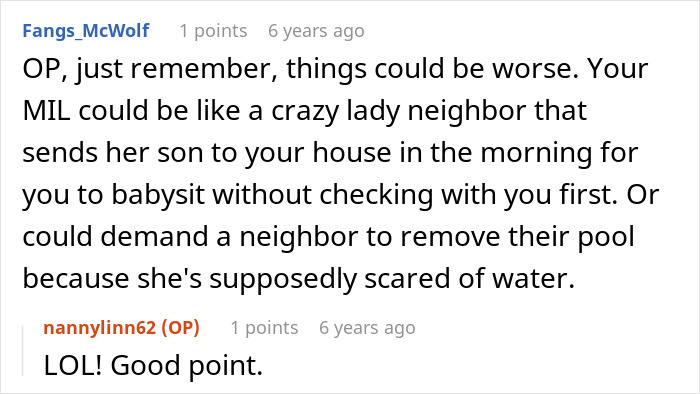
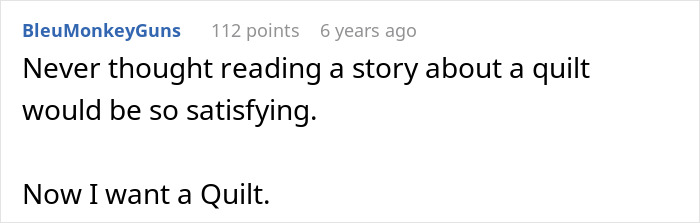
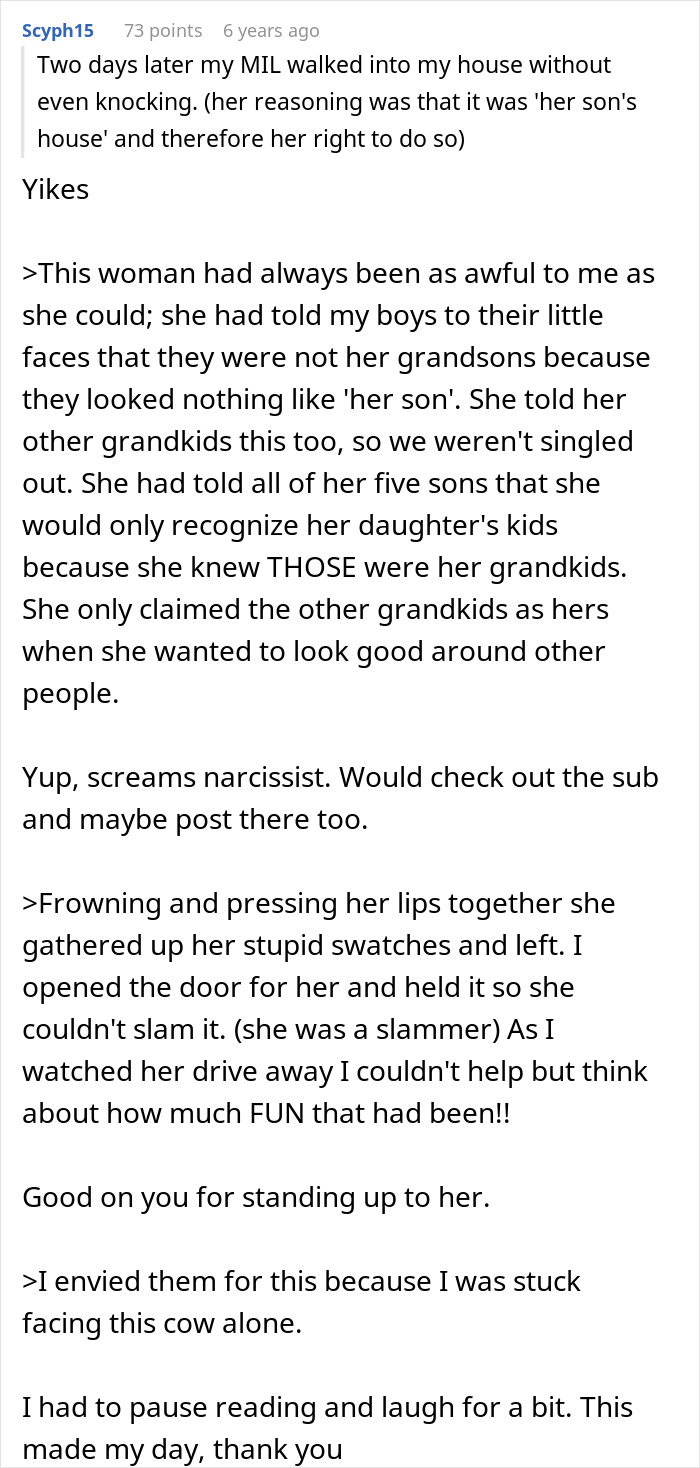
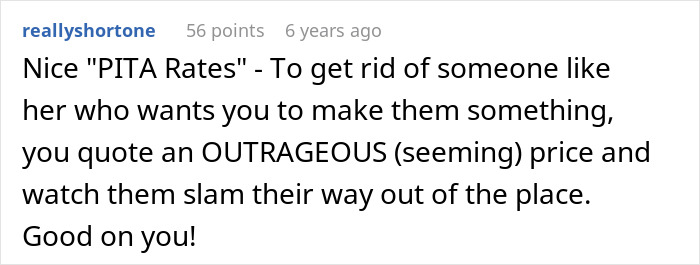
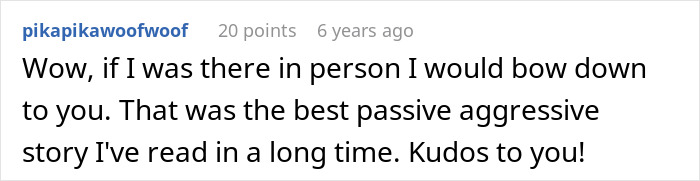
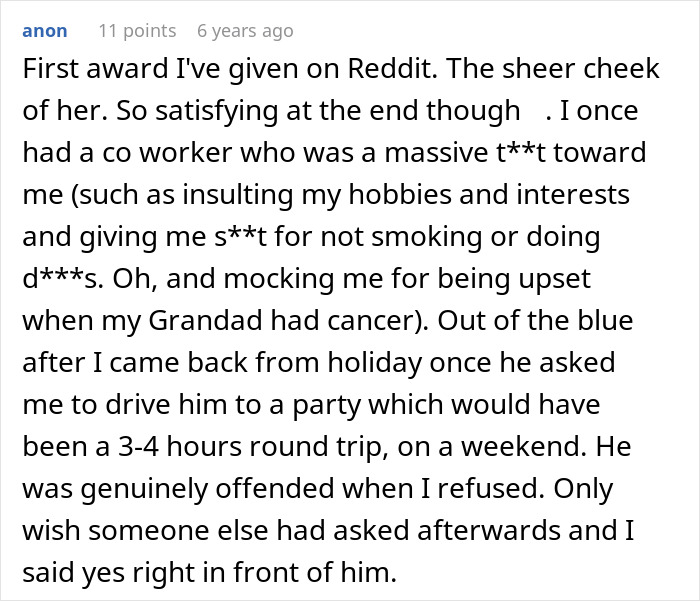
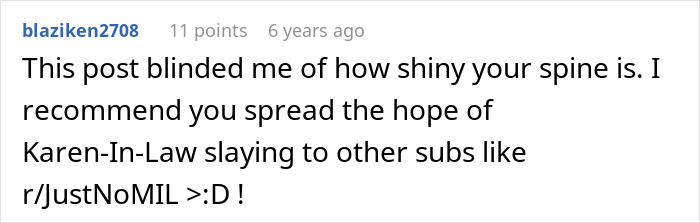
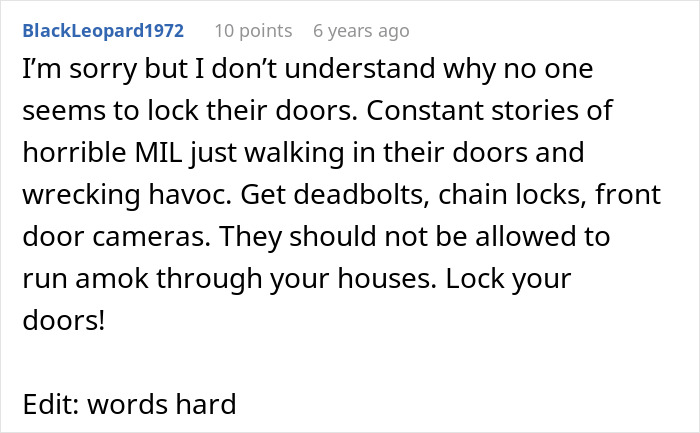
Internet user u/nannylinn62 entertained the internet with a story about how she resorted to epic passive-aggressive behavior to put her toxic, overly entitled mother-in-law in her place. And the drama all started with a hand-made quilt that the MIL envied. Let’s get into it.
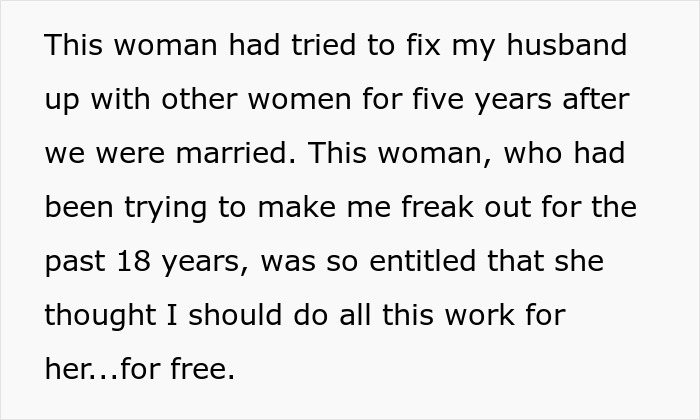
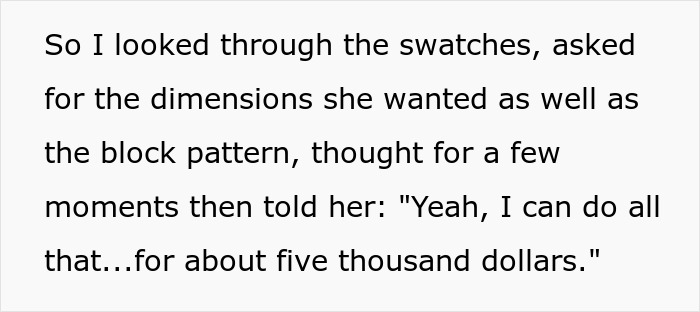
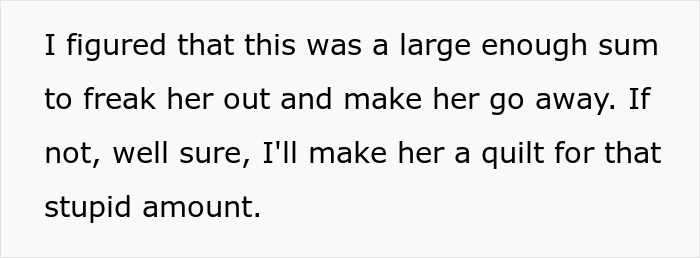
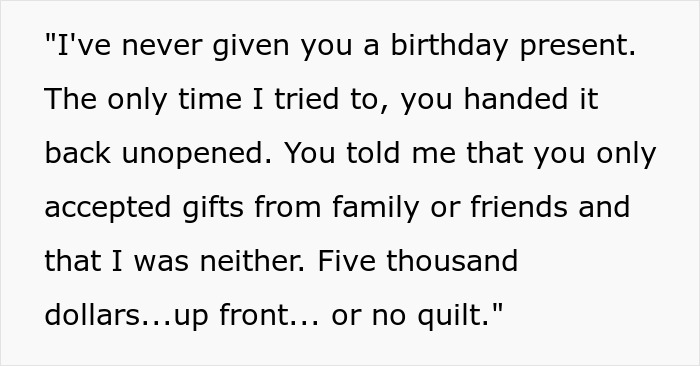
Boundaries are non-negotiable if you want happy and healthy relationships. And, yes, even though boundaries are harder to communicate, set, and defend in a family context, they are still necessary. They are what help protect your well-being, mental health, and needs.
What’s more, you can tell a lot about another person by their (un)willingness to respect those needs. Someone who can’t take a polite “no” for an answer might have one foot in entitlement, narcissism, and toxicity territory.
Writer and philosopher Susanna Newsonen, the author of Notes on Letting Go, emphasizes that saying “no” keeps you grounded and protects your energy. What’s more, clear boundaries in conversations help protect your emotional well-being. And when you find time to get quality rest, you’re better prepared to face any challenges that life throws at you.
That being said, it takes a lot of courage to decline someone’s request or invitation (or, god forbid, their entitled demand…). And yet, setting boundaries and saying “no” are a question of practice. You get better with each attempt.
“Consistently ignoring your own needs for rest increases stress hormones like cortisol, harms your immune system, and leads to emotional burnout,” Newsonen writes on Psychology Today.
Meanwhile, if you don’t want to talk about a certain topic, something you can say is: “I’m not prepared to talk about that right now. Thanks for understanding.” According to Newsonen, this way, you find a balance between clarity, kindness, and firmness.
“Boundary-setting reduces anxiety and increases a sense of agency. You’re not shutting people out; you’re protecting the parts of you that aren’t ready to be exposed. You’re allowed to decide which parts of your life are open for discussion.”
Doubtless, at some point, someone will challenge your life choices. Instead of getting defensive or lashing out at them, you can gently redirect the conversation. For instance, you can say: “I’m happy with where I am. What about you? How are you feeling about things lately?”
Not only do you completely disarm the other person, but you’re also showing empathy and interest in them without being hostile. The reality is that, very often, people who criticize you “often do so from a place of their own insecurity” and they likely want to be heard, even “when their words come out sounding like judgment.”
Of course, all of this is easier said than done in practice when you’re dealing with someone so entitled that they likely don’t have enough self-awareness to change (for now, at least). Entitled individuals are very often incredibly demanding, lack gratitude, need special treatment, are exceedingly selfish, and have a victim mentality.
“They expect to get preferential treatment and special favors in life without regard for why they should be treated specially. Their view is ‘the world owes me,’” Verywell Mind explains.
“Regardless of what they have, they always believe that they deserve more. They expect to elevate their lifestyle above that of others without putting in the effort needed to do so.”
In that regard, entitled individuals expect others to do things for them because of who they are. They basically believe that other people should bend over backward to help them.
“If someone has a problem with them or does not agree with what they are doing, they will try to make the other party feel as if they are wrong and that it is a horrible thing to disagree with them.”
We want to hear your perspective in the comments. Share your thoughts about the family drama below. What would you do if someone in your family started making demands and throwing their entitlement left, right, and center? Who is the most entitled person you know, whether they’re a relative, friend, coworker, or casual acquaintance, and how do you deal with them?



































 No fees, cancel anytime










31
0