Get Premium
Dark mode theme is available exclusively for premium users. Learn more about the benefits of subscribing.
No fees, cancel anytime.

 Dark Mode Ad-Free Browsing Unlimited Content
 Ad-Free Browsing Unlimited Content Dark Mode
Join 1.2 million Panda readers who get the best art, memes, and fun stories every week!

23submissions
1week left

Unlike the high-stakes drama of Judge Judy or Suits, real-life courtrooms are usually far less thrilling. There are no intense showdowns, shocking twists, or gripping scenes—just routine procedures and formalities.
At least, most of the time. On rare occasions, law officials come across cases that are anything but ordinary. And thanks to this fascinating Reddit thread, they’ve shared some of the strangest ones. Witchcraft, drunk horse driving, even [end]—it’s all there.
Read their accounts below, but fair warning: some of these stories might leave you a little shaken.
Click here & follow us for more lists, facts, and stories.
This post may include affiliate links.
 Also not a judge, but I work with a psychologist who does some work in mental hospitals and has to testify as to whether they should or should not be released. Court is over the phone right now because of Covid, so I was privy to the little exchange.
My boss's patient is schizophrenic and was refusing his medication. My boss was testifying as to why he shouldn't be released (violent to his family, active psychosis), much to the patient's displeasure. The patient starts yelling, "Man, I wanna get out of here! It's so nasty. They got SNAKES in here."
The judge replied, "Sir, the quickest way to get released is to comply with your medication. And the medication will also help you with your snake problem....".
 I went to court for a traffic ticket in the state of Mississippi. I was working a project out there. What I found weird is the judge’s ruling on two different cases. First was a woman who wrecked her car, had a child not in a baby car seat, dui, and possession of a controlled substance. He gave her a year probation. No jail time. Next was a lady who’s son had been skipping school and missed X amount of days. Something like 34 days. He put the mother in cuffs right then and there and ordered her to spend the same amount of days in jail that she had “allowed” her son to miss school. I didn’t say anything but I’m pretty sure the look on my face was “[why?]”.
 A little late to the show.....and not a judge....but here’s my strange court related incident.
I was in court for a dog without a leash citation, and to start things off, the judge quiets the room for briefing. She does her spiel and directly after the bailiff walks from the rear of the courtroom up to the bench, leans in to whisper something and hands her an object.
The judges face turns toward us and asks the bailiff, “Where is he!?” “Please come to the stand!”
As a gentleman approaches, the sounds of p**n start playing from the phone that the bailiff handed the judge.
“You have the audacity to watch p**n in my courtroom while I’m briefing everyone!? I can’t believe this...this is a first....” proclaimed the judge.
I don’t quite remember what the charges against the “p**n watcher” were initially but the judge added 72 hours for contempt of court.
Perhaps it’s a good thing that real law is much more predictable than fiction—these incidents are rare for a reason. Living in a world where they were commonplace would be far more unsettling.
Still, it’s hard not to be intrigued by these cases, especially the violent ones. They make us question what leads someone down this path and what’s running through their mind when it happens.
Seeking answers, Bored Panda spoke with Ryo Sawada, a Master’s student in forensic psychology at the University of Greenwich, UK.
According to Sawada, violent behavior doesn’t have a single explanation—it can be influenced by various biological, cultural, and environmental factors. “These can range from brain injuries or abnormalities in impulse control (biological), to toxic masculinity (cultural), or the normalization of violence when someone is exposed to it frequently in childhood (environmental),” he said.
 Worked in LE for a long while. Escorted an inmate to court for his dismemberment and [end] charges trial. He chose to represent himself. Context: was infatuated with Charles Manson and cults. Started one that preyed on mentally unstable/ handicap women and [unalived] them if they tried to leave. This poor girl with autism wanted to go home. He [unalived] her with his followers help, chopped her up, and burned the pieces in a dumpster.
His opening statement was something along the lines of "Ladies and gentlemen of the court I just want to clarify that things being inserted into my b**t are going to come up in this trial. I'm not gay. I just liked it." The judge said what the [darn], but caught himself before dropping the f-b**b. Everyone in the courtroom laughed at him. It was thrown out and he went for mental health screenings.
I don't miss LE work... at all. I did accrue a s**t load of stories though.
 Not a judge, but just remembered this. I was in traffic court because I was a dumb teenager. The case before me was a guy accused of drunk driving. He, in all seriousness, told the judge that the reason his car was swerving wasn't due to intoxication but due to him trying to open a beer bottle with his teeth while driving.
So at least the judge was in a good mood when it was my turn...(he was still laughing at that guy).
 I went on a field trip to the court house and two cases were scheduled that day. The first one was assault and the guy said he didn’t whip the ball at his head he only threw it. Second person walked in wearing the things she said she didn’t steal.
At the same time, some people who resort to violence experience cognitive distortions—irrational or exaggerated thoughts that distort their perception of reality.
“Minimization, for instance, makes offenders downplay the harm they’ve caused (‘It wasn’t that bad’),” said Sawada. “Similarly, entitlement convinces them they had the right to act that way (‘I’m better, so I can do this’). These distortions are commonly seen in violent offenders, including those involved in sexual offenses.”
However, cognitive distortions aren’t exclusive to violent behavior. They can appear in various contexts, such as anxiety, depression, or even everyday situations. One example is ‘all-or-nothing thinking,’ where someone views themselves as either a complete success or an absolute failure, with no room for nuance.
 Well, I'm not a judge but I was in traffic court once and the following exchange happened:
"So Miss [defendant] you're here for a... seat cushion violation? Is that even a thing?"
"Apparently your honour, the officer said I was too short"
(Long discussion with the state attorney and judge followed, they had white noise but you could see the judge was clearly thinking this was an idiotic ticket).
"How tall are you Miss?"
"About 5 feet"
"This is the stupidest thing I've ever heard of, case dismissed".
I looked it up later, there is a real restriction in Florida to say you need a raised seat if you are very short to see over the steering wheel but this is presumably for people with dwarfism or other such conditions rather than petite women.
Edit: apparently this is no longer a thing, the state must have thought it was stupid also.
 Studied forensics, and a defence lawyer told me this story.
He is called to defend a client who accused of robbing a garage in a nearby city. Police found his fingerprints in a coke machine. Yes, IN a coke machine. As in the disassembled a vending machine and dusted it, and found a print on an internal component.
Oh, here’s the catch. The suspect was currently serving a prison sentence at the time of the crime....
So this was the prosecutor’s theory: suspect had broken out of jail, drove 2 hours to that garage, burglarized it, opened up the coke machine, left his fingerprint inside it and nowhere else, reassembled it, drove back 2 hours, and snuck back in jail.
Surprisingly this case didn’t get tossed out laughing and actually went to court. The good news for the suspect is that his lawyer discovered that before his incarceration he happened to work for the business that maintained the coke machine, so he was trying to explain the fingerprint by saying it could have been left there went the suspect performed maintenance.
He hired a fingerprint expert, who was able to demonstrate that police used the wrong method for lifting a print.
 Not a judge, but in the US Navy I was a legal officer on a ship. My Captain has the ability to administer punishment for violating military law. We had a Sailor who broke the law and after the Captain found him guilty, the Sailor said he would jump overboard. No one took him seriously and sure enough, he went out to the weather deck and jumped right in the ocean. We had to recover him with one of our small boats and he threatened to do it again...and did do it again a week later.
Research suggests that people who commit crimes tend to share certain personality traits like low agreeableness and conscientiousness, paired with high neuroticism and extroversion.
Adding to this, Sawada noted that forensic psychologists look at the Dark Tetrad—a group of four dark personality traits regularly identified in offenders:
“These traits are not mental disorders like Antisocial Personality Disorder (ASPD),” Sawada clarified, “but they can become triggers when combined with factors like substance use or high levels of stress.”
 Somebody before me went up to the judge and was charged with 23 counts of unlawful detention of an alligator. Yeah, even the judge found it absolutely f*****g hilarious.
 Not a judge, but my mom had to go to court once because our dog caught and ate a rabbit. We were charged with "endangering wildlife". When the case was called judge laughed and threw the charges out.
 My father was a judge. A police officer burned her wife and two kids alive, he was caught later that day. That was one of the most horrible cases he ever presided over.
For the most part, psychologists agree that violence is a learned behavior—which means it can also be unlearned.
One way to address this is by developing conflict resolution skills to prevent disagreements from escalating into aggression. “Start with simple steps, like avoiding blame or ‘pointing fingers,’” Sawada encouraged. “The key is: stay calm, listen and understand, express your feelings, brainstorm solutions, and finally, agree and move forward.”
Another approach is empathy training, which helps people connect with and understand the emotions of others. Studies have shown that this technique can significantly reduce aggression, particularly among young offenders.
For those who need additional support, therapy can be a valuable resource. “Seeking help is not embarrassing—that’s exactly what we psychologists are here for,” said Sawada.
 Not a judge but grand jury, which is where mainly the police testify for indictment on people they've arrested, no judge just DA.
In one officer was in the police station parking lot when a vehicle screeched into the parking lot next to him and a guy jumped out freaking out about how he had taken all these d***s and was now dying. Left vehicle door open, lots of d***s in plain sight, and the guy was fine he just panicked for a minute. Easiest arrest that officer ever had, also easiest indictment.
 Obviously not a judge BUT I sat in on court proceedings once.
An off duty Police Officer was arrested for driving drunk in the city she worked in. The arguments made by her defense were incredible. First one was that no RN had taken the officers blood. Which a hospital representative clarified this is normal. Reiterated that for something this simple they can have residents/trainees do this as part of their learning. Second one was that the BAC content was higher because the alcohol was fermenting in the bag. That the exposure to air increased this process, thus raising the tested level. Which was promptly shut down by an expert testifying that is not how it works. That alcohol doesn’t continue to ferment and produce higher numbers from a blood sample over time. Finally his last ditch effort! He tried saying the blood was tampered with and/or not tested correctly. There was a chain of custody provided and everything else that was needed to debunk this.
The officer looked very defeated by the end of our sit in. The judge basically had to tell the defense to put something better together. Finally even the judge got tired of this “see what sticks” approach and shut it down.
 I'm not a judge but have to go to court a lot for work.
I deal with a lot of weird stuff in life and sometimes I feel like I'm in a dream. That or a "simulation" as people like to say because there is no way life is so weird.
Anyway, this little guy gets up and introduces himself to the judge, while his lawyer is standing by him, and says, "Hi your honor, my name is Precious Love, and this is my lawyer, Counselor Frankenstein" and I just stared at them thinking I had gone crazy.
 My father was a circuit court judge for a number of years. He used to tell me all kinds of stories, but my favorite was from a divorce dispute. The two sons of the husband and wife were messing around and they made a hole in the wall. The father was upset so he grabbed a hammer and punched a bunch of holes into the wall to prove to the boys how bad the holes look. I don’t remember the exact number, but it was around 90. When the attorney for the wife asked him if it was a good idea the husband said “well...in hindsight...I guess maybe not.” My father said that’s the only time that he’s ever almost burst out laughing in court.
 I was a mediator in small claims court in Queens NY during law school. Mediators attempt to help the parties reach a settlement. A woman brought a claim against a shoe store. According to her, there was a display with shoes for $20. When she got to the register with two pairs of shoes, they charged her $25 per pair. She complained and told the counter person that they were on sale for $20. She brought the counter person to the display and, according to the woman, they had switched the sign so that it now said $25. She paid the $50 and then sued for the $10 extra that she had to pay. The cost for filing the claim was $15. After she told me her story I met with the two lower level employees that the shoe store had sent to the court. They of course denied changing the sign, but I told them they can settle for $10 and leave immediately or they would have to wait for a judge to decide the case. They happily paid the $10. The woman lost five dollars in the transaction.
 I'm not a judge, but a legal case involving alleged identical twins once landed on my desk. It somehow hinged on whether or not they were *identical* or just fraternal twins.
They had an identical set of CODIS results. One party claimed that proved they were twins, the other party argued that all it demonstrated was that they were *not excluded* from being identical twins, so they 'might' not actually be identical. Apparently that was worth paying me reasonable amounts of money to demonstrate, mathematically, that if two siblings share fifteen CODIS markers, they are identical twins with a certainty of >99.99% rather than just being fraternal (or just siblings).
I have no idea what that case was about or why that was such a controversial piece of evidence.
 Obligatory: I am not a judge. My brother's ex-girlfriend got arrested for theft from someone. Turns out, she was stealing manure. (I believe she intended to use it as a prank on someone else.) Turns out, you can be arrested and prosecuted for stealing manure.
 Not a judge, but I have a CJ degree and had a former judge as an instructor.
He told us a story of bio twins that were both potential father's in a paternity case. The paternity was determined by a "best" 2 of 3 quarter flip.
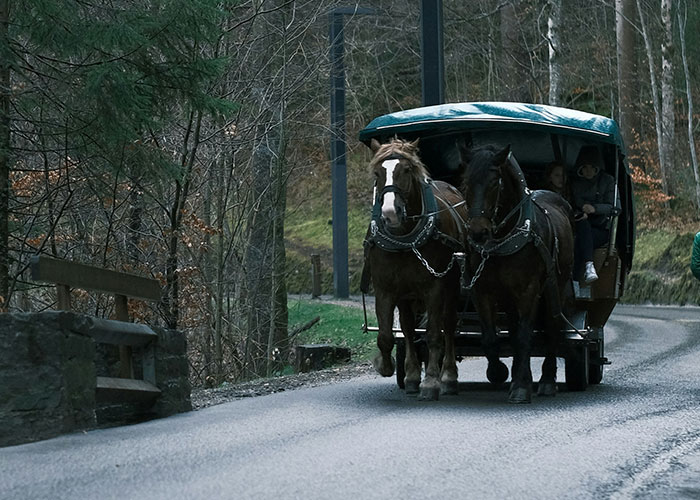 Sitting next to my Grandpa now. I asked him (Chief Justice of UT Supreme Court) and he told me about the case of a guy cited for drunk driving A HORSE, in down town SLC. This was decades ago.
 I’m just a law student, but I’ll relay a case I read and still think about to this day.
A woman’s family was suing a guy for intentional infliction of emotional distress. What happened is this guy was doing some sort of work at the scene of a car accident where a girl from the aforementioned family had been beheaded. He took a picture of the girl and sent it to his friend, who posted it online. Her family ended up seeing it, and sued him.
The family ended up losing.
 Obligatory not a judge, but my step grandfather was an Oregon Supreme Court Justice. He'd retired long before I met him so I never saw any of his cases in person, but he told me one particular story about a man who tried to represent himself in court.
This young man, probably in his early 30s, comes into the courtroom wearing a military service uniform. The guy seems well groomed, coherent, capable. My grandfather served in the Air Force and while he thought it odd someone would appear in court in uniform, he respected the dude. Military guy starts his defense but only gets a couple sentences in before he holds up his arm and points to the service stripes saying, "And these, these are where I get my power from. All my energy comes from these stripes."
Everyone starts looking around the room at each other as if silently asking, "Uh, did you all hear that correctly?" My grandpa asks him to clarify what he means and he says the stripes are powerful and give him their energy so he can be powerful too. Grandpa stops the court proceedings and orders the guy to have a mental evaluation ASAP. He's immediately escorted out.
The next day my grandpa gets a knock at his office door. He opens it and low and behold it's the same military dude from the previous day, wearing the same outfit. The dude's just standing there and grinning a really big, unsettling smile. Apparently the psychiatrists determined he was of sound mind and wasn't a threat to himself or others so let him go (my grandpa never told me when this story took place but I'm assuming it happened before 72 hour holds were a thing). My grandfather just stood their dumbfounded before asking, "Uh, anything I can do for you?" The guy wanted to talk about his case and getting the trial rescheduled, acting like nothing happened. Grandpa eventually convinced him to go talk to the receptionist instead.
I don't know if there was a follow-up trial or what happened to the man or even if he was really in the military. Just a bizarre story about a guy who the mental health care system failed.
You Might Also Like: 46 relatable memes for anyone who’s had enough of people























 No fees, cancel anytime




