Bored Panda works better on our iPhone app
Continue in app Continue in browser

The Bored Panda iOS app is live! Fight boredom with iPhones and iPads here.

I Documented The Dangerous Work Of Honey Collectors In Bangladesh’s Mangrove Forests
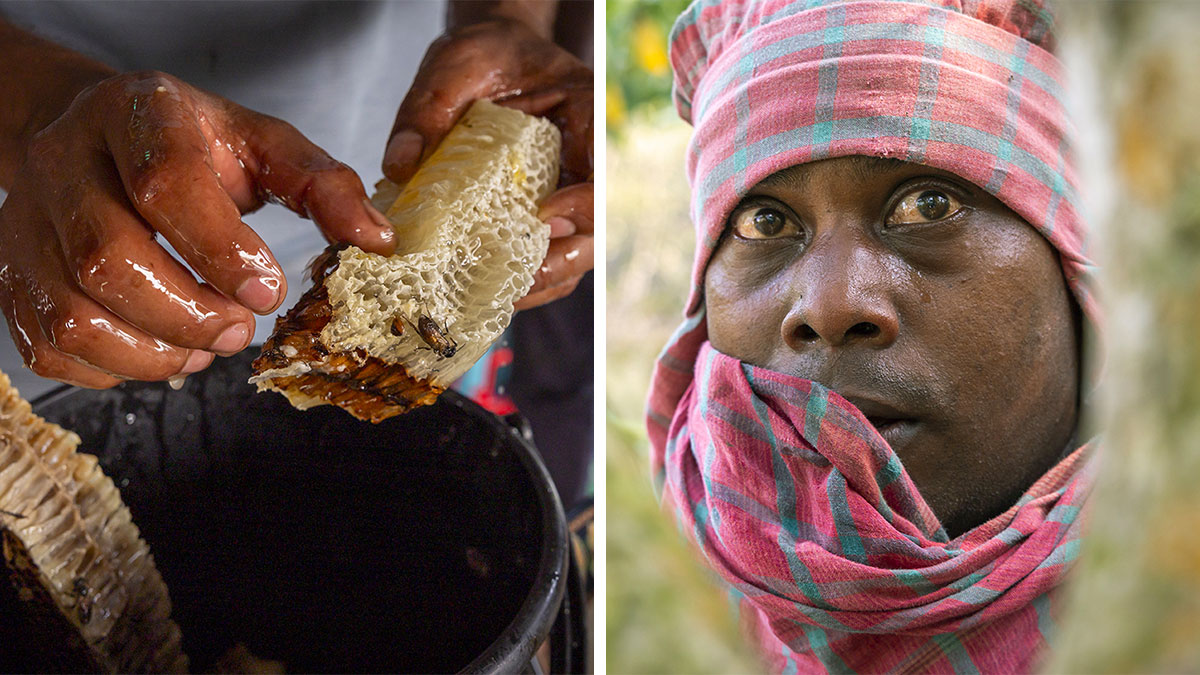
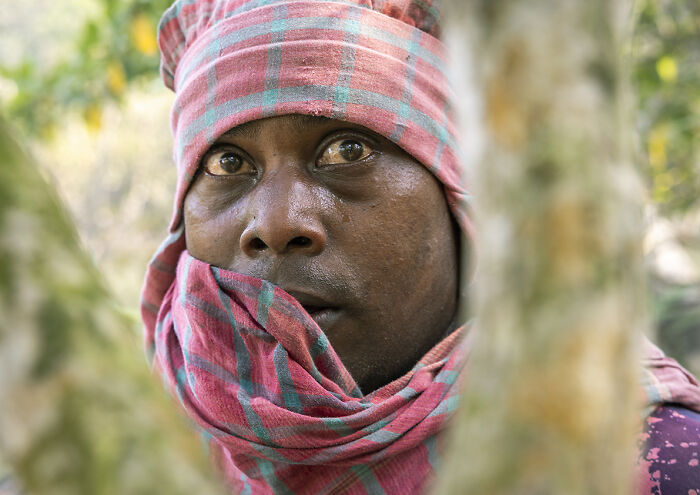
Close-up of honey collectoru2019s hands holding honeycomb with bees and a focused man in tiger territory wearing a scarf.
User submission

I Documented The Dangerous Work Of Honey Collectors In Bangladesh’s Mangrove Forests

28

ADVERTISEMENT

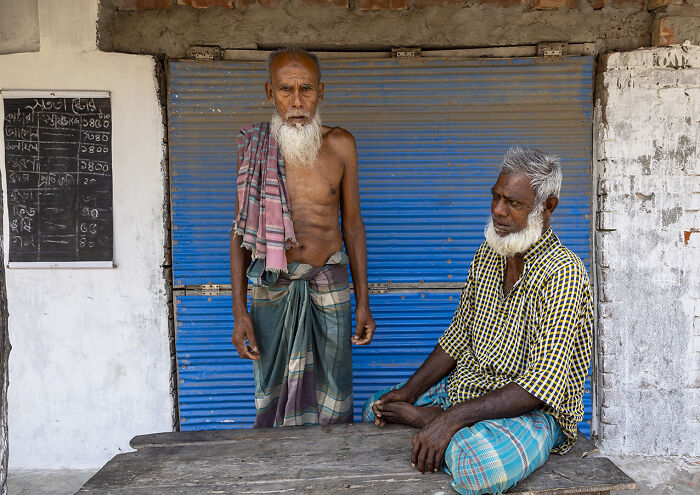
Honey collection in the Shyamnagar mangroves, on the edge of the Sundarbans in Bangladesh, is a centuries-old livelihood carried out by traditional foragers called mouali.

Each spring, honey-gathering teams venture deep into the mangroves to harvest wild honey, braving the tigers. For them, it is both a source of income and a cultural heritage. However, now, this practice is guided by permits and conservation efforts to protect bees and the forest.

More info: ericlafforgue.com | flickr.com | x.com | linkedin.com | Instagram | Facebook

RELATED:

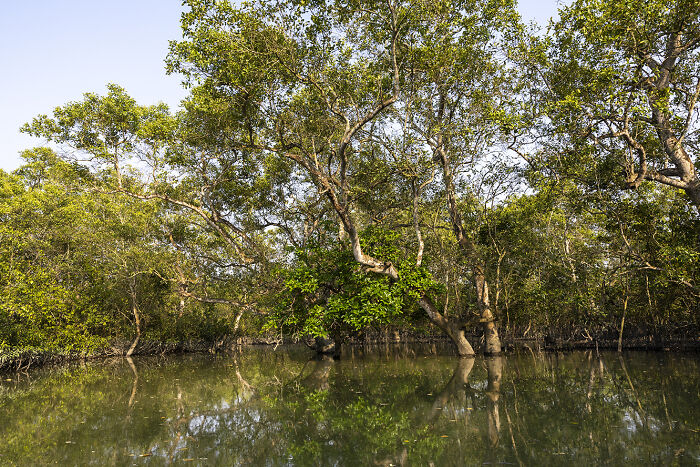
    The Sundarbans are the world’s largest mangrove forest, a unique ecosystem where land and sea meet

    Each spring, the honey gatherers venture deep into the mangroves to harvest wild honey, braving tigers

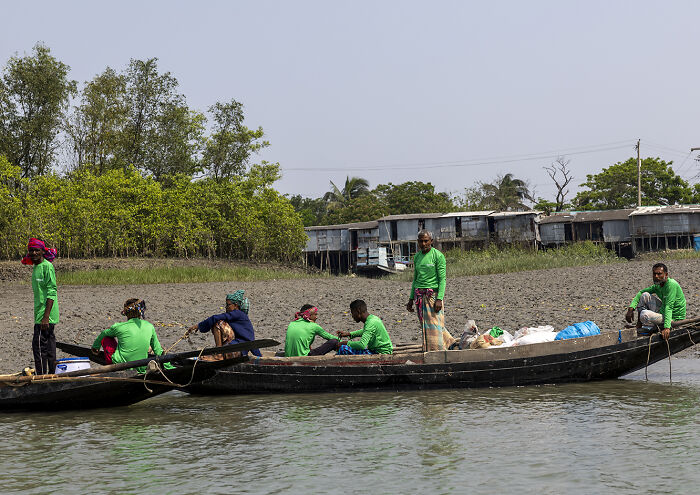
    Each honey-gathering team typically comprises 5–10 individuals, each with assigned roles—such as the leader, harvester, pot keeper, smoke torch preparer, and boatman

    ADVERTISEMENT

    This practice is deeply rooted and often a seasonal, supplementary livelihood for subsistence communities.

    Collecting honey in the Sundarbans is extremely risky because honey hunters must enter tiger territory deep in the mangroves

    Royal Bengal tigers often ambush silently, making them one of the greatest dangers to mouali during the season. Every year, attacks cause injuries and deaths, making this livelihood one of the most dangerous in the world.

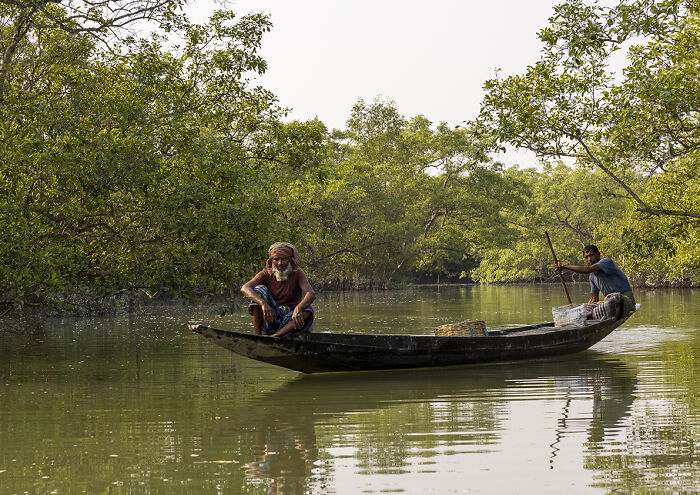
    Some honey collectors venture into the mangrove in very small groups, sometimes only two people. Without the support of armed forest rangers, they face the full dangers of the wildlife

    ADVERTISEMENT

    The dangers range from things like tiger attacks, snakes, and getting lost in the very dense forest. These small teams take enormous risks to harvest wild honey, driven by the need to earn a small living despite the life-threatening conditions.

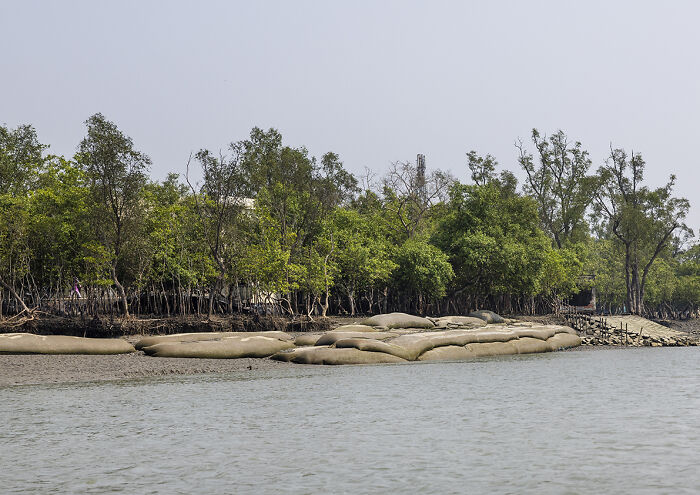
    Mangroves here protect the coast from cyclones and erosion, while providing habitat for animals. It takes more than an hour to navigate the mangrove labyrinth to reach the honey sites

    Of course, there are no signs to guide the way. The collectors have visited these places many times to monitor the hives and now know the routes by heart.

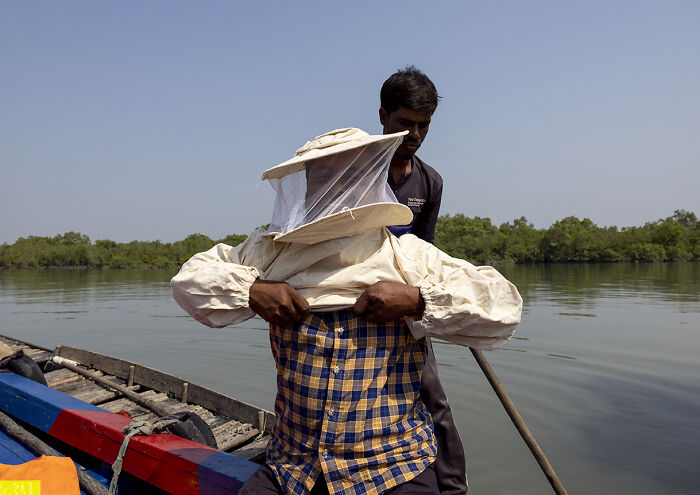
    Local collectors protect only their heads from bee stings, as they can’t afford proper gear. Sometimes they earn extra money by guiding officials or tourists, who come fully protected

    ADVERTISEMENT
    ADVERTISEMENT

    Once the collectors spot the combs, they leave their boat and carefully move on foot through the mangroves. This is the most dangerous moment, as a tiger can leap out at any second

    The men remain tense and alert, fully aware of the risk. Annually, between 10 and 25 people may be killed by tigers in the Sundarbans.

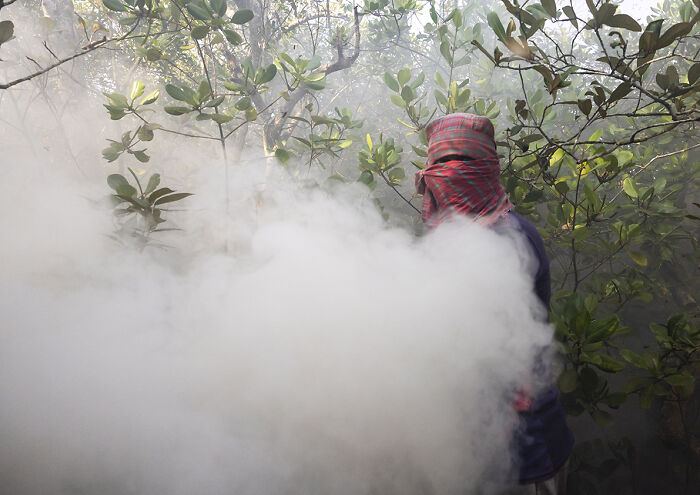
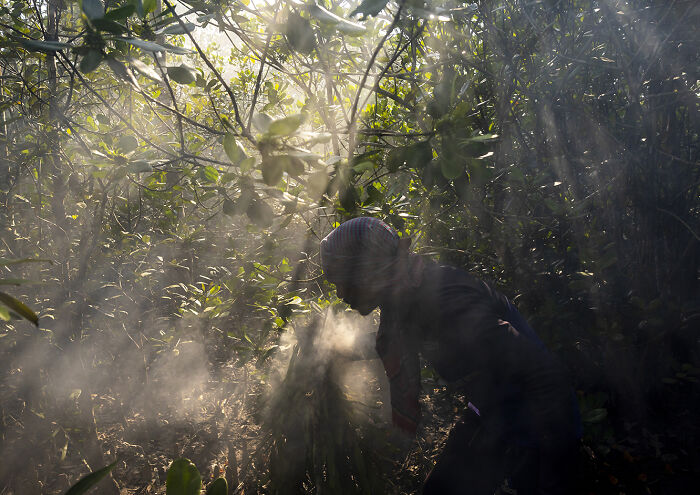
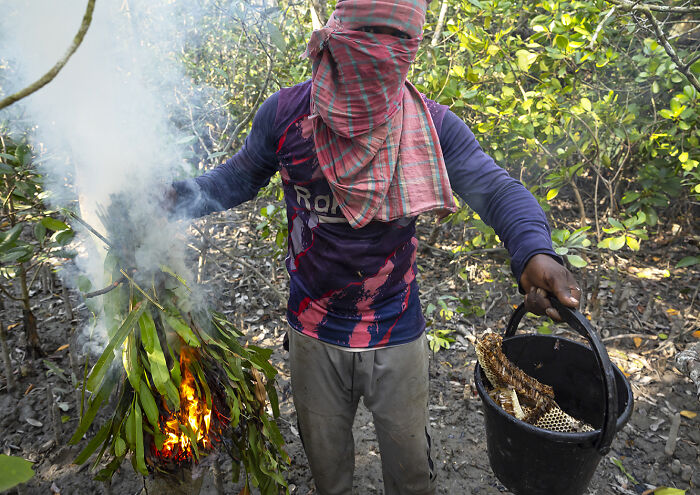
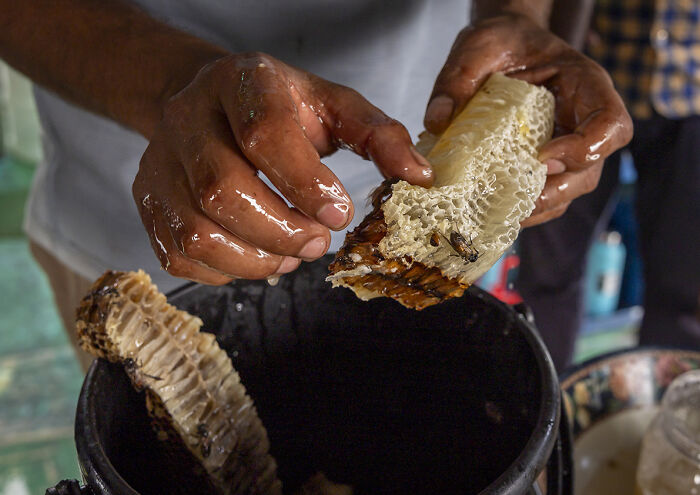
    Smoke is used to pacify the bees, after which the comb is cut to retrieve the honey. Importantly, permits are required for legal honey collection

    Training is provided to harvesters, and regulations strictly prohibit the use of flammable substances or harmful chemicals to minimize environmental impact and ensure sustainability. Intensive harvesting and human disturbance in the mangroves stress the bees and disrupt their natural cycles.

    ADVERTISEMENT

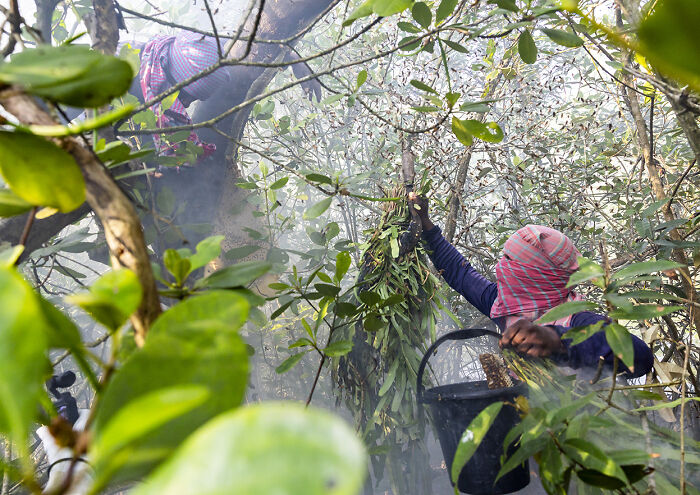
    Once the smoke is placed beneath the comb, one man climbs the tree to cut it while another collects the honey in a bucket below

    The air fills with incredible noise as thousands of bees swarm to defend their territory. The collectors are stung by bees, but they are used to it and hardly suffer. The whole process takes only a few seconds

    During peak season, a collector may earn about 200 euros per month (the honey-gathering season runs from March to June), collecting around 10 kg of honey per trip—a fortune in this area

    Many poor men risk entering the forest without proper permits or protection, facing tiger attacks as a constant hazard. When they die, their families lose their main breadwinner.

    Sundarbans honey is rich and slightly salty, reflecting the unique flavors of the region’s mangrove flowers

    It has low moisture and high freshness, with strong antioxidant content from polyphenols and flavonoids. Packed with minerals, vitamin C, and natural sugars, it is valued for its nutritional and medicinal benefits as it is used in healing, immunity, and respiratory relief by the local community.

    The honey knowledge is passed down through generations, with sons often accompanying their fathers into the forest from a young age to learn the skills

    In villages like Shyamnagar, honey gathering is not only a way to earn income but also a tradition that shapes identity and community ties. Families depend on the honey season to supplement their livelihood, and stories of past hunts, dangers, and survival are part of their cultural memory.

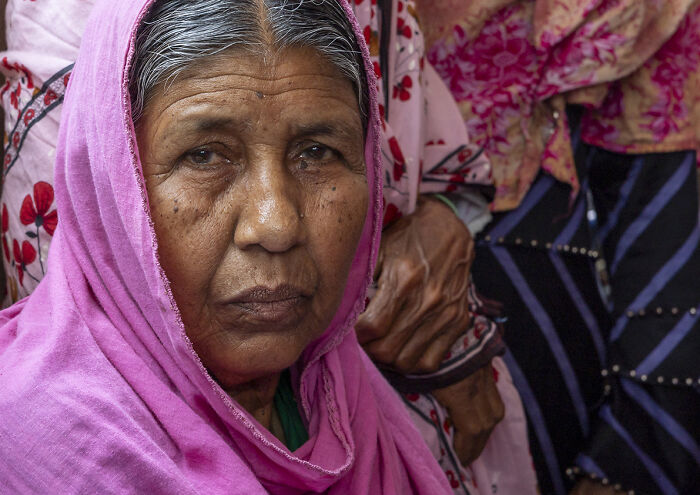
    At the start of the honey-collecting season, the community holds a ceremony. On this day, the front rows are reserved for “tiger widows,” women who lost their husbands to tiger attacks

    That year, there were 10 widows in Shyamnagar village. Widows often face social stigma. Some communities believe a woman brings bad luck if her husband was killed by a tiger.

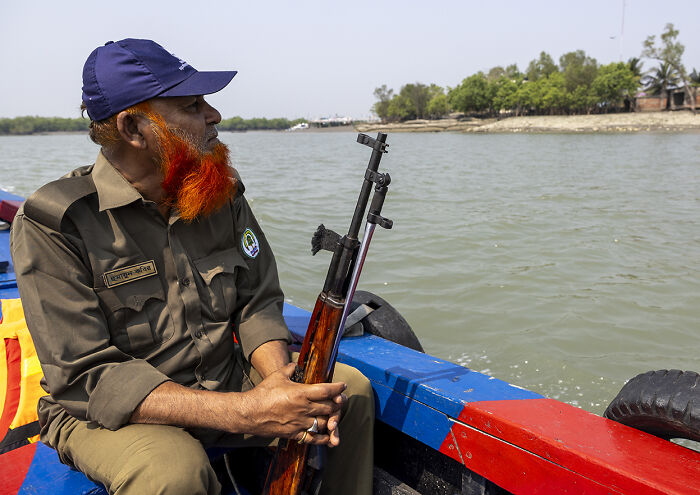
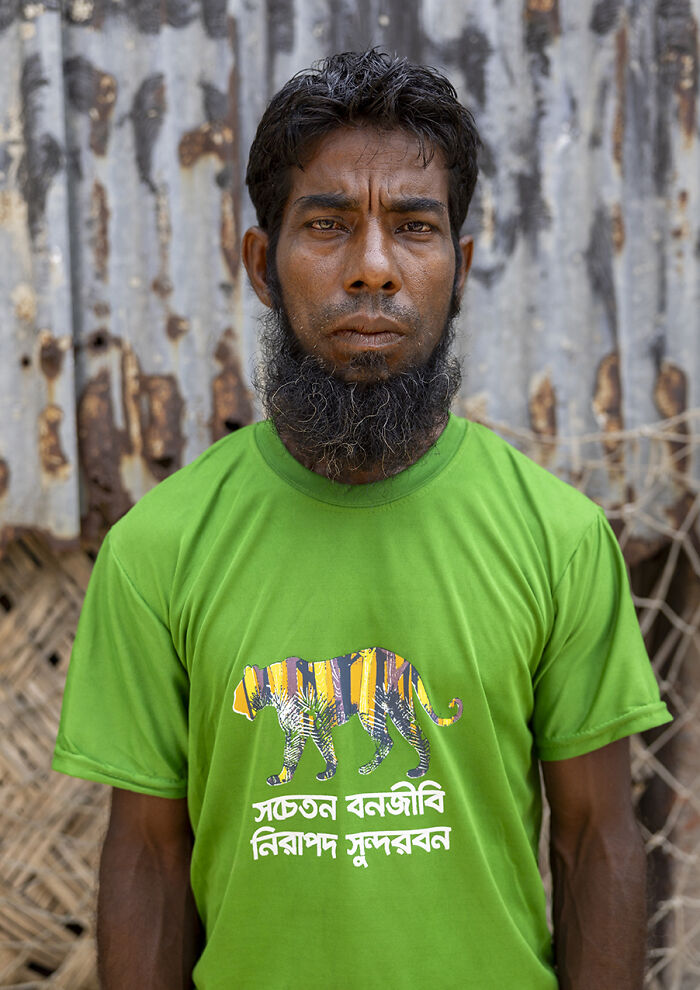
    This man wears a shirt that says ‘Foresters make the Sundarbans safer,’ a reference to tiger attacks

    When he was 10, he was on a boat with his father collecting honey when suddenly a tiger leapt aboard and dragged his father away. The body was never found. He keeps cruising through the forest, as he has no other choice but to earn money, like many.

    Unfortunately, climate change is hitting the Sundarbans hard. Rising sea levels erode the mangrove banks, while stronger, more frequent cyclones uproot trees and destroy bee habitats

    Increased salinity from seawater intrusion reduces the diversity of flowering plants, meaning bees have fewer sources of nectar. As the mangroves shrink and become less resilient, both honey production and the livelihoods of the mouali are under serious threat.

    1Kviews

    Share on Facebook


    Eric Lafforgue

    Eric Lafforgue

    Author, Community member

    Read more »

    Ever since he was young, he has been fascinated by far away countries and travelling, and spent some time when he was 10 years old in Djibouti, Ethiopia and Yemen. He started taking photographs in 2006. Quickly, magazines and newspapers from all over the world like Geo, Nat Geo, Lonely Planet Magazine, etc began using his work for illustrations on North Korea, Papua ...

    Read less »
    Eric Lafforgue

    Eric Lafforgue

    Author, Community member

    Ever since he was young, he has been fascinated by far away countries and travelling, and spent some time when he was 10 years old in Djibouti, Ethiopia and Yemen. He started taking photographs in 2006. Quickly, magazines and newspapers from all over the world like Geo, Nat Geo, Lonely Planet Magazine, etc began using his work for illustrations on North Korea, Papua ...

    Diana Lopetaitė

    Diana Lopetaitė

    Moderator, BoredPanda staff

    Read more »

    Hey there, Pandas! My name is Diana (though some prefer to refer to me as Diane, Deanna, and even Liana sometimes), and I am a Community Post Moderator Lead for Bored Panda. As my position title states, I am one of the people (employed Pandas for bamboo) over here who work with the community side of things on this website to ensure all is well, and while at that, I also help various creators and artists get recognition for the incredible work they do by connecting them to a large worldwide audience. Other than that, outside of work, you can find me brewing a nice cup of coffee, making a pizza from scratch, or baking brownies. I also love traveling, concerts, and cats (heavy on that, because I am a cat mom).

    Read less »

    Diana Lopetaitė

    Diana Lopetaitė

    Moderator, BoredPanda staff

    Hey there, Pandas! My name is Diana (though some prefer to refer to me as Diane, Deanna, and even Liana sometimes), and I am a Community Post Moderator Lead for Bored Panda. As my position title states, I am one of the people (employed Pandas for bamboo) over here who work with the community side of things on this website to ensure all is well, and while at that, I also help various creators and artists get recognition for the incredible work they do by connecting them to a large worldwide audience. Other than that, outside of work, you can find me brewing a nice cup of coffee, making a pizza from scratch, or baking brownies. I also love traveling, concerts, and cats (heavy on that, because I am a cat mom).

    What do you think ?
    You May Like
    Related on Bored Panda
    Popular on Bored Panda
    Trending on Bored Panda
    Also on Bored Panda
    ADVERTISEMENT