Get Premium
Dark mode theme is available exclusively for premium users. Learn more about the benefits of subscribing.
No fees, cancel anytime.

 Dark Mode Ad-Free Browsing Unlimited Content
 Ad-Free Browsing Unlimited Content Dark Mode
Join 1.2 million Panda readers who get the best art, memes, and fun stories every week!

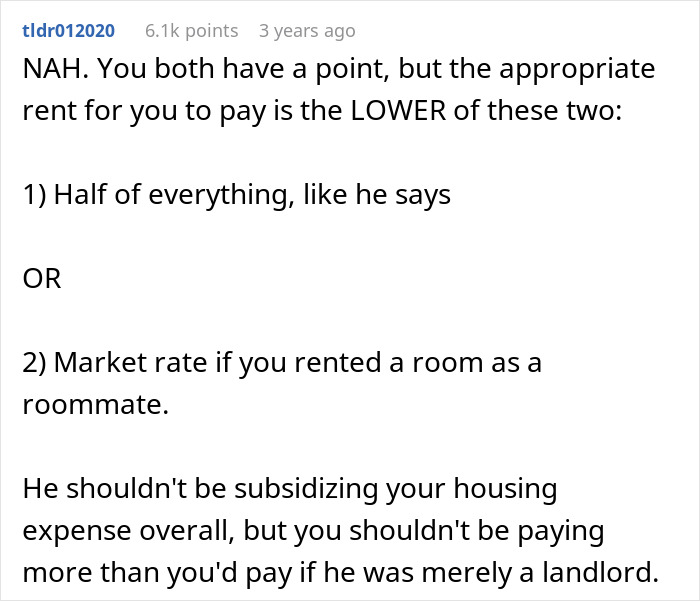
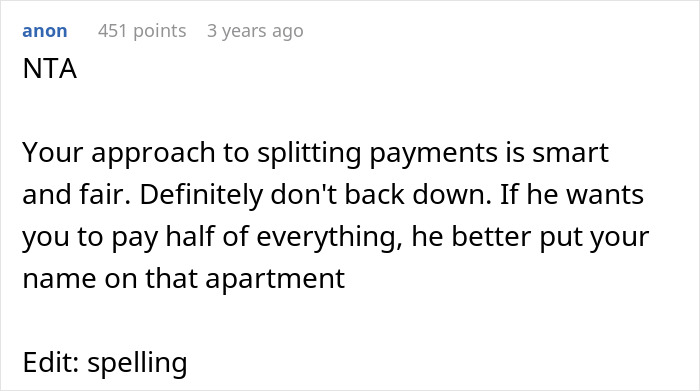
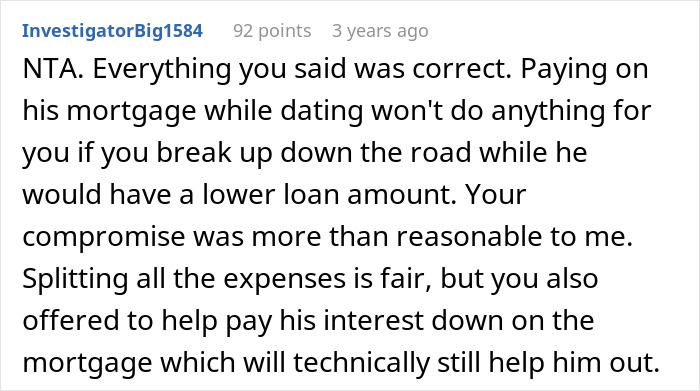
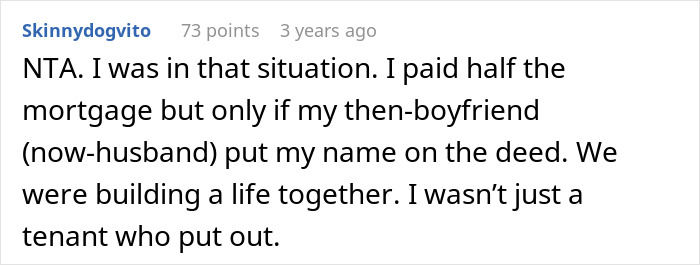
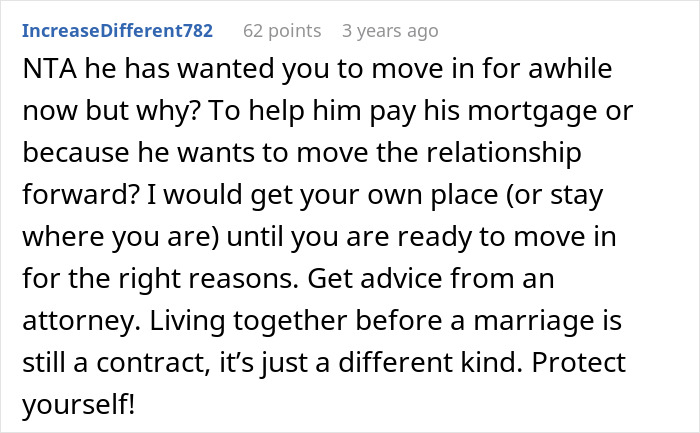
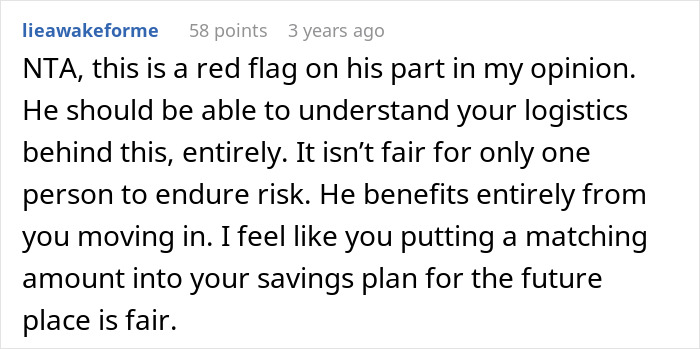
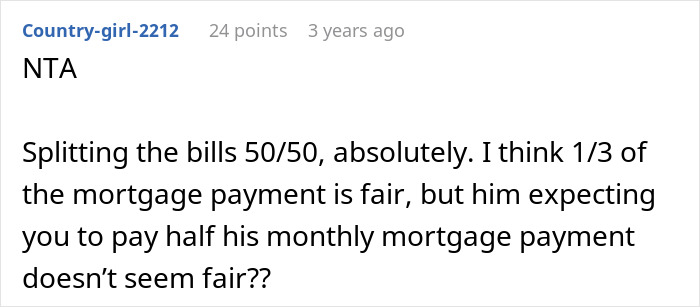
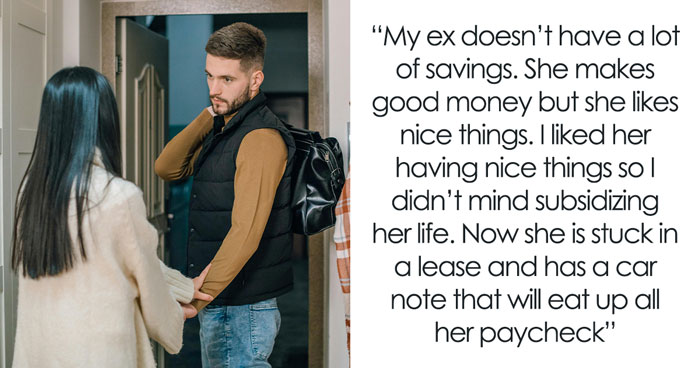
Moving in together is a big step, and it pays to have the important conversations before doing so. One of them is how you’ll split expenses as a couple. A woman has told how her boyfriend is insisting that they split everything 50/50 when she moves into the home he owns. She feels this isn’t fair as it means she’ll be paying off his mortgage and interest while he reaps the benefits.
The woman is considering staying with roommates instead but her boyfriend says she’s unreasonable and has insinuated that she’s leeching off him. Bored Panda reached out to Chip Lupo for his take on the matter. He’s a financial writer and analyst for WalletHub.
Image credits: Vitaly Gariev (not the actual photo)
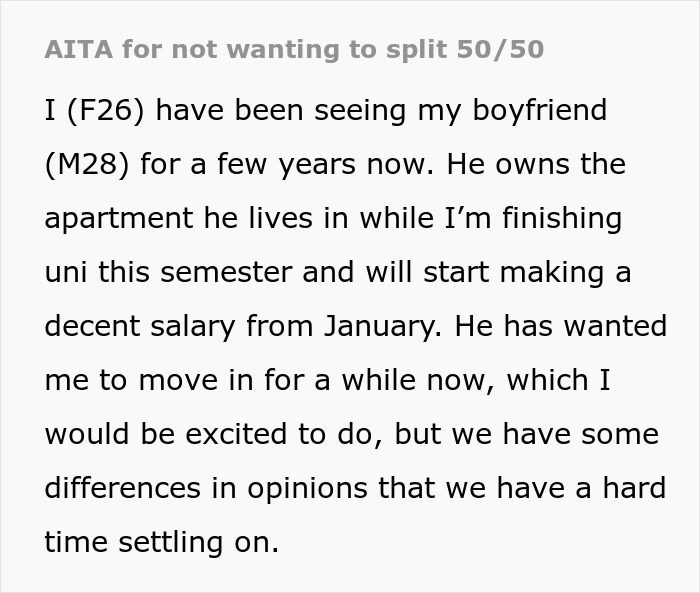
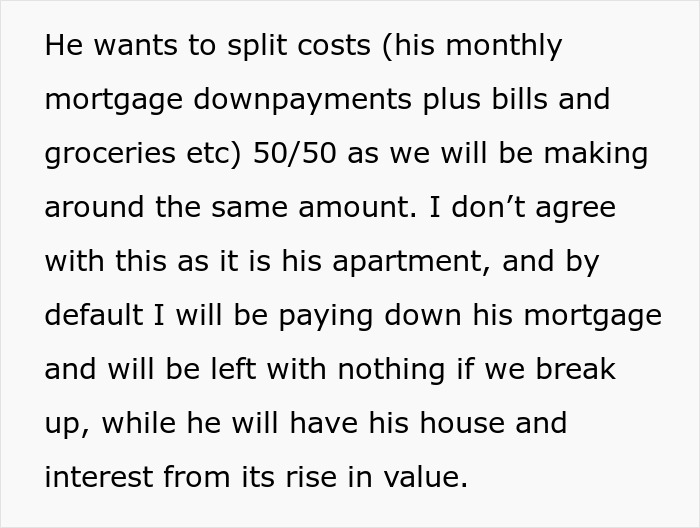
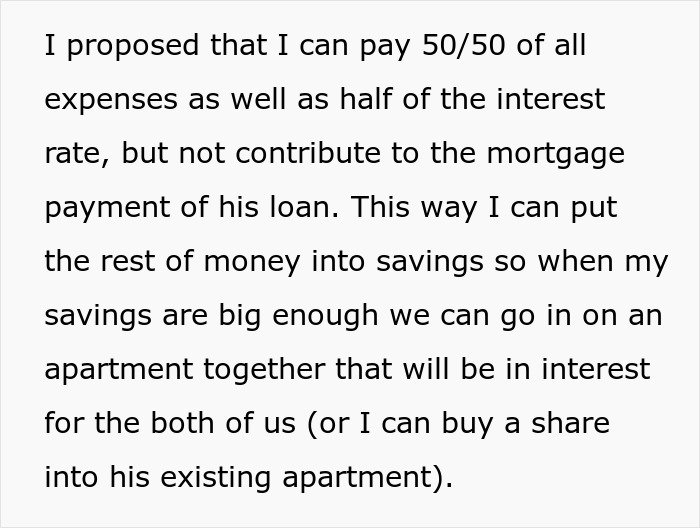
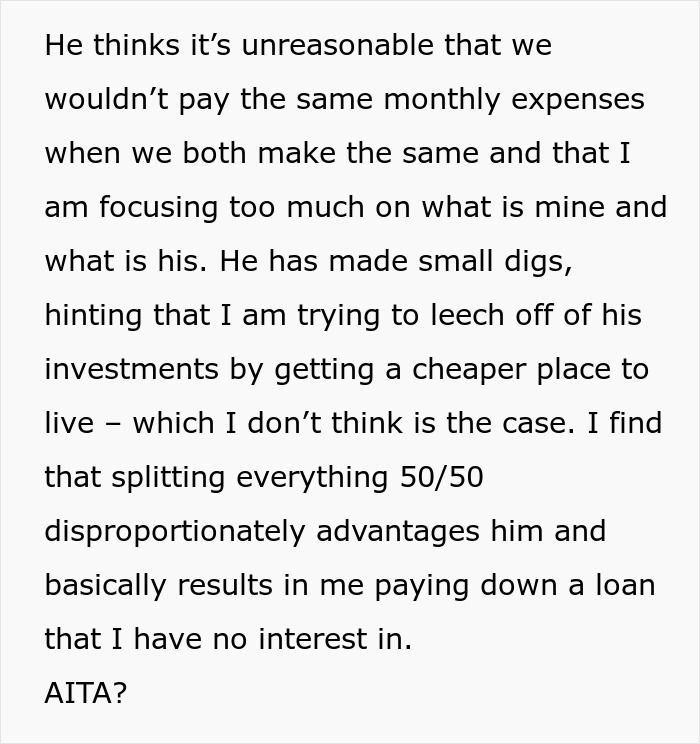
Image credits: Getty Images (not the actual photo)
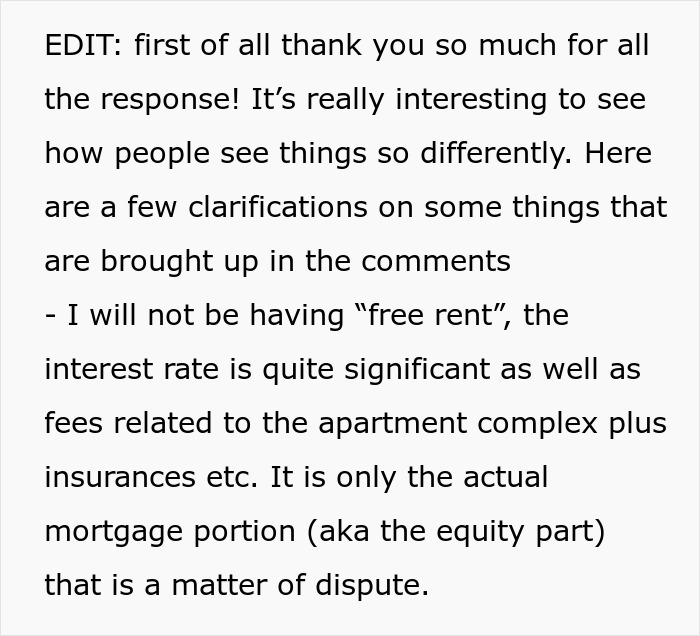
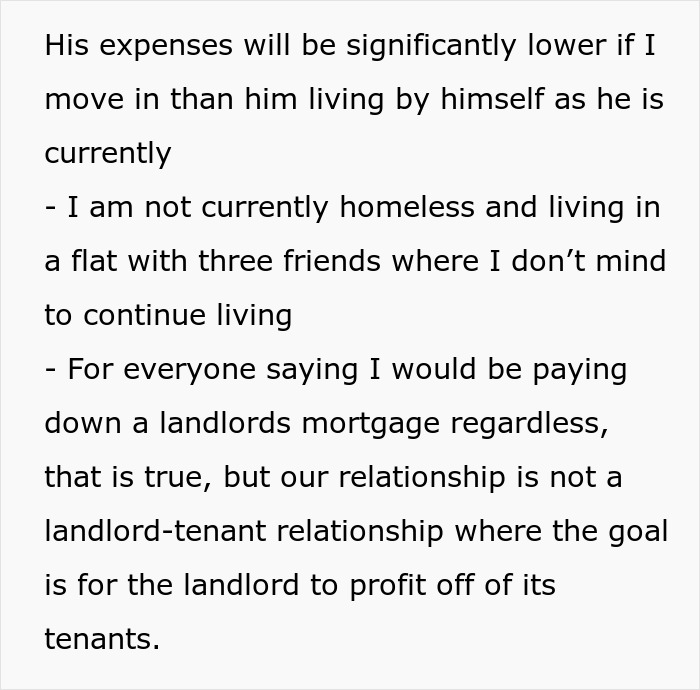
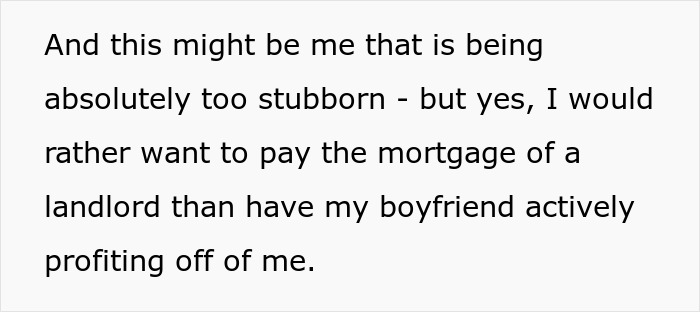
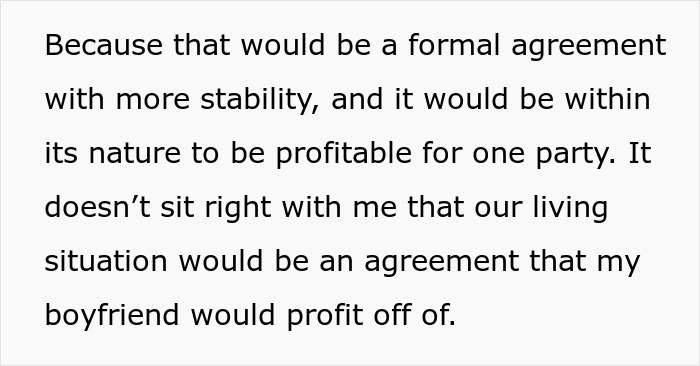
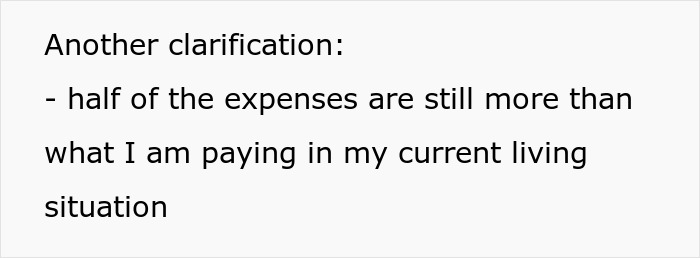
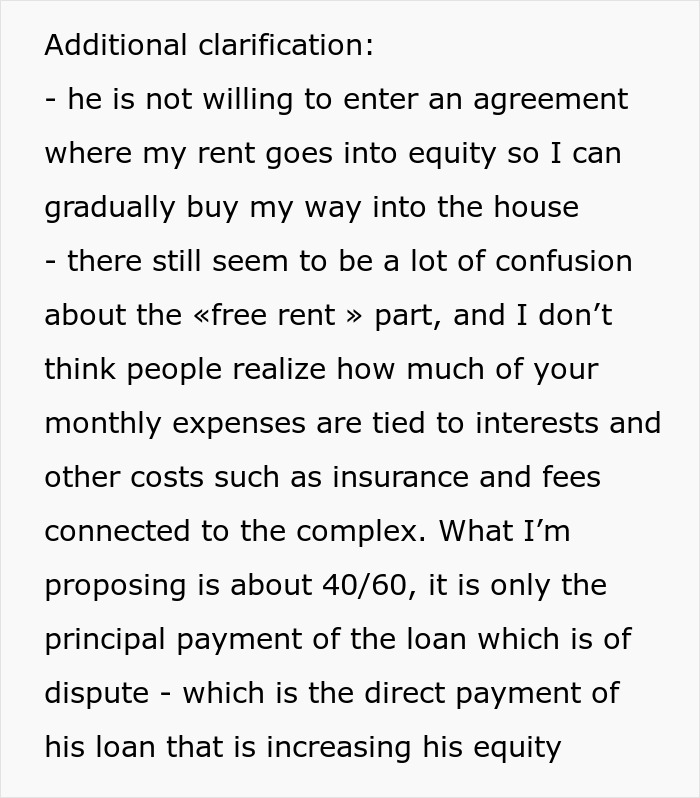
Image credits: Vitaly Gariev (not the actual photo)
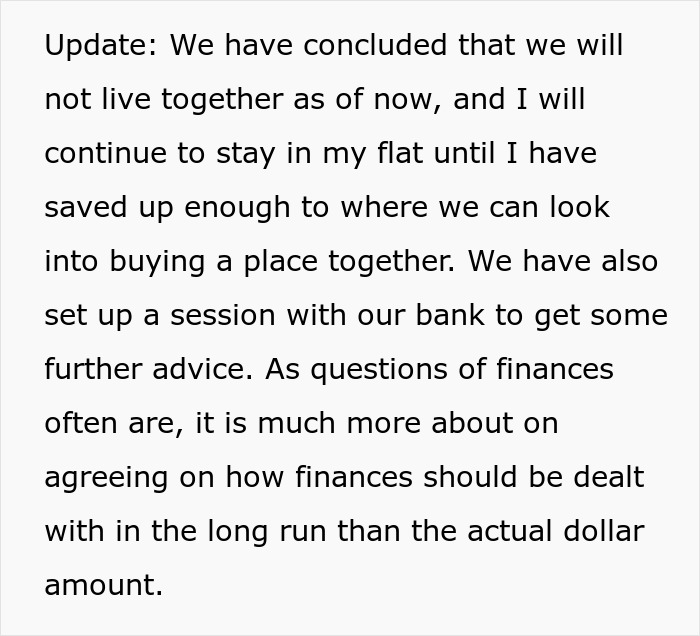
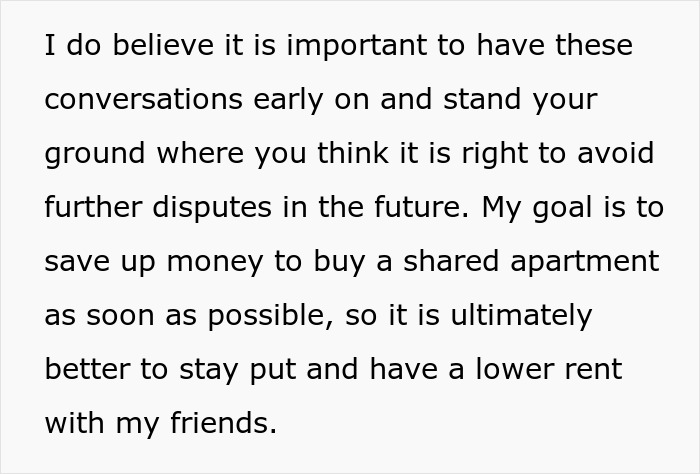
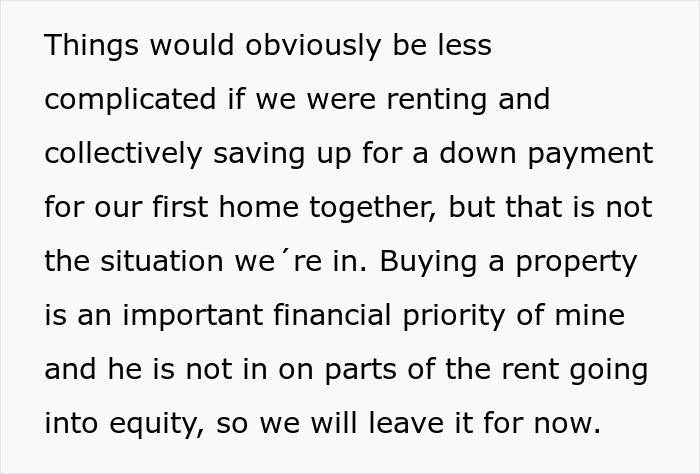

Image source: Ok_Database3372
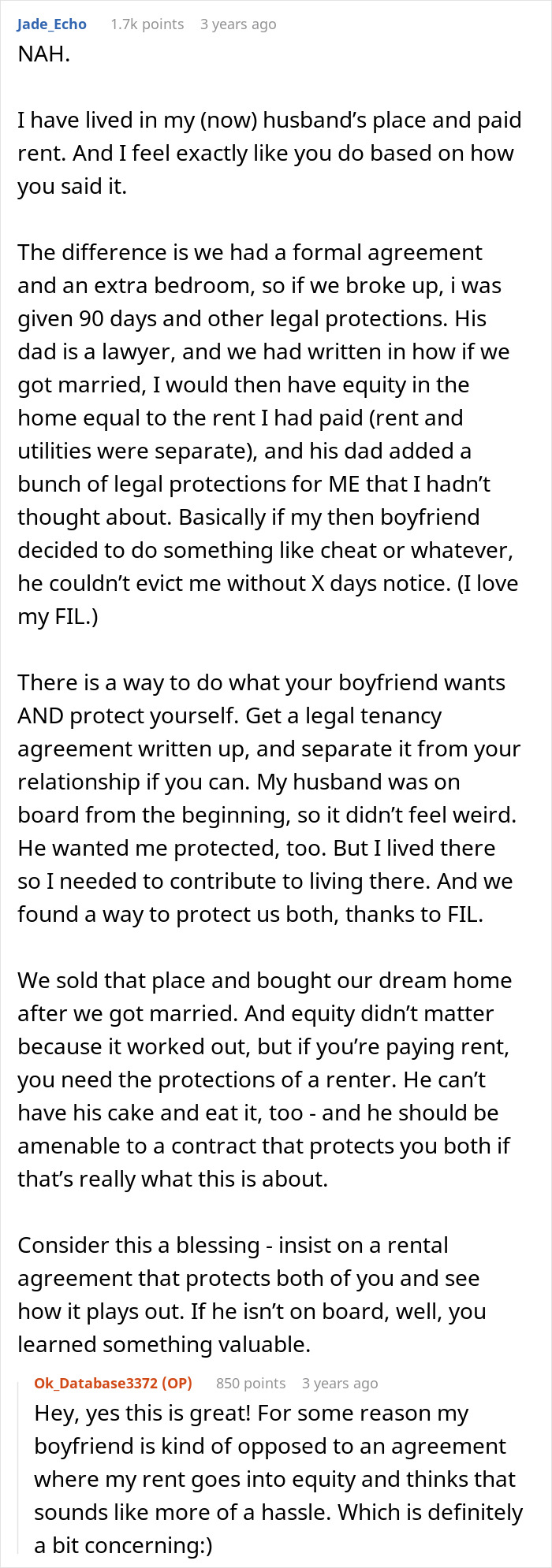
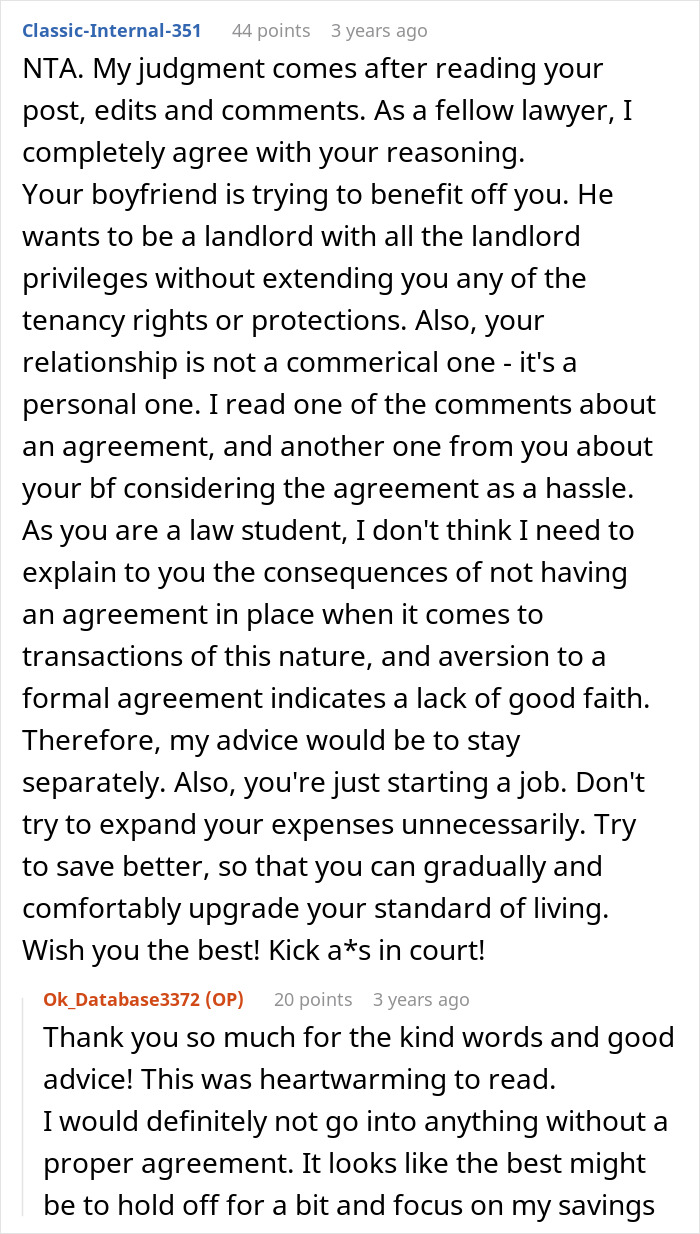
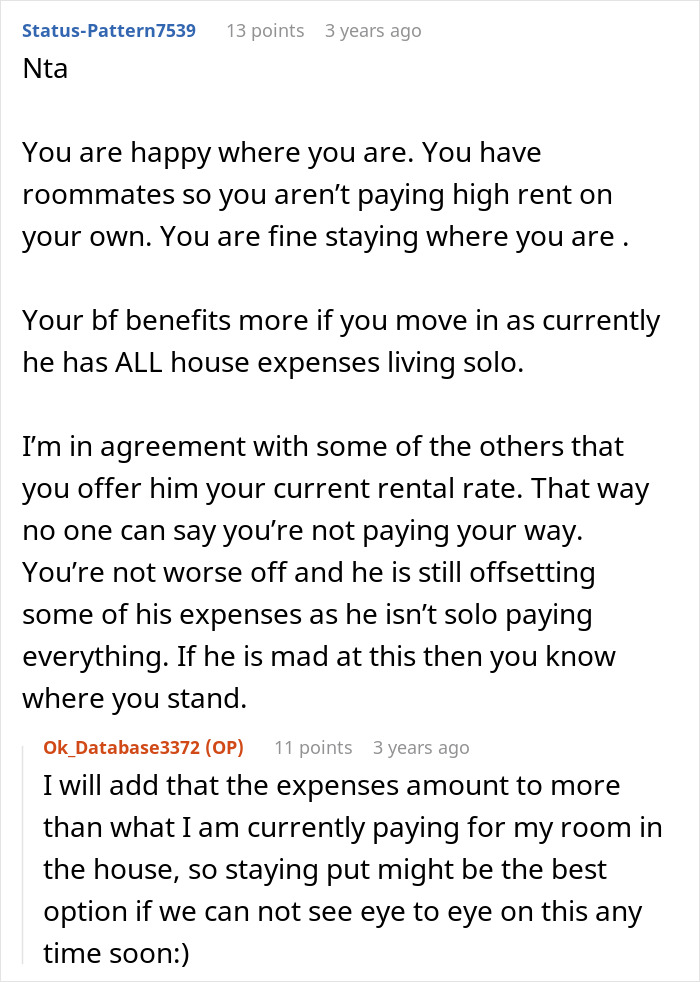
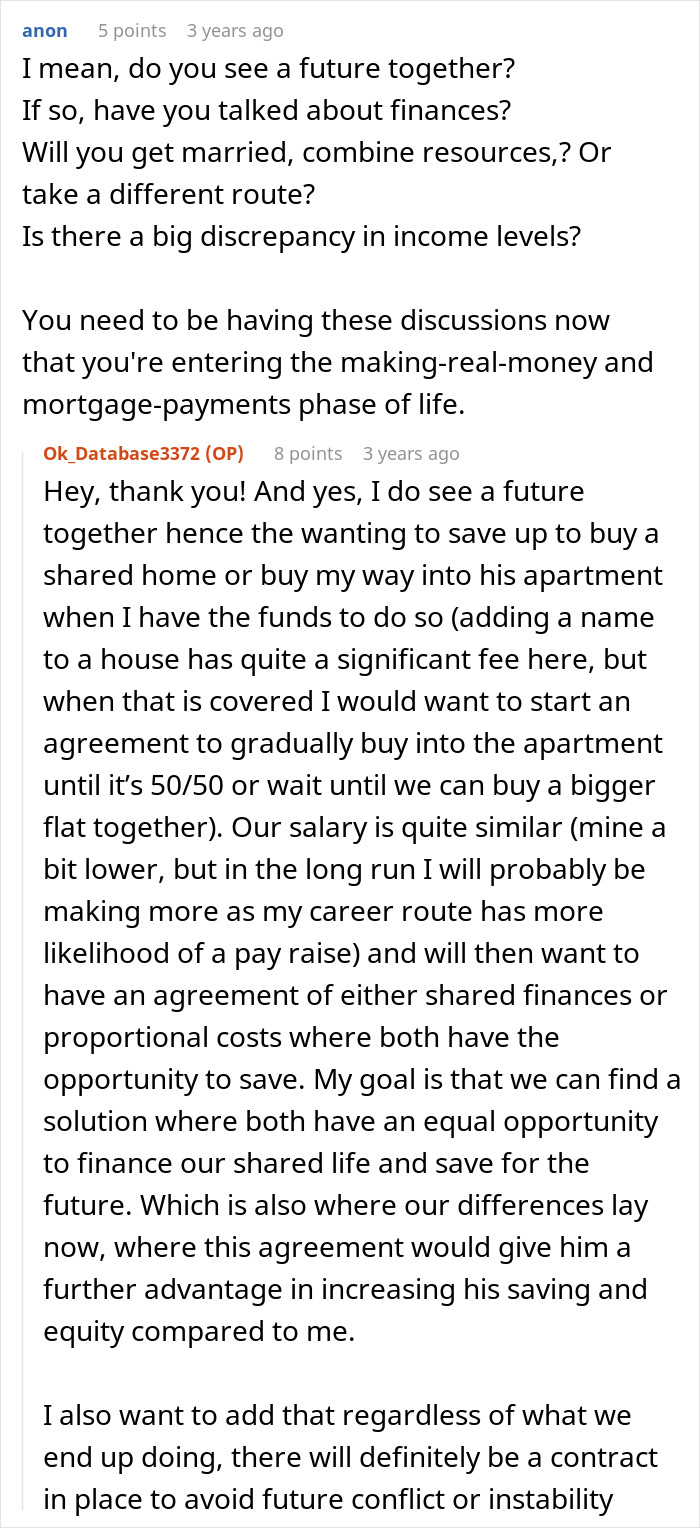
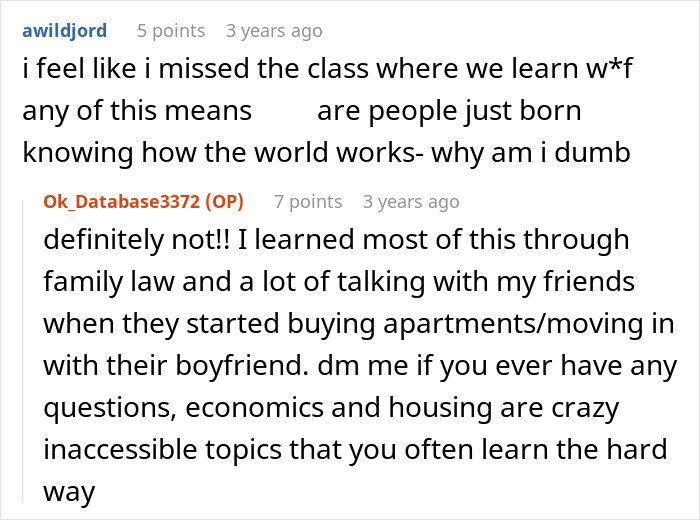
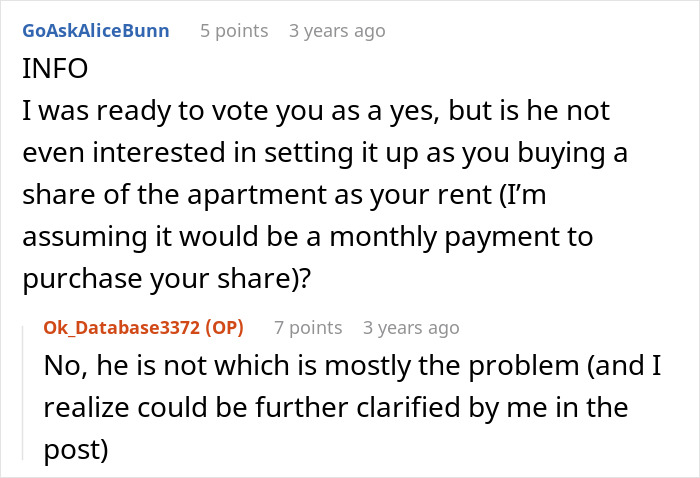
From a financial standpoint, her position is reasonable. That’s the opinion of WalletHub’s financial writer and analyst Chip Lupo.
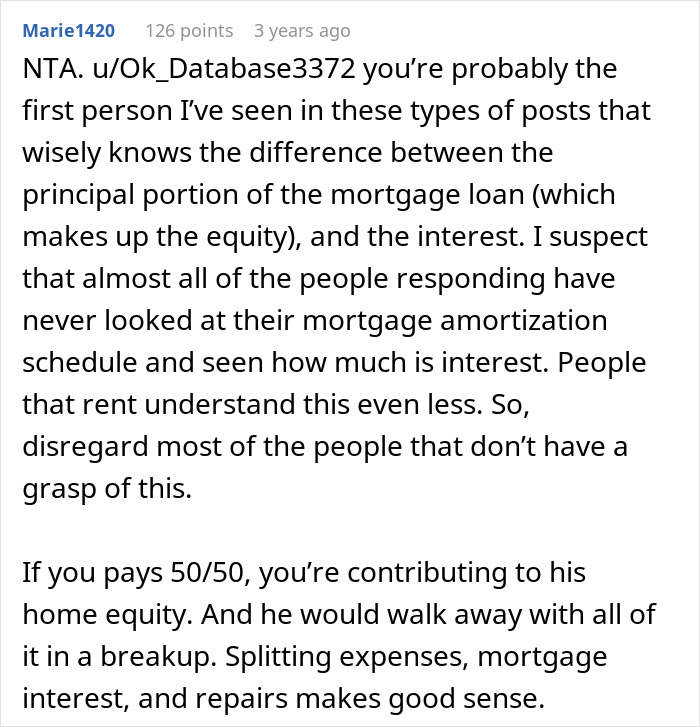
“She is not refusing to contribute to housing costs; she is objecting to paying toward the principal on a property she does not own. That distinction matters because interest, utilities, insurance and building fees are everyday living expenses, while payment on the principal builds his equity,” Lupo told Bored Panda during an interview. “If she helps fund that without a legal ownership stake, she is effectively improving his balance sheet at the expense of her ability to save for a down payment of her own.”
The expert says he’d advise the woman to only move in once the arrangement is financially clear, mutually agreed upon and documented. He adds that if she already has stable housing and moving in would cost her more than her current living arrangement, there is no sound financial reason to agree to a deal she views as one-sided.
“The real issue is not ’50/50′ in name, but whether contributions match ownership, risk and benefit. In its current form, they do not,” Lupo said. “His comments about her ‘leeching’ also suggest a poor foundation for discussing money. If they cannot come to terms on financials, delaying cohabitation is the more prudent decision.”
We asked Lupo what options the couple has in this situation. According to him, there are several, but each comes with different degrees of fairness.
One option, he says, is to delay moving in together until they are better aligned financially. Lupo explains that this avoids creating financial resentment in the relationship.
“Another is a cost-sharing model where she contributes to shared living expenses and non-equity housing costs, such as utilities, groceries, insurance, building fees and possibly mortgage interest, while he remains solely responsible for the principal,” he added. “This approach treats her contribution as payment for rent and expenses, not as a contribution toward the principal of his asset.”
Lupo says a second model would be a fixed rent arrangement, where the woman pays a set monthly amount based on fair occupancy value rather than on his mortgage structure. He notes that while this is often cleaner financially, it can create an owner-tenant relationship.
“A third option is equity sharing through participation, in which her payments gradually buy her a documented share of the property. But this approach only works if both parties are willing to formalize legal ownership,” the expert told us.
Lupo says they could also continue living separately and save until they are able to purchase a home together with joint ownership. He believes that his may be the most balanced long-term solution.
The woman has made it clear that she wants to buy a home in the future. We asked Lupo what step she can take to speed up this process.
“The fastest way for her to buy her own property is to begin building a strict savings and affordability plan. She should first calculate the full amount she needs, not just for a down payment but also for closing costs, moving expenses and a buffer for any unexpected repairs,” he replied.
He says she should set up automated transfers into a dedicated house fund as soon as she begins earning a salary. “She should also keep her current housing costs as low as possible in the meantime,” he advises. “Because every extra dollar spent on living expenses is a dollar not going toward ownership.”
Lupo added that the woman should also work on improving the credit profile a lender will eventually underwrite. “That means paying down debt, keeping her debt-to-income ratio under control, maintaining at least a good credit score, and sticking to a budget that cuts nonessential spending,” he explains. “In practical terms, reducing debt has a two-pronged benefit: it frees up cash for savings and improves the odds of qualifying for a mortgage with the best possible terms.”
The expert notes that a disciplined budget matters here “because the speed of purchasing a first home is usually determined by consistency, not by one-off financial wins.”








By entering your email and clicking Subscribe, you're agreeing to let us send you customized marketing messages about us and our advertising partners. You are also agreeing to our Privacy Policy.
Thank you! You've successfully subscribed to newsletters!



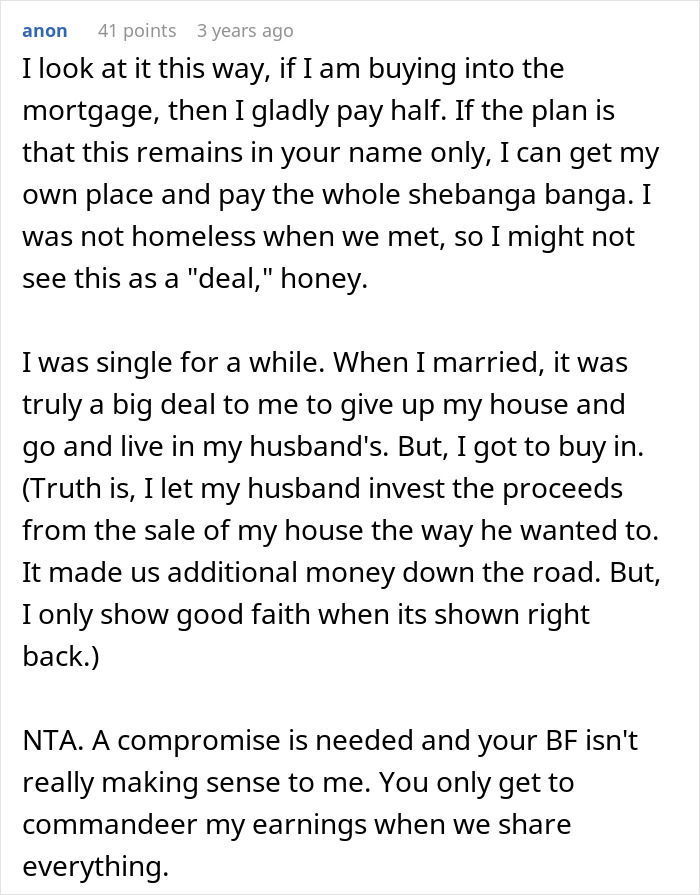
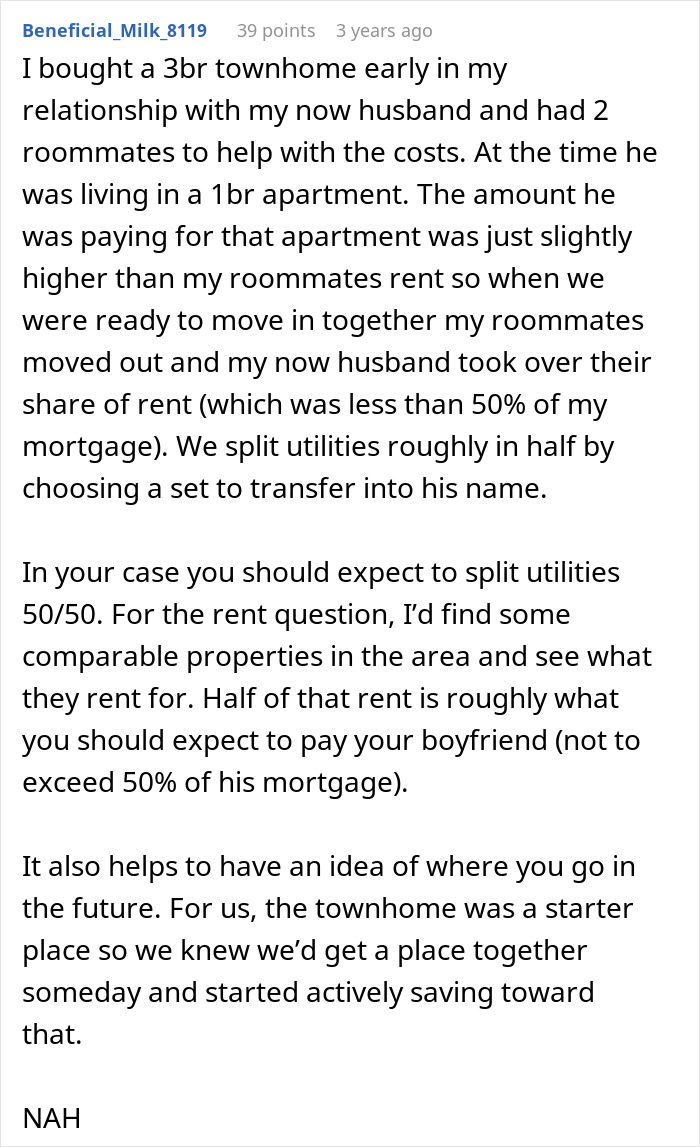
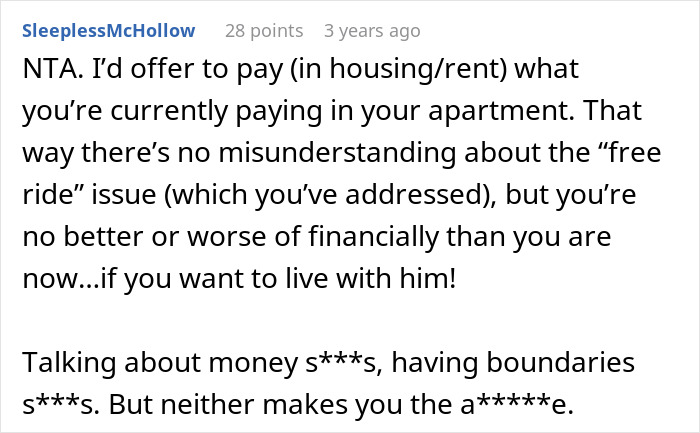
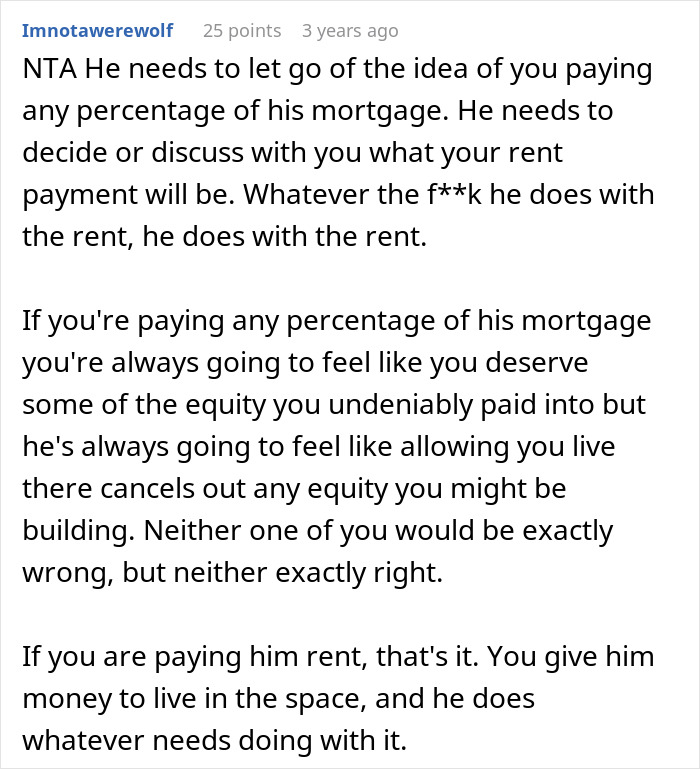
Difficult. Somehow I understand the BF. BF probably already payed off part of the mortgage and probably a 10% deposit. If a person gets added on the deed and breaks up with BF after a month is it 50/50 split fair? There are ways to sign a contracts based on how much each person would get after break up based on contributions to equity.
why would she get added to the deed? She is paying to stay, like she pays her current landlord. She isn't asking her landlord for being put in the deed. She is conflagrating sleeping with someone and paying to stay in a place with having actual ownership of the place
Load More Replies... It's interesting that she is fine with paying landlord's mortgage, but not her boyfriend's. That she sees it as him profiting off of her. I'm sure they could have figured out a solution were everybody wins. But not with that view of hers vs his money.
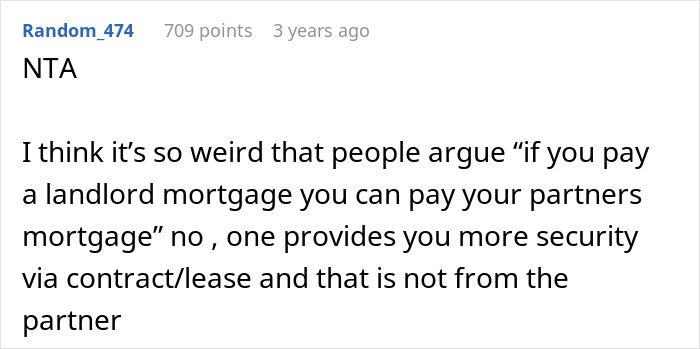
one of the commenters explained the difference. He wants her to live as a tenant, but not have the protections of a tenant. He doesn't want her to have the security of a lease, he doesn't want her to have equity in the place.
Load More Replies... Difficult. Somehow I understand the BF. BF probably already payed off part of the mortgage and probably a 10% deposit. If a person gets added on the deed and breaks up with BF after a month is it 50/50 split fair? There are ways to sign a contracts based on how much each person would get after break up based on contributions to equity.
why would she get added to the deed? She is paying to stay, like she pays her current landlord. She isn't asking her landlord for being put in the deed. She is conflagrating sleeping with someone and paying to stay in a place with having actual ownership of the place
Load More Replies... It's interesting that she is fine with paying landlord's mortgage, but not her boyfriend's. That she sees it as him profiting off of her. I'm sure they could have figured out a solution were everybody wins. But not with that view of hers vs his money.
one of the commenters explained the difference. He wants her to live as a tenant, but not have the protections of a tenant. He doesn't want her to have the security of a lease, he doesn't want her to have equity in the place.
Load More Replies...
































 No fees, cancel anytime






31
5