Get Premium
Dark mode theme is available exclusively for premium users. Learn more about the benefits of subscribing.
No fees, cancel anytime.

 Dark Mode Ad-Free Browsing Unlimited Content
 Ad-Free Browsing Unlimited Content Dark Mode
Join 1.2 million Panda readers who get the best art, memes, and fun stories every week!

Marrying into a family comes with its own unique and “fun” challenges, from expectations, to demands and just entitled behavior. You’ve only got to scroll here for a bit to find other examples. However, sometimes things aren’t so clear cut and so folks have to ask the internet if they are overthinking things.
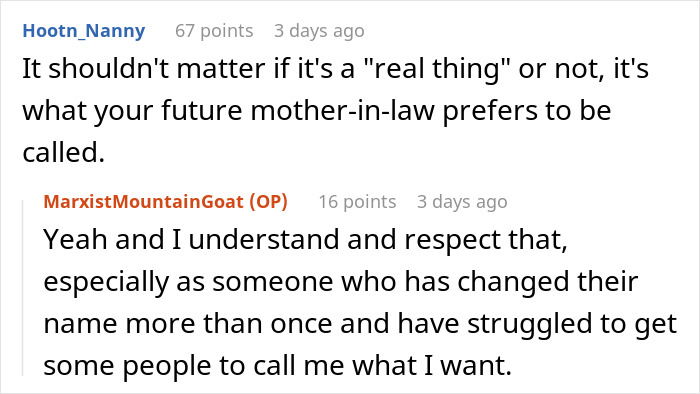
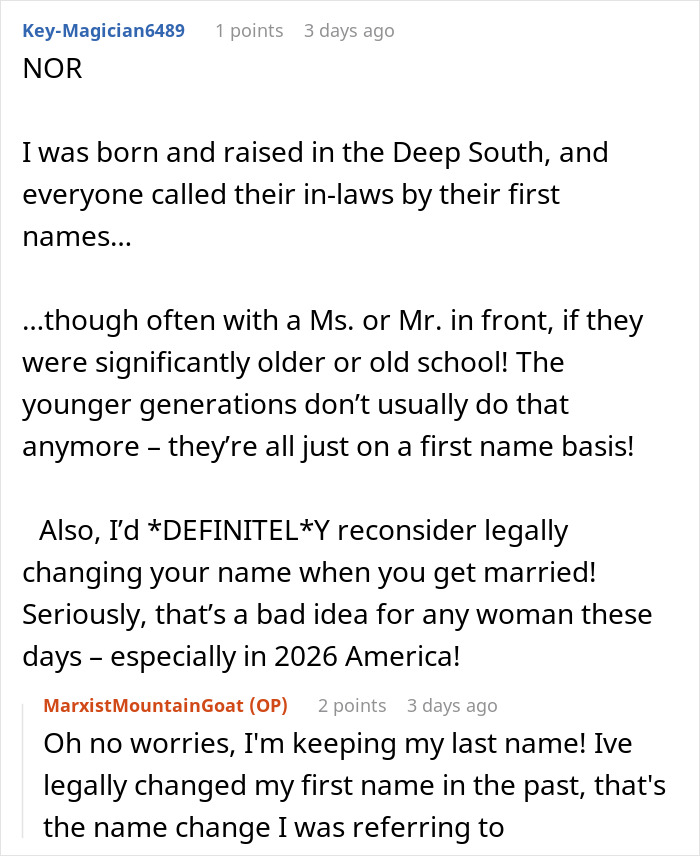
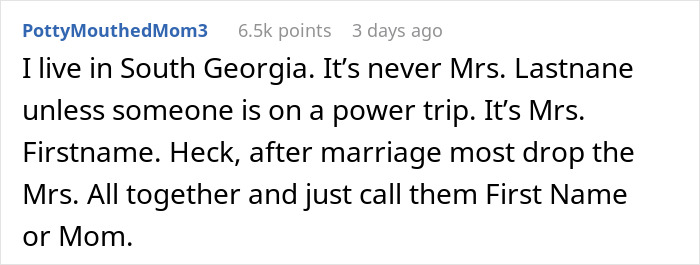
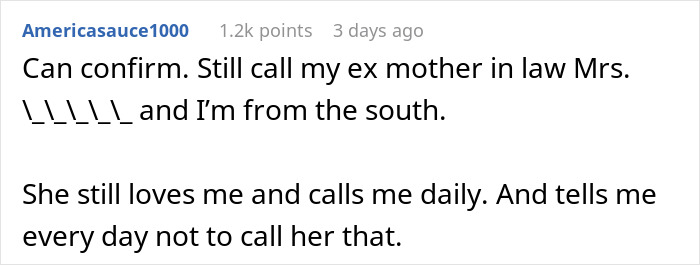
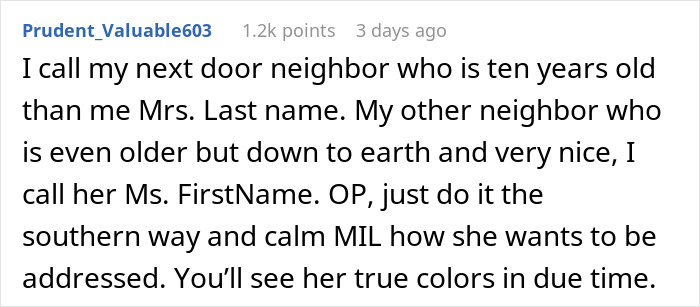
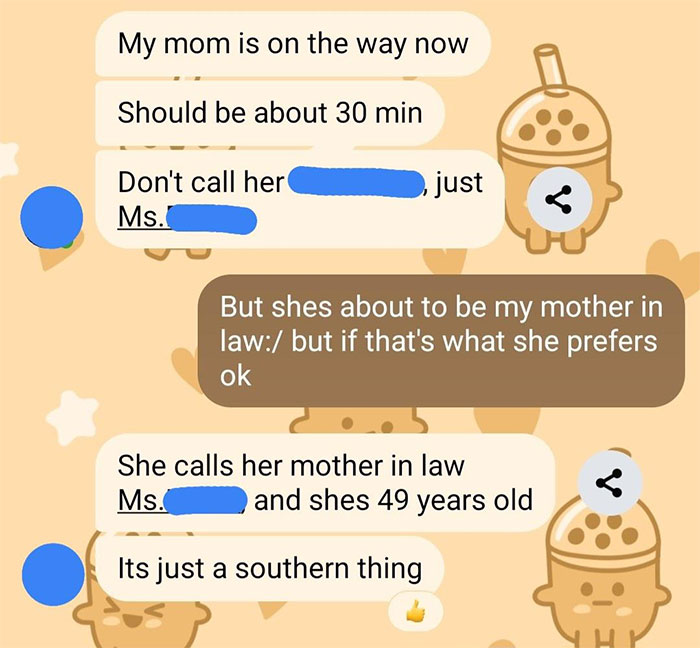
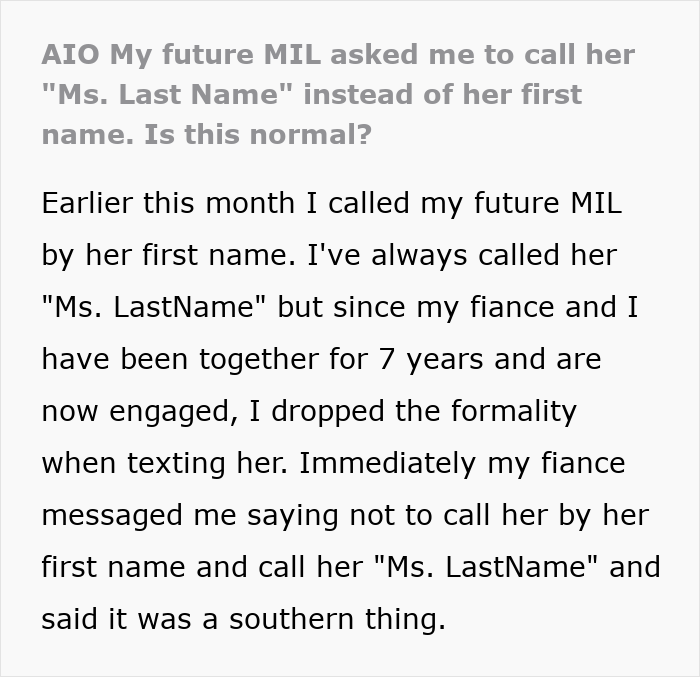
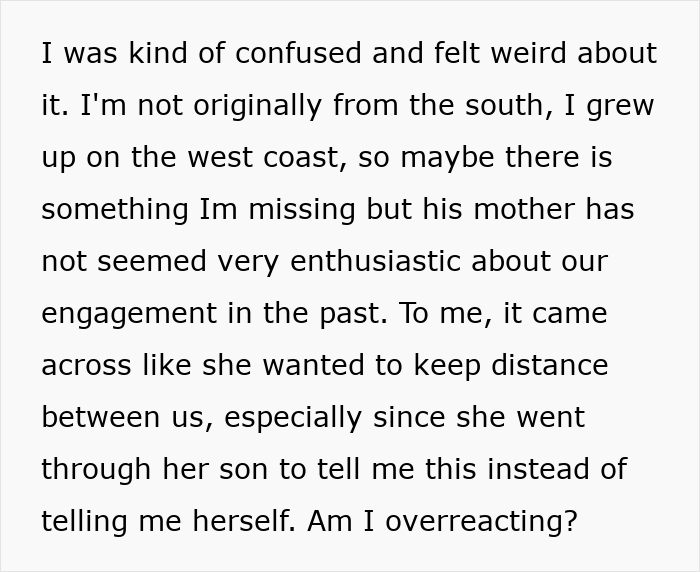
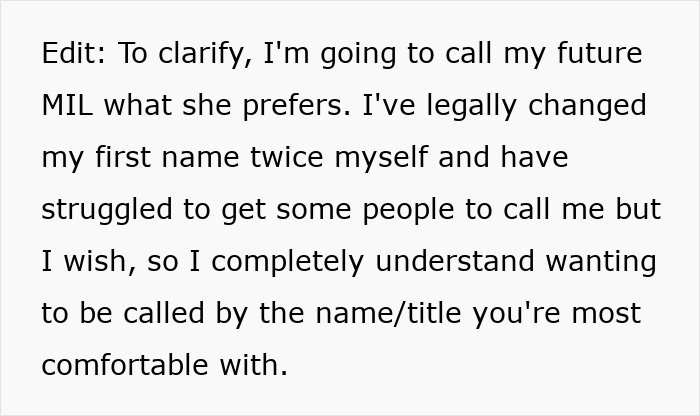
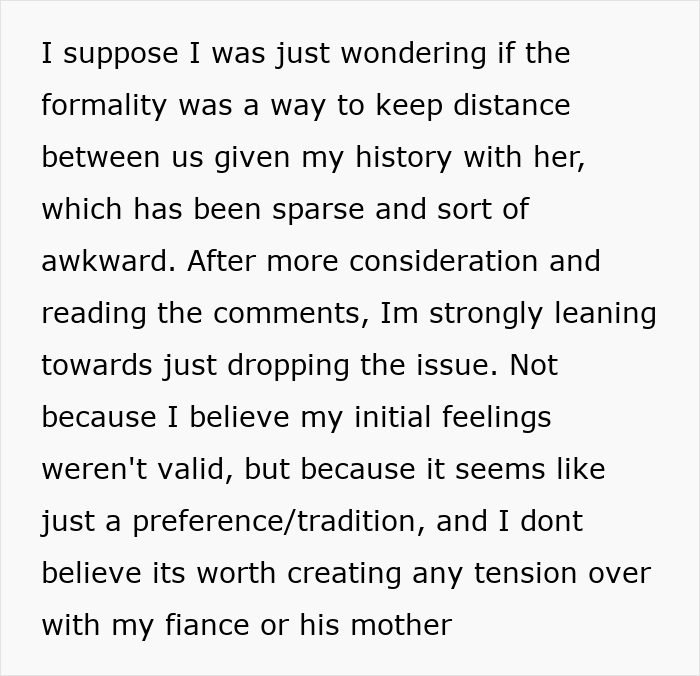
A woman went online to seek advice on what to do after discovering that her future mother-in-law demanded to be called by her surname, and not her first name. So people rolled up their sleeves and got to work discussing the MIL’s demands, their own experiences and if she was being unreasonable.
Image credits: pvproductions (not the actual photo)
Image credits: MarxistMountainGoat
Image credits: jet-po (not the actual photo)
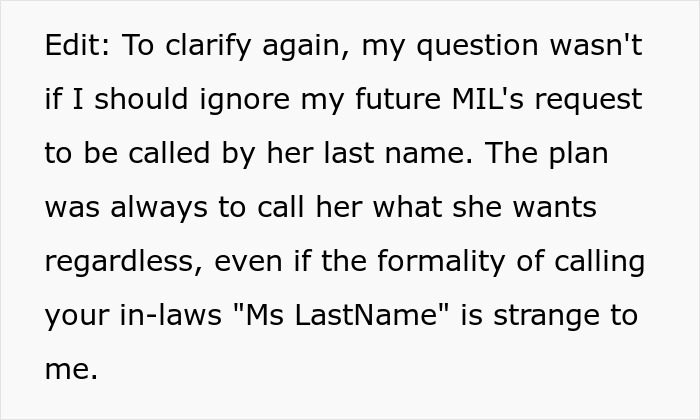

Image credits: MarxistMountainGoat
Distance with in laws rarely shows up as one big blowup. It tends to creep in through small moments, like a first name dropped in a text message, that suddenly reveal how much unspoken tension has been sitting underneath a relationship all along. Reading a story like this, it’s easy to see why so many people feel a jolt of recognition. In law relationships are famously hard, and researchers have spent decades trying to understand why. A Psychology Today piece on in-law dynamics notes that a large share of couples, as many as three in four, report ongoing friction with a partner’s parent, even when nobody involved is acting like a villain.
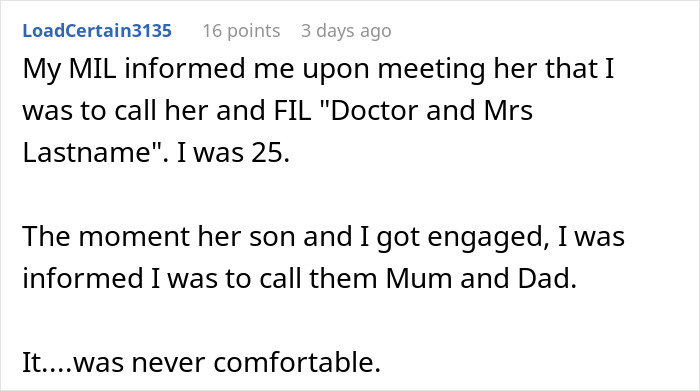
Part of the difficulty is structural rather than personal. When two adults join their lives together, they’re also asking two family systems that have run on their own rules for decades to suddenly make room for someone new. A Columbia Metropolitan piece on why in-law relationships strain points out that new family members bring their own history, personality, and comfort level, and blending that into an existing family takes real adjustment on both sides. Nobody signed up to be blended in, which is part of why it can feel uncomfortable even when nothing overtly hostile has happened.
Then there’s the layer of psychology researchers keep circling back to. Work referenced by outlets covering psychologist Terri Apter’s research has found that a majority of women describe tension with a mother in law, often rooted in a mother feeling protective of a son who now shares his attention and loyalty with someone else. That doesn’t make either woman wrong. It just means two people can be reacting to the same relationship from very different emotional starting points, one feeling like she’s gaining a family and the other feeling like she’s losing a piece of one.
Communication style adds another wrinkle, and it’s one that shows up constantly in stories like this. When a message about boundaries or preferences gets relayed through a partner rather than delivered directly, it can land very differently than the same words would coming from the source. Therapists call this pattern triangulation. It’s rarely done with bad intent. Often it’s just a family’s long habit, a way of avoiding an uncomfortable conversation. But for the person on the receiving end, especially someone newer to the family, it can easily read as distance or disapproval, even when that’s not the intention at all.
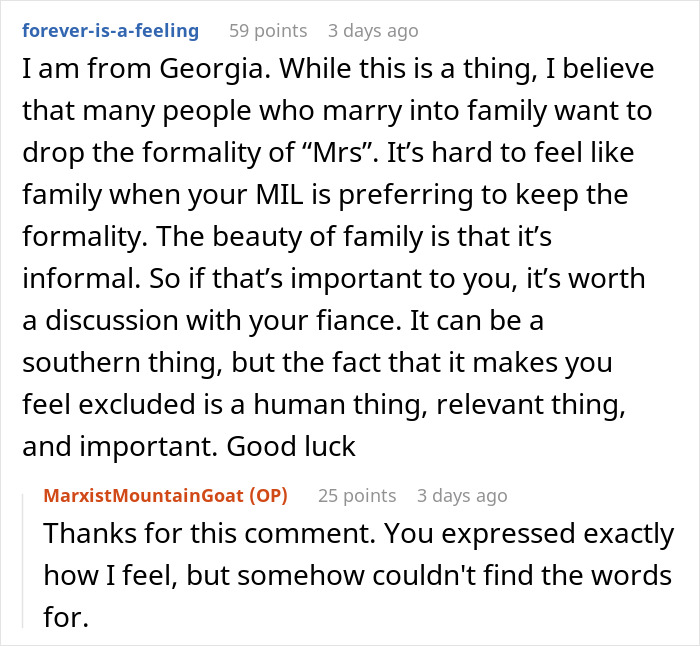
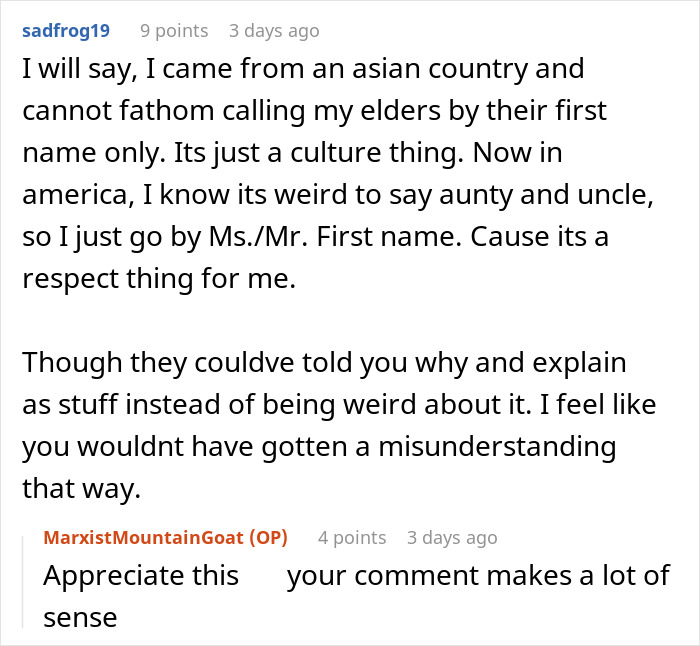
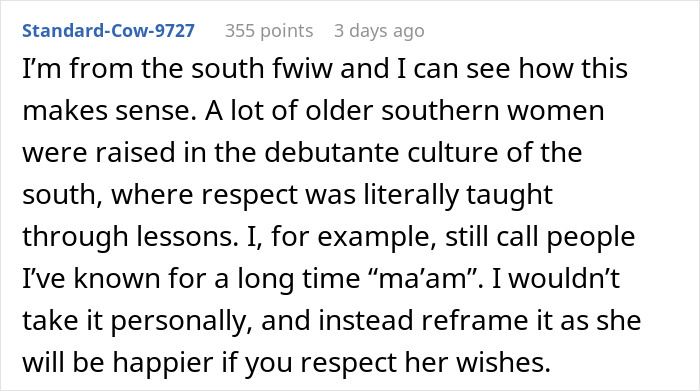
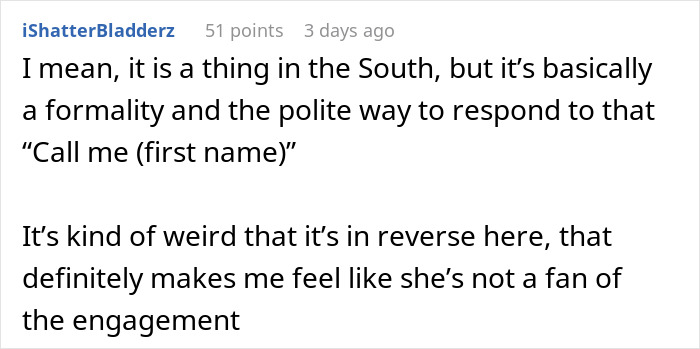
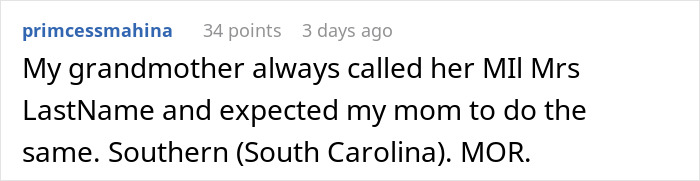
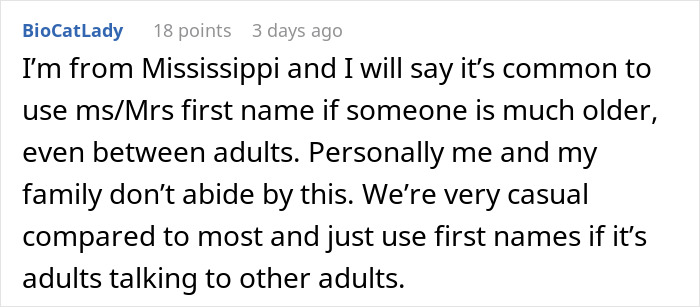
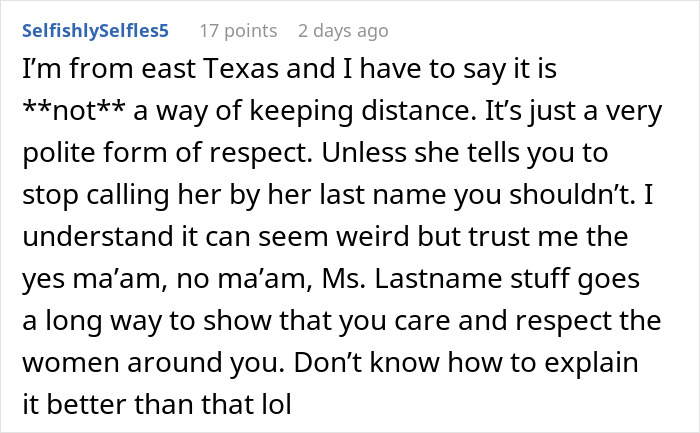
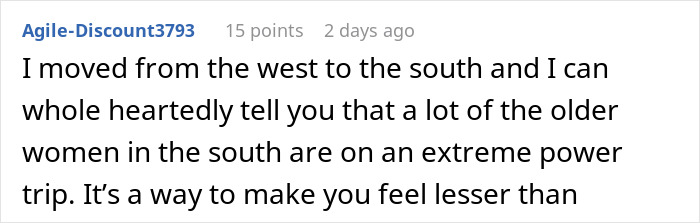
Cultural background matters too, and this is where regional customs like using a title and last name for elders come in. Etiquette writers have long described formal address as a deeply ingrained Southern tradition, one that has little to do with any individual relationship and everything to do with how an entire region was raised to show respect. A Steven Petrow column on what to call in laws points out that even adult children who have known their Southern in-laws for years sometimes never get invited to drop the formality, simply because that’s how that generation was taught to relate to elders. Someone from a region without that custom can reasonably read formality as coldness, while someone raised inside it experiences the exact same words as basic respect.
Alignment between partners plays a role as well. A mismatch is linked to more strain on the marriage down the road than the in-law behavior itself. In other words, it often isn’t the mother in law or the father in law causing the real friction. It’s whether both partners are on the same page about what closeness should even look like. None of this guarantees closeness will come easily or quickly. But naming these different layers, family adjustment, protective instincts, indirect communication habits, and regional upbringing, at least explains why the distance can feel so confusing from the inside. It’s rarely just one thing. It’s usually all of them, overlapping at once.












By entering your email and clicking Subscribe, you're agreeing to let us send you customized marketing messages about us and our advertising partners. You are also agreeing to our Privacy Policy.
Thank you! You've successfully subscribed to newsletters!



When I was dating my ex-gf she called my grandmother by her first name. Grand ma did not like that or her. My ex turned out to be a lying b***h later so it’s ok. When I dated my future wife I took her to see my grandmother and she called her Mrs with the surname. My grandmother liked her a lot. Unfortunately she passed away before my wife and I got married.

"That's fine, but my future children will also call you Mrs. Lastname."
When I was dating my ex-gf she called my grandmother by her first name. Grand ma did not like that or her. My ex turned out to be a lying b***h later so it’s ok. When I dated my future wife I took her to see my grandmother and she called her Mrs with the surname. My grandmother liked her a lot. Unfortunately she passed away before my wife and I got married.
"That's fine, but my future children will also call you Mrs. Lastname."



















 No fees, cancel anytime




28
5