Get Premium
Dark mode theme is available exclusively for premium users. Learn more about the benefits of subscribing.
No fees, cancel anytime.

 Dark Mode Ad-Free Browsing Unlimited Content
 Ad-Free Browsing Unlimited Content Dark Mode
Join 1.2 million Panda readers who get the best art, memes, and fun stories every week!

Most of us have grown up believing that “a friend in need is a friend indeed,” but some friendships can feel heavy. It may be the late-night calls you can’t ignore, the favors that quietly pile up, the moments you stay silent, or the friend who constantly shows up uninvited.
But friendship doesn’t mean bending over backwards or sacrificing your comfort for someone who wouldn’t do the same.
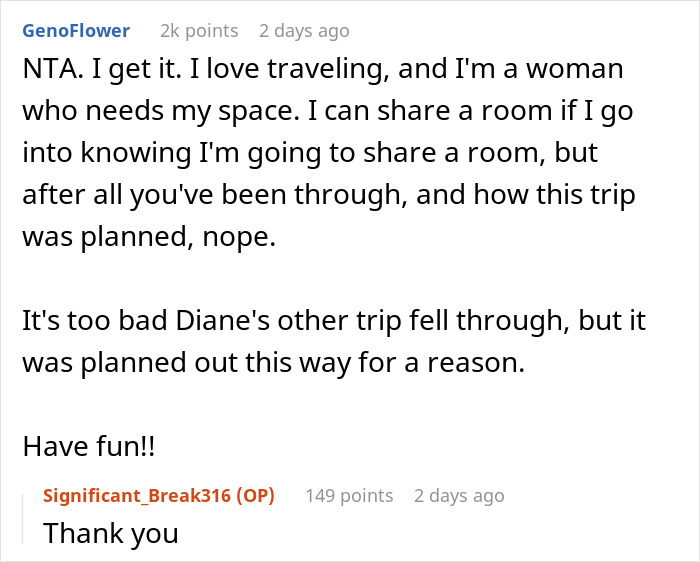
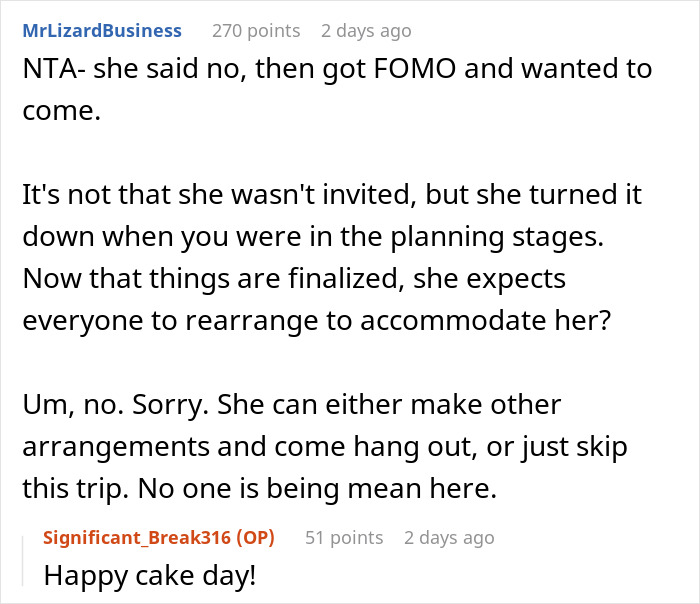
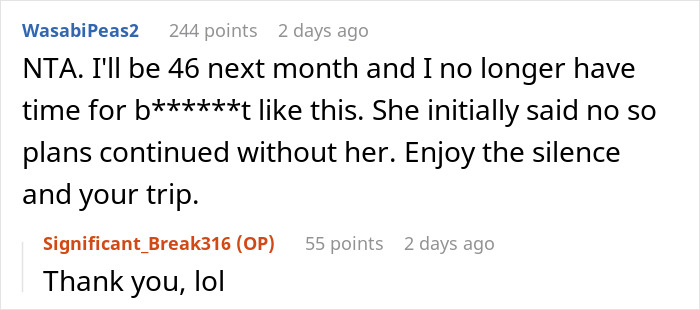
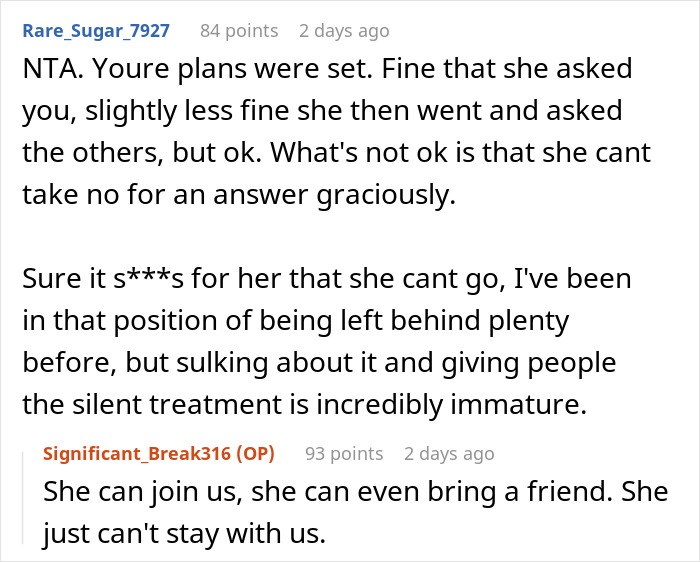
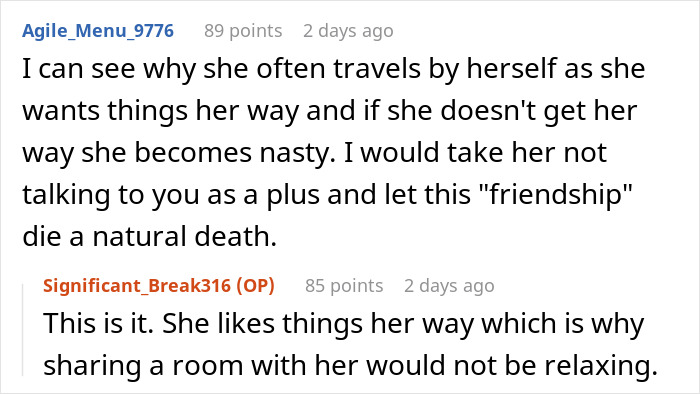
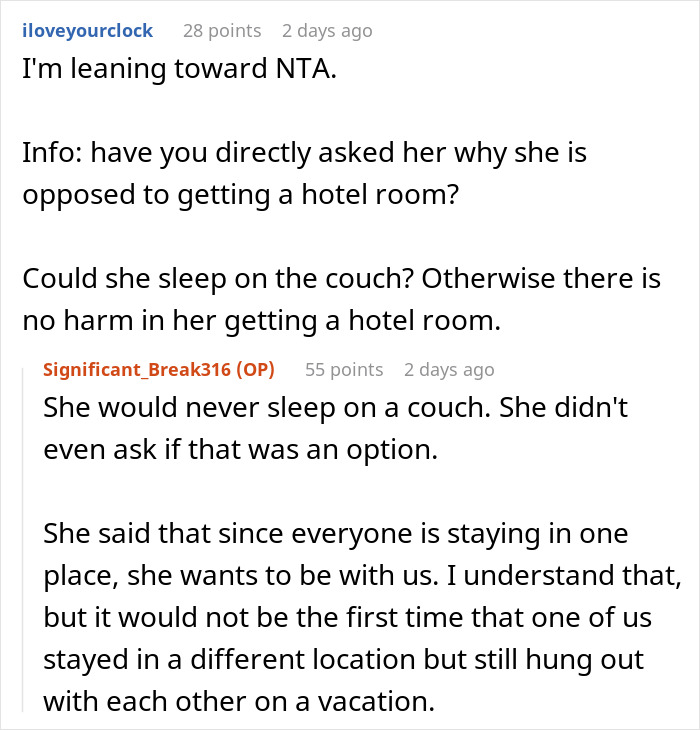
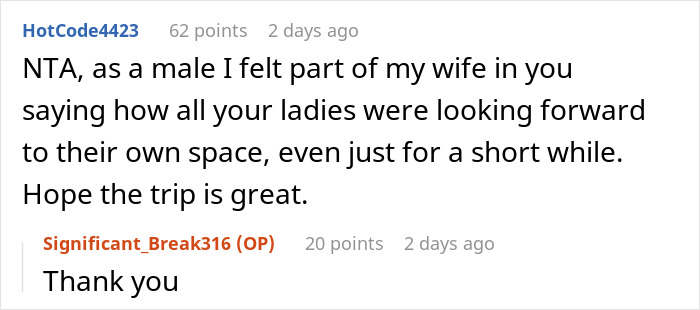
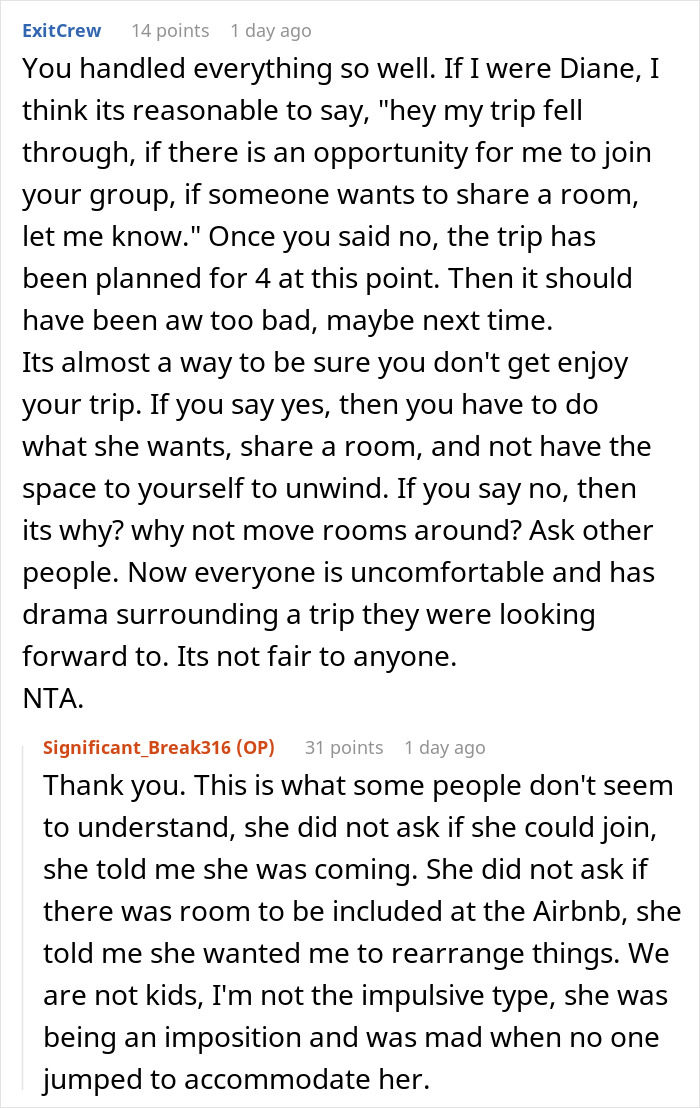
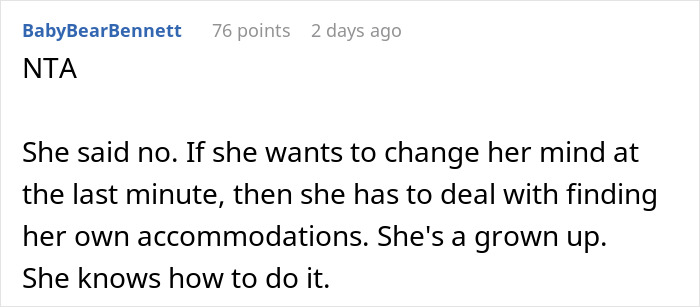
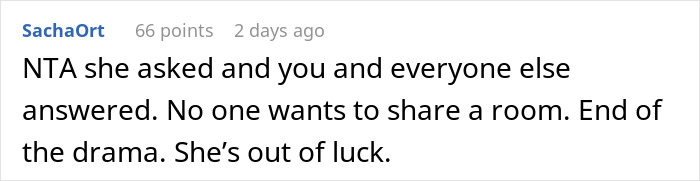
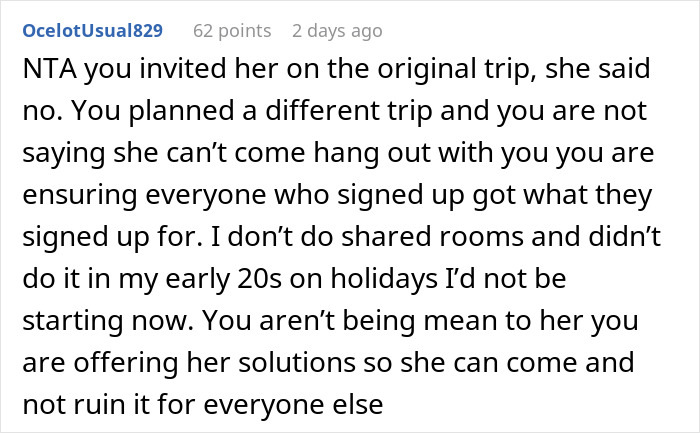
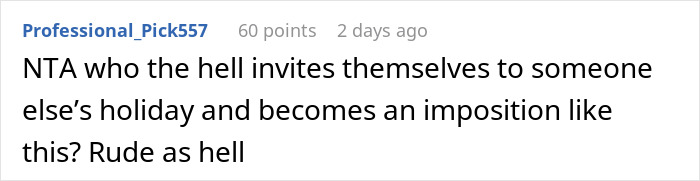
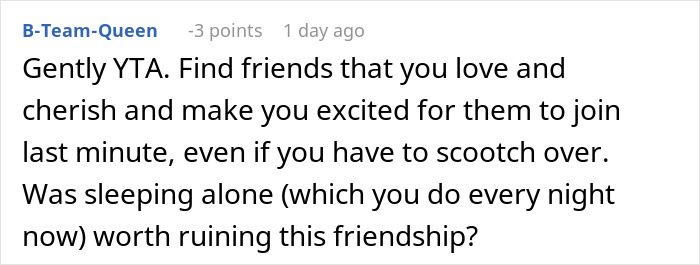
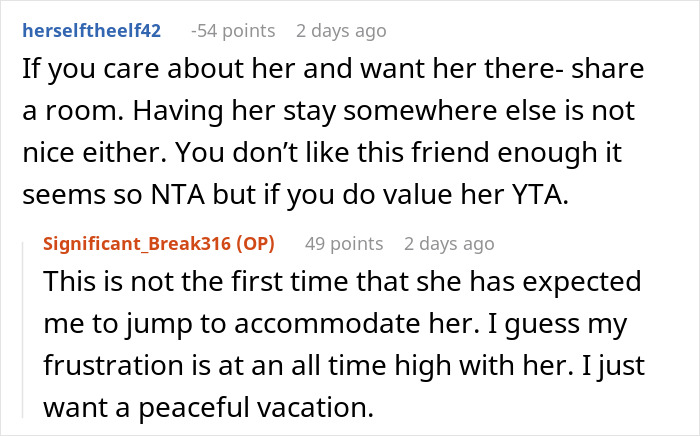
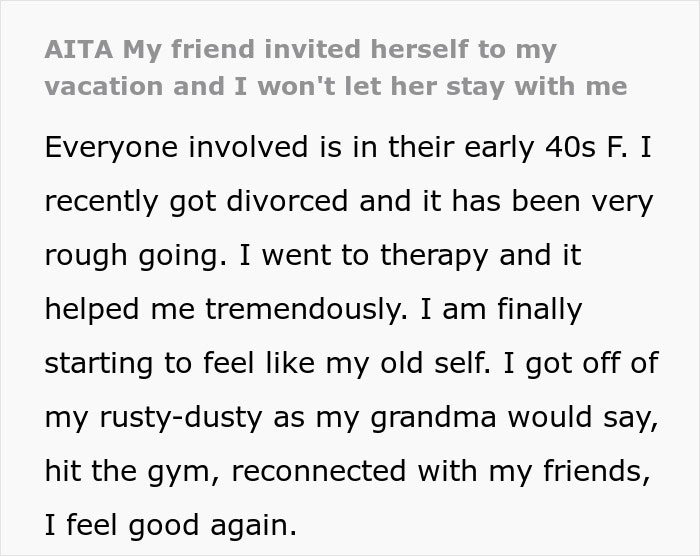
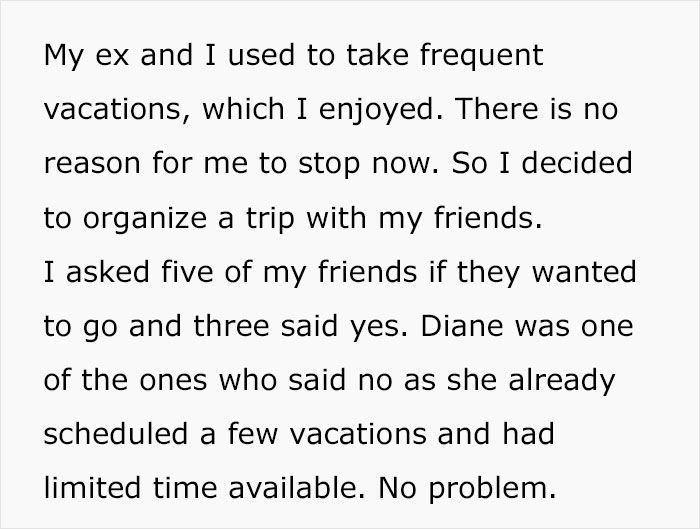
A woman knew this simple truth and tried her best to set some boundaries when a friend wanted to join her vacation at the last minute.
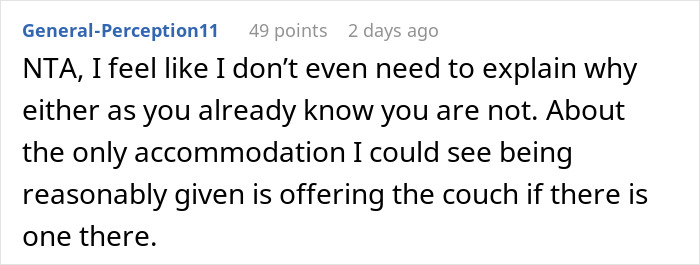
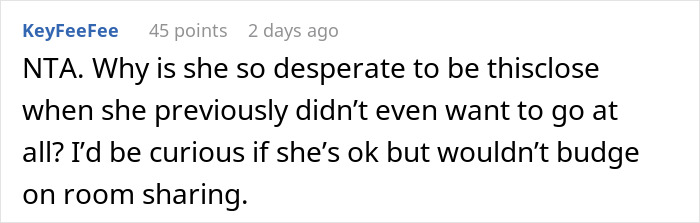
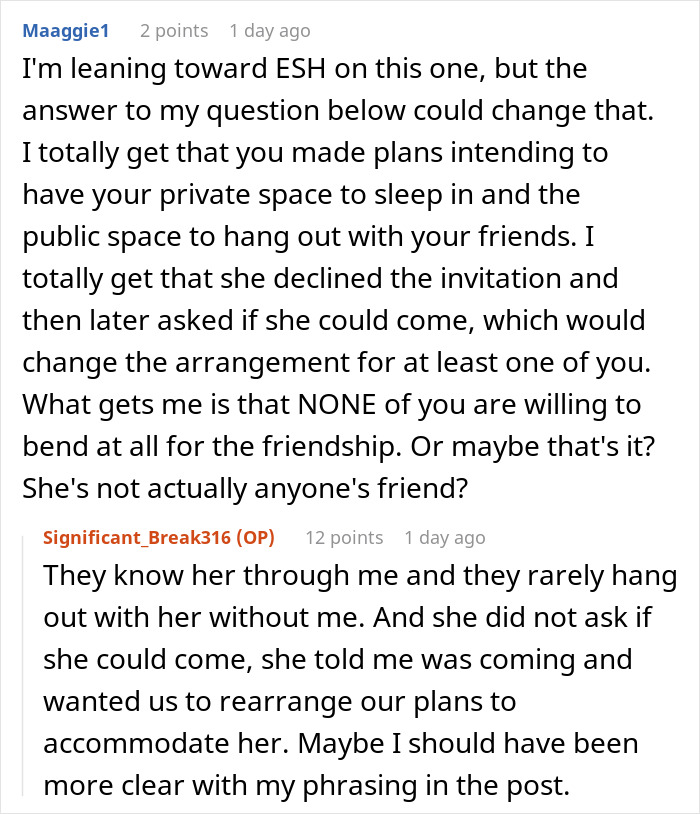
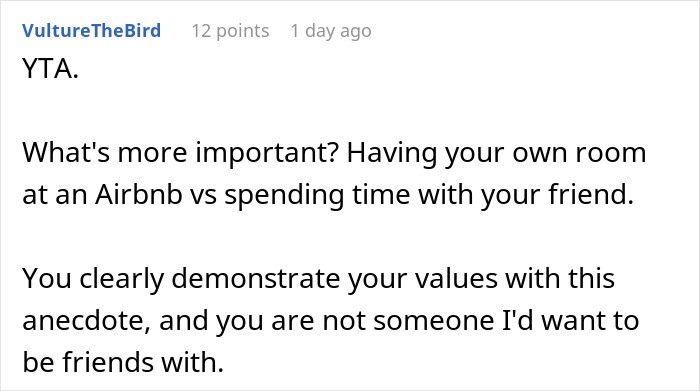
Sharing her story online, she said in the end, it was less about lodging logistics and more about peace of mind.
Image credits: freepik (not the actual photo)

Image credits: freepik (not the actual photo)

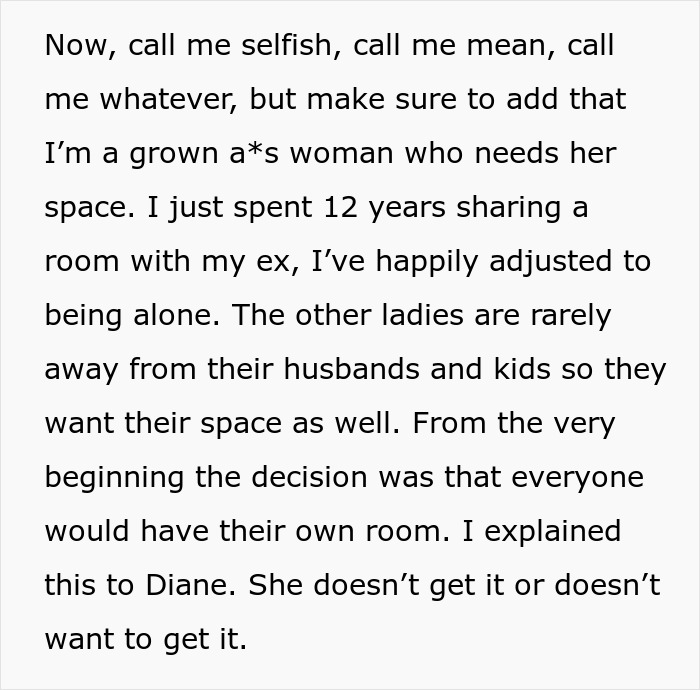
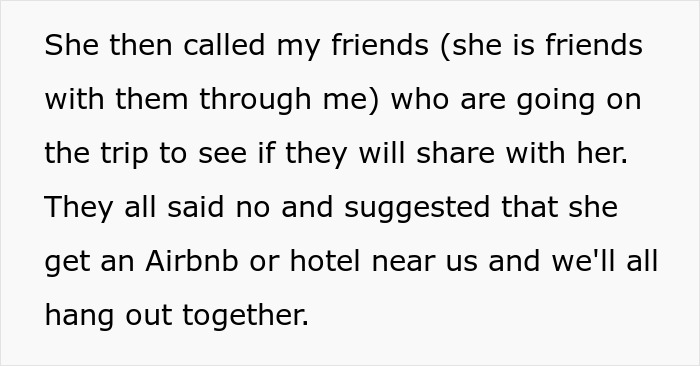

Image credits: user25451090 / freepik (not the actual photo)
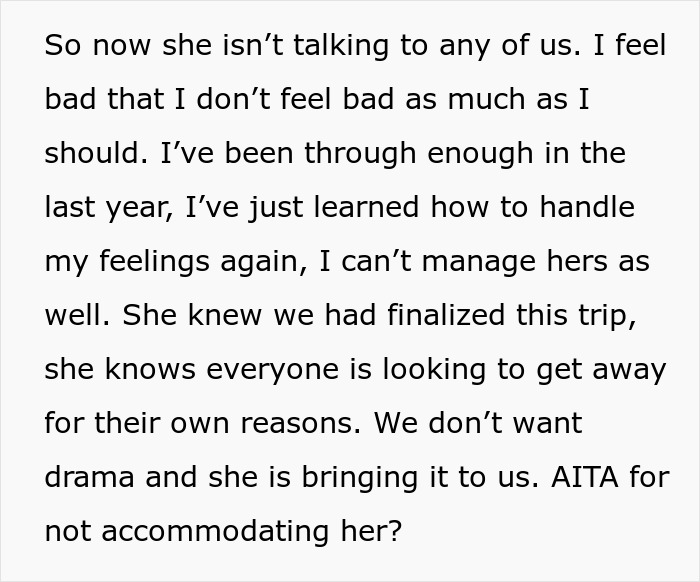
Image credits: Significant_Break316
When you zoom out from the obvious situation — which is a simple dispute over a room or a canceled vacation plan — you can see some larger issues at play. For instance, repeated boundary crossing, entitled behavior, and unspoken assumptions.
One way to think of boundaries is that they provide an instruction manual for how you like to be treated. If you don’t set them, others may unconsciously fill the gap with their expectations, whether it’s in your best interest or not.
While we place a lot of importance on friendships, quality and boundaries matter just as much as quantity. A survey found that 61% of US adults believe having close friends is extremely or very important for people to live a fulfilling life.
But findings from the American Friendship Project show that while many people are satisfied with the number of friends they have, over 40 % feel they aren’t as close with their friends as they’d like to be.
Research on adult friendships shows that support from friends and autonomy — the freedom to be yourself and have your needs respected — are the main predictors of friendship quality and wellbeing.
When boundaries aren’t set or respected, it can create a dynamic where one person tries to take more emotional or practical space than the other is comfortable with. Because of this, friendships can stay at a surface level instead of becoming truly close.
“Be clear about your needs and boundaries, and express them. Don’t become a doormat, and be aware of people who make you into one… They say you become the average of your group of friends, so make sure you are in a group you admire, respect, and trust,” says Founder of Menlo Park Psychiatry & Sleep Medicine, Dr. Alex Dimitriu.
Experts say that healthy boundaries are clear expectations about respect and limits.
Saying “I need my own room” is about being honest about your needs and feelings, which is what makes a relationship healthy. Because when you protect your peace of mind, you can show up fully for others without resentment or stress.
Many of us feel guilt at the idea of disappointing someone we care about, especially if that person has always expected us to say yes. When we say no to a friend, it triggers that age-old fear of being seen as selfish or unkind, even when it’s the healthiest choice.
It’s that little voice in your head that says, “A good friend would just say yes.”
Being friends with someone for a long time or having deep shared history can also make some people assume that they have perpetual access to your life. This is known as friendship entitlement, where some people mistake past intimacy for rights.
Entitlement can look like expecting a friend to always reschedule their plans to help in a crisis, or believing support should be unlimited and unconditional.
Some people forget that relationships evolve and so do people’s needs. Some people also conflate limits with personal dislike, like the boundary is more about them and not your needs.
“Your friend, especially in a long-term relationship, may be surprised, confused, or even hurt by your new boundary. This is normal. Their reaction is their responsibility, not yours. Your responsibility is to communicate your need clearly and respectfully,” writes Jane Doe, a Friendship Boundaries Expert.
Conflicts like this escalate because of a constellation of boundary crossings over time, not just a one-off incident.
As some experts put it: the core goal of drawing lines isn’t to create distance, but to be your own person.
Ultimately, healthy friendships aren’t about perfection or always agreeing… they’re about mutual respect and growth.








By entering your email and clicking Subscribe, you're agreeing to let us send you customized marketing messages about us and our advertising partners. You are also agreeing to our Privacy Policy.
Thank you! You've successfully subscribed to newsletters!































 No fees, cancel anytime









29
0