Get Premium
Dark mode theme is available exclusively for premium users. Learn more about the benefits of subscribing.
No fees, cancel anytime.

 Dark Mode Ad-Free Browsing Unlimited Content
 Ad-Free Browsing Unlimited Content Dark Mode
Join 1.2 million Panda readers who get the best art, memes, and fun stories every week!

Many of us have hardly retained anything from our school years, especially mathematics classes.
Therefore, it does not come as a surprise that adults tend to use their phone calculators to compute the most basic additions and subtractions.
But one calculator feature, which people might especially enjoy upon shopping during sales, is to be able to deduce a percentage off a number.
However, on the off and scary chance that one might find themselves devoid of their smartphones during Black Friday shopping for Christmas gifts, being able to calculate a percentage is undeniably a good skill to have.
Image credits: gunsnrosesgirl3
Image credits: gunsnrosesgirl3
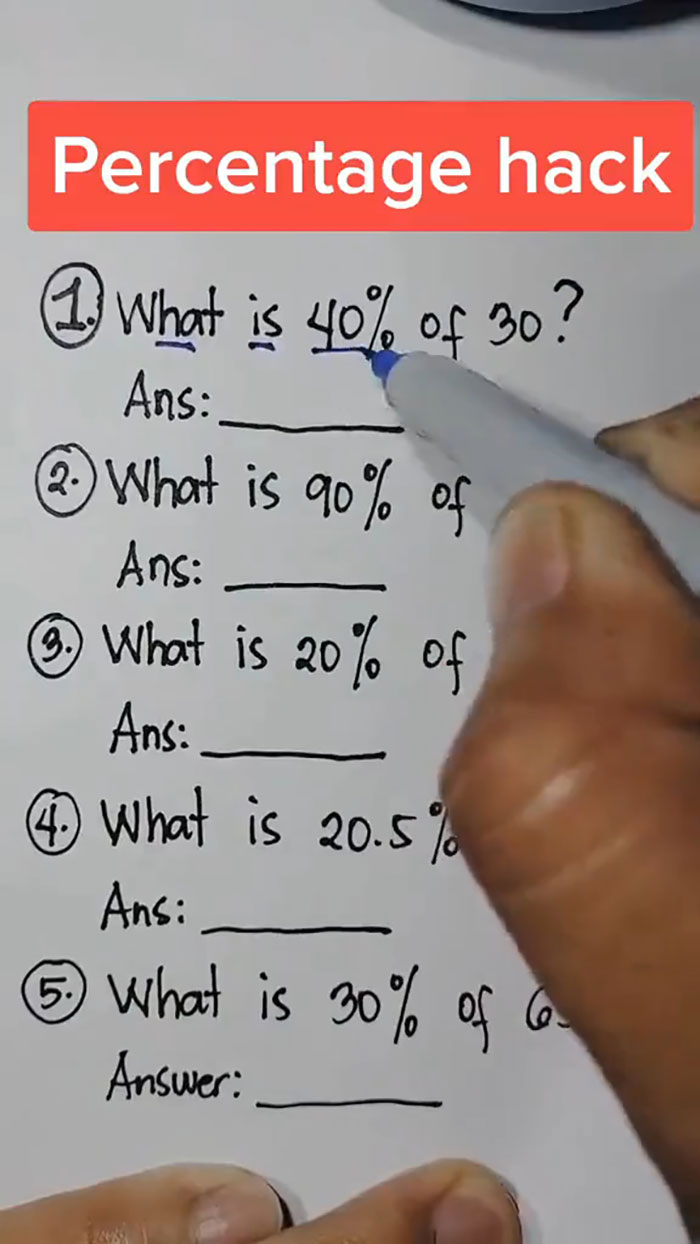
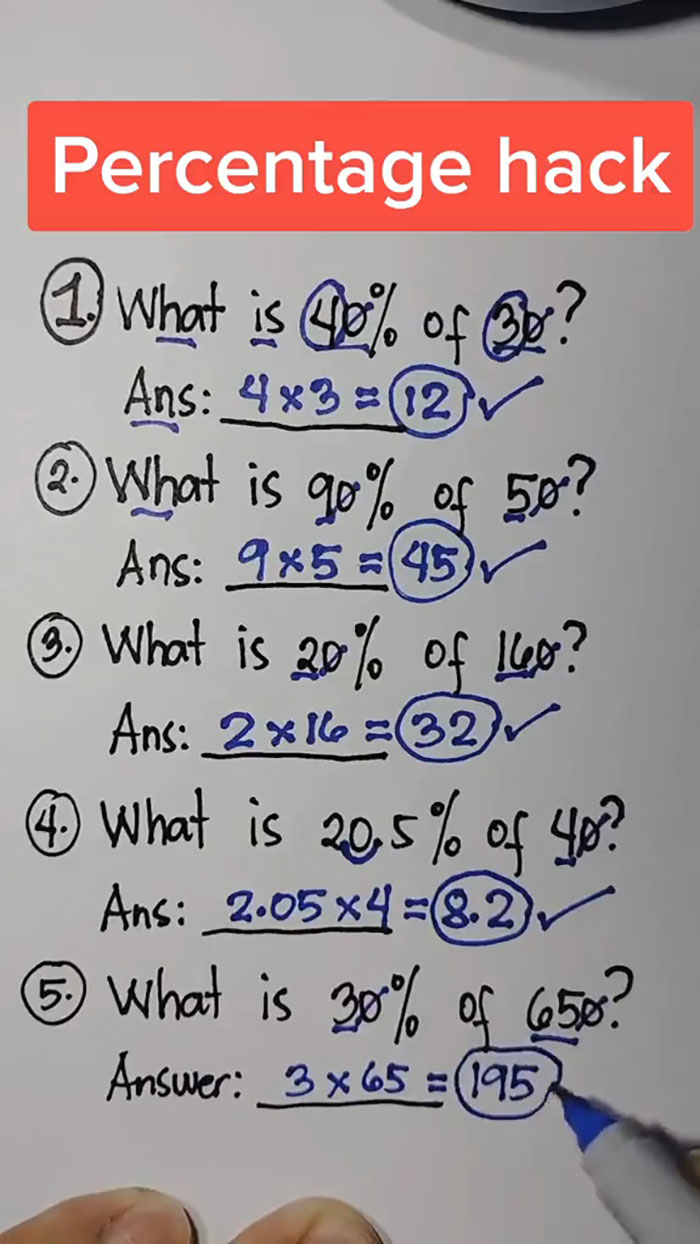
Selina, who runs the popular science-themed “gunsnrosesgirl3” X (formerly known as Twitter) account, shared a video on Monday (November 20) that could potentially revolutionize the way people calculate percentages.
One of the better-known methods to calculate percentages is to simply multiply the starting number by the percentage number as a fraction.
How to easily work out percentages
pic.twitter.com/rQbPF3fKl3— Science girl (@gunsnrosesgirl3) November 20, 2023
Image credits: Annie Spratt
Nevertheless, this method once again might often require the use of a calculator, for those who would identify themselves as not being the most mathematically knowledgeable people.
As a result, Selina’s video, which has been viewed 11.8 million times, exposes an easy hack to get around percentages.
Image credits: Joshua Hoehne
It demonstrates that you would simply need to divide two numbers by ten and then multiply them by each other.
As a result, it would look like this following example: 40 percent of 30 is 4 x 3, which equals 12.
Unilad has demonstrated the calculation with the example of a restaurant bill amounting to $87.50.
To get the 20 percent for, for example, your tip, you calculate 2 x 8.75, which would equal a tip of $17.50.
Image credits: ThisIsEngineering
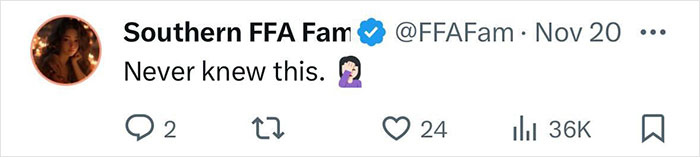
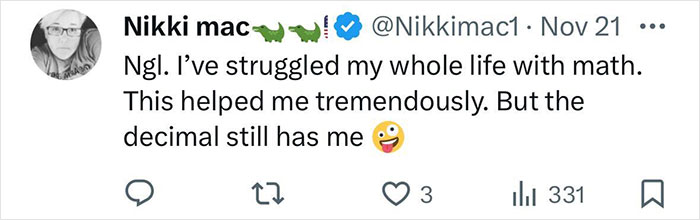
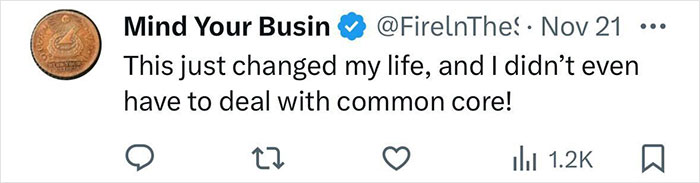
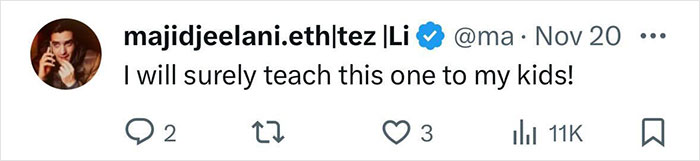
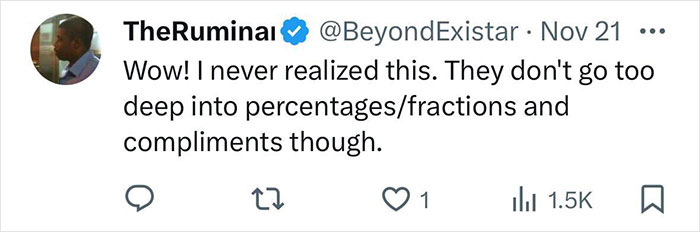
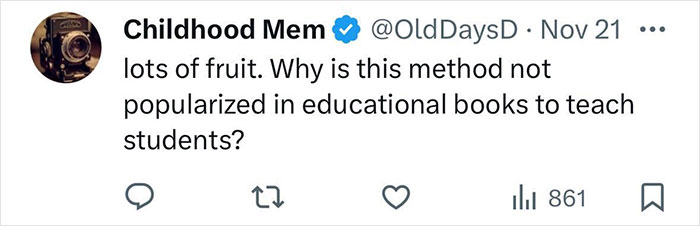
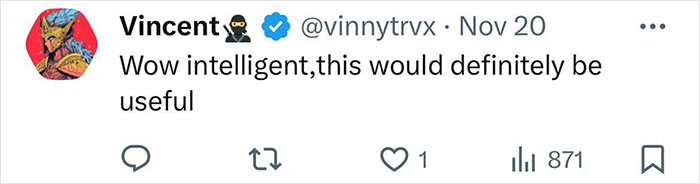
“Something as neat and efficient as this will never be taught in public education,” an X user commented.
A person tried to challenge other X users with the following problem: “Now do 41% of 30…” to which a person replied: “That should be 4.1 x 3 = 12.3?”
Image credits: Mikhail Nilov
The person who challenged fellow X users with the seemingly complicated request went on to congratulate the individual who took up the challenge and wrote: “Bingo! I don’t know why the video didn’t show how to do it with numbers that do not finish with 0.”
In other math news, a trend branded “girl math” has taken social media by storm, which has seen women posting their hilarious reasoning when shopping, packing, and saving time and money.
An example of girl math consists of not paying $15 in shipping, and instead spending another $30 in order to benefit from the free shipping.

By entering your email and clicking Subscribe, you're agreeing to let us send you customized marketing messages about us and our advertising partners. You are also agreeing to our Privacy Policy.
Thank you! You've successfully subscribed to newsletters!
51Kviews
Share on Facebook
It makes me sad that what was once common knowledge is now considered a newly discovered life hack.

Teaching a "hack " is only useful when the underlying principles are taught too - why it works. Otherwise, they will fail to answer slightly different phrased questions.
Load More Replies...
The people in the comments trying to be rude to her for pointing out a neat trick smh. Of course it doesn't work for every number, but it's useful for things like sales or tipping where you see nice round numbers. Why is everyone being so aggressive??
It makes me sad that what was once common knowledge is now considered a newly discovered life hack.
Teaching a "hack " is only useful when the underlying principles are taught too - why it works. Otherwise, they will fail to answer slightly different phrased questions.
Load More Replies... The people in the comments trying to be rude to her for pointing out a neat trick smh. Of course it doesn't work for every number, but it's useful for things like sales or tipping where you see nice round numbers. Why is everyone being so aggressive??





















 No fees, cancel anytime












51
25