Get Premium
Dark mode theme is available exclusively for premium users. Learn more about the benefits of subscribing.
No fees, cancel anytime.

 Dark Mode Ad-Free Browsing Unlimited Content
 Ad-Free Browsing Unlimited Content Dark Mode
Join 1.2 million Panda readers who get the best art, memes, and fun stories every week!

Sometimes, caring about someone means noticing potential challenges before they do, and feeling the weight of responsibility even when they don’t see it. It’s a difficult position to be in when your intentions are protective, but the person you care about interprets your concern as criticism.
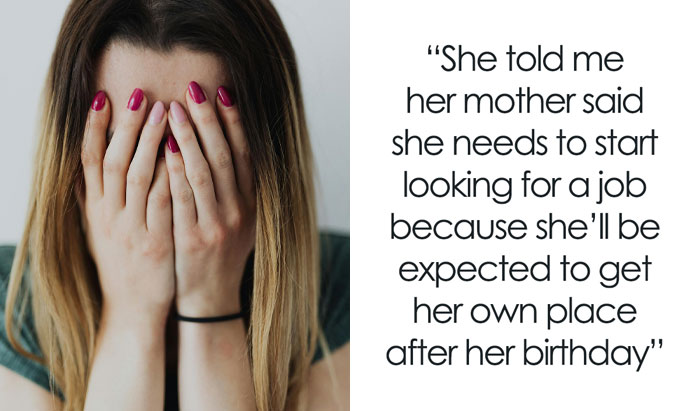
This is exactly the situation today’s Original Poster (OP) found herself in with her daughter-in-law. While she voiced out her concern regarding the daughter-in-law’s decision, it backfired when she didn’t take it well.
More info: Reddit
Image credits: gpointstudio / Freepik (not the actual photo)
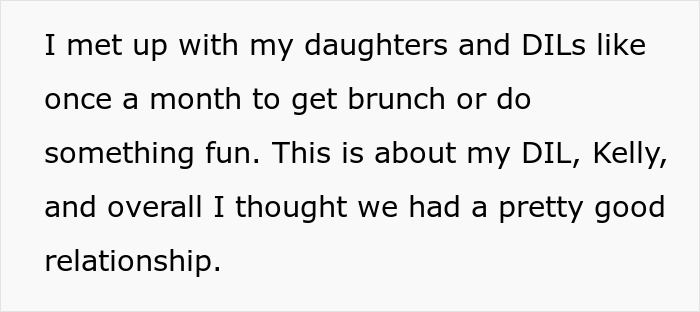
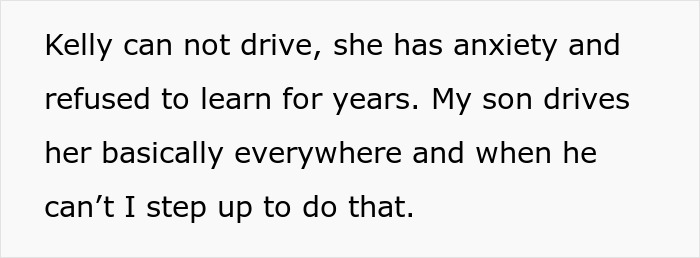
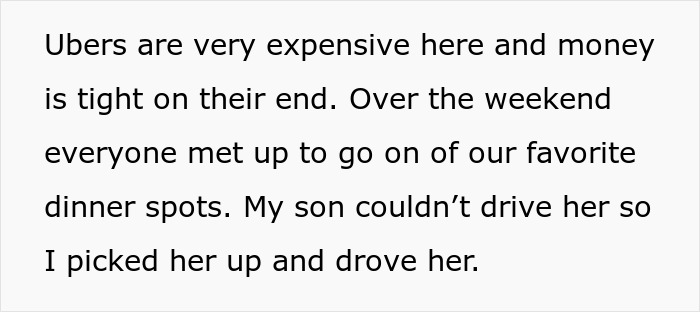
Image credits: Freepik / Freepik (not the actual photo)
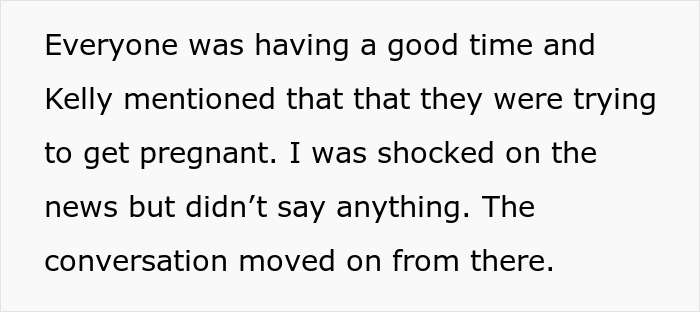
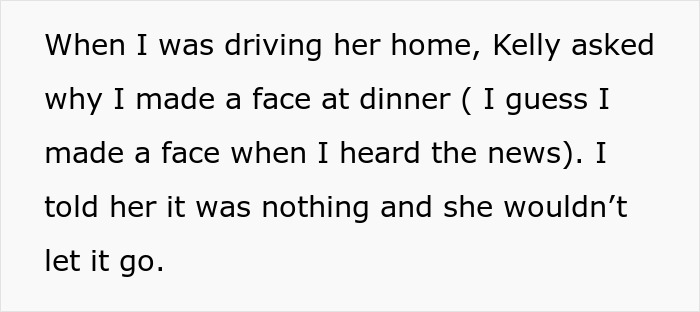
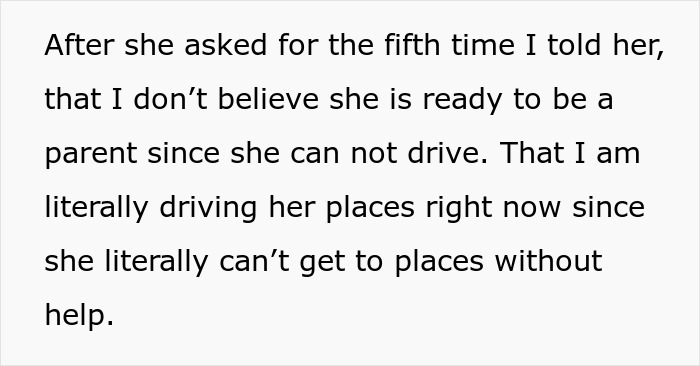
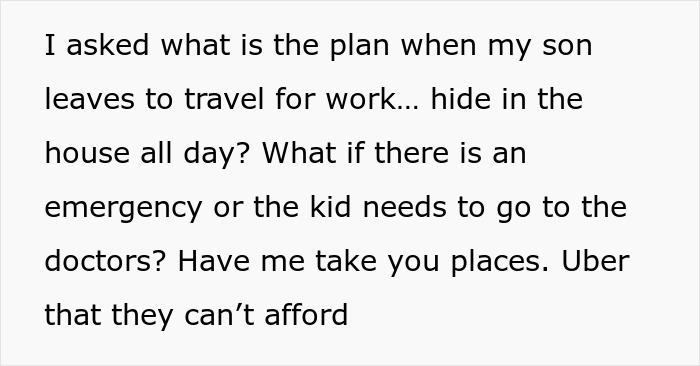
Image credits: Dragana Stock / Freepik (not the actual photo)
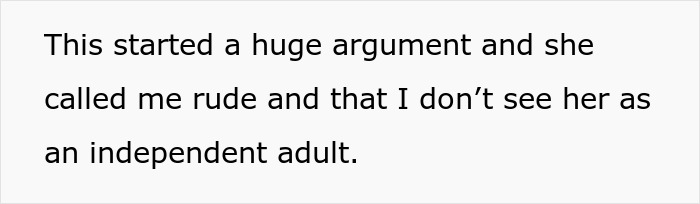
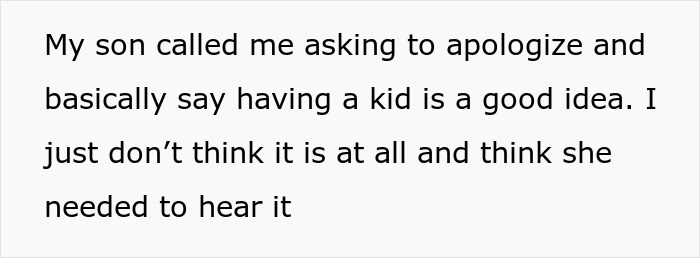
Image credits: Sad-Drive8298
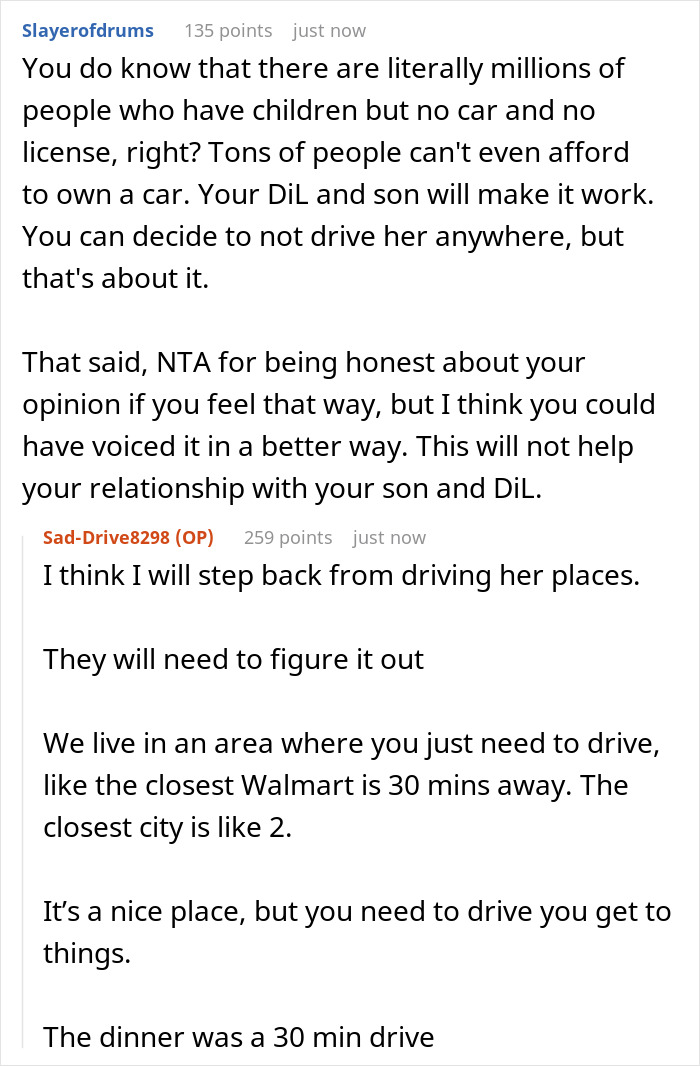
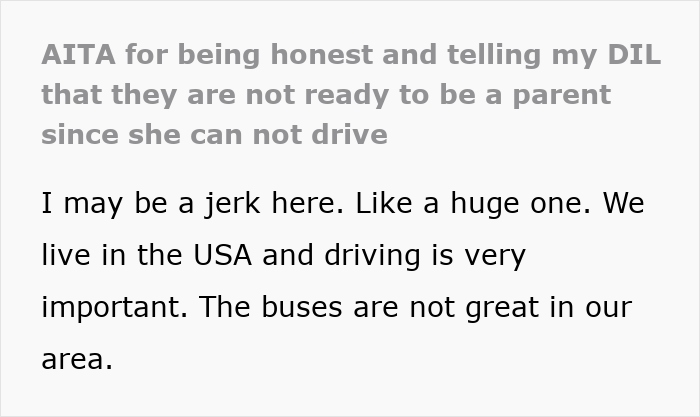
The OP described having a solid relationship with her daughter-in-law which was strengthened by regular monthly outings. She noted that the daughter-in-law doesn’t drive due to anxiety and has avoided learning for years, and because of this, she relies heavily on the OP’s son for transportation. When he’s unavailable, the OP often steps in. Ubers are also an option, but they could be expensive.
During their usual monthly outings with the family, the daughter-in-law casually announced that she and her husband were trying for a baby. While everyone else seemed to take it in stride, the OP was visibly surprised, apparently enough to make a facial expression that didn’t go unnoticed. On the drive home, the daughter-in-law then pressed the OP repeatedly about her reaction.
After dodging the question several times, she finally admitted that she didn’t believe the daughter-in-law was ready for parenthood if she couldn’t drive independently. She asked what would happen when her husband traveled for work, questioned how she would handle emergencies, pediatric appointments, or everyday errands with a child in tow.
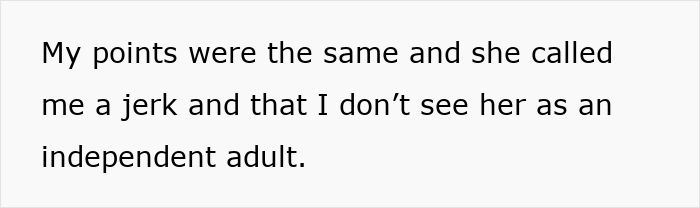
This left the daughter-in-law feeling insulted and dismissed, accusing the OP of treating her like a child rather than an independent adult. The OP, meanwhile, stood by her position, insisting she was simply being honest about practical realities. Later, the son called, asking her to apologize and offer support for their plans to have a child, but she refused, believing that voicing her concerns was necessary rather than cruel.
Image credits: pressfoto / Freepik (not the actual photo)
Transportation access in the United States is far from equal, and its limitations can have real-life consequences for families. According to Sustainable America, nearly 45% of Americans have no access to public transit, especially outside major cities, making personal vehicles almost essential for daily life.
Transportation also directly affects healthcare access, particularly for mothers and infants. The Observer notes that without a car or reliable transit, new mother or mothers-to-be often miss or delay prenatal, postnatal, and well‑child appointments, which can raise risks for complications and undermine early childhood health.
For people who cannot drive, live in rural areas, or face financial constraints, this creates a heavy dependence on others for mobility. Research from Brown & Brown further shows that when parents cannot reliably get to work, school, or medical appointments, their daily routines become unpredictable, increasing emotional and cognitive strain.
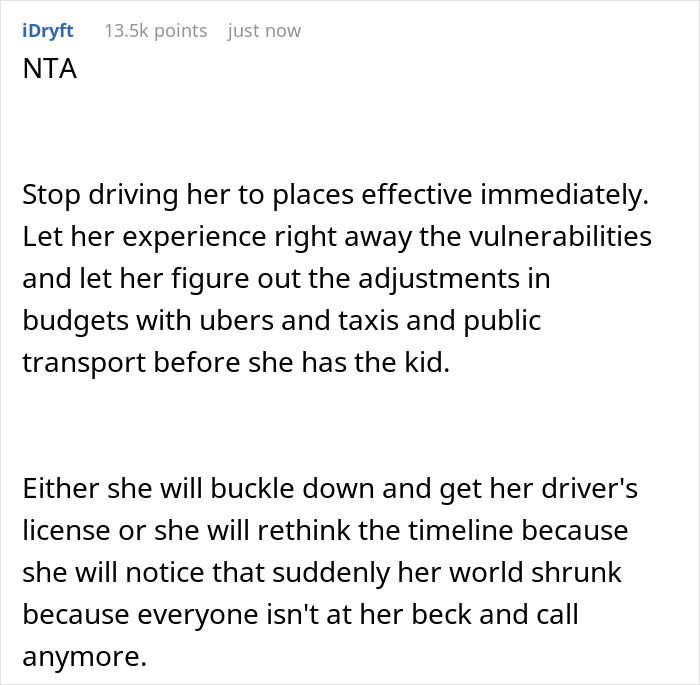
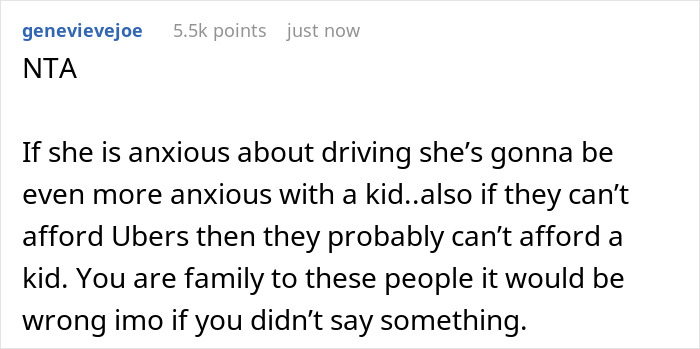
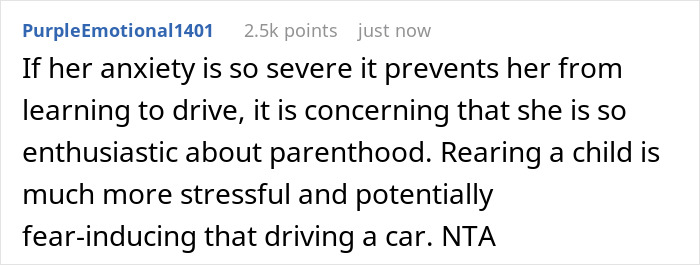
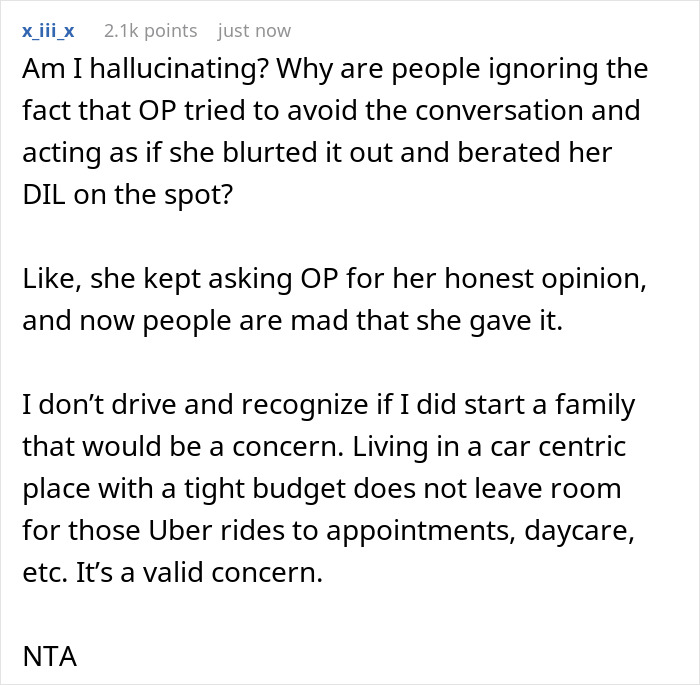
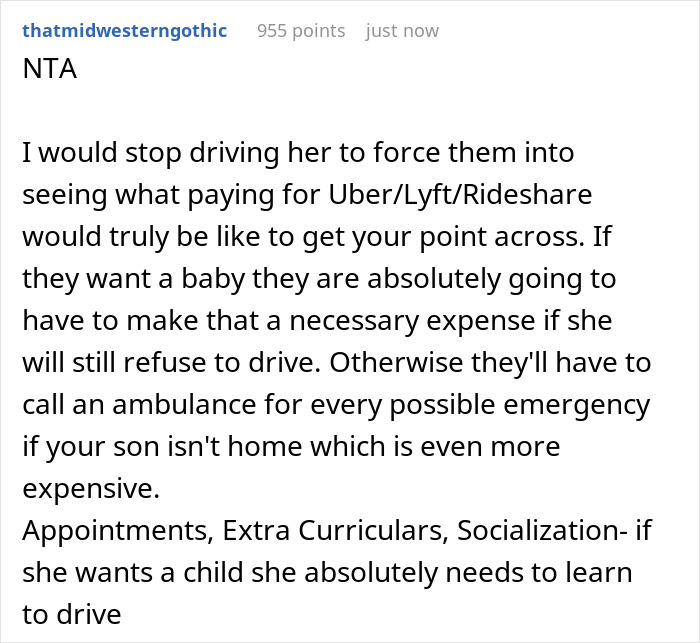
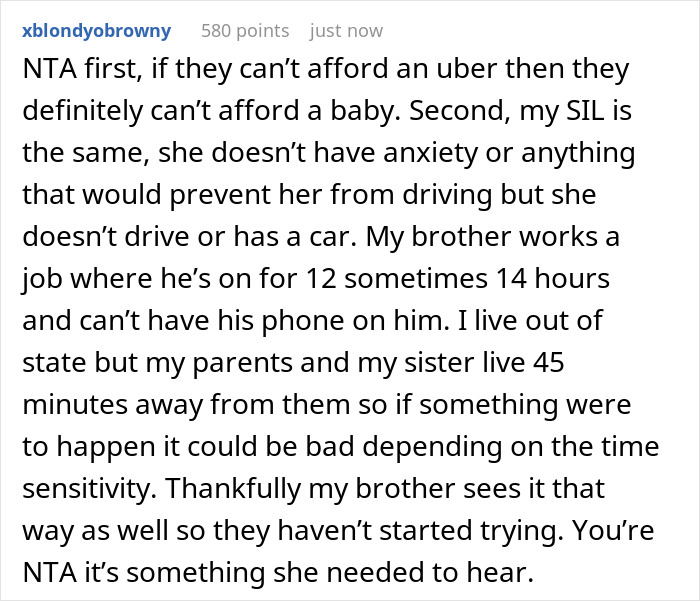
Netizens argues that the daughter-in-law’s inability to drive raises valid concerns about her readiness for parenthood. They also emphasized that relying on others for transportation could make daily responsibilities and emergencies difficult to manage. What do you think about this situation? Do you think being able to drive should be a prerequisite for becoming a parent? We would love to know your thoughts!
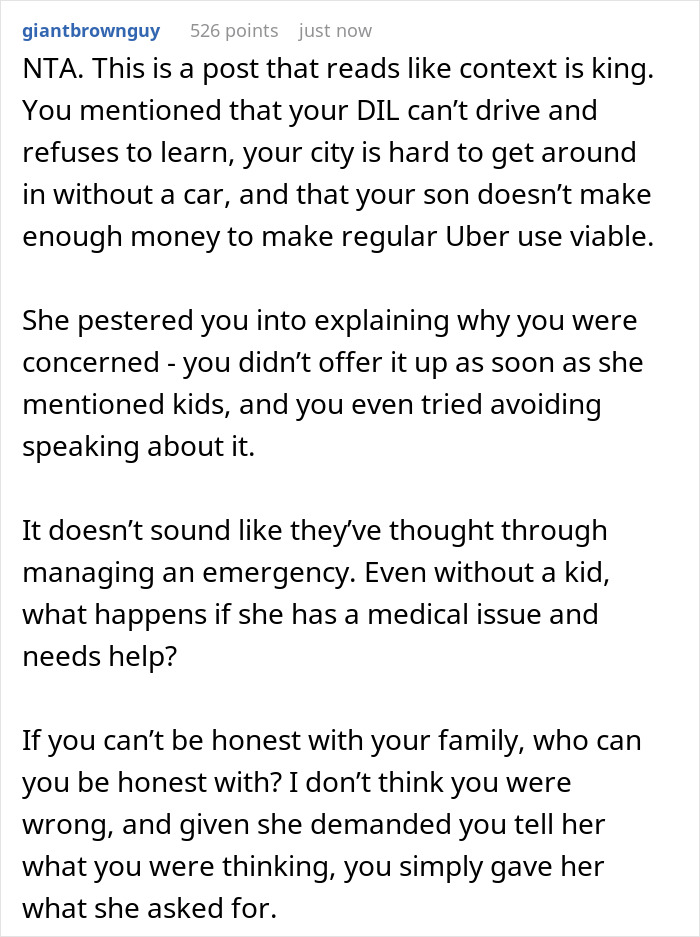
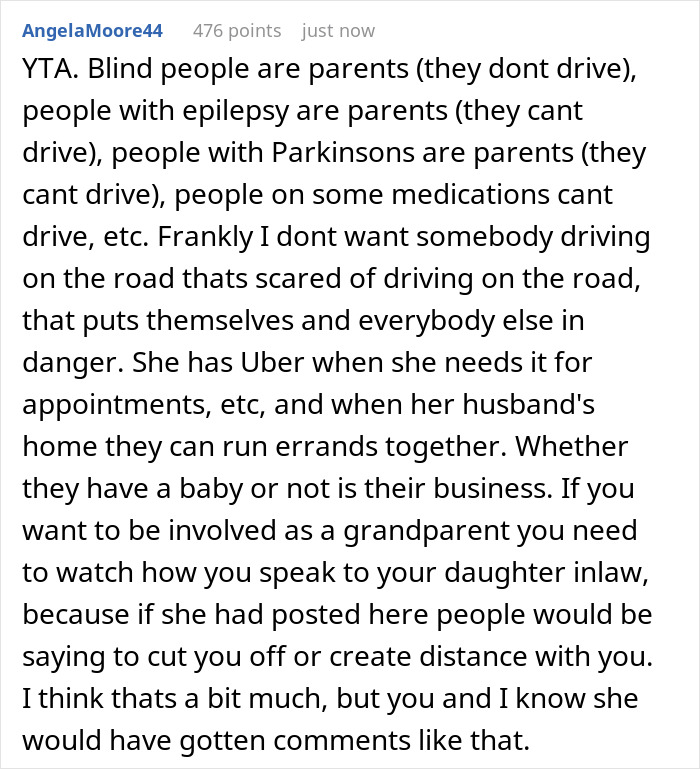
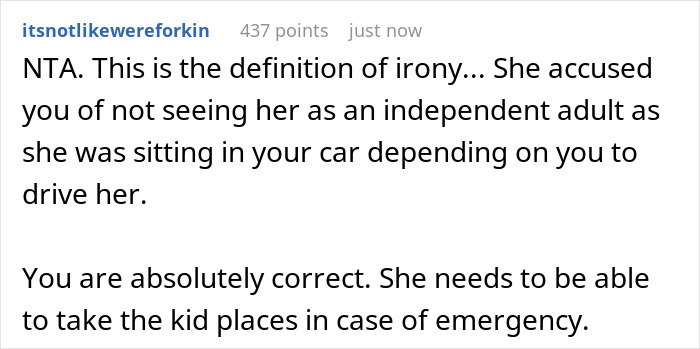

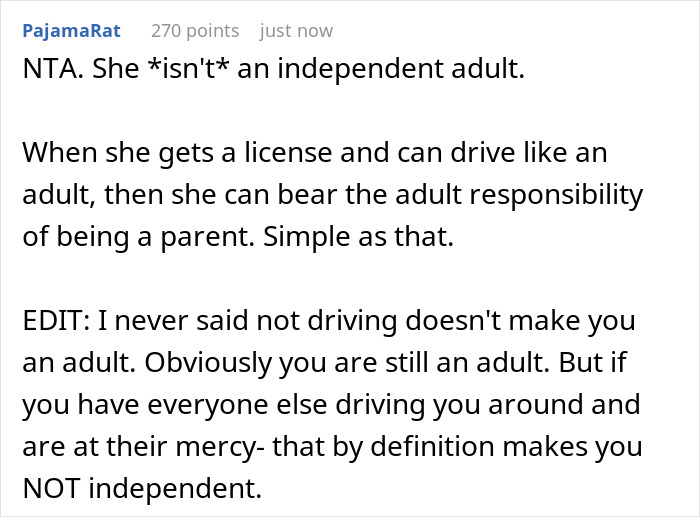
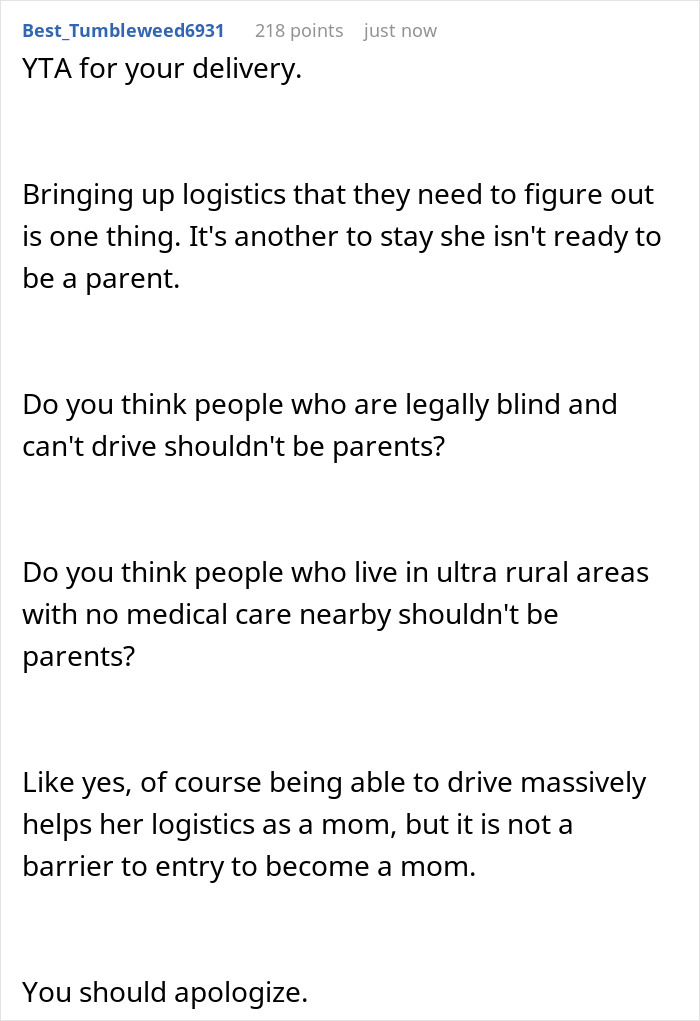

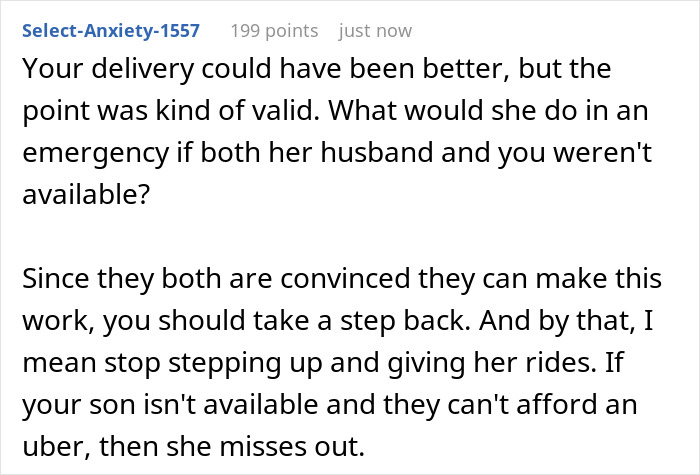

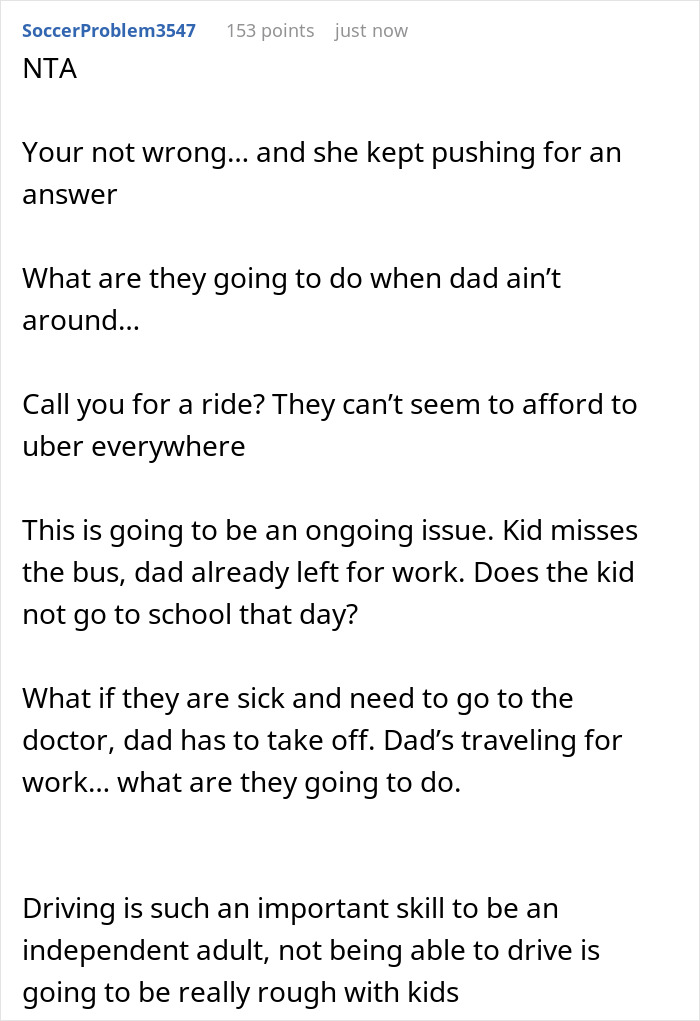
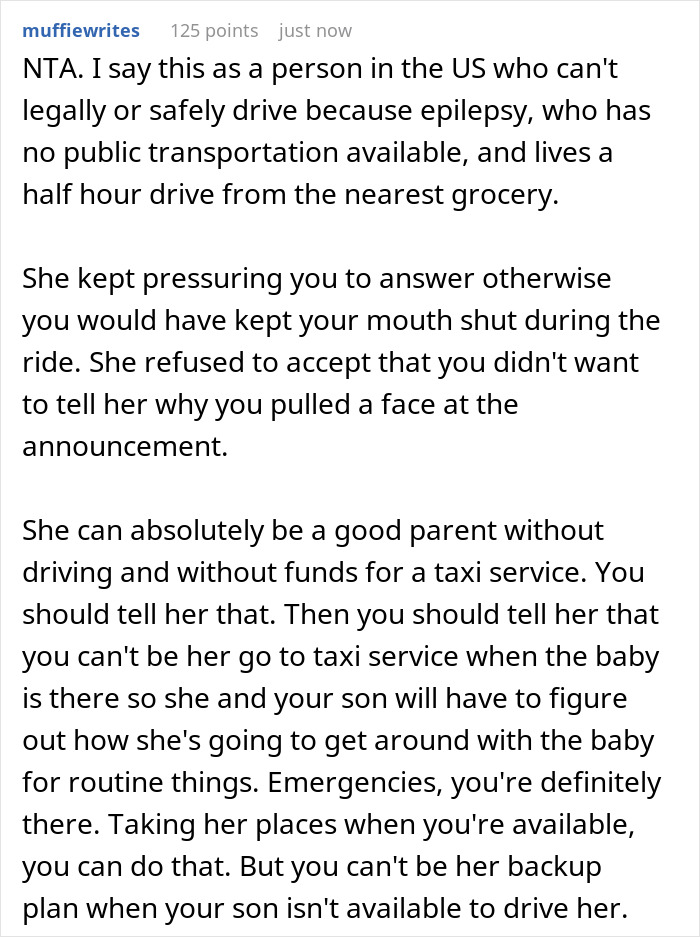
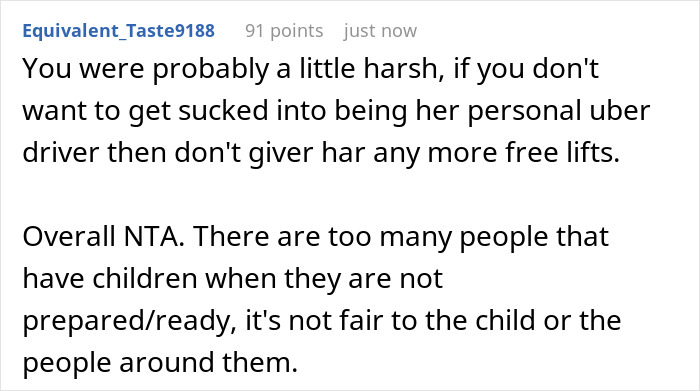
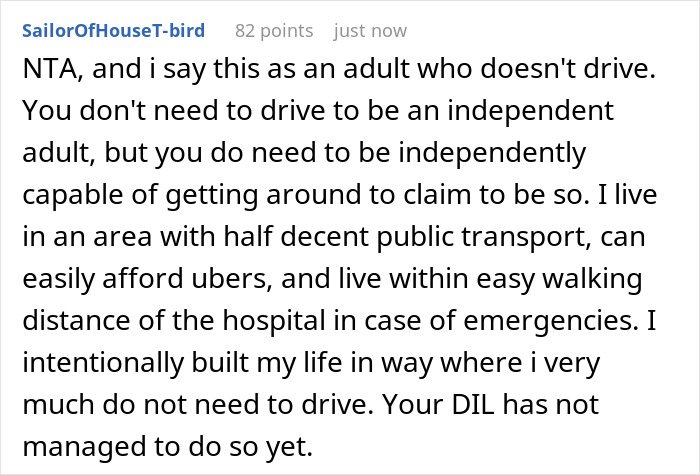
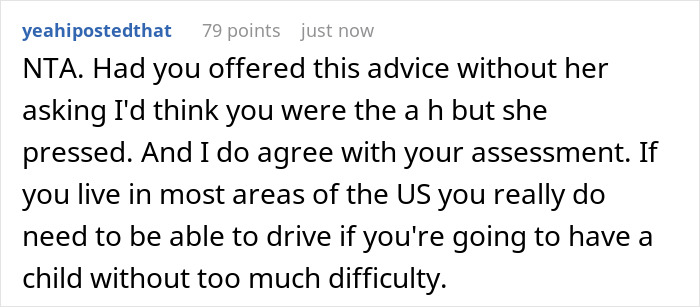

NTA for her opinion - she makes valid points. Definitely TA for her delivery. She could have phrased it like "I have some concerns about you being able to secure transport when you have a kid, particularly if there is an emergency" rather than being straight up rude and condescending
My cousin lives in rural ME and doesn't drive, she's an amazing mother of 5 kids. Driving can make parenting logistics easier but it's hardly a prerequisite. OP should stay in her lane.

OP tried to stay in her lane; DIL kept pressing her for an answer. Could she have worded it better? Absolutely, but she wasn't wrong in her concerns.
Load More Replies...
Ah, the USA. Where people who can't drive also shouldn't have children. It's one thing to say "Hey, and have you planned how to handle this issue", and another "you shouldn't have children if you can't drive". Also, if OP is so worried, she should rather put pressure on local politicians to improve public transport, than on her DIL.
NTA for her opinion - she makes valid points. Definitely TA for her delivery. She could have phrased it like "I have some concerns about you being able to secure transport when you have a kid, particularly if there is an emergency" rather than being straight up rude and condescending
My cousin lives in rural ME and doesn't drive, she's an amazing mother of 5 kids. Driving can make parenting logistics easier but it's hardly a prerequisite. OP should stay in her lane.
OP tried to stay in her lane; DIL kept pressing her for an answer. Could she have worded it better? Absolutely, but she wasn't wrong in her concerns.
Load More Replies... Ah, the USA. Where people who can't drive also shouldn't have children. It's one thing to say "Hey, and have you planned how to handle this issue", and another "you shouldn't have children if you can't drive". Also, if OP is so worried, she should rather put pressure on local politicians to improve public transport, than on her DIL.
























 No fees, cancel anytime









21
8