Get Premium
Dark mode theme is available exclusively for premium users. Learn more about the benefits of subscribing.
No fees, cancel anytime.

 Dark Mode Ad-Free Browsing Unlimited Content
 Ad-Free Browsing Unlimited Content Dark Mode
Join 1.2 million Panda readers who get the best art, memes, and fun stories every week!

Every year, the Central West Astronomical Society (CWAS) brings together some of the world's most talented astrophotographers through the David Malin Astrophotography Awards, a competition celebrating the beauty and scientific wonder of the night sky. Named after pioneering astronomical photographer David Malin, whose groundbreaking imaging techniques transformed deep-space photography, the awards recognize extraordinary images captured by both amateur and professional photographers. From distant galaxies and colorful nebulae to eclipses, comets, planets, and dramatic nightscapes, the competition showcases the incredible diversity of our universe through the lens of modern astrophotography.
Entries compete across categories including Deep Sky, Solar System, Nightscapes, Wide-Field, Junior, and Animated Sequences, with winners selected for both their technical excellence and artistic vision. The winning photographs are exhibited at the CSIRO Parkes Observatory Visitors Centre before touring museums and galleries across Australia, inspiring visitors to see the cosmos in a completely new way. Below, we've gathered some of the most breathtaking images from this year's competition, each offering a remarkable glimpse into the beauty and scale of the universe.
More info: cwas.org.au | Facebook
This post may include affiliate links.
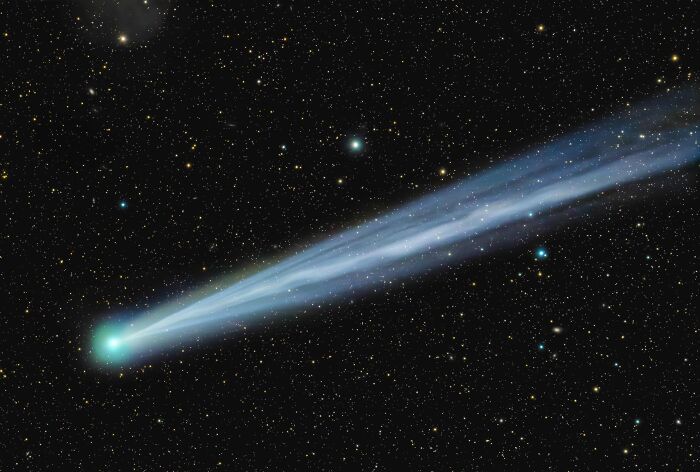
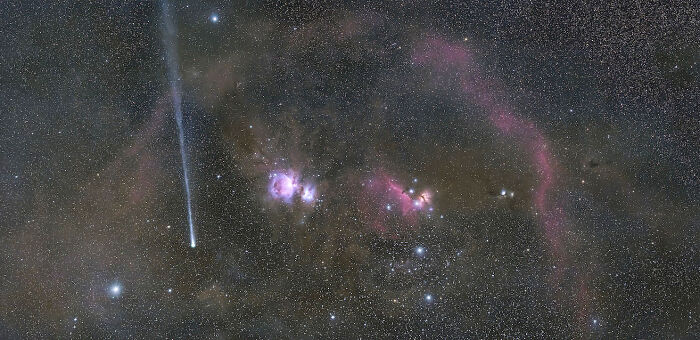
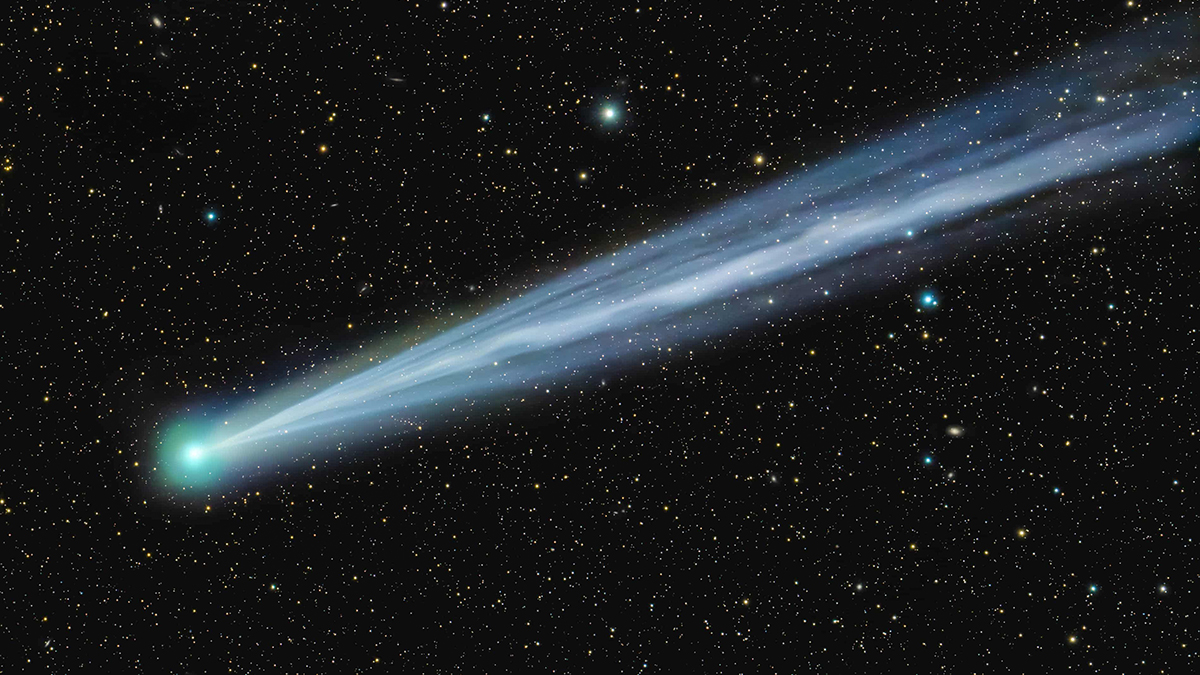
This telescopic image was created from 45 one-minute exposures aligned on the stars and the comet separately. The two images were recombined, resulting in an image with high signal-to-noise ratio. It was colour calibrated using the star field, and the comet colours are realistic.
Comet C/2025 R3 (PANSTARRS) is a rare long-period comet discovered by the Pan-STARRS sky survey in Hawaii on September 8, 2025. Thought to have originated in the distant Oort Cloud, it follows an orbit of roughly 170,000 years, meaning this is likely the only time anyone alive today will ever have the chance to observe it. After reaching its closest point to the Sun on April 19, 2026, the comet developed a striking ion tail stretching several degrees across the sky and briefly became visible to the naked eye under dark conditions. Once it leaves the inner Solar System, its trajectory is expected to send it back into deep space for tens of thousands of years, possibly forever.
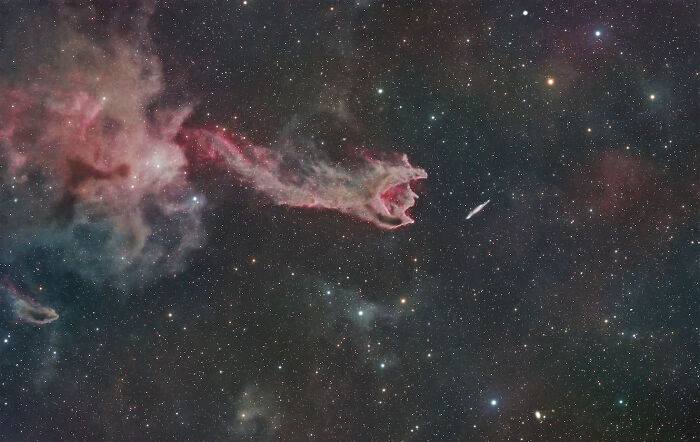
God’s Hand is a star-forming region located in the Puppis constellation, about 1,300 light years from Earth. It is one of several objects referred to as ‘cometary globules’ because its shape is similar to that of a comet. Composed of relatively dense dark matter, it is an opaque structure that is being illuminated by the glow of a nearby star.
This two-panel mosaic reveals the scale and structure of this nearby star-forming region. The Chamaeleon molecular cloud complex lies around 450 to 600 light years away from Earth and contains dense dust lanes, faint reflection nebulosity and scattered young stellar populations.
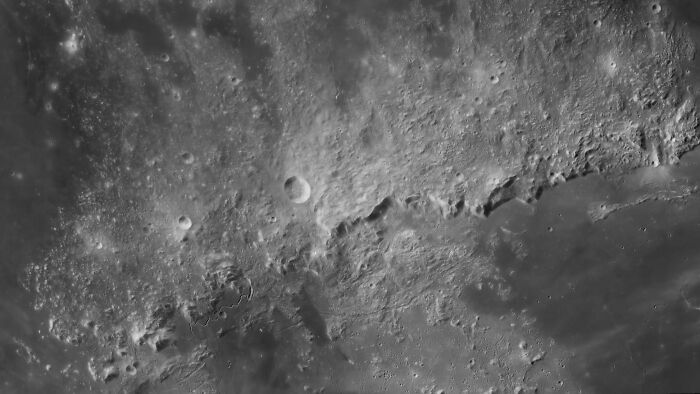
The Montes Apenninus, a rugged mountain range on the northern part of the moon’s near side, captured with a DIY Dall-Kirkham telescope and a ZWO ASI290MM camera.
Montes Apenninus is the Moon's longest and one of its most spectacular mountain ranges, stretching for about 600 kilometers (370 miles) along the southeastern edge of Mare Imbrium. Formed nearly 3.9 billion years ago by the colossal impact that created the Imbrium Basin, some of its peaks rise more than 5,000 meters (16,400 feet) above the lunar surface, comparable in height to Earth's highest mountain ranges. The region includes Mons Huygens, the tallest confirmed mountain on the Moon, making the Montes Apenninus one of the most dramatic and scientifically significant landscapes in the lunar highlands.
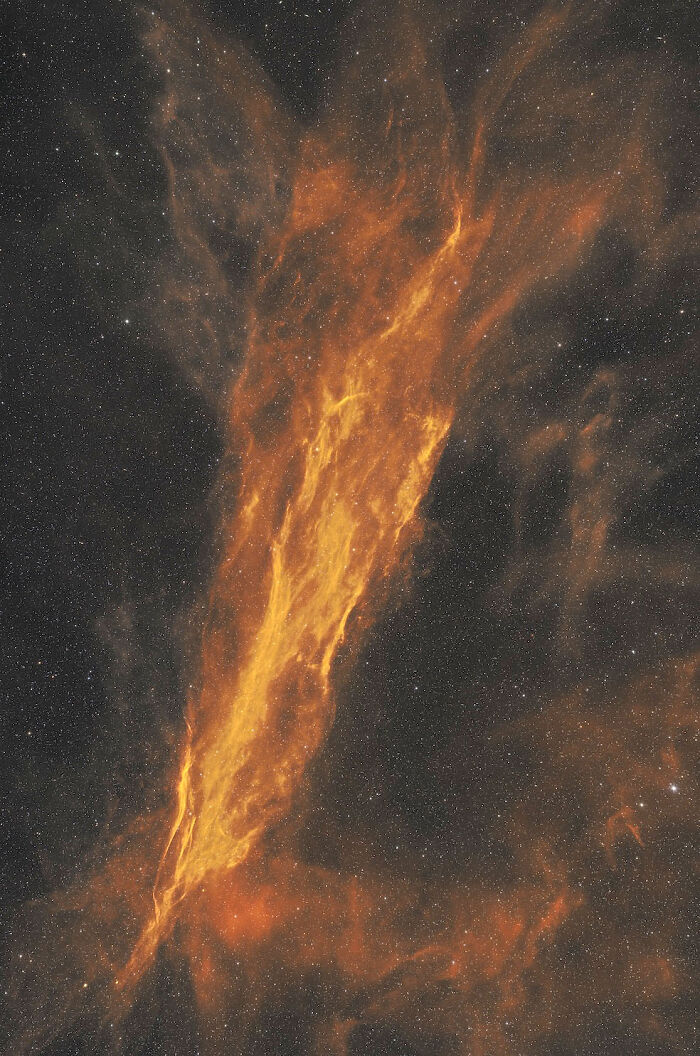
Looking somewhat like a flaming tree in space, this image is centred around the nebula Gum12b located in the southern hemisphere constellations of Antlia and Vela.
Gum 12b is a bright star-forming region within the larger Gum 12 nebula, located roughly 4,000 light-years from Earth in the constellation Centaurus. Filled with glowing hydrogen gas, dark dust clouds, and young, massive stars, it is part of a vast stellar nursery where new stars continue to form. Images processed in RGB Ha SII combine natural-color data with narrowband filters that isolate hydrogen-alpha (Ha) and ionized sulfur (SII) emissions, revealing intricate filaments and faint structures invisible to the naked eye. These techniques allow astrophotographers to capture both the beauty and the complex physical processes unfolding inside one of our galaxy's active star-forming regions.
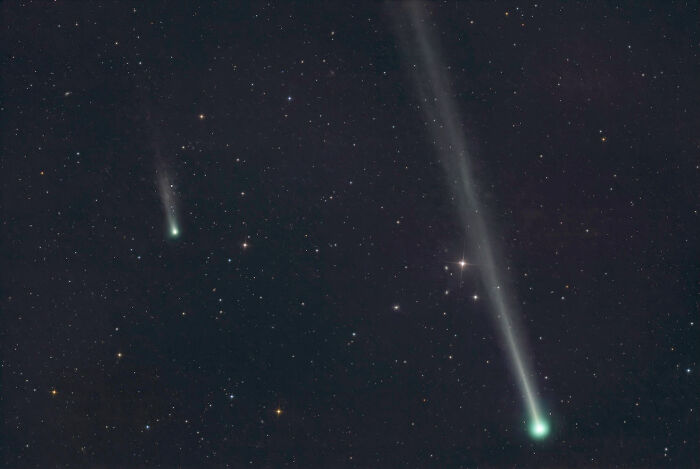
The image captures a rare celestial meeting between two newly discovered long-period comets: C/2025 R2 (SWAN) and C/2025 K1 (ATLAS). In September 2025, the pair appeared unusually close together in the constellation Virgo, creating the illusion of racing side by side across the night sky. In reality, the comets were traveling on very different trajectories—C/2025 R2 (SWAN) had already passed its closest approach to the Sun and was heading back toward the outer Solar System, while C/2025 K1 (ATLAS) was still inbound on its journey toward perihelion. Such close apparent conjunctions between two bright comets are exceptionally uncommon, making the event a memorable target for astrophotographers.

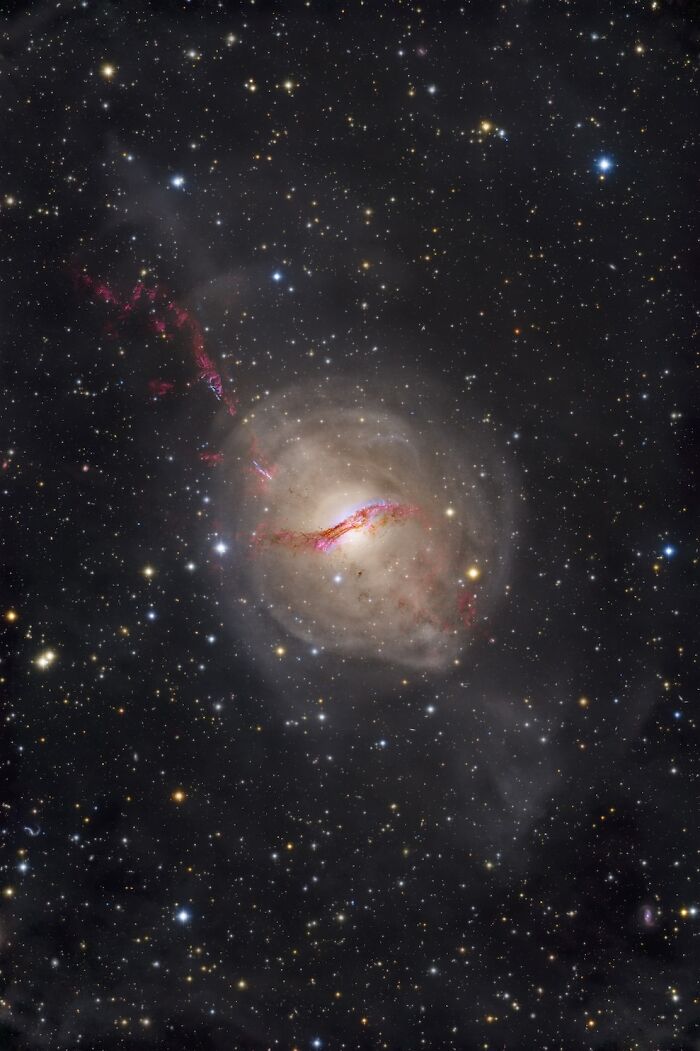
Centaurus A (NGC 5128) is one of the closest and most intensely studied active galaxies, located about 12 million light-years from Earth. At its center lies a supermassive black hole containing tens of millions of times the Sun's mass, which powers enormous jets of high-energy particles stretching hundreds of thousands of light-years into space. The image also reveals faint, ghostly shells surrounding the galaxy—remnants of a cosmic collision with a smaller galaxy that occurred hundreds of millions of years ago. Capturing both the delicate outer shells and the energetic jets in a single photograph requires many hours of exposure, revealing one of the clearest examples of how galaxy mergers and supermassive black holes continue to shape the evolution of the universe.
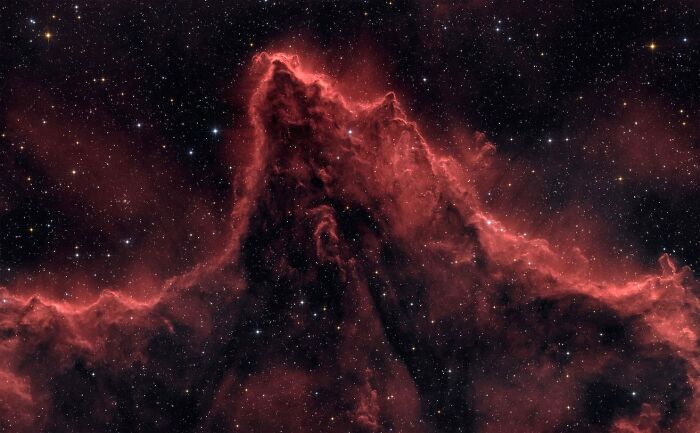
This image was inspired by the Deep Sky winner of the 2025 David Malin awards, Anne-Maree McComb. It captures the nebulous region BRAN 56, using the hydrogen-alpha (Ha) data for luminance and added colour from an L-eXtreme stack.
BRAN 56 is a little-known emission nebula located in the southern sky, cataloged by Australian astronomer Robert Brand in his survey of faint nebulae. Rich in glowing hydrogen gas and dark lanes of interstellar dust, the region is an active stellar nursery, where gravity continues to shape dense clouds into new generations of stars. Because BRAN 56 is relatively faint, revealing its intricate filaments and subtle colors requires many hours of long-exposure imaging and careful processing. Although it receives far less attention than famous nebulae like Orion or Carina, BRAN 56 offers astronomers and astrophotographers a valuable glimpse into the ongoing cycle of star formation within our own Milky Way.
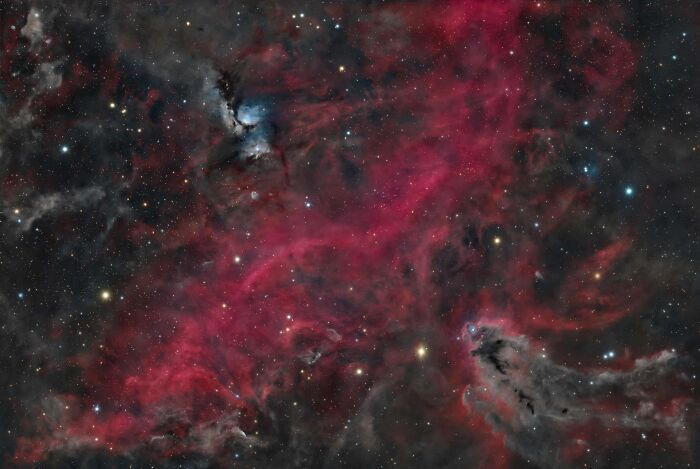
This image captures two very different structures within the Orion molecular cloud complex: the bright nebula M78 and the dark nebula LDN 1622. M78 is illuminated primarily by two young B-type stars whose scattered blue light reveals the surrounding dust.
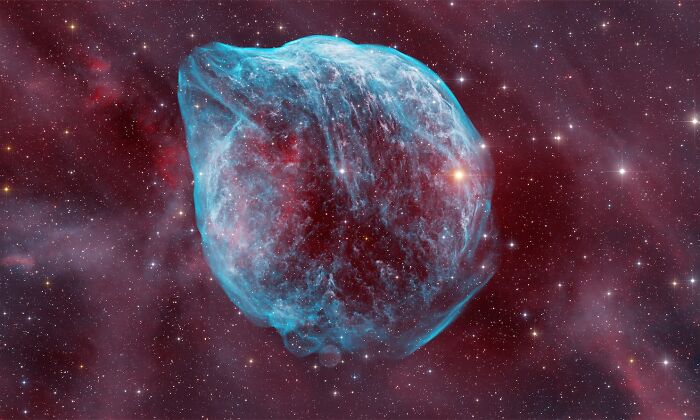
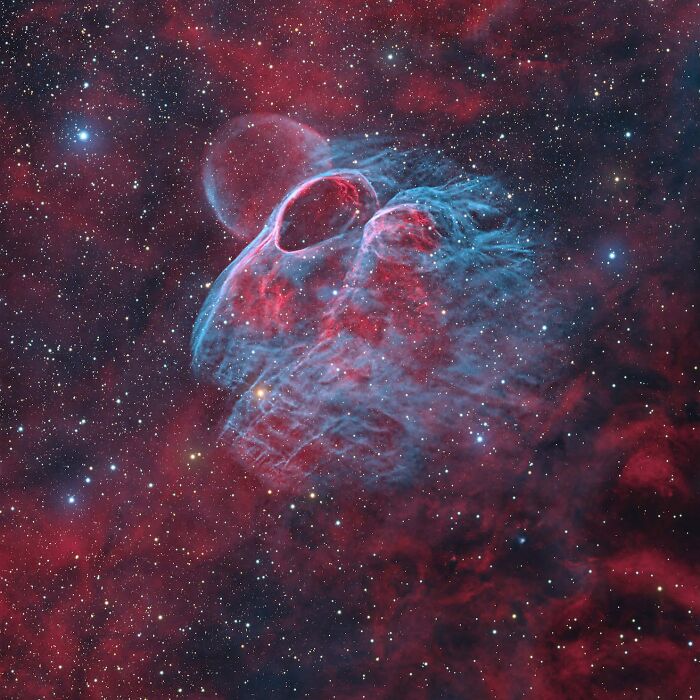
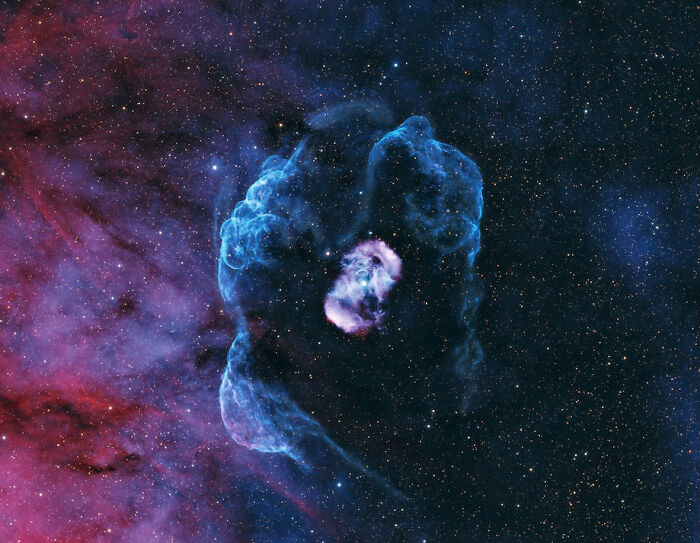
This emission nebula created by the WR star EZ Canis Majoris is a stunning doubly ionised oxygen (Oiii) object. It was formed by the intense stellar winds generated by EZ Canis Majoris as it enters the final stages of its life.
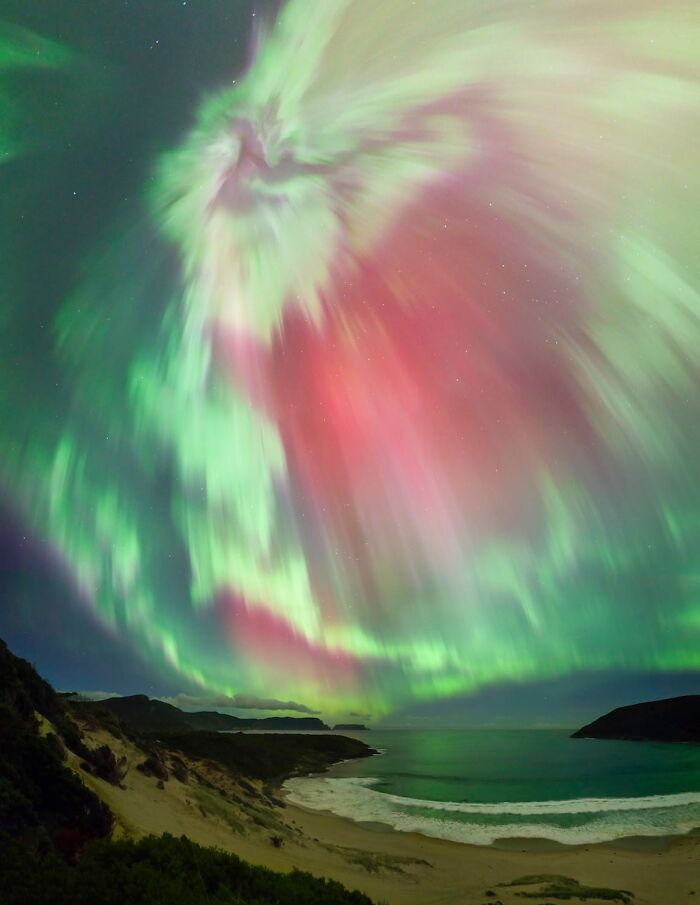
This aurora was a once-in-a-lifetime event so the photographer knew to go somewhere special, trudging through the bush to the beach as the southern lights danced above.
"This photo is one of the 6,000 plus I took but it highlighted an extreme amount of activity although it still remains difficult to grasp the scale of how large it was."
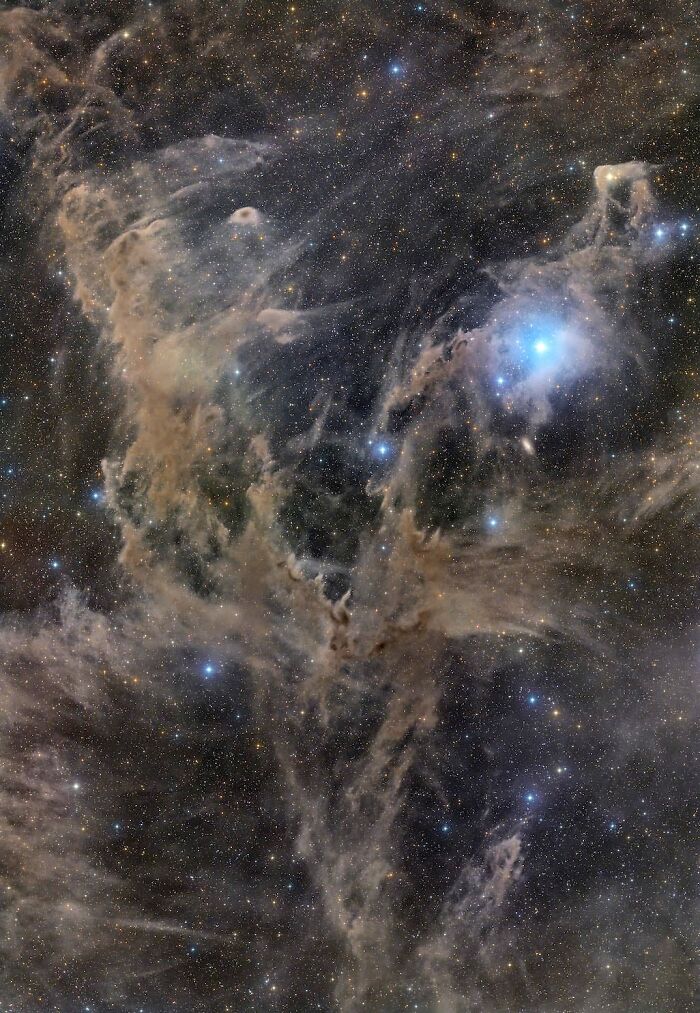
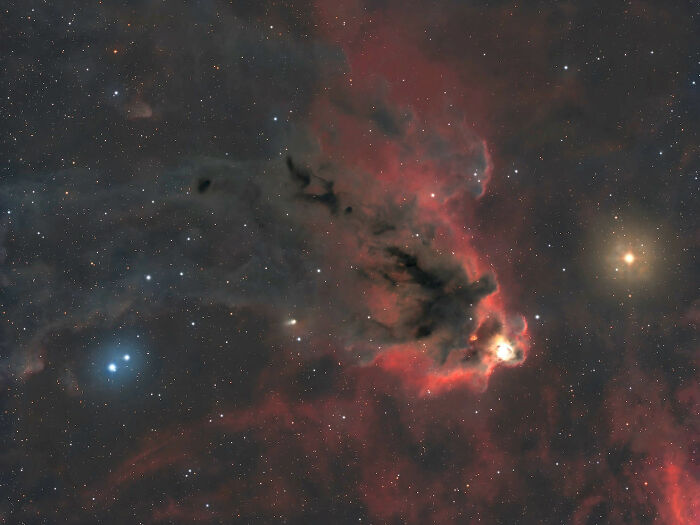
Framing the dark, obscuring dust of LDN 1622 against the glowing Ha emissions of the Orion Cloud Complex, the photographer demonstrates strong processing fundamentals, yielding good star color and well-defined H-alpha regions. Although a slightly dark overall stretch hides some of the intricate dust structures captured during the 28-hour integration, the rendition of the visible dust is highly effective.
LDN 1622, often nicknamed the "Boogeyman Nebula," is a dark nebula located about 1,500 light-years from Earth on the outskirts of the Orion Molecular Cloud Complex, one of the nearest and most active stellar nurseries in the Milky Way. Unlike emission nebulae, LDN 1622 doesn't produce its own light. Instead, its dense clouds of dust absorb and block the glow of stars and gas behind them, creating its distinctive silhouette. Illuminated by nearby young stars, the surrounding dust also reflects faint blue light and glows in hydrogen-alpha, making it a favorite target for astrophotographers. The nebula's eerie, face-like appearance is a classic example of pareidolia, our tendency to see familiar shapes in random patterns.
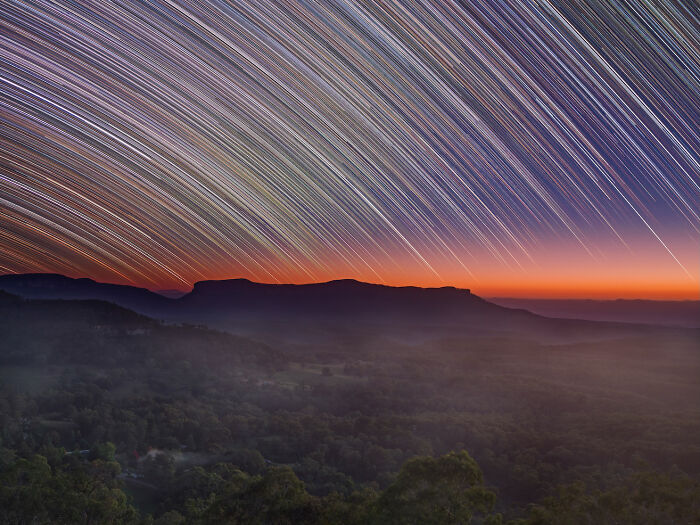
Pantoneys Crown is an isolated, flat-topped mesa in NSW. Here its distinctive shape is picked out against a sky full of star trails and a pre-dawn glow, with mist rising from the floor of the Capertee Valley beneath‚ the world’s second-largest canyon.
Comet C/2025 R3 (PANSTARRS) in Orion captures the rare appearance of a long-period comet passing through one of the sky's most recognizable constellations. Discovered by the Pan-STARRS survey in 2025, the comet likely originated in the distant Oort Cloud and follows an orbit so vast that it may not return to the inner Solar System for hundreds of thousands of years. In this image, its glowing coma and delicate ion and dust tails are set against the familiar stars of Orion, creating a striking contrast between a fleeting visitor and a constellation that has guided observers for millennia. Such alignments are short-lived, making them particularly rewarding targets for astrophotographers who carefully plan their observations to capture these rare celestial encounters.
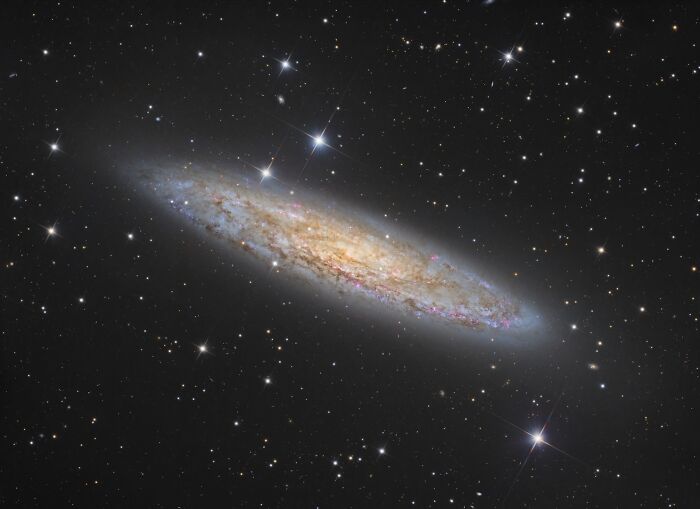
NGC 253, also known as the Sculptor Galaxy or the Silver Coin Galaxy (Dollar Galaxy), is one of the brightest and closest starburst galaxies, located about 11 million light-years away in the constellation Sculptor. Unlike most spiral galaxies, NGC 253 is undergoing an intense burst of star formation, producing new stars at a rate several times higher than that of the Milky Way. The pink knots scattered throughout its spiral disk mark vast hydrogen-rich star-forming regions, while dark lanes of interstellar dust weave through the galaxy's brilliant core. Because of its proximity and nearly edge-on orientation, NGC 253 has become one of the most studied galaxies beyond our own, helping astronomers better understand how galaxies grow, evolve, and form stars over billions of years.
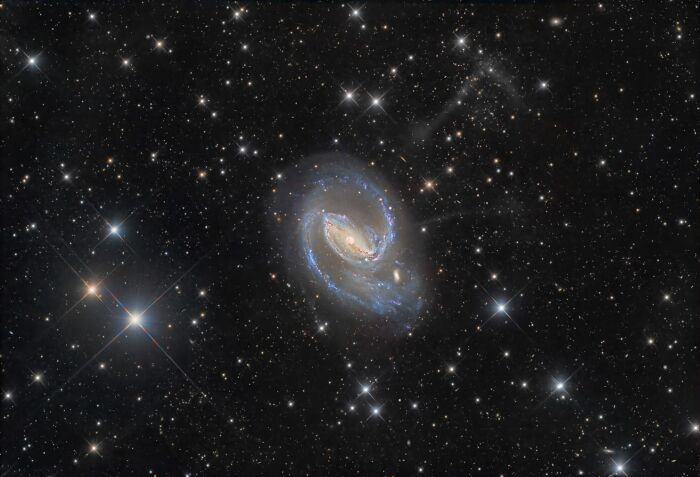
NGC 1097 is a striking barred spiral galaxy located about 45 million light-years from Earth in the constellation Fornax. At its heart lies a supermassive black hole estimated to contain around 140 million times the mass of the Sun, surrounded by a brilliant ring where new stars are forming at an exceptional rate. Its distinctive central bar acts like a cosmic conveyor belt, funneling gas and dust toward the galaxy's core and fueling both star formation and the active galactic nucleus. NGC 1097 also has two small satellite galaxies that are gradually being torn apart by its immense gravity, making it an important target for astronomers studying how galaxies evolve through interactions, mergers, and black hole activity.
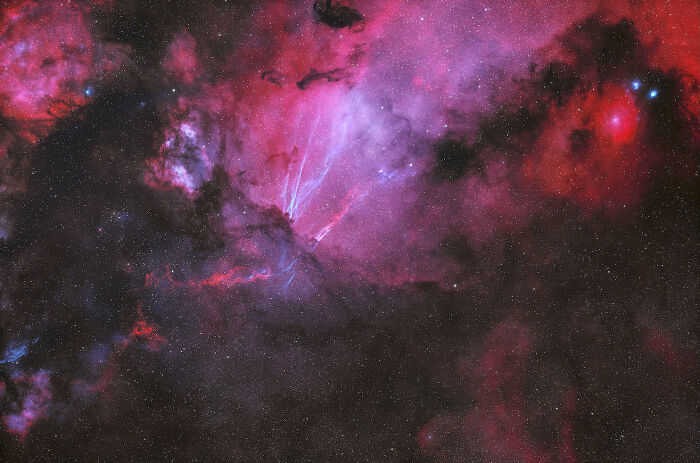
Inspired by the recent discovery of the OED-1 nebula in Vela, the image shows a faint filamentary structure within the Vela supernova remnant.
The Vela Supernova Remnant is the expanding debris field left behind by a massive star that exploded approximately 11,000 years ago, located about 800 light-years from Earth in the constellation Vela. Spanning nearly 100 light-yearsacross, it is one of the closest and largest supernova remnants visible from Earth. The faint filamentary structures seen within the remnant are delicate shock waves where the expanding blast collides with surrounding clouds of gas and dust, heating them until they glow in hydrogen and oxygen emissions. These intricate filaments are exceptionally faint, often requiring dozens of hours of narrowband imaging to capture. Studying them helps astronomers understand how supernova explosions enrich interstellar space with the heavy elements that eventually become the building blocks of new stars, planets, and even life itself.
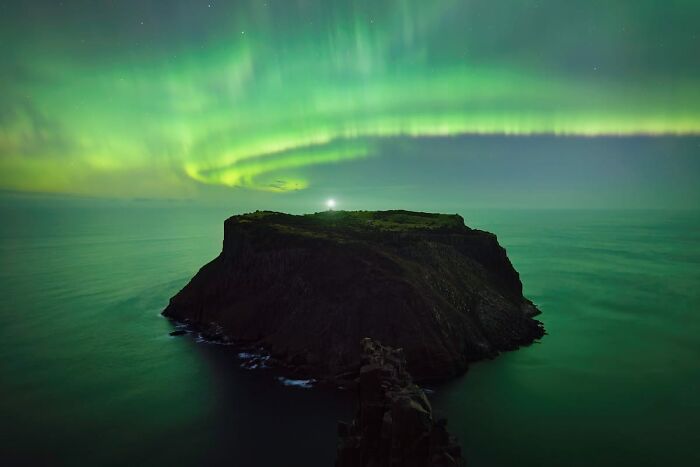
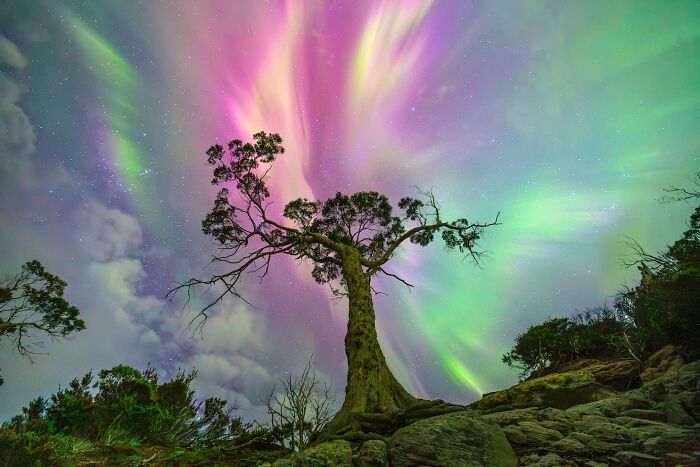
Atop Australia’s tallest sea cliffs, the aurora australis arcs across the sky, its curtain sweeping down as if to touch the Tasman Island.
Aurora Australis, or the Southern Lights, is one of Earth's most spectacular natural phenomena. It occurs when charged particles from the Sun collide with gases in the upper atmosphere near the South Magnetic Pole, causing the sky to glow in shimmering curtains of green, pink, red, and violet light. While it is most commonly seen from Antarctica, Tasmania, and southern New Zealand, particularly strong geomagnetic storms can make the aurora visible much farther north, including parts of southern Australia. Capturing displays like this requires clear, dark skies, precise timing, and often long-exposure photography, revealing intricate ribbons and waves of light that are usually far subtler to the naked eye.
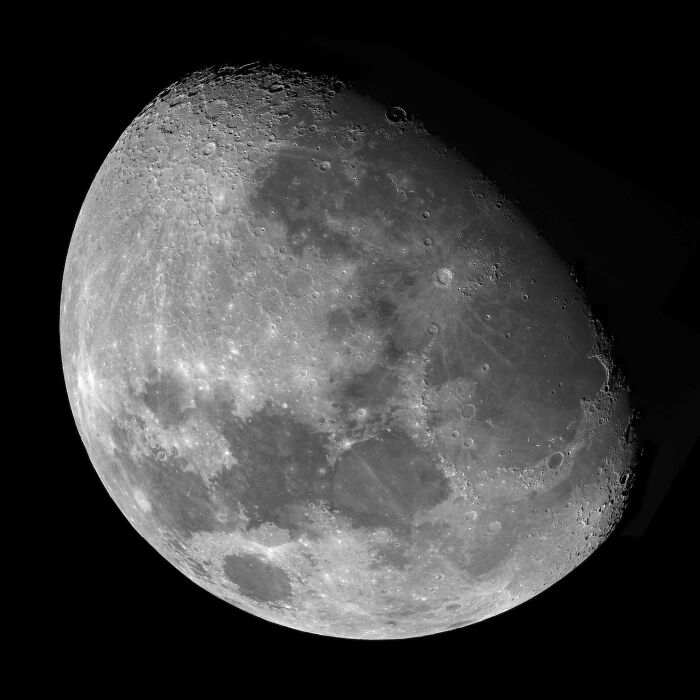
A waxing gibbous Moon is the lunar phase that occurs between the first quarter and the full Moon, when more than half of the Moon's Earth-facing side is illuminated and the bright portion continues to grow each night. During this phase, sunlight strikes the lunar surface at an angle that accentuates craters, mountains, and valleys, creating dramatic shadows and exceptional detail. For this reason, many astronomers and astrophotographers consider the waxing gibbous phase one of the best times to photograph the Moon, as it reveals the rugged texture of the lunar landscape far more vividly than a fully illuminated Moon.
This is a photograph that rewards the viewer the longer they spend with it. The visual layering, striking composition and extraordinary use of colour create a sense of depth that draws you into the frame. The opposing hues of pink and blue work beautifully together, while the luminous central structure acts as an anchor, pulling the eye ever deeper into the image.






































 No fees, cancel anytime