Get Premium
Dark mode theme is available exclusively for premium users. Learn more about the benefits of subscribing.
No fees, cancel anytime.

 Dark Mode Ad-Free Browsing Unlimited Content
 Ad-Free Browsing Unlimited Content Dark Mode
Join 1.2 million Panda readers who get the best art, memes, and fun stories every week!
Interviewer: Henri, thank you for joining us today. Can you tell us about your early life and how your upbringing influenced your photography?
*
Henri Cartier-Bresson: I was born in a small village near Paris, and my parents were art collectors. Their love for art greatly influenced my appreciation for aesthetics and visual harmony. I was quite introverted, but I found solace in drawing, painting, and literature, particularly the works of French poets and authors like Rimbaud, Proust, and Baudelaire.
*
Interviewer: How did your interest in photography begin?
*
Henri Cartier-Bresson: At the age of fifteen, my father gifted me a Box Brownie camera, which sparked my interest in photography. This early exposure shaped my approach to capturing the world around me.
*
Interviewer: Can you share some insights into your education and how it impacted your artistic development?
*
Henri Cartier-Bresson: After completing secondary education, I enrolled at the Lhote Academy, where I studied under Cubist painter and sculptor André Lhote. His teachings on geometry and composition greatly influenced my photography, helping me develop my signature style.
*
Interviewer: Your trip to the Côte d’Ivoire in 1931 marked a turning point in your life. Can you tell us more about that experience?
*
Henri Cartier-Bresson: I used a simple camera to document my experiences in Africa. Unfortunately, I contracted blackwater fever, and upon my return to France, I spent months recovering. This time allowed me to reflect on my photographic experiences and solidify my passion for photography.
*
Interviewer: How did other artists and movements inspire your work during the early 1930s?
*
Henri Cartier-Bresson: I discovered the work of Eugène Atget, which greatly impacted my developing style. I also became acquainted with Surrealist figures like Salvador Dalí, Max Ernst, and André Breton. Their emphasis on intuition, spontaneity, and the subconscious inspired my approach to street photography.
*
Interviewer: How did the Leica 35mm rangefinder camera become your signature tool?
*
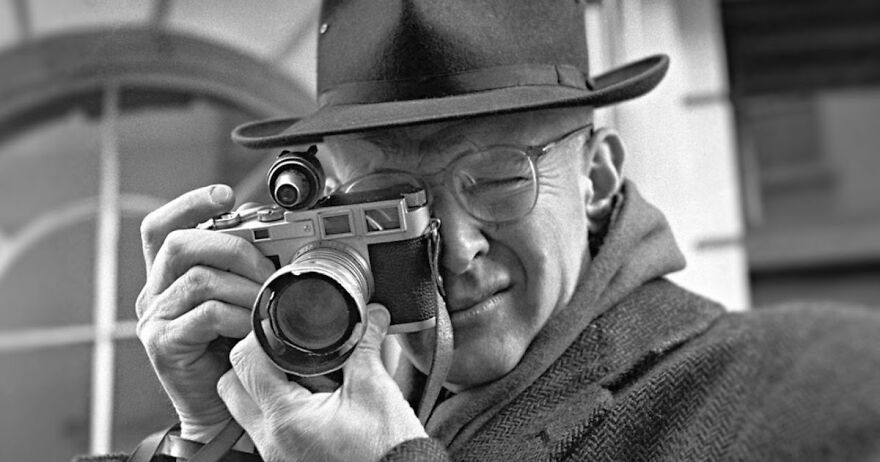
Henri Cartier-Bresson: In the mid-1930s, I purchased a Leica camera, which allowed me to move freely through the streets of Paris. Its compact and unobtrusive nature helped me capture the decisive moment with a unique blend of precision and poetry.
*
Interviewer: In conclusion, how do you think your formative years shaped your artistic legacy?
*
Henri Cartier-Bresson: My privileged upbringing, passion for the arts, and strong support system allowed me to explore my creative talents. My education in painting and immersion in Parisian culture set the stage for my success as a groundbreaking photographer. These formative years are the roots of my unique vision and artistic legacy.
Interviewer: Henri, thank you for joining us today. Can you tell us about your early life and how your upbringing influenced your photography?
*
Henri Cartier-Bresson: I was born in a small village near Paris, and my parents were art collectors. Their love for art greatly influenced my appreciation for aesthetics and visual harmony. I was quite introverted, but I found solace in drawing, painting, and literature, particularly the works of French poets and authors like Rimbaud, Proust, and Baudelaire.
*
Interviewer: How did your interest in photography begin?
*
Henri Cartier-Bresson: At the age of fifteen, my father gifted me a Box Brownie camera, which sparked my interest in photography. This early exposure shaped my approach to capturing the world around me.
*
Interviewer: Can you share some insights into your education and how it impacted your artistic development?
*
Henri Cartier-Bresson: After completing secondary education, I enrolled at the Lhote Academy, where I studied under Cubist painter and sculptor André Lhote. His teachings on geometry and composition greatly influenced my photography, helping me develop my signature style.
*
Interviewer: Your trip to the Côte d’Ivoire in 1931 marked a turning point in your life. Can you tell us more about that experience?
*
Henri Cartier-Bresson: I used a simple camera to document my experiences in Africa. Unfortunately, I contracted blackwater fever, and upon my return to France, I spent months recovering. This time allowed me to reflect on my photographic experiences and solidify my passion for photography.
*
Interviewer: How did other artists and movements inspire your work during the early 1930s?
*
Henri Cartier-Bresson: I discovered the work of Eugène Atget, which greatly impacted my developing style. I also became acquainted with Surrealist figures like Salvador Dalí, Max Ernst, and André Breton. Their emphasis on intuition, spontaneity, and the subconscious inspired my approach to street photography.
*
Interviewer: How did the Leica 35mm rangefinder camera become your signature tool?
*
Henri Cartier-Bresson: In the mid-1930s, I purchased a Leica camera, which allowed me to move freely through the streets of Paris. Its compact and unobtrusive nature helped me capture the decisive moment with a unique blend of precision and poetry.
*
Interviewer: In conclusion, how do you think your formative years shaped your artistic legacy?
*
Henri Cartier-Bresson: My privileged upbringing, passion for the arts, and strong support system allowed me to explore my creative talents. My education in painting and immersion in Parisian culture set the stage for my success as a groundbreaking photographer. These formative years are the roots of my unique vision and artistic legacy.
 No fees, cancel anytime
 then open in external browser


 and click "Open in External Browser"



-2
0