Get Premium
Dark mode theme is available exclusively for premium users. Learn more about the benefits of subscribing.
No fees, cancel anytime.

 Dark Mode Ad-Free Browsing Unlimited Content
 Ad-Free Browsing Unlimited Content Dark Mode
Join 1.2 million Panda readers who get the best art, memes, and fun stories every week!

In a vacuum, most folks would agree that jealousy is an unattractive quality. However, in practice, life tends to be a lot more nuanced, particularly when it comes to money and family. Sometimes all it takes for drama and conflict is a mismatch of expectations and what actually happens in practice.
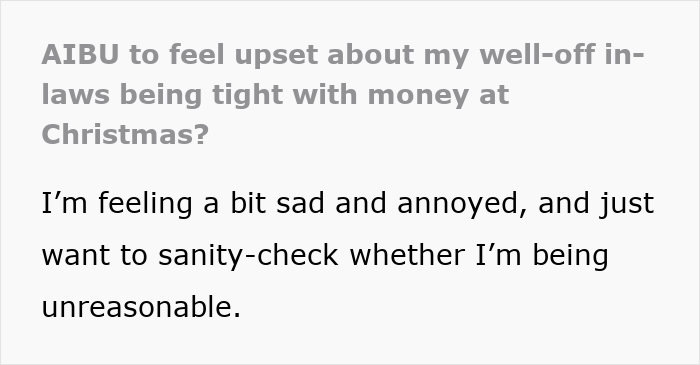
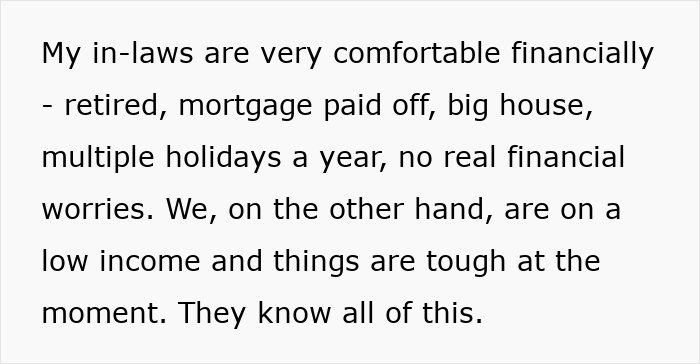
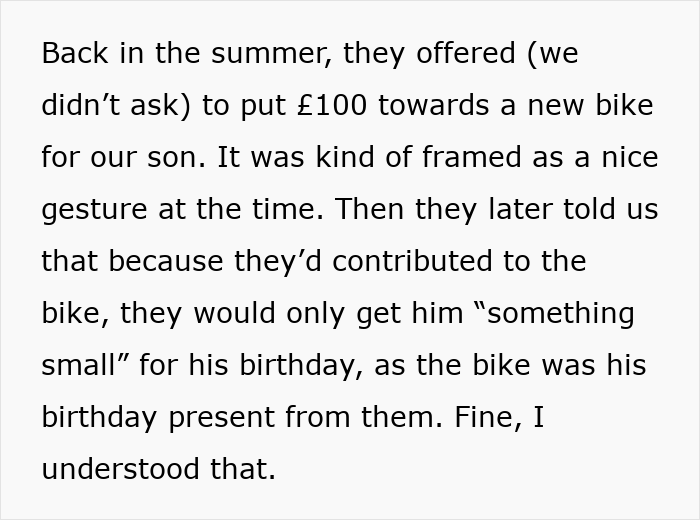
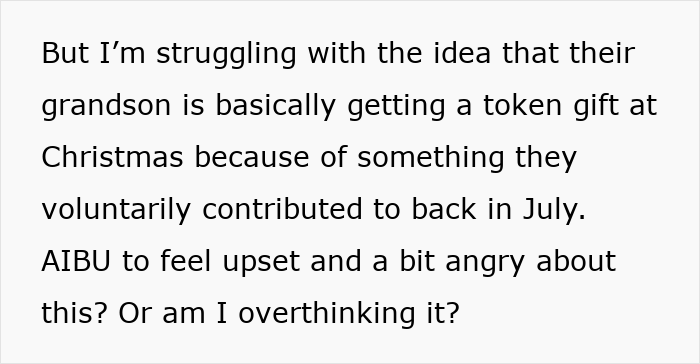
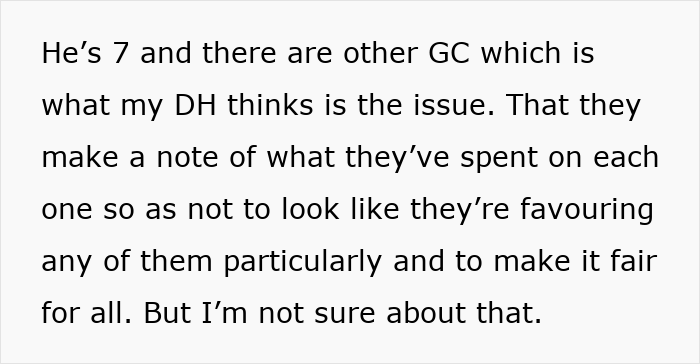
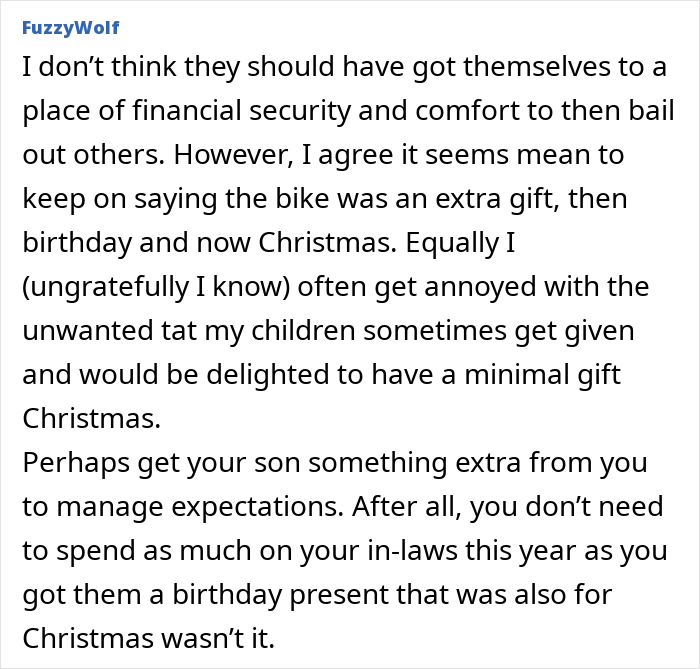
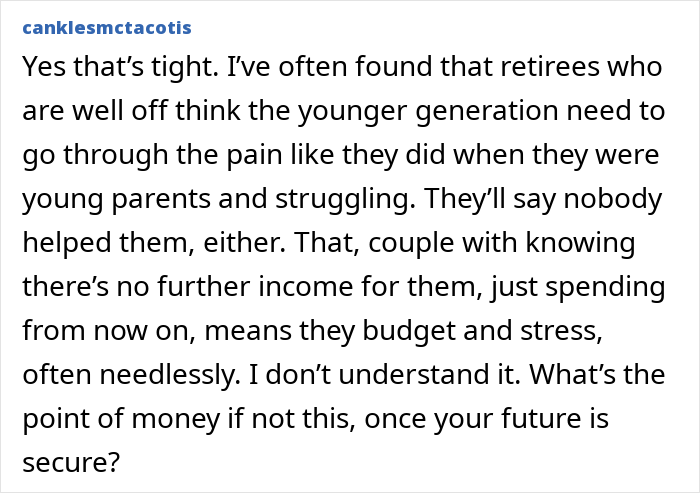
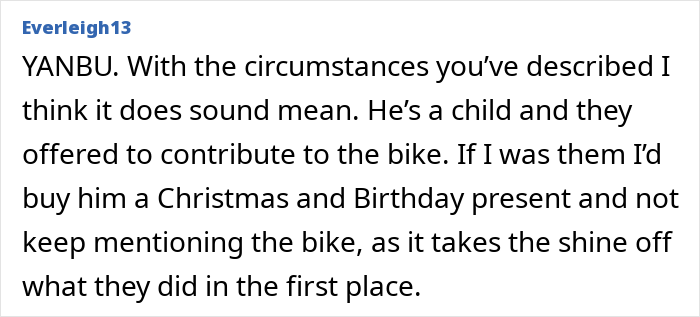
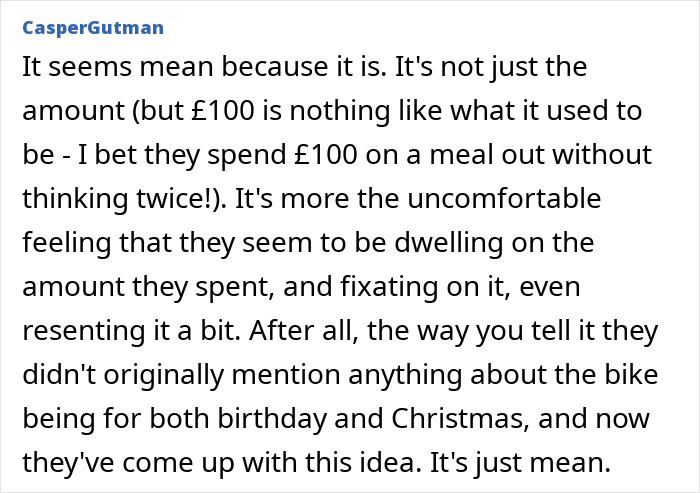
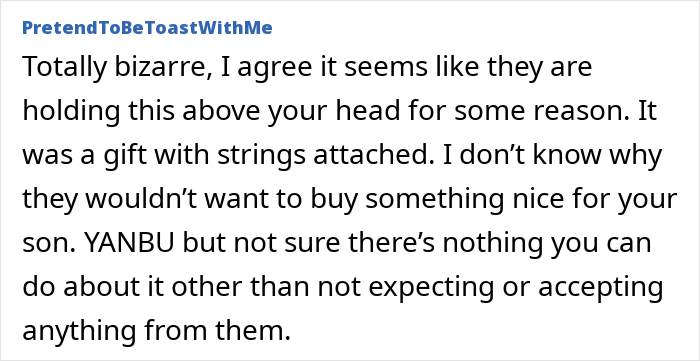
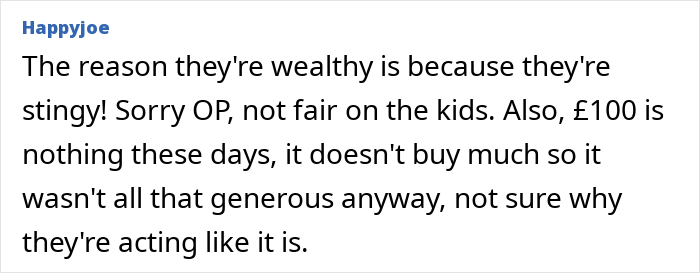
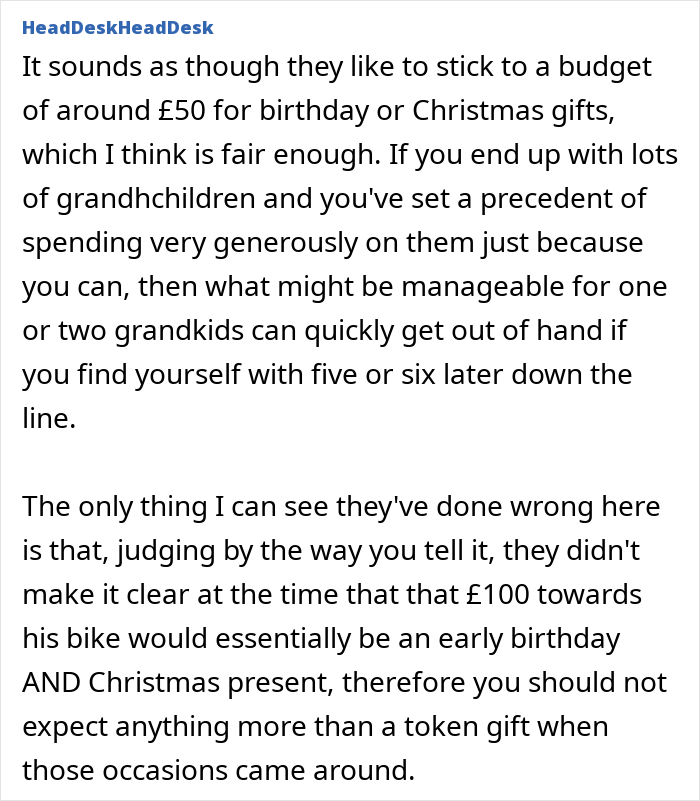
A mom asked the internet for advice when she discovered that her rather well-off relatives were planning to get her son a rather small Christmas present as they had already helped purchase him a bike in the past. Readers discussed the situation and gave her suggestions on how to handle it.
Image credits: cottonbro studio / Pexels (not the actual photo)
Image credits: Jessica Lewis / Pexels (not the actual photo)
Image credits: Karola G / Pexels (not the actual photo)
Image credits: Gingerbreadcottage
Image credits: Karola G / Pexels (not the actual photo)
Navigating jealousy within family relationships is like walking through a hall of mirrors where every reflection distorts what you thought you knew about love, fairness, and your own emotions. The bike gift story captures a painful reality many people face when dealing with in-laws or relatives whose behavior triggers feelings that are hard to name, let alone manage. What makes this situation particularly challenging is that it sits at the intersection of multiple emotional landmines like financial inequality, grandparent favoritism, unmet expectations, and that gnawing feeling that something just isn’t right.
Jealousy is a common emotion that happens when someone feels threatened by the possibility of losing something important, and it can show up in small ways like feeling uneasy when a friend gets attention or in big ways like distrusting a partner. But family jealousy operates differently than romantic jealousy. Family related envy often stems from a complex cocktail of emotions including fear of losing one’s place in the family hierarchy, resentment over perceived favoritism, and sometimes even a misplaced sense of competition. In this story, the parent isn’t jealous of their in-laws’ wealth itself but rather of the disparity in how resources and affection are distributed, particularly when it affects their child.
If one of your adult children is in financial difficulty, you are probably going to spend more money on the grandchildren in that family, and the key is to make sure that the favoritism doesn’t outlast the specific situations that engendered it. However, what the poster describes suggests something else entirely: the in-laws used a modest contribution as justification to essentially check out meaningful gift giving for both birthdays and Christmas, despite having ample means. This pattern reveals what researchers call fixed favoritism rather than fluid favoritism, where circumstances rather than genuine need drive unequal treatment.
For dysfunctional families, the effects of differential treatment on children are much stronger, and favoritism is associated with stronger negative effects especially when families do not share close relationships. To be clear, there isn’t enough information to actually say this is a dysfunctional family. The emotional impact extends beyond the immediate disappointment. When grandparents demonstrate patterns of unequal investment, children notice and internalize these messages about their worth. The poster’s instinct that something feels mean isn’t overthinking at all, it’s recognizing a genuine pattern of behavior that communicates a troubling message to their son about his value to his grandparents.
Image credits: Mental Health America / Pexels (not the actual photo)
So how do you navigate these feelings without becoming consumed by them? First, understand that jealousy comes from personal feelings of unimportance, inadequacy, or inferiority when a family member compares themselves to you, and about half of all people (52%) experience family jealousy. Your feelings are valid and remarkably common. What matters is how you manage them.
Identifying unrealistic expectations is the first step in managing them, and you should write down expectations you and your family members hold for each other and assess whether they are reasonable considering one’s abilities, limitations, and priorities. In this case, the expectation that financially comfortable grandparents would show consistent generosity toward their only grandchild seems reasonable. However, expecting them to suddenly become different people or to care about fairness the way you do is setting yourself up for disappointment.
Adjusting your expectations doesn’t mean that you’re not open to the possibility of change, it just means that you’re not going to wait around vulnerable, exposed, and needs unmet for change to happen. This is crucial advice for dealing with in-laws who have shown you who they are. Your in-laws have demonstrated through their actions that they value their own financial comfort over meaningful gestures toward their grandson. Believing otherwise keeps you trapped in a cycle of hope and disappointment.
You should find a time when you and your family members are both calm and try to start a conversation about the issue using statements that express how you feel without making accusations. You might say something like, “We’ve noticed that the bike contribution from July is being counted as both a birthday and Christmas gift, and we’re concerned about what message this sends to our son about his place in your lives.” Keep the conversation focused on your child’s emotional needs rather than the money itself.

By entering your email and clicking Subscribe, you're agreeing to let us send you customized marketing messages about us and our advertising partners. You are also agreeing to our Privacy Policy.
Thank you! You've successfully subscribed to newsletters!


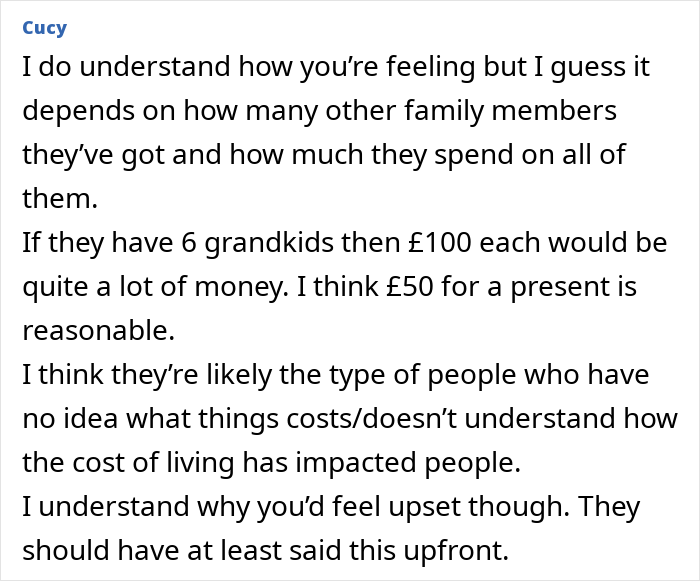
I'm happy to admit I could be the AH here, but you're not entitled to gifts just because someone appears to be rich. Who knows; they may not be as well off as they seem. Especially if they're expecting to have to foot 100 pounds per grandchild and if they have multiple grandkids, that gets expensive (I know for us that's essentially $200 a pop, and that is a lot more than I would spend on anybody sans my mother. Everyone else gets maybe $50 tops spent on them). I think OP is being a bit entitled here, personally.

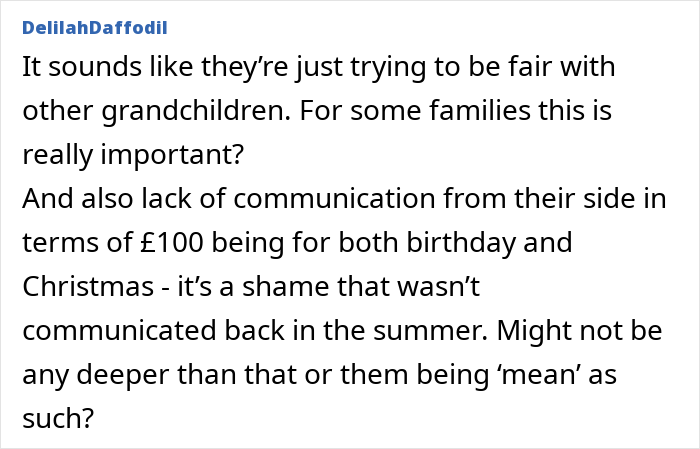
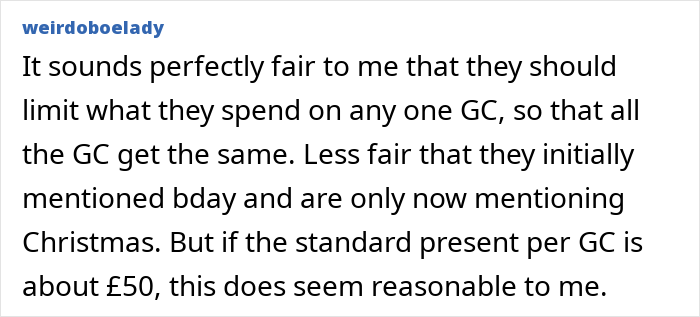
100% agree here. OP basically says they're owed a certain amount of gift money based on how much money the grandparents have. That sounds like there's strings attached from her end. Also, they're still getting him a gift?
Load More Replies... I understand it's disappointing, but you can't tell people what to give. A small gift is still a gift and if his parents don't act disappointed, the 7 yo is never going to think anything different than my grandparents got me a present.
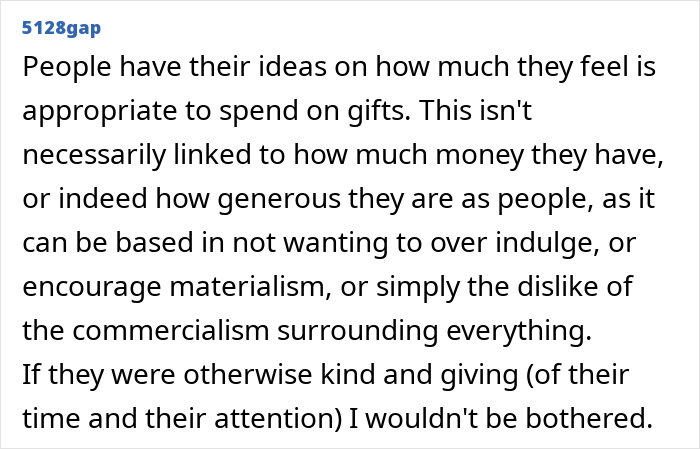
I'm curious if the grandparents actually have money to throw around or if they budget carefully and OP sees them as wealthy compared to herself. Retired and mortgage paid off does not necessarily mean lots of disposable income if you didn't save/invest right, but multiple holidays a year usually does. Either way, I don't think that they're mean. Probably cheap, but cheap is't the same as mean.

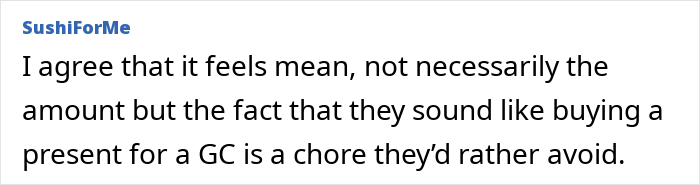
It is though. The use of the word "mean" here in the UK is the same as "cheap" or "stingy" in the States. It's not being used as a character flaw for the grandparents.
Load More Replies... I'm happy to admit I could be the AH here, but you're not entitled to gifts just because someone appears to be rich. Who knows; they may not be as well off as they seem. Especially if they're expecting to have to foot 100 pounds per grandchild and if they have multiple grandkids, that gets expensive (I know for us that's essentially $200 a pop, and that is a lot more than I would spend on anybody sans my mother. Everyone else gets maybe $50 tops spent on them). I think OP is being a bit entitled here, personally.
100% agree here. OP basically says they're owed a certain amount of gift money based on how much money the grandparents have. That sounds like there's strings attached from her end. Also, they're still getting him a gift?
Load More Replies... I understand it's disappointing, but you can't tell people what to give. A small gift is still a gift and if his parents don't act disappointed, the 7 yo is never going to think anything different than my grandparents got me a present.
I'm curious if the grandparents actually have money to throw around or if they budget carefully and OP sees them as wealthy compared to herself. Retired and mortgage paid off does not necessarily mean lots of disposable income if you didn't save/invest right, but multiple holidays a year usually does. Either way, I don't think that they're mean. Probably cheap, but cheap is't the same as mean.
It is though. The use of the word "mean" here in the UK is the same as "cheap" or "stingy" in the States. It's not being used as a character flaw for the grandparents.
Load More Replies...






























 No fees, cancel anytime
 then open in external browser


 and click "Open in External Browser"























23
28