Get Premium
Dark mode theme is available exclusively for premium users. Learn more about the benefits of subscribing.
No fees, cancel anytime.

 Dark Mode Ad-Free Browsing Unlimited Content
 Ad-Free Browsing Unlimited Content Dark Mode
Join 1.2 million Panda readers who get the best art, memes, and fun stories every week!

Reaching out to someone who’s grieving often feels like the right thing to do because it’s an instinctive, human response to another person’s pain. When you see a neighbor express how lost and lonely they feel after losing someone, offering a cup of tea is just a simple act of compassion.
However sometimes, even well-intentioned moments take on a momentum of their own. For today’s Original Poster (OP), what began as a respectful, friendly gesture quickly shifted into something more intense, more insistent, and far less comfortable.
More info: Mumsnet
Image credits: Curated Lifestyle / Unsplash (not the actual photo)
Image credits: MungoforPresident
Image credits: Getty Images / Unsplash (not the actual photo)
Image credits: MungoforPresident
Image credits: Clayton Webb / Unsplash (not the actual photo)
Image credits: MungoforPresident
Image credits: Sweet Life / Unsplash (not the actual photo)
Image credits: MungoforPresident
Image credits: dotshock / Freepik (not the actual photo)
Image credits: MungoforPresident
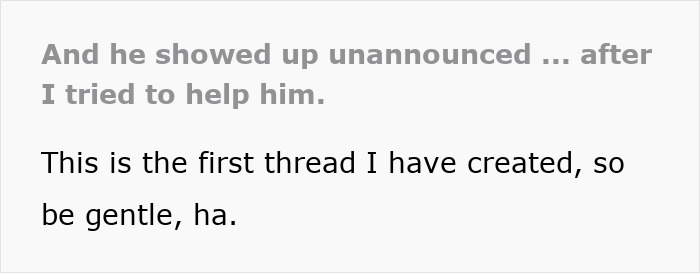
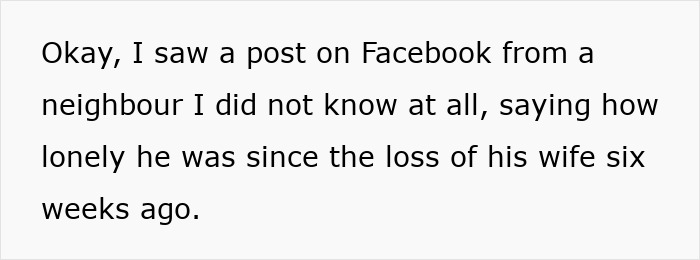
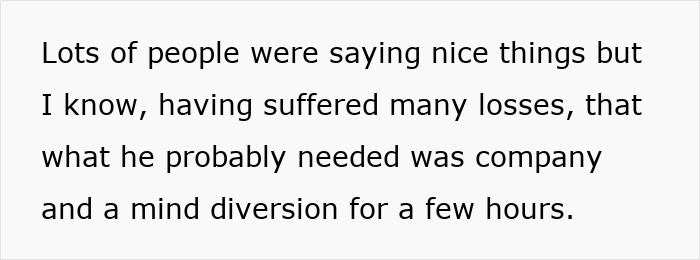
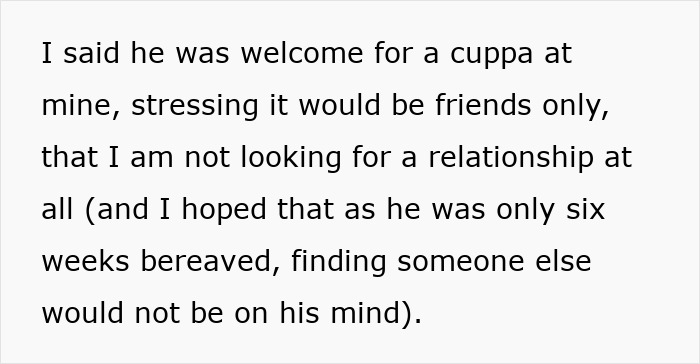
After seeing a Facebook post about a neighbor mourning his wife, the OP offered a friendly invitation for a casual tea, explicitly stressing that it was strictly platonic. With six weeks since his bereavement, it was assumed romantic intentions weren’t on his mind, and a simple social distraction could help him cope.
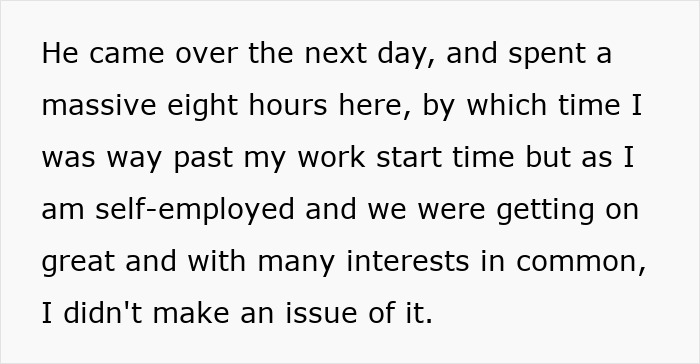
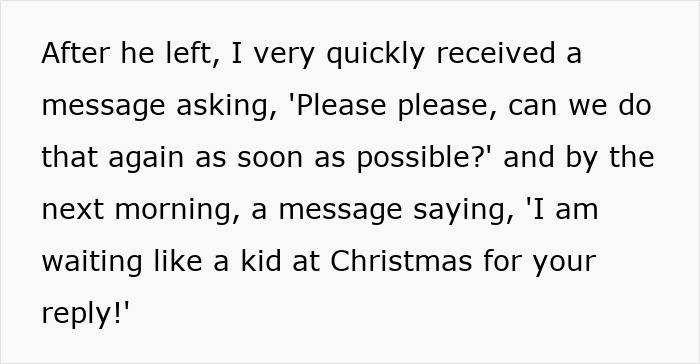
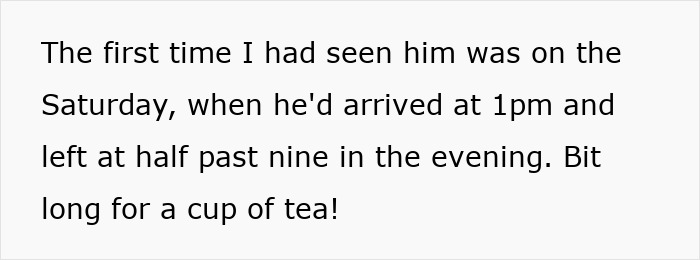
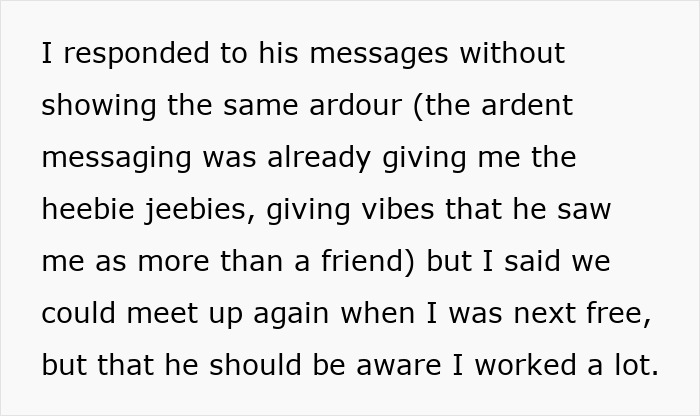
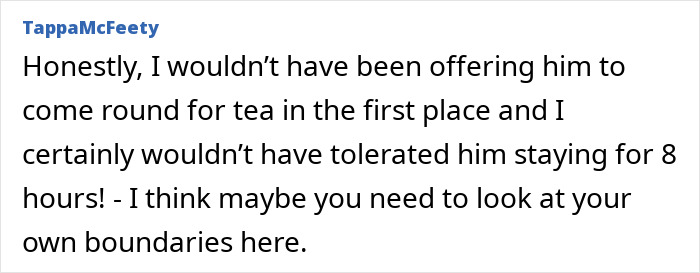
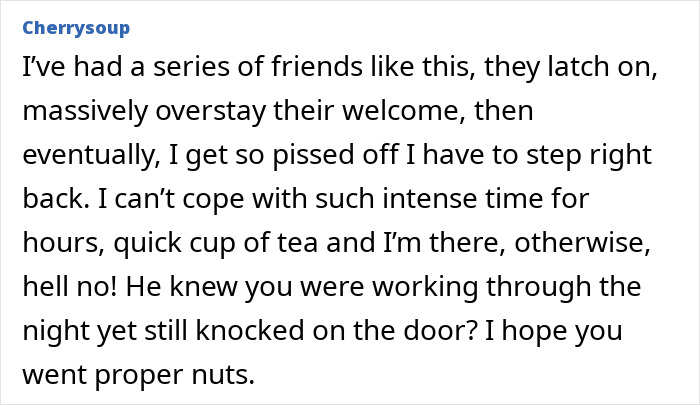
The neighbor arrived the very next day and stayed for eight hours. They had nice conversations and found out their interests aligned, and the OP, being self-employed, tolerated the overextended visit without complaint. When he left, she received messages from him asking if they could meet again “as soon as possible”.
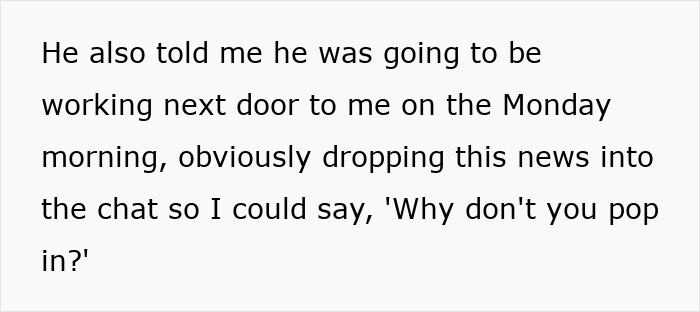
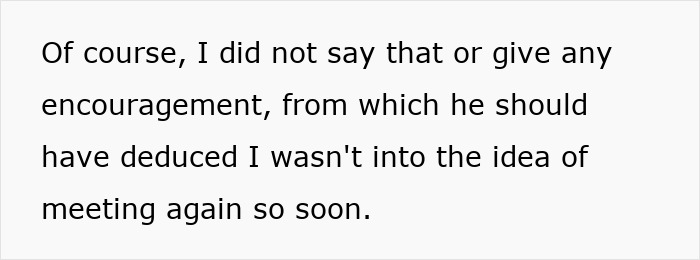
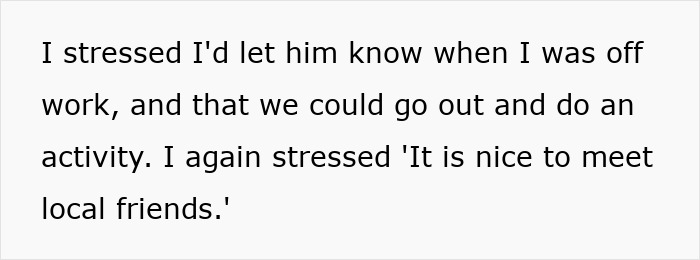
Despite repeated attempts to set limits, the neighbor found subtle ways to insert himself into the OP’s life. Attempts to set boundaries from explaining work commitments, emphasizing friendship, to even suggesting future meetings only when she was free, were largely ignored.
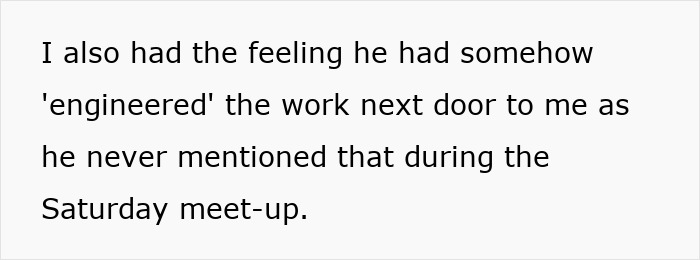
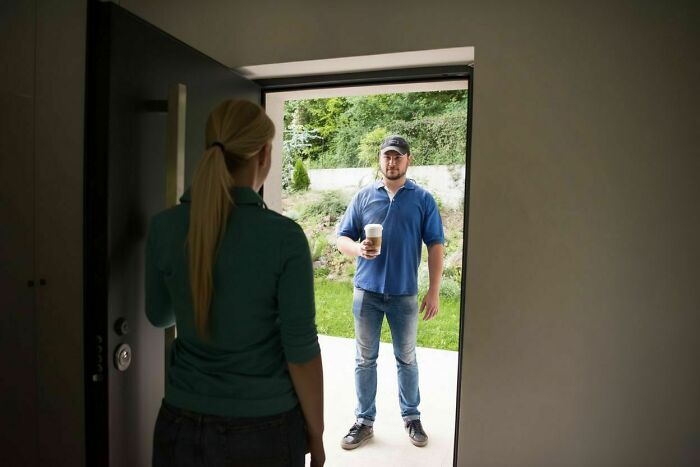
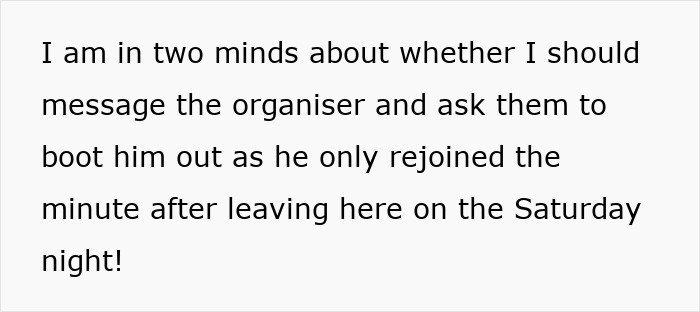
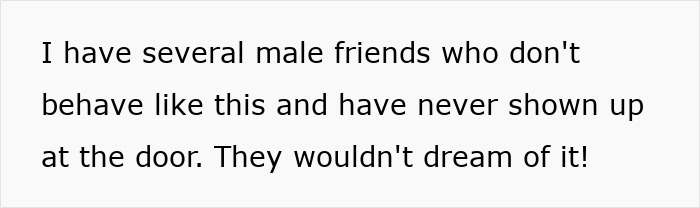
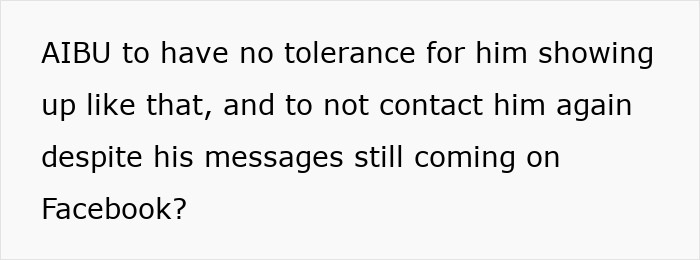
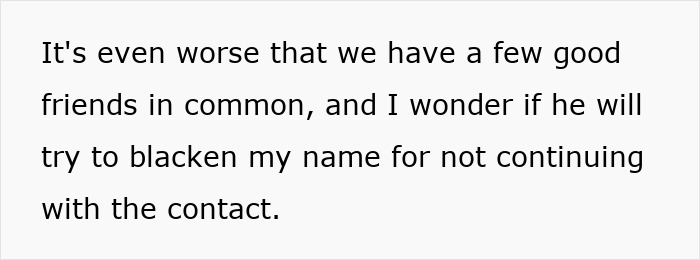
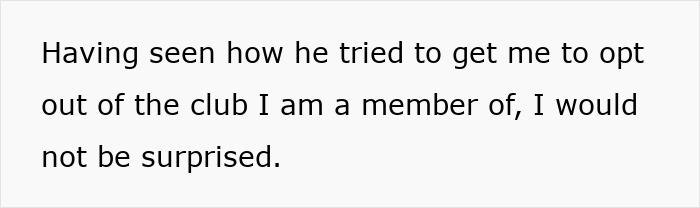
The final straw came when the neighbor showed up early one morning, unannounced, holding coffees the OP didn’t even drink. Exhausted, sleep-deprived, and mortified, she had to firmly close the door. To complicate matters further, the neighbor joined the same Saturday club as her, despite previously criticizing it. Now, she was left wondering if she was wrong for not responding to his messages which were still flooding in.
Image credits: Vitaly Gariev / Unsplash (not the actual photo)
The neighbor’s sudden overattachment makes far more sense when viewed through what Psychology Today describes as grief-driven attachment amplification. After a profound loss, some people instinctively cling to the nearest source of warmth or stability, seeking reassurance and constant connection to soothe their distress.
The Attachment Project builds on this, stating that repeated intrusions, no matter how well-intended, can create anxiety or resentment in the person on the receiving end. They explain that when boundaries begin to feel blurred and when someone pushes for connection you didn’t agree to, it can leave the receiver overwhelmed or pressured.
This is why boundary-setting becomes essential, especially when compassion gets mistaken for availability. Crossroads Hospice emphasizes the need for clear limits delivered gently: explaining when you’re actually free, specifying how communication should work, and reinforcing those boundaries each time they’re tested.
For someone in deep grief, these limits might feel like rejection, so consistency matters from sticking to scheduled interactions, not responding to surprise visits, to calmly reminding them of the arrangement. It protects the supporter’s well-being without dismissing the mourner’s pain.
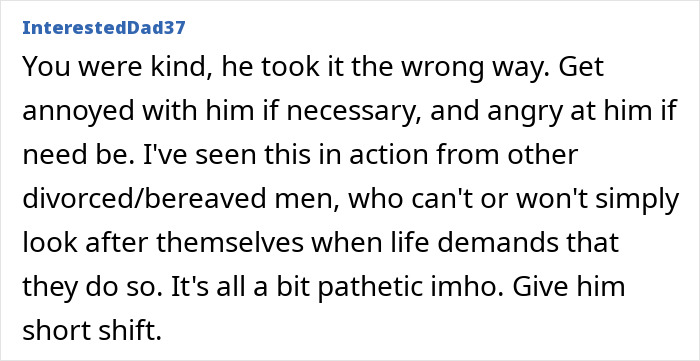
Netizens expressed frustration and incredulity at how the situation unfolded, emphasizing that the neighbor’s behavior was overbearing and inappropriate. They noted the importance of setting and maintaining personal boundaries, suggesting that while the neighbor’s grief might explain his behavior, it did not excuse it.
What do you think about this situation? Do you think grief excuses intrusive behavior, or should boundaries still always come first? We would love to know your thoughts!



Sounds like a nightmare that isn't over yet. In my first semester at university, we were doing groupwork and there was a student sitting alone. I invited him to join our group and ended up with a stalker for the next four years. So, yeah, not being nice to men again.
When I was in vacation rentals (NOT AirBnB, but a real estate agency that contracted with condo owners for whom their beach condo was a second home), I was nice—-because I was working and had to be nice to customers, ffs—-to a guy who came in looking for a beach condo for his vacation. I ended up being stalked by him for years. I even left the company and customer-facing job to go back into accounting. F****r found my new company, and started trying to talk to me there! Luckily, I was in an office on the top floor, and had told the front desk all about the stalking—-you should’ve seen their faces and heard them very forcefully say he would NEVER get past them! (Unfortunately, they couldn’t chase him out of the parking lot or street in front of the building.) It was the idiots I used to work with who told him where I was—-just when I thought I could breathe again. People, NEVER do this! FFS, do NOT tell a stalker where the woman he’s stalking now works! Needless to say I gave my ex-coworkers a piece of my mind about that. It was years of having to scan the parking lot at work, and generally looking over my shoulder, to make sure he wasn’t around. If he was, and the front desk gave me a head’s up (I still love those women for looking out for me), I had to scan the parking lot from inside, while trying to not be seen by him, going out a different door and taking a very long detour route to get home (I only lived two blocks from work and normally walked, if I had driven the day he showed up, I just left my car in the company parking lot). It wasn’t until I got married that he FINALLY left me alone. That was almost 25 years ago, but I still scan outside and look over my shoulder, to make sure I’m not being followed, even if my husband (who knows the whole story of my being stalked) is right next to me. Having to live like that, take those precautions to avoid a stalker, and having it go on for so many years, means the feeling of someone taking away your sense of safety, freedom, and boldness to live your life unfettered doesn’t ever completely go away. I hate that, and resent that a*****e who couldn’t tell the difference between plain politeness to a customer at work, and flirting, which I did not do in any way, shape or form. I was at work, ffs, and had to be professional. I was definitely not interested, never did anything to indicate I was, and never gave him another thought. He was merely a customer, and one who did not even rent a condo from my company, so I forgot about him as soon as he left the office. When he started stalking me to ask me out, my immediate—-and permanent—-reaction was total revulsion. I despise him and his interference in my life for all those years.
Load More Replies... Sounds like a nightmare that isn't over yet. In my first semester at university, we were doing groupwork and there was a student sitting alone. I invited him to join our group and ended up with a stalker for the next four years. So, yeah, not being nice to men again.
When I was in vacation rentals (NOT AirBnB, but a real estate agency that contracted with condo owners for whom their beach condo was a second home), I was nice—-because I was working and had to be nice to customers, ffs—-to a guy who came in looking for a beach condo for his vacation. I ended up being stalked by him for years. I even left the company and customer-facing job to go back into accounting. F****r found my new company, and started trying to talk to me there! Luckily, I was in an office on the top floor, and had told the front desk all about the stalking—-you should’ve seen their faces and heard them very forcefully say he would NEVER get past them! (Unfortunately, they couldn’t chase him out of the parking lot or street in front of the building.) It was the idiots I used to work with who told him where I was—-just when I thought I could breathe again. People, NEVER do this! FFS, do NOT tell a stalker where the woman he’s stalking now works! Needless to say I gave my ex-coworkers a piece of my mind about that. It was years of having to scan the parking lot at work, and generally looking over my shoulder, to make sure he wasn’t around. If he was, and the front desk gave me a head’s up (I still love those women for looking out for me), I had to scan the parking lot from inside, while trying to not be seen by him, going out a different door and taking a very long detour route to get home (I only lived two blocks from work and normally walked, if I had driven the day he showed up, I just left my car in the company parking lot). It wasn’t until I got married that he FINALLY left me alone. That was almost 25 years ago, but I still scan outside and look over my shoulder, to make sure I’m not being followed, even if my husband (who knows the whole story of my being stalked) is right next to me. Having to live like that, take those precautions to avoid a stalker, and having it go on for so many years, means the feeling of someone taking away your sense of safety, freedom, and boldness to live your life unfettered doesn’t ever completely go away. I hate that, and resent that a*****e who couldn’t tell the difference between plain politeness to a customer at work, and flirting, which I did not do in any way, shape or form. I was at work, ffs, and had to be professional. I was definitely not interested, never did anything to indicate I was, and never gave him another thought. He was merely a customer, and one who did not even rent a condo from my company, so I forgot about him as soon as he left the office. When he started stalking me to ask me out, my immediate—-and permanent—-reaction was total revulsion. I despise him and his interference in my life for all those years.
Load More Replies...
























 No fees, cancel anytime
 then open in external browser


 and click "Open in External Browser"





















23
8